Search results
Search for "Michael addition" in Full Text gives 328 result(s) in Beilstein Journal of Organic Chemistry. Showing first 200.
Rhodopyran, a carboxylated hexahydrocyclopenta[b]pyran from Rhodococcus
Beilstein J. Org. Chem. 2026, 22, 1107–1113, doi:10.3762/bjoc.22.89
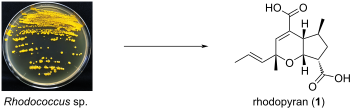
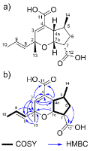
- Michael-type C–C cyclization, whereas closure of the pyran ring could proceed by intramolecular oxa-Michael addition or an epoxide-opening-type O-cyclization. The order of these two ring-forming events cannot be determined from the present data. An alternative catabolic contribution should also be


Synthesis of sterically shielded piperidine nitroxides via acid-catalyzed heterocyclization of β-aminoketone derivatives with ketones
Beilstein J. Org. Chem. 2026, 22, 948–954, doi:10.3762/bjoc.22.74
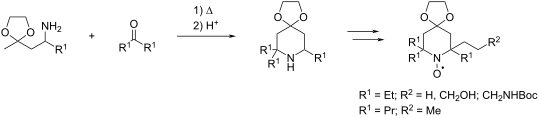
- -tetrapropyl-substituted piperidine nitroxides, and sterically shielded nitroxides with functional groups in the side chain of the heterocycle. Results and Discussion Aminodioxolanes 4a,b were obtained from enones 1a,b via a modified literature sequence [30] involving phthalimide Michael addition, dioxolane


Recent advances in copper-catalyzed direct hydroamination of alkenes with (hetero)aromatic amines
Beilstein J. Org. Chem. 2026, 22, 925–947, doi:10.3762/bjoc.22.73
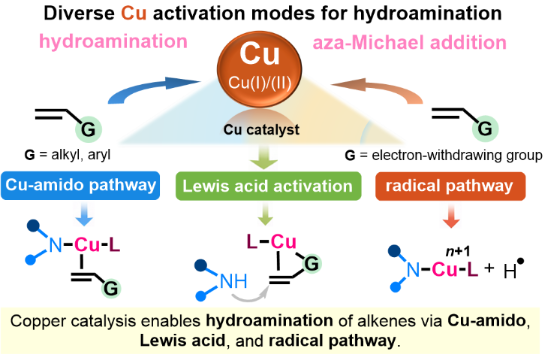
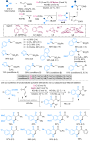
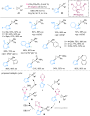
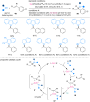
- , and functional group tolerance. This review summarizes recent advances in the copper-catalyzed hydroamination of alkenes with (hetero)aromatic N–H nucleophiles, emphasizing the mechanistic paradigms and the factors governing selectivity. Keywords: aromatic amines; aza-Michael addition; Cu catalysis
- -Michael addition [13][14][15][16][17][18]. In such cases, the reaction provides direct access to β-amino carbonyl derivatives and related motifs that serve as versatile intermediates in synthetic and medicinal chemistry. Despite its conceptual simplicity, catalytic hydroamination remains challenging. This
- selective hydroamination chemistry. Review Copper-catalyzed aza-Michael addition Early studies on copper–amido complexes by Gunnoe The aza-Michael addition of (hetero)aromatic amines to electron-deficient olefins provides a straightforward and atom-economical route to β-amino carbonyl, β-amino sulfone, and







Chiral cyclopropenimine-catalyzed enantioselective Michael reactions of phenol and benzofuran-derived α,β-unsaturated pyrazolamides with benzophenone-imine of glycine esters
Beilstein J. Org. Chem. 2026, 22, 888–896, doi:10.3762/bjoc.22.69
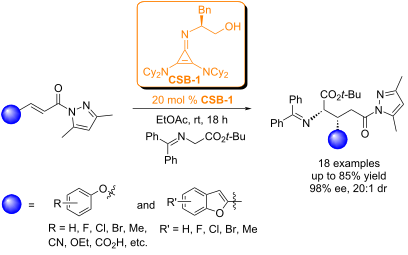
- adjacent stereocenters, which was obtained from in-situ acidic hydrolysis and lactamization of the corresponding Michael product. Keywords: α,β-unsaturated pyrazolamide; chiral cyclopropenimine; glutamic acid; lactamization; Michael addition; Introduction Phenols and benzofurans are feedstock chemicals
- anti-form of 6a. With mode B, the π–π stacking between benzophenone-imine 2a and the phenoxylmethyl group in 5a may enhance the ratio of this attack to produce the syn-form of 6a as major product. A mechanism for this highly enantioselective Michael addition between 2a and 5a was proposed based on
- -disubstituted glutamic and pyroglutamic acid esters by this protocol are underway. Experimental General procedure for the CSB-1-catalyzed Michael addition of compounds 2 and 5 To 2a (1.0 mmol) and 5a (1.0 mmol) in EtOAc (10.0 mL) was added CSB-1 (0.2 mmol) and the mixture was stirred at rt for 18 h. After the






Site-specific labelling of native peptides and proteins: chemical and enzymatic strategies
Beilstein J. Org. Chem. 2026, 22, 857–881, doi:10.3762/bjoc.22.67
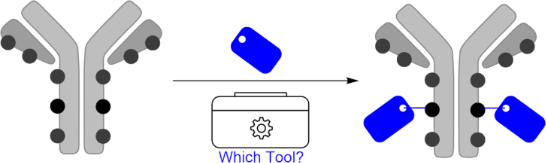
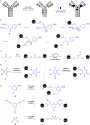
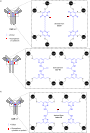
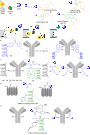
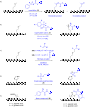
- Knoevenagel–Michael addition (TKM) conjugation to enable production of glycoengineered high DAR ADCs [129]. Qasba’s engineered bovine galactosyltransferase (β4GalT1(Y289L)) is an elegant example of using glycosyltransferases to remodel glycans of target protein with non-natural sugars (e.g., GalNAz), leading








Unsymmetrical sulfoxides with sterically hindered catechol fragment: synthesis, structure, electrochemical properties, and antiradical activity
Beilstein J. Org. Chem. 2026, 22, 828–837, doi:10.3762/bjoc.22.65
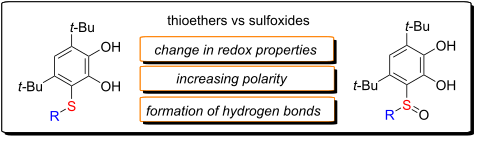
- , and antibacterial agents [6][7][8]. However, the practical utility of such type of compounds extends beyond biomedical applications. For instance, Michael addition reactions between dithiols and phenolic compounds yield cross-linked, colorless polymer films with universal adhesion and high stability


Modern synthetic pathways towards eribulin and its subunits
Beilstein J. Org. Chem. 2026, 22, 495–526, doi:10.3762/bjoc.22.37
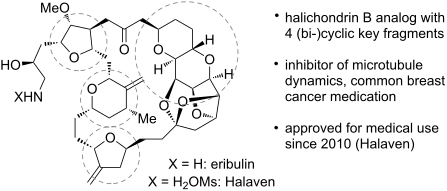
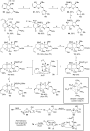
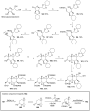
- conditions, which led to a cyclization, and benzylated with BnBr towards 321. Stereoselective Michael addition of a Gilman reagent yielded 322. Reduction of the lactone unit yielded a lactol, which is in equilibrium with acyclic aldehyde and alcohol. The aldehyde was trapped via HWE reaction and the obtained








Dialkylaminoalkylation of β-ketosulfones via ring-opening of 3-sulfonylpyrrolidines
Beilstein J. Org. Chem. 2026, 22, 383–389, doi:10.3762/bjoc.22.26
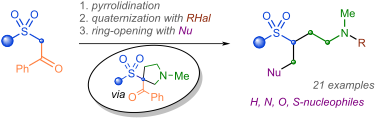
- of the quaternary ammonium salt in the presence of a O-, S- or N-nucleophile with cesium carbonate leads to a retro-Claisen reaction, ring-opening and Michael addition. The resulting novel 4-Nu-3-sulfonylbutan-1-amines are isolated in moderate to excellent overall yields. The reduction of the




Electrosynthetic access to unsymmetrical oxaza[8]helicenes with high chiral stability and strong circularly polarized luminescence (CPL)
Beilstein J. Org. Chem. 2026, 22, 372–382, doi:10.3762/bjoc.22.25
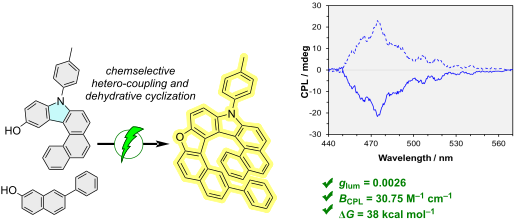
- -bromophenanthrene (1) via Buchwald–Hartwig amination with p-toluidine under Pd catalysis [55] – was subjected to phosphoric acid-mediated annulation with p-benzoquinone to give the hydroxycarbazole derivative 3 through a tandem Michael addition/ring-closure sequence. After rapid optimization of key parameters (see




Synthesis of tricyclic fused pyrrolidine nitroxides from 2-alkynylpyrrolidine-1-oxyls
Beilstein J. Org. Chem. 2026, 22, 344–351, doi:10.3762/bjoc.22.22

- -alkynyl-substituted pyrrolidine nitroxides was studied. These nitroxides have been prepared via intramolecular Huisgen cycloaddition or intramolecular alkylation in 2-pyrazolyl derivatives prepared by Michael addition–cyclocondensation of the corresponding alkynones with hydrazine. The reduction kinetics
- Huisgen cycloaddition or via one-pot Michael addition–cyclocondensation reaction with hydrazine with subsequent intramolecular alkylation of the resulting pyrazoles. Results and Discussion Synthesis We have earlier reported on the synthesis of 2-alkynylpyrrolidine-1-oxyls 2a–c via addition of the




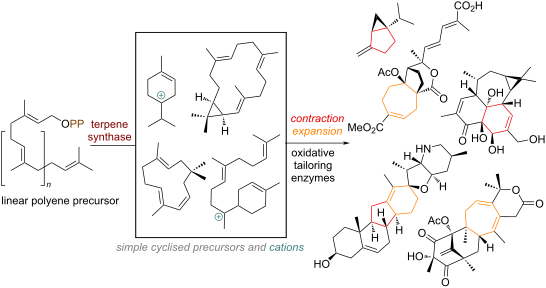
Ring contraction and ring expansion reactions in terpenoid biosynthesis and their application to total synthesis
Beilstein J. Org. Chem. 2026, 22, 289–343, doi:10.3762/bjoc.22.21






A mild and atom-efficient four-component cascade strategy for the construction of biologically relevant 4-hydroxyquinolin-2(1H)-one derivatives
Beilstein J. Org. Chem. 2026, 22, 244–256, doi:10.3762/bjoc.22.18
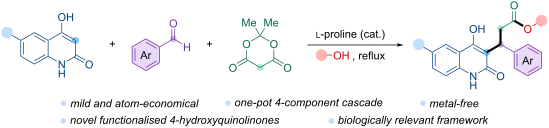
- direct access to scarcely explored open-chain quinolinone esters, expanding the medicinal chemistry toolbox with promising scaffolds for drug discovery. Keywords: antibacterial activity; 4-hydroxyquinolin-2(1H)-one; ʟ-proline catalysis; Meldrum’s acid; Michael addition; multicomponent reaction
- approach involves the 1,4-Michael addition of the ambident anion derived from 6-halo-4-hydroxyquinolin-2-one to suitably activated unsaturated compounds. Considering the target structures (Figure 2), suitable Michael acceptors include α,β-unsaturated esters, aldehydes, methyl ketones, arylidene malonates
- obtained via the two-step procedure. The 6-halo-4-hydroxyquinolin-2-ones 2a–c were then subjected to Michael addition reactions with various acceptors following the retrosynthetic approaches (Scheme 2), and the results are discussed below (Scheme 4). No Michael adducts were obtained from reactions of 2a–c


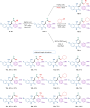
Screwing the helical chirality through terminal peri-functionalization
Beilstein J. Org. Chem. 2026, 22, 205–212, doi:10.3762/bjoc.22.14
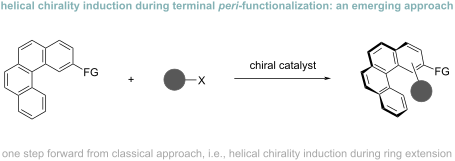
- catalysts [33]. A domino reaction was developed, beginning with a PPS L2-catalyzed Michael addition of phosphine oxides 7 to nitro-substituted oxa[5]helicenes 6, followed by a copper-promoted aromatization. This sequence efficiently produced phosphorus-containing oxa[5]helicene derivatives 8 in high yields
- and with excellent enantioselectivities. The catalytic system operated under mild conditions within a practical timeframe and demonstrated broad substrate tolerance, providing a range of chiral helicenes. Notably, unsymmetrical phosphine oxides also underwent smooth Michael addition, with excellent
- nucleophilic substitution reactions (Scheme 5). A stereochemical model was proposed for the phospha-Michael addition, indicating that enantioselectivity was primarily influenced by steric effects arising from hydrogen bonding and ion pairing between the peptide mimetic phosphonium salt (PPS)-activated


Symmetrical D–π–A–π–D indanone dyes: a new design for nonlinear optics and cyanide detection
Beilstein J. Org. Chem. 2026, 22, 131–142, doi:10.3762/bjoc.22.6
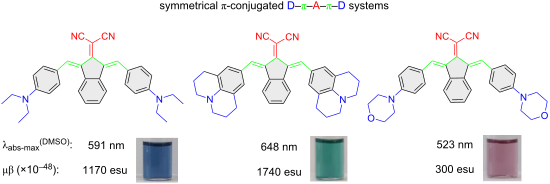
- theory (DFT) methods. The dyes also exhibit chemosensor properties, showing selectivity for cyanide via a Michael addition mechanism that causes the disappearance of the ICT band, and a significant color change was observed in both organic and aqueous media. In addition, the interaction mechanism between


Highly electrophilic, gem- and spiro-activated trichloromethylnitrocyclopropanes: synthesis and structure
Beilstein J. Org. Chem. 2026, 22, 123–130, doi:10.3762/bjoc.22.5
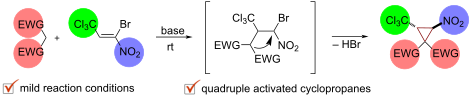
- –C2H protons of the cyclopropane ring (3JH(1)H(2) = 5.7–7.5 Hz) indicate their transoid arrangement [38][39][45]. This makes it possible to assign 1SR,2RS configurations to the stereocenters. The proposed mechanism for this transformation is depicted in Scheme 6. Michael addition of the CH-acid anion I


An Fe(II)-catalyzed synthesis of spiro[indoline-3,2'-pyrrolidine] derivatives
Beilstein J. Org. Chem. 2025, 21, 2383–2388, doi:10.3762/bjoc.21.183
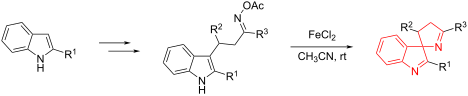
- yield substituted spiropyrrolidines (Scheme 1, path b) [9]. Additionally, an organocatalytic, enantioselective Michael addition/cyclization sequence of 3-aminooxindole Schiff bases with terminal vinyl ketones, catalyzed by a cinchona-derived base, has been reported to afford chiral spiroindolylpyrroles




Rotaxanes with integrated photoswitches: design principles, functional behavior, and emerging applications
Beilstein J. Org. Chem. 2025, 21, 2345–2366, doi:10.3762/bjoc.21.179
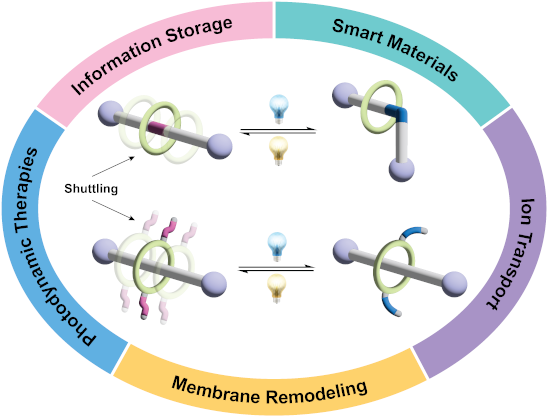
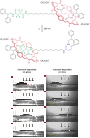
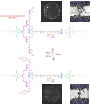
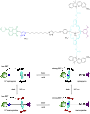
- Michael addition taking place at the active site (C=C−C=N+) in the merocyanine unit in the presence of sulfite ions, resulting in color changes from red to green. This work represents a substantial advancement in the development of rotaxane-based fluorescent probes, providing highly sensitive and





Recent advances in Norrish–Yang cyclization and dicarbonyl photoredox reactions for natural product synthesis
Beilstein J. Org. Chem. 2025, 21, 2315–2333, doi:10.3762/bjoc.21.177
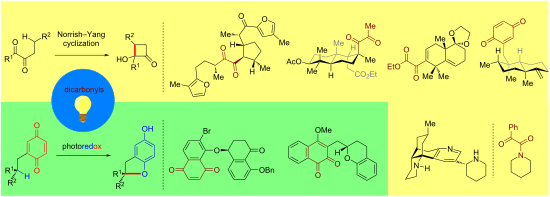
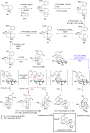
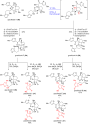
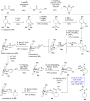
- bonds of 83 (Scheme 10). Building block 76 was first obtained in 18% overall yield from β-ketoester 74 through a sequence involving Michael addition, decarboxylation, nitrile hydration, and cyclization under vacuum. Aminoketal 81 – a direct precursor to the oxygen-sensitive α,β-unsaturated iminium 81a







Halogenated butyrolactones from the biomass-derived synthon levoglucosenone
Beilstein J. Org. Chem. 2025, 21, 2297–2301, doi:10.3762/bjoc.21.175
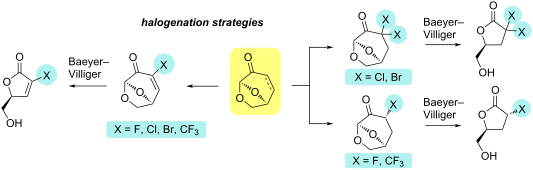
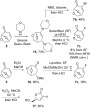
- morpholine via an aza-Michael addition and condensation (Scheme 3). It was envisaged that the β-amino group could act as a stable functional group resulting in Baylis–Hillman-like reactivity. An extensive survey of reaction conditions using Selectfluor and N-fluorobenzenesulfonimide (NFSI) as the sources of




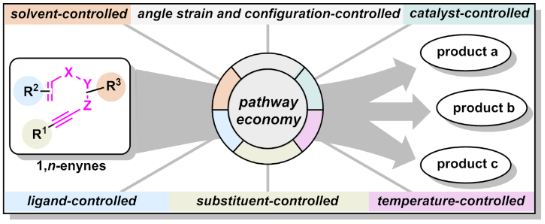
Pathway economy in cyclization of 1,n-enynes
Beilstein J. Org. Chem. 2025, 21, 2260–2282, doi:10.3762/bjoc.21.173
- toward bicyclo[4.3.0]nonane frameworks via geminal carbo-functionalization of 3-siloxy-1,3-dien-7-ynes (Scheme 21) [32]. A stereoselective sequence initiated by 5-exo-dig cyclization and Michael addition under cationic gold catalysis to generate strained bicyclic gold-carbene complex 101, which was
- pathway-controlled approach using tryptamine ynamides bearing Michael acceptor moieties as substrates (Scheme 27) [38][39]. Under strong Brønsted acid catalysis, protonation of the carbonyl group was achieved, which facilitated a Michael addition between the electron-rich indole C3-position and the
- activated ynamide. This sequence resulted in the formation of spiroindoleninium intermediate 130 (Scheme 27, path a). Subsequent intramolecular Mannich cyclization proceeded, yielding the 1H-pyrrolo[2,3-d]carbazole derivatives 131. When silica gel was utilized as the catalytic medium, the same Michael


Electrochemical cyclization of alkynes to construct five-membered nitrogen-heterocyclic rings
Beilstein J. Org. Chem. 2025, 21, 2173–2201, doi:10.3762/bjoc.21.166
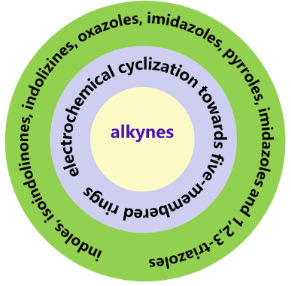
- benzamides with terminal alkynes, 5-exo-dig aza-cyclization of 2-alkynylbenzamides as well as reductive cascade annulation of o-alkynylbenzamides. Pyrroles and imidazoles were formed efficiently via electrochemical annulation of alkynes with enamides and tandem Michael addition/azidation/cyclization of
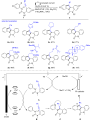
- electricity as a sustainable and green oxidant, noble metal catalyst (Rh) was required to achieve reasonable yields. An electrochemical synthesis of imidazoles through tandem Michael addition/azidation/intramolecular cyclization of alkynes, amines and azides was realized by Chen in 2022 (Scheme 17) [267
- -nitrophenylacetylene. Electrochemical annulation of alkynyl enaminones. Electrochemical annulation of alkyne and enamide. Electrochemical tandem Michael addition/azidation/cyclization. Electrochemical [3 + 2] cyclization of heteroarylamines. Electrochemical CuAAC to access 1,2,3-triazole. About the Authors. Funding








Bioinspired total syntheses of natural products: a personal adventure
Beilstein J. Org. Chem. 2025, 21, 2048–2061, doi:10.3762/bjoc.21.160
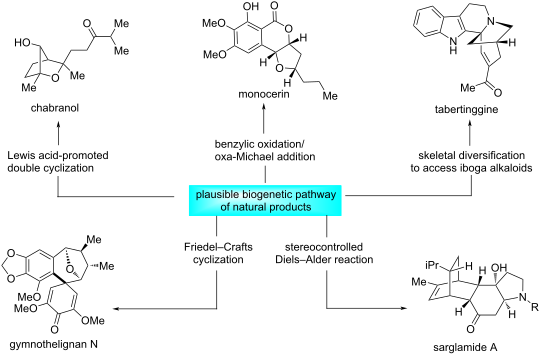
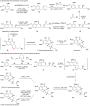
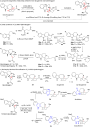
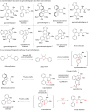
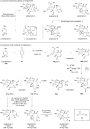
- benzylic oxidation to generate a para-quinone methide (pQM) intermediate. Using fusarentin 6-methyl ether as an example, pQM intermediate 10 would be generated. The C10 alcohol should successively undergo an oxa-Michael addition reaction to close the THF ring, providing 7-O-demethylmonocerin. Similarly
- , monocerin and 12-hydroxymonocerin were presumably generated from their corresponding precursors through similar oxidation and oxa-Michael addition reactions. Given the fact that quinone methides served as a powerful platform for the development of rich useful organic transformations, especially, through
- unreacted, which released the secondary alcohol, followed by BCl3-promoted selective cleavage of the isopropyl and one methyl protection ultimately furnished thenatural product fusarentin 6-methyl ether. With fusarentin 6-methyl ether in hand, we explored the bioinspired oxidation/oxa-Michael addition. This



General method for the synthesis of enaminones via photocatalysis
Beilstein J. Org. Chem. 2025, 21, 1535–1543, doi:10.3762/bjoc.21.116
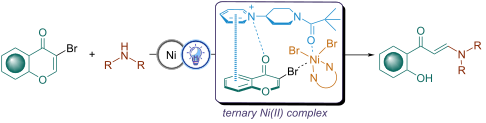
- the reactivity of unsaturated esters towards an aza-Michael addition is the use of transition metal complexes as catalysts/promoters [40][41][42]. Considering this background, we reasoned that Ni(II) could be a suitable catalyst for the amination of unsaturated systems. Initial investigations were




Oxetanes: formation, reactivity and total syntheses of natural products
Beilstein J. Org. Chem. 2025, 21, 1324–1373, doi:10.3762/bjoc.21.101
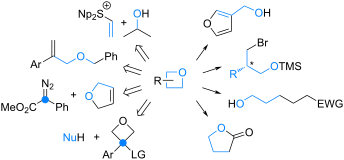
- moderate to good yields of the spirocycle. The reaction is assumed to proceed through a Michael addition followed by Williamson etherification of the resulting γ-hydroxyselenone 12. In 2022, Kleij et al. reported a domino synthesis of bicyclic 3,5-anhydrofuranoses 15 using easily accessible bis-epoxy










Recent advances in amidyl radical-mediated photocatalytic direct intermolecular hydrogen atom transfer
Beilstein J. Org. Chem. 2025, 21, 1306–1323, doi:10.3762/bjoc.21.100
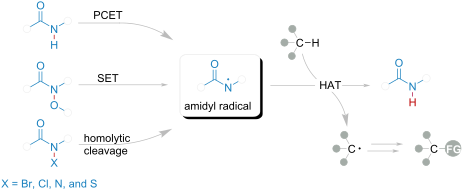
- range of functionalized polyolefins, showcasing the applicability of this xanthylated polyolefin in various reactions, including trifluoromethylthiolation, polymer grafting, Michael addition, and epoxide opening. Amidyl radical from N–X bond cleavage Direct halogenation of C–H bonds is of significant