


Search results
Search for "alkylation" in Full Text gives 671 result(s) in Beilstein Journal of Organic Chemistry. Showing first 200.
Amino acid-based surfactants: sustainable synthesis and antimicrobial mechanisms
Beilstein J. Org. Chem. 2026, 22, 1067–1085, doi:10.3762/bjoc.22.85
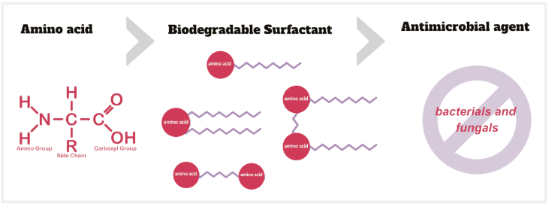
- structures (charge density, alkyl chain length/position and presence of aromatic groups) on the antimicrobial efficiency of these amphiphilic small molecules (Table 1) [4]. These structural classes are typically obtained through complementary synthetic strategies involving N-acylation and N-alkylation
- reactions. N-Alkylation is mainly achieved either by reductive amination with long-chain aldehydes followed by chemical reduction, or by direct nucleophilic substitution using activated alkyl halides or sulfonates [6][10][13]. Reductive amination generally affords improved control over mono-N-alkylation and
- moderate to high yields, whereas direct alkylation requires strict stoichiometric and reaction control to minimize overalkylation and side reactions [13]. In addition, double-chain derivatives (e.g., LANHCn) are commonly obtained via aminolysis of methyl esters with long-chain amines under thermal


Synthesis of functionalized, 13-alkyl-substituted coralyne derivatives and investigation of their interactions with duplex and abasic site-containing DNA
Beilstein J. Org. Chem. 2026, 22, 1057–1066, doi:10.3762/bjoc.22.84
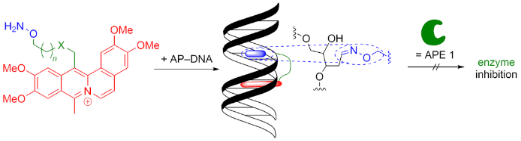
- abasic site-containing DNA (AP-DNA), different synthetic routes towards the functionalization of coralyne were tested. In particular, the alkylation of the benzylic position in papaverine and subsequent cyclization by treatment with acetic anhydride in sulfuric acid led to the synthesis of a coralyne
- derivative with an alkoxyamine-functionalized linker attached at position C13. Firstly, it was demonstrated with a resembling model compound that the alkylation of the coralyne scaffold does not influence the DNA-binding properties. Furthermore, it was shown that the alkoxyamine function can be readily
- The synthesis of the coralyne derivatives started with papaverine (3a), as it is a readily available starting material and its transformation to coralyne (2a) is an established and reliable synthetic route [41][42][43]. Moreover, the alkylation of the benzylic position of papaverine (3a) is well


The role of spacer length and flexibility in peptide self-assembly
Beilstein J. Org. Chem. 2026, 22, 986–996, doi:10.3762/bjoc.22.77
- (2.5%) acting as scavengers to suppress carbocation-mediated side reactions [38]. Furthermore, the utilization of the Clt-resin, instead of the commonly used Wang resin, reduced S-alkylation of the thiol side chains [39]. C0-Nap-ICA 8 was obtained through coupling of C0-Nap 5 to H2N-Cys-Ala-Clt-resin


Cascade transformation of 2-(diazoacetyl)-2H-azirines to 2-aroyl-3-hydroxy-1H-pyrroles via condensation with aromatic aldehydes
Beilstein J. Org. Chem. 2026, 22, 897–904, doi:10.3762/bjoc.22.70
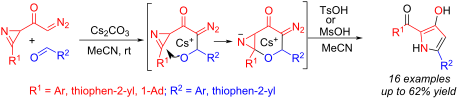
- azirine 1. Alkylation and triflation reactions of pyrrole 5a. Optimization of the synthesis of pyrrole 5a.a Supporting Information Deposition number CCDC 2536266 (compound 5a) contains the supplementary crystallographic data for this paper. These data are provided free of charge by the joint Cambridge


Chiral cyclopropenimine-catalyzed enantioselective Michael reactions of phenol and benzofuran-derived α,β-unsaturated pyrazolamides with benzophenone-imine of glycine esters
Beilstein J. Org. Chem. 2026, 22, 888–896, doi:10.3762/bjoc.22.69
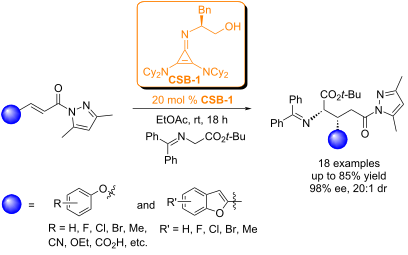
- Michael adducts in high yields and enantioselectivities in the presence of Lambert catalyst CSB-1. Therefore, the phenol-derived pyrazolamides 5a–l were prepared from phenols, ethyl 4-bromocrotonate and 3,5-dimethyl-1H-pyrazole in three steps including alkylation, hydrolysis and amidation (Scheme 2a). The






Site-specific labelling of native peptides and proteins: chemical and enzymatic strategies
Beilstein J. Org. Chem. 2026, 22, 857–881, doi:10.3762/bjoc.22.67
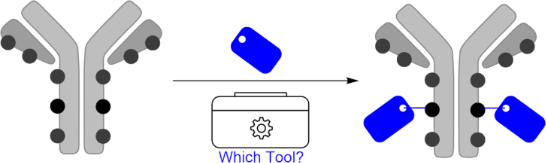
- has led to the development of labelling techniques, wherein the C-terminal carboxylate can be functionalized via visible-light photoredox decarboxylative catalysis (Scheme 2d) [23]. Similarly, decarboxylative alkylation has been applied to complex proteomes to enable proteome-wide C-terminal profiling
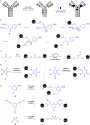
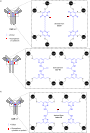
- native antibody sequences. The bis-sulfone ADC discovery spurred the development of a wide range of rebridging systems, with the apex goal of creating ADCs with a DAR of 4. For example, dihaloacetones 7 have been utilized for rebridging by alkylation, whereby the ketone-containing rebridged antibody
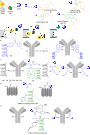
- thiophosphorodichloridate reagents 25, as shown with hexahistidine-tagged proteins (Scheme 9d) [94]. Aspartate and glutamate, while weakly nucleophilic, can undergo O-alkylation via diazo compounds 26 (Scheme 9e) [95][96]. Arginine, traditionally difficult to modify due to its high pKa values, can be targeted with








Halogenated azobenzene acrylates: from efficient solution photoswitching to stable solid-state photochromic materials
Beilstein J. Org. Chem. 2026, 22, 782–794, doi:10.3762/bjoc.22.60
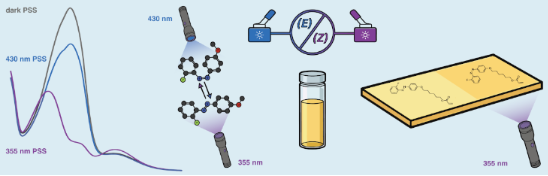
- halogenated azobenzene acrylate monomers bearing fluorine, chlorine or bromine substituents is reported. The monomers were prepared via a facile three-step synthetic route involving azo-coupling, O-alkylation and O-acylation. Apart from the steady electrochemical properties, halogen substitution proved to be


Towards the targeted protein degradation of CK2: design and synthesis of CAM4066-based PROTACs
Beilstein J. Org. Chem. 2026, 22, 611–619, doi:10.3762/bjoc.22.47
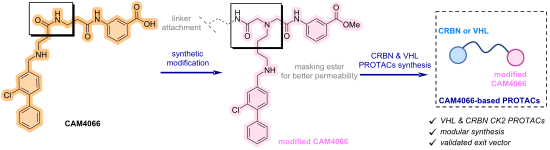
- construction. The synthesis of the ATP-site binder began with the alkylation of commercially available methyl 3-aminobenzoate (3) using bromoacetyl bromide. Although initial purification via silica gel chromatography led to substantial product loss, isolation by simple aqueous workup afforded the intermediate
- undesired alkylation of the base and significantly improved the isolated yield up to 84%. Introduction of an acetic acid handle was then achieved via alkylation with bromoacetic acid under DIPEA mediation, giving intermediate 6, which served as the common attachment point for linkers 7–10 (for full

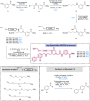
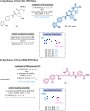
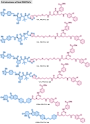
Modern synthetic pathways towards eribulin and its subunits
Beilstein J. Org. Chem. 2026, 22, 495–526, doi:10.3762/bjoc.22.37
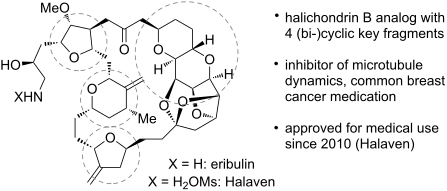
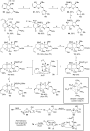
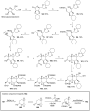
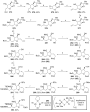
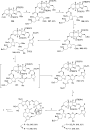
- , stereoselective dihydroxylation with AD-mix β and diol-protection yielded acetonide 57. Another DMP-oxidation, followed by HWE reaction, and deprotection of the diol motifs enabled the cyclization towards 60. After TBDMS-protection and reduction to the respective aldehyde (62), an alkylation with the α-sulfonyl








Synthesis and uranyl(VI) extraction performance of a calix[4]pyrrole–tetrahydroxamic acid receptor
Beilstein J. Org. Chem. 2026, 22, 486–494, doi:10.3762/bjoc.22.36
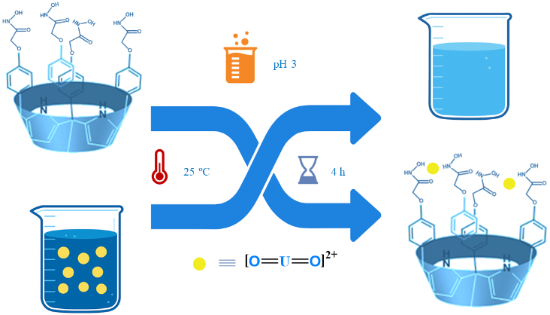
- mixture of acetonitrile and acetone. Using this protocol, the PCP α,α,α,α-isomer was recovered in 47% yield, as previously reported by Namor and Shehab [49]. Subsequently, the synthesis of the PCP ester derivative (PCP E) was carried out via O-alkylation of PCP with ethyl bromoacetate in dry acetone/K2CO3


Recent advances in the stereoselective synthesis of distal biaxially chiral molecules
Beilstein J. Org. Chem. 2026, 22, 461–479, doi:10.3762/bjoc.22.34
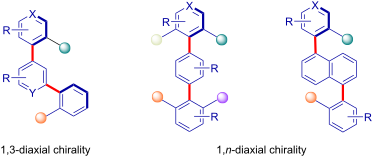
- alkylation for dynamic kinetic resolution. Moreover, additional alkylation at a sterically congested second rotational axis enabled the construction of remote, double axially chiral molecules 26. Further advances have come from transition-metal catalysis. Li’s group established a rhodium-catalyzed protocol
- a related development, our group reported an iridium-catalyzed asymmetric alkylation for the efficient construction of distal biaxial molecules 32 incorporating both C–C and C–N chiral axes (Scheme 8) [49]. The method delivered atropisomers in high yield and stereoselectivity. Moreover
- biaxially chiral 1,4-distyryl-2,3-naphthalene diols. H-Bond-enabled enantioselective synthesis of remote biaxially chiral amides mediated by the counterion. Enantioselective synthesis of biaryl products with twofold chiral axes. Iridium-catalyzed C–H alkylation to obtain the distal biaxial atropisomers. Co


Cone p-aminocalix[4]arenes enriched with ‘clickable’ alkyne or azide functionalities
Beilstein J. Org. Chem. 2026, 22, 399–415, doi:10.3762/bjoc.22.28
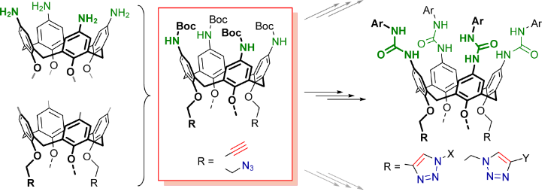
- simple filtration to remove the inorganic by-product components from the reaction mixtures. Although the free amines 31 and 32 were pure enough according to their 1H NMR data, these compounds were not fully characterized in order to avoid the risk of self-alkylation of the amines during their storage




Dialkylaminoalkylation of β-ketosulfones via ring-opening of 3-sulfonylpyrrolidines
Beilstein J. Org. Chem. 2026, 22, 383–389, doi:10.3762/bjoc.22.26
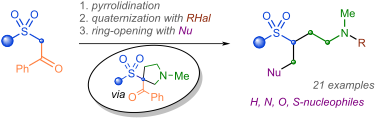
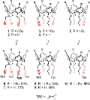
- pyrrolidines as sacrificial framework and two domino processes used for assembling of the pyrrolidine ring and for the ring-cleavage of it. Thus, one-pot pyrrolidination of β-ketosulfones and alkylation combined with the subsequent debenzoylative ring-cleavage allows for wide range of the incorporated reagents




Synthesis of tricyclic fused pyrrolidine nitroxides from 2-alkynylpyrrolidine-1-oxyls
Beilstein J. Org. Chem. 2026, 22, 344–351, doi:10.3762/bjoc.22.22

- -alkynyl-substituted pyrrolidine nitroxides was studied. These nitroxides have been prepared via intramolecular Huisgen cycloaddition or intramolecular alkylation in 2-pyrazolyl derivatives prepared by Michael addition–cyclocondensation of the corresponding alkynones with hydrazine. The reduction kinetics
- Huisgen cycloaddition or via one-pot Michael addition–cyclocondensation reaction with hydrazine with subsequent intramolecular alkylation of the resulting pyrazoles. Results and Discussion Synthesis We have earlier reported on the synthesis of 2-alkynylpyrrolidine-1-oxyls 2a–c via addition of the




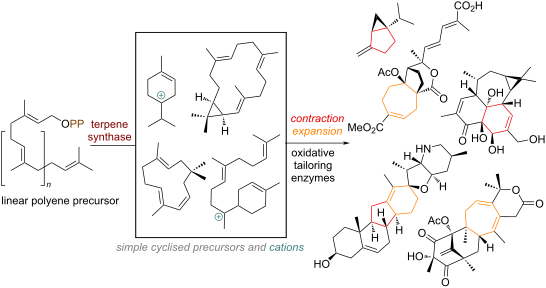
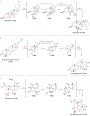
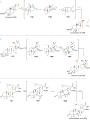
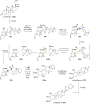
Ring contraction and ring expansion reactions in terpenoid biosynthesis and their application to total synthesis
Beilstein J. Org. Chem. 2026, 22, 289–343, doi:10.3762/bjoc.22.21






Highly electrophilic, gem- and spiro-activated trichloromethylnitrocyclopropanes: synthesis and structure
Beilstein J. Org. Chem. 2026, 22, 123–130, doi:10.3762/bjoc.22.5
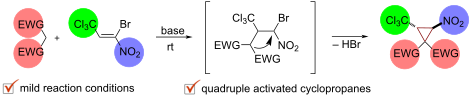
- to the bromonitroalkene afford the intermediate anion II, followed by tautomerization and formation of anion IV, which undergoes intramolecular nucleophilic substitution of the bromide along the C-alkylation pathway [37][38][39] (Scheme 6). The trans-configuration of the methine protons of the


Total synthesis of natural products based on hydrogenation of aromatic rings
Beilstein J. Org. Chem. 2026, 22, 88–122, doi:10.3762/bjoc.22.4
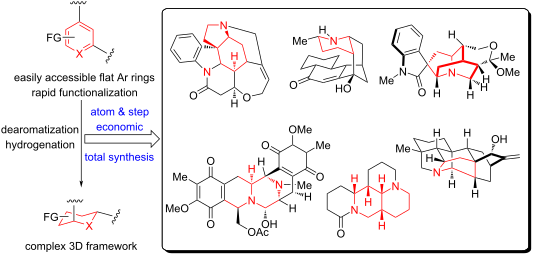
- % yield over two steps [76]. Alkylation with MeI furnished pyridinium 91, which was hydrogenated in two steps with NaBH3CN to the fully saturated piperidine 92. Acidic removal of the benzoyl group triggered auto-oxidation to the indole, and subsequent hydrolysis of methyl ester delivered the target
- ]. Starting from pyridine derivatives 129, they obtained the key intermediate 131 via a Simmon–Smith reaction and a bimetallic-mediated photocatalytic radical coupling reaction. Intermediate 132 was then constructed by Friedel–Crafts alkylation using diethylaluminum chloride as a Lewis acid. The pyridine ring


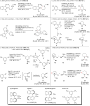









Reactivity umpolung of the cycloheptatriene core in hexa(methoxycarbonyl)cycloheptatriene
Beilstein J. Org. Chem. 2026, 22, 64–70, doi:10.3762/bjoc.22.2
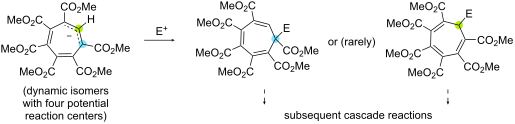
- reported [31] halogenations of anion 1 only afforded the corresponding octasubstituted cycloheptatriene derivatives. The reactions of 2 with alkyl halides were selective in terms of the initial reaction – the i-substitution was never observed. However, the alkylation reactions were even more intricate than
- principle [38]. At least, the reaction times and conditions required for the alkylation reactions investigated, which proceed through an α-attack, indicate relatively high barriers. This in turn indicates that the selectivity observed in alkylation reactions (α-attack) is due to some stabilization of the
- occur. In the case of bromine, the two processes demonstrate similar rates. The formation of product 4a upon chlorination indicates the reaction barrier above 9.6 kcal/mol. Therefore, unlike with alkylation, the ester group adjacent to the α-position reduces chlorination of the main conformer, while


One-pot synthesis of ethylmaltol from maltol
Beilstein J. Org. Chem. 2025, 21, 2755–2760, doi:10.3762/bjoc.21.212

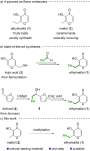
- ), selective methylation of maltol (2) would represent the most direct access to ethylmaltol (1). Herein, we disclose an operationally simple, one-pot methylation procedure to access ethylmaltol (1) from maltol (2, Scheme 1c). Results and Discussion Inspired by the selective γ-alkylation of dianions of β-keto
- %) and putative 6 (10%) formed (Table 1, entry 5). Both 7 and putative 6 likely arise from dianion interconversions, potentially mediated by LDA, that proceed at rates comparable to the subsequent methylation events. Of note, no O-alkylation side products were observed, which we attribute to the lower
- ) from its naturally occurring congener maltol (2). Initial efforts focused on the methylation of a dianionic intermediate, reminiscent of γ-alkylation of β-keto esters. Although this successfully provided ethylmaltol (1), the presence of inseparable impurities and the need for industrially unattractive


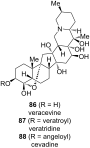
Recent advancements in the synthesis of Veratrum alkaloids
Beilstein J. Org. Chem. 2025, 21, 2657–2693, doi:10.3762/bjoc.21.206
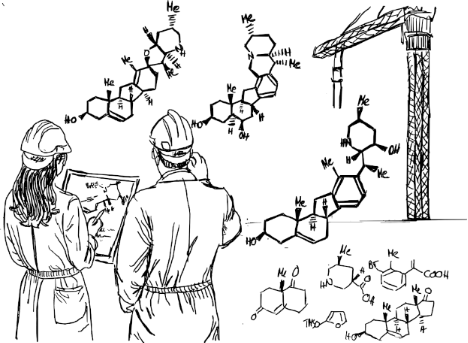
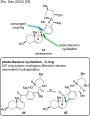
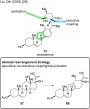
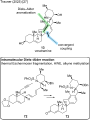
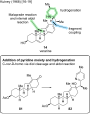
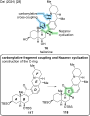
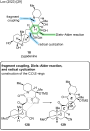
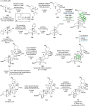
- manipulations were carried out, the double bond isomerized to position C5–C6, and a reduction was performed, all in an optimized three-step, scalable sequence. Alkylation with phosphonate reagent 36 and subsequent Horner–Wadsworth–Emmons (HWE) reaction formed ring C, followed by an enolate alkylation to forge
- -methylene group and an ester reduction/Appel reaction sequence to convert the ester moiety to an iodide leaving group. The right-hand fragment (E/F-ring) was synthesized from tert-butylsiloxyfuran 39. Commencing via an asymmetric allylic alkylation and an aza-Michael reaction, butanolide 40 was obtained in
- alkylation was diasteroselective. In the next steps, addition of isopropenyllithium to the lactone moiety led to a hemiketal, which was then opened and a protecting group on the hydroxy group was installed, furnishing fragment 42. Key convergent coupling of this total synthesis was performed by lithium
















Synthesis of new tetra- and pentacyclic, methylenedioxy- and ethylenedioxy-substituted derivatives of the dibenzo[c,f][1,2]thiazepine ring system
Beilstein J. Org. Chem. 2025, 21, 2645–2656, doi:10.3762/bjoc.21.205
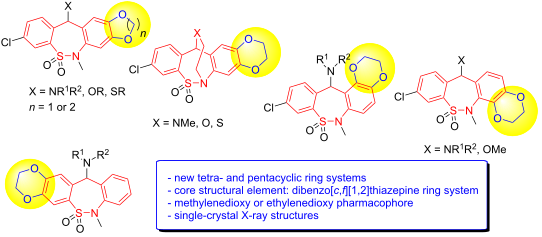
- of compound 23a was proven by single-crystal X-ray diffraction (Figure 4). Starting from compound 7, using methods we have previously developed for the synthesis of related compounds [2][3], we have now prepared new pentacyclic ring systems 25–27 (Scheme 5). Demethylation of 7 followed by alkylation
- cyclized to target compound 27 by intramolecular N-alkylation reaction. Structures of compounds 25, 26 and 27 have also been confirmed by single-crystal X-ray diffraction (Figure 5). Next, we synthesized some derivatives of new tetracyclic ketone 8 in a way that is already routinely used (Scheme 6


Recent advances in total synthesis of illisimonin A
Beilstein J. Org. Chem. 2025, 21, 2571–2583, doi:10.3762/bjoc.21.199
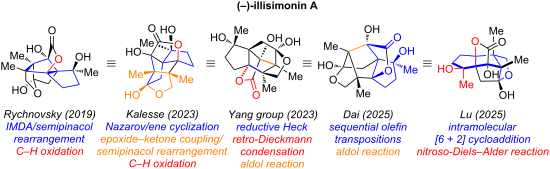
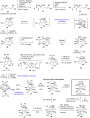
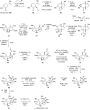
- of 85 with iodine and BnOH enabled the intermolecular iodoetherification to yield ketal 86. A KF-promoted intramolecular alkylation of the cyclopentadiene moiety then delivered compound 87. To introduce the C4 hydroxy group and C1 functional handle for further elaboration, a nitroso-Diels–Alder






Assembly strategy for thieno[3,2-b]thiophenes via a disulfide intermediate derived from 3-nitrothiophene-2,5-dicarboxylate
Beilstein J. Org. Chem. 2025, 21, 2489–2497, doi:10.3762/bjoc.21.191
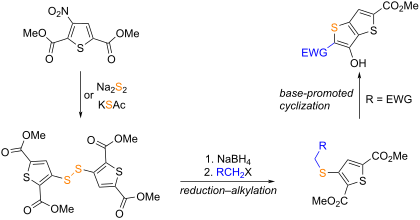
- -dicarboxylates by its one-pot reduction–alkylation using NaBH4 in DMF followed by an alkylating agent. Base-promoted cyclization of electron-deficient 3-alkylthio derivatives furnished 2-aryl-, 2-aroyl-, and 2-cyano-substituted thieno[3,2-b]thiophenes, bearing a 3-hydroxy group. This protocol broadens access to
- ]. In route IV, cleavage of the ethyl xanthate group in the starting substrate by NaOMe generates a thiolate intermediate, which undergoes S-alkylation and subsequent NaOMe-promoted cyclization to afford the 3-hydroxy-TT [28]. In our recent works, it was presented an effective strategy for synthesizing
- -alkylation and base-promoted cyclization to form the 3-hydroxy-TT molecules (Scheme 2). Results and Discussion We began our study by investigating the reaction of dimethyl 3-nitrothiophene-2,5-dicarboxylate (1) with Na2S, inspired by Beck’s reported synthesis of 2-substituted-3-aminobenzo[b]thiophenes via



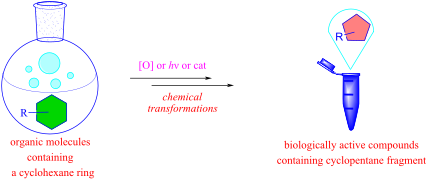
Transformation of the cyclohexane ring to the cyclopentane fragment of biologically active compounds
Beilstein J. Org. Chem. 2025, 21, 2416–2446, doi:10.3762/bjoc.21.185
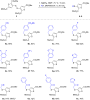
- -ketoxime 45 by Grignard reduction alkylation, followed by a Beckmann fragmentation of the C2–C3 bond of the intermediate 3-ethyl-substituted hydroxyimino ketone in the SOCl2-CH2Cl2 system. The introduction of a carbonyl substituent into the isopropylidene fragment of ketone 46 was achieved either by


Synthetic study toward vibralactone
Beilstein J. Org. Chem. 2025, 21, 2376–2382, doi:10.3762/bjoc.21.182

- and ClpP2 and it could be utilized as a probe to study the activity and structure of the ClpP1P2 complex from Listeria monocytogenes [25]. Previously, Snider and co-worker reported the first total synthesis of vibralactone (6) employing Birch reductive alkylation, intramolecular aldol reaction and
- late-stage lactonization as key steps [26] (Scheme 1). Subsequently, they achieved the asymmetric synthesis of vibralactone (6) based on the asymmetric Birch reduction–alkylation methodology developed by the Schultz group [27][28]. In 2016, Brown and co-workers described an efficient synthetic route
- single step from commercially available fructone [38] (Scheme 3). Following an efficient O-trimethylsilylquinine-catalyzed ketene–aldehyde cycloaddition and subsequent alkylation [36], 17 was synthesized. From 17, it was envisioned that the bicyclic skeleton could be efficiently constructed through ketal





