Search results
Search for "copper-catalyzed" in Full Text gives 287 result(s) in Beilstein Journal of Organic Chemistry. Showing first 200.
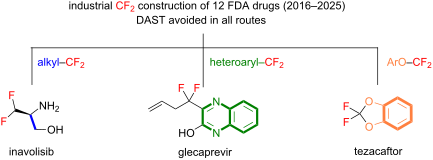
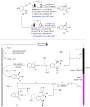
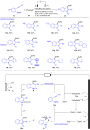
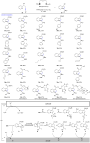
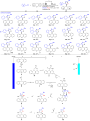
Construction of CF2 moieties in FDA-approved drugs (2016–2025): industrial routes, mechanisms, and scale-up considerations
Beilstein J. Org. Chem. 2026, 22, 1122–1150, doi:10.3762/bjoc.22.91


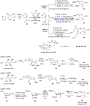




Novel macrocycles: from synthesis to supramolecular function
Beilstein J. Org. Chem. 2026, 22, 982–985, doi:10.3762/bjoc.22.76
- designed protection and functionalization sequences, the authors introduced orthogonal reactive groups at opposite rims of the macrocycle. The synthetic versatility of these systems was demonstrated by copper-catalyzed “click” reactions and amine-based transformations, yielding highly functionalized
Recent advances in copper-catalyzed direct hydroamination of alkenes with (hetero)aromatic amines
Beilstein J. Org. Chem. 2026, 22, 925–947, doi:10.3762/bjoc.22.73
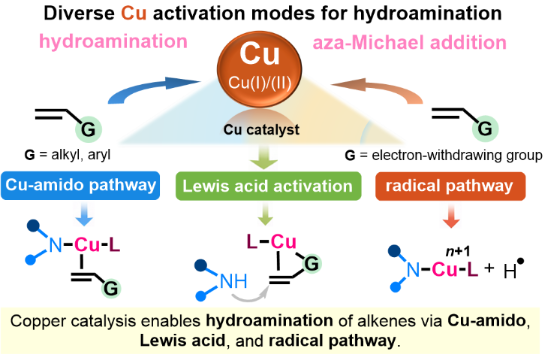
- , and functional group tolerance. This review summarizes recent advances in the copper-catalyzed hydroamination of alkenes with (hetero)aromatic N–H nucleophiles, emphasizing the mechanistic paradigms and the factors governing selectivity. Keywords: aromatic amines; aza-Michael addition; Cu catalysis
- valuable in hydroamination chemistry. Several distinct yet interrelated activation modes have been identified for copper-catalyzed alkene amination [27]. Copper frequently participates directly in amine activation via the formation of Cu–N species (Scheme 1a) [30][31]. In the presence of a base and
- Cu as a catalytic platform for C–N bond construction. Unlike earlier review articles that broadly covered copper-catalyzed C–N bond-forming reactions or hydroamination chemistry across diverse nitrogen sources [24][25][26][27], this review places a clear and specific emphasis on recent advances in






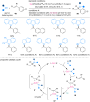

An Fe(II)-catalyzed synthesis of spiro[indoline-3,2'-pyrrolidine] derivatives
Beilstein J. Org. Chem. 2025, 21, 2383–2388, doi:10.3762/bjoc.21.183
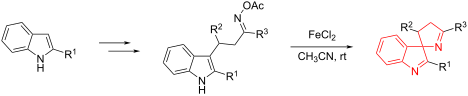
- under heating furnished chiral spiroindolylpyrroles in excellent yields and enantioselectivity (Scheme 1, path d) [11]. Moreover, a copper-catalyzed reaction of oxindole-derived alkenes with acetophenone O-acetyl oxime has also been employed to construct the spiroindolylpyrrole scaffold (Scheme 1, path


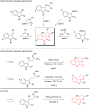


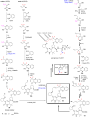
Comparative analysis of complanadine A total syntheses
Beilstein J. Org. Chem. 2025, 21, 2334–2344, doi:10.3762/bjoc.21.178
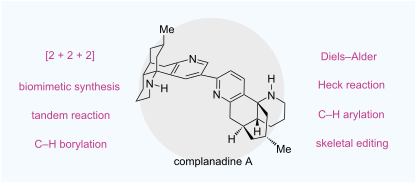
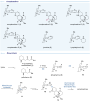
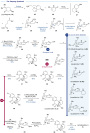
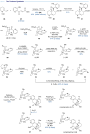
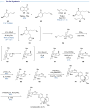
- , followed by acetylation of the resulting propargylic alcohol afforded 17 which was further advanced to 18 via copper-catalyzed selective displacement of the propargyl acetate with benzylamine and hydrolysis of the primary acetate. The primary alcohol of 18 was activated with PPh3/CCl4, triggering an



Halogenated butyrolactones from the biomass-derived synthon levoglucosenone
Beilstein J. Org. Chem. 2025, 21, 2297–2301, doi:10.3762/bjoc.21.175
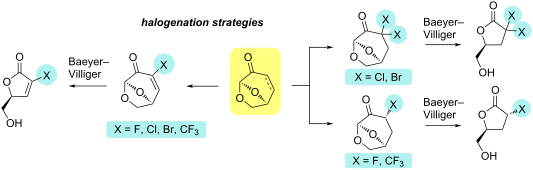
- using CF3 donors in copper-catalyzed [34], base- and Lewis acid-mediated reactions [35][36][37]. The reaction of enamine 9a with Togni’s reagent (18) and subsequent hydrolysis gave the substituted derivative 19 in 35% yield (qNMR) (Scheme 4). The yield was improved using the N-methylpiperazine-derived




Pathway economy in cyclization of 1,n-enynes
Beilstein J. Org. Chem. 2025, 21, 2260–2282, doi:10.3762/bjoc.21.173
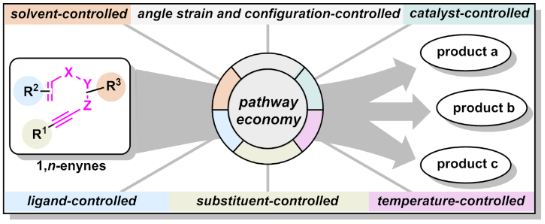
- 133 (Scheme 27, path b). Through precise acid catalyst selection, the reaction pathways were strategically modulated to afford efficient construction of both 1H-pyrrolo[2,3-d]carbazole derivatives and spiro[indoline-3,3'-pyrrolidin]-2-one derivatives. In 2019, the Ye group reported a copper-catalyzed
- copper-catalyzed tandem process initiated by endo-cyclization of indolyl homopropargyl amides, enabling atom-economical synthesis of therapeutically significant bridged aza[n.2.1] skeletons. Angle strain and configuration-controlled cyclization of 1,n-enynes In cyclization reactions, angle strain and


Synthesis of triazolo- and tetrazolo-fused 1,4-benzodiazepines via one-pot Ugi–azide and Cu-free click reactions
Beilstein J. Org. Chem. 2025, 21, 2202–2210, doi:10.3762/bjoc.21.167
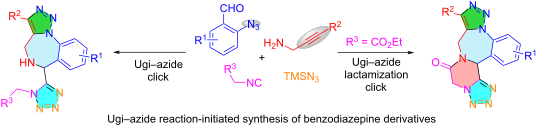
- advantages over traditional copper-catalyzed azide–alkyne cycloaddition (CuAAC) reactions, including operational simplicity and the absence of metal contaminants, which is crucial for pharmaceutical applications. After having identified suitable reaction conditions of the Ugi–azide and click reactions for


Electrochemical cyclization of alkynes to construct five-membered nitrogen-heterocyclic rings
Beilstein J. Org. Chem. 2025, 21, 2173–2201, doi:10.3762/bjoc.21.166
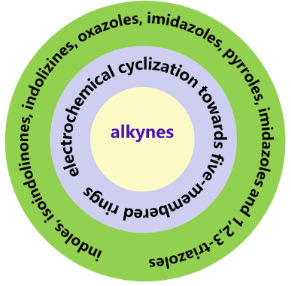
- , this protocol was an efficient and sustainable approach to synthesize 2,3′-biindolyl atropisomers and could be potentially applied in manufacture of functional materials, bioactive molecules and chiral ligands. Construction of isoindolinones and indolizines An electrochemical and copper-catalyzed
- along with the formation of Cu(OPiv) which was transformed to Cu(OPiv)2 by oxidation at the anode. Finally, the cyclization of E afforded target isoindolone 24. Notably, this reaction was the first example of electrochemical copper-catalyzed oxidative cyclization of alkyne which was enabled by C–H
- tandem C–H indolization of 2-alkynylanilines with 3-functionalized indoles. The electrochemical and copper-catalyzed annulation of benzamides and terminal alkynes formed isoindolones in high yields. Isoindolinone could be also afforded via electrochemical 5-exo-dig aza-cyclization of 2-alkynylbenzamides








C2 to C6 biobased carbonyl platforms for fine chemistry
Beilstein J. Org. Chem. 2025, 21, 2103–2172, doi:10.3762/bjoc.21.165
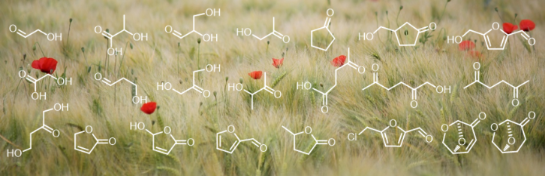
- MPa NH3 and 2 MPa H2. The reaction could be carried for 10 catalytic cycles without deactivation. Zhang developed a transition-metal copper-catalyzed chemoselective asymmetric hydrogenation of the carbonyl group in exocyclic α,β-unsaturated cyclopentanones. Chiral exocyclic allylic pentanols (a


Aryl iodane-induced cascade arylation–1,2-silyl shift–heterocyclization of propargylsilanes under copper catalysis
Beilstein J. Org. Chem. 2025, 21, 1984–1994, doi:10.3762/bjoc.21.154
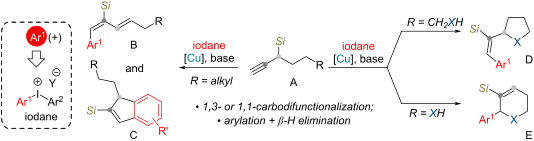
- , LV-1006, Riga, Latvia 10.3762/bjoc.21.154 Abstract A novel copper-catalyzed arylation strategy for propargylsilanes utilizing diaryl-λ3-iodanes has been developed, enabling a cascade sequence involving 1,2-silyl migration and heterocyclization. The β-silicon effect facilitates the formation of
- have been induced by addition of external halogen or selenium electrophiles and Brønsted acids. This encouraged us to develop a methodology involving a copper-catalyzed terminal alkyne arylation of propargylsilanes by diaryl-λ3-iodanes, followed by 1,2-silyl shift and terminated by nucleophile addition
- analogs, that needed longer reaction times to reach full conversion (4 h for R = Ph, Me; 20 h for R = 3,5-(NO2)2C6H3). Conclusion In this work we have reported copper-catalyzed arylation reactions of propargylsilanes, using iodanes as the electrophilic aryl synthon equivalents. For internal nucleophile


Preparation of a furfural-derived enantioenriched vinyloxazoline building block and exploring its reactivity
Beilstein J. Org. Chem. 2025, 21, 1737–1741, doi:10.3762/bjoc.21.136

- of products in copper-catalyzed 1,4-addition of phenylmagnesium bromide, Giese reaction with 2-iodopropane, Simmons‒Smith or Johnson–Corey–Chaykovsky cyclopropanation, hydroboration reaction with 9-BBN, and Diels–Alders reaction with Danishevsky diene. Gratifyingly, it was found that vinyloxazoline S


Azide–alkyne cycloaddition (click) reaction in biomass-derived solvent CyreneTM under one-pot conditions
Beilstein J. Org. Chem. 2025, 21, 1544–1551, doi:10.3762/bjoc.21.117
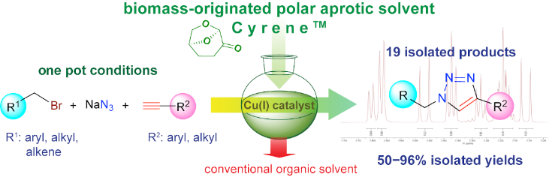
- , EtLev: ethyl levulinate, GVL: γ-valerolactone. Effect of the Cu source used in the click reaction of benzyl azide (1a, 1.15 mmol) and phenylacetylene (2a, 1 mmol). Reaction conditions: 2.5 mL CyreneTM, 1 mol % catalyst precursor, 0.1 mmol Et3N, T = 30 °C, t = 0.5 h. Copper-catalyzed azide–alkyne
- parentheses. Solvent recovery for the CuAAC reaction of 1a and 2a. Reaction conditions: 12.5 mL CyreneTM, 1 mol % CuI, 0.5 mmol Et3N, T = 30 °C, t = 2 h. Isolated yields are given in parentheses. Synthesis of CyreneTM (dihydrolevoglucosenone) from cellulose-based feeds via levoglucosenone (LG). Copper
- -catalyzed azide–alkyne cycloaddition of benzyl azide (1a) and phenylacetylene (2a) in various solvents. Effect of the water content on the CuAAC reaction of benzyl azide (1a) and phenylacetylene (2a).a Supporting Information Supporting Information File 8: Source of chemicals, detailed experimental


Copper catalysis: a constantly evolving field
Beilstein J. Org. Chem. 2025, 21, 1477–1479, doi:10.3762/bjoc.21.109
- papers (three Full Research Papers and two Letters) contributed by scientists from Asia and Europe. The breadth of topics and the geographical diversity of the authors reflect the global interest in copper catalysis today. The Review article by Yang and Fang focuses on copper-catalyzed yne–allylic
- community in that it elegantly reviews recent advances in allylation reactions of copper-catalyzed asymmetric allylic substitution reactions of chiral secondary alkylcopper species [5]. In summary, the contribution includes stereospecific transmetalations of organolithium and -boron compounds, copper
- , Burley, Watson, and co-workers present a new synthesis of germyl triazoles from germyl alkynes through a copper-catalyzed azide–alkyne cycloaddition (CuAAC) reaction [6]. The resulting Ge-substituted triazoles could be further diversified. For example, through chemoselective transition-metal-catalyzed
Recent advances in oxidative radical difunctionalization of N-arylacrylamides enabled by carbon radical reagents
Beilstein J. Org. Chem. 2025, 21, 1207–1271, doi:10.3762/bjoc.21.98
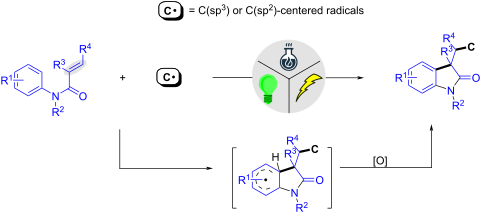
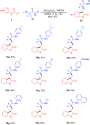
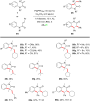
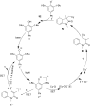
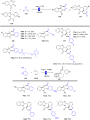
- either a 1,5-hydride shift to give D or a direct cyclization with the aryl ring via intermediate E, which upon deprotonation lead to the final products 16 and 17. In a 2016 study by Van der Eycken’s group (Scheme 9), an innovative copper-catalyzed alkylarylation of activated alkenes using isocyanides as














Synthetic approach to borrelidin fragments: focus on key intermediates
Beilstein J. Org. Chem. 2025, 21, 1135–1160, doi:10.3762/bjoc.21.91
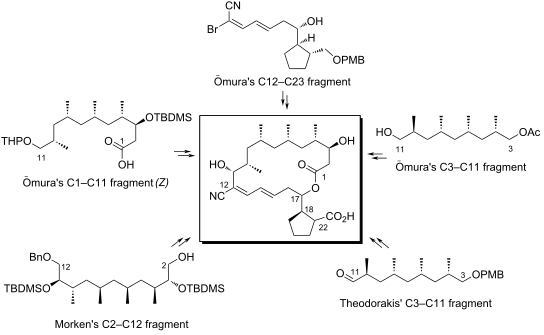
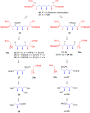
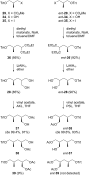
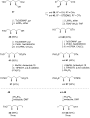
- the significant role of asymmetric catalysis in their strategy, utilizing a copper-catalyzed asymmetric 1,4-addition and a ruthenium-catalyzed asymmetric ketone hydrogenation. Fragment 61 was synthesized in 15% overall yield across 19 steps, while fragment 62b was achieved in 32% yield over 11 steps








Recent advances in controllable/divergent synthesis
Beilstein J. Org. Chem. 2025, 21, 890–914, doi:10.3762/bjoc.21.73
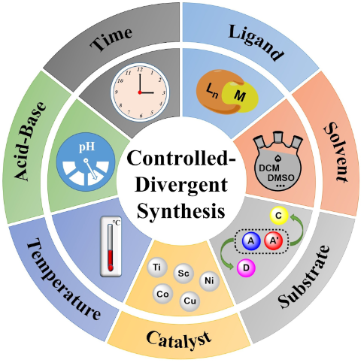
- team designed a new class of acetylene carbonate reagents and successfully applied them to copper-catalyzed decarboxylative amination/hydroamination sequences (Scheme 18) [48]. By controlling acidic and basic reaction conditions, the authors achieved the controllable synthesis of two types of
- intermediates undergo a propargylation process (Int-63, Int-64 to Int-65) followed by a proton elimination process to generate Int-66 (Int-5 to Int-66). Then, Int-66 undergoes an intramolecular amination through copper-catalyzed activation to form Int-68, and finally, 2-methylene-3-aminoindoline 69 is generated
- (such as indole substrates), Int-79 is more stable at −78 °C, favoring the formation of the mono-insertion product 86. In 2022, Wu and colleagues reported a novel methodology for constructing α-ketoamides 90 or 92 and amides 91 through copper-catalyzed dicarbonylation and monocarbonylation reactions







Cu–Bpin-mediated dimerization of 4,4-dichloro-2-butenoic acid derivatives enables the synthesis of densely functionalized cyclopropanes
Beilstein J. Org. Chem. 2025, 21, 877–883, doi:10.3762/bjoc.21.71
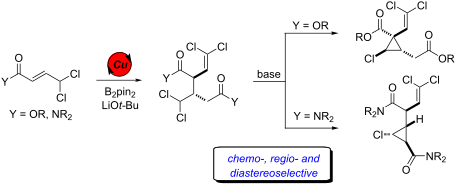
- carboboration of unsaturated hydrocarbons [1][2][3][4][5][6][7]. In the course of our investigation of the copper-catalyzed borylative coupling of alkynes with allylic gem-dichlorides [3], we observed that alkyl 4,4-dichloro-2-butenoates deviated from the general reactivity trend. While allylic gem-dichlorides
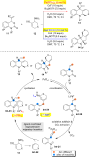
- mechanism for the copper-catalyzed diastereoselective dimerization of 4,4-dichoro-2-butenoic acid derivatives (Scheme 4). Initially, the LCu–pin complex generated through reaction between LCu–Ot-Bu and B2pin2 undergoes coordination and regioselective insertion into 1 giving rise to β-borylated organocopper
- functionalized cyclopropane scaffolds depending on the nature of the carboxylic acid derivative. Chemodivergent reactivity observed in copper-catalyzed borylative couplings of allylic gem-dichlorides. Cu-Bpin-mediated dimerization of 4,4-dichoro-2-butenoic acid derivatives. Control experiments. Proposed


Chitosan-supported CuI-catalyzed cascade reaction of 2-halobenzoic acids and amidines for the synthesis of quinazolinones
Beilstein J. Org. Chem. 2025, 21, 839–844, doi:10.3762/bjoc.21.67
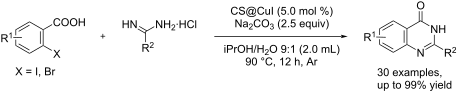
- higher reactivity than 2-bromobenzoic acid derivatives. Based on previously reported literature [7][13], a mechanism for the copper-catalyzed formation of quinazolinones is proposed in Scheme 3. Initially, the 2-halobenzoic acid 1 coordinates with CS@CuI to form intermediate I in the presence of Na2CO3
- approach features mild reaction conditions, broad substrate scope (30 examples), and high efficiency (up to 99% yield). In a word, this work presents a novel and efficient protocol for the construction of quinazolinones and offers significant research value. Copper-catalyzed cascade reaction of 2


Regioselective formal hydrocyanation of allenes: synthesis of β,γ-unsaturated nitriles with α-all-carbon quaternary centers
Beilstein J. Org. Chem. 2025, 21, 800–806, doi:10.3762/bjoc.21.63
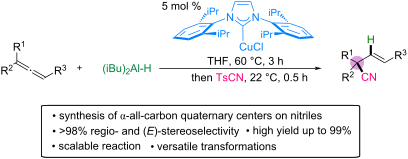
- Seeun Lim Teresa Kim Yunmi Lee Department of Chemistry, Kwangwoon University, Seoul 01897, Republic of Korea 10.3762/bjoc.21.63 Abstract This study introduces a highly selective hydrocyanation method based on copper-catalyzed hydroalumination of allenes with diisobutylaluminum hydride, followed
- 98% yield. Ortho-bromoaryl-substituted nitrile 3m also underwent tandem amidation and copper-catalyzed cyclization, efficiently producing lactam 9 in a 98% yield. Scheme 7 illustrates a plausible reaction mechanism based on previous studies [34]. The process begins with the formation of NHC–copper
- , as it minimizes the allylic strain between the R and R'' groups. Conclusion In this study, we developed a highly regio- and (E)-selective formal hydrocyanation protocol for allenes using a copper-catalyzed hydroalumination/cyanation sequence with DIBAL-H and tosyl cyanide. This approach offers mild




Copper-catalyzed domino cyclization of anilines and cyclobutanone oxime: a scalable and versatile route to spirotetrahydroquinoline derivatives
Beilstein J. Org. Chem. 2025, 21, 749–754, doi:10.3762/bjoc.21.58
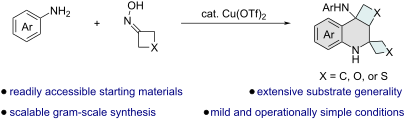
- report the copper-catalyzed synthesis of tetrahydroquinoline derivatives via a domino reaction of aniline with cyclobutanone oxime. This method demonstrates a selective approach for generating bioactive tetrahydroquinoline scaffolds, which have broad applications in pharmaceutical chemistry. The reaction
- cyclobutanone oxime using a copper-catalyzed reaction under ambient air conditions (Scheme 1c). Results and Discussion With these considerations in mind, we explored the feasibility of synthesizing cyclobutane-fused spirotetrahydroquinolines (STHQs) through the reaction of arylamines with cyclobutanone oxime
- to generate an enamine intermediate. Subsequently, an intermolecular cyclization occurs between the enamine and imine intermediates, ultimately yielding the final target product through an aromatization process (Scheme 4). Conclusion In summary, we have developed an efficient and practical copper




Recent advances in allylation of chiral secondary alkylcopper species
Beilstein J. Org. Chem. 2025, 21, 639–658, doi:10.3762/bjoc.21.51
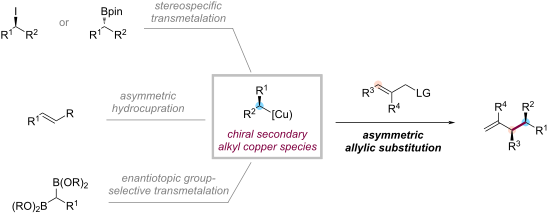
- attention due to their unique properties in stereoselective allylic substitution. This review highlights recent advances in copper-catalyzed asymmetric allylic substitution reactions with chiral secondary alkylcopper species, encompassing several key strategies for their generation: stereospecific
- -catalyzed allylic substitution reactions [20]. To address these limitations, copper-catalyzed processes have emerged as a promising alternative. Copper-catalyzed allylic substitutions are distinguished by their unique inner-sphere mechanistic pathway, which enables the incorporation of hard, non-stabilized
- nucleophiles 5 that have conjugate acids with pKa values greater than 25 such as organolithium, organomagnesium, organozinc, and organozirconium reagents. This crucial distinction effectively expanded the scope of allylic substitution reactions beyond traditional boundaries. The evolution of copper-catalyzed





Total synthesis of (±)-simonsol C using dearomatization as key reaction under acidic conditions
Beilstein J. Org. Chem. 2025, 21, 601–606, doi:10.3762/bjoc.21.47
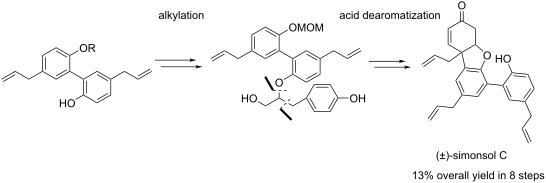
- alcohol 19 was isolated in 89% yield. The copper-catalyzed replacement of the bromine substituent in 19 with a hydroxy group was achieved in the presence of a catalytic amount of oxalamide ligand I [13]. This transformation is critical for enabling further functionalization and the reaction conditions


Synthesis of N-acetyl diazocine derivatives via cross-coupling reaction
Beilstein J. Org. Chem. 2025, 21, 490–499, doi:10.3762/bjoc.21.36
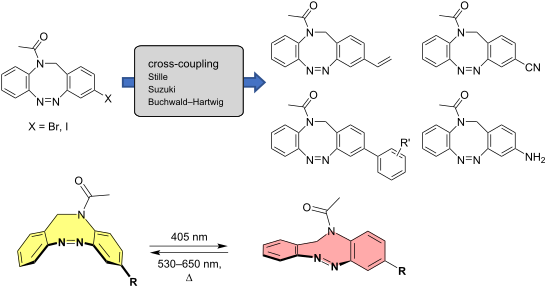
- provided the corresponding amino-substituted N-acetyl diazocine 21 (Scheme 1). Another option for carbon–heteroatom bond formation reactions are copper-catalyzed Ullmann-type reactions, which have already been applied to the parent diazocine [36][37]. The attempted synthesis of azide-functionalized N


Streamlined modular synthesis of saframycin substructure via copper-catalyzed three-component assembly and gold-promoted 6-endo cyclization
Beilstein J. Org. Chem. 2025, 21, 226–233, doi:10.3762/bjoc.21.14
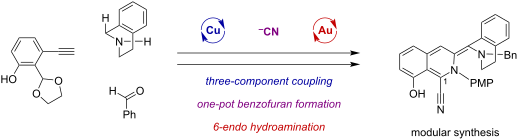
- involvement of a fluorescent intermediate in the cascade synthetic process. Keywords: cascade reactions; copper-catalyzed three-component coupling; gold-mediated 6-endo hydroamination; tandem cyclizations; tetrahydroisoquinoline alkaloids; Introduction The bis-tetrahydroisoquinoline (THIQ) alkaloid family