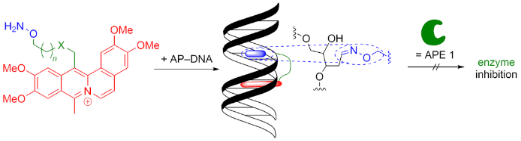
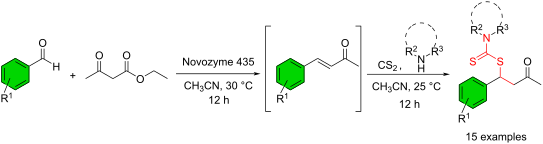
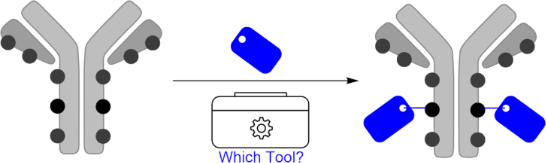
Search for "enzyme" in Full Text gives 553 result(s) in Beilstein Journal of Organic Chemistry. Showing first 200.
Beilstein J. Org. Chem. 2025, 21, 2553–2570, doi:10.3762/bjoc.21.198
Graphical Abstract
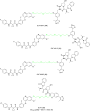
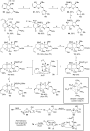
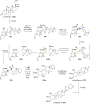
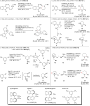
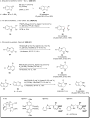
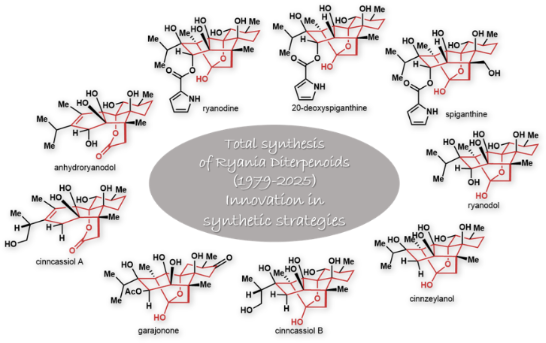
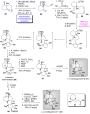
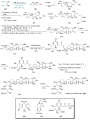
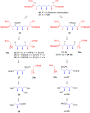
Scheme 1: Representative Ryania diterpenoids and their derivatives.
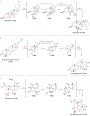
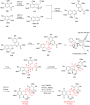
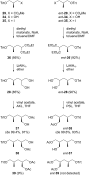
Scheme 2: Deslongchamps’s total synthesis of ryanodol (4).
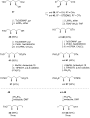
Scheme 3: Deslongchamps’s total synthesis of 3-epi-ryanodol (5).
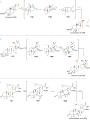
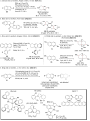
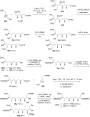
Scheme 4: Inoue’s total synthesis of ryanodol (4).
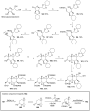
Scheme 5: Inoue’s total synthesis of ryanodine (1) from ryanodol (4).
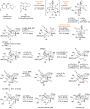
Scheme 6: Inoue’s total synthesis of cinncassiol A (9), cinncassiol B (7), cinnzeylanol (6), and 3-epi-ryanod...
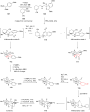
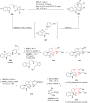
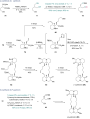
Scheme 7: Reisman’s total synthesis of (+)-ryanodol (4).
Scheme 8: Reisman’s total synthesis of (+)-ryanodine (1) and (+)-20-deoxyspiganthine (2).
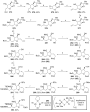
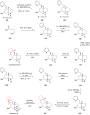
Scheme 9: Micalizio’s formal total synthesis of ryanodol (4).
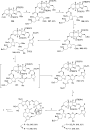
Scheme 10: Zhao’s total synthesis of garajonone (8).
Scheme 11: Zhao’s formal total synthesis of ryanodol (4) and ryanodine (1).
Beilstein J. Org. Chem. 2025, 21, 2489–2497, doi:10.3762/bjoc.21.191
Graphical Abstract
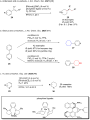
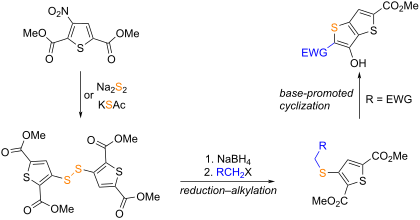
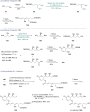
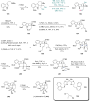
Scheme 1: The synthetic routes to 3-hydroxy-substituted TT derivatives.
Scheme 2: The present retrosynthetic plan for constructing TT molecules.
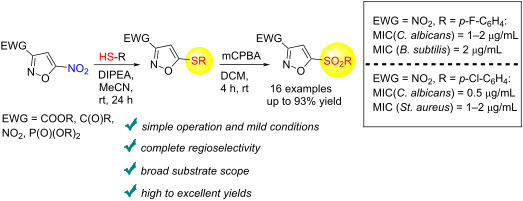
Scheme 3: An attempt to nucleophilically substitute the NO2 group in ester 1.
Scheme 4: The reaction of ester 1 with potassium thioacetate.
Scheme 5: A probable mechanism for the formation of compounds 2 and 3.
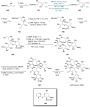
Scheme 6: The synthesis of 3-(alkylthio)thiophene-2,5-dicarboxylates 4–6, yields, and scope of products. *Fro...
Scheme 7: The synthesis of TT derivatives, yields, and scope of products. Conditions: i) LiH (5 equiv), DMF, ...
Beilstein J. Org. Chem. 2025, 21, 2283–2296, doi:10.3762/bjoc.21.174
Graphical Abstract
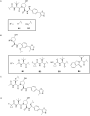
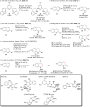
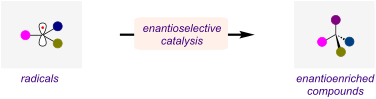
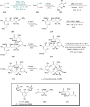
Figure 1: Methods of radical generation (A) and general types of radical reactions (B).
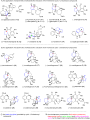
Figure 2: Chiral catalysis in enantioselective radical chemistry [13-37].
Scheme 1: Diastereo- and enantioselective additions of nucleophilic radicals to N-enoyloxazolidinone and pyrr...
Scheme 2: Organocatalyzed formal [3 + 2] cycloadditions affording substituted pyrrolidines.
Scheme 3: Synthesis of a hexacyclic compound via an organocatalyzed enantioselective polyene cyclization.
Scheme 4: Nickel-catalyzed asymmetric cross-coupling reactions.
Scheme 5: Chiral cobalt–porphyrin metalloradical-catalyzed radical cyclization reactions.
Scheme 6: Enantioselective radical chaperone catalysis.
Scheme 7: Enantioselective radical addition by decatungstate/iminium catalysis.
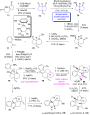
Scheme 8: An ene-reductase-catalyzed photoenzymatic enantioselective radical cyclization/enantioselective HAT...
Scheme 9: Photoenzymatic oxidative C(sp3)–C(sp3) coupling reactions between organoboron compounds and amino a...
Scheme 10: Electrochemical α-alkenylation reactions of 2-acylimidazoles catalyzed by a chiral-at-rhodium Lewis...
Scheme 11: Regio- and enantioselective electrochemical reactions of silyl polyenolates catalyzed by a chiral n...
Beilstein J. Org. Chem. 2025, 21, 2103–2172, doi:10.3762/bjoc.21.165
Graphical Abstract
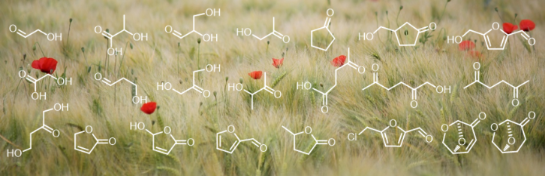
Figure 1: C2–C6 biobased carbonyl building blocks.
Scheme 1: Proposed (2 + 2) route to glycolaldehyde and glycolic acid from erythritol by Cu/AC catalyst (AC = ...
Scheme 2: Reductive amination of GCA.
Scheme 3: N-Formylation of secondary amines by reaction with GCA.
Scheme 4: Synthesis and conversion of hydroxy acetals to cyclic acetals.
Scheme 5: Synthesis of 3-(indol-3-yl)-2,3-dihydrofurans via three-component reaction of glycolaldehyde, indol...
Scheme 6: BiCl3-catalyzed synthesis of benzo[a]carbazoles from 2-arylindoles and α-bromoacetaldehyde ethylene...
Scheme 7: Cu/NCNSs-based conversion of glycerol to glycolic acid and other short biobased acids.
Scheme 8: E. coli-based biotransformation of C1 source molecules (CH4, CO2 and CO) towards C2 glycolic acid.
Scheme 9: N-Formylation of amines with C2 (a) or C3 (b) biomass-based feedstocks.
Scheme 10: Methods for the formation of propanoic acid (PA) from lactic acid (LA).
Scheme 11: Co-polymerization of biobased lactic acid and glycolic acid via a bicatalytic process.
Scheme 12: Oxidation of α-hydroxy acids by tetrachloroaurate(III) in acetic acid–sodium acetate buffer medium.
Figure 2: Selective catalytic pathways for the conversion of lactic acid (LA).
Scheme 13: Synthesis of 1,3-PDO via cross-aldol reaction between formaldehyde and acetaldehyde to 3-hydroxypro...
Scheme 14: Hydrothermal conversion of 1,3-dihydroxy-2-propane and 2,3-dihydroxypropanal to methylglyoxal.
Scheme 15: FLS-catalyzed formose reaction to synthesize GA and DHA.
Scheme 16: GCA and DHA oxidation products of glycerol and isomerization of GCA to DHA under flow conditions us...
Scheme 17: Acid-catalyzed reactions of DHA with alcohols.
Scheme 18: Synthesis of dihydroxyacetone phosphate from dihydroxyacetone.
Scheme 19: Bifunctional acid–base catalyst DHA conversion into lactic acid via pyruvaldehyde or fructose forma...
Scheme 20: Catalytic one-pot synthesis of GA and co-synthesis of formamides and formates from DHA.
Scheme 21: (a) Synthesis of furan derivatives and (b) synthesis of thiophene derivative by cascade [3 + 2] ann...
Scheme 22: Brønsted acidic ionic liquid catalyzed synthesis of benzo[a]carbazole from renewable acetol and 2-p...
Scheme 23: Asymmetric hydrogenation of α-hydroxy ketones to 1,2-diols.
Scheme 24: Synthesis of novel 6-(substituted benzylidene)-2-methylthiazolo [2,3-b]oxazol-5(6H)-one from 1-hydr...
Scheme 25: ʟ-Proline-catalyzed synthesis of anti-diols from hydroxyacetone and aldehydes.
Scheme 26: C–C-bond-formation reactions of a biomass-based feedstock aromatic aldehyde (C5) and hydroxyacetone...
Scheme 27: Ethanol upgrading to C4 bulk chemicals via the thiamine (VB1)-catalyzed acetoin condensation.
Scheme 28: One-pot sequential chemoenzymatic synthesis of 2-aminobutane-1,4-diol and 1,2,4-butanetriol via 1,4...
Scheme 29: Synthesis of 1,4-dihydroxybutan-2-one by microbial transformation.
Scheme 30: Conversion of polyols by [neocuproine)Pd(OAc)]2(OTf)2] to α-hydroxy ketones.
Scheme 31: Chemoselective oxidation of alcohols with chiral palladium-based catalyst 2.
Scheme 32: Electrochemical transformation of furfural to 5-hydroxy-2(5H)-furanone (HFO).
Scheme 33: Selective hydrodeoxygenation of HFO and oxidation to γ-butyrolactone (GBL).
Scheme 34: Photosensitized oxygenation of furan towards HFO via ozonide intermediates.
Scheme 35: Conversion of furfural to HFO and MAN by using mesoporous carbon nitride (SGCN) as photocatalyst.
Scheme 36: Synthesis of HFO from furan derivatives.
Scheme 37: Photooxidation of furfural to 5-hydroxy-2(5H)-furanone (HFO).
Scheme 38: Synthesis of Friedel–Crafts indole adduct from HFO.
Scheme 39: Conversion of HFO to α,γ-substituted chiral γ-lactones.
Scheme 40: Tautomeric transformation of HFO to formylacrylic acid.
Scheme 41: Hydrolysis of HFO to succinic acid in aqueous solution.
Scheme 42: Substitution and condensation reactions of 5-hydroxy-2(5H)-furanone (HFO).
Scheme 43: (a) Conversion of HFO towards valuable C4 chemicals and (b) anodic oxidation of 5-hydroxy-2(5H)-fur...
Figure 3: Conversion of HFO towards other natural and synthetic substances.
Scheme 44: Conversion of furfural to maleic anhydride (reaction a: VOx/Al2O3; reaction b: VPO).
Scheme 45: Conversion of furfural into succinic acid.
Scheme 46: Electro‑, photo‑, and biocatalysis for one-pot selective conversions of furfural into C4 chemicals.
Scheme 47: Production route of furfural from hemicellulose.
Scheme 48: Mechanism for xylose dehydration to furfural through a choline xyloside intermediate.
Scheme 49: Conversion of furfural to furfuryl alcohol and its derivatives.
Scheme 50: Conversion of furfural to furfuryl alcohol and 3-(2-furyl)acrolein.
Scheme 51: The aerobic oxidative condensation of biomass-derived furfural and linear alcohols.
Scheme 52: The single-step synthesis of 2-pentanone from furfural.
Scheme 53: Electrocatalytic coupling reaction of furfural and levulinic acid.
Scheme 54: Conversion of furfural to m-xylylenediamine.
Scheme 55: Conversion of furfural to tetrahydrofuran-derived amines.
Scheme 56: Formation of trans-4,5-diamino-cyclopent-2-enones from furfural.
Scheme 57: Production of pyrrole and proline from furfural.
Scheme 58: Synthesis of 1‑(trifluoromethyl)-8-oxabicyclo[3.2.1]oct-3-en-2-ones from furfural.
Scheme 59: Conversion of furfural to furfural-derived diacids.
Scheme 60: A telescope protocol derived from furfural and glycerol.
Scheme 61: A tandem cyclization of furfural and 5,5-dimethyl-1,3-cyclohexanedione.
Scheme 62: A Ugi four-component reaction to construct furfural-based polyamides.
Scheme 63: One-pot synthesis of γ-acyloxy-Cy7 from furfural.
Scheme 64: Dimerization–Piancatelli sequence toward humins precursors from furfural.
Scheme 65: Conversion of furfural to CPN.
Scheme 66: Synthesis of jet fuels range cycloalkanes from CPN and lignin-derived vanillin.
Scheme 67: Solar-energy-driven synthesis of high-density biofuels from CPN.
Scheme 68: Reductive amination of CPN to cyclopentylamine.
Scheme 69: Asymmetric hydrogenation of C=O bonds of exocyclic α,β-unsaturated cyclopentanones.
Scheme 70: Preparation of levulinic acid via the C5 route (route a) or C6 route (routes b1 and b2).
Scheme 71: Mechanism of the rehydration of HMF to levulinic acid and formic acid.
Scheme 72: Important levulinic acid-derived chemicals.
Scheme 73: Direct conversion of levulinic acid to pentanoic acid.
Scheme 74: Catalytic aerobic oxidation of levulinic acid to citramalic acid.
Scheme 75: Conversion of levulinic acid to 1,4-pentanediol (a) see ref. [236]; b) see ref. [237]; c) see ref. [238]; d) see r...
Scheme 76: Selective production of 2-butanol through hydrogenolysis of levulinic acid.
Scheme 77: General reaction pathways proposed for the formation of 5MPs from levulinic acid.
Scheme 78: Selective reductive amination of levulinic acid to N-substituted pyrroles.
Scheme 79: Reductive amination of levulinic acid to chiral pyrrolidinone.
Scheme 80: Reductive amination of levulinic acid to non-natural chiral γ-amino acid.
Scheme 81: Nitrogen-containing chemicals derived from levulinic acid.
Scheme 82: Preparation of GVL from levulinic acid by dehydration and hydrogenation.
Scheme 83: Ruthenium-catalyzed levulinic acid to chiral γ-valerolactone.
Scheme 84: Catalytic asymmetric hydrogenation of levulinic acid to chiral GVL.
Scheme 85: Three steps synthesis of ε-caprolactam from GVL.
Scheme 86: Multistep synthesis of nylon 6,6 from GVL.
Scheme 87: Preparation of MeGVL by α-alkylation of GVL.
Scheme 88: Ring-opening polymerization of five-membered lactones.
Scheme 89: Synthesis of GVL-based ionic liquids.
Scheme 90: Preparation of butene isomers from GVL under Lewis acid conditions.
Scheme 91: Construction of C5–C12 fuels from GVL over nano-HZSM-5 catalysts.
Scheme 92: Preparation of alkyl valerate from GVL via ring opening/reduction/esterification sequence.
Scheme 93: Construction of 4-acyloxypentanoic acids from GVL.
Scheme 94: Synthesis of 1,4-pentanediol (PDO) from GVL.
Scheme 95: Construction of novel cyclic hemiketal platforms via self-Claisen condensation of GVL.
Scheme 96: Copper-catalyzed lactamization of GVL.
Figure 4: Main scaffolds obtained from HMF.
Scheme 97: Biginelli reactions towards HMF-containing dihydropyrimidinones.
Scheme 98: Hantzsch dihydropyridine synthesis involving HMF.
Scheme 99: The Kabachnik–Fields reaction involving HMF.
Scheme 100: Construction of oxazolidinone from HMF.
Scheme 101: Construction of rhodamine-furan hybrids from HMF.
Scheme 102: A Groebke–Blackburn–Bienaymé reaction involving HMF.
Scheme 103: HMF-containing benzodiazepines by [4 + 2 + 1] cycloadditions.
Scheme 104: Synthesis of fluorinated analogues of α-aryl ketones.
Scheme 105: Synthesis of HMF derived disubstituted γ-butyrolactone.
Scheme 106: Functionalized aromatics from furfural and HMF.
Scheme 107: Diels–Alder adducts from HMF or furfural with N-methylmaleimide.
Scheme 108: Pathway of the one-pot conversion of HMF into phthalic anhydride.
Scheme 109: Photocatalyzed preparation of humins (L-H) from HMF mixed with spoiled HMF residues (LMW-H) and fur...
Scheme 110: Asymmetric dipolar cycloadditions on HMF.
Scheme 111: Dipolar cycloadditions of HMF based nitrones to 3,4- and 3,5-substituted isoxazolidines.
Scheme 112: Production of δ-lactone-fused cyclopenten-2-ones from HMF.
Scheme 113: Aza-Piancatelli access to aza-spirocycles from HMF-derived intermediates.
Scheme 114: Cross-condensation of furfural, acetone and HMF into C13, C14 and C15 products.
Scheme 115: Base-catalyzed aldol condensation/dehydration sequences from HMF.
Scheme 116: Condensation of HMF and active methylene nitrile.
Scheme 117: MBH reactions involving HMF.
Scheme 118: Synthesis of HMF-derived ionic liquids.
Scheme 119: Reductive amination/enzymatic acylation sequence towards HMF-based surfactants.
Scheme 120: The formation of 5-chloromethylfurfural (CMF).
Scheme 121: Conversion of CMF to HMF, levulinic acid, and alkyl levulinates.
Scheme 122: Conversion of CMF to CMFCC and FDCC.
Scheme 123: Conversion of CMF to BHMF.
Scheme 124: Conversion of CMF to DMF.
Scheme 125: CMF chlorine atom substitutions toward HMF ethers and esters.
Scheme 126: Introduction of carbon nucleophiles in CMF.
Scheme 127: NHC-catalyzed remote enantioselective Mannich-type reactions of CMF.
Scheme 128: Conversion of CMF to promising biomass-derived dyes.
Scheme 129: Radical transformation of CMF with styrenes.
Scheme 130: Synthesis of natural herbicide δ-aminolevulinic acid from CMF.
Scheme 131: Four step synthesis of the drug ranitidine from CMF.
Scheme 132: Pd/CO2 cooperative catalysis for the production of HHD and HXD.
Scheme 133: Different ruthenium (Ru) catalysts for the ring-opening of 5-HMF to HHD.
Scheme 134: Proposed pathways for preparing HXD from HMF.
Scheme 135: MCP formation and uses.
Scheme 136: Cu(I)-catalyzed highly selective oxidation of HHD to 2,5-dioxohexanal.
Scheme 137: Synthesis of N‑substituted 3‑hydroxypyridinium salts from 2,5-dioxohexanal.
Scheme 138: Ru catalyzed hydrogenations of HHD to 1,2,5-hexanetriol (a) see ref. [396]; b) see ref. [397]).
Scheme 139: Aviation fuel range quadricyclanes produced by HXD.
Scheme 140: Synthesis of HDGK from HXD and glycerol as a chain extender.
Scheme 141: Synthesis of serinol pyrrole from HXD and serinol.
Scheme 142: Synthesis of pyrroles from HXD and nitroarenes.
Scheme 143: Two-step production of PX from cellulose via HXD.
Scheme 144: Preparation of HCPN from HMF via hydrogenation and ring rearrangement.
Scheme 145: Suggested pathways from HMF to HCPN.
Scheme 146: α-Alkylation of HCPN with ethylene gas.
Scheme 147: Synthesis of 3-(hydroxymethyl)cyclopentylamine from HMF via reductive amination of HCPN.
Scheme 148: Production of LGO and Cyrene® from biomass.
Scheme 149: Synthesis of HBO from LGO and other applications.
Scheme 150: Construction of m-Cyrene® homopolymer.
Scheme 151: Conversion of Cyrene® to THFDM and 1,6-hexanediol.
Scheme 152: RAFT co-polymerization of LGO and butadienes.
Scheme 153: Polycondensation of HO-LGOL and diols with dimethyl adipate.
Scheme 154: Self-condensation of Cyrene® and Claisen–Schmidt reactions.
Scheme 155: Synthesis of 5-amino-2-(hydroxymethyl)tetrahydropyran from Cyrene®.
Beilstein J. Org. Chem. 2025, 21, 2085–2102, doi:10.3762/bjoc.21.164
Graphical Abstract
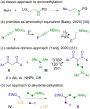
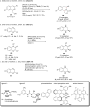
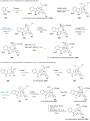
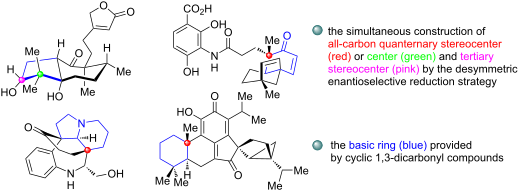
Figure 1: Several representative terpenoid and alkaloid natural products synthesized by applying desymmetric ...
Figure 2: Selected terpenoid and alkaloid natural products synthesized by applying desymmetric enantioselecti...
Scheme 1: The total synthesis of (+)-aplysiasecosterol A (6) by Li [14].
Scheme 2: The total synthesis of (−)-cyrneine A by Han [31].
Scheme 3: The total syntheses of three cyrneine diterpenoids by Han [31,32].
Scheme 4: The total synthesis of (−)-hamigeran B and (−)-4-bromohamigeran B by Han [51].
Scheme 5: The total synthesis of (+)-randainin D by Baudoin [53].
Scheme 6: The total synthesis of (−)-hunterine A and (−)-aspidospermidine by Stoltz [58].
Scheme 7: The total synthesis of (+)-toxicodenane A by Han [65,66].
Scheme 8: The formal total synthesis of (−)-conidiogeone B and total synthesis of (−)-conidiogeone F by Lee a...
Scheme 9: The total syntheses of four conidiogenones natural products by Lee and Han [72].
Scheme 10: The total synthesis of (−)-platensilin by Lou and Xu [82].
Scheme 11: The total synthesis of (−)-platencin and (−)-platensimycin by Lou and Xu [82].
Scheme 12: The total synthesis of (+)-isochamaecydin and (+)-chamaecydin by Han [86].
Beilstein J. Org. Chem. 2025, 21, 1932–1963, doi:10.3762/bjoc.21.151
Graphical Abstract
Scheme 1: General mechanism of a lipase-catalyzed esterification.
Scheme 2: Shishido’s synthesis of (−)-xanthorrhizol (4) and (+)-heliannuol D (8).
Scheme 3: Shishido’s synthesis of a) (−)-heliannuol A (15) and b) heliannuol G (20) and heliannuol H (21).
Scheme 4: Deska’s synthesis of hyperione A (30) and ent-hyperione B (31).
Scheme 5: Huang’s synthesis of (+)-brazilin (37).
Scheme 6: Shishido’s synthesis of (−)-heliannuol D (42) and (+)-heliannuol A (43).
Scheme 7: Chênevert’s synthesis of (S)-α-tocotrienol (49).
Scheme 8: Kita’s synthesis of monoester 53.
Scheme 9: Kita’s synthesis of fredericamycin A (60).
Scheme 10: Takabe’s synthesis of (E)-3,7-dimethyl-2-octene-1,8-diol (64).
Scheme 11: Takabe’s synthesis of (18S)-variabilin (70).
Scheme 12: Kawasaki’s synthesis of (S)-Rosaphen (74) and (R)-Rosaphen (75).
Scheme 13: Tokuyama’s synthesis of a) (−)-petrosin (84) and b) (+)-petrosin (86).
Scheme 14: Fukuyama’s synthesis of leustroducsin B (96).
Scheme 15: Nanda’s synthesis of a) fragment 100, b) fragment 106 and c) (−)-rasfonin (109).
Scheme 16: Davies’ synthesis of (+)-pilocarpine (115) and (+)-isopilocarpine (116).
Scheme 17: Ōmura’s synthesis of salinosporamide A (125).
Scheme 18: Kang’s synthesis of ʟ-cladinose (124) and its derivative.
Scheme 19: Kang’s preparation of fragment 139.
Scheme 20: Kang’s synthesis of azithromycin (149).
Scheme 21: Kang’s synthesis of (−)-dysiherbaine (156).
Scheme 22: Kang’s synthesis of (−)-kaitocephalin (166).
Scheme 23: Kang’s synthesis of laidlomycin (180).
Scheme 24: Snyder’s synthesis of arboridinine (190).
Scheme 25: Ma’s synthesis of (+)-alstrostine G (203).
Scheme 26: Trost’s synthesis of (−)-18-epi-peloruside A (215).
Scheme 27: Lindel’s synthesis of (–)-dihydroraputindole (223).
Scheme 28: Iwata’s synthesis of a) (−)-talaromycin B (232) and b) (+)-talaromycin A (235).
Scheme 29: Cook’s synthesis of a) (−)-vincamajinine (240) and b) (−)-11-methoxy-17-epivincamajine (245).
Scheme 30: Cook’s synthesis of (+)-dehydrovoachalotine (249) and voachalotine (250).
Scheme 31: Cook’s synthesis of a) (−)-12-methoxy-Nb-methylvoachalotine (257) and b) (+)-polyneuridine, macusin...
Scheme 32: Trauner’s synthesis of stephadiamine (273).
Scheme 33: Garg’s synthesis of (–)-ψ-akuammigine (285).
Scheme 34: Ding’s synthesis of (+)-18-benzoyldavisinol (293) and (+)-davisinol (294).
Beilstein J. Org. Chem. 2025, 21, 1924–1931, doi:10.3762/bjoc.21.150
Graphical Abstract
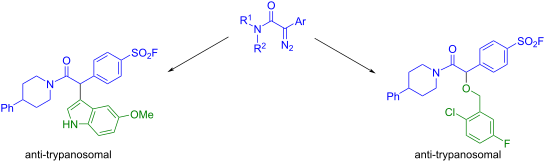
Figure 1: Envisaged connective synthesis of reactive probes 3 bearing S(VI) electrophilic warheads (WH). Dive...
Scheme 1: Synthesis of α-diazoamide substrates D1–5 of general structure 2 bearing S(VI) electrophiles. Panel...
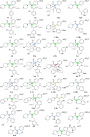
Figure 2: Structures and reactions of co-substrates. Panel A: structures of the 16 selected co-substrates C1–...
Figure 3: Structures and structure elucidation of intermolecular reaction products. The relevant reactivity m...
Beilstein J. Org. Chem. 2025, 21, 1854–1863, doi:10.3762/bjoc.21.144
Graphical Abstract
Figure 1: Schematic representation of the modulation of MOF pore environments. A) de novo synthesis of severa...
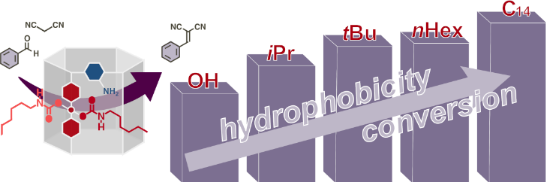
Figure 2: A) Schematic representation of the reaction of KSU-1 with aliphatic isocyanates and the estimated c...
Scheme 1: Probable mechanisms for the Knoevenegel condensation reaction between benzaldehyde and malononitril...
Figure 3: A) Schematic representation of the reaction between benzaldehyde and malononitrile to form benzylid...
Figure 4: Graphical representation of the Knoevenagel catalysis results. A) Comparison of the reaction in tol...
Figure 5: Left: comparison of BMN and HPMM protons in 1H NMR spectra. Note that the peaks corresponding to HP...
Beilstein J. Org. Chem. 2025, 21, 1757–1785, doi:10.3762/bjoc.21.139
Graphical Abstract
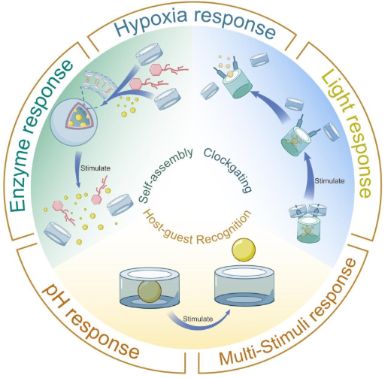
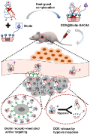
Figure 1: Schematic diagram of drug-controlled release mechanisms based on aromatic macrocycles.
Figure 2: Chemical structure of a) calix[n]arene (m = 1,3,5), and b) pillar[n]arene (m = 1,2,3).
Figure 3: Changes in pH conditions cause the release of drugs from CA8 host–guest complexes [101]. Figure 3 was adapted wi...
Figure 4: The illustration of the pH-mediated 1:1 complex formation between the host and guest molecules in a...
Figure 5: Illustration of the pH-responsive self-assembly of mannose-modified CA4 into micelles and the subse...
Figure 6: Illustration of the assembly of supramolecular prodrug nanoparticles from WP6 and DOX-derived prodr...
Figure 7: Illustration of the formation of supramolecular vesicles and their pH-dependent drug release [93]. Figure 7 was...
Figure 8: Schematic illustration of the application of the multifunctional nanoplatform CyCA@POPD in combined...
Figure 9: Illustration of the photolysis of an amphiphilic assembly via CA-induced aggregation [114]. Figure 9 was reprint...
Figure 10: Schematic illustration of drug release controlled by the photo-responsive macroscopic switch based ...
Figure 11: Schematic illustration of the formation process of Azo-SMX and its photoisomerization reaction unde...
Figure 12: Schematic illustration of the enzyme-responsive behavior of supramolecular polymers [95]. Figure 12 was used wit...
Figure 13: Schematic illustration of the amphiphilic assembly of SC4A and its enzyme-responsive applications [119]. ...
Figure 14: Stimuli-responsive nanovalves based on MSNs and choline-SC4A[2]pseudorotaxanes, MSN-C1 with ester-l...
Figure 15: A schematic diagram showing the construction of a supramolecular system by host–guest interaction b...
Figure 16: A schematic diagram showing the formation of the host–guest complex DOX@Biotin-SAC4A by biotin modi...
Figure 17: A schematic diagram showing the self-assembly of CA4 into a hypoxia-responsive peptide hydrogel, wh...
Figure 18: Schematic illustration of the formation process of Lip@GluAC4A and the release of Lip under hypoxic...
Figure 19: Schematic illustration of the construction of a supramolecular vesicle based on the host–guest comp...
Figure 20: Schematic illustration of WP6 self-assembly at pH > 7, and the stimulus-responsive drug release beh...
Figure 21: Schematic illustration of the formation of supramolecular vesicles based on the WP5⊃G super-amphiph...
Figure 22: Schematic illustrations of the host–guest recognition of QAP5⊃SXD, the formation of the nanoparticl...
Figure 23: Schematic illustration of the activation of T-SRNs by acid, alkali, or Zn2+ stimuli to regulate the...
Figure 24: Illustration of the triggered release of BH from CP[5]A@MSNs-Q NPs in response to a drop in pH or a...
Figure 25: Illustration of the supramolecular amphiphiles TPENCn@1 (n = 6 and 12) self-assembling with disulfi...
Beilstein J. Org. Chem. 2025, 21, 1192–1200, doi:10.3762/bjoc.21.96
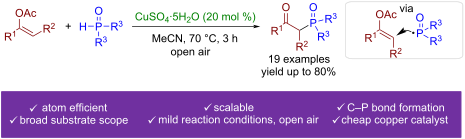
Graphical Abstract
Scheme 1: Recent approaches for the synthesis of β-ketophosphonates by the oxyphosphorylation of unsaturated ...
Scheme 2: The scope of the discovered copper(II)-mediated phosphorylation of enol acetates.
Scheme 3: Gram-scale synthesis of 3a.
Scheme 4: Control experiments.
Scheme 5: Proposed mechanism for copper(II) mediated phosphorylation of enol acetates.
Beilstein J. Org. Chem. 2025, 21, 1135–1160, doi:10.3762/bjoc.21.91
Graphical Abstract
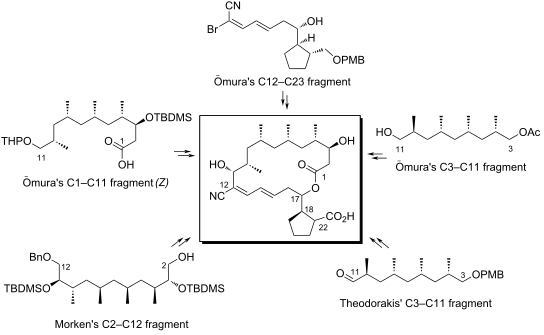
Figure 1: Chemical structure of borrelidin (1).
Scheme 1: Synthetic strategy for Morken’s C2–C12 intermediate 20 as reported by Uguen et al. [41].
Scheme 2: Preparation of monoacetates 37 and ent-38 by Uguen et al. [41].
Scheme 3: Preparation of sulfones 27 and ent-27 by Uguen et al. [41].
Scheme 4: Attempts to couple sulfones 27 and ent-27 with epoxides 23a–c reported by Uguen et al. [41].
Scheme 5: Modified synthetic plan for Morken’s C2–C12 intermediate by Uguen [41].
Scheme 6: Revised synthetic strategy for Morken’s C2–C12 intermediate 20 by Uguen [41].
Scheme 7: Iterative synthesis of polydeoxypropionates developed by Zhou et al. [40].
Scheme 8: Application of iterative synthesis of polydeoxypropionate to construct the C3–C11 fragment 60 of bo...
Scheme 9: Retrosynthetic analysis of borrelidin by Yadav et al. [39].
Scheme 10: Two-carbon homologation of precursor 66 in the synthesize C1–C11 fragment 61 of borrelidin [39].
Scheme 11: Synthesis of the C1–C11 fragment 61 of borrelidin from monoalcohol 65 [39].
Scheme 12: Synthetic plan for Theodorakis’ C3–C11 fragment 82 of borrelidin by Laschat et al. [38].
Scheme 13: Synthesis of Theodorakis’ C3–C11 fragment 82 from compound 88 [38].
Scheme 14: Retrosynthesis of 61 and 62b by Minnaard and Madduri [37].
Scheme 15: Synthesis of intermediate 98 by Minnaard and Madduri [37].
Scheme 16: Synthesis of Ōmura’s C1–C11 fragment 61 by Minnaard and Madduri [37].
Scheme 17: Synthesis of fragment 62b of borrelidin as proposed by Minnaard and Madduri [37].
Scheme 18: Iterative directed allylation for the synthesis of deoxypropionates by Herber and Breit [33].
Scheme 19: Iterative copper-mediated directed allyl substitution for the synthesis of Theodorakis’ C3–C11 frag...
Scheme 20: Retrosynthesis of the C3–C17 fragment of borrelidin by Iqbal and co-workers [35].
Scheme 21: Synthesis of key intermediates 137 and 147 for the synthesis of the C3–C17 fragment of borrelidin.
Scheme 22: Synthesis of the C3–C17 fragment 150a,b of borrelidin.
Scheme 23: Synthesis of the C11–C15 fragment 155a of borrelidin.
Scheme 24: Macrocyclization of borrelidin model compounds 155a and 155b using ring-closing metathesis.
Beilstein J. Org. Chem. 2025, 21, 1104–1115, doi:10.3762/bjoc.21.88
Graphical Abstract
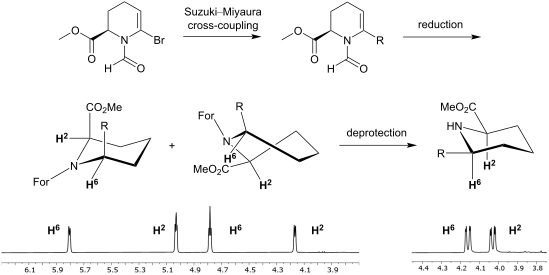
Scheme 1: ᴅ-2-Aminoadipic acid (1) can be used to generate C6 aryl and alkynyl-modified pipecolic acid deriva...
Scheme 2: Methyl ester formation, followed by cyclization, N-formylation, as well as bromination under Vilsme...
Scheme 3: Suzuki–Miyaura cross-coupling reaction between bromide 2 and a variety of boronic acids 8.
Scheme 4: Reaction of 3a to (2R,6S)-9a and (2R,6R)-9a. The chromatograms prove the simple diastereoselection.
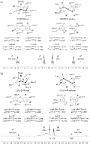
Figure 1: The minor diastereomer of the catalytic hydrogenation was assigned as (2R,6R)-9, based on the analy...
Figure 2: 1H NMR spectra with both signal sets for the chair and half-chair configuration as well as Newman p...
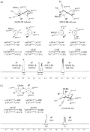
Figure 3: 1H NMR spectra with signal set for the chair configuration as well as Newman projection for both pr...
Scheme 5: a) Sonogashira–Hagihara cross-coupling reaction followed by b) NaBH3CN reduction of the N-acylimini...
Figure 4: 1H NMR with Newman projection for both protons H2 and H6 with corresponding dihedral angles ϕ for a...
Scheme 6: Overview of reduction and deprotection to the final pipecolic acid derivatives (2R,6S)-5.
Beilstein J. Org. Chem. 2025, 21, 1031–1086, doi:10.3762/bjoc.21.85
Graphical Abstract
Figure 1: Biologically active cinnamic acid derivatives.
Scheme 1: General synthetic strategies for cinnamic acid derivatizations.
Scheme 2: Cinnamic acid coupling via isobutyl anhydride formation.
Scheme 3: Amidation reaction via O/N-pivaloyl activation.
Scheme 4: Cinnamic acid amidation using TCCA/PPh3 reagent.
Scheme 5: Cinnamic acid amidation using triazine-based reagents.
Scheme 6: Cinnamic acid amidation using continuous flow mechanochemistry.
Scheme 7: Cinnamic acid amidation using COMU as coupling reagent.
Scheme 8: Cinnamic acid amidation using allenone coupling reagent.
Scheme 9: Cinnamic acid amidation using 4-acetamidophenyl triflimide as reagent.
Scheme 10: Cinnamic acid amidation using methyltrimethoxysilane (MTM).
Scheme 11: Cinnamic acid amidation utilizing amine–borane reagent.
Scheme 12: Cinnamic acid amidation using TCCA/PPh3 reagent.
Scheme 13: Cinnamic acid amidation using PPh3/I2 reagent.
Scheme 14: Cinnamic acid amidation using PCl3 reagent.
Scheme 15: Cinnamic acid amidation utilizing pentafluoropyridine (PFP) as reagent.
Scheme 16: Cinnamic acid amidation using hypervalent iodine(III).
Scheme 17: Mechanochemical amidation using 1,1,2,2-tetrafluoroethyl-N,N-dimethylamine (TFEDMA) reagent.
Scheme 18: Methyl ester preparation using tris(2,4,6-trimethoxyphenyl)phosphine (TMPP).
Scheme 19: N-Trifluoromethyl amide preparation using isothiocyanate and AgF.
Scheme 20: POCl3-mediated amide coupling of carboxylic acid and DMF.
Scheme 21: O-Alkylation of cinnamic acid using alkylating agents.
Scheme 22: Glycoside preparation via Mitsunobu reaction.
Scheme 23: O/N-Acylation via rearrangement reactions.
Scheme 24: Amidation reactions using sulfur-based alkylating agents.
Scheme 25: Amidation reaction catalyzed by Pd0 via C–N cleavage.
Scheme 26: Amidation reaction catalyzed by CuCl/PPh3.
Scheme 27: Cu(II) triflate-catalyzed N-difluoroethylimide synthesis.
Scheme 28: Cu/Selectfluor-catalyzed transamidation reaction.
Scheme 29: CuO–CaCO3-catalyzed amidation reaction.
Scheme 30: Ni-catalyzed reductive amidation.
Scheme 31: Lewis acidic transition-metal-catalyzed O/N-acylations.
Scheme 32: Visible-light-promoted amidation of cinnamic acid.
Scheme 33: Sunlight/LED-promoted amidation of cinnamic acid.
Scheme 34: Organophotocatalyst-promoted N–O cleavage of Weinreb amides to synthesize primary amides.
Scheme 35: Cinnamamide synthesis through [Ir] photocatalyst-promoted C–N-bond cleavage of tertiary amines.
Scheme 36: Blue LED-promoted FeCl3-catalyzed reductive transamidation.
Scheme 37: FPyr/TCT-catalyzed amidation of cinnamic acid derivative 121.
Scheme 38: Cs2CO3/DMAP-mediated esterification.
Scheme 39: HBTM organocatalyzed atroposelective N-acylation.
Scheme 40: BH3-catalyzed N-acylation reactions.
Scheme 41: Borane-catalyzed N-acylation reactions.
Scheme 42: Catalytic N-acylation reactions via H/F bonding activation.
Scheme 43: Brønsted base-catalyzed synthesis of cinnamic acid esters.
Scheme 44: DABCO/Fe3O4-catalyzed N-methyl amidation of cinnamic acid 122.
Scheme 45: Catalytic oxidation reactions of acylating agents.
Scheme 46: Preparation of cinnamamide-substituted benzocyclooctene using I(I)/I(III) catalysis.
Scheme 47: Pd-colloids-catalyzed oxidative esterification of cinnamyl alcohol.
Scheme 48: Graphene-supported Pd/Au alloy-catalyzed oxidative esterification via hemiacetal intermediate.
Scheme 49: Au-supported on A) carbon nanotubes (CNT) and B) on porous boron nitride (pBN) as catalyst for the ...
Scheme 50: Cr-based catalyzed oxidative esterification of cinnamyl alcohols with H2O2 as the oxidant.
Scheme 51: Co-based catalysts used for oxidative esterification of cinnamyl alcohol.
Scheme 52: Iron (A) and copper (B)-catalyzed oxidative esterification of cinnamaldehyde.
Scheme 53: NiHPMA-catalyzed oxidative esterification of cinnamaldehyde.
Scheme 54: Synthesis of cinammic acid esters through NHC-catalyzed oxidative esterification via intermolecular...
Scheme 55: Redox-active NHC-catalyzed esterification via intramolecular oxidation.
Scheme 56: Electrochemical conversion of cinnamaldehyde to methyl cinnamate.
Scheme 57: Bu4NI/TBHP-catalyzed synthesis of bisamides from cinnamalaldehyde N-tosylhydrazone.
Scheme 58: Zn/NC-950-catalyzed oxidative esterification of ketone 182.
Scheme 59: Ru-catalyzed oxidative carboxylation of terminal alkenes.
Scheme 60: Direct carboxylation of alkenes using CO2.
Scheme 61: Carboxylation of alkenylboronic acid/ester.
Scheme 62: Carboxylation of gem-difluoroalkenes with CO2.
Scheme 63: Photoredox-catalyzed carboxylation of difluoroalkenes.
Scheme 64: Ru-catalyzed carboxylation of alkenyl halide.
Scheme 65: Carboxylation of alkenyl halides under flow conditions.
Scheme 66: Cinnamic acid ester syntheses through carboxylation of alkenyl sulfides/sulfones.
Scheme 67: Cinnamic acid derivatives synthesis through a Ag-catalyzed decarboxylative cross-coupling proceedin...
Scheme 68: Pd-catalyzed alkyne hydrocarbonylation.
Scheme 69: Fe-catalyzed alkyne hydrocarbonylation.
Scheme 70: Alkyne hydrocarboxylation using CO2.
Scheme 71: Alkyne hydrocarboxylation using HCO2H as CO surrogate.
Scheme 72: Co/AlMe3-catalyzed alkyne hydrocarboxylation using DMF.
Scheme 73: Au-catalyzed oxidation of Au–allenylidenes.
Scheme 74: Pd-catalyzed C–C-bond activation of cyclopropenones to synthesize unsaturated esters and amides.
Scheme 75: Ag-catalyzed C–C-bond activation of diphenylcyclopropenone.
Scheme 76: Cu-catalyzed C–C bond activation of diphenylcyclopropenone.
Scheme 77: PPh3-catalyzed C–C-bond activation of diphenylcyclopropenone.
Scheme 78: Catalyst-free C–C-bond activation of diphenylcyclopropenone.
Scheme 79: Cu-catalyzed dioxolane cleavage.
Scheme 80: Multicomponent coupling reactions.
Scheme 81: Pd-catalyzed partial hydrogenation of electrophilic alkynes.
Scheme 82: Nickel and cobalt as earth-abundant transition metals used as catalysts for the partial hydrogenati...
Scheme 83: Metal-free-catalyzed partial hydrogenation of conjugated alkynes.
Scheme 84: Horner–Wadsworth–Emmons reaction between triethyl 2-fluoro-2-phosphonoacetate and aldehydes with ei...
Scheme 85: Preparation of E/Z-cinnamates using thiouronium ylides.
Scheme 86: Transition-metal-catalyzed ylide reactions.
Scheme 87: Redox-driven ylide reactions.
Scheme 88: Noble transition-metal-catalyzed olefination via carbenoid species.
Scheme 89: TrBF4-catalyzed olefination via carbene species.
Scheme 90: Grubbs catalyst (cat 7)/photocatalyst-mediated metathesis reactions.
Scheme 91: Elemental I2-catalyzed carbonyl-olefin metathesis.
Scheme 92: Cu-photocatalyzed E-to-Z isomerization of cinnamic acid derivatives.
Scheme 93: Ni-catalyzed E-to-Z isomerization.
Scheme 94: Dehydration of β-hydroxy esters via an E1cB mechanism to access (E)-cinnamic acid esters.
Scheme 95: Domino ring-opening reaction induced by a base.
Scheme 96: Dehydroamination of α-aminoester derivatives.
Scheme 97: Accessing methyl cinnamate (44) via metal-free deamination or decarboxylation.
Scheme 98: The core–shell magnetic nanosupport-catalyzed condensation reaction.
Scheme 99: Accessing cinnamic acid derivatives from acetic acid esters/amides through α-olefination.
Scheme 100: Accessing cinnamic acid derivatives via acceptorless α,β-dehydrogenation.
Scheme 101: Cu-catalyzed formal [3 + 2] cycloaddition.
Scheme 102: Pd-catalyzed C–C bond formation via 1,4-Pd-shift.
Scheme 103: NHC-catalyzed Rauhut–Currier reactions.
Scheme 104: Heck-type reaction for Cα arylation.
Scheme 105: Cu-catalyzed trifluoromethylation of cinnamamide.
Scheme 106: Ru-catalyzed alkenylation of arenes using directing groups.
Scheme 107: Earth-abundant transition-metal-catalyzed hydroarylation of α,β-alkynyl ester 374.
Scheme 108: Precious transition-metal-catalyzed β-arylation of cinnamic acid amide/ester.
Scheme 109: Pd-catalyzed β-amination of cinnamamide.
Scheme 110: S8-mediated β-amination of methyl cinnamate (44).
Scheme 111: Pd-catalyzed cross-coupling reaction of alkynyl esters with phenylsilanes.
Scheme 112: Pd-catalyzed β-cyanation of alkynyl amide/ester.
Scheme 113: Au-catalyzed β-amination of alkynyl ester 374.
Scheme 114: Metal-free-catalyzed Cβ-functionalizations of alkynyl esters.
Scheme 115: Heck-type reactions.
Scheme 116: Mizoroki–Heck coupling reactions using unconventional functionalized arenes.
Scheme 117: Functional group-directed Mizoroki–Heck coupling reactions.
Scheme 118: Pd nanoparticles-catalyzed Mizoroki–Heck coupling reactions.
Scheme 119: Catellani-type reactions to access methyl cinnamate with multifunctionalized arene.
Scheme 120: Multicomponent coupling reactions.
Scheme 121: Single atom Pt-catalyzed Heck coupling reaction.
Scheme 122: Earth-abundant transition metal-catalyzed Heck coupling reactions.
Scheme 123: Polymer-coated earth-abundant transition metals-catalyzed Heck coupling reactions.
Scheme 124: Earth-abundant transition-metal-based nanoparticles as catalysts for Heck coupling reactions.
Scheme 125: CN- and Si-based directing groups to access o-selective cinnamic acid derivatives.
Scheme 126: Amide-based directing group to access o-selective cinnamic acid derivatives.
Scheme 127: Carbonyl-based directing group to access o-selective cinnamic acid derivatives.
Scheme 128: Stereoselective preparation of atropisomers via o-selective C(sp2)–H functionalization.
Scheme 129: meta-Selective C(sp2)–H functionalization using directing group-tethered arenes.
Scheme 130: para-Selective C(sp2)–H functionalization using directing group-tethered arenes.
Scheme 131: Non-directed C(sp2)–H functionalization via electrooxidative Fujiwara–Moritani reaction.
Scheme 132: Interconversion of functional groups attached to cinnamic acid.
Scheme 133: meta-Selective C(sp2)–H functionalization of cinnamate ester.
Scheme 134: C(sp2)–F arylation using Grignard reagents.
Scheme 135: Truce–Smiles rearrangement of N-aryl metacrylamides.
Scheme 136: Phosphine-catalyzed cyclization of γ-vinyl allenoate with enamino esters.
Beilstein J. Org. Chem. 2025, 21, 884–889, doi:10.3762/bjoc.21.72
Graphical Abstract
Scheme 1: Synthesis of ultracycles.
Figure 1: (a, b) Crystal structure of B4aH (hydrogen atoms are omitted for clarity), and (c) the stacking str...
Figure 2: (a) The structures of host and guests, (b) 1H NMR spectra (298 K, 400 MHz, CD3CN) of B4aH upon titr...
Figure 3: (a–c) DFT-optimized structure of the B4aH-C72− complex. The blue dotted lines represent hydrogen bo...
Beilstein J. Org. Chem. 2025, 21, 817–829, doi:10.3762/bjoc.21.65
Graphical Abstract
Figure 1: Natural products and synthetic medicinal compounds containing a 2-pyrrolidinone subunit.
Scheme 1: Synthesis of 4-[1-(4-methoxybenzyl)amino]ethylidene-1,5-disubstituted pyrrolidine-2,3-diones 3a–e.
Scheme 2: Synthesis of 4-(1-methylamino)ethylidene-1,5-disubstituted pyrrolidine-2,3-diones 5a–e.
Scheme 3: Proposed mechanism for the reaction between 4-[1-(4-methoxybenzyl)amino]ethylidene-1,5-disubstitute...
Figure 2: The molecular structure of 5a, showing the atom-labelling scheme and displacement ellipsoids at the...
Figure 3: The bioavailability radar of studied compounds 5a–e.
Figure 4: The interactions of potential drugs 5a–c in the active site of enzyme iNOS.
Figure 5: The interactions of potential drugs 5d and 5e and control drug (DEX) in the active site of enzyme i...
Beilstein J. Org. Chem. 2025, 21, 680–716, doi:10.3762/bjoc.21.54
Graphical Abstract
Figure 1: Fundamental characteristics of the C–F bond.
Figure 2: Incorporation of fluorine at the end of an alkyl chain.
Figure 3: Incorporation of fluorine into the middle of a linear alkyl chain.
Figure 4: Incorporation of fluorine across much, or all, of a linear alkyl chain.
Figure 5: Incorporation of fluorine into cycloalkanes.
Figure 6: Conformational effects of introducing fluorine into an ether (geminal to oxygen).
Figure 7: Conformational effects of introducing fluorine into an ether (vicinal to oxygen).
Figure 8: Effects of introducing fluorine into alcohols (and their derivatives).
Figure 9: Controlling the ring pucker of sugars through fluorination.
Figure 10: Controlling bond rotations outside the sugar ring through fluorination.
Figure 11: Effects of incorporating fluorine into amines.
Figure 12: Effects of incorporating fluorine into amine derivatives, such as amides and sulfonamides.
Figure 13: Effects of incorporating fluorine into organocatalysts.
Figure 14: Effects of incorporating fluorine into carbonyl compounds, focusing on the “carbon side.”
Figure 15: Fluoroproline-containing peptides and proteins.
Figure 16: Further examples of fluorinated linear peptides (besides fluoroprolines). For clarity, sidechains a...
Figure 17: Fluorinated cyclic peptides.
Figure 18: Fluorine-derived conformational control in sulfur-containing compounds.
Beilstein J. Org. Chem. 2025, 21, 616–629, doi:10.3762/bjoc.21.49
Graphical Abstract
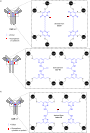
Figure 1: Representation of an antibody–drug conjugate. The antibody shown in this figure is from https://www...
Figure 2: a. Photoredox catalytic cycles; b. absorption spectrum of photosensitizers. Therapeutic window indi...
Figure 3: Graph representing the average number of publications focusing on photoredox chemistry applied to p...
Figure 4: Schematic procedure developed by Sato et al. on histidine photoinduced modification. The antibody s...
Figure 5: Schematic procedure of the divergent method developed by Sato et al. on histidine/tyrosine photoind...
Figure 6: Schematic procedure developed by Bräse et al. on photoinduced disulfide rebridging method.
Figure 7: Schematic procedure developed by Lang et al. on a photoinduced dual nickel photoredox-catalyzed app...
Figure 8: Schematic of the procedure developed by Chang et al. on photoinduced high affinity IgG Fc-binding s...
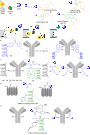
Figure 9: Potential advantages of photoredox chemistry for bioconjugation applied to antibodies. The antibody...
Figure 10: Representation of the photoinduced control of the DAR. The antibody shown in this figure is from ht...
Figure 11: Representation of a photoinduced control of multi-payloads ADC strategy. The antibody shown in this...
Beilstein J. Org. Chem. 2025, 21, 483–489, doi:10.3762/bjoc.21.35
Graphical Abstract
Scheme 1: A) Chemical structures of hypermodified nucleobase queuine and nucleoside queuosine (Q) occurring a...
Scheme 2: Three-step syntheses of preQ1 (1) and DPQ1 (2). For the synthesis of m6preQ1 (16) see Supporting Information File 1.
Scheme 3: Syntheses of haloalkyl- and mesyloxyalkyl-modified preQ1 as and DPQ1 ligands.
Beilstein J. Org. Chem. 2025, 21, 473–482, doi:10.3762/bjoc.21.34
Graphical Abstract
Scheme 1: Previous work.
Scheme 2: Hypothesis, retro-Michael reaction, and its application in kinetic resolution.
Scheme 3: Model reaction.
Scheme 4: Kinetic resolution of the Michael adduct 1.
Scheme 5: Chemical correlation of 3 with 19.
Scheme 6: Epimerization of the anti-1 adduct promoted by A.
Beilstein J. Org. Chem. 2025, 21, 421–443, doi:10.3762/bjoc.21.30
Graphical Abstract
Figure 1: Catalytic rate enhancements from a reduction in the Gibbs free energy transition barrier can be fra...
Figure 2: Typical catalysis modes using macrocycle cavities performing (non-specific) hydrophobic substrate b...
Figure 3: (A) Cram’s serine protease model system [87,88]. The macrocycle showed strong substrate binding (organizat...
Figure 4: (A) Self-assembling capsules can perform hydrophobic catalysis [116,117]. (B) Resorcin[4]arene building bloc...
Figure 5: (A) Metal-organic cages and key modes in catalysis. (B) Charged metals or ligands can result in +/−...
Figure 6: (A) Frameworks (MOFs, COFs) can be catalysts. (B) Example of a 2D-COF, assembled by dynamic covalen...
Figure 7: (A) Examples of dynamic covalent chemistry used to synthesize organic cages. (B) Organic cages are ...
Figure 8: (A) Design and development of soluble, functionalized, robust organic cages. (B) Examples of modula...
Figure 9: (A) There are 13 metastable conformers (symmetry-corrected) for cage 1 due to permutations of amide...
Beilstein J. Org. Chem. 2025, 21, 348–357, doi:10.3762/bjoc.21.25
Graphical Abstract
Figure 1: An overview of previously synthesized 1,2-benzothiazines [36-39].
Scheme 1: General scheme for the synthesis of pyrazolo-1,2-benzothiazine-N-aryl/benzyl/cyclohexylacetamide.
Figure 2: An example of contrasting 1H NMR signals for monoalkylated (7a) and dialkylated (7l) derivatives, (...
Beilstein J. Org. Chem. 2025, 21, 47–54, doi:10.3762/bjoc.21.5
Graphical Abstract
Scheme 1: i) Synthesis of benzyl glutamate NCA using phosgene and propylene oxide as a scavenger. ii) Ring-op...
Figure 1: i) The PBLG-PSar block copolymers are dissolved in DMF and then assembled though the solvent-exchan...
Figure 2: Progression of shape transformation of PSar-PBLG vesicles at 70 °C (scalebar 0.5 µm). a) Initial (0...
Figure 3: The temperature-dependent behavior of vesicles and shape Transformation: a) Thermograph of PBLG-PSa...
Beilstein J. Org. Chem. 2024, 20, 3151–3173, doi:10.3762/bjoc.20.261
Graphical Abstract
Figure 1: Classical MCRs.
Figure 2: Different scaffolds that can be formed with the Ugi adduct.
Scheme 1: Oxoindole-β-lactam core produced in a U4C-3CR.
Figure 3: Most active oxoindole-β-lactam compounds developed by Brãndao et al. [33].
Scheme 2: Ugi-azide synthesis of benzofuran, pyrazole and tetrazole hybrids.
Figure 4: The most promising hybrids synthesized via the Ugi-azide multicomponent reaction reported by Kushwa...
Scheme 3: Four-component Ugi reaction for the synthesis of novel antioxidant compounds.
Figure 5: Most potent antioxidant compounds obtained through the Ugi four-component reaction developed by Pac...
Scheme 4: Four-component Ugi reaction to synthesize β-amiloyd aggregation inhibitors.
Figure 6: The most potential β-amiloyd aggregation inhibitors generated by Galante et al. [37].
Scheme 5: Four-component Ugi reaction to obtain FATH hybrids and the best candidate synthesized.
Scheme 6: Four-component Ugi reaction for the synthesis of FATMH hybrids and the best candidate synthesized.
Scheme 7: Petasis multicomponent reaction to produce pyrazine-based MTDLs.
Figure 7: Best pyrazine-based MTDLs synthesized by Madhav et al. [40].
Scheme 8: Synthesis of BCPOs employing a Knoevenagel-based multicomponent reaction and the best candidate syn...
Scheme 9: Hantzsch multicomponent reaction for the synthesis of DHPs as novel MTDLs.
Figure 8: Most active 1,4-dihydropyridines developed by Malek et al. [43].
Scheme 10: Chromone–donepezil hybrid MTDLs obtained via the Passerini reaction.
Figure 9: Best CDH-based MTDLs as AChE inhibitors synthesized by Malek et al. [46].
Scheme 11: Replacement of the nitrogen in lactams 11 with an oxygen in 12 to influence hydrogen-bond donating ...
Scheme 12: MCR 3 + 2 reaction to develop spirooxindole, spiroacenaphthylene, and bisbenzo[b]pyran compounds.
Figure 10: SIRT2 activity of best derivatives obtained by Hasaninejad et al. [49].
Scheme 13: Synthesis of ML192 analogs using the Gewald multicomponent reaction and the best candidate synthesi...
Scheme 14: Development of 1,5-benzodiazepines via Ugi/deprotection/cyclization (UDC) approach by Xu et al. [59].
Scheme 15: Synthesis of polysubstituted 1,4-benzodiazepin-3-ones using UDC strategy.
Scheme 16: Synthetic procedure to obtain 3-carboxamide-1,4-benzodiazepin-5-ones employing Ugi–reduction–cycliz...
Scheme 17: Ugi cross-coupling (U-4CRs) to synthesize triazolobenzodiazepines.
Scheme 18: Azido-Ugi four component reaction cyclization to obtain imidazotetrazolodiazepinones.
Scheme 19: Synthesis of oxazolo- and thiazolo[1,4]benzodiazepine-2,5-diones via Ugi/deprotection/cyclization a...
Scheme 20: General synthesis of 2,3-dichlorophenylpiperazine-derived compounds by the Ugi reaction and Ugi/dep...
Figure 11: Best DRD2 compounds synthesized using a multicomponent strategy.
Scheme 21: Bucherer–Bergs multicomponent reaction to obtain a key intermediate in the synthesis of pomaglumeta...
Scheme 22: Ugi reaction to synthesize racetam derivatives and example of two racetams synthesized by Cioc et a...
Beilstein J. Org. Chem. 2024, 20, 3113–3133, doi:10.3762/bjoc.20.258
Graphical Abstract
Figure 1: Example bioactive compounds containing cyclic scaffolds potentially accessible by HVI chemistry.
Figure 2: A general mechanism for HVI-mediated endo- or exo-halocyclisation.
Scheme 1: Metal-free synthesis of β-fluorinated piperidines 6. Ts = tosyl.
Scheme 2: Intramolecular aminofluorination of unactivated alkenes with a palladium catalyst.
Scheme 3: Aminofluorination of alkenes in the synthesis of enantiomerically pure β-fluorinated piperidines. P...
Scheme 4: Synthesis of β-fluorinated piperidines.
Scheme 5: Intramolecular fluoroaminations of unsaturated amines published by Li.
Scheme 6: Intramolecular aminofluorination of unsaturated amines using 1-fluoro-3,3-dimethylbenziodoxole (12)...
Scheme 7: 3-fluoropyrrolidine synthesis. aDiastereomeric ratio (cis/trans) determined by 19F NMR analysis.
Scheme 8: Kitamura’s synthesis of 3-fluoropyrrolidines. Values in parentheses represent the cis:trans ratio.
Scheme 9: Jacobsen’s enantio- and diastereoselective protocol for the synthesis of syn-β-fluoroaziridines 15.
Scheme 10: Different HVI reagents lead to different diastereoselectivity in aminofluorination competing with c...
Scheme 11: Fluorocyclisation of unsaturated alcohols and carboxylic acids to make tetrahydrofurans, fluorometh...
Scheme 12: Oxyfluorination of unsaturated alcohols.
Scheme 13: Synthesis and mechanism of fluoro-benzoxazepines.
Scheme 14: Intramolecular fluorocyclisation of unsaturated carboxylic acids. Yield of isolated product within ...
Scheme 15: Synthesis of fluorinated tetrahydrofurans and butyrolactone.
Scheme 16: Synthesis of fluorinated oxazolines 32. aReaction time increased to 40 hours. Yields refer to isola...
Scheme 17: Electrochemical synthesis of fluorinated oxazolines.
Scheme 18: Electrochemical synthesis of chromanes.
Scheme 19: Synthesis of fluorinated oxazepanes.
Scheme 20: Enantioselective oxy-fluorination with a chiral aryliodide catayst.
Scheme 21: Catalytic synthesis of 5‑fluoro-2-aryloxazolines using BF3·Et2O as a source of fluoride and an acti...
Scheme 22: Intramolecular carbofluorination of alkenes.
Scheme 23: Intramolecular chlorocyclisation of unsaturated amines.
Scheme 24: Synthesis of chlorinated cyclic guanidines 44.
Scheme 25: Synthesis of chlorinated pyrido[2,3-b]indoles 46.
Scheme 26: Chlorolactonization and chloroetherification reactions.
Scheme 27: Proposed mechanism for the synthesis of chloromethyl oxazolines 49.
Scheme 28: Oxychlorination to form oxazine and oxazoline heterocycles promoted by BCl3.
Scheme 29: Aminobromocyclisation of homoallylic sulfonamides 53. The cis:trans ratios based on the 1H NMR of t...
Scheme 30: Synthesis of cyclic imines 45.
Scheme 31: Synthesis of brominated pyrrolo[2,3-b]indoles 59.
Scheme 32: Bromoamidation of alkenes.
Scheme 33: Synthesis of brominated cyclic guanidines 61 and 61’.
Scheme 34: Intramolecular bromocyclisation of N-oxyureas.
Scheme 35: The formation of 3-bromoindoles.
Scheme 36: Bromolactonisation of unsaturated acids 68.
Scheme 37: Synthesis of 5-bromomethyl-2-oxazolines.
Scheme 38: Synthesis of brominated chiral morpholines.
Scheme 39: Bromoenolcyclisation of unsaturated dicarbonyl groups.
Scheme 40: Brominated oxazines and oxazolines with BBr3.
Scheme 41: Synthesis of 5-bromomethtyl-2-phenylthiazoline.
Scheme 42: Intramolecular iodoamination of unsaturated amines.
Scheme 43: Formation of 3-iodoindoles.
Scheme 44: Iodoetherification of 2,2-diphenyl-4-penten-1-carboxylic acid (47’) and 2,2-diphenyl-4-penten-1-ol (...
Scheme 45: Synthesis of 5-iodomethyl-2-oxazolines.
Scheme 46: Synthesis of chiral iodinated morpholines. aFrom the ʟ-form of the amino acid starting material. Th...
Scheme 47: Iodoenolcyclisation of unsaturated dicarbonyl compounds 74.
Scheme 48: Synthesis of 5-iodomethtyl-2-phenylthiazoline (87).
Beilstein J. Org. Chem. 2024, 20, 3085–3112, doi:10.3762/bjoc.20.257
Graphical Abstract
Figure 1: Chemical structures of the main tetrapyrrolic macrocycles studied in this review for their role as ...
Figure 2: Calix[4]pyrroles 3 and 4 and an their acyclic analogue 5 used for the transformation of Danishefsky...
Figure 3: Calixpyrrole-based organocatalysts 11 and 12 for the diastereoselective addition reaction of TMSOF ...
Figure 4: (a) Chemical structures of macrocyclic organocatalysts used for the synthesis of cyclic carbonates ...
Figure 5: Cuprous chloride-catalyzed aziridination of styrene (22) by chloramine-T (23) providing 1-tosyl-2-p...
Figure 6: Chemical structures of the various porphyrin macrocycles (18, 25–41) screened as potential catalyst...
Figure 7: Organocatalytic activity of distorted porphyrins explored by Senge and co-workers. Planar macrocycl...
Figure 8: Chemical structures of H2EtxTPP (x = 0, 2, 4, 6, 8) compounds with incrementally increasing nonplan...
Figure 9: Chemical structures of OxP macrocycles tested as potential organocatalysts for the conjugate additi...
Figure 10: a) Fundamental structure of the J-aggregates of diprotonated TPPS3 53 and b) its use as a catalyst ...
Figure 11: Chemical structures of amphiphilic porphyrin macrocycles used as pH-switchable catalysts based on i...
Figure 12: a) Chemical structures of porphyrin macrocycles for the cycloaddition of CO2 to N-alkyl/arylaziridi...
Figure 13: Electron and energy-transfer processes typical for excited porphyrin molecules (Por = porphyrin mac...
Figure 14: Proposed mechanism for the light-induced α-alkylation of aldehydes with EDA in the presence of H2TP...
Figure 15: a) Chemical structures of porphyrins screened as photoredox catalysts, b) model reaction of furan (...
Figure 16: Porphyrin macrocycles H2TPP (18) and PPIX 78 as photoreductants for the red light-induced C–H aryla...
Figure 17: Porphyrin macrocycles H2TPP (18) and PPIX 78 as photoredox catalyst for (a) α-alkylation of an alde...
Figure 18: Corrole macrocycles 98–100 as photoredox catalysts for C–H arylation and borylation reactions. Adap...
Figure 19: Proposed catalytic cycle of electrocatalytic generation of H2 evolution using tetrapyrrolic macrocy...
Figure 20: a) Chemical structures of tetrapyrrolic macrocycles 109, 73, and 110 used for oxygen reductions in ...
Figure 21: a) Absorption spectra (left) of the air-saturated DCE solutions containing: 5 × 10⁻⁵ M H2TPP (black...
Figure 22: Chemical structures of N,N’-dimethylated saddle-distorted porphyrin isomers, syn-Me2P 111 and anti-...
Figure 23: Reaction mechanisms for the two-electron reduction of O2 by a) syn-Me2Iph 113 and b) anti-Me2Iph 114...
Figure 24: O2/H2O2 interconversion using methylated saddle-distorted porphyrin and isophlorin (reduced porphyr...
Figure 25: Chemical structures of distorted dodecaphenylporphyrin macrocycle 117 and its diprotonated form 118...