Search results
Search for "protecting groups" in Full Text gives 332 result(s) in Beilstein Journal of Organic Chemistry. Showing first 200.
Site-specific labelling of native peptides and proteins: chemical and enzymatic strategies
Beilstein J. Org. Chem. 2026, 22, 857–881, doi:10.3762/bjoc.22.67
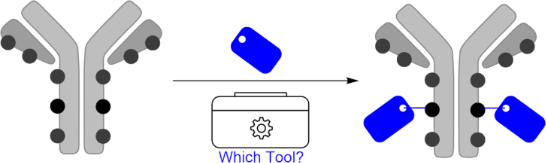
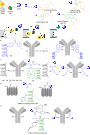
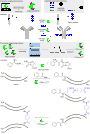
- therapeutics, advances in protein modification have the potential to partially replace solid-phase peptide synthesis (SPPS), reducing environmental impact by minimising protecting groups and harmful solvents. Driven by scientific innovation, clinical demand and sustainability goals, the global protein








Total synthesis of the capsular polysaccharide repeating unit towards the development of a glycoconjugate vaccine against Klebsiella pneumoniae ST512
Beilstein J. Org. Chem. 2026, 22, 821–827, doi:10.3762/bjoc.22.64
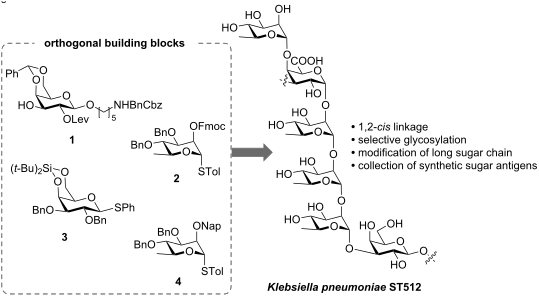
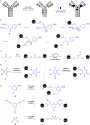
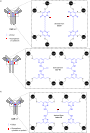
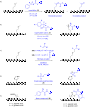
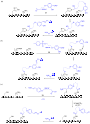
- deprotection was achieved by removing the Fmoc and Lev protecting groups with sodium methoxide, followed by 2,2,6,6-tetramethyl-1-piperidinyl-1-oxyl (TEMPO)/bis(acetoxy)iodobenzene (BAIB)-mediated oxidation of the C6-primary alcohol [35]. Final hydrogenolysis furnished the target hexasaccharide repeating unit
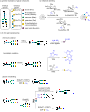
- -throughput screening, a series of analogues including di-, tri-, tetra-, and pentasaccharides were synthesized (Scheme 3). We utilized the intermediate products from the assembly of the hexasaccharide repeating unit 20. The protecting groups of disaccharide 13 were removed by treatment with sodium methoxide


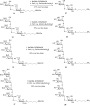
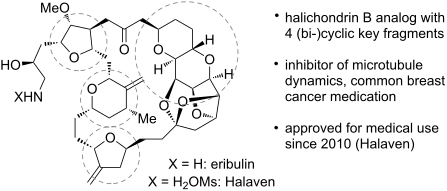
Modern synthetic pathways towards eribulin and its subunits
Beilstein J. Org. Chem. 2026, 22, 495–526, doi:10.3762/bjoc.22.37
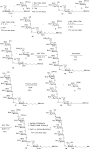
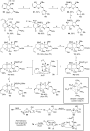
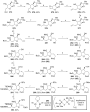
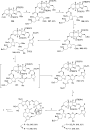
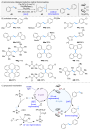
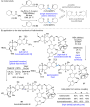
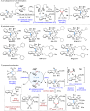
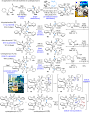
- –Kishi (NHK) coupling and Pd-mediated cyclization. Fragment 31 was synthesized from known precursor 28 [74] in 9 steps via MMTr-protection, replacement of the Bn- with TBDMS-protecting groups, hydroxylation of sulfone 29 to alcohol 30, tosylation, bromide substitution, acidic MMTr-cleavage and DMP
- . Eventual change of the two PNB- with TBDMS-protecting groups yielded 45 in 58%. Notably, by this technique, the central pyran motif was assembled in one step and required only the stereoinformation of 42`s alcohol unit, while in former works two individual steps and the use of expensive metal catalysts
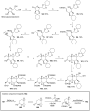
- towards 113 upon acidic treatment and TBDMS-protection. Reduction, cleavage of the silyl-protecting groups and acetylation led to tetrahydropyran 114. Lewis acid-catalyzed C-allylation, cross metathesis, basic cleavage of the acetate motifs and transesterification enabled the DBU-induced isomerization of








Recent advances in the stereoselective synthesis of distal biaxially chiral molecules
Beilstein J. Org. Chem. 2026, 22, 461–479, doi:10.3762/bjoc.22.34
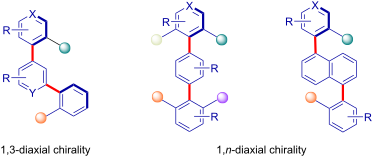
- -containing five-membered rings with iridium complexes and examined the influence of different alcohol protecting groups on the monoalkyne substrates. The reaction proceeded in generally high yields (>70%) with satisfactory enantioselectivity. Building on this work, Shibata and Tsuchikama developed a one-pot


A facile and practical method for the synthesis of trans-(±)-taxifolin and its derivatives via Darzens reaction
Beilstein J. Org. Chem. 2026, 22, 443–450, doi:10.3762/bjoc.22.31
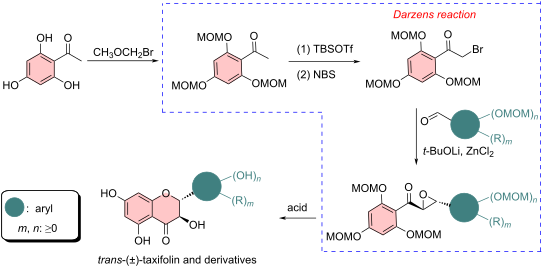
- synthesis uses hydroxyacetophenones as starting material, whose hydroxy groups are first protected by various protecting groups and then reacted with aromatic aldehydes to form the corresponding chalcone intermediates. The chalcones are then oxidized with peroxides, such as H2O2, to give the α,β


Cone p-aminocalix[4]arenes enriched with ‘clickable’ alkyne or azide functionalities
Beilstein J. Org. Chem. 2026, 22, 399–415, doi:10.3762/bjoc.22.28
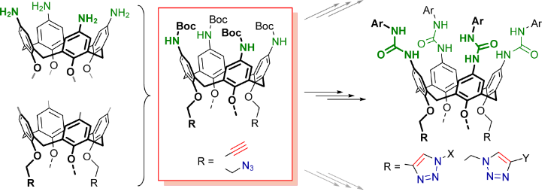
- excess benzyl azide or phenylacetylene, taken as representatives, under copper(I) catalysis, resulting in the narrow-rim triazolated macrocycles. By removing the Boc protecting groups and involving the free amino groups in reactions with p-tolyl isocyanate, a series of narrow-rim triazolated
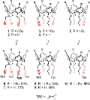
- in acidic conditions, so the amino groups in calixarenes 18–20 must be deactivated prior to the cycloaddition. Following the above reasons, a two-step replacement of protecting groups in calixarenes 18–20 was performed. First, the amino groups were acylated with di-tert-butyl dicarbonate (Boc2O) and
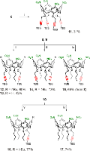
- next the TBS-protecting groups were removed from the acetylene units in the Boc-protected tetraamines 21–23 (Scheme 4). For the removal of the TBS groups, instead of using an equivalent amount of n-Bu4NF, it was used as a catalyst in a water/THF mixture, which showed excellent efficiency for the room




Advances in Zr-mediated radical transformations and applications to total synthesis
Beilstein J. Org. Chem. 2026, 22, 71–87, doi:10.3762/bjoc.22.3
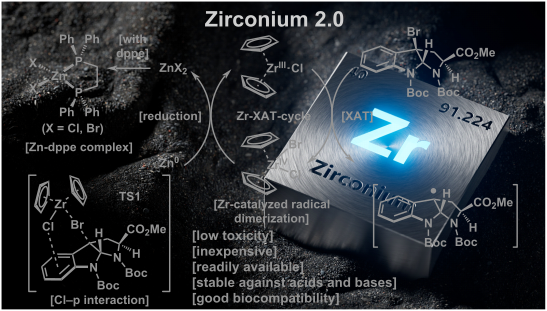
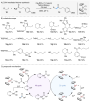
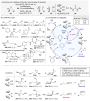
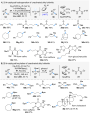
- conditions, delivering the desired ketones 12 in good yields. The reaction also tolerated a wide range of protecting groups, including esters, carbamates, and silyl ethers, without degradation (10f–k). Neopentyl iodide 10l and secondary alkyl iodide 10m were also competent substrates, although tertiary alkyl








One-pot synthesis of ethylmaltol from maltol
Beilstein J. Org. Chem. 2025, 21, 2755–2760, doi:10.3762/bjoc.21.212

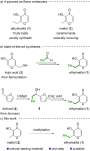
- to ethylmaltol (1) combined with the rather harsh deprotection conditions, led us to investigate other masking groups. Next, we turned towards silyl protecting groups as they offered (a) facile tuning of stability and (b) the opportunity for acid-mediated deprotection during aqueous work-up


Recent advancements in the synthesis of Veratrum alkaloids
Beilstein J. Org. Chem. 2025, 21, 2657–2693, doi:10.3762/bjoc.21.206
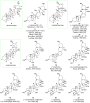
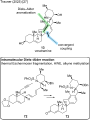
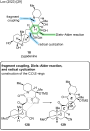
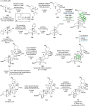
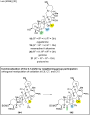
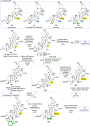
- . For intermediates, circles are added with the number of carbon atoms (carbons included in the skeleton, carbon atoms of protecting groups are not counted). We decided to deviate from the originally proposed step-count and will stick to the definition of a reaction step being the sum of all
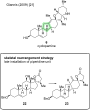
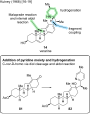
- gave the protected sulfonamide 30. For the isomerization of the exo-double bond, an Alder-ene reaction with N-sulfinylbenzenesulfonamide and subsequent desulfurization was the way of choice. Finally, both remaining protecting groups were removed to furnish cyclopamine (6). In total, 6 was prepared in
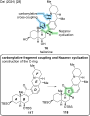
- butenolide moiety, selective α-methylation, formation of a lactam, reduction of the former to an amine, and installation of two different protecting groups. Aryl bromide 53 (fragment B) was then ready for coupling. Lithium–halogen exchange in fragment B 53 and subsequent 1,2-addition to fragment A 47
















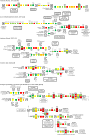
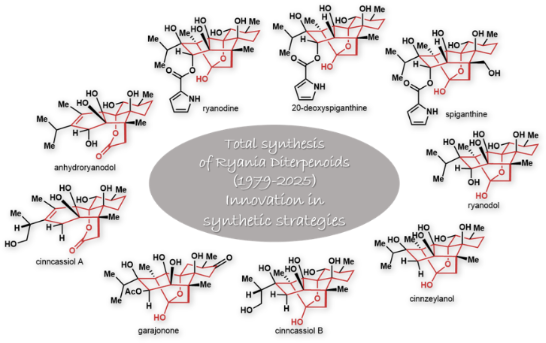
Total syntheses of highly oxidative Ryania diterpenoids facilitated by innovations in synthetic strategies
Beilstein J. Org. Chem. 2025, 21, 2553–2570, doi:10.3762/bjoc.21.198
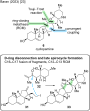
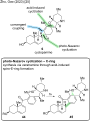
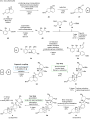
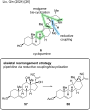
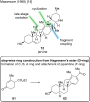
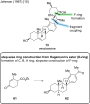
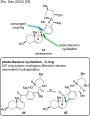
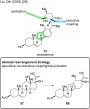
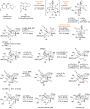
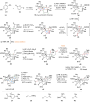
- distinct positions (C3, C4, C12) in a single step. This obviated the need for protecting groups and individual oxidation state adjustments, greatly streamlining the synthesis of this polyhydroxylated diterpene and underscoring the reaction’s utility in improving synthetic efficiency. The specific synthetic







Synthetic study toward vibralactone
Beilstein J. Org. Chem. 2025, 21, 2376–2382, doi:10.3762/bjoc.21.182

- to explore additional protecting groups for the hydroxy functionality. Furthermore, given that alkylidene carbenes are electron-deficient and highly electrophilic, electron-rich C–H bonds are more prone to undergo C–H insertion [48]. Following this analysis, commencing from 20, after reduction, the


Comparative analysis of complanadine A total syntheses
Beilstein J. Org. Chem. 2025, 21, 2334–2344, doi:10.3762/bjoc.21.178
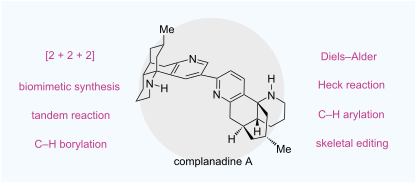
- removal of the two Boc protecting groups completed the Sarpong total synthesis of complanadine A. Efficient access of key coupling intermediates 33 and 34 further enabled Sarpong and co-workers to successfully synthesize other lycopodium alkaloids. For example, to synthesize complanadine B with mono



Photoswitches beyond azobenzene: a beginner’s guide
Beilstein J. Org. Chem. 2025, 21, 1808–1853, doi:10.3762/bjoc.21.143
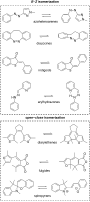
- , the synthesis can be directed towards the desired target with the use of protecting groups [41]. For the synthesis of azothiazoles 25, the addition of phenylhydrazine (22) to ammonium thiocyanate followed by ring closure and oxidation was recently proposed (Scheme 6A) [42]. Heteroarylazo-1,2,3






Preparation of a furfural-derived enantioenriched vinyloxazoline building block and exploring its reactivity
Beilstein J. Org. Chem. 2025, 21, 1737–1741, doi:10.3762/bjoc.21.136

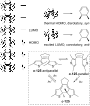
- involves an electrooxidative dialkoxylation of the furan ring providing spirocycles 4a–c which undergo a further electrooxidative fragmentation to products 3a–c. However, the further transformation of products 3a–c was hampered by the problematic removal of the protecting groups (Ts, Boc, Ac) under the
- electrolysis conditions and its removal was compatible with the double bond and acetal functions in ester 3d (see Supporting Information File 1 for attempts of other protecting groups such as Boc, Troc, and tfa). However, Pd-catalyzed N-Alloc deprotection induced isomerization of the double bond leading to the


Convenient alternative synthesis of the Malassezia-derived virulence factor malassezione and related compounds
Beilstein J. Org. Chem. 2025, 21, 1730–1736, doi:10.3762/bjoc.21.135

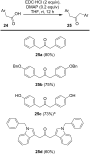
- . 20% (4 steps) relative to an overall yield of ca. 5% via the preparation of the isonitrile followed by the Fe hydride initiated isonitrile–olefin intramolecular coupling reaction [18]. Protection of the indole nitrogens with the Boc group was preferable to the use of benzyl protecting groups since


Approaches to stereoselective 1,1'-glycosylation
Beilstein J. Org. Chem. 2025, 21, 1700–1718, doi:10.3762/bjoc.21.133
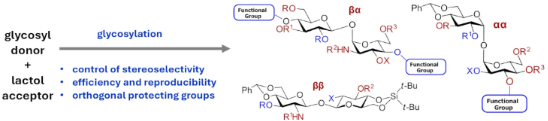
- requirements for functional or protecting groups that substitute the hydroxy- or amino functions of the monosaccharide components. Over the past decade, significant progress has been achieved in the stereoselective construction of 1,1'-glycosides using both conventional glycosylation methodologies and
- system, a variety of other factors commonly influences both the reaction rate and the stereochemical outcome of the glycosylation reaction, including the reactivity of the acceptor hydroxy group, the effect of remote protecting groups and a balance between the nucleophilicity of the acceptor and the
- -configuration on the glycosyl acceptor side was “retained” from the 1,2-orthoester progenitor. The nature of the protecting groups proved to be critical for the glycosylation outcome: the use of bulkier benzoyl esters, as in the phenyl 1,2-orthoester 19, led to a lower yield (36%) of the 1,1'-linked product 20


Chemical synthesis of glycan motifs from the antitumor agent PI-88 through an orthogonal one-pot glycosylation strategy
Beilstein J. Org. Chem. 2025, 21, 1587–1594, doi:10.3762/bjoc.21.122

- desired phosphite, which was further oxidized by 3-chloroperoxybenzoic aicd (mCPBA) at −78 °C to 0 °C, producing the desired phosphorylated fully protected trisaccharide 12 in 79% overall yield over three steps. Removal of all protecting groups in trisaccharide 12 is a challenging task due to the presence



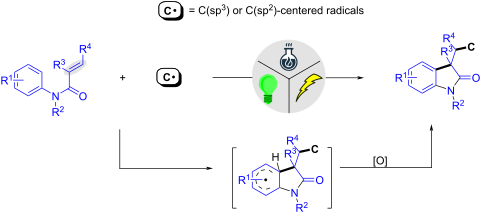
Recent advances in oxidative radical difunctionalization of N-arylacrylamides enabled by carbon radical reagents
Beilstein J. Org. Chem. 2025, 21, 1207–1271, doi:10.3762/bjoc.21.98














A versatile route towards 6-arylpipecolic acids
Beilstein J. Org. Chem. 2025, 21, 1104–1115, doi:10.3762/bjoc.21.88
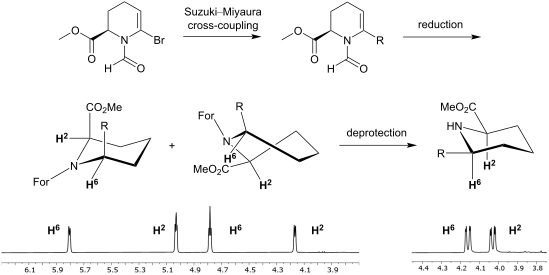
- reduction of the pyrimidine ring, only a partial reduction occurs for the anthracene ring. For all other hydrogenation products 9 the coupled aromatic moiety is not affected (Scheme 6). Removal of both protecting groups is the last step in the generation of pipecolic acid derivatives (2R,6S)-5 and (2R,6S)-6





Entry to 2-aminoprolines via electrochemical decarboxylative amidation of N‑acetylamino malonic acid monoesters
Beilstein J. Org. Chem. 2025, 21, 630–638, doi:10.3762/bjoc.21.50
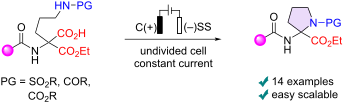
- competing reaction, the cation 9a-II reacts with water to form acyclic hemiaminal 10a. With the optimized conditions in hand (Table 1, entries 8 and 10) the scope of the developed decarboxylative amidation was briefly explored (Scheme 3). N-Acetyl, N-Cbz, and N-Bz protecting groups are compatible with the



Photocatalyzed elaboration of antibody-based bioconjugates
Beilstein J. Org. Chem. 2025, 21, 616–629, doi:10.3762/bjoc.21.49
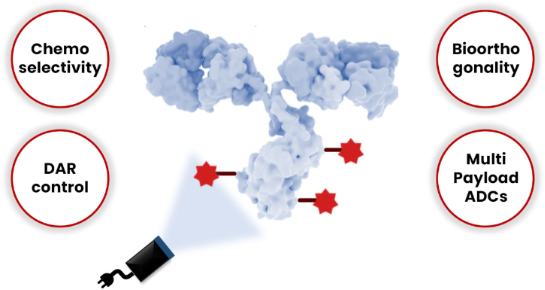
- paradigms under which photochemical reactions operate makes them uniquely tolerant of numerous unprotected functional groups [48]. Consequently, the elaboration of a variety of highly sophisticated biomolecules, including ADCs, can be carried out without protecting groups in a highly selective manner. This


Synthesis of electrophile-tethered preQ1 analogs for covalent attachment to preQ1 RNA
Beilstein J. Org. Chem. 2025, 21, 483–489, doi:10.3762/bjoc.21.35
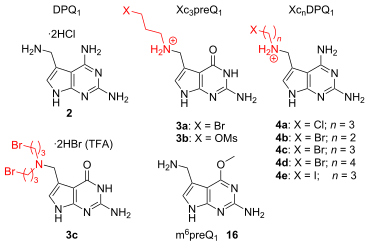
- protecting groups and time-consuming purification steps, that provides preQ1 in 43% overall yield with a purity of >98% (Scheme 2). The approach is based on the cyclocondensation reaction between 2-chloro-3-cyanopropan-1-al (6) (itself obtained from chloroacetonitrile and methyl formate) and 2,6


The effect of neighbouring group participation and possible long range remote group participation in O-glycosylation
Beilstein J. Org. Chem. 2025, 21, 369–406, doi:10.3762/bjoc.21.27
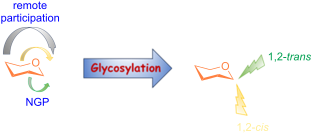
- glycochemists. The protecting building blocks on the glycosides contribute significantly in attaining the required stereochemistry of the resulting glycosides. Strategic installation of suitable protecting groups in the C-2 position, vicinal to the anomeric carbon, renders neighbouring group participation
- , whereas protecting groups in the distal C-3, C-4, and C-6 positions are often claimed to exhibit remote group participation with the anomeric carbon. Neighbouring group participation and remote group participation are being widely studied to help the glycochemists design the synthetic protocols for
- idea of glycosylation mechanisms to enable the readers to have a background idea as a reference before going to describe the role of protecting groups. The mechanistic pathway of glycosylation strongly depends on many factors, especially, the concentration of the participating moieties, the reaction




Surprising acidity for the methylene of 1,3-indenocorannulenes?
Beilstein J. Org. Chem. 2024, 20, 3144–3150, doi:10.3762/bjoc.20.260
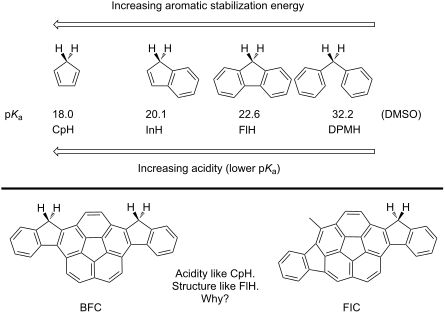
- . Access to the dianion of BFC presages an interesting diradical and this was achieved by inclusion of mesityl protecting groups [27]. Extension of the BFC model with thiophene provides further interesting materials [28]. A reasonable corollary to this behavior would assert that derivatives of TBF and


Hypervalent iodine-mediated intramolecular alkene halocyclisation
Beilstein J. Org. Chem. 2024, 20, 3113–3133, doi:10.3762/bjoc.20.258
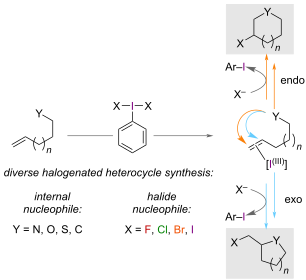
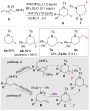
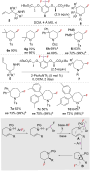
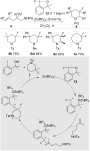
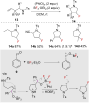
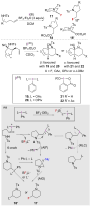
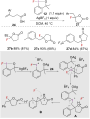
- iodosylbenzene 9 (Scheme 7) [32]. The authors reported the synthesis of 3-fluoropyrrolidines 14 with BF3·OEt2 as a source of fluoride for the intramolecular aminofluorination of homoallylic amines 13. The authors explored the reaction with various protecting groups on nitrogen and substituents on the alkene and
- alkyl chain. Substrates with p-tolylsulfonyl (Ts), p-nitrobenzenesulfonyl (Ns) and benzenesulfonyl (Bs) protecting groups were cyclised in high yields to the corresponding 3-fluoropyrrolidine derivatives 14. A range of unsaturated amines were successfully cyclised. However, substrates with substituents