Search results
Search for "emission" in Full Text gives 493 result(s) in Beilstein Journal of Organic Chemistry. Showing first 200.
Thermodynamic equilibrium between locally excited and charge transfer states in perylene–phenothiazine dyads
Beilstein J. Org. Chem. 2025, 21, 1577–1586, doi:10.3762/bjoc.21.121
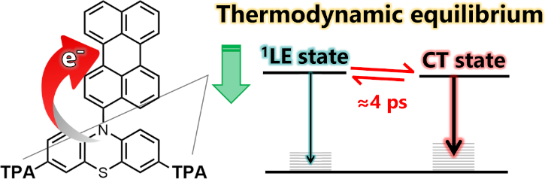
- local excited (LE) and charge-transfer (CT) states can be experimentally observed as dual fluorescence: a structured, higher-energy emission from the LE state and a broad, red-shifted emission from the CT state [8][9]. Classical systems such as 4-(N,N-dimethylamino)benzonitrile (DMABN) and pyrene-o
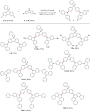
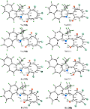
- synthesized and characterized (Figure 1). Their photophysical properties were comprehensively examined by steady-state and time-resolved emission and absorption spectroscopy. Furthermore, time-dependent density functional theory (TD-DFT) calculations were performed to support the experimental findings
- TPA-substituted compounds, several weak absorption bands corresponding to CT transitions (primarily HOMO→LUMO) appear in the longer-wavelength region (Figure 3c), in good agreement with the experimental observations. Steady-state emission spectra of the Pe–PTZ derivatives displayed dual emission bands




Synthesis of an aza[5]helicene-incorporated macrocyclic heteroarene via oxidation of an o-phenylene-pyrrole-thiophene icosamer
Beilstein J. Org. Chem. 2025, 21, 1561–1567, doi:10.3762/bjoc.21.119
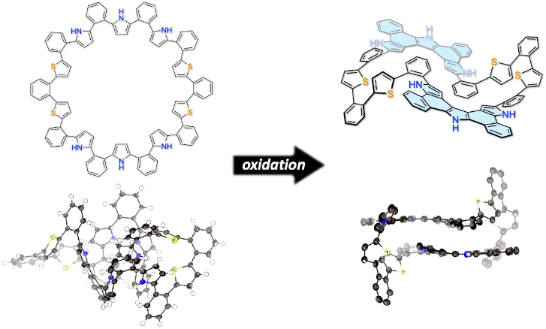
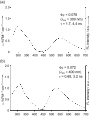
- emission spectra of 4 were measured in DMSO (Figure 5a). As observed for other o-phenylene-bridged cyclic heteroarenes in previous reports, compound 4 exhibited a broad featureless absorption band up to 450 nm, with emission peaked at 546 nm. The red-shifted emission is likely due to a significant
- at 399 nm (Figure 5b). A broad emission was observed at 528 nm, resulting in a relatively large Stokes shift of 6100 cm−1, which can be attributed to the structural relaxation in the excited state, as inferred by the observed broad 1H NMR spectrum at room temperature. Due to the thermal energy loss
- characterized by X-ray analysis and NMR spectroscopy at elevated temperatures. Optical studies showed that compound 4 had broad absorption (up to 450 nm) and emission at 546 nm, while macrocycle 5 showed an emission peak at 528 nm, presumably as a consequence of structural relaxation and CT character. This


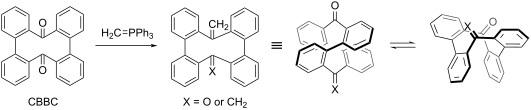
Wittig reaction of cyclobisbiphenylenecarbonyl
Beilstein J. Org. Chem. 2025, 21, 1454–1461, doi:10.3762/bjoc.21.107
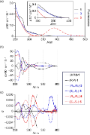
- the axial chirality of the biaryl segments, respectively. (a) UV–vis absorption (solid lines) and emission (dashed lines) spectra of 1 (black), 3 (blue), and 5 (red). (b) CD spectra of 1 (black), 3 (blue), and 5 (red). (c) CD g values of 1 (black), 3 (blue), and 5 (red). λ = wavelength; ε = extinction



Advances in nitrogen-containing helicenes: synthesis, chiroptical properties, and optoelectronic applications
Beilstein J. Org. Chem. 2025, 21, 1422–1453, doi:10.3762/bjoc.21.106
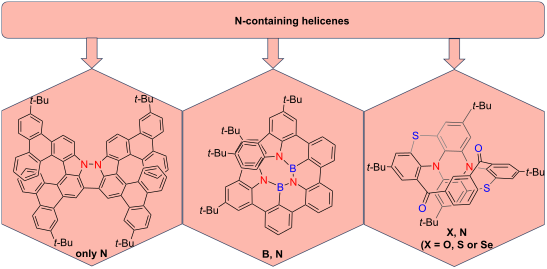
- 2a–c featuring a nitrogen-embedded cyclopenta[ef]heptalene core [15]. These compounds exhibit λabs at 363, 452, and 580 nm, and PLQYs of 0.05, 0.33, and 0.32, respectively. While compounds 2a and 2b display broad emission near 505 nm, 2c shows dual-emission peaks at 588 and 634 nm with an ultranarrow
- core [17]. Compared to 4a, compound 4b exhibits bathochromic shifts of 12 nm in absorption and 45 nm in emission, as well as a higher ΦF (0.75 vs 0.68). Both isomers display TADF at room temperature and phosphorescence at 77 K. Notably, 4a demonstrates a long-lived red afterglow persisting for up to 30
- absorption and emission maxima (λabs = 399 nm, λem = 405 nm), a fluorescence quantum yield (ΦF) of 0.13, and high dissymmetry factors (|gabs| = 1.9 × 10⁻², |gabs| = 9.5 × 10⁻³ at 403 nm) [18] (Table 2). Miura and co-workers employed Pd(II)/Ag(I)-catalyzed cyclizations to construct azahelicenes, with compound

Tautomerism and switching in 7-hydroxy-8-(azophenyl)quinoline and similar compounds
Beilstein J. Org. Chem. 2025, 21, 1404–1421, doi:10.3762/bjoc.21.105
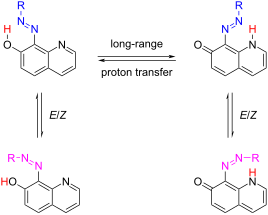
- intensity of the E− is substantially larger, exactly as observed in Figure 5. Excited-state proton transfer and switching The lack of emission in the azo dyes is attributed to the availability of non-bonding electron pairs at the nitrogen atoms from the azo group and the possibility for cis/trans
- ESIPT from enol to keto form, which leads to very weak emission, and the trans to cis isomerization, leading to emissionless deactivation to the ground state. The potential energy surfaces (PESs) of 1 in the ground and excited state, sketched in Figure 6, show a very complicated picture. The ground
- measurable emission of 1 was detected in any of the studied solvents, excluding the first pathway. The ESIPT process is practically barrierless leading to the CI in the N=N bond isomerization region with preferential population of E as discussed above. The third pathway could lead to population of KK, rise




N-Salicyl-amino acid derivatives with antiparasitic activity from Pseudomonas sp. UIAU-6B
Beilstein J. Org. Chem. 2025, 21, 1388–1396, doi:10.3762/bjoc.21.103
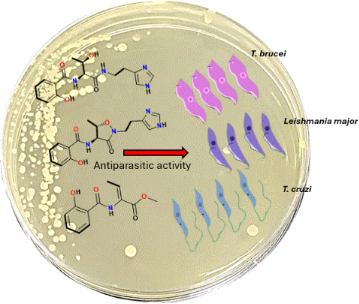
- cell line are given below), after which the Alamar Blue cell viability reporter was added and the fluorescence recorded using an FLx 800 plate reader (BioTek) with excitation wavelength 535/540 nm and emission wavelength at 590/610 nm using Gen5 Reader Control 2.0 Software (BioTek). EC50 values were


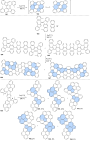
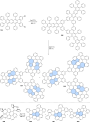
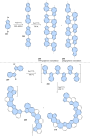
Recent advances and future challenges in the bottom-up synthesis of azulene-embedded nanographenes
Beilstein J. Org. Chem. 2025, 21, 1272–1305, doi:10.3762/bjoc.21.99
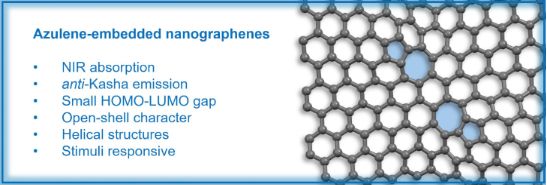
- , resulting in a significant dipole moment of 1.08 D [18]. Due to its unique non-alternant topology, azulene exhibits a smaller energy gap compared to that of isomeric naphthalene and unusual emission from the S2 state (anti-Kasha’s emission), as a consequence of its non-mirror related highest occupied
- gap, aromaticity of azulene subunit and anti-Kasha’s emission from higher excited states. In such cases, the azulene unit merely acts as a linker within a more complex benzenoid framework. This review covers all types of azulene-embedded molecular scaffolds, regardless of whether they contain a
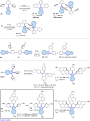
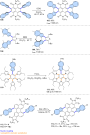
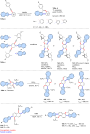
- counterparts. Moreover, the azulene-like electronic structure is preserved, leading PAHs 57a–d and 60 to display characteristic low-energy azulene absorption and anti-Kasha emission. Intramolecular C–H arylation: Various C–H arylation strategies have proven to be effective as the final step in the synthesis of






Optimized synthesis of aroyl-S,N-ketene acetals by omission of solubilizing alcohol cosolvents
Beilstein J. Org. Chem. 2025, 21, 1201–1206, doi:10.3762/bjoc.21.97
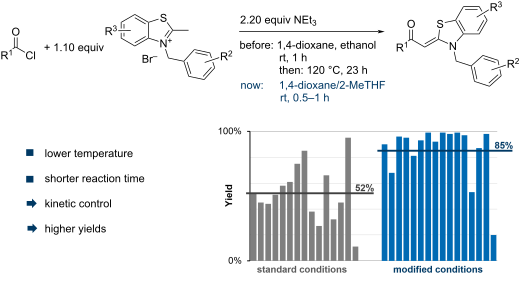
- ; condensation; Einhorn-type acylation; 2-methyl N-benzyl benzothiazolium salts; Introduction Aroyl-S,N-ketene acetals, in particular N-benzyl derivatives 1, are very short donor–acceptor chromophores that have recently found a renaissance due to their peculiar intense solid-state emission and significant turn
- -on of emission upon induced aggregation in alcohol–water mixtures [1]. This chromophore class has been extensively developed in recent years, even to aggregation-induced emissive (AIE) multichromophores [2] and even bichromophoric fluorimetric sensors [3][4]. The retrosynthesis of the title compounds


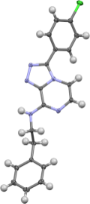
Investigations of amination reactions on an antimalarial 1,2,4-triazolo[4,3-a]pyrazine scaffold
Beilstein J. Org. Chem. 2025, 21, 1126–1134, doi:10.3762/bjoc.21.90
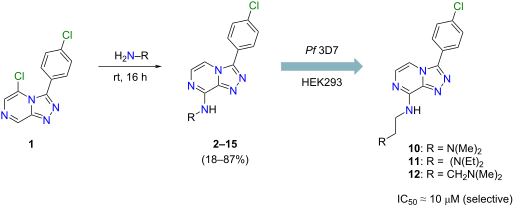
- °C in 5% CO2. At 6 h, 5 µL of 600 µM resazurin, diluted in growth media, was added. Plates were further incubated for 6 h and measured for fluorescence at 530 nm excitation and 595 nm emission. The % inhibition was calculated using 0.4% DMSO (no inhibition) and 50 μM puromycin (100% inhibition) data




Biobased carbon dots as photoreductants – an investigation by using triarylsulfonium salts
Beilstein J. Org. Chem. 2025, 21, 1024–1030, doi:10.3762/bjoc.21.84
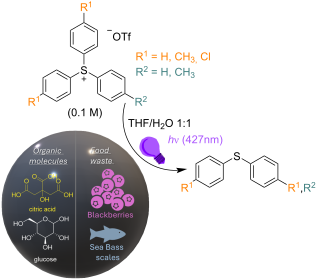
- typically exhibit excitation-dependent emission spectra and large Stokes shifts, features that are uncommon in traditional molecular fluorophores and semiconductor nanoparticles, and such behavior is attributed to the intrinsic heterogeneity of the CDs. The peculiar photophysics of carbon dots arises from
- their size, surface defects, and functional groups, which can be engineered to tune their optical properties. Accordingly, their emission spans a broad range of wavelengths, from ultraviolet to the visible region, allowing for the potential application in an impressive range of applications, such as
- tail extending to the visible region. The emission properties of the synthesized CDs were also investigated and the results are summarized in Table 2. The fluorescence quantum yield strongly depends on the nature of the starting substrates, as is apparent by comparison of the value obtained for


Synthesis of pyrrolo[3,2-d]pyrimidine-2,4(3H)-diones by domino C–N coupling/hydroamination reactions
Beilstein J. Org. Chem. 2025, 21, 1010–1017, doi:10.3762/bjoc.21.82
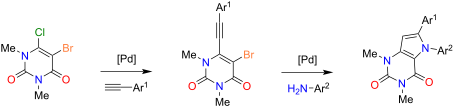
- ]pyrimidine-2,4(3H)-diones 4 were investigated by steady-state absorption and photoluminescence spectroscopy (Figure 2, Table 2). The wavelength and intensity of absorption and emission depended on the substitution pattern. The methyl-substituted compound 4a showed one broad absorption band at ≈290 nm. A
- absorption was observed as compared to compound 4k containing a 4-tolyl group. However, the presence of a CF3 group resulted in a reduction of the extinction coefficient of the absorption band. The emission spectrum of 4a consisted of a strong emission band at 377 nm with a weak shoulder expiring to higher
- wavelengths. However, this shoulder was less distinct for compounds 4m and 4j and not detectable for 4k and 4l, containing the N,N-dimethylaminophenyl group. In contrast to the absorption spectra, in the case of the emission spectra, the presence of a thienyl substituent (compound 4m) led to a hypsochromic


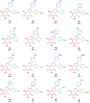

On the photoluminescence in triarylmethyl-centered mono-, di-, and multiradicals
Beilstein J. Org. Chem. 2025, 21, 964–998, doi:10.3762/bjoc.21.80
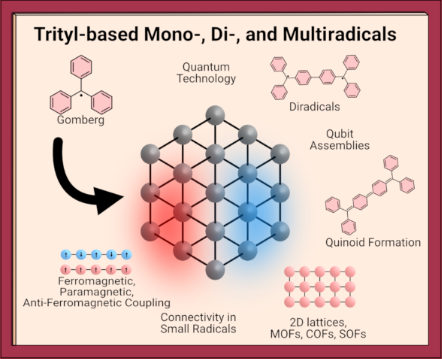
- emission performance [15]. Other prospective applications utilize the manipulation of the spin-state of the unpaired electron and the potential for optical readout of the spin state for quantum technological information processing, communication, or chemical and biological sensing [16][17][18]. However
- strong emission in some of the donor-functionalized triarylmethyl radicals has been explained by improved orbital overlap between the ground D0 and excited D1 states, while often geometrical alignment with a certain angle between the donor and the triarylmethyl units is being discussed. (The reader may
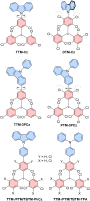
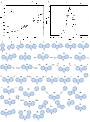
- . Only at temperatures as low as 90 K, the monoradical is stable, allowing recording of the absorption and emission spectra [30]. Symmetrical halogenation of the triphenylmethyl (or trityl) unit increases stability of the molecule, compared to the parent unsubstituted trityl radical first reported by





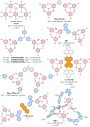


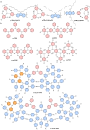
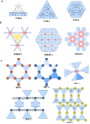


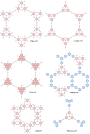
Study of tribenzo[b,d,f]azepine as donor in D–A photocatalysts
Beilstein J. Org. Chem. 2025, 21, 935–944, doi:10.3762/bjoc.21.76
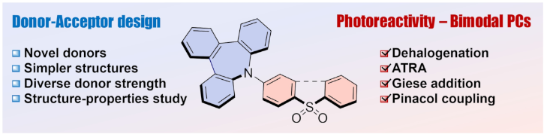
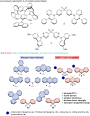
- conjugated scaffolds. Interestingly, molecule 4a, which has the most flexible acceptor core, exhibited a dual emission (DE) profile (Figure 2a). This behavior may be connected to the phenomenon known as PISP (photoinduced structural planarization), which has been reported for the TBA N-substituted with an
- . Analyzing the diverse absorption profiles, we can observe an increase in the red-shifted behavior related to the donor strength in compounds 5e, 5d, and 5c. In contrast, the azepine-derived compounds are the most blue-shifted (Table 1, entry 5). The same trend is observed in the emission (Figure 2b). The
- structures in materials chemistry to photocatalysis. D–A–D organic PCs previously reported and our new D–A bimodal organic PCs. Selected frontier MOs and relative calculated energies of D–A photocatalysts (4a,5a–e, and 6a). Absorption and emission profiles of D–A compounds (4a,5a–e, and 6a) measured in MeCN



Synthesis and photoinduced switching properties of C7-heteroatom containing push–pull norbornadiene derivatives
Beilstein J. Org. Chem. 2025, 21, 807–816, doi:10.3762/bjoc.21.64
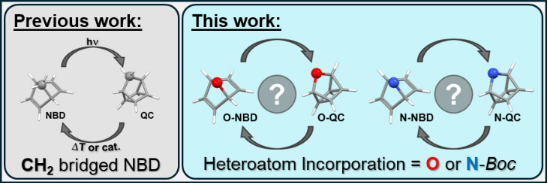
- incorporating larger heteroatoms in the bridge moiety, we anticipate a bathochromic shift that would facilitate absorption match with the solar emission spectrum. Results and Discussion Synthesis The library of new heterocyclic NBD molecules synthesized and investigated in this study is presented in Scheme 1


Binding of tryptophan and tryptophan-containing peptides in water by a glucose naphtho crown ether
Beilstein J. Org. Chem. 2025, 21, 541–546, doi:10.3762/bjoc.21.42
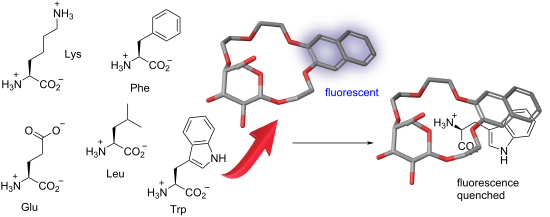
- – a chemoselective receptor for aromatic amino acid esters in water. Fluorescence emission spectra of receptor 1 (25 μM in H2O) upon addition of increasing amounts of tripeptide 2. The concentration of the guest corresponding to each curve is indicated on the right. The arrow marks the quenching of


Deep-blue emitting 9,10-bis(perfluorobenzyl)anthracene
Beilstein J. Org. Chem. 2025, 21, 515–525, doi:10.3762/bjoc.21.39
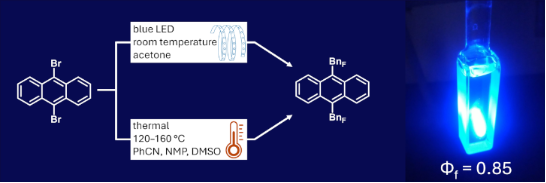
- because isolated electronically excited molecules are more likely to undergo fluorescence instead of non-radiative relaxation, as discussed in some literature [13]. At the same time, it should be noted that emission properties in the crystalline phase and amorphous films, which are often used in OLED
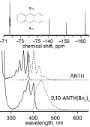
- devices, can differ and this requires further studies. Photophysical properties Absorption and emission spectra of ANTH and 9,10-ANTH(BnF)2 are shown in Figure 1. The maximum λabs and λem values for ANTH and the 9,10-disubstituted ANTH derivatives are shown in Table 1. The maximum λem of 9,10-ANTH(BnF)2
- , whereas 9,10-ANTH(BnF)2 loses vibronic structure in the emission spectrum. This may be the result of different conformations upon relaxation [31]. The HOMO–LUMO gap (Eg) decreases from ANTH (3.28 eV) to 9,10-ANTH(BnF)2 (3.05 eV). A decrease in Eg is regarded as one of the methods for improving the





Unprecedented visible light-initiated topochemical [2 + 2] cycloaddition in a functionalized bimane dye
Beilstein J. Org. Chem. 2025, 21, 500–509, doi:10.3762/bjoc.21.37
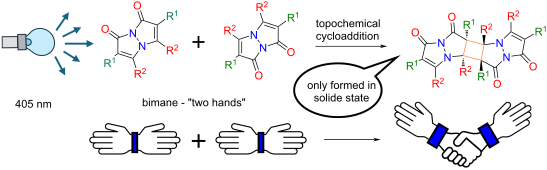
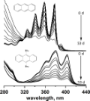
- react and Me2B did not. One possible explanation lies in the light source used for irradiation. The emission wavelength (405 nm) is within 2 nm of the λmax of Cl2B (as a solution in DCM), allowing it to absorb the initiation light with much greater intensity. Additionally, Cl2B has a higher molar
- –0.08. A fluorescence spectrum was then recorded, exciting at 370 nm, using 1 nm excitation and emission slits. The emission was recorded in the range of 370–850 nm. This was done for each solvent: DCM, acetonitrile, and toluene. The quantum yields were calculated by using Me2B in acetonitrile as the
- quantum yields (Φfl) calculated with respect to Me2B in acetonitrile (Φfl = 33%) [19]. Shoulders (sh) on emission spectrum are indicated in parentheses. Supporting Information Supporting Information File 2: Spectroscopic and crystallographic information as well as synthetic details. Funding The authors


Photomechanochemistry: harnessing mechanical forces to enhance photochemical reactions
Beilstein J. Org. Chem. 2025, 21, 458–472, doi:10.3762/bjoc.21.33

- the absorption spectrum of reagents and ensure that the emission spectrum of the light source used overlaps (at least to some extent) with it (Figure 1). The Stark–Einstein law, sometimes referred to as the law of photochemical equivalence, asserts that the absorption of light is a quantum process




Synthesis, structure, ionochromic and cytotoxic properties of new 2-(indolin-2-yl)-1,3-tropolones
Beilstein J. Org. Chem. 2025, 21, 358–368, doi:10.3762/bjoc.21.26
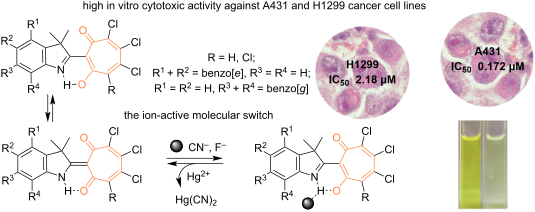
- determined. The structure of 2-(3,3-dimethyl-3H-benzo[g]indolin-2-yl)-5,6,7-trichloro-1,3-tropolone was determined by X-ray diffraction analysis. The compounds obtained are capable of switching emission at 420–440 nm and 476–530 nm upon successive exposure to CN− and Hg2+ ions in an acetonitrile solution. 2
- large Stokes shift values (Table 2, Figure 5). This is consistent with the above conclusion about the existence of tautomeric equilibrium 7,8 (OH)–7,8 (NH) in solutions based on NMR data and DFT quantum chemical calculations (Scheme 2). The emission with a larger Stokes shift appears to correspond to
- spectrometer. Electronic absorption spectra were obtained on a Varian Cary 100 spectrophotometer. Emission spectra were recorded on a Varian Cary Eclipse spectrofluorimeter. Acetonitrile of spectroscopic grade (Aldrich), previously purified by distillation, and tetra-n-butylammonium salts (TBAX: F, Cl, Br, I




Red light excitation: illuminating photocatalysis in a new spectrum
Beilstein J. Org. Chem. 2025, 21, 296–326, doi:10.3762/bjoc.21.22
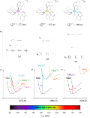
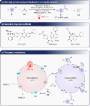
- process by converting these latter into a higher-energy excited state (Scheme 4c) unlike what has been done until now with various described systems already discussed in the literature and emission of blue-light in the case of the triplet–triplet annihilation upconversion phenomenon among others (Scheme
- to narrow both absorption and emission peaks, along with a bathochromic shift in their spectra. Heptamethin cyanins, in particular, are highly relevant for NIR applications, making them valuable in photochemistry. Additionally, their solubilities, redox and photophysical properties can be fine-tuned
















Synthesis and characterizations of highly luminescent 5-isopropoxybenzo[rst]pentaphene
Beilstein J. Org. Chem. 2025, 21, 270–276, doi:10.3762/bjoc.21.19
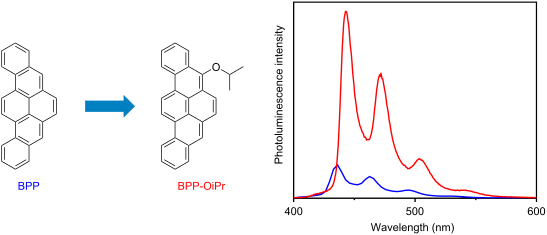
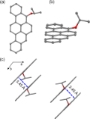
- (13%). BPP-dione, when compared to the parent BPP, also displayed improved absorption and emission from the first excited singlet (S1) state with a PLQY of 62% and an intramolecular charge-transfer character. The rod-like nano- to microcrystals as well as longer wires of these BPPs were also revealed
- , in comparison with parent BPP 2. Notably, both BPP-OiPr 3 and BPP-dione 4 displayed enhanced PLQYs while a significant solvent-polarity dependence of the emission was observed only for the latter, suggesting the photoinduced intramolecular charge-transfer character of 4. Moreover, BPPs 2–4 formed
- exhibited similar emission spectra in toluene with maxima at 436 and 443 nm, respectively, with well-defined vibronic structures (Figure 2b). Notably, the absolute PLQY of BPP-OiPr 3 was measured to be 0.73, demonstrating a remarkable enhancement of the photoluminescence from BPP 2 (PLQY: 0.13) and tert




Streamlined modular synthesis of saframycin substructure via copper-catalyzed three-component assembly and gold-promoted 6-endo cyclization
Beilstein J. Org. Chem. 2025, 21, 226–233, doi:10.3762/bjoc.21.14
- the optical properties of 18 in CHCl3 (c = 100 μM) by measuring its UV–vis absorption spectrum as well as its excitation and emission spectra. The UV–vis spectrum of 18 showed two absorption peaks at 334 nm and around 375 nm (gray solid line). When excited at 375 nm, the emission spectra of 18
- displayed a relatively broad peak with a maximum around 490 nm (blue solid line). The excitation spectra of 18 (blue dashed line), corresponding to an emission at 490 nm, was also recorded (Figure S3, Supporting Information File 1 for details). Despite the modest emission quantum yield (Φfl = 0.07, excited
- - and E- rings serve as hydrogen bond (HB) donors/acceptors to facilitate DNA alkylation at C21. UV–vis absorption (gray solid line), the emission spectrum (blue solid line), and the corresponding excitation spectrum (blue dashed line) of the imidate 18 in CHCl3 (c = 100 μM). aQuantum yield (Φfl




Heteroannulations of cyanoacetamide-based MCR scaffolds utilizing formamide
Beilstein J. Org. Chem. 2025, 21, 217–225, doi:10.3762/bjoc.21.13
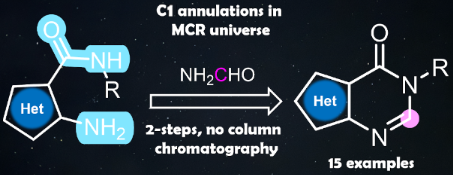
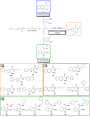
- fashion, substituted indolopyrimidone derivatives 7a–e were obtained within 3 h in 31–90% total yield (2 steps) upon heating with formamide (Scheme 5). Next, we characterized certain physicochemical properties of the newly synthesized compounds. The absorbance and emission spectra of 5–7 were obtained
- , showing similar profiles across all the different scaffolds (Figure 2 and Supporting Information File 1). The compounds 5–7 exhibited a maximum absorbance (λmax) at 330 nm, 284 nm and 310 nm, respectively, which also corresponded to their excitation wavelength (λex). Upon excitation, fluorescence emission




Synthesis, structure and π-expansion of tris(4,5-dehydro-2,3:6,7-dibenzotropone)
Beilstein J. Org. Chem. 2025, 21, 1–7, doi:10.3762/bjoc.21.1
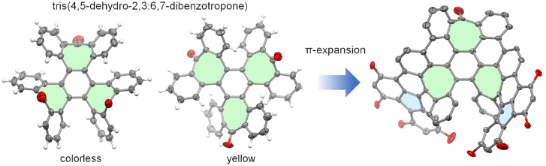
- in 3, which consume the energy of the excited state. Figure 4 shows the UV–vis absorption spectrum of 3 in cyclohexane with the absorption edge at 561 nm and its emission spectrum with a peak at 580 nm. In the test windows of cyclic voltammetry (Supporting Information File 1, Figure S1), 3 exhibits
- clarification). Structure of (M,P,M)-3 in the crystal of 3·CH2Cl2 (carbon and oxygen atoms are shown as grey and red ellipsoid at the level of 50% probability, and hexyl groups and hydrogen atoms are removed for clarity). UV–vis absorption spectrum (black line) and emission spectrum (blue line, excited at 400


Synthesis, characterization, and photophysical properties of novel 9‑phenyl-9-phosphafluorene oxide derivatives
Beilstein J. Org. Chem. 2024, 20, 3299–3305, doi:10.3762/bjoc.20.274
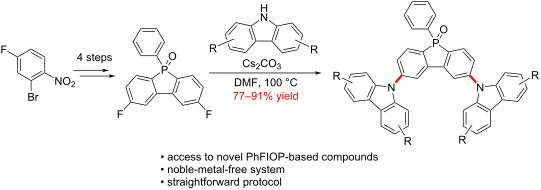
- has insignificant effect on the molecular ground state of 7-H. The PL spectra of the PhFlOP-based compounds 7 in toluene at room temperature are shown in Figure 3, and the λem values are included in Table 2. Different emission wavelengths are observed due to the various substituents present in the
- significantly blueshifted emission maximum at 392 nm, perhaps as a consequence of a more rigid configuration. As for 7-Br, owing to the electron-withdrawing properties of Br, it displays a blueshifted PL maximum at 383 nm. The emission wavelength of 7-Cz-2 has a slight redshift compared to 7-Cz-1, which may be
- induced by the stronger electron-donating feature of the carbazole substituent located on the donor carbazole group. In addition, we tested the emission wavelength of 7-H in different solvents (Figure 3b) and found that the maximum is redshifted gradually with increasing solvent polarity, which indicates