


Search results
Search for "structure" in Full Text gives 3019 result(s) in Beilstein Journal of Organic Chemistry. Showing first 200.
Synthesis and structural elucidation of a novel bis-spirooxindole from isatin and ethylenediamine
Beilstein J. Org. Chem. 2026, 22, 813–820, doi:10.3762/bjoc.22.63

- :1 isatin-to-diamine ratio provides the diiminoisatin, whereas a 1:2 ratio leads to the formation of a highly symmetric bis-spirooxindole scaffold. The new spirocyclic product was fully characterized by HRMS, IR and extensive 1D/2D NMR analysis, and its structure was unequivocally established by
- -proline (7), which leads to the formation of the dispirocyclic product 9 whose structure was ultimately established by X-ray diffraction after initial ambiguity based on spectroscopic data alone (Scheme 1) [16][17]. This case illustrates how condensations of isatin with bifunctional nitrogen nucleophiles
- nucleophiles are highly sensitive to subtle variations in the nucleophile structure and reaction conditions, and may lead to markedly divergent outcomes. While simple diimines are often formed under controlled stoichiometry, alternative pathways can give rise to unexpectedly condensed spirocyclic architectures


Halogenated azobenzene acrylates: from efficient solution photoswitching to stable solid-state photochromic materials
Beilstein J. Org. Chem. 2026, 22, 782–794, doi:10.3762/bjoc.22.60
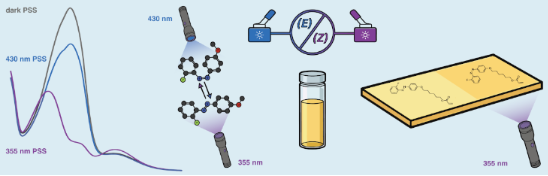
- solid-state E/Z isomerization [8][9]. Azobenzene was also incorporated into the structure of liquid crystal elastomers (LCEs) [10][11], where UV-light curing increases thermally induced LCE film actuation or even locks the film in a specific shape during flipping [10]. The phenomenon of photoactuation
- calorimetry (DSC), thermogravimetric analysis (TGA), cyclic voltammetry (CV), UV–vis absorption spectroscopy, 1H and 13C NMR, and theoretical DFT calculations were employed. Furthermore, the target compounds are designed for incorporation as photoactive copolymers into the structure of functionalized
- photoconversion could be higher. The type of halogen has only a negligible effect. The reverse switch of 1a–f induced by 430 nm light afforded the E/Z molar ratios of 73:27–92:8 with no straightforward structure–switching property relationships. The recorded half-lives of the Z-isomer in the dark () range from


Design, synthesis, and biological evaluation of FXR/ASK1 dual-target modulators
Beilstein J. Org. Chem. 2026, 22, 771–781, doi:10.3762/bjoc.22.59
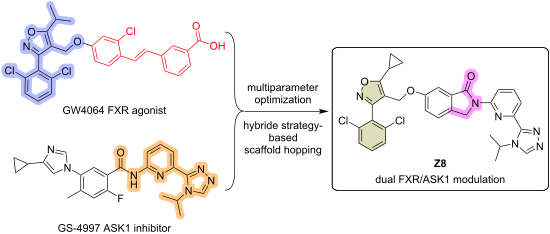
- of insulin resistance, inflammation, and hepatic steatosis [15]. The most advanced ASK1 inhibitor in clinical development is the compound celonsertib (Scheme 2). Following this, a series of new ASK1 inhibitors were derived using selonsertib as a lead compound in a variety of structure-optimized ways
- of the minimal pharmacophores of the selective FXR agonist GW4064 and the selective ASK1 inhibitor selonsertib (GS-4997) [35][36][37]. Published structure–activity relationship (SAR) studies have identified the isoxazole moiety and terminal carboxylic acid of GW4064 [38], along with the 4
- -aliphatically substituted 4H-1,2,4-triazolopyridine biaryl scaffold of selonsertib [31][39][40], as key pharmacophores. In the co-crystal structure of hFXR-LBD with GW4064 [41], the isoxazole core coordinates the π-cation interaction between His 447 and Trp 469; the 5-isopropyl group is embedded into a


Preparation of 3-(alkylamino)imidazo[1,2-a]pyridine-2-carbaldehydes via Kornblum oxidation and unexpected ring-opening reactions of the corresponding alcohols under oxidative conditions
Beilstein J. Org. Chem. 2026, 22, 763–770, doi:10.3762/bjoc.22.58
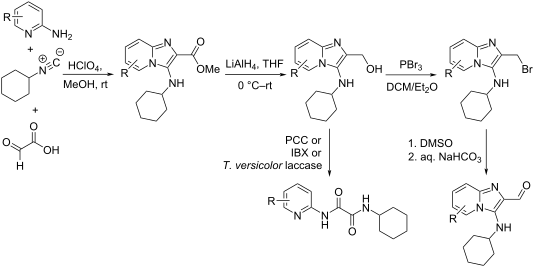
- transcriptase in due course. Examples of biologically active imidazo[1,2-a]pyridines. Compounds envisaged for synthesis. Previously reported 3-amino-2-carboxylic acid derivatives. Single crystal X-ray structure of 18a. ORTEP diagram drawn at 50% probability level. Different oxidative cleavage products obtained


Synthesis and biological evaluation of new brassinosteroid analogs with C-22 benzoate function
Beilstein J. Org. Chem. 2026, 22, 753–762, doi:10.3762/bjoc.22.57
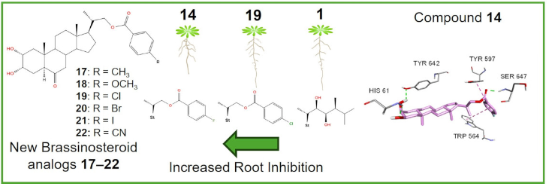
- inhibition of root growth of Arabidopsis thaliana. The RLIT data is compared with those previously reported for two series of compounds having the same substitution pattern at C-22 but different structure in ring A. This comparison revealed that a 2α,3α-dihydroxy configuration is more active than a 3
- -carbonyl or 3β-hydroxy function in this ring. Additionally, the accumulation of the dephosphorylated form of the BES1 protein, which is part of the BRs signaling pathway and control their activity, has been evaluated as well. The results are analyzed in terms of BR analog’s structure and compared with
- binding energies obtained from a docking study. In this way, it is intended to assess the effect of chemical structure on the initial and one intermediate step, and on the final plant response. Our results show that the binding of BR analogs to the active site, which initiate the signaling process, and


Rongalite addition to dienones: diastereoselectivity in cyclic sulfone synthesis; stereochemical rationalization and prospects as a general conjugate nucleophile
Beilstein J. Org. Chem. 2026, 22, 742–752, doi:10.3762/bjoc.22.56

- product, we used density functional theory (DFT) and conformational search techniques based on tight-binding methods to find the energetically minimized structure of 7 (see Supporting Information File 1 for details on all computations). The lowest energy structure is depicted in Figure 3. It shows a
- structure somewhat rotated out of planarity (dihedral angles between aromatic C–C and vinylic CH are 34°). This presumably still allows for some conjugative stabilization from the aromatic rings to the enone π-systems and reduces eclipsing interactions between the ortho-methyl groups and the vinylic H
- calculated transition state structure TS-12a shows a flattened half-chair conformer, which has the aryl rings in pseudo-equatorial positions. TS-12b adopts a different shape, closer to a flattened chair which again allows both aryl groups to be equatorial. There has been much debate in the literature


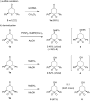


Synthesis of heterocycles based on azomethine ylides from α-amino acids (or amines) and carbonyl compounds
Beilstein J. Org. Chem. 2026, 22, 705–741, doi:10.3762/bjoc.22.55
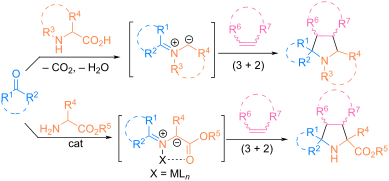
- efficient synthesis of a series of polysubstituted enantioenriched pyrrolidine derivatives 48 possessing a spiroindene molecular structure (Scheme 22) [59]. Based on the results of DFT calculations, it was suggested that the [6 + 3] cycloaddition product for benzofulvene 47 loses aromatic stability and
- configuration and the structure of the transition state [88]. In [1], we developed an efficient protocol for the diastereo- and regioselective synthesis of spiro[cyclopropa[a]pyrrolizine-2,2'-indenes] 128–131 using 1,3-dipolar cycloaddition reactions of stable azomethine ylide 123, obtained in situ by
- constructing the structure of spiro[indoline-3,2'-pyrrole]. In a study by Zhao and co-workers, asymmetric 1,3-dipolar cycloaddition of azomethine ylides derived from isatin and benzylamines to maleimides was catalyzed by Cinchona alkaloid-based squaramide L24 (Scheme 49) [99]. The cycloaddition proceeded


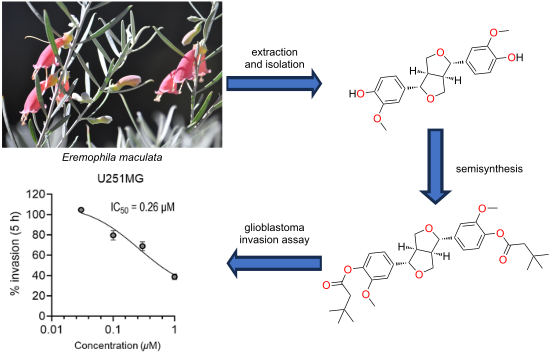
Anti-invasive and cytotoxic evaluation of a (+)-pinoresinol-based semisynthetic library against glioblastoma
Beilstein J. Org. Chem. 2026, 22, 691–704, doi:10.3762/bjoc.22.54
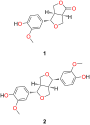
- analysis. During our comparison of spectroscopic and chiro-optical data for (+)-salicifoliol (1) with reported literature values [16], we noted that an earlier paper [15] reporting the chemical structure of 1 had misdrawn the stereochemistry. The stereochemical assignment for (+)-salicifoliol (1) has been
- and were also fully characterized following NMR, UV–vis, [α]D, ECD, and ESIMS data analyses. An example of our structure elucidation studies is described below, which focuses on the brominated pinoresinol enantiomer (+)-5,5'-dibromopinoresinol (5). HRESIMS data revealed an ion at m/z 536.9519 [M + Na
- planar structure assignment for 5. Moreover, the relative configuration of the semisynthetic derivative 5 was assigned following ROESY data analysis. Following the slow evaporation of a methanolic solution of (+)-eudesmin (3), suitable crystals were obtained for X-ray crystallographic studies (Figure 4



Synthesis of depressin, cryptomeridiol and 4-epi-cryptomeridiol enabled by a terpenoid chiral pool-producing platform
Beilstein J. Org. Chem. 2026, 22, 683–690, doi:10.3762/bjoc.22.53
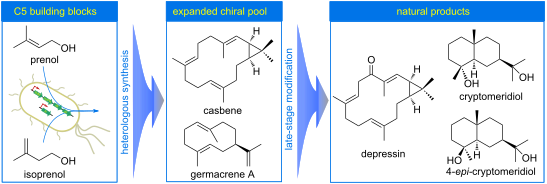
- ). Depressin (1) was isolated from the soft coral Simularia depressa collected from Hainan Province of China [13]. Its structure contains the typical bicyclo[12.1.0]pentadecane casbane diterpenoid skeleton with a cis-disubstituted cyclopropane unit, and a keto group at C5, which is the most frequently oxidized
- ). Supporting Information Supporting Information File 5: Materials, synthetic methods and copies of NMR spectra for all compounds. Supporting Information File 6: X-ray crystal structure of 16. Funding We are grateful to the National Natural Science Foundation of China (No. 82574274) for the financial support.


Harnessing light energy with molecules
Beilstein J. Org. Chem. 2026, 22, 680–682, doi:10.3762/bjoc.22.52

- structure by a heteroatom (oxygen or nitrogen) in donor–acceptor, push–pull NBD derivatives are reported. In a computational study, Pawar and co-workers [7] further expanded the NBD structure by elongating the unsaturated bridge with different heteroatoms or functional groups. Azobenzenes, interconverting
Using generative AI to transform peptide hits into small molecule leads
Beilstein J. Org. Chem. 2026, 22, 672–679, doi:10.3762/bjoc.22.51
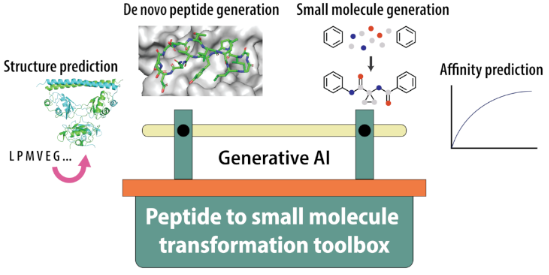
- potential for new AI-based tools to expedite the structure-based transformation of peptide hits into small molecule leads. In this Perspective, we highlight how AI-enabled prediction and design tools can potentially span the entire workflow from peptide to small molecule: target protein structure prediction
- drugs derived from native peptide substrates. A classic example is the ACE inhibitor captopril, an analogue of a snake venom peptide, the development of which has been cited as an early success story for structure-based rational drug design [12][13]. Despite the long history, there is still no
- experimental co-crystal structure of the bound complex, standard medicinal chemistry principles are used to probe structure–activity relationships (SAR) and determine the key interactions that form a minimal pharmacophore, supported by classical physics-based molecular modelling methods such as molecular


Advantages of PROTACs in achieving selective degradation of homologous protein families
Beilstein J. Org. Chem. 2026, 22, 628–661, doi:10.3762/bjoc.22.49
- ; PROTAC; protein–protein interaction; selectivity; ubiquitination; Introduction The cell is the fundamental unit of structure and function in the human body [1][2]. More than 20,000 proteins act in concert to regulate the entire cellular life process [1]. To date, dysregulated protein function has been
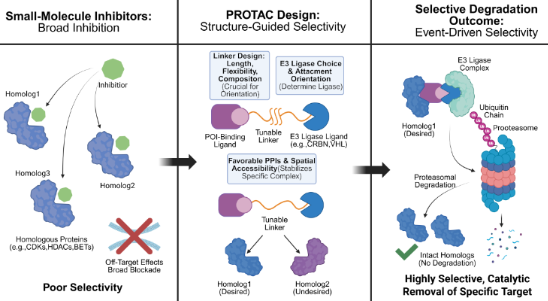
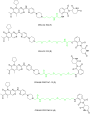
- imperative to minimize the degradation of non-targeted proteins. While conventional inhibitors often exhibit lacking selectivity towards proteins with high sequence similarity, PROTACs leverage their heterobifunctional structure to achieve exquisite selectivity [24][27]. This is accomplished by fine-tuning
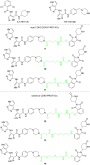
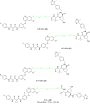
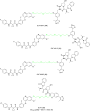
- -containing compound 33 can almost completely degrade p38δ, but in the degradation of p38α, it is restricted. In contrast, the structure of compound 30 having additional carbon atoms added to the linker, resulted in less than 50% degradation of both subtypes at the maximum efficiency. It can be seen that the







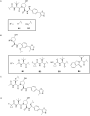


Towards the targeted protein degradation of CK2: design and synthesis of CAM4066-based PROTACs
Beilstein J. Org. Chem. 2026, 22, 611–619, doi:10.3762/bjoc.22.47
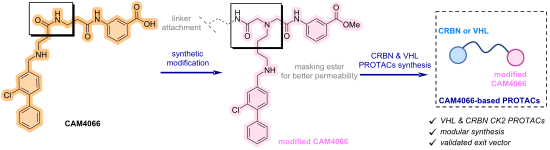
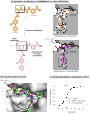
- broader kinome perturbation. The first design objective was therefore to identify a suitable exit vector for linker attachment that would allow productive E3-ligase recruitment without compromising the established binding geometry of CAM4066. Inspection of the co-crystal structure of 1 bound to CK2α
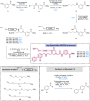
- geometry, and E3 ligase selection. Conclusion In summary, we have developed a modular synthetic platform for the construction of CK2-targeting degraders 23–26, 28, and 29 based on the selective bivalent inhibitor CAM4066. Structure-guided design enabled identification of a solvent-accessible exit vector
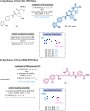
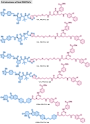
- degraders and lays the groundwork for future optimisation toward achieving effective and selective CK2 degradation. Design strategy and validation. A) Structure of CAM4066 (1) that served as a model design for the development of CK2 targeted PROTACs with a general structure 2. Crystal structures showcased

Computational prediction of C–H hydricities and their use in predicting the regioselectivity of electron-rich C–H functionalisation reactions
Beilstein J. Org. Chem. 2026, 22, 603–610, doi:10.3762/bjoc.22.46
- solvation model. We then conduct re-optimization in ORCA (v.5.0.4) [17][18], using the composite electronic structure method r2SCAN-3c [19] and the conductor-like polarizable continuum model (CPCM) [20] as the implicit solvation model. r2SCAN-3c is chosen as the optimal functional based on a benchmark study
- that evaluates the accuracy of different levels of theory, ranging from semiempirical methods (xTB [16]), composite electronic structure methods (r2SCAN-3c [19]) to DFT methods (M06-2X[21], CAM-B3LYP [22][23]). All methods are evaluated either as single-point calculations or optimization and frequency
- random conformer, we produce 20 random conformers from a SMILES string and optimise the structure with molecular mechanics force fields (MMFF) [33] using RDKit [12]. The CM5 atomic charges of the lowest-energy conformer are then used to generate atomic descriptors based on sorting the CM5 charges for a


![[Graphic 6]](/bjoc/content/inline/1860-5397-22-46-i8.svg?max-width=637&scale=1.18182)


Design and synthesis of an erdafitinib-based selective FGFR2 degrader
Beilstein J. Org. Chem. 2026, 22, 583–591, doi:10.3762/bjoc.22.44
- proper ligand binding, thus promoting uncontrolled cell proliferation [11][14]. Mutations in FGFR2 may alter its structure, enabling it to bypass normal regulatory mechanisms and activate downstream oncogenic pathways independently of external stimuli, which also contributes to tumor development. Gene
- purpose the clinically validated inhibitor erdafitinib as a POI binder that selectively targets FGFR2. Based on the analysis of the co-crystal structure of erdafitinib bound to the FGFR kinase domain (PDB: 5EW8, https://doi.org/10.2210/pdb5EW8/pdb) [30], we observed that the aliphatic amine group is
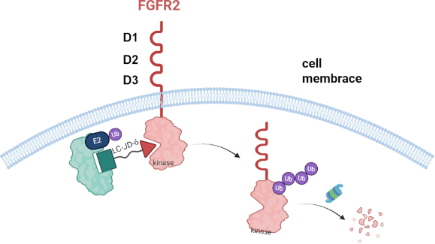
- development of novel therapeutic strategies against FGFR2-driven tumors. Chemical structures of severel FGFR inhibitors and degraders. Rationale of the FGFR2 degrader design. a) Structure of the erdafitinib–FGFR complex. The figure was generated by PyMOL (PDB: 5EW8, https://doi.org/10.2210/pdb5EW8/pdb) [30



Continuous-flow carbonyl hydrogenation under subatmospheric to atmospheric hydrogen pressure enabled by robust heterogeneous Pt–Fe catalysts
Beilstein J. Org. Chem. 2026, 22, 575–582, doi:10.3762/bjoc.22.43
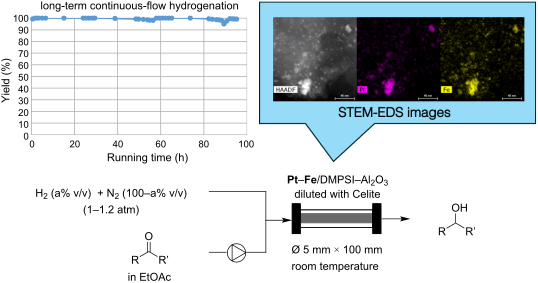
- ][10][11][12]. In this context, advanced technologies represented by the precise control of the bimetallic structure of a heterogeneous catalyst, mechanochemical hydrogenation, and continuous-flow methods using packed-bed reactors greatly contributed to advancing this transformation [9][11][12][13
- Al2O3 to form a stabilized composite support [32]. A plausible scenario for the formation of the bimetallic structure of Pt‒Fe nanoparticles during the catalyst preparation would be the same as that for the formation of Pt–Ni bimetallic structures, and it involves the following steps [33]. Na2PtCl6∙6H2O
- grown from the existing Pt nanoparticles. Therefore, a bimetallic structure of Pt and Fe is generated, and both elements are observed with similar distributions by STEM‒EDS mapping analysis (Figure S1, Supporting Information File 1). The Pt nanoparticles are isolated by the surrounding Fe species, which


Kinetic resolution of racemic planar-chiral vinylcymantrenes by molybdenum-catalyzed asymmetric metathesis dimerization
Beilstein J. Org. Chem. 2026, 22, 568–574, doi:10.3762/bjoc.22.42
- revealed that the unit cell contains two independent molecules, having slightly different conformations, and the structure of one of the two crystallographically independent molecules is shown in Figure 1 with the selected bond lengths and angles (see Supporting Information File 1 and Supporting
- Information File 2 for details). The two cyclopentadienides and the olefinic moiety are nearly coplanar with a C2–C13–C14–C8 torsion angle of 175.4(2)°. The Flack parameter for this structure was determined to be –0.010(4), and the absolute configuration of (–)-2b was unambiguously determined to be (S,S) (see
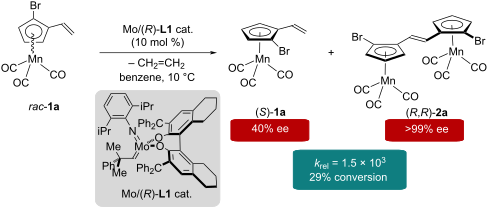
- ], reveals that the molybdenum-catalyzed asymmetric metathesis reactions are powerful tools to control planar chirality in various transition-metal complexes. ORTEP drawing of the X-ray structure of (S,S)-(–)-2b with atom numbering (thermal ellipsoids set at the 30% probability level). Selected bond lengths


Molecular tweezer–peptide conjugates disrupt the protein–protein interaction between survivin and histone H3 essential in mitosis
Beilstein J. Org. Chem. 2026, 22, 557–567, doi:10.3762/bjoc.22.41
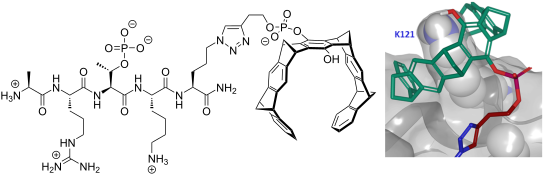
- . demonstrated that survivin contributes most of the binding energy to this critical complex with histone H3 [8]. In 2011, a crystal structure was solved depicting structural details of the H3 N-terminus (1–21) bound by survivin’s BIR domain (Figure 2). Only the first six residues (ARpTKQT) show electron density
- in solution, as shown by the fluorescence polarization measurements where the K121A mutation has drastically reduced affinity. In the new crystal structure, the apolar pyrrolidine of Pro-26 occupies half of the tweezer cavity, while from the opposite side, a density that most likely corresponds to a
- + ions that were surprisingly observed in the center of the aromatic ring structure, perhaps due to their weaker binding of the hydrate shell. However, this early crystal structure was obtained with the diacetoxytweezer in organic solution [18]. Interestingly, a similar unexpected inclusion of a




Experimental and DFT studies on the regioselective methanolysis of 5-azido-9-oxabicyclo[6.1.0]nonan-4-yl 4-nitrobenzoate isomers
Beilstein J. Org. Chem. 2026, 22, 547–556, doi:10.3762/bjoc.22.40
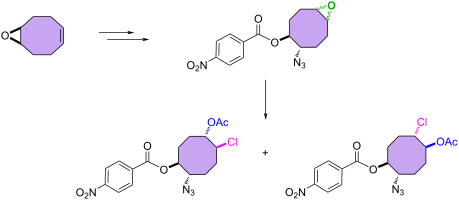
- epoxide ring and acetylation resulted in the formation of two corresponding chloro-acetate isomers. The structure of one of the chloro-acetate isomers was determined via crystallographic analysis and the other by 1D and 2D NMR spectroscopy. DFT computations confirm the regioselectivity of the methanolysis
- corresponding acetates 10 and 11 using AcCl in CH2Cl2. The reaction mixture was chromatographed on a silica gel column with n-hexane/ethyl acetate 85:15 as eluent to give pure acetates 10 and 11 in 57% and 35% yields, respectively. The structure of compound 10 was unambiguously determined by single crystal X
- intermediate 12 with the anti-face of the benzoate to give compound 14. Similarly, the chloride anion attacks by SN2-type the epoxide ring of intermediate 15 to give the sole product 16. The structure of acetate 11 was investigated using 1D (1H and 13C) and 2D (COSY, NOESY, NOE-diff, and HMQC) NMR


Melifoliox B, a novel phloroglucin derivative isolated from Melicope barbigera (Rutaceae) and synthesis of new oxidation products from melifoliones A and B
Beilstein J. Org. Chem. 2026, 22, 535–546, doi:10.3762/bjoc.22.39
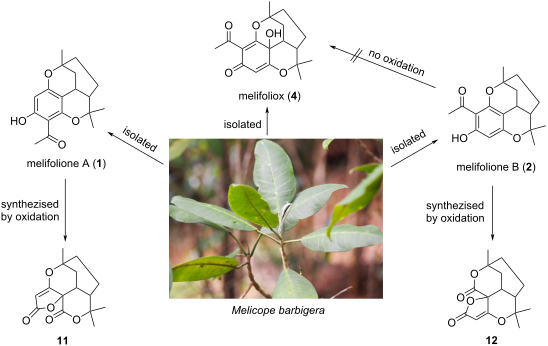
- to new acetophenones and 2H-chromenes, the dichlormethane extract from leaves of Melicope barbigera A. Gray (Rutaceae) afforded a mixture of the isomeric melifoliones A (1) and B (2) as well as an oxidation product of 2, whose structure was elucidated as the para-quinol 4. For an independent
- formerly found in Melicope latifolia (syn. Euodia latifolia [4]. We now report on the identification and structure elucidation of a new natural compound 4 in the dichloromethane extract of leaves of Melicope barbigera, which was characterized as an oxidation product of melifolione B (2) by means of high
- resolution electrospray ionization mass spectrometry (HRESIMS) and NMR spectra. However, the isomeric compound 3 could not be detected in the extract (Figure 1). Since 4 could be an artefact, built by oxidation of 2 during working up of the extract, and to finally confirm the structure, the isomeric



Get a better glimpse on sequential photoreactions of trisnorbornadienes with 19F NMR spectroscopy
Beilstein J. Org. Chem. 2026, 22, 527–534, doi:10.3762/bjoc.22.38
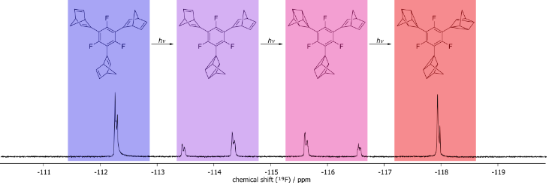
- exemplarily with a trifluorinated trisnorbornadienylbenzene that 19F NMR spectroscopy may be applied as a useful complementary method for the investigation of sequential photoreactions. The trisnorbornadiene core structure was used as it figures as promising scaffold for molecular solar thermal (MOST) energy
- lines, 1H NMR spectroscopy is a very useful method to follow the photoreaction, ideally upon direct irradiation in the NMR probehead (in situ NMR), because it potentially enables accurate structure elucidation. But even though this method may enable the accurate monitoring of a stepwise photochromic


Modern synthetic pathways towards eribulin and its subunits
Beilstein J. Org. Chem. 2026, 22, 495–526, doi:10.3762/bjoc.22.37
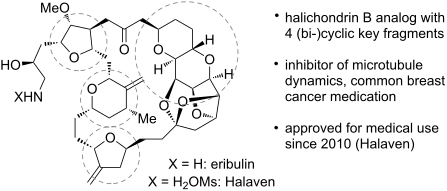
- described the total synthesis of the marine natural product [19] and shortly thereafter, also its simplified structure, 1, was assembled and showed similar anticancer behavior [19][21]. Since 2010, the mesylate salt of 1 is approved by the U.S. Food and Drug Administration (FDA) for the treatment of
- tissue sarcomas. Moreover, ongoing studies aim to optimize combination therapies involving 1 with targeted agents, immunotherapies, and other chemotherapeutics to enhance its efficacy and reduce adverse effects [51][52][53][54][55][56][57][58][59][60][61][62][63][64][65]. Given the challenging structure
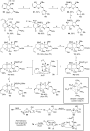
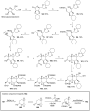
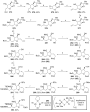
- epoxide 98. Deprotection of the alcohol motif of 98 enabled the cyclization towards tetrahydropyran 99. Next, 99 underwent an esterification with acrylic acid, was cyclized via Grubbs metathesis and the remaining double bond was hydrogenated leading to bicyclic core structure of 101. Notably, during the








Synthesis and uranyl(VI) extraction performance of a calix[4]pyrrole–tetrahydroxamic acid receptor
Beilstein J. Org. Chem. 2026, 22, 486–494, doi:10.3762/bjoc.22.36
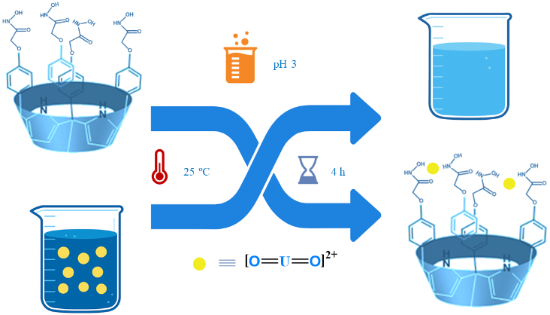
- % yield. Its structure was confirmed by 1H NMR, 13C NMR, and HRMS. The uranium(VI) extraction efficiency of PCP HA was evaluated by solid–liquid extraction experiments, using uranyl acetate as the uranium source, with measurements performed by gamma spectroscopy. PCP HA demonstrated good performance
- amount of solid KCN in aqueous hydroxylamine has been reported for the solution-phase hydroxylamination of esters previously described by Ho et al. [52]. This study demonstrated that the extent of ester conversion and the formation of carboxylic acid by-products vary markedly with the structure of the
- %). The structure of PCP HA was fully characterized by 1H NMR and 13C NMR (DMSO-d6) as well as by HRMS (ESI+) (Figures S3–S6, and S9 in Supporting Information File 1). In the 1H NMR spectrum, two sets of singlets at 4.41 and 4.76 ppm (CH2) were attributed to the –O=C–CH2–O– groups of the E/Z isomers of


Synthesis of a HDAC inhibitor–nanogold probe for cryo-EM visualization in class I HDAC co-repressor complexes
Beilstein J. Org. Chem. 2026, 22, 480–485, doi:10.3762/bjoc.22.35
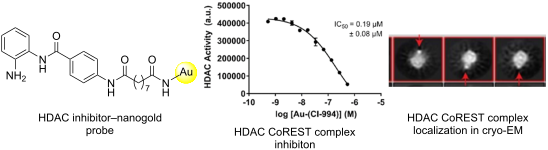
- . Examples of structure elucidation utilizing cryo-EM for class I HDAC complexes include the MiDAC and SIN3 complexes [8][9]. However, despite these advances, obtaining high-resolution structures of flexible multiprotein complexes can still prove challenging. One such example of this includes the tripartite
- CoREST complex that encompasses HDAC1/2, the co-repressor of REST (CoREST) and the lysine-specific demethylase 1 (LSD1). Cryo-EM and small angle X-ray scattering revealed that the CoREST complex exists as a bi-lobed structure [10]. Enzyme kinetics studies showed that HDAC1 and LSD1 do not act
- , like other benzamide HDAC inhibitors, exhibits slow on/off binding kinetics, hence once bound to the HDAC within the complex it should not readily dissociate [16]. A crystal structure of HDAC2 bound to an analogue of CI-994 (PDB: 4LY1) revealed that the acetamide moiety is oriented outside the HDAC



Structural reassignment of compound 968, an allosteric glutaminase inhibitor
Beilstein J. Org. Chem. 2026, 22, 455–460, doi:10.3762/bjoc.22.33
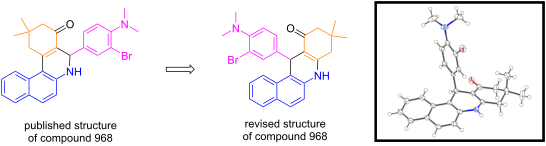
- anticancer drug target. Compound 968 is a glutaminase inhibitor that is widely used to probe cancer cells’ dependence on glutaminase activity. Here, we show by NMR spectroscopy and X-ray crystallography that the reported benzo[c]phenanthridine structure of compound 968 is incorrect; its true structure is the
- not produce benzo[c]phenanthridine 1 as product, but instead yields the isomeric benzo[c]acridine 2 (Figure 2). Upon learning of these results, we became concerned that the accepted structure of compound 968 is incorrect. We then sought to determine whether compound 968 is a benzo[c]phenanthridine 1
- or benzo[c]acridine 2. Clarifying this issue would benefit the community of cancer biologists who use compound 968, enable medicinal chemistry around the compound 968 scaffold, as well as correct the structure displayed by vendors of this compound. Results and Discussion To determine whether the





