Search results
Search for "HPLC" in Full Text gives 835 result(s) in Beilstein Journal of Organic Chemistry. Showing first 200.
Asymmetric synthesis of β-amino cyanoesters with contiguous tetrasubstituted carbon centers by halogen-bonding catalysis with chiral halonium salt
Beilstein J. Org. Chem. 2025, 21, 547–555, doi:10.3762/bjoc.21.43
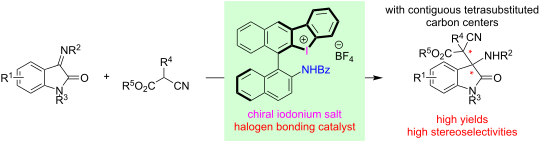
- : Experimental procedures, characterization data, NMR spectra, and HPLC chromatograms. Funding This research was funded by an IAAR Research Support Program (Chiba Halogen Science: Halogen-Linkage of Molecular Functions); Chiba University Open Recruitment for International Exchange Program, Chiba University


Deep-blue emitting 9,10-bis(perfluorobenzyl)anthracene
Beilstein J. Org. Chem. 2025, 21, 515–525, doi:10.3762/bjoc.21.39
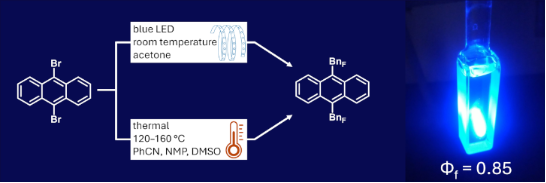
- a relatively fast and efficient conversion into the desired products. Further optimization of this promising photochemical method is currently under way in our laboratory. Isolation and characterization Pure samples of 9,10-ANTH(BnF)2 and 9-ANTH(BnF) were isolated by HPLC (Figure S3, Supporting
- photoirradiated 9,10-ANTH(BnF)2 solution contained only resonances for the starting material (20%) and for a single presumed photoproduct (80%) which retained the symmetry of 9,10-ANTH(BnF)2 (see Supporting Information File 1, Figures S7 and S9 (19F NMR)). An HPLC analysis of the photoirradiated ANTH solution
- revealed that at least three compounds were present, in accordance with an earlier report [32]. In the photoirradiated 9,10-ANTH(BnF)2 sample, the HPLC chromatogram shown in Figure S10 (Supporting Information File 1) showed 9,10-ANTH(BnF)2 (tR = 4.5 minutes) and a major product (tR = 6 minutes), in





Synthesis of the aggregation pheromone of Tribolium castaneum
Beilstein J. Org. Chem. 2025, 21, 510–514, doi:10.3762/bjoc.21.38
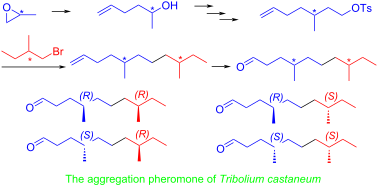
- , Mori and Phillips achieved the complete separation of the derivatives from the four stereoisomers by reversed-phase HPLC at −54 °C, and revealed that the natural pheromone consists of four stereoisomers of 4,8-dimethyldecanal (Figure 1) [16][17]. Previous syntheses mainly focused on chiral sources of


Synthesis of electrophile-tethered preQ1 analogs for covalent attachment to preQ1 RNA
Beilstein J. Org. Chem. 2025, 21, 483–489, doi:10.3762/bjoc.21.35
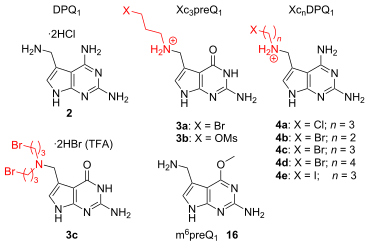
- (16) see Supporting Information File 1. Syntheses of haloalkyl- and mesyloxyalkyl-modified preQ1 as and DPQ1 ligands. Supporting Information Supporting Information File 12: Experimental part, HPLC analysis of preQ1 and NMR spectra. Acknowledgements We thank Clemens Eichler (University of Innsbruck


Organocatalytic kinetic resolution of 1,5-dicarbonyl compounds through a retro-Michael reaction
Beilstein J. Org. Chem. 2025, 21, 473–482, doi:10.3762/bjoc.21.34
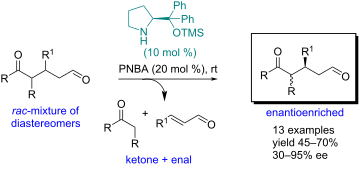
- its enantioselectivity, aliquots of the reaction mixture were taken at defined time intervals and analyzed by HPLC using a chiral column after passing them through a short silica gel pad. Some interesting conclusions can be made from the data in Table 1. Firstly, the retro-Michael reaction occurs, to
- –240 mesh). Chiral HPLC analysis was performed using different chiral columns. IR spectra were recorded on an FTIR instrument. High-resolution mass spectra were performed by positive electrospray ionization using a quadrupole-time-of-flight detector (ESI+-Q-TOF) instrument. All compounds were purchased
- resolution of pure diastereomer anti-1. Supporting Information Supporting Information File 10: Characterization data, copies of spectra and HPLC chromatograms. Funding J.G.-P. thanks to the Universidad de Valladolid for a predoctoral fellowship. The Spanish MINECO (Project CTQ2014-59870 P) and the Junta de


Identification and removal of a cryptic impurity in pomalidomide-PEG based PROTAC
Beilstein J. Org. Chem. 2025, 21, 407–411, doi:10.3762/bjoc.21.28
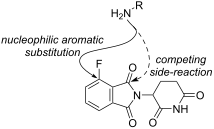
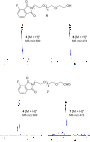
- impurity generated in this process. Nucleophilic acyl substitution competes with aromatic substitution to displace glutarimide and gives a byproduct that can co-elute with the desired product on HPLC throughout the remainder of the synthesis. Scavenging with taurine is a convenient way to minimize this
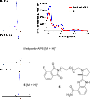
- iVeliparib-AP6. As a common practice for small-molecule library synthesis, the identity and the purity of the reaction products of this simple, 3-step process were analyzed by LC–MS. Whereas the HPLC traces of the reaction mixtures showed one major product peak, the final product carried a barely noticeable
- shoulder peak (Figure 2, marked with asterisk). A close examination of the UV profile indicated the presence of an impurity. Its removal requires repetitive prep-HPLC purifications that are inefficient and time-consuming. The isolated impurity lacks the characteristic fluorescent yellow color of




Antibiofilm and cytotoxic metabolites from the entomopathogenic fungus Samsoniella aurantia
Beilstein J. Org. Chem. 2025, 21, 327–339, doi:10.3762/bjoc.21.23
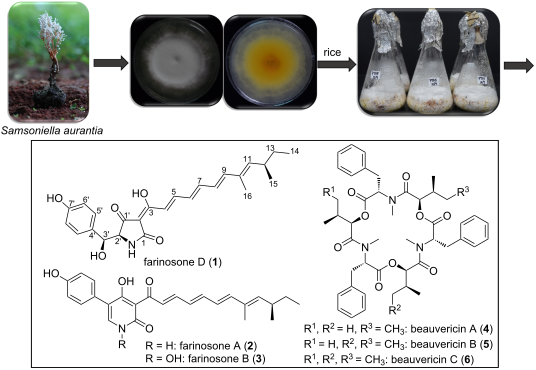
- were obtained using a J-815 spectropolarimeter (JASCO Pfungstadt, Germany). The optical rotation, ECD, and UV–vis spectra of the newly described secondary metabolites were assessed in MeOH (Uvasol, Merck, Darmstadt, Germany). Analytical HPLC chromatograms and electrospray ionization mass spectra (ESIMS
- range from 190 to 600 nm. High-resolution electrospray ionization mass spectra (HRESIMS) were obtained using an Agilent 1200 Infinity Series HPLC-UV system (Agilent Technologies, Santa Clara, CA, USA) equipped with a C18 Acquity UPLC BEH analytical column (50 × 2.1 mm, 1.7 µm; Waters, Milford, MA, USA
- acetone/MeOH (9:1, 7:3, 1:1, 0:1) along with one last fraction of MeOH 100% using 0.1% formic acid. Nine fractions of 1 L each were eluted that were collected and evaporated separately under reduced pressure to dryness. For fractions 3, 4, 6 and 8 were further purified using a PLC 2250 preparative HPLC


Oxidation of [3]naphthylenes to cations and dications converts local paratropicity into global diatropicity
Beilstein J. Org. Chem. 2025, 21, 277–285, doi:10.3762/bjoc.21.20
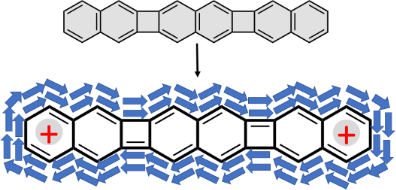
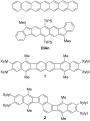
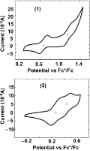
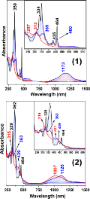
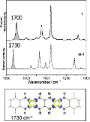
- +) couple. Electrolyte solutions, at a concentration 0.1 M, were prepared from anhydrous, degassed HPLC grade CH2Cl2 and anhydrous Bu4NPF6. Voltammograms were recorded at a sweep rate of 100 mV s−1. Sample concentrations were ca. 1–2 mM. Electronic spectroscopy UV–vis–NIR spectroelectrochemical studies were


Effect of substitution position of aryl groups on the thermal back reactivity of aza-diarylethene photoswitches and prediction by density functional theory
Beilstein J. Org. Chem. 2025, 21, 242–252, doi:10.3762/bjoc.21.16
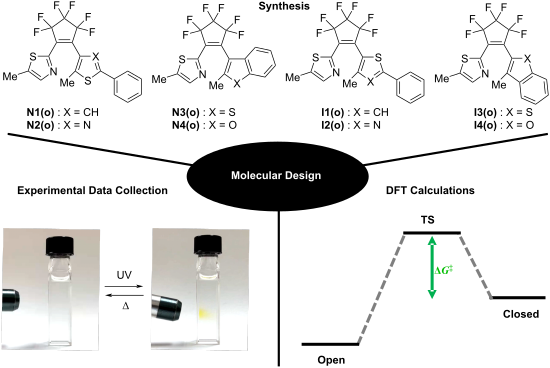
- reaction mixture was neutralized by HCl aqueous solution, extracted with ether, washed with brine, dried over MgSO4, filtered, and concentrated in vacuo. The crude product was purified by column chromatography on silica gel using n-hexane and ethyl acetate 8:2 and recycling HPLC using chloroform as the
- concentrated in vacuo. The crude product was purified by column chromatography on silica gel using n-hexane and ethyl acetate 8:2 and recycling HPLC using chloroform as the eluent to give 0.68 g of I1 in 56% yield. 1H NMR (300 MHz, CDCl3, TMS) δ = 2.09 (s, 3H, CH3), 2.46 (s, 3H, CH3), 7.27 (s, 1H, aromatic H
- HPLC using chloroform as the eluent to give 0.39 g of I2 in 41% yield. 1H NMR (300 MHz, CDCl3, TMS) δ = 2.31 (s, 3H, CH3), 2.47 (s, 3H, CH3), 7.47–7.51 (m, 3H, aromatic H), 7.72 (q, 1H, aromatic H), 7.98–8.01 (m, 2H, aromatic H); 13C NMR (75 MHz, CDCl3) δ = 12.1, 16.4, 114.8, 126.9, 129.3, 131.2, 132.8



Facile one-pot reduction of β-nitrostyrenes to phenethylamines using sodium borohydride and copper(II) chloride
Beilstein J. Org. Chem. 2025, 21, 39–46, doi:10.3762/bjoc.21.4
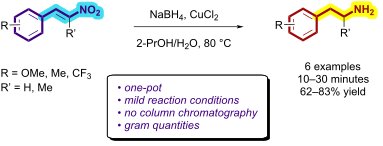
- MassLynx ver. 4.1 and data analysis was done using Waters OpenLynx browser ver. 4.1. Solvents were commercial HPLC grade and used without further purification. The substrates 2a, 7a, and 8a were commercially available and used without further purification. The substituted β-nitrostyrenes 1a and 3a–6a were


Emerging trends in the optimization of organic synthesis through high-throughput tools and machine learning
Beilstein J. Org. Chem. 2025, 21, 10–38, doi:10.3762/bjoc.21.3
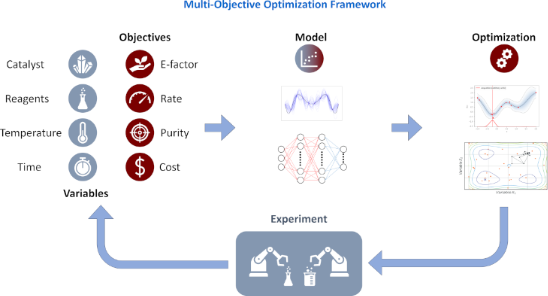
- consists of a fluid delivery system, mixing tools, reactors, quenching units, pressure regulation units, and collection vessels. The fluid delivery is normally executed using either high-pressure liquid chromatography (HPLC), a syringe, or peristaltic pumps. A passive mixing stage where the reagents are
- drug molecules autonomously, and it does not include a closed-loop optimization framework. The Pfizer research team developed a custom-designed flow system for rapid reaction screening of the Suzuki–Miyaura coupling reaction on a nanomolar scale [50]. The platform included a modified HPLC system that
- reaction, employing a "black-box" optimization strategy directed by Nelder–Mead simplex method algorithm [57]. In-line HPLC analysis was performed to determine the product yield in real time and give feedback to the control system to direct the input conditions to achieve the optimum product yield in 19


Ceratinadin G, a new psammaplysin derivative possessing a cyano group from a sponge of the genus Pseudoceratina
Beilstein J. Org. Chem. 2024, 20, 3215–3220, doi:10.3762/bjoc.20.267
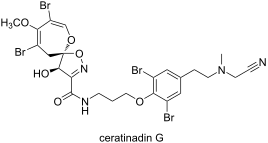
- ), as well as additional signals not matching those of any known psammaplysin derivatives. Further separation of this fraction using C18 HPLC led to the isolation of ceratinadin G (1, 0.4 mg, 3.2 × 10⁻⁴%) along with psammaplysin F (2) [10][11][12]. Ceratinadin G (1) was isolated as an optically active
- [silica gel 60N (spherical, neutral, 40–50 µm), Kanto Chemical Co., Inc.; 38 × 350 mm; eluent CHCl3/MeOH 100:0 to 0:100], yielding 18 fractions (Fr. 1–18). A portion (17.0 mg) of the fraction Fr. 14 (32.5 mg) was further separated by C18 HPLC (COSMOSIL 5C18-AR-II, 10 × 250 mm, Nacalai tesque Inc.; eluent


Discovery of ianthelliformisamines D–G from the sponge Suberea ianthelliformis and the total synthesis of ianthelliformisamine D
Beilstein J. Org. Chem. 2024, 20, 3205–3214, doi:10.3762/bjoc.20.266
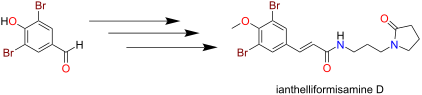
- HPLC (RP-HPLC), which led to the purification of the known metabolites, ianthelliformisamines A–C (1–3) [7] and aplysterol (8) [13], and four new natural products, ianthelliformisamines D–G (4–7) (Figure 1). This extraction and isolation process was repeated twice to obtain sufficient quantities of the
- ETD ESI-qTOF. Alltech Davisil (30–40 µm, 60 Å) C8-bonded silica and Alltech Davisil (30–40 µm, 60 Å) diol-bonded silica were used for pre-adsorption work before RP- or NP-HPLC, respectively. The pre-adsorbed material was subsequently packed into an Alltech stainless steel guard cartridge (10 × 30 mm
- ) then attached to a HPLC column prior to fractionation. A Waters 600 pump fitted with a Waters 996 photodiode array detector fitted with a Gilson 717-plus autosampler were used for RP-HPLC separations. A Thermo Fisher Scientific Dionex Ultimate 3000 UHPLC was used for NP-HPLC separations. Thermo Betasil


![[Graphic 1]](/bjoc/content/inline/1860-5397-20-266-i2.svg?max-width=637&scale=1.18182)
![[Graphic 2]](/bjoc/content/inline/1860-5397-20-266-i3.svg?max-width=637&scale=1.18182)
![[Graphic 3]](/bjoc/content/inline/1860-5397-20-266-i4.svg?max-width=637&scale=1.18182)

![[Graphic 4]](/bjoc/content/inline/1860-5397-20-266-i5.svg?max-width=637&scale=1.18182)
![[Graphic 5]](/bjoc/content/inline/1860-5397-20-266-i6.svg?max-width=637&scale=1.18182)

Multicomponent reactions driving the discovery and optimization of agents targeting central nervous system pathologies
Beilstein J. Org. Chem. 2024, 20, 3151–3173, doi:10.3762/bjoc.20.261

- compounds with high yields (84–92%). The three most promising compounds of the library (13a, 13b, and 13c) were selected for further detailed characterization. In vitro evaluation was performed employing a high-performance liquid chromatography (HPLC)-based methodology, using the fluorogenic histone




Advances in the use of metal-free tetrapyrrolic macrocycles as catalysts
Beilstein J. Org. Chem. 2024, 20, 3085–3112, doi:10.3762/bjoc.20.257
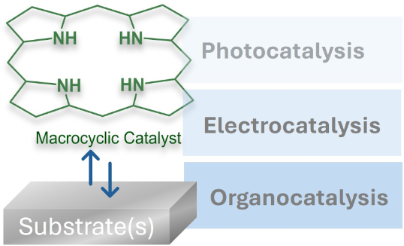
- hypothesis that the reaction would work in acidic environment using catalysts insensitive to pH-induced aggregation. In the same aldol reaction, using of macrocycles 60 and 61 containing chiral secondary amine moieties provided not only good yields, but also good diastereoselectivities; chiral HPLC analysis


Enantioselective regiospecific addition of propargyltrichlorosilane to aldehydes catalyzed by biisoquinoline N,N’-dioxide
Beilstein J. Org. Chem. 2024, 20, 3069–3076, doi:10.3762/bjoc.20.255
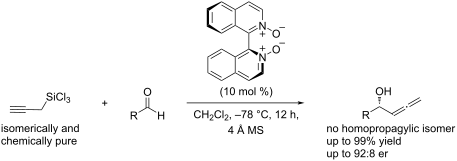
- enantiomeric ratios were determined by HPLC on a chiral stationary phase. Evaluation of the extent to which (S)-8 catalyzed the allenylation reaction. Reaction conditions: aldehyde 1a–k (0.1 mmol), silane (0.15 mmol), (S)-8 (0.01 mmol), CH2Cl2 (0.4 mL). Enantiomeric ratios were determined by HPLC on a chiral
- Information File 10: Experimental details, characterization data, spectra, and HPLC traces. Acknowledgements We thank the Florida Institute of Technology and University of Miami for the generous support of the instrumentation facility. Funding This work was financially supported by a grant from the National


Synthesis of fluorinated acid-functionalized, electron-rich nickel porphyrins
Beilstein J. Org. Chem. 2024, 20, 2954–2958, doi:10.3762/bjoc.20.248
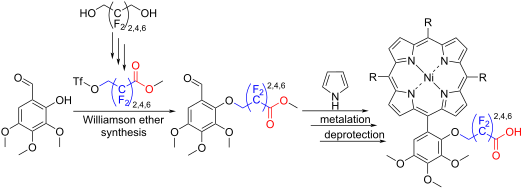
- -substituted Ni porphyrins 29 (78%), 30 (97%), and 31 (57%). The latter were treated with LiOH and HCl to give the free acids 32 (94%), 33 (39%), and 34 (45%). The HPLC–ESIMS analysis of 32, 33, and 34 revealed that two major atropisomers of each porphyrin had formed. In 32 both atropisomers exhibit a roughly
- Information File 42: Experimental procedures, characterization data of all products, and copies of 1H, 13C, and 19F NMR spectra. Acknowledgements We thank Dr. Claus Bier for the help with the HPLC–ESIMS measurements.


4,6-Diaryl-5,5-difluoro-1,3-dioxanes as chiral dopants for liquid crystal compositions
Beilstein J. Org. Chem. 2024, 20, 2940–2945, doi:10.3762/bjoc.20.246
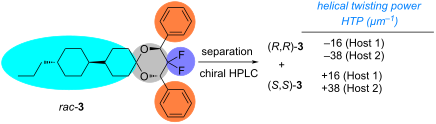
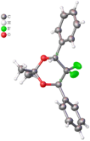
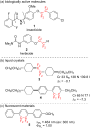
- purification. Ketalization of rac-2 with liquid crystal-like ketone 1 [43] (in toluene) or 2,2-dimethoxypropane 5 (in THF) provided dioxanes rac-3 and rac-4 in 56% and 62% yields, respectively (Scheme 2). Samples of rac-3 and rac-4 were separated by preparative HPLC on a chiral phase. Suitable crystals of all


Recent advances in transition-metal-free arylation reactions involving hypervalent iodine salts
Beilstein J. Org. Chem. 2024, 20, 2891–2920, doi:10.3762/bjoc.20.243

- chemistry on the histone H2A protein. The protein was demonstrated as the T120C mutant via site-directed mutagenesis in Escherichia coli and decontaminated by HPLC. A notable reconciliation was changing the aqueous buffer from HEPES to phosphate owing to side-product generation during the arylation in HEPES
- . The reaction of H2A with the diaryliodonium salt in phosphate buffer resulted in the expected arylated conjugate in an hour with a maximum of 98% conversion, yielding sulfur arylated product in 54% isolated yield after purification by HPLC. Additionally, the functionalization of the ketone with a
- high conversions (83–93%) in 1–20 hours. Purification by HPLC yielded the isolated oxime conjugates in excellent amounts. This methodology presents a promising approach for the late-stage variation of proteins and peptides, offering versatility and efficiency in aqueous environments. In addition to




Synthesis and antimycotic activity of new derivatives of imidazo[1,2-a]pyrimidines
Beilstein J. Org. Chem. 2024, 20, 2806–2817, doi:10.3762/bjoc.20.236
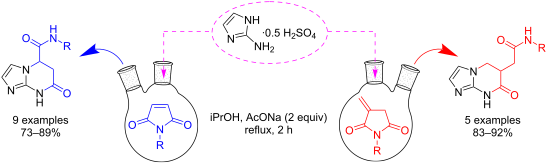
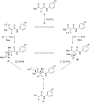
- maleimides or N-arylitaconimides. The mechanism of the studied processes was postulated basing on experimental data, HPLC–MS analysis of reaction mixtures, and quantum chemical calculations. Molecular docking results of the obtained imidazo[1,2-a]pyrimidines, when compared with voriconazole, a drug already
- hemisulfate to its basic form in situ. Thin-layer chromatography (TLC) and high-performance liquid chromatography with mass-spectrometric detection (HPLC–MS) were used to monitor the reaction and to identify the products obtained. It should be noted that in the case of HPLC–MS analysis, the signals registered
- spectroscopy, HPLC–HRESIMS) of the products of the investigated reactions unambiguously confirms the processes proceeding along routes A1 and B1 with the formation of N-aryl(alkyl)-7-oxo-5,6,7,8-tetrahydroimidazo[1,2-a]pyrimidin-5-carboxamides 4a–i and N-aryl-2-(7-oxo-5,6,7,8-tetrahydroimidazo[1,2-a]pyrimidin


Access to optically active tetrafluoroethylenated amines based on [1,3]-proton shift reaction
Beilstein J. Org. Chem. 2024, 20, 2776–2783, doi:10.3762/bjoc.20.233
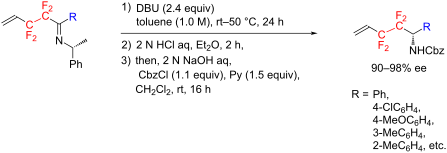
- amide (S)-23b in 27% isolated yield over three-steps. The measurement of HPLC equipped with a chiral column, CHIRALPAK AD-H for (S)-23b, showed that the amide had an optical purity of 95% ee (Scheme 4). On the next stage, the substrate scope for the present reaction was explored by using various imines
- scope for the present [1,3]-proton shift reaction. aYields are determined by 19F NMR spectroscopy. Values in parentheses show isolated yields. Enantiomeric excesses are deteremined by HPLC equipped with DAICEL CHIRALPAK AD-H. bCarried our at 50 °C in the [1,3]-proton shift reaction step. Proposed
- reaction mechanism. Investigation of the reaction conditions. Supporting Information Supporting Information File 3: Full experimental details, 1H, 13C, 19F NMR spectra of 16a–g and 23a–g, and HPLC charts of racemic as well as chiral compounds 23a–g. Supporting Information File 4: Crystallographic



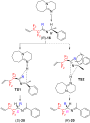
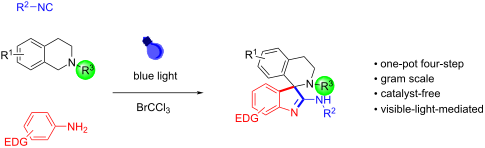
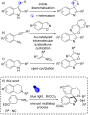
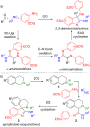
Synthesis of spiroindolenines through a one-pot multistep process mediated by visible light
Beilstein J. Org. Chem. 2024, 20, 2722–2731, doi:10.3762/bjoc.20.230
- oxide, activated, neutral, Brockmann I. Petroleum ether (40–60 °C) is abbreviated as PE. HPLC analysis was performed on Agilent HP 1100 equipped with a DAD detector (220 nm) and column ACE Excel 3 C18-AR (3 μm, 3 × 150 mm2). Mass analysis was performed on a Microsaic 4000 MiD® mass spectrometer. HRMS
- . Walter Sgroi for his collaboration for IR spectra, Valeria Rocca for HPLC-MS analysis and Lorenzo Esposito for practical collaboration to this work.




Homogeneous continuous flow nitration of O-methylisouronium sulfate and its optimization by kinetic modeling
Beilstein J. Org. Chem. 2024, 20, 2408–2420, doi:10.3762/bjoc.20.205
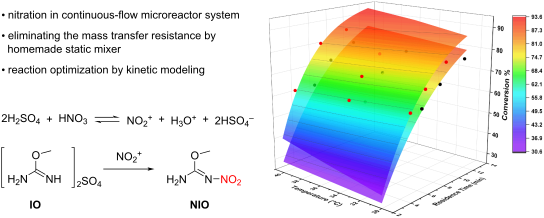
- was collected and analyzed by high-performance liquid chromatography (HPLC, ThermoFisher Ulcel3000), and the conversion of the samples was derived from the external standard method based on the regression equation of the HPLC standard curve. HPLC detection conditions: C18 column (10 μm, 4.6 × 250 mm


![[Graphic 1]](/bjoc/content/inline/1860-5397-20-205-i17.svg?max-width=637&scale=1.18182)


Asymmetric organocatalytic synthesis of chiral homoallylic amines
Beilstein J. Org. Chem. 2024, 20, 2349–2377, doi:10.3762/bjoc.20.201
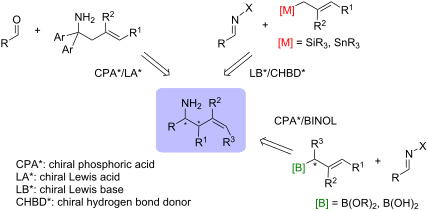
- separate peaks on chiral HPLC. Kinetic resolution of chiral secondary allylboronates [15][30]. (E)-Stereospecific asymmetric α-trifluoromethylallylation of cyclic imines and hydrazones [31]. Hosomi–Sakurai-type allylation of in situ-formed N-Fmoc aldimines [32]. Chiral squaramide-catalysed hydrogen bond








Natural resorcylic lactones derived from alternariol
Beilstein J. Org. Chem. 2024, 20, 2171–2207, doi:10.3762/bjoc.20.187
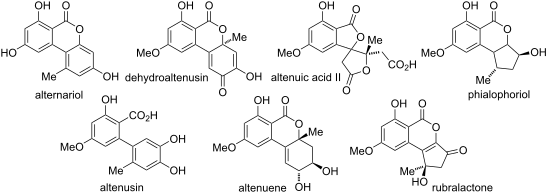
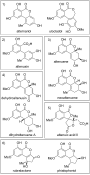
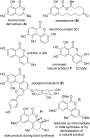
- found in Diaporthe cameroonensis [143]. No biological activities were determined for these compounds (Figure 7). A number of sulfate conjugates have been synthesized and used as standards for mass-spectrometric or HPLC analyses [134][141][144]. In this course it turned out that 3-O-sulfates of
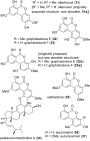
- (61 and 62) were isolated as the racemates from Alternaria alternata [211] and from Alternaria sp. [263] and the racemates could be separated by HPLC [211]. 2-O-Acetylaltenuene was furthermore obtained from A. brassicae [262]. (+)-61, (−)-61, (+)-62, and (−)-62 showed antimicrobial activity against