


Search results
Search for "terminal" in Full Text gives 1003 result(s) in Beilstein Journal of Organic Chemistry. Showing first 200.
Azide–alkyne cycloaddition (click) reaction in biomass-derived solvent CyreneTM under one-pot conditions
Beilstein J. Org. Chem. 2025, 21, 1544–1551, doi:10.3762/bjoc.21.117
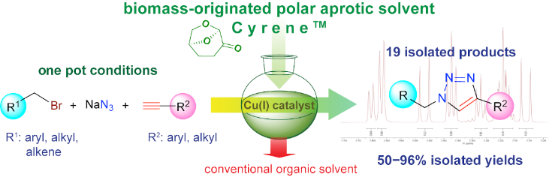
- -triazoles in CyreneTM (Figure 4). It was shown that the protocol resulted in the formation of products 3a and 5b–f with yields of 57–91% depending on the structure of the bromide derivatives. The isolated yields were in the same range as reported by Citarella et al. [39]. The presence of a terminal carbon
- in the formation of 1-allyl-4-substituted-1H-1,2,3-triazoles bearing a terminal C–C double bond moiety. Thus, we attempted to prepare a series of 1-allyl-4-substituted-1H-1,2,3-triazoles (Figure 5, 6a–f) from allyl bromide (4g) and selected acetylenes 2a–f. Similar to the formation of N-substituted-4


Ambident reactivity of enolizable 5-mercapto-1H-tetrazoles in trapping reactions with in situ-generated thiocarbonyl S-methanides derived from sterically crowded cycloaliphatic thioketones
Beilstein J. Org. Chem. 2025, 21, 1508–1519, doi:10.3762/bjoc.21.113
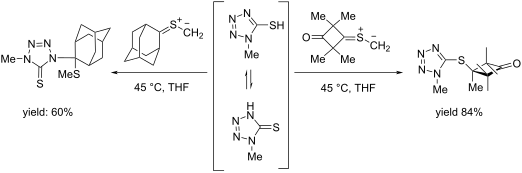
- terminal S‒CH2 position, leading to the formation of the sulfonium cation 11 and the delocalized heterocyclic anion 12 (Scheme 6). In the next step, competitive addition of both intermediate species yields either thioaminals 9 or dithioacetals 10. However, a slow isomerization of the thermodynamically less


Wittig reaction of cyclobisbiphenylenecarbonyl
Beilstein J. Org. Chem. 2025, 21, 1454–1461, doi:10.3762/bjoc.21.107
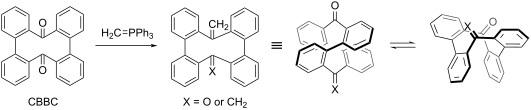
- internally functionalized DBC derivatives [22]. The dihedral angle between the mean planes of the two terminal benzene units is 83°, which is comparable to those of other derivatives. Next, products 3 and 5 were analyzed by variable temperature (VT) 1H NMR spectroscopy. The 1H NMR spectrum of bis-olefin 5 in



Advances in nitrogen-containing helicenes: synthesis, chiroptical properties, and optoelectronic applications
Beilstein J. Org. Chem. 2025, 21, 1422–1453, doi:10.3762/bjoc.21.106
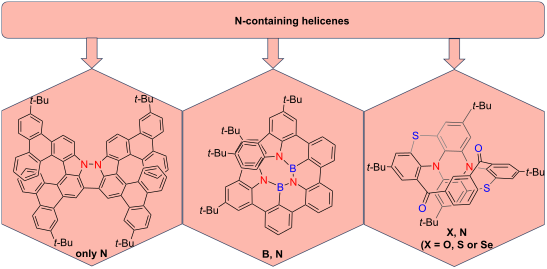
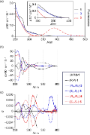
- , and 60c – featuring 2,1,3-thiadiazole termini [75] (Table 20). Among them, compound 60c exhibited pronounced CPL activity in toluene (|glum| = 0.04, ΦF = 3%), demonstrating the efficacy of terminal heterocycle incorporation for boosting chiroptical performance. In 2024, Babu and co-workers developed

Tautomerism and switching in 7-hydroxy-8-(azophenyl)quinoline and similar compounds
Beilstein J. Org. Chem. 2025, 21, 1404–1421, doi:10.3762/bjoc.21.105
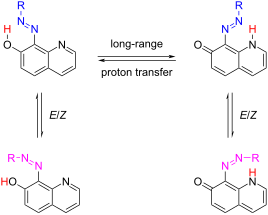
- , populating both KE and KK, which undergo ground-state PT to E and K, respectively. Therefore, it is crucial to have the intermediate keto tautomers KE and KK higher in energy in the ground state, comparing to the paired terminal E and K, respectively, in order to provide efficient switching. The additional
- factors that are important include relatively low PT barriers (TS(E-KE) and TS(K-KK)) and relatively large twisting barrier (TS(KE-KK)). The former provides fast PT to the corresponding terminal states, while the latter allows accumulation of the KK and K as a result of the irradiation. When the crane
- terminal form of the switching process is KK. This is also a kind of switching, which could be detected, because the TS(KE-KK) is large enough to allow accumulation of the switched form KK. As will be discussed in the next paragraph, in the case of compound 1, the enol form is not the only existing




Oxetanes: formation, reactivity and total syntheses of natural products
Beilstein J. Org. Chem. 2025, 21, 1324–1373, doi:10.3762/bjoc.21.101
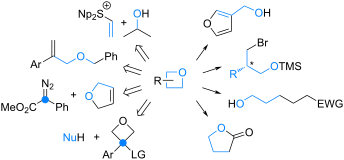
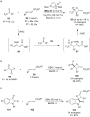
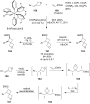
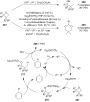
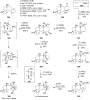
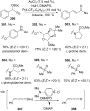
- react through the terminal carbon and deliver tetrahydrooxepines, especially, if the oxirane is monosubstituted (58, R1 = H). The deprotonation step can also be enabled by employing classical electron-withdrawing groups such as esters, and a particularly powerful methodology was disclosed by Bull and










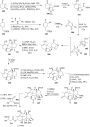
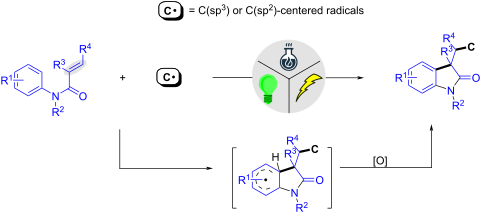
Recent advances in oxidative radical difunctionalization of N-arylacrylamides enabled by carbon radical reagents
Beilstein J. Org. Chem. 2025, 21, 1207–1271, doi:10.3762/bjoc.21.98
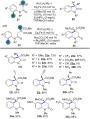
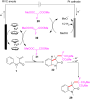
- different substituents, including aryl, heteroaryl, and alkyl groups at the terminal alkyne, were well tolerated, yielding moderate to good results (16aa–da). Furthermore, variations in the nitrile reaction partners, such as butyronitrile (16ea), 2-phenylacetonitrile (16fa), malononitrile (16ga), and 3-oxo














Synthesis of β-ketophosphonates through aerobic copper(II)-mediated phosphorylation of enol acetates
Beilstein J. Org. Chem. 2025, 21, 1192–1200, doi:10.3762/bjoc.21.96
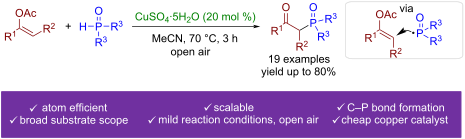
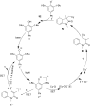
- reaction times, and scope limitations. In the present work, the selective copper(II)-mediated phosphorylation of enol acetates with the formation of substituted β-ketophosphonates employing cheap copper sulfate as a catalyst and atmospheric oxygen as a terminal oxidant was carried out (Scheme 1c). Results
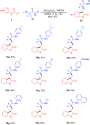
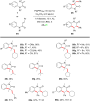
- substituted enol acetates 1a–n, possessing both electron-donating and electron-withdrawing groups, leading to the desired phosphorylation products 3a–n in good yields. Notably, sterically hindered terminal substituted enol acetates also furnished the desired products 3c–f, albeit in lower yields. The


Synthetic approach to borrelidin fragments: focus on key intermediates
Beilstein J. Org. Chem. 2025, 21, 1135–1160, doi:10.3762/bjoc.21.91
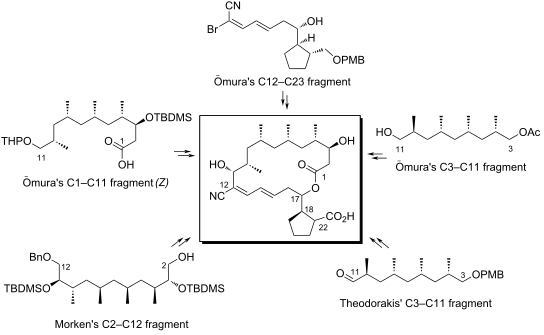
- stereoselectivity. The authors emphasized that, as the alkene moiety in 54 was in a terminal position, the stereoselectivity of the products was determined solely by the chiral environment of the catalysts. The application of this method to construct the C3–C11 fragment 60 of borrelidin is summarized in Scheme 8
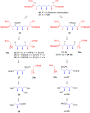
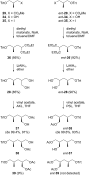
- compound 84 through a series of sequential steps, including chemoenzymatic (ω-1)-hydroxylation, regioselective dehydration of the resulting alcohol to form a terminal alkene, ozonolysis of the alkene to yield an aldehyde, reduction of the aldehyde product to a primary alcohol, and protection of the alcohol
- subsequently dehydrated using Martin’s sulfurane to produce terminal alkene 90 in 97% yield. A sequence of ozonolysis, reduction with sodium borohydride, and PMB protection using camphorsulfonic acid and PMB-trichloroacetimidate reagents followed, yielding compound 87 in 62% yield. Next, the ester


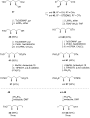


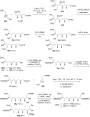


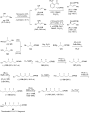


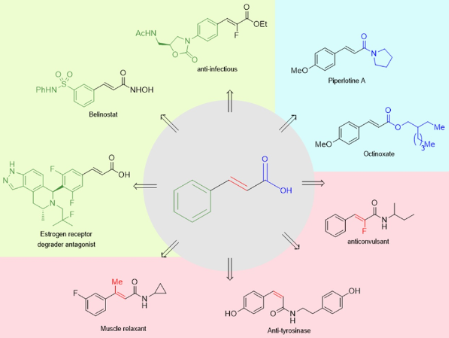
Recent advances in synthetic approaches for bioactive cinnamic acid derivatives
Beilstein J. Org. Chem. 2025, 21, 1031–1086, doi:10.3762/bjoc.21.85


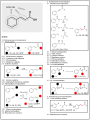

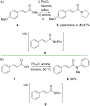

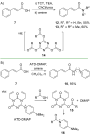


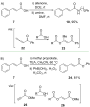


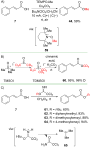

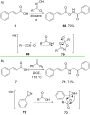
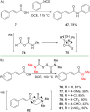


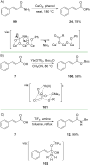








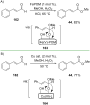

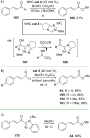
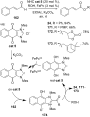


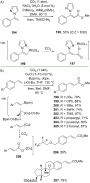
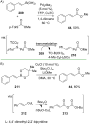
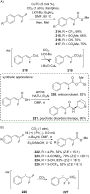
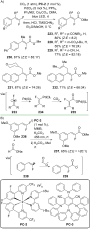

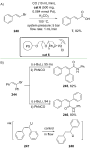
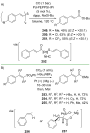

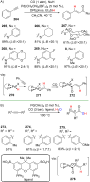

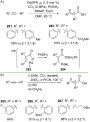
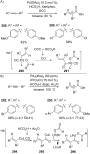

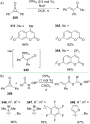
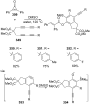
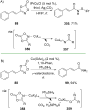
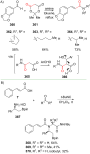
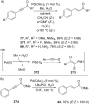

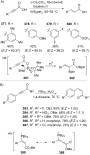

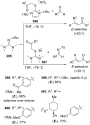
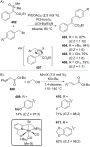
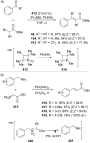
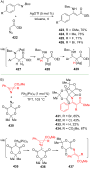


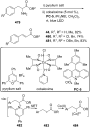


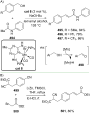
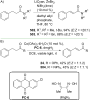

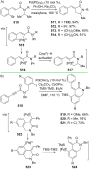
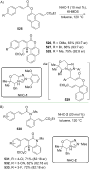
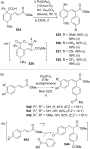

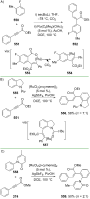
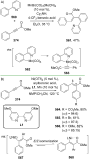
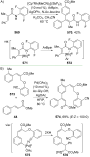


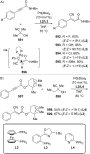
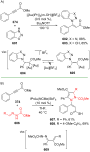
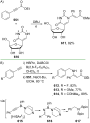
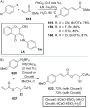
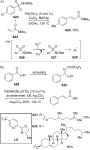
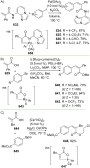
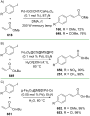
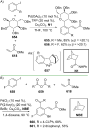
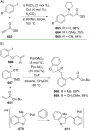

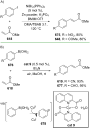
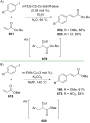

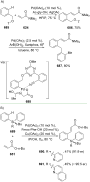
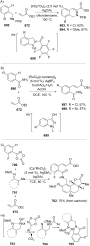


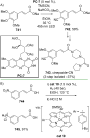


Recent total synthesis of natural products leveraging a strategy of enamide cyclization
Beilstein J. Org. Chem. 2025, 21, 999–1009, doi:10.3762/bjoc.21.81
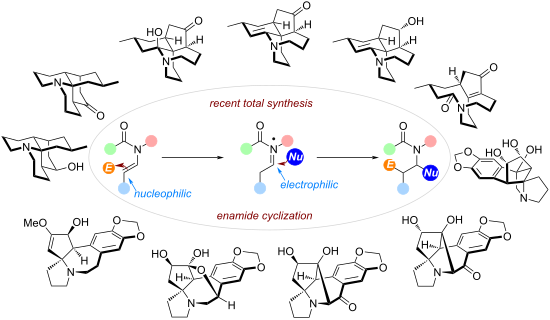
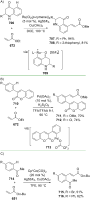
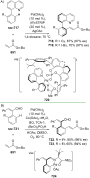
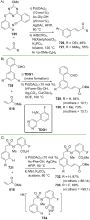
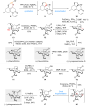
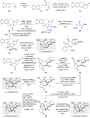
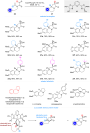
- , the terminal alkene remains intact during this process, and the initial protonation proceeds with full stereocontrol, rendering this transformation both highly chemo- and diastereoselective. From the cyclization result, it is presumed that the higher nucleophilicity of the alkyne functionality over
- the terminal alkene and the conformational strain of forming a bridge[3.2.1]bicycle might be responsible for a selective 6-exo-trig cyclization. From tricyclic compound 4, anti-Markovnikov oxidation catalyzed by palladium led to the formation of aldehyde 5. When treated with p-TsOH, the intramolecular





Harnessing tethered nitreniums for diastereoselective amino-sulfonoxylation of alkenes
Beilstein J. Org. Chem. 2025, 21, 947–954, doi:10.3762/bjoc.21.78

- diastereoselectivity (Table 4, entry 1). A urea substrate also furnished the expected product in a good yield and with high diastereoselectivity (Table 4, entry 3). With tri-substituted allylic carbamate 35, some amount of expected mesyloxylated product 36 did form, but there was also an isolable amount of a terminal
- unpurified reaction residues showed a complex mixture of products. There were some signals suggestive of terminal alkenes, implying that olefin transposition was a competing pathway. With alkyne substrate 59, decomposition occurred, and the 1H NMR of the unpurified reaction mixture was illegible. With
- terminal alkene substrate 60, unproductive decomposition of starting material was again observed. Given the highly predictable diastereoselectivity of this transformation and by analogy to prior art [4][6], we hypothesize that the reaction proceeds through the formation of a transient nitrenium species


Silver(I) triflate-catalyzed post-Ugi synthesis of pyrazolodiazepines
Beilstein J. Org. Chem. 2025, 21, 915–925, doi:10.3762/bjoc.21.74
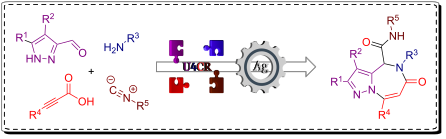
- ) [46]. In 2019, Li, Yang, Van der Eycken and co-workers reported a modification of this strategy relying on thermal activation instead of cationic gold catalysis [47]. The approach worked particularly well with substrates featuring terminal alkynes. Inspired by these developments and taking into
- . Another set of pyrazolodiazepines 16p–v was readily obtained from the substrates 15p–v stemming from various 3-substituted propiolic acids and aliphatic or aromatic isocyanides. Finally, the annulation of substrates 15w and 15x, featuring a terminal alkyne, also proceeded in a 7-endo-dig fashion, yielding
- pyrazolodiazepines 16w and 16x, respectively. Such an outcome is notable, as related carbocyclizations often switch to an exo mode when shifting from internal to terminal alkynes [61][62][63]. To demonstrate the robustness of our methodology, we tested a telescope procedure in which, after the Ugi step, the product




Dicarboxylate recognition based on ultracycle hosts through cooperative hydrogen bonding and anion–π interactions
Beilstein J. Org. Chem. 2025, 21, 884–889, doi:10.3762/bjoc.21.72
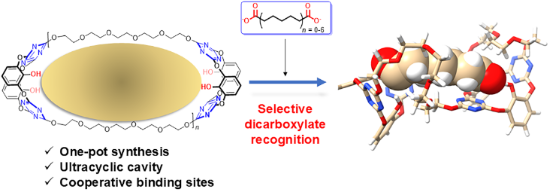
- dicarboxylates interact with each subcavity of B4aH through their terminal anionic groups, utilizing cooperative hydrogen bonding and anion–π interactions. The optimal size matching between dicarboxylate and the host cavity, as seen with C72−, enhances the synergistic effect between the two subcavities
- dicarboxylate C72− is included within the cavity of B4aH. The two subcavities interact synergistically with the included dicarboxylate; the two terminal carboxylate groups are respectively positioned within electron-deficient cavities of the submacrocycles, forming hydrogen bonds (2.49–2.59 Å) with the two


Unraveling cooperative interactions between complexed ions in dual-host strategy for cesium salt separation
Beilstein J. Org. Chem. 2025, 21, 845–853, doi:10.3762/bjoc.21.68
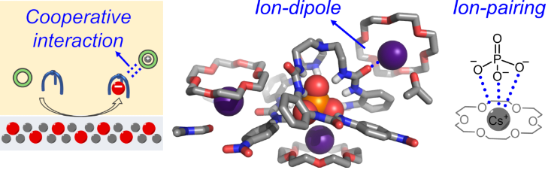
- stabilized by the binding with 18-crown-6 and three ion-dipole interactions with O=C (urea unit) and O–N (terminal nitro group). Distances of Cs–O are measured at 3.0 Å and 3.4 Å. Regarding type-(II) cesium binding, four cesium cations are observed to interact with two urea units and two nitro groups through


Regioselective formal hydrocyanation of allenes: synthesis of β,γ-unsaturated nitriles with α-all-carbon quaternary centers
Beilstein J. Org. Chem. 2025, 21, 800–806, doi:10.3762/bjoc.21.63
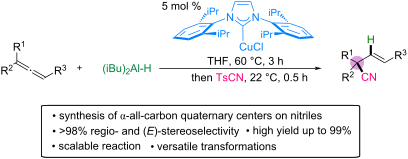
- centers (Scheme 1b). Although both methodologies achieved high regioselectivity, their substrate scopes were limited, and most studies focused on the hydrocyanation of terminal allenes. Given the synthetic importance of nitriles that bear all-carbon quaternary centers and the distinctive reactivity of




Orthogonal photoswitching of heterobivalent azobenzene glycoclusters: the effect of glycoligand orientation in bacterial adhesion
Beilstein J. Org. Chem. 2025, 21, 736–748, doi:10.3762/bjoc.21.57
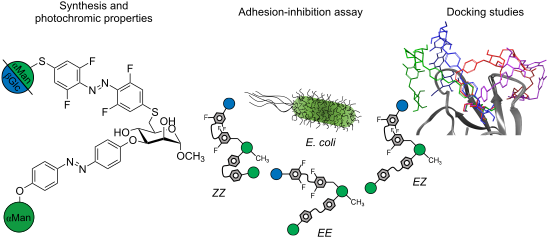
- proton of the terminal sugar units in the 1H NMR spectrum (Table 1 and Supporting Information File 1, Figures S8, S10, and S12). Irradiation with 365 nm light excites the π–π* band of the ortho-fluorinated S-azobenzene units (ABF4) of both 3 and 4 and the π–π* band of the O-azobenzene (AB) unit of 5
- modeling illustrates the different FimH binding modes of the various isomers of 1 and 2 (Figure 4C and D). Inspection of these ligand–protein complexes reveals that in all isomers, a terminal α-ᴅ-mannoside ligand is complexed within the FimH carbohydrate binding pocket where it forms the classical network
- following conclusions can be drawn. (i) In all inspected azobenzene glycoconjugates (1, 2, 4, and 5), a terminal α-ᴅ-mannopyranoside unit is complexed within the FimH CRD, as expected. (ii) The isomeric state of the azo group in the monovalent azobenzene glycosides 4 and 5 alters the orientation of the non


Origami with small molecules: exploiting the C–F bond as a conformational tool
Beilstein J. Org. Chem. 2025, 21, 680–716, doi:10.3762/bjoc.21.54
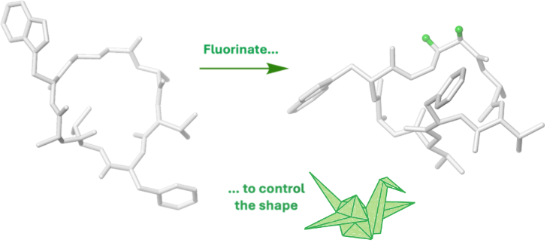
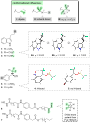
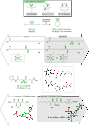
- (I, Figure 2). This has several implications. For example, if the C–C(F) bond rotates, the orientation of the terminal C–F bond dipole changes, and this can alter the overall dipole moment of the molecule. Indoles 1–3 illustrate this point (Figure 2) [9]. The non-fluorinated indole 1 has an unvarying
- polar C–F bonds at the end of an alkyl chain, is that the terminal C–H bond also becomes polarised. In the case of the difluoromethyl group, the terminal hydrogen bears a partial positive charge and is able to act as a H-bond donor (II, Figure 2). This can influence the conformation of the molecule if
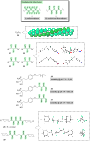
- molecular properties. The fluorine–oxygen gauche effect has been exploited to influence the properties of liquid crystals [86][87]. For example, the vicinal fluoroether 50 (Figure 7) can adopt a low-energy conformation in which the terminal C–F bond aligns gauche to the vicinal C–O bond. This orientation of



Photochemically assisted synthesis of phenacenes fluorinated at the terminal benzene rings and their electronic spectra
Beilstein J. Org. Chem. 2025, 21, 670–679, doi:10.3762/bjoc.21.53
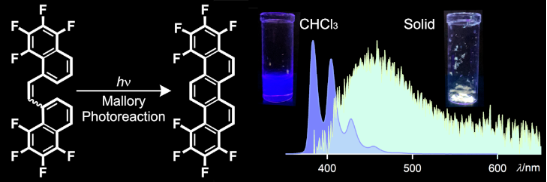
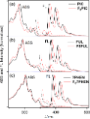
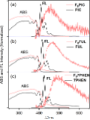
- , Okayama University, Okayama 700-8530, Japan 10.3762/bjoc.21.53 Abstract [n]Phenacenes ([n] = 5–7), octafluorinated at the terminal benzene rings (F8-phenacenes: F8PIC, F8FUL, and F87PHEN), were photochemically synthesized, and their electronic spectra were investigated to reveal the effects of the
- serves as a p-channel organic semiconductor [37], whereas perfluoropentacene can be used as an n-channel material [38]. It has been demonstrated that the molecular structure of [7]helicenes was modified by fluorination, thus, the helicenes’ pitch was manipulated by terminal fluorination modes [39][40
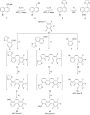
- the corresponding parent phenacenes PIC, FUL, and 7PHEN to reveal the effects of the fluorination at the terminal rings. Results and Discussion Synthesis of F8-phenacenes The synthetic routes to building blocks 10, 13, and 15 and those to the desired F8PIC, F8FUL, and F87PHEN are respectively shown in





Recent advances in allylation of chiral secondary alkylcopper species
Beilstein J. Org. Chem. 2025, 21, 639–658, doi:10.3762/bjoc.21.51
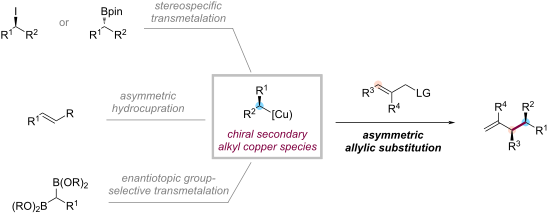
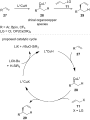
- bearing various functionalities. Notably, no erosion of enantiomeric excess was observed during any of the transformations. Double CuH insertion into alkynes for regiodivergent allylic substitution Generating chiral secondary alkylcopper species in situ through sequential hydrocupration of terminal
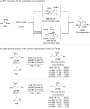
- readily available starting materials: terminal alkynes, HBdan, polymethylhydrosiloxane (PMHS), and allylic phosphates, through a complex cascade hydroboration and hydroallylation sequence [56]. Shortly after this work, Xiong, Zhu, and co-workers reported a ligand-controlled copper-catalyzed regiodivergent
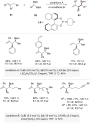
- asymmetric difunctionalization of terminal alkynes through a cascade process involving initial hydroboration followed by a hydroallylation (Scheme 15) [57]. Employing a catalytic system consisting of (R)-DTBM-Segphos (L4) and CuBr resulted in the exclusive 1,1-difunctionalization of aryl- and alkyl





Photocatalyzed elaboration of antibody-based bioconjugates
Beilstein J. Org. Chem. 2025, 21, 616–629, doi:10.3762/bjoc.21.49
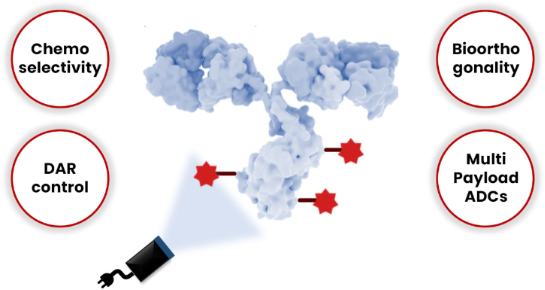
- acts as a microtubule destabilizer. To ensure the stability and homogeneity of the final product, the design of the FcBP included a norbornene motif at the N-terminal end of the peptide sequence. The norbornene motif selectively reacts with a tetrazine located on the spacer-payload. This study


Formaldehyde surrogates in multicomponent reactions
Beilstein J. Org. Chem. 2025, 21, 564–595, doi:10.3762/bjoc.21.45
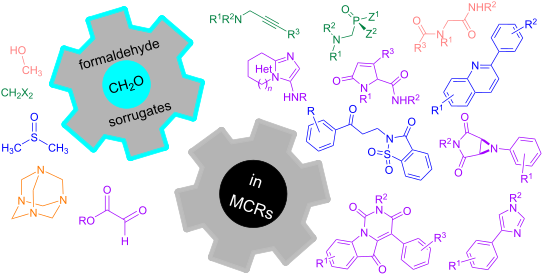
- (CuCl2, NaNO2, TEMPO) using molecular oxygen as a terminal oxidant have also been used [12]. Nevertheless, neither of these conditions was successful when they were applied to methanol to generate formaldehyde, because overoxidation is an important side reaction in these cases [12][13][14][15]. However
- (DMF), dimethyl sulfoxide (DMSO), or dioxane to achieve high yields. The assumed mechanism is initiated by activation of the C–H bond of the terminal alkyne by a metal catalyst. The resulting metal acetylide reacts with the imine/enamine through a nucleophilic addition. Because imines/enamines are
- the same amine component) deprotonates the terminal alkyne, generating the metal acetylide derivative A, which is the active nucleophilic species in the reaction. Intermediate A undergoes an oxidative addition by the dihaloalkane, generating intermediate B. This undergoes reductive elimination to


Binding of tryptophan and tryptophan-containing peptides in water by a glucose naphtho crown ether
Beilstein J. Org. Chem. 2025, 21, 541–546, doi:10.3762/bjoc.21.42
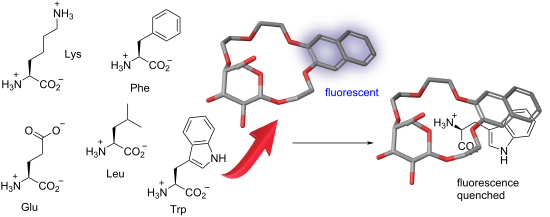
- tripeptides 2–7 consisting of one tryptophan and two alanine residues. We varied the position of the tryptophan in the peptide sequence, N-terminus in 2, middle of the chain in 3, and C-terminus in 4 to check if this affects their binding by 1. To probe the importance of the N-terminal amino group in the
- fluorescence measurements where a strong quenching of the naphthalene fluorescence upon addition of each of the Trp-containing tripeptides 2–7 was observed. For peptides 2 and 3 interactions of the receptor with the N-terminal ammonium cation are likely also involved in the binding process (Figure 5). This is
- as well indicated by the lower binding affinity of 1 to the acetylated analogues of peptides 2 and 3. In the case of peptide 4, acetylation of its N-terminus did not affect the stability of the complex with receptor 1. This suggests that 1 interacts with the N-terminal ammonium in 4 to a much lesser


Synthesis of the aggregation pheromone of Tribolium castaneum
Beilstein J. Org. Chem. 2025, 21, 510–514, doi:10.3762/bjoc.21.38
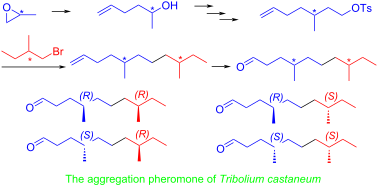
- coupling, and finally leads to the target pheromones by olefin oxidation with RuCl3/NaIO4. Results and Discussion The retrosynthetic analysis of the aggregation pheromone (4R,8R)-1 is shown in Scheme 1. Obviously, the target pheromone (4R,8R)-1 could be synthesized via an oxidation of chiral terminal
- ]. (4R,8R)-4,8-Dimethyldecanal ((4R,8R)-1) was obtained from chiral terminal olefine (5R,9R)-12 through the oxidation with RuCl3 and NaIO4 [36], and its specific rotation and NMR spectrum matched with the reference [20]. Moreover, using the similar procedure for (4R,8R)-1, the other three constituents of


Unprecedented visible light-initiated topochemical [2 + 2] cycloaddition in a functionalized bimane dye
Beilstein J. Org. Chem. 2025, 21, 500–509, doi:10.3762/bjoc.21.37
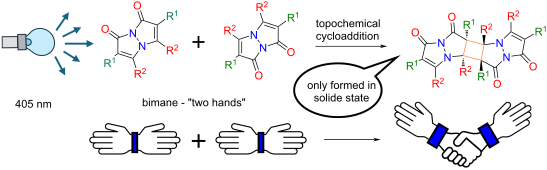
- refined isotropic on calculated positions using a riding model with their Uiso values constrained to 1.5 times the Ueq of their pivot atoms for terminal sp3 carbon atoms and 1.2 times for all other carbon atoms. Disordered moieties were refined using bond length restraints and displacement parameter





