Search results
Search for "separation" in Full Text gives 886 result(s) in Beilstein Journal of Organic Chemistry. Showing first 200.
4,6-Diaryl-5,5-difluoro-1,3-dioxanes as chiral dopants for liquid crystal compositions
Beilstein J. Org. Chem. 2024, 20, 2940–2945, doi:10.3762/bjoc.20.246
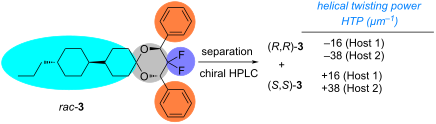
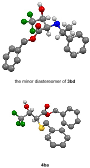
- here preliminary results with the diastereoselective synthesis of two 4,6-diphenyl-5,5-difluoro-1,3-dioxanes (rac-3 and rac-4) and their separation into their corresponding enantiomers ((R,R)-3 and (S,S)-3; (R,R)-4 and (S,S)-4). rac-3 and rac-4 are obtained from readily available racemic 2,2-difluoro


C–C Coupling in sterically demanding porphyrin environments
Beilstein J. Org. Chem. 2024, 20, 2784–2798, doi:10.3762/bjoc.20.234
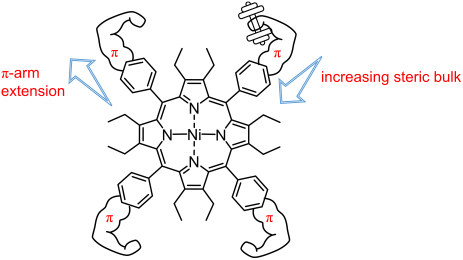
- previously, enrichment to the αβαβ, isomer may be necessary to remove the impact of opposing bromine atoms on the coupling reaction. Separation of the four individual atropisomers (αβαβ, α2β2, α3β, α4) has been accomplished before in dodecasubstituted porphyrins through Ni(II) metalation [15]. The core
- metalation effect prevents inner core N–H tautomerism [64] and thus increases the structural symmetry of the macrocycle [65][66], leading to more facile atropisomeric separation. However, in the case of compound 11 the atropisomers could not be separated due to low rotational barriers and similar polarities
- , even with Ni(II) metalation. There are many other methods available to achieve different desired atropisomeric ratios. These include thermal enrichment [67][68], photoracemization [69][70], axial-ligand coordination [71], precise separation techniques [50] or a combination of the procedures mentioned


Interaction of a pyrene derivative with cationic [60]fullerene in phospholipid membranes and its effects on photodynamic actions
Beilstein J. Org. Chem. 2024, 20, 2732–2738, doi:10.3762/bjoc.20.231
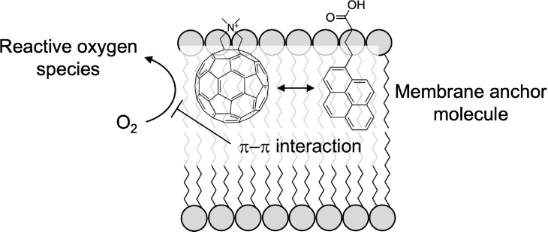
- an acceptor in photoinduced charge-separation systems, we have previously employed ferrocene-porphyrin-C60 triad molecules (Figure 1a) in a biological system to control the plasma membrane potential (Vm) of living mammalian neuronal cells under photoirradiation [4][5][6]. Generally, Vm originates


Synthesis of benzo[f]quinazoline-1,3(2H,4H)-diones
Beilstein J. Org. Chem. 2024, 20, 2708–2719, doi:10.3762/bjoc.20.228
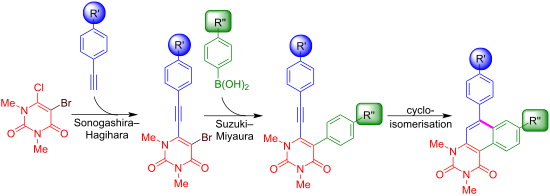
- attempt, we used platinum(II) chloride (PtCl2) as the Lewis acid and 4a as the model starting material. The reaction afforded a mixture of the desired product 5a and the starting material. Separation of both compounds proved to be difficult and, hence, optimisation was carried out as depicted in Table 1




The scent gland composition of the Mangshan pit viper, Protobothrops mangshanensis
Beilstein J. Org. Chem. 2024, 20, 2644–2654, doi:10.3762/bjoc.20.222
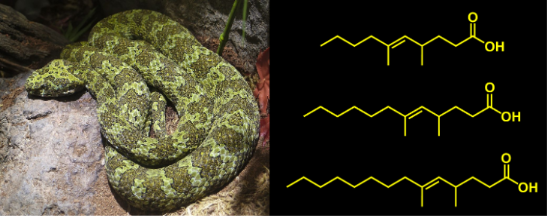
- diastereomers were then subjected to silver nitrate column chromatography to separate the geometric isomers. This separation was only partially achieved (Supporting Information File 1, Figure S10), but one diastereomer was enriched and the sample was subjected to NOESY NMR experiments. Coupling was observed


Applications of microscopy and small angle scattering techniques for the characterisation of supramolecular gels
Beilstein J. Org. Chem. 2024, 20, 2608–2634, doi:10.3762/bjoc.20.220
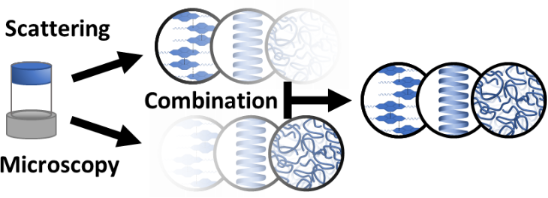
- could CLSM observe the initial kinetic self-sorting of gelators, but it also showed that the homogenous mixture of NFs and CFs can undergo a higher level of self-sorting, resulting in macroscopic phase separation (Figure 4). To gather a three-dimensional surface profile of a material, AFM utilises a


Visible-light-mediated flow protocol for Achmatowicz rearrangement
Beilstein J. Org. Chem. 2024, 20, 2493–2499, doi:10.3762/bjoc.20.213
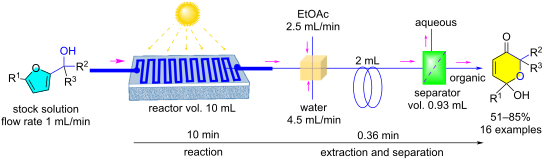
- transformations, then reaction extraction and separation, into a single process, which are typically performed individually/separately in batch methods. This enhances the overall efficiency for obtaining the desired product(s) from the reaction mixture. In continuation to our efforts on developing flow-based
- (see details in Supporting Information File 1, Table S2). In this context, our previously in-house-developed liquid–liquid extractor was utilized (see details in Supporting Information File 1, Figure S4) [27]. After few trials towards optimization of extraction and separation, the best yield (82%) was
- obtained when EtOAc (flow rate set at 2.5 mL/min), water (flow rate set at 4.5 mL/min) were taken with the extraction time of 0.25 min and separation time of 0.11 min (see details in Supporting Information File 1, Table S2, entry 5). To verify the steadiness of the newly constructed integrated photo-flow


Machine learning-guided strategies for reaction conditions design and optimization
Beilstein J. Org. Chem. 2024, 20, 2476–2492, doi:10.3762/bjoc.20.212
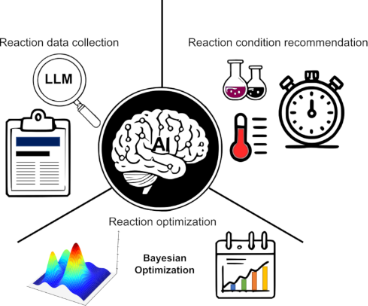
- interdependencies between different reaction sequences, such as additional separation and purification steps, could reduce the overall yield [202]. This indicates that the suboptimal combination of each reaction does not necessarily represent the global optimum for multistep synthesis [203][204][205]. In contrast
- algorithm for the shell growth of core-shell semiconductor nanoparticles. This involves various unit operations such as phase separation, washing, and continuous in-situ spectral monitoring. Although the process conditions for this reaction system do not have as extensive a literature base for training data


Facile preparation of fluorine-containing 2,3-epoxypropanoates and their epoxy ring-opening reactions with various nucleophiles
Beilstein J. Org. Chem. 2024, 20, 2421–2433, doi:10.3762/bjoc.20.206
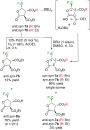
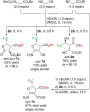
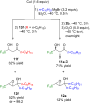
- during the lactone-forming process. Their close structural resemblance led to a significant peak overlap both in the 1H and 19F NMR spectra which made it difficult to obtain their exact ratio and thus, the combined 19F NMR yields were shown in Table 4. Separation of these two compounds was eventually





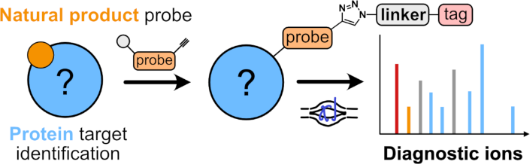
Improved deconvolution of natural products’ protein targets using diagnostic ions from chemical proteomics linkers
Beilstein J. Org. Chem. 2024, 20, 2323–2341, doi:10.3762/bjoc.20.199
- . Acquisition techniques benefit from possible multistage ion separation and isolation, and diverse fragmentation techniques. All of that is nowadays combined in one instrument to provide greater flexibility of the spectra acquisition setup [7][8][9][10][11][12][13][14][15][16]. Given the sheer amount of data
- proteins can be proteolytically cleaved on-beads or directly eluted for further enrichment on an affinity resin. Due to the easy handling of the magnetic beads and separation for the liquid phase using the magnet, the protocol utilizing the carboxylate magnetic beads was first developed for whole proteome




Electrochemical allylations in a deep eutectic solvent
Beilstein J. Org. Chem. 2024, 20, 2217–2224, doi:10.3762/bjoc.20.189
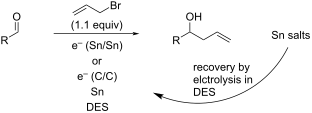
- partial solubility of ethylene glycol in methoxycyclopentane as ethylene glycol could be clearly seen in the 1H NMR spectrum of the crude reaction extracts. It should also be noted that the lower isolated yields most likely reflect mechanical losses during extraction and chromatographic separation as the

Factors influencing the performance of organocatalysts immobilised on solid supports: A review
Beilstein J. Org. Chem. 2024, 20, 2129–2142, doi:10.3762/bjoc.20.183
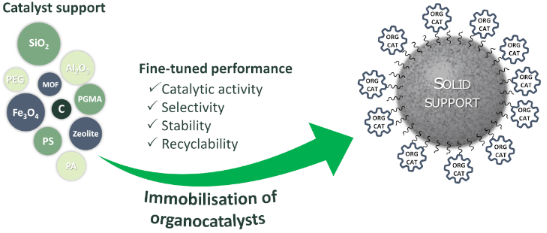
- ] reactions. POFs [102] are hydrocarbon systems that contain pores, of which COFs are a subgroup. POFs are widely applied in the fields of gas adsorption and storage, the separation of gases, catalysis, energy storage, photocatalysis, etc., and have many different types, such as hyper-cross-linked polymers


Efficacy of radical reactions of isocyanides with heteroatom radicals in organic synthesis
Beilstein J. Org. Chem. 2024, 20, 2114–2128, doi:10.3762/bjoc.20.182
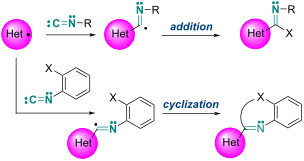
- -withdrawing group improves the stability of the product 4 (R = p-O2N-C6H4, E = PhSe) and also because phase separation is caused by the product precipitation from the reaction solution. On the other hand, the addition reaction of (PhTe)2 to isocyanides does not proceed at all [30]. This is because the


Multicomponent syntheses of pyrazoles via (3 + 2)-cyclocondensation and (3 + 2)-cycloaddition key steps
Beilstein J. Org. Chem. 2024, 20, 2024–2077, doi:10.3762/bjoc.20.178
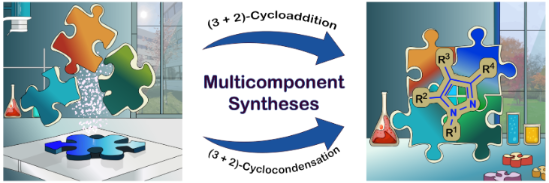
- three different regioisomers when employing different isothiocyanates 19. However, easy separation by LC–MS could be achieved, as demonstrated for one-pot process generated pyrazoles 21a–f. The reaction demonstrates high tolerance to steric hindrance and electronic factors, enabling the synthesis of


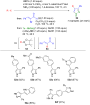


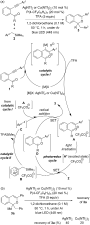
Development of a flow photochemical process for a π-Lewis acidic metal-catalyzed cyclization/radical addition sequence: in situ-generated 2-benzopyrylium as photoredox catalyst and reactive intermediate
Beilstein J. Org. Chem. 2024, 20, 1973–1980, doi:10.3762/bjoc.20.173
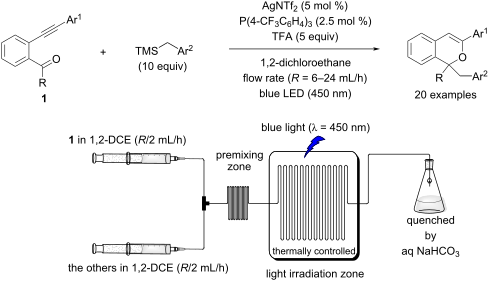
- envisioned that the characteristics of the flow photochemical process, i.e., efficient light irradiation and immediate separation of the formed product from the reaction system, would be suitable for this sequential reaction. Here, we report the results of our investigation on the use of a flow photochemical


Regioselective alkylation of a versatile indazole: Electrophile scope and mechanistic insights from density functional theory calculations
Beilstein J. Org. Chem. 2024, 20, 1940–1954, doi:10.3762/bjoc.20.170
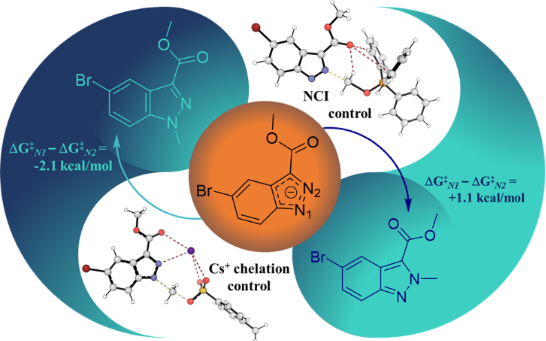
- the major regioisomer regardless of which conditions were employed. Though separation of products was challenging, resulting in a lower isolated yield under conditions B, the regioselectivity was greater than 99:1 under both conditions. DFT calculations again showed the deprotonated analog of 21 to be


Access to 2-oxoazetidine-3-carboxylic acid derivatives via thermal microwave-assisted Wolff rearrangement of 3-diazotetramic acids in the presence of nucleophiles
Beilstein J. Org. Chem. 2024, 20, 1894–1899, doi:10.3762/bjoc.20.164

- derivative 3a could be obtained in high yield (83%) after simple chromatographic separation of the reaction mixture (Scheme 2). When the synthesis was carried out using conventional heating in 1,2-dichlorobenzene (200 °C, 1 h), product 3a was obtained in slightly lower yield (75%), so further experiments


Oxidative fluorination with Selectfluor: A convenient procedure for preparing hypervalent iodine(V) fluorides
Beilstein J. Org. Chem. 2024, 20, 1785–1793, doi:10.3762/bjoc.20.157
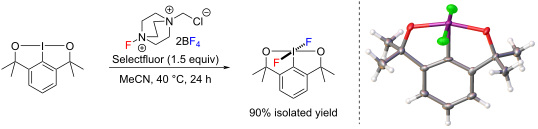
- efficient separation from the excess Selectfluor and its byproduct. Reducing the amount of Selectfluor to 2.5 equivalents and the reaction time to 24 hours (Table 2, entry 2) resulted in a similar high yield of difluoroiodane 6. The reaction also proceeded well at either room temperature for 24 hours (Table


Synthesis of polycyclic aromatic quinones by continuous flow electrochemical oxidation: anodic methoxylation of polycyclic aromatic phenols (PAPs)
Beilstein J. Org. Chem. 2024, 20, 1746–1757, doi:10.3762/bjoc.20.153
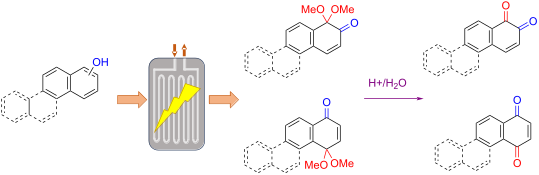
- estitmation of the HOMO/LUMO energies to shed more light on this transformation. The easy separation of the supporting electrolyte from the product will allow recycling and makes this a green transformation. Keywords: acetal formation; cyclic voltammetry; flow electrochemistry; green oxidation; polycyclic




Syntheses and medicinal chemistry of spiro heterocyclic steroids
Beilstein J. Org. Chem. 2024, 20, 1713–1745, doi:10.3762/bjoc.20.152
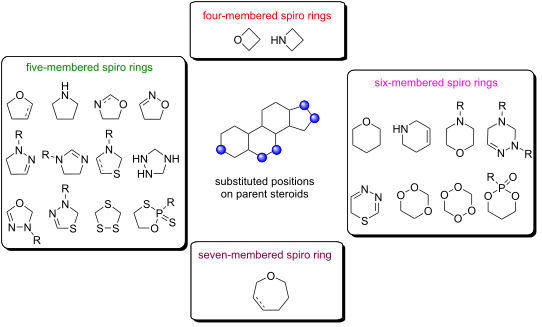
- , albeit less potent than the reference drug. However, many oxazolines showed improved selectivity, with greater separation of antiprogestational and antiglucocorticoid activity (Scheme 19) [38]. 1,2-Aminoalcohols have been extensively utilized as building blocks for synthesizing spiro-1,3-oxazolidin-2


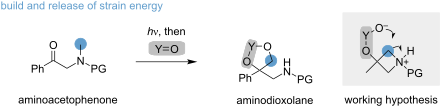
Ring opening of photogenerated azetidinols as a strategy for the synthesis of aminodioxolanes
Beilstein J. Org. Chem. 2024, 20, 1671–1676, doi:10.3762/bjoc.20.148
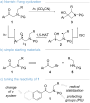
- boronic monoester (18 → 19) followed by ring opening, in accordance to the hemiketal reactions. We decided to directly cleave dioxaborolane 20 after the reaction has stalled to facilitate separation. After a brief optimization of the reaction conditions (details are provided in Supporting Information File



Divergent role of PIDA and PIFA in the AlX3 (X = Cl, Br) halogenation of 2-naphthol: a mechanistic study
Beilstein J. Org. Chem. 2024, 20, 1580–1589, doi:10.3762/bjoc.20.141
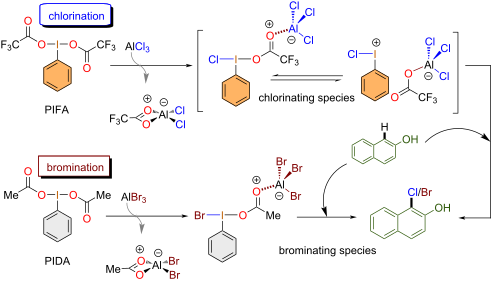
- , we found the ω-B97XD functional [35] appropriate for this study because it considered dispersion interactions through a range separation (22% for short range and 100% Hartree–Fock for long range), which properly describes thermochemistry and noncovalent interactions. When searching for the critical


Diameter-selective extraction of single-walled carbon nanotubes by interlocking with Cu-tethered square nanobrackets
Beilstein J. Org. Chem. 2024, 20, 1298–1307, doi:10.3762/bjoc.20.113
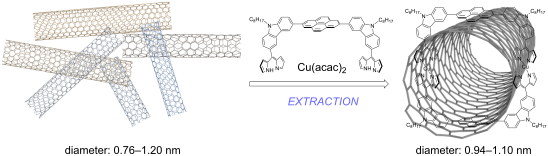
- Guoqing Cheng Naoki Komatsu Graduate School of Human and Environmental Studies, Kyoto University, Sakyo-ku, Kyoto 606-8501, Japan 10.3762/bjoc.20.113 Abstract We have been working with carbon nanotube separation through host–guest chemistry. Herein, a new macrocyclic host molecule, Cu-tethered
- square nanobrackets, is designed, synthesized and applied to single-walled carbon nanotubes (SWNTs) for their diameter-based separation. The complexation between copper ions and dipyrrin moieties of the nanobracket gives Cu-tethered square nanobrackets, which is confirmed by absorption, Raman and MALDI
- ; separation; Introduction Single-walled carbon nanotubes (SWNTs) have been attracting considerable interest due to their unique physical and chemical properties. For their further applications, structural control of SWNTs is of great importance, since the electronic and optical properties significantly




Two-fold addition reaction of silylene to C60: structural and electronic properties of a bis-adduct
Beilstein J. Org. Chem. 2024, 20, 1179–1188, doi:10.3762/bjoc.20.100
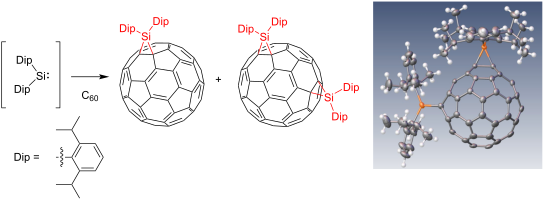
- structure with the cage C–C separation distance of 2.25 Å at the addition site [44]. On the other hand, the Si–C bond lengths of the silirane ring in 3 are Si1–C1: 1.8886(15) Å, Si1–C9: 1.8796(15) Å, Si2–C21: 1.8778(14) Å, and Si2–C40: 1.8865(15) Å, which are roughly equal to those of the reported siliranes


Light on the sustainable preparation of aryl-cored dibromides
Beilstein J. Org. Chem. 2024, 20, 1076–1087, doi:10.3762/bjoc.20.95
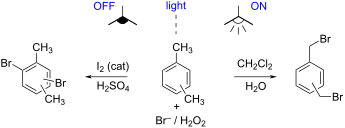
- can complicate product separation, and will require disposal. Lastly, only one half of the halogen load is incorporated into the product, the other half being lost as bromide ion. A solution for some of the aforementioned problems is the in situ generation of bromine: firstly, the handling of Br2 is
- reaction time (4 h overall, entries 3 and 4 in Table 1). In these last experiments a whitish solid appeared during addition of the oxidant, initially observed in the one with lower water amount (Table 1, entry 3). The 1H NMR confirmation of the nature of the solid as 3a, makes clear that phase separation