


Search results
Search for "cyclic" in Full Text gives 1336 result(s) in Beilstein Journal of Organic Chemistry. Showing first 200.
Recent advances in electrochemical copper catalysis for modern organic synthesis
Beilstein J. Org. Chem. 2025, 21, 155–178, doi:10.3762/bjoc.21.9
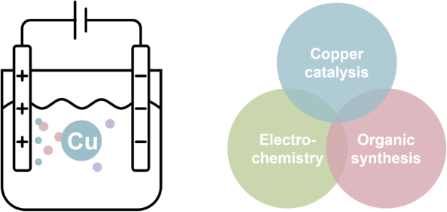
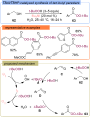
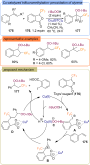
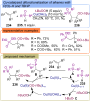
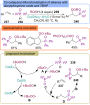
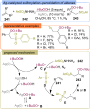
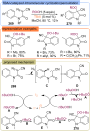
- desired annulation products. Moreover, the same products were generated using alkynyl carboxylic acids instead of terminal alkynes via decarboxylative C–H alkynylation and annulation. Cyclic voltammetry (CV) studies exhibited an oxidative current at 0.95 V vs SCE in the presence of the Cu(II) salt, base
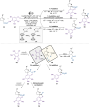
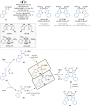
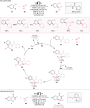
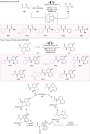
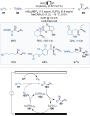
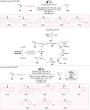
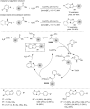
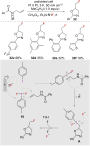
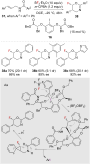
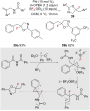
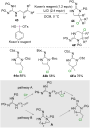
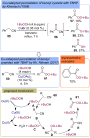
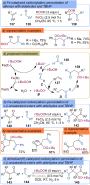
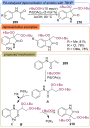
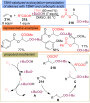
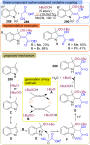
- asymmetric C(sp3)–H alkynylation of tertiary cyclic amines by merging Cu(II)/TEMPO catalysis with electrochemistry to yield chiral C1-alkynylated tetrahydroisoquinolines (THIQs) (Figure 5) [50]. As a co-catalytic redox mediator, TEMPO plays an essential role in the formation of iminium intermediate 15 and in








Cu(OTf)2-catalyzed multicomponent reactions
Beilstein J. Org. Chem. 2025, 21, 122–145, doi:10.3762/bjoc.21.7

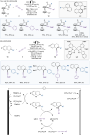
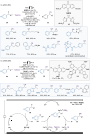
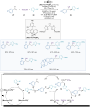
- Venezian 21, 20133, Milano, Italy 10.3762/bjoc.21.7 Abstract This review reports the achievements in copper(II) triflate-catalyzed processes concerning the multicomponent reactions, applied to the synthesis of acyclic and cyclic compounds. In particular, for the heteropolycyclic systems mechanistic
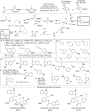
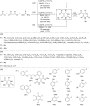
- . The Mannich reaction with aromatic aldehydes and cyclic amines was performed efficiently on 2-naphthol, by using SiO2-supported copper triflate under solvent-free conditions, without an additional co-catalyst or additive (Scheme 3) [17]. The treatment of stoichiometric amounts of arylaldehydes
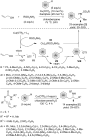
- realized with high diastereo- and enantioselectivities (Scheme 12) [25]. Providing cyclic compounds For more than a century, Biginelli's reaction has been known as an effective tool for the construction of dihydropyrimidines through a three-component process by condensation in an acidic medium of an










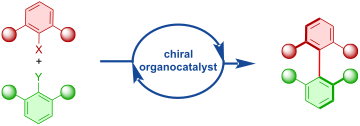
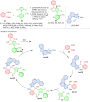
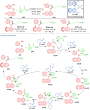
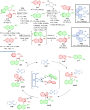
Recent advances in organocatalytic atroposelective reactions
Beilstein J. Org. Chem. 2025, 21, 55–121, doi:10.3762/bjoc.21.6











Synthesis, structure and π-expansion of tris(4,5-dehydro-2,3:6,7-dibenzotropone)
Beilstein J. Org. Chem. 2025, 21, 1–7, doi:10.3762/bjoc.21.1
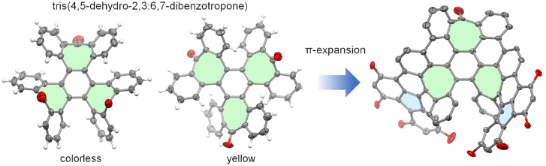
- in 3, which consume the energy of the excited state. Figure 4 shows the UV–vis absorption spectrum of 3 in cyclohexane with the absorption edge at 561 nm and its emission spectrum with a peak at 580 nm. In the test windows of cyclic voltammetry (Supporting Information File 1, Figure S1), 3 exhibits


Reactivity of hypervalent iodine(III) reagents bearing a benzylamine with sulfenate salts
Beilstein J. Org. Chem. 2024, 20, 3281–3289, doi:10.3762/bjoc.20.272
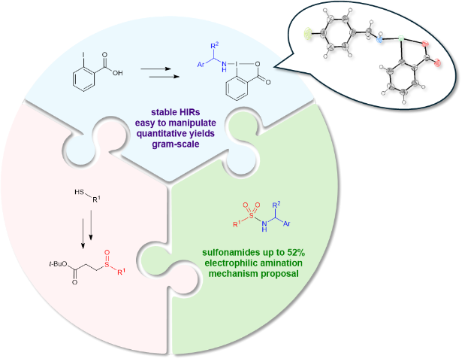
- as strong oxidizing agents [1], during the last decades HIRs have been investigated as group-transfer reagents, useful in several bond-forming reactions, such as in C–C, C–N, and C–O [2][3][4][5]. The benziodoxol(on)e family, cyclic iodine(III) reagents, stands out for their thermal stability and
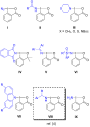
- have been reported [12]. These reagents have proven effective in delivering azides (I) [13], amides (II) [14], aliphatic cyclic amines (III) [15], phthalimidates (IV) [16], imines (V) [17], sulfoximides (VI) [18], carbazoles (VII) [19], secondary (VIII) [4] and primary (IX) [20] amines (Figure 1). The
- benziodoxol(on)es can be found in the literature, including reagents featuring cyclic aliphatic amine moieties (III) [15], phthalimidates (IV) [16], and carbazoles (VII) [19]. Minakata and co-workers proposed an innovative approach for transferring imine groups using iodane-containing (diarylmethylene)amino



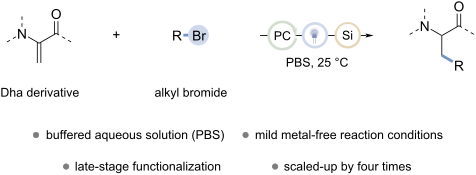
Giese-type alkylation of dehydroalanine derivatives via silane-mediated alkyl bromide activation
Beilstein J. Org. Chem. 2024, 20, 3274–3280, doi:10.3762/bjoc.20.271
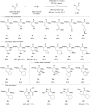
- obtained for compound 13 with a longer chain length than for 12. Similarly, the secondary cyclic alkyl substrates used in compound 18 (60%) and 3 (56%) worked well for this reaction. Besides, oxygen-containing compounds 14 and 15 were obtained in yields of 51% and 67% and medicinally interesting groups
- like the azetidine in compound 16 (56%) and the piperidine in compound 17 (67%) also resulted in good yields. Concerning tertiary alkyl substrates, acyclic alkyl substrates used in compound 19 (68%) and 20 (53%) as well as cyclic alkyl substrates like bromomethylcyclohexane used in compound 21 (61
- tertiary amide on the same position. Alternatively, the use of a double Boc-protected Dha resulted in a rather low yield of compound 25 (32%), while varying one Boc-protecting group with a Cbz-protecting group increased the yield substantially to 86% for compound 26. In addition, the use of a cyclic, N-Cbz



Non-covalent organocatalyzed enantioselective cyclization reactions of α,β-unsaturated imines
Beilstein J. Org. Chem. 2024, 20, 3221–3255, doi:10.3762/bjoc.20.268
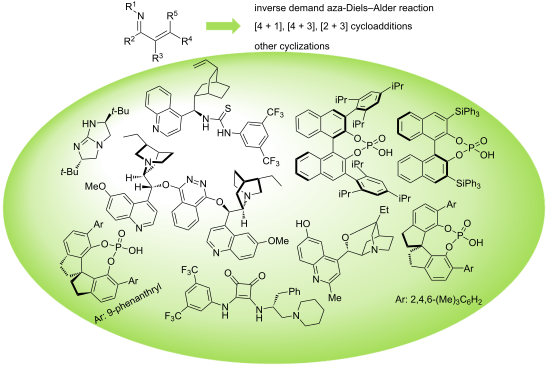
- enables the synthesis of structurally distinct cyclic derivatives which are difficult to access by other methodologies, using an efficient and atom-economical path from simple precursors. In recent years several asymmetric catalytic cyclization strategies have been accomplished for the construction of N
- cyclic derivatives. Conjugated imines are usually synthesized from the corresponding carbonyl precursors by reaction with a sulfonamide in the presence of Lewis acids and a dehydrating agent such as molecular sieves [3]. Also, recently a palladium-catalyzed dehydrogenation of aliphatic imines was
- , respectively. Additionally, the most common cyclic α,β-unsaturated imines involve benzofuran or saccharin-derived azadienes (Figure 1). Cycloaddition reactions, especially Diels–Alder reactions, have attracted a lot of attention since their discovery as one of the most powerful methodologies for the











Synthesis of extended fluorinated tripeptides based on the tetrahydropyridazine scaffold
Beilstein J. Org. Chem. 2024, 20, 3174–3181, doi:10.3762/bjoc.20.262
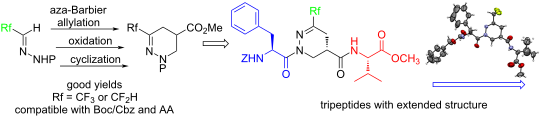
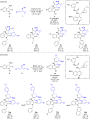
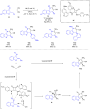
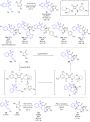
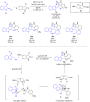
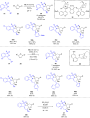
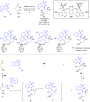
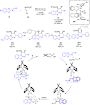
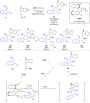
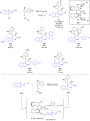
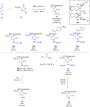
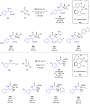
- synthesis of tripeptides incorporating new fluorinated heterocyclic hydrazino acids, based on the tetrahydropyridazine scaffold is described. Starting from simple fluorinated hydrazones, these non-proteinogenic cyclic β-amino acids were easily prepared by a zinc-catalyzed aza-Barbier reaction followed by an
- stabilizes their secondary structure and their metabolic stability, which is useful for numerous applications [3][4][5]. Indeed, the cyclic structure considerably reduces the number of possible rotational conformers, allowing a rational control of the 3D conformational space. Among these cyclic structures
- tetrahydropyridazine scaffold is also found in numerous natural linear or cyclic peptides such as svetamycins or antrimycins as dehydropiperazic acid (Figure 2) [10]. Whereas many publications have been devoted to the synthesis and structure of piperazic acid derivatives (dehydro, chloro, hydroxy, …) [11][12], nothing


Multicomponent reactions driving the discovery and optimization of agents targeting central nervous system pathologies
Beilstein J. Org. Chem. 2024, 20, 3151–3173, doi:10.3762/bjoc.20.261

- , and either sodium hydroxide or sodium hydrogen sulfide to obtain a cyclic imine. Subsequently, the U-3CR is performed, where the cyclic imine reacts with an electron-deficient 2-fluorobenzoic acid and an isocyanide to yield a bisamide. Then, the bisamide undergoes an intramolecular SNAr reaction to




Surprising acidity for the methylene of 1,3-indenocorannulenes?
Beilstein J. Org. Chem. 2024, 20, 3144–3150, doi:10.3762/bjoc.20.260
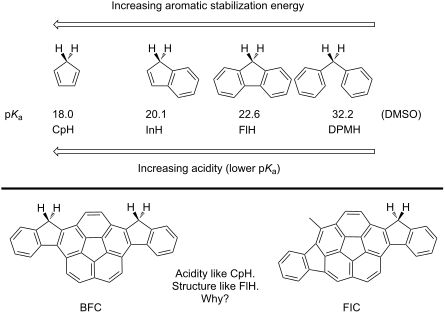
- conformationally planar-locked 2,3-diphenylindene (pKa 17.7 in DMSO [17]. The CL perspective also allows one to create graphs with points representing the aromatic elements, such as, benzene, Cp anion, pyrrole, etc. (Scheme 2, top). Triphenylene is a simple cyclic graph of three benzene elements and their direct


Hypervalent iodine-mediated intramolecular alkene halocyclisation
Beilstein J. Org. Chem. 2024, 20, 3113–3133, doi:10.3762/bjoc.20.258
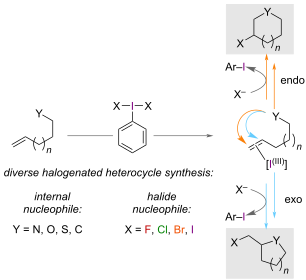
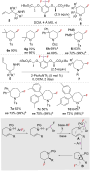
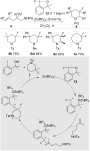
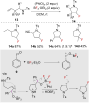
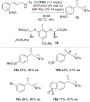
- structures. HVI reagents are characterized by their diverse reactivity as oxidants and electrophilic reagents. In addition, they are inexpensive, non-toxic and considered to be environmentally friendly. An important application of HVI reagents is the synthesis of halogenated cyclic compounds, in particular
- ; heterocycles; hypervalent iodine; oxidation; Introduction Halogenated carbocyclic and heterocyclic compounds are present in many active pharmaceutical ingredients [1][2]. The intramolecular halocyclisation of alkenes mediated by HVI(III) reagents allow access to a range of halogenated cyclic scaffolds in a
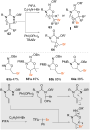
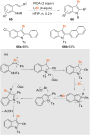
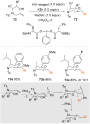
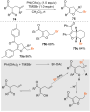
- cost effective and selective, one-pot transformation. Pharmaceutical uses for bio-active cyclic molecules accessible by I(III) reagents are plentiful; anticancer drugs can be formed from the basis of pyrrolo[2,3-b]indoles 1 [3][4], 2-oxazolines 2 [5][6], dihydrofuran 3 [7][8], and spirocyclic scaffolds





















Advances in the use of metal-free tetrapyrrolic macrocycles as catalysts
Beilstein J. Org. Chem. 2024, 20, 3085–3112, doi:10.3762/bjoc.20.257
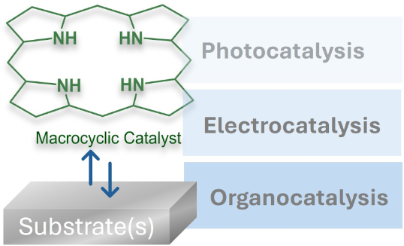
- two macrocycles as metal-free catalysts. Keywords: calix[4]pyrroles; electrocatalysis; free-base porphyrins; organocatalysis; photocatalysis; tetrapyrrolic macrocycles; Introduction Tetrapyrrolic macrocycles are a class of cyclic compounds that contain four pyrrolic units in their ring. Examples of
- /16) aldol products with up to 82% yield in a 70:30 diastereoisomeric ratio. A decade after, Ema, Maeda and co-workers investigated using of calix[4]pyrrole macrocyclic organocatalysts for the synthesis of cyclic carbonates 21 from epoxides 20 (1,2-epoxyhexane) and CO2 [39]. For this purpose, they
- catalysis of Diels–Alder reaction in aqueous environment catalyzed by TPPS3 53 supramolecular aggregates [67]. The Diels–Alder reaction between cinnamaldehyde (55) and cyclopentadiene (56) proceeds via iminium activation by the zwitterionic hetero-aggregates derived from TPPS3 molecules 53 and a cyclic


Chemical structure metagenomics of microbial natural products: surveying nonribosomal peptides and beyond
Beilstein J. Org. Chem. 2024, 20, 3050–3060, doi:10.3762/bjoc.20.253
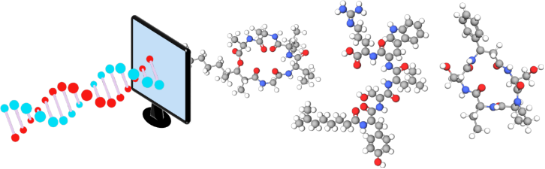
- thioesterase (TE) domain and determines the topology of the final NRP product. The TE may release the NRP as a linear peptide or cyclic peptide, and the latter further manifests many possible topologies (Figure 5b). In a nutshell, offloading is a TE-catalyzed nucleophilic attack to release an NRP from the
- megaenzyme machinery. Water can act as the nucleophile during the offloading step, which amounts to hydrolysis and results in a linear peptide. On the other hand, a cyclic peptide forms when an intramolecular functional group acts as the nucleophile in this step. Regardless of the resulting topology, the NRP


Cyclodextrin-based rotaxanes for polymer materials: challenge on simultaneous realization of inexpensive production and defined structures
Beilstein J. Org. Chem. 2024, 20, 3026–3049, doi:10.3762/bjoc.20.252
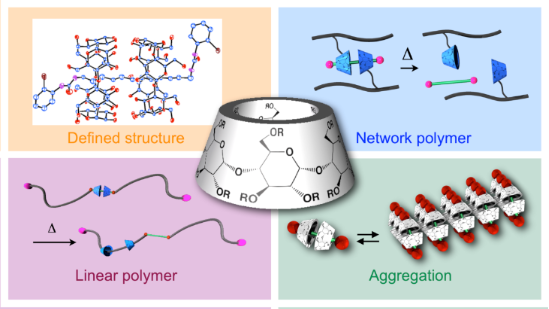
- Synthesis and structure of cyclodextrin-based (poly)rotaxanes CDs are cyclic sugar molecules in which multiple glucose units that are connected by α-1,4 bonds, e.g., α-CD, β-CD, and γ-CD (glucose-unit numbers 6, 7, and 8, respectively), are used for scientific studies and industrial productions (Figure 2






Tunable full-color dual-state (solution and solid) emission of push–pull molecules containing the 1-pyrindane moiety
Beilstein J. Org. Chem. 2024, 20, 3016–3025, doi:10.3762/bjoc.20.251
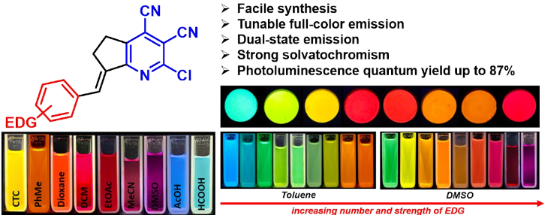
- rigidity along the C–C bond between the heterocycle and ethene bridge due to the fused cyclic fragment. As a consequence of the additional ring, the fluorescence efficiency increased. At the same time, solid-state emission was observed due to the steric hindrance, which prevented intermolecular


Advances in radical peroxidation with hydroperoxides
Beilstein J. Org. Chem. 2024, 20, 2959–3006, doi:10.3762/bjoc.20.249
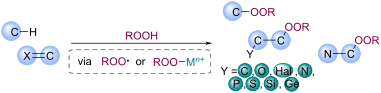
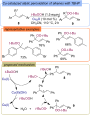
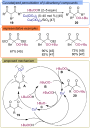
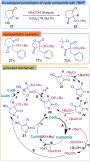
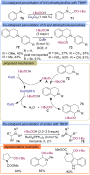
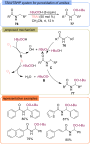
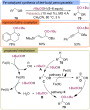
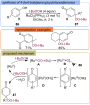
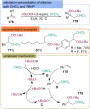
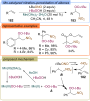
- Cu(II) salt. The cobalt-catalyzed peroxidation of cyclic compounds 21 by TBHP has been demonstrated (Scheme 11) [48]. There are three possible reaction pathways: the first starts with the oxidation of cobalt(II) by TBHP to form cobalt(III) and the tert-butoxy radical (step A). Next, the formed Co(III
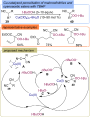
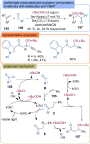
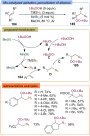
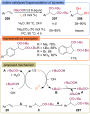
- of a set of tert-butoxy and tert-butylperoxy radicals from TBHP has been demonstrated in an undivided electrochemical cell under constant current conditions (Scheme 14) [55]. Using this approach, the electrochemical peroxidation of cyclic 1,3-dicarbonyl compounds 35 with TBHP was realized to give





























Structure and thermal stability of phosphorus-iodonium ylids
Beilstein J. Org. Chem. 2024, 20, 2931–2939, doi:10.3762/bjoc.20.245
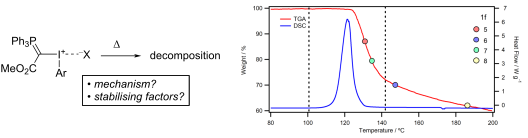
- charge on this substituent in the hypervalent bond. The long I–X distances (a = 2.758–4.165 Å) are indicative of ionic compounds, with the exception of the cyclic benziodoxolone 2, in which a covalent I–O bond is observed (a = 2.484 Å). We were unable to obtain a crystal structure of the ortho-nitro
- the acyclic tetrafluoroborate (1a), triflate (1b), chloride (1c) and nitrate (1d), the anion X– occupies the position trans to the arene substituent, with the ylid in the equatorial position. In tosylates 1e and 1f, as well as the cyclic and pseudocyclic structures 2 and 3, the anion or coordinating
- same plane as the R–I–X bond through formation of a cyclic or pseudocyclic structure (φ < 5°), relatively stable compounds ensued, while a large twist away from planarity resulted in compounds that were destabilised towards thermal decomposition. We envisage that the insights gained from this study


The charge transport properties of dicyanomethylene-functionalised violanthrone derivatives
Beilstein J. Org. Chem. 2024, 20, 2921–2930, doi:10.3762/bjoc.20.244
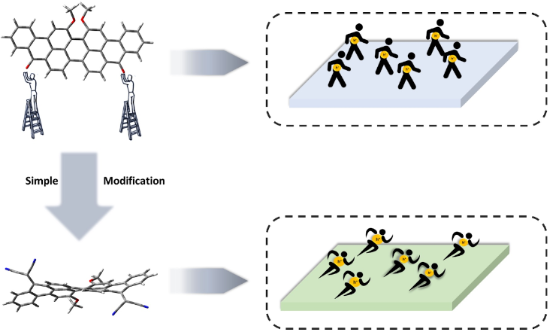
- frontier orbitals. Electrochemical studies The electrochemical properties of the dyes were investigated by square wave voltammetry (SWV) and cyclic voltammetry (CV) and the data are summarised in Table 1, with the plots shown in Figure 6. All the materials exhibit at least one reversible reduction and two


Recent advances in transition-metal-free arylation reactions involving hypervalent iodine salts
Beilstein J. Org. Chem. 2024, 20, 2891–2920, doi:10.3762/bjoc.20.243

- chemoselectivity of the product is primarily determined by the steric hindrance and electrophilicity of the aryl groups [17]. When the two aryl groups form a cyclic structure with a central iodine atom, they are referred to as cyclic diaryliodonium salts 4 (Figure 1). Cyclic DAISs are predominantly found in simple
- five to seven-membered cyclic compounds [47]. Arylation reactions using diaryliodonium salts can occur through four distinct mechanisms. First, the arylation can occur under metal-free conditions, involving the formation of a three-membered ring transition state through ligand coupling, leading to the
- ) to iodine(I). Intermediate II then undergoes an intramolecular aryl migration, yielding the diarylated products 41, analogous to the known iodoniumphenolate reactions that produce diaryl ethers. The same research group meliorated the N-arylation of aliphatic cyclic amines with the same fluorinated




Synthesis of pyrrole-fused dibenzoxazepine/dibenzothiazepine/triazolobenzodiazepine derivatives via isocyanide-based multicomponent reactions
Beilstein J. Org. Chem. 2024, 20, 2870–2882, doi:10.3762/bjoc.20.241
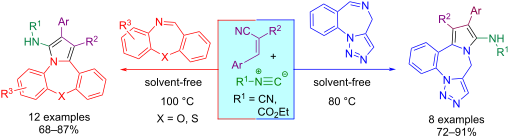
- .20.241 Abstract An efficient and facile synthesis of pyrrole-fused dibenzoxazepine/dibenzothiazepine/triazolobenzodiazepine derivatives was developed through the isocyanide-based multicomponent reaction of isocyanides, gem-diactivated olefins, and cyclic imines such as dibenzoxazepine, dibenzothiazepine
- great attention in biomedical applications, clinical diagnostics, and conjugate materials. Keywords: cyclic imines; dibenzothiazepine; dibenzoxazepine; isocyanides; multicomponent reactions; pyrrole; triazolobenzodiazepine; Introduction Pyrroles and their derivatives are important N-heterocyclic
- with 1,10-phenanthroline as cyclic imine under solvent-free conditions for the synthesis of pyrrole-fused phenanthroline. This reaction proceeds via in situ formation of zwitterion I through reaction of the aldehyde and malononitrile followed by 1,3-dipolar cycloaddition (Scheme 1a) [41]. Chen and co





Mechanochemical difluoromethylations of ketones
Beilstein J. Org. Chem. 2024, 20, 2799–2805, doi:10.3762/bjoc.20.235
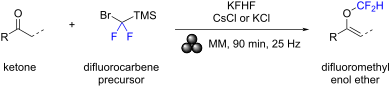
- reactions of difluorocarbene with cyclic and acyclic 1,3-diones (Scheme 1A) [41][42][43][44][45]. Typically, they were conducted with a base to form the corresponding enolate anions which then reacted with difluorocarbene to yield difluoromethyl enol ethers. Those products are of interest because they
- subsequently oxidized to yield the corresponding aryl difluoromethyl ethers. Noteworthy, however, the latter study focused mostly on cyclic ketones, with only one reported example of a difluoromethylation reaction of an acyclic substrate. Against this background and seeing new synthetic opportunities, we
- ketones reacted well too. Accordingly, 3j was obtained in 42% yield. Enone 1k gave 3k in 51% yield, and after isolation by column chromatography the product was obtained in 13% yield. Difluoromethyl enol ether 3l was formed from diketone 1l in 25% yield. Finally, conversions of the two cyclic ketones 1m


Copper-catalyzed yne-allylic substitutions: concept and recent developments
Beilstein J. Org. Chem. 2024, 20, 2739–2775, doi:10.3762/bjoc.20.232
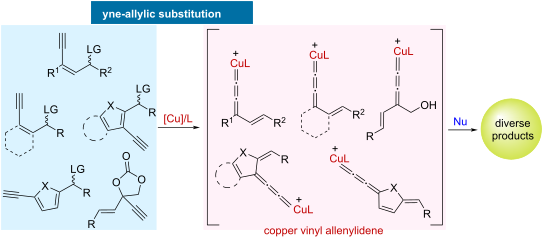
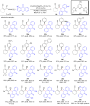
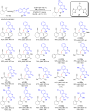
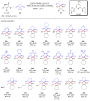
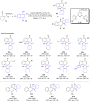
- reaction. Therefore, they believe that the dearomatization caused by copper vinyl allenylidene intermediate remains a key step in the reaction (Scheme 30). Copper-catalyzed yne-allylic substitution–annulation reactions In the pioneering report [62], Fang et al. found that when cyclic 1,3-dicarbonyls such
- as Meldrum’s acid and 1,3-dimethylbarbituric acid were used as the nucleophiles, the yne-allylic substitution products underwent further intramolecular cyclizations to give the spiro-cyclic products in high yields (Scheme 31, 30a–f). The generation of products likely begins with an α-attack on the
- yne-allylic cation intermediate, followed by an intramolecular cyclization. The disparity in reactivity could stem from the chelation between acyclic 1,3-dicarbonyl enolates and the copper catalyst, enhancing γ-position attack in an intramolecular manner. Conversely, Meldrum's acid's rigid cyclic













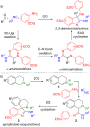
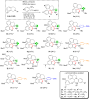
Synthesis of spiroindolenines through a one-pot multistep process mediated by visible light
Beilstein J. Org. Chem. 2024, 20, 2722–2731, doi:10.3762/bjoc.20.230
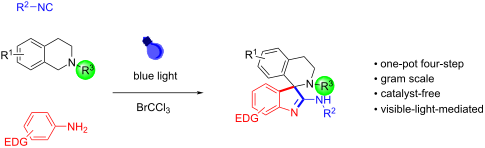
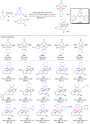
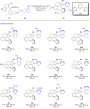
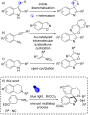
- reactants. Therefore, based on the previous studies on the oxidative 3-component Ugi–Joullié reaction [22][23][24] and our precedent experience [25][26][27], we speculated that cyclic imines could be good substrates for our reaction, thanks to their higher rigidity and stability. As depicted in Scheme 2b




Synthesis of benzo[f]quinazoline-1,3(2H,4H)-diones
Beilstein J. Org. Chem. 2024, 20, 2708–2719, doi:10.3762/bjoc.20.228
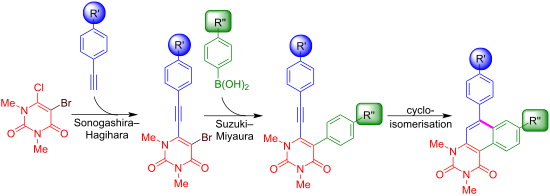
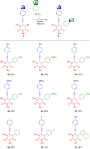
- have already been identified for flavins, making them interesting for photoredox catalysis [68][69]. Inspired by the current interest in the synthesis of novel uracil-derived cyclic compounds and our previous studies, we herein wish to report a new method for the synthesis of a series of novel uracil




Computational design for enantioselective CO2 capture: asymmetric frustrated Lewis pairs in epoxide transformations
Beilstein J. Org. Chem. 2024, 20, 2668–2681, doi:10.3762/bjoc.20.224
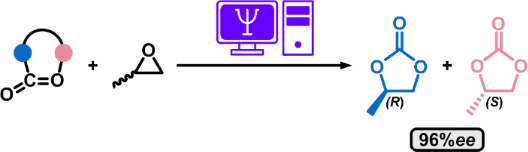
- strategy to mitigate rising atmospheric carbon dioxide levels. Despite extensive research on the CO2 insertion into epoxides to form cyclic carbonates, the stereochemical implications of this reaction have been largely overlooked, despite the prevalence of racemic epoxide solutions. This study introduces
- into readily available substrates such as epoxides, resulting in the formation of polycarbonates or monomeric cyclic carbonates [22]. Depending on the substitution pattern in the epoxide, a chiral centre is present in the product. The insertion of CO2 into epoxides has been the subject of numerous
- is the energy of the rate-limiting TS, Ij the energy of the most populated intermediate, and δGi,j a correction that accounts for the cyclic nature of the catalytic cycle [26]: The energy span is a crucial parameter as it directly correlates with the turnover frequency (TOF) of the catalytic reaction





