Search results
Search for "amine" in Full Text gives 1234 result(s) in Beilstein Journal of Organic Chemistry. Showing first 200.
Discovery of ianthelliformisamines D–G from the sponge Suberea ianthelliformis and the total synthesis of ianthelliformisamine D
Beilstein J. Org. Chem. 2024, 20, 3205–3214, doi:10.3762/bjoc.20.266
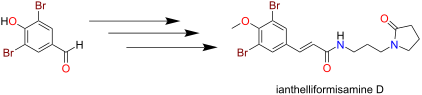
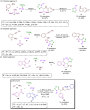
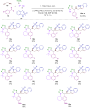
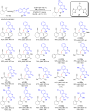
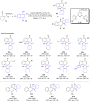
- commercially available primary amine, 1-(3-aminopropyl)pyrrolidin-2-one completed the total synthesis of the natural product in an overall yield of 1.5%. The NMR data comparison of the natural product and our synthetic compound was essentially identical. Due to our interest in the identification of potential
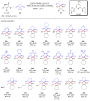
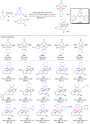
- –activity relationship data, leading to speculation over the moieties responsible for their antibiotic effects. A reduction in the number of amines in the polymeric chain and the absence of a primary amine was noted to decrease bioactivity by Xu et al. [7]. Research reported by Khan et al. in 2014 [9] also


![[Graphic 1]](/bjoc/content/inline/1860-5397-20-266-i2.svg?max-width=637&scale=1.18182)
![[Graphic 2]](/bjoc/content/inline/1860-5397-20-266-i3.svg?max-width=637&scale=1.18182)
![[Graphic 3]](/bjoc/content/inline/1860-5397-20-266-i4.svg?max-width=637&scale=1.18182)

![[Graphic 4]](/bjoc/content/inline/1860-5397-20-266-i5.svg?max-width=637&scale=1.18182)
![[Graphic 5]](/bjoc/content/inline/1860-5397-20-266-i6.svg?max-width=637&scale=1.18182)

Synthesis of 2H-azirine-2,2-dicarboxylic acids and their derivatives
Beilstein J. Org. Chem. 2024, 20, 3191–3197, doi:10.3762/bjoc.20.264
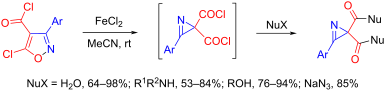
- reaction conditions for the preparation of amides from azirine-2-carbonyl chlorides [27] are not suitable for obtaining bis-amides from azirine-2,2-dicarbonyl dichlorides. In order to obtain a maximum yield, it is better in this case, to carry out the reaction with 2 equiv of the amine in the presence of 4
- equiv of Cs2CO3 to trap hydrogen chloride. Additionally, the workup procedure, in which the product is isolated by filtration through celite after reaction with the amine, often allows one to obtain higher yields than an aqueous treatment of the reaction mixture. A number of amides 10a–h were obtained
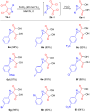
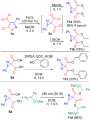
- -2,2-dicarboxylic acids 6. Transformations of 3-(tert-butyl)-5-chloroisoxazole-4-carbonyl chloride (1j). Synthesis of amides 10. aFiltration through celite after reaction with amine (without aqueous workup). bWork up with H2O. Synthesis of esters 11. Synthesis of dicarbonyl azide 12. Synthesis of 5





Synthesis of extended fluorinated tripeptides based on the tetrahydropyridazine scaffold
Beilstein J. Org. Chem. 2024, 20, 3174–3181, doi:10.3762/bjoc.20.262
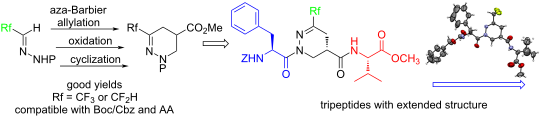
- has become an essential structural motif in medicinal chemistry due to its hydrogen-bond donor capacity, its lipophilic character, and as a bioisostere for alcohol, thiol, or amine groups [16][17][18][19]. Thus, the contribution of fluorinated compounds to pharmaceuticals has been crucial for more


Multicomponent reactions driving the discovery and optimization of agents targeting central nervous system pathologies
Beilstein J. Org. Chem. 2024, 20, 3151–3173, doi:10.3762/bjoc.20.261
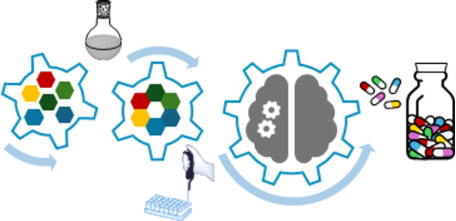
- other approaches such as visible light, microwaves, heterogeneous catalysis, and ultrasound [12][13][14][15]. Due to its versatility, one of the most prevalent of these MCRs is the Ugi reaction [16]. This reaction generally combines an isocyanide with an acid, an amine, and an aldehyde or ketone to
- development as a therapeutic agent for AD. Petasis reaction: Continuing in the context of the development of MTDLs, in 2023 Madhav et al. [40] reported the synthesis of pyrazine-based MTDLs using the Petasis reaction, which involves a secondary amine, a suitable aldehyde, and a substituted boronic acid in the
- intramolecular SNAr reactions. Ugi-4CR/deprotection/cyclization (UDC) strategy: In the UDC approach a protected amine and an electrophilic functional group like esters or ketones are used. Convertible isocyanides can also be employed. Once the Ugi reaction is completed, the protecting group is removed, and the




Advances in the use of metal-free tetrapyrrolic macrocycles as catalysts
Beilstein J. Org. Chem. 2024, 20, 3085–3112, doi:10.3762/bjoc.20.257
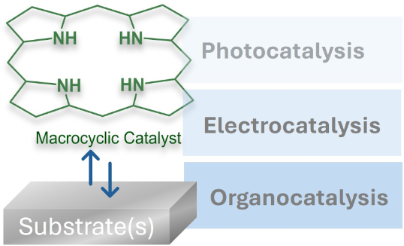
- one remaining –NH group is catalytically active while both tri- and tetraalkylated analogues 40 and 41, without an –NH unit, are not. Further, the authors performed 1H NMR experiments with a different substrate:macrocycle ratio and suggested a bifunctional reaction mechanism involving both inner amine
- ones with secondary amine side arm (48d, 48g, h) were catalytically active for Michael additions, providing 60–71% yields (Table 3), whereas tetraalkylated analogues (49a–g) and dialkylated OxPs without a secondary amine side arm (48a–c, 48e and 48i) were not. Based on these results, the authors have
- secondary amine 57. They have hypothesized that the organocatalytic activity of the aggregates is based on two types of interactions, i.e., electrostatic interactions of α,β-unsaturated iminium cations derived from cinnamaldehyde and the cyclic secondary amine with anionic sulfonate groups and π–π


Synthesis of the 1,5-disubstituted tetrazole-methanesulfonylindole hybrid system via high-order multicomponent reaction
Beilstein J. Org. Chem. 2024, 20, 3077–3084, doi:10.3762/bjoc.20.256
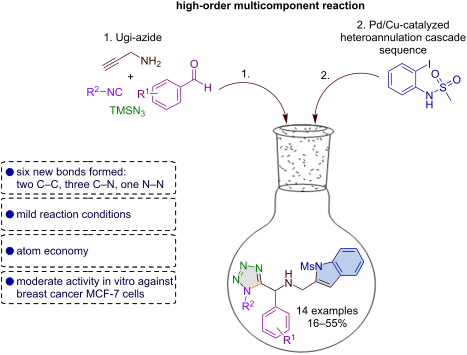
- trifluoroethanol as the solvent and at room temperature [23][24][25][26]. In the initial reaction, propargylamine served as a bifunctional reagent, with the primary amine group participating in the first step and the terminal alkyne promoting the subsequent heteroannulation. (Scheme 2). As observed in our previous



Enantioselective regiospecific addition of propargyltrichlorosilane to aldehydes catalyzed by biisoquinoline N,N’-dioxide
Beilstein J. Org. Chem. 2024, 20, 3069–3076, doi:10.3762/bjoc.20.255
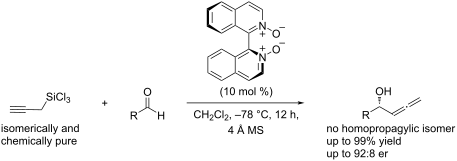
- quenching with aqueous NaOH or NaHCO3 solutions. Results and Discussion Our group recently reported that N,N-diisopropylethylamine required for the synthesis of propargyltrichlorosilane isomerized it to allenyltrichlorosilane in the absence of solvents, and that removal of the amine before the distillation
- prevent a direct Si–N interaction. From Rprop, the amine group of N,N-diisopropylethylamine abstracts the H1 proton with a barrier of 14.2 kcal/mol to form an intermediate (IN1). The intermediate IN1 is unstable (endergonic by 14.0 kcal/mol) and will immediately stabilize to another intermediate (IN2


Chemical structure metagenomics of microbial natural products: surveying nonribosomal peptides and beyond
Beilstein J. Org. Chem. 2024, 20, 3050–3060, doi:10.3762/bjoc.20.253
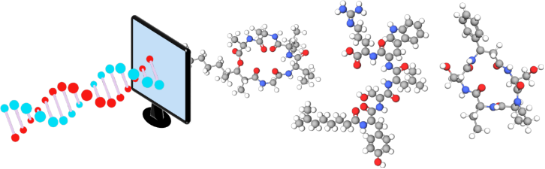
- to fully understand the determinant(s) of NRP topology. There are many ways to classify NRPs when topology and chemical structural features are considered simultaneously. For example, a macrocycle may be a lactam or a lactone depending on whether the internal nucleophile is an amine or an alcohol


Tailored charge-neutral self-assembled L2Zn2 container for taming oxalate
Beilstein J. Org. Chem. 2024, 20, 3007–3015, doi:10.3762/bjoc.20.250
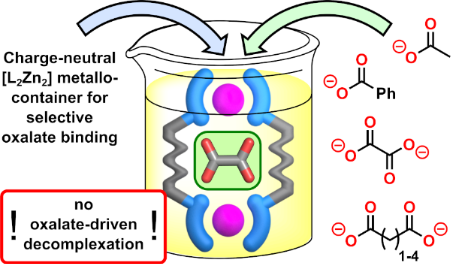
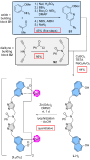
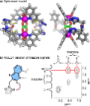
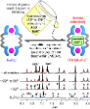
- ligand resulted in no clean formation of a charge-neutral metallocontainer with zinc(II) acetate. We believe that the modification with benzoyl chloride does not only alter the solubility but also shields the secondary amine which might act as additional coordination site. Binding of monocarboxylate



Advances in radical peroxidation with hydroperoxides
Beilstein J. Org. Chem. 2024, 20, 2959–3006, doi:10.3762/bjoc.20.249
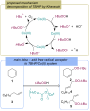
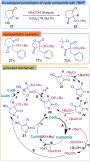
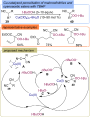
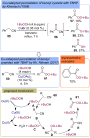
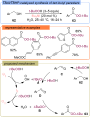
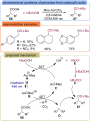
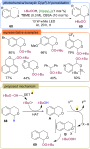
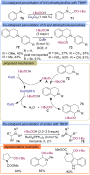
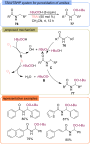
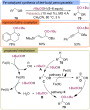
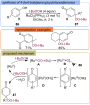
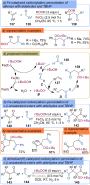
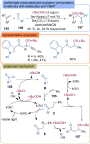
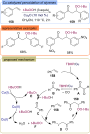
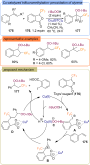
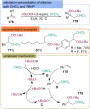
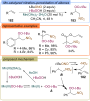
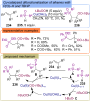
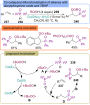
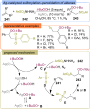
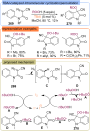
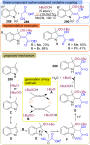
- proposed mechanism of amine 72 peroxidation is the oxidation of Cu(I) with TBHP, resulting in the formation of tert-butoxy radical A, which abstracts the hydrogen atom from substrate 72 to form the C-centered radical B. The generated Cu(II) oxidizes TBHP to form tert-butylperoxy radical C, which recombines



















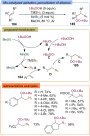


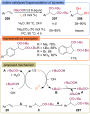
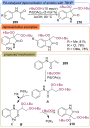

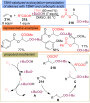







Recent advances in transition-metal-free arylation reactions involving hypervalent iodine salts
Beilstein J. Org. Chem. 2024, 20, 2891–2920, doi:10.3762/bjoc.20.243

- group with a less hindered portion is observed. The mechanism revealed the reaction undergoes the homolytic cleavage of the diaryliodonium salt to produce an iodoaryl radical cation, which further reacts with the amine to acquire the corresponding diaryl amines. Moreover, a similar reaction tried with a
- diaryliodonium salts 40 (Scheme 18) [69], which however, does not produce the diarylated compounds. The intramolecular aryl migration from the iodine to the nitrogen leads to a quaternary ammonium ion intermediate A. Consequently, a nucleophilic ring opening of cyclic amine in 42 occurred via cleavage of the




N-Glycosides of indigo, indirubin, and isoindigo: blue, red, and yellow sugars and their cancerostatic activity
Beilstein J. Org. Chem. 2024, 20, 2840–2869, doi:10.3762/bjoc.20.240
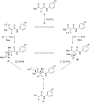
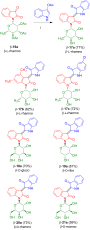
- -glycoside 11a (Scheme 7) [20]. Debenzylation gave product 11b which was transformed to akashin A (11c) by reduction of the azide to the amine in the presence of propane-1,3-dithiol and subsequent debenzoylation. Akashin A was transformed to akashins B and C by acetylation and reaction with diacetyl
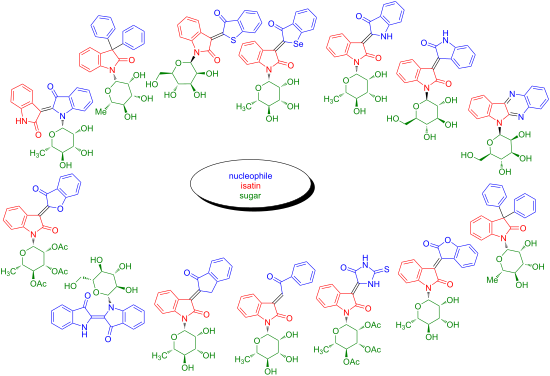
- -mannose (14) afforded indigo-N-mannoside α-15a, albeit, in low yield (Scheme 11) [21]. Deacetylation afforded product α-15b. Indirubin-N-glycosides (red sugars) In contrast to indigo, indirubin is a non-symmetrical compound containing an amine- and an amide-type nitrogen atom. In our group, we developed a
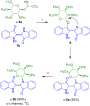
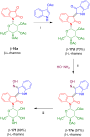
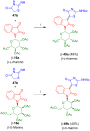
- -glycosides containing the carbohydrate moiety located at the amine-type nitrogen atom (Scheme 18) [25]. For this purpose, we decided to react isatins with N-glycosylated indoxyls which were entirely unknown at that time. The reaction of ʟ-rhamnose α/β-4c with indoline afforded α/β-25a (β:α ≈ 4:1


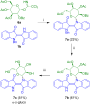
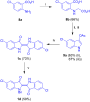


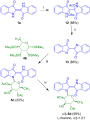


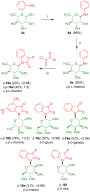





Multicomponent synthesis of α-branched amines using organozinc reagents generated from alkyl bromides
Beilstein J. Org. Chem. 2024, 20, 2834–2839, doi:10.3762/bjoc.20.239
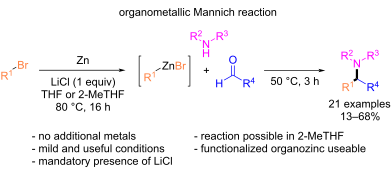
- 16 h at 80 °C (Table 1, entry 2). However, its suitability in the multicomponent coupling with an amine and an aldehyde still had to be demonstrated as there was no precedent for such a Mannich multicomponent coupling involving nonstabilized organozinc halides using THF or 2-MeTHF as solvent. To our
- species 2 were collected using a syringe and allowed to react with an amine 3 and an aldehyde 4 under moderate heating (Scheme 2). The multicomponent couplings proceeded smoothly, with an acceptable yield of the α-branched amine being obtained after 3 h at 50 °C. A range of secondary amines as well as
- various aromatic aldehydes could be used in the multicomponent coupling. Interestingly, functionalized organozinc reagents gave the multicomponent coupling product, except for the cyanated organozinc compound 2d, which only provided traces of the expected α-branched amine. It can be noted that in sharp


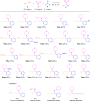
Synthesis of tricarbonylated propargylamine and conversion to 2,5-disubstituted oxazole-4-carboxylates
Beilstein J. Org. Chem. 2024, 20, 2827–2833, doi:10.3762/bjoc.20.238

- anhydride, the intermediately formed hemiacetal underwent acetylation, leading to N,O-acetals 1. In this method, an acid amide can be used as an amine masked with an acyl group. Subsequent elimination of acetic acid occurred to afford 2 in situ upon treatment with a base, enabling nucleophilic addition with
- nucleophiles to synthesize PCPAs, and their ring closures were also investigated. Results and Discussion NAI 2 can be generated by treating N,O-acetal 1 with a base, such as triethylamine. However, the addition of an amine was omitted because lithium acetylide functions both as nucleophile and base. When 1a


Investigation of a bimetallic terbium(III)/copper(II) chemosensor for the detection of aqueous hydrogen sulfide
Beilstein J. Org. Chem. 2024, 20, 2818–2826, doi:10.3762/bjoc.20.237
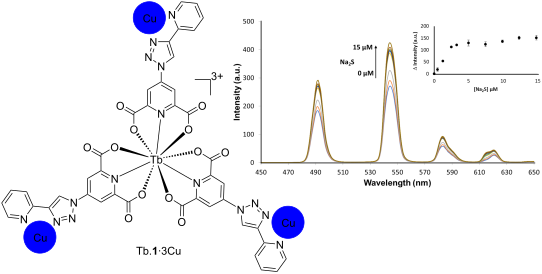
- , highly sensitive chemosensors via a facile synthetic route/method, we have explored three chelates for lanthanide ions (DO3A, 2,6-pyridinedicarboxylic acid and DO2A), resulting in complexes with different overall charges. Additionally we have explored two copper(II) binding groups (di(2-picolyl)amine and


Synthesis and antimycotic activity of new derivatives of imidazo[1,2-a]pyrimidines
Beilstein J. Org. Chem. 2024, 20, 2806–2817, doi:10.3762/bjoc.20.236
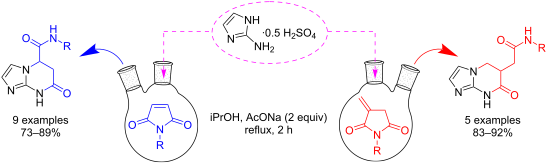
- , it is worth mentioning the work of Li and co-workers (2011) [20], who described a single example of the formation of such structures by carrying out an organocatalytic domino aza-Michael–Mannich reaction between benzylidene-1H-imidazol-2-amine and cinnamaldehyde. Although the imidazo[1,2-a


Access to optically active tetrafluoroethylenated amines based on [1,3]-proton shift reaction
Beilstein J. Org. Chem. 2024, 20, 2776–2783, doi:10.3762/bjoc.20.233
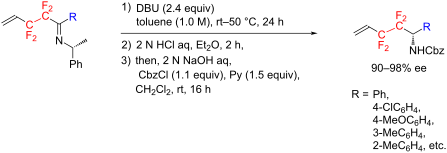
- amides in moderate three-step yields. Keywords: amine; chirality transfer; [1,3]-proton shift reaction; tetrafluoroethylene fragment; Introduction A fluorine atom has quite peculiar chemical and physical properties compared to others, and hence changes in molecular properties resulting from the
- 22b could not be completely suppressed. The thus obtained [1,3]-proton shift product (S)-20b was subjected to 2 N HCl aq in Et2O for 2 h, and subsequently 2 N NaOH aq, affording the corresponding free amine (S)-17b. Then, treatment of the amine with CbzCl and pyridine in CH2Cl2 gave the corresponding
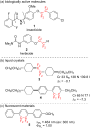
- good yield and a high asymmetric transfer was achieved. As a result, it was found that various optically active amine derivatives could be obtained with high optical purity. Various applications of tetrafluoroethylenated molecules. Precedent synthetic approaches to optically active compounds possessing



Copper-catalyzed yne-allylic substitutions: concept and recent developments
Beilstein J. Org. Chem. 2024, 20, 2739–2775, doi:10.3762/bjoc.20.232
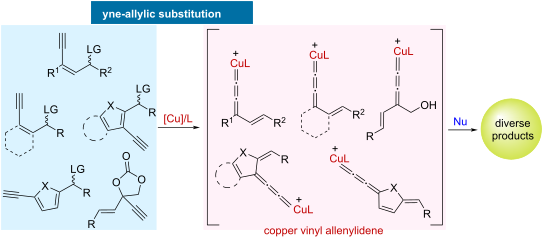
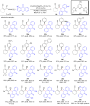
- :1 (Scheme 3, 3e). Carbonates with aryl or styryl residue can undergo the reaction smoothly (Scheme 3, 3f–k), but alkyl-substituted substrates showed low yields (Scheme 3, 3l and 3m). Moreover, secondary amines with various substituents, acyclic amines, primary amines, or even the amine moieties in
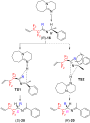
- et al. [63][64] reported the first amine-mediated highly enantioselective copper-catalyzed asymmetric yne-allylic substitution, affording 1,4-enynes with up to 98% ee and >20:1 rr. A series of secondary amines can react smoothly and achieve good enantioselectivities and regioselectivities (Scheme 7
- ). Further control experiments and DFT calculations show that during the catalytic process, tertiary amine directly participates as a nucleophilic reagent to give the ammonium salt, which then releases dimethylaminium to provide the final product (Scheme 12). Chiral allylic sulfone compounds can be easily











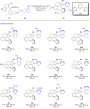


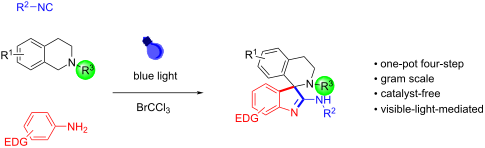
Synthesis of spiroindolenines through a one-pot multistep process mediated by visible light
Beilstein J. Org. Chem. 2024, 20, 2722–2731, doi:10.3762/bjoc.20.230
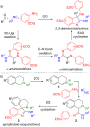
- Scheme 6. Based on the results reported by Zeitler [28], several mechanisms are involved in the oxidation of N-Ph-THIQ. The most probable involves the photoexcitation of the EDA (Electron Donor-Acceptor) complex promoting an electron transfer from N-Ph-THIQ to BrCCl3 to afford the amine radical cation




Synthesis of benzo[f]quinazoline-1,3(2H,4H)-diones
Beilstein J. Org. Chem. 2024, 20, 2708–2719, doi:10.3762/bjoc.20.228
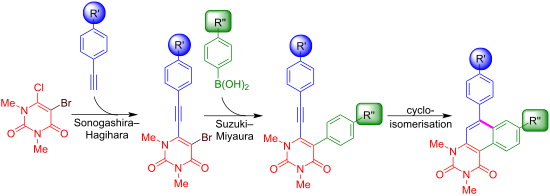
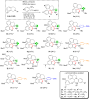
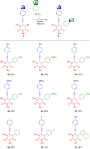
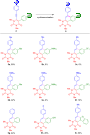
- when located at position 5 of the uracil ring, which might be due to the protonation of the amine under the employed reaction conditions, making the aryl ring less feasible for the SEAr reaction (Scheme 4b). The same effects may explain the cyclisation of 4f to 5f, while 4c is not converted to the




Computational design for enantioselective CO2 capture: asymmetric frustrated Lewis pairs in epoxide transformations
Beilstein J. Org. Chem. 2024, 20, 2668–2681, doi:10.3762/bjoc.20.224
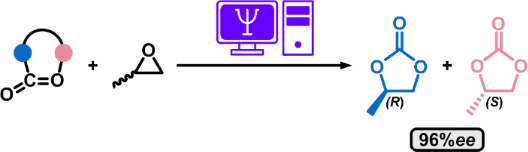
- regioselectivity of the CO2 insertion into PO must be addressed as part of the full mechanistic investigation. The compound 3-boryl-2-propen-1-amine is now considered as the catalyst (Figure 2B). As observed in Figure 2A, the bond length and electron density at the bond critical point (BCP) difference are minimal


Synthesis and cytotoxicity studies of novel N-arylbenzo[h]quinazolin-2-amines
Beilstein J. Org. Chem. 2024, 20, 2592–2598, doi:10.3762/bjoc.20.218
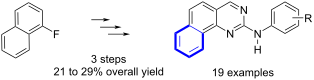
- ]quinazolin-2-amine (3): To a stirred solution of guanidinium carbonate (2.0 g, 0.011 mol) in DMA (15 mL) was added compound 2 (1.5 g, 0.008 mol). Then the reaction mixture was heated to stir at 150 °C for 16 h. After completion of the reaction (TLC), the mixture was poured into ice water, a solid was formed
- ; HRESIMS (m/z): [M + H]+ calcd for C12H10N3,196.0869; found, 196.0872 (1 ppm); mp: 193–195 °C (lit. 194–196 °C [12]). Step 3: Representative procedure for the preparation of compounds 4: To the stirred solution of benzo[h]quinazolin-2-amine (3a, 0.256 mmol, 1.0 equiv) in 1,4-dioxane (4 mL) was added
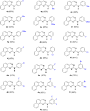
- ). Compound 4a: N-phenylbenzo[h]quinazolin-2-amine: 69% yield (off white solid). 1H NMR (400 MHz, DMSO-d6, δ ppm) 10.01 (br s, 1H, NH), 9.29 (s, 1H), 9.03 (dd, J = 7.2, 0.8 Hz, 1H), 8.07–8.01 (m, 3H), 7.84–7.72 (m, 3H), 7.43 (d, J = 2.0 Hz, 1H), 7.41 (t, J = 7.6 Hz, 1H), 7.05 (t, J = 6.8 Hz, 1H); 13C NMR (75


Base-promoted cascade recyclization of allomaltol derivatives containing an amide fragment into substituted 3-(1-hydroxyethylidene)tetronic acids
Beilstein J. Org. Chem. 2024, 20, 2585–2591, doi:10.3762/bjoc.20.217
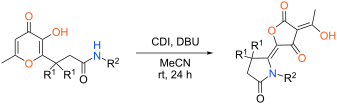
- refluxing EtOH allowed us to obtain substituted enehydrazine 7 (Scheme 5a). The similar condensation with amine 8 led to enamine derivative 9 (Scheme 5b). Based on the data of X-ray analysis compound 7 has the same configuration of double and hydrogen bonds as in the case of starting tetronic acids 4


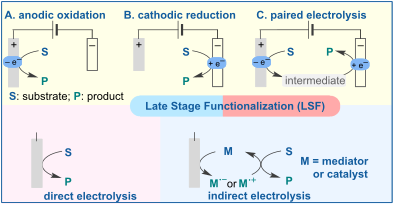
A review of recent advances in electrochemical and photoelectrochemical late-stage functionalization classified by anodic oxidation, cathodic reduction, and paired electrolysis
Beilstein J. Org. Chem. 2024, 20, 2500–2566, doi:10.3762/bjoc.20.214
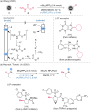
- the DDQH• radical to generate a carbocation and DDQH−. In path B, the reaction involves direct hydride transfer to DDQ, forming DDQH− and a carbocation. In both pathways, the amine nucleophile captures the carbocation, resulting in the final amination product after losing a proton. Subsequently, DDQH
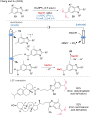
- mediator between the anode and the nickel-chelated enolate intermediate. Simultaneously, the amine substrate is oxidized at the anode and deprotonated to generate a nitrogen-centered radical. The desired product then is generated by the stereoselective cross-coupling of the carbon-centered radical with the




























Asymmetric organocatalytic synthesis of chiral homoallylic amines
Beilstein J. Org. Chem. 2024, 20, 2349–2377, doi:10.3762/bjoc.20.201
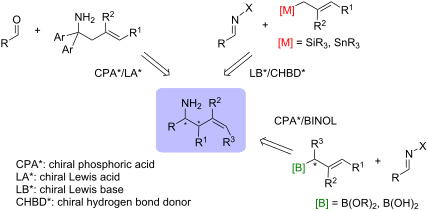
- as a key methodology in the synthesis of alkaloids and natural products with 4-, 5- and 6-membered cyclic amine motifs. Initially reliant on stoichiometric reagents, synthetic chemists predominantly used N-substituted chiral imines, organometallic chiral reagents and achiral reagents with an
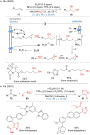
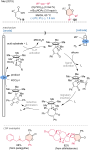
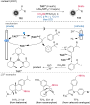
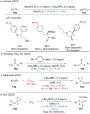
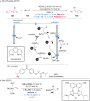
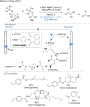
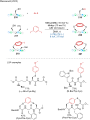
- directly prepared by combining three readily accessible synthons: an amine, an allyl nucleophile, and a carbonyl compound (Scheme 1) [15][16]. A selection of structural motifs accessible via homoallylic amines is shown in Scheme 1. Despite several reviews on homoallylic amine syntheses being published [17
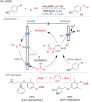
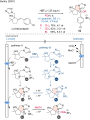
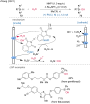
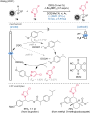
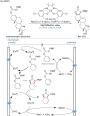
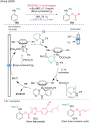
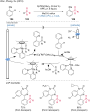
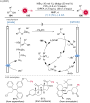
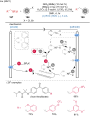
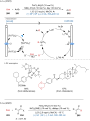
- (Scheme 6). The study explored a broad range of p-methoxyphenyl (PMP)imines derived from aryl, heteroaryl and alkyl aldehydes (including ethyl glyoxylate), demonstrating yields of 57–98% and high enantioselectivity of 90–98%. Screening of aldehyde and amine components indicated that the method is