Search results
Search for "efficiency" in Full Text gives 1251 result(s) in Beilstein Journal of Organic Chemistry. Showing first 200.
Extension of the π-system of monoaryl-substituted norbornadienes with acetylene bridges: influence on the photochemical conversion and storage of light energy
Beilstein J. Org. Chem. 2024, 20, 3061–3068, doi:10.3762/bjoc.20.254
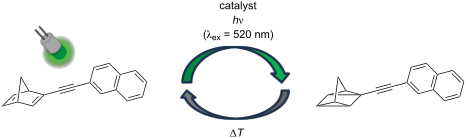
- ). Indeed, the quenching efficiency of triplet-excited [Ru(phen)3](PF6)2 by 1i was calculated to be as low as 5% under the highly diluted conditions required for the experiments in Figure 3. In order to gain structural information about the photoproducts, the photoisomerization reactions were also examined
- be investigated in the presence of the photosensitizer because these substrates have no sufficient solubility in acetonitrile. To assess the efficiency of the photoreactions, photoisomerization quantum yields were determined in cyclohexane by actinometry (λex = 310 nm or 340 nm) [41][42]. The quantum


Tunable full-color dual-state (solution and solid) emission of push–pull molecules containing the 1-pyrindane moiety
Beilstein J. Org. Chem. 2024, 20, 3016–3025, doi:10.3762/bjoc.20.251
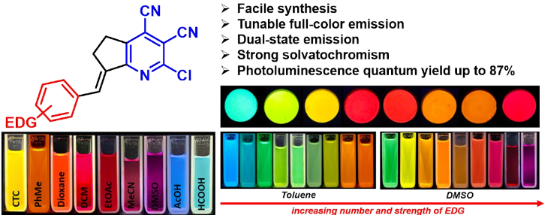
- flexibility, high efficiency, and versatility, making them essential for modern high-tech applications. Despite the wide variety of known push–pull molecules, the number of fluorescent cores with synthetic potential for tuning the emission wavelength to achieve a full-emission spectrum is limited. Typically
- rigidity along the C–C bond between the heterocycle and ethene bridge due to the fused cyclic fragment. As a consequence of the additional ring, the fluorescence efficiency increased. At the same time, solid-state emission was observed due to the steric hindrance, which prevented intermolecular
- highest fluorescence efficiency of 53.4% was observed for the para-methyl derivative 1b. Solutions of stilbazoles 1 in DMSO were also characterized by large Stokes shift values, reaching 207 nm (5846 cm−1) and showing nonradiative loss of excitation energy. It should be noted that stilbazoles 1, in


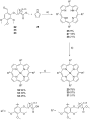
Synthesis of fluorinated acid-functionalized, electron-rich nickel porphyrins
Beilstein J. Org. Chem. 2024, 20, 2954–2958, doi:10.3762/bjoc.20.248
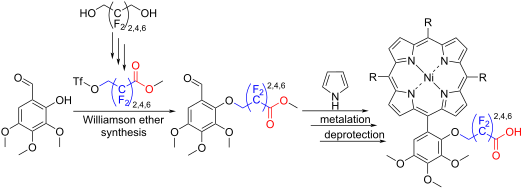
- transfer and increases the efficiency [12]. Three conditions should be met for the target porphyrins of this study. 1. The acid covalently bound to the porphyrin should have an acid strength similar to trifluoroacetic acid. 2. The length of the tether with which the acid group is bound should be sufficient


The charge transport properties of dicyanomethylene-functionalised violanthrone derivatives
Beilstein J. Org. Chem. 2024, 20, 2921–2930, doi:10.3762/bjoc.20.244
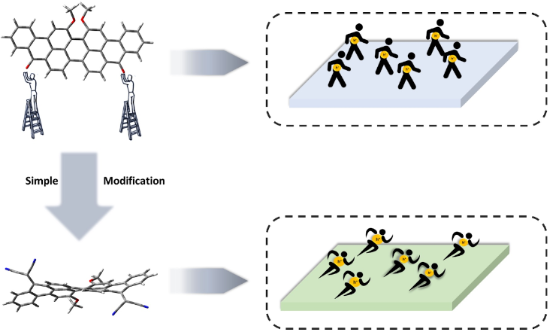
- × 10−4 cm2 V−1 s−1) and 2-ethylhexyl chains (4.93 × 10⁻⁵ cm2 V−1 s−1). The stronger π–π interactions led to a higher power conversion efficiency (PCE) as a result of the higher short-circuit current density (Jsc), due to films with higher crystallinity providing a smoother pathway to charge carriers to


Recent advances in transition-metal-free arylation reactions involving hypervalent iodine salts
Beilstein J. Org. Chem. 2024, 20, 2891–2920, doi:10.3762/bjoc.20.243

- , diaryliodonium salts (DAIS), a versatile category of hypervalent iodine compounds, have seen significant progress in hypervalent iodine chemistry. Their efficiency and environmentally friendly characteristics have positioned DAIS as next-generation arylation reagents [29][30]. Other than aromatic electrophiles
- efficiency and effectiveness as a synthetic approach. Furthermore, a transition-metal-free arylation of quinoxalines 17 and quinoxalinones 19 via aryl radicals was discussed by Li and co-workers in 2022. In this report the aryl radicals were generated by planetary ball milling of diaryliodonium salts 16 at a
- . Notably, the efficiency of the cross-coupling reaction was observed to increase with the transfer of electron-poor aryl groups from the hypervalent iodine salt. Thus, electron-withdrawing substituents such as trifluoromethyl, m-chloro, and fluorine on the aryl group promoted efficient coupling. Moreover




Synthesis of pyrrole-fused dibenzoxazepine/dibenzothiazepine/triazolobenzodiazepine derivatives via isocyanide-based multicomponent reactions
Beilstein J. Org. Chem. 2024, 20, 2870–2882, doi:10.3762/bjoc.20.241
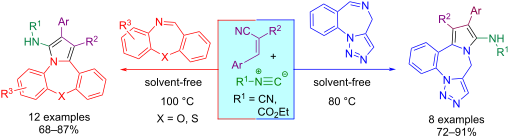
- achieve this goal [7][33]. Among them, isocyanide-based multicomponent reactions (I-MCRs) are one of the well-known strategies in this field due to their operational simplicity, one-pot, convergent properties and atom economy, high efficiency, and high levels of chemical selectivity [34][35][36]. In
- increase and the electron-donating substituents led to a decrease in the reaction efficiency (Scheme 3, 4a–k). In addition, benzothiazepine was used in this protocol and the corresponding pyrrole-fused benzothiazepine was obtained with a yield of 73% (Scheme 3, 4l). Also, various isocyanides were suitable
- benzoxazepine, the presence of an electron-withdrawing group leads to an increase in the yield of pyrrole-fused triazolobenzodiazepines whereas electron-donating groups led to a decrease in its yield. Also, the substitution of naphthyl used in gem-diactivated olefins increased the efficiency of the desired





Multicomponent synthesis of α-branched amines using organozinc reagents generated from alkyl bromides
Beilstein J. Org. Chem. 2024, 20, 2834–2839, doi:10.3762/bjoc.20.239
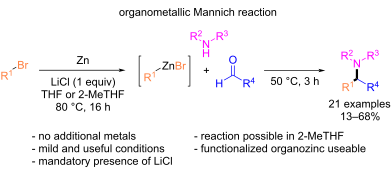
- stoichiometric amount of LiCl was essential for the efficiency of the subsequent three-component coupling with aldehydes and amines. A variety of primary, secondary, and tertiary organozinc reagents as well as secondary amines and aromatic aldehydes could be used for the straightforward preparation of α-branched


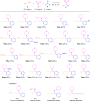
Mechanochemical difluoromethylations of ketones
Beilstein J. Org. Chem. 2024, 20, 2799–2805, doi:10.3762/bjoc.20.235
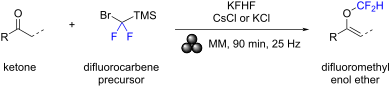
- efficiently converted to the target products under solvent-free conditions. The reactions proceed at room temperature and are complete within 90 minutes, demonstrating both efficiency and experimental simplicity. Keywords: ball milling; difluorocarbene; difluoromethylations; difluoromethyl enol ether
- reaction conditions with difluorocarbene precursor 2, KFHF (4 equiv) as activator, and CsCl or KCl (4 equiv) as grinding auxiliaries in a PTFE milling jar for 90 min at 25 Hz (Scheme 3). To get an initial efficiency estimate, the crude reaction mixtures were first analyzed by quantitative 1H NMR


Access to optically active tetrafluoroethylenated amines based on [1,3]-proton shift reaction
Beilstein J. Org. Chem. 2024, 20, 2776–2783, doi:10.3762/bjoc.20.233
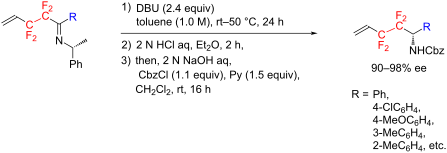
- high enantiomeric excess (90% ee for (S)-23d and (S)-23e). Furthermore, it was found that the substituent position on the aromatic ring did not significantly influence the reaction efficiency as well as optical purity and the reaction proceeded in a highly enantioselective manner (91% ee for (S)-23f

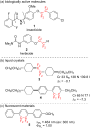


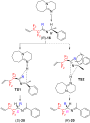
Copper-catalyzed yne-allylic substitutions: concept and recent developments
Beilstein J. Org. Chem. 2024, 20, 2739–2775, doi:10.3762/bjoc.20.232
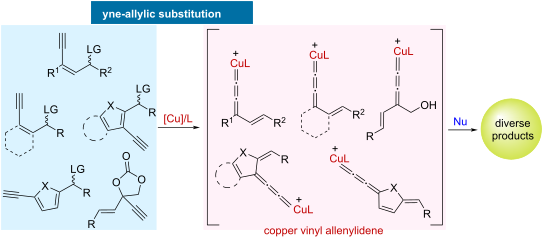
- precise and highly regioselective construction of an array of novel chiral coumarin derivatives, characterized by their exceptional synthetic efficiency and remarkable tolerance towards a broad spectrum of functional groups (Scheme 21, 22a–n). Almost at the same time, Lin et al. [71] also devised a copper
- , followed by a Conia-ene cyclization. The absolute configuration of the products is controlled by the ligand, which further confirms the remote stereocontrol of the copper catalyst. They obtained a single crystal of dinuclear copper and confirmed that the catalytic efficiency of the single crystal is
- , resulting in the C2-dearomatized naphthalenone products 41a–d with high efficiency (Scheme 41). In addition, electron-rich phenols or nonfunctionalized 2-naphthols could also be used as nucleophiles, providing the desired chiral spirocycles 43a–e and 44a–e in good yields with excellent ee values (Scheme 42













Synthesis of spiroindolenines through a one-pot multistep process mediated by visible light
Beilstein J. Org. Chem. 2024, 20, 2722–2731, doi:10.3762/bjoc.20.230
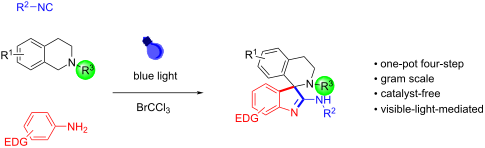
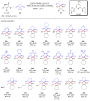
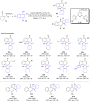
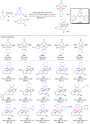
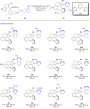
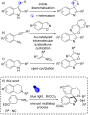
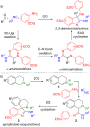
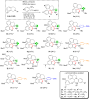
- detrimental (Table 2, entries 4, 5 and 7), while higher temperature improved the efficiency of the process (Table 2, entry 6). Under the optimized conditions we were able to obtain 3a with a 61% isolated yield, which can be considered an excellent result, as it is related to a four-step process (an average
- overall yield resulted even better (76% starting from 1 g of N-Ph-THIQ), a slight decrease of the conversion of α-aminoamidine 2d into the spiro[indole-THIQ] 3d was observed. As expected, the use of a larger-diameter reactor caused a low penetration of the irradiation, thus leading to lower efficiency
- the preparation of complex structures without using catalysts, and purification of intermediates. Remarkably, the reaction can be performed even on gram scale without loss of efficiency. Studies directed toward evaluating the biological activities of the spiroindolenines are currently underway in our




Photoluminescence color-tuning with polymer-dispersed fluorescent films containing two fluorinated diphenylacetylene-type fluorophores
Beilstein J. Org. Chem. 2024, 20, 2682–2690, doi:10.3762/bjoc.20.225
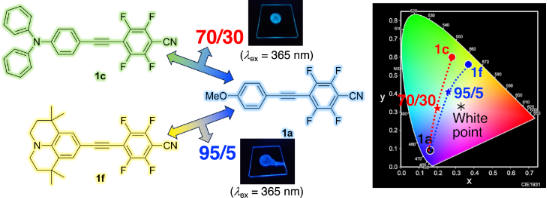
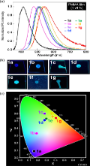
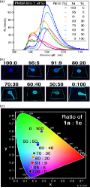
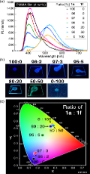
- absorption spectrum of 1a in the two-component film. This result also clearly suggests an energy transfer from 1a to 1c. The fluorescence resonance energy transfer efficiency (EFRET) [30][31] was calculated from the ratio of the fluorescence lifetimes of the two- and high-energy-component films (Equation 1


Computational design for enantioselective CO2 capture: asymmetric frustrated Lewis pairs in epoxide transformations
Beilstein J. Org. Chem. 2024, 20, 2668–2681, doi:10.3762/bjoc.20.224
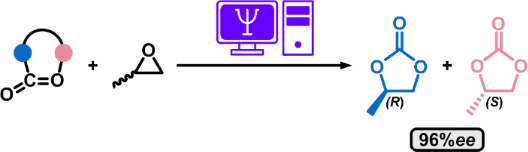
- catalyst efficiency and selectivity in sustainable chemistry applications. Keywords: asymmetric catalysis; carbon dioxide; CO2; epoxide; frustrated Lewis pairs (FLPs); volcano plot; Introduction The field of frustrated Lewis pairs (FLPs) has flourished since their seminal discovery in 2006 by Stephan and


Efficient modification of peroxydisulfate oxidation reactions of nitrogen-containing heterocycles 6-methyluracil and pyridine
Beilstein J. Org. Chem. 2024, 20, 2599–2607, doi:10.3762/bjoc.20.219
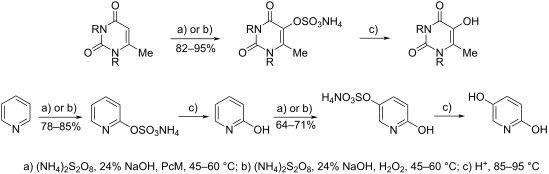
- convenience of the process, our objective is to enhance the efficiency of the Elbs and Boyland–Sims peroxydisulfate oxidation reactions. Results and Discussion We conducted research to enhance the product yield of peroxydisulfate oxidation reactions of specific nitrogen-containing heterocyclic compounds, such
- generate sulfate anion radicals (SO4•−) [42] during their interaction with sulfate anions. This reaction occurs at a significant rate (k = 3.1∙108 min−1) [43] and leads to the recombination of peroxydisulfate in the reaction mixture. It has been demonstrated that the efficiency of peroxydisulfate


Anion-dependent ion-pairing assemblies of triazatriangulenium cation that interferes with stacking structures
Beilstein J. Org. Chem. 2024, 20, 2567–2576, doi:10.3762/bjoc.20.215
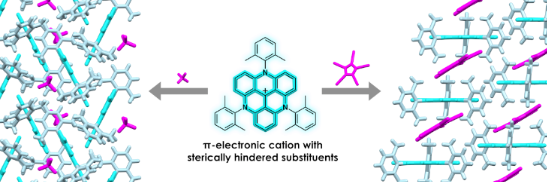
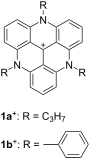
- introduction of N-aryl units during the synthesis is rendered difficult owing to steric hindrances. For example, N-phenyl-substituted TATA+ cation 1b+ (Figure 1) [26] exhibited slightly red-shifted absorption and emission, with a higher quantum efficiency compared to those of N-alkyl-substituted TATA+ cations



A review of recent advances in electrochemical and photoelectrochemical late-stage functionalization classified by anodic oxidation, cathodic reduction, and paired electrolysis
Beilstein J. Org. Chem. 2024, 20, 2500–2566, doi:10.3762/bjoc.20.214
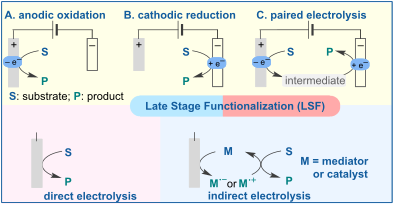
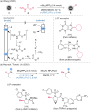
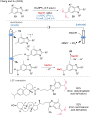
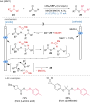
- oxidation then yields the intermediate. Subsequent desilylation and substrate/product exchange complete the catalytic cycle (Scheme 40). This approach underlines the potential of asymmetric electrosynthesis in achieving high selectivity and efficiency in complex molecule synthesis, further broadening the
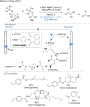
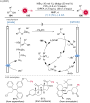
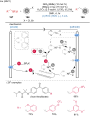
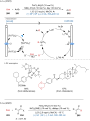
- efficient method for C–H functionalization. The continuous flow setup allows for precise control over reaction conditions, enhanced mass transfer, and improved reaction kinetics, leading to higher efficiency and faster reaction times. In 2023, the Chiang group reported the photoelectrochemical homo-coupling


























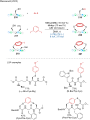


Visible-light-mediated flow protocol for Achmatowicz rearrangement
Beilstein J. Org. Chem. 2024, 20, 2493–2499, doi:10.3762/bjoc.20.213
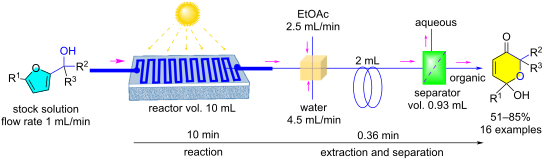
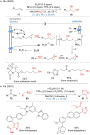
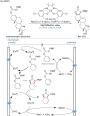
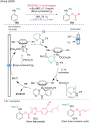
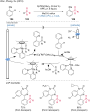
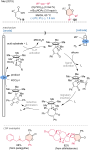
- dihydropyranones due to its ability to better control of reaction conditions, including more uniform light exposure and improved mixing efficiency, which result in higher reaction rates and more consistent product quality. Additionally, the flow system enhances mass transfer and reduces reaction times, leading to
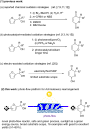
- developed by Guan-Ben Du et al. [14]. Very often, the photolysis reactions performed in batch process encounter issues that include ineffective illumination, improper mixing, prolonged reaction durations, low quantum efficiency and mass transfer, a limited surface-to-volume ratio, along with an inadequate
- transformations, then reaction extraction and separation, into a single process, which are typically performed individually/separately in batch methods. This enhances the overall efficiency for obtaining the desired product(s) from the reaction mixture. In continuation to our efforts on developing flow-based


Machine learning-guided strategies for reaction conditions design and optimization
Beilstein J. Org. Chem. 2024, 20, 2476–2492, doi:10.3762/bjoc.20.212
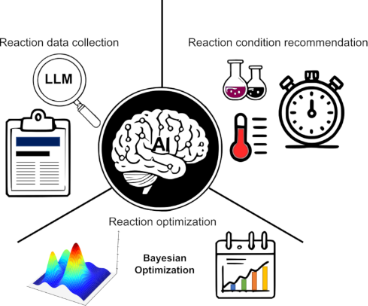
- efficiency and effectiveness of reaction conditions design, and enable novel discoveries in synthetic chemistry. Keywords: data preprocessing; reaction conditions prediction; reaction data mining; reaction optimization; reaction representation; Introduction Machine learning (ML) techniques have been widely
- applied to various chemical-related tasks, such as computer-aided synthesis planning (CASP) [1][2][3][4], which can recommend possible synthetic routes for a target molecule and potentially improve the efficiency of developing new synthetic pathways. Many studies have shown that ML-based retrosynthesis
- -scale global models, descriptors with longer feature lengths and higher computational efficiency, such as the first four methods, are preferred. However, for small-scale local models, QM features can offer more compact and accurate information, but they require sampling and optimizing the 3D conformers


Homogeneous continuous flow nitration of O-methylisouronium sulfate and its optimization by kinetic modeling
Beilstein J. Org. Chem. 2024, 20, 2408–2420, doi:10.3762/bjoc.20.205
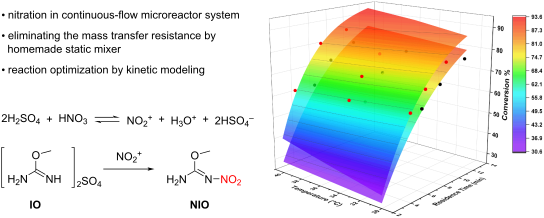
- reaction process of O-methylisouronium sulfate to improve the reaction efficiency and intrinsic safety. In recent years, continuous flow microreactors have been recognized due to their excellent mass and heat transfer performance, precise control over reaction parameters, and intrinsic safety [5][6][7][8
- shown in Figure S1 in Supporting Information File 1, the conversion of IO gradually increased as the molar ratio of HNO3 elevated. The molar ratio of HNO3 was established at 4.4 equiv, a value chosen to optimize both conversion and atom efficiency. Effect of two types of mixing equipment Upon achieving
- the elimination of mass transfer limitations. The improved mixing efficiency can be attributed to the mixer’s design features, such as its double reverse rotating vortex [27][28], large specific surface area [29], and the incorporation of obstacles within the flow channel [30][31]. Determining


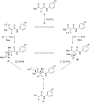
![[Graphic 1]](/bjoc/content/inline/1860-5397-20-205-i17.svg?max-width=637&scale=1.18182)


Efficient one-step synthesis of diarylacetic acids by electrochemical direct carboxylation of diarylmethanol compounds in DMSO
Beilstein J. Org. Chem. 2024, 20, 2392–2400, doi:10.3762/bjoc.20.203
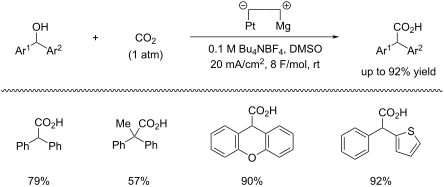
- ), electrodes (Table 1, entries 2, 6, and 7), and electricity (Table 1, entries 2 and 8–10) were investigated. A current density between 10 and 30 mA/cm2 had little effect on the yield of 2a (Table 1, entries 1–3). Carboxylation of 1a also took place in DMF instead of DMSO as solvent. However, the efficiency


Asymmetric organocatalytic synthesis of chiral homoallylic amines
Beilstein J. Org. Chem. 2024, 20, 2349–2377, doi:10.3762/bjoc.20.201
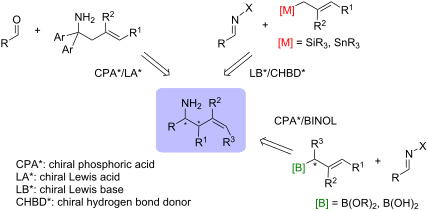
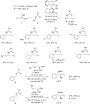
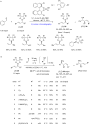
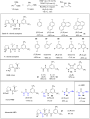
- . The limitations in the scope of this methodology include a poor stereoselectivity achieved with 5-membered cyclic 2,3-disubstituted silanes in contrast to the 6-membered analogues (53). A lower efficiency was recorded with 2-substituted allylsilanes bearing either a halogen or an alkyl group with








Improved deconvolution of natural products’ protein targets using diagnostic ions from chemical proteomics linkers
Beilstein J. Org. Chem. 2024, 20, 2323–2341, doi:10.3762/bjoc.20.199
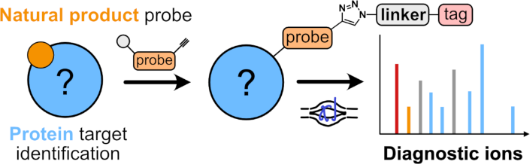
- dozens of kilodaltons. The main advantage of the gel shift assay is to obtain quantitative information of the protein’s probe modification extent, considering high efficiency of the click reaction. Given the bulkiness of the PEG–azide linker, the bioorthogonal reaction needs some optimization, including
- modified peptides can be used for side identification given the relatively high abundance and ionization efficiency due to remaining lysine. The use of the AzTB linker is practical for swift optimization of enrichment workflows, because after the probe–protein conjugates enrichment on the streptavidin
- solvent alone cleans the probe–protein conjugates from excess of ‘click’ reagents and non-protein components present in lysates with high efficiency. The fast sequence of the wash steps is performed on a magnet separating the magnetic beads with aggregated proteins from the wash solution. Next, the




Stereoselective mechanochemical synthesis of thiomalonate Michael adducts via iminium catalysis by chiral primary amines
Beilstein J. Org. Chem. 2024, 20, 2313–2322, doi:10.3762/bjoc.20.198
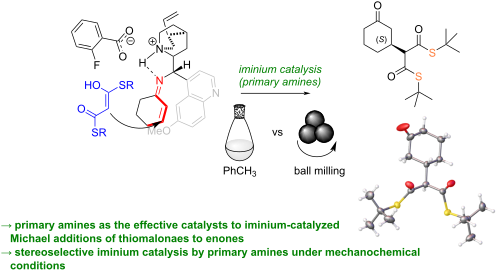
- significant enhancement of catalytic system efficiency and results from the dramatic decrease in enantioselectivity observed in mill reactions. Additionally, the catalyst’s synthesis requires an extra synthetic step. We decided to conduct further investigations utilizing system A or its modifications. First
- guanidine motif in AA-3 compared to simple AA-1. Alterations in the thiol structure within thiomalonates significantly impact their stability and reactivity, thereby influencing both reaction efficiency and stereochemical outcome, as demonstrated in the case of catalysis employing bifunctional hydrogen bond
- efficiency. Motivated by our curiosity surrounding the reactivity of alicyclic enones with bis-thiomalonates, we embarked on a study to evaluate a chosen catalytic system's efficacy under both standard conditions and mechanochemical milling. We aimed to facilitate the nucleophilic addition of 1–4 to 4


Hydrogen-bond activation enables aziridination of unactivated olefins with simple iminoiodinanes
Beilstein J. Org. Chem. 2024, 20, 2305–2312, doi:10.3762/bjoc.20.197
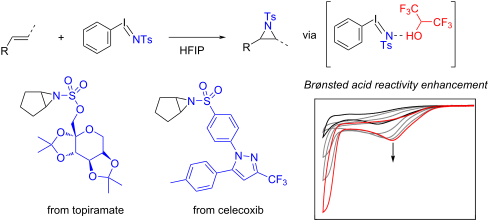
- ). Increasing the reaction temperature negatively affected the efficiency of aziridination: Reactions performed at 30 or 50 °C afforded 3a in 50% and 43% yield, respectively (Table 1, entries 5 and 6). Replacing HFIP with 2,2,2-trifluoroethanol (TFE), which is also a commonly encountered fluorinated alcohol
- the generality of H-bond activation of iminoiodinanes for direct aziridination, albeit with modest efficiency for some substrates. The impact of the iminoiodinane structure on the efficiency of HFIP-promoted direct aziridination was next investigated (Scheme 3). For this purpose, cyclopentene was
- % yield. The N-Tces group (Tces = trichloroethylsulfamate) could also be transferred to afford 6f in 39% yield. Finally, the iminoiodinane derived from celecoxib (2i) could be used to transfer this drug moiety to furnish aziridine 6i in 46% yield. In general, the efficiency of aziridination correlates


Metal-free double azide addition to strained alkynes of an octadehydrodibenzo[12]annulene derivative with electron-withdrawing substituents
Beilstein J. Org. Chem. 2024, 20, 2234–2241, doi:10.3762/bjoc.20.191
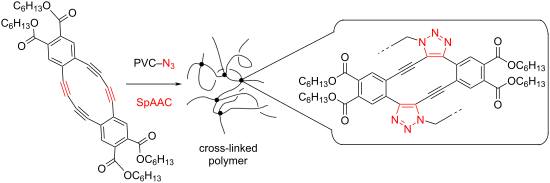
- high efficiency under physiologically active conditions and the absence of any toxic metal ions. SpAAC is biorthogonal, which allows for the specific labeling and imaging of biomolecules even in living cells and organisms. Recently, a more rapid click reaction was desired and the strain-promoted
- ], and crosslinked polymers [14][15][16][17]. Since crosslinking polymers requires high reaction efficiency under mild conditions, developing such reactions is crucial. We previously reported the regioselective double azide addition to octadehydrodibenzo[12]annulene with hexyloxy substituents (DBA-OHex