


Search results
Search for "selective" in Full Text gives 1589 result(s) in Beilstein Journal of Organic Chemistry. Showing first 200.
Synthesis and characterizations of highly luminescent 5-isopropoxybenzo[rst]pentaphene
- Islam S. Marae,
- Jingyun Tan,
- Rengo Yoshioka,
- Zakaria Ziadi,
- Eugene Khaskin,
- Serhii Vasylevskyi,
- Ryota Kabe,
- Xiushang Xu and
- Akimitsu Narita
Beilstein J. Org. Chem. 2025, 21, 270–276, doi:10.3762/bjoc.21.19
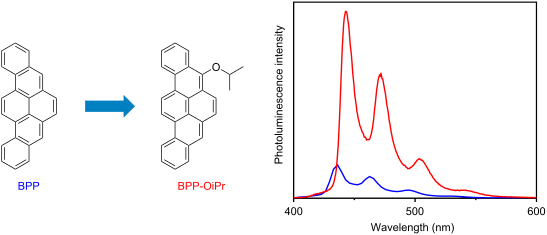
- -donating bis(methoxyphenyl)amino groups further improved the PLQY to 73%, displaying a mixed excitonic and charge-transfer character [22]. Additionally, the functionalization of BPP with two methyl benzoate groups enabled the development of hole-selective contact, which was applicable in significantly

Graphical Abstract

Scheme 1: Synthesis of BPP-OiPr 3 and BPP-dione 4.
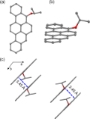
Figure 1: Single crystal structure of BPP-OiPr 3: a) top view, b) side view (thermal ellipsoids shown at 50% ...

Figure 2: a) UV–vis absorption spectra of BPP 2, BPP-OiPr 3, and BPP-dione 4 measured in toluene. Inset: magn...

Figure 3: SEM images of BPP-OiPr showing: a) the variety in crystallization, including differences in shape, ...
Streamlined modular synthesis of saframycin substructure via copper-catalyzed three-component assembly and gold-promoted 6-endo cyclization
- Asahi Kanno,
- Ryo Tanifuji,
- Satoshi Yoshida,
- Sota Sato,
- Saori Maki-Yonekura,
- Kiyofumi Takaba,
- Jungmin Kang,
- Kensuke Tono,
- Koji Yonekura and
- Hiroki Oguri
Beilstein J. Org. Chem. 2025, 21, 226–233, doi:10.3762/bjoc.21.14
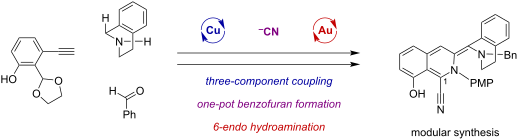
- measurements (Figures S20 to S25, Supporting Information File 1). A notable feature of this cascade process is the temporary protection of the C≡N triple bond, nitrile in the key intermediate 11, by the 2,3-diaminobenzofuran group. This facilitates the site-selective activation of the alkyne triple bond by the

Graphical Abstract

Figure 1: Representative bis-tetrahydroisoquinoline (THIQ) alkaloids and their analogues. Oxygen atoms on bot...
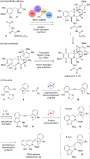
Scheme 1: Strategies for the construction of the pentacyclic core scaffold of saframycin A (1). (a) Biosynthe...

Scheme 2: Streamlined synthesis of the substructure 14 for saframycins 1 within just four steps in overall 29...

Figure 2: UV–vis absorption (gray solid line), the emission spectrum (blue solid line), and the corresponding...
Recent advances in electrochemical copper catalysis for modern organic synthesis
- Yemin Kim and
- Won Jun Jang
Beilstein J. Org. Chem. 2025, 21, 155–178, doi:10.3762/bjoc.21.9
- olefin addition reactions [20] conducted by various research groups, contributed to this area of research. Recently, the coupling reactions of C(sp3)-based electrophiles were explored using dual photoredox and copper catalysis, achieving selective radical coupling reactions involving alkyl halides [21

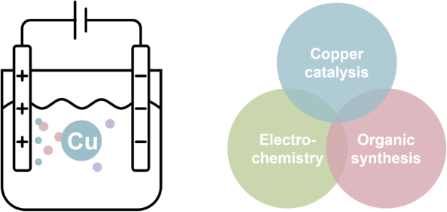
Graphical Abstract

Figure 1: General mechanisms of traditional and radical-mediated cross-coupling reactions.

Figure 2: Types of electrocatalysis (using anodic oxidation).

Figure 3: Recent developments and features of electrochemical copper catalysis.

Figure 4: Scheme and proposed mechanism for Cu-catalyzed alkynylation and annulation of benzamide.
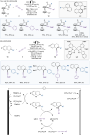
Figure 5: Scheme and proposed mechanism for Cu-catalyzed asymmetric C–H alkynylation.

Figure 6: Scheme for Cu/TEMPO-catalyzed C–H alkenylation of THIQs.
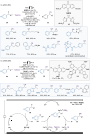
Figure 7: Scheme and proposed mechanism for Cu-catalyzed electrophotochemical enantioselective cyanation of b...
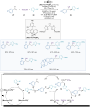
Figure 8: Scheme and proposed mechanism for Cu-catalyzed electrophotochemical asymmetric heteroarylcyanation ...
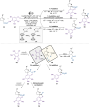
Figure 9: Scheme and proposed mechanism for Cu-catalyzed enantioselective regiodivergent cross-dehydrogenativ...
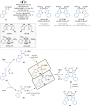
Figure 10: Scheme and proposed mechanism for Cu/Ni-catalyzed stereodivergent homocoupling of benzoxazolyl acet...
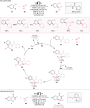
Figure 11: Scheme and proposed mechanism for Cu-catalyzed electrochemical amination.

Figure 12: Scheme and proposed mechanism for Cu-catalyzed electrochemical azidation of N-arylenamines and annu...
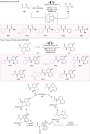
Figure 13: Scheme and proposed mechanism for Cu-catalyzed electrochemical halogenation.

Figure 14: Scheme and proposed mechanism for Cu-catalyzed asymmetric cyanophosphinoylation of vinylarenes.

Figure 15: Scheme and proposed mechanism for Cu/Co dual-catalyzed asymmetric hydrocyanation of alkenes.
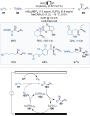
Figure 16: Scheme and proposed mechanism for Cu-catalyzed electrochemical diazidation of olefins.

Figure 17: Scheme and proposed mechanism for Cu-catalyzed electrochemical azidocyanation of alkenes.

Figure 18: Scheme and proposed mechanism for Cu-catalyzed electrophotochemical asymmetric decarboxylative cyan...
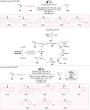
Figure 19: Scheme and proposed mechanism for electrocatalytic Chan–Lam coupling.
Recent advances in organocatalytic atroposelective reactions
- Henrich Szabados and
- Radovan Šebesta
Beilstein J. Org. Chem. 2025, 21, 55–121, doi:10.3762/bjoc.21.6
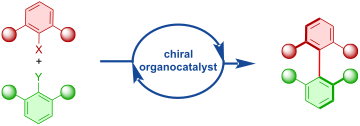
- activation of propargylic aldehydes with catalyst Int-1. Another critical feature was the ability of the organocatalyst to promote the Z-selective isomerization of Int-2 to Int-3. In a related fashion, Wang and co-workers developed an atroposelective heterocycloaddition [19]. The iminium-activated alkynals 4
- acylazolium intermediate Int-16 followed by E-selective protonation of Int-17 (Scheme 9). NHC-catalysis also proved useful in the atroposelective construction of triaryl derivatives with two stereogenic axes. Wei, Du, and co-workers developed a synthesis of 1,2-diaxially chiral triarylpyranones 29 via an NHC

Graphical Abstract

Scheme 1: Formation of axially chiral styrenes 3 via iminium activation.

Scheme 2: Synthesis of axially chiral 2-arylquinolines 6.

Scheme 3: Atroposelective intramolecular (4 + 2) annulation leading to aryl-substituted indolines.

Scheme 4: Atroposelective formation of biaryl via twofold aldol condensation.

Scheme 5: Strategy towards diastereodivergent formation of axially chiral oligonaphthylenes.

Scheme 6: Atroposelective formation of chiral biaryls based on a Michael/Henry domino reaction.

Scheme 7: Organocatalytic Michael/aldol cascade followed by oxidative aromatization.

Scheme 8: Atroposelective formation of C(sp2)–C(sp3) axially chiral compounds.

Scheme 9: NHC-catalyzed synthesis of axially chiral styrenes 26.

Scheme 10: NHC-catalyzed synthesis of biaxial chiral pyranones.

Scheme 11: Formation of bridged biaryls with eight-membered lactones.

Scheme 12: The NHC-catalyzed (3 + 2) annulation of urazoles 37 and ynals 36.

Scheme 13: NHC-catalyzed synthesis of axially chiral 4‑aryl α‑carbolines 41.

Scheme 14: NHC-catalyzed construction of N–N-axially chiral pyrroles and indoles.

Scheme 15: NHC-catalyzed oxidative Michael–aldol cascade.

Scheme 16: NHC-catalyzed (4 + 2) annulation for the synthesis of benzothiophene-fused biaryls.
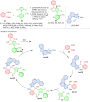
Scheme 17: NHC-catalyzed desymmetrization of N-aryl maleimides.

Scheme 18: NHC-catalyzed deracemization of biaryl hydroxy aldehydes 55a–k into axially chiral benzonitriles 56a...

Scheme 19: NHC-catalyzed desymmetrization of 2-aryloxyisophthalaldehydes.

Scheme 20: NHC-catalyzed DKR of 2-arylbenzaldehydes 62.

Scheme 21: Atroposelective biaryl amination.

Scheme 22: CPA-catalyzed atroposelective amination of 2-anilinonaphthalenes.

Scheme 23: Atroposelective DKR of naphthylindoles.

Scheme 24: CPA-catalyzed kinetic resolution of binaphthylamines.

Scheme 25: Atroposelective amination of aromatic amines with diazodicarboxylates.

Scheme 26: Atroposelective Friedländer heteroannulation.

Scheme 27: CPA-catalyzed formation of axially chiral 4-arylquinolines.

Scheme 28: CPA-catalyzed Friedländer reaction of arylketones with cyclohexanones.

Scheme 29: CPA-catalyzed atroposelective Povarov reaction.

Scheme 30: Atroposelective CPA-catalyzed Povarov reaction.

Scheme 31: Paal–Knorr formation of axially chiral N-pyrrolylindoles and N-pyrrolylpyrroles.

Scheme 32: Atroposelective Paal–Knorr reaction leading to N-pyrrolylpyrroles.

Scheme 33: Atroposelective Pictet–Spengler reaction of N-arylindoles with aldehydes.

Scheme 34: Atroposelective Pictet–Spengler reaction leading to tetrahydroisoquinolin-8-ylanilines.

Scheme 35: Atroposelective formation of arylindoles.

Scheme 36: CPA-catalyzed arylation of naphthoquinones with indolizines.

Scheme 37: Atroposelective reaction of o-naphthoquinones.

Scheme 38: CPA-catalyzed formation of axially chiral arylquinones.

Scheme 39: CPA-catalyzed axially chiral N-arylquinones.

Scheme 40: Atroposelective additions of bisindoles to isatin-based 3-indolylmethanols.

Scheme 41: CPA-catalyzed synthesis of axially chiral arylindolylindolinones.

Scheme 42: CPA-catalyzed reaction between bisindoles and ninhydrin-derived 3-indoylmethanols.

Scheme 43: Atroposelective reaction of bisindoles and isatin-derived imines.

Scheme 44: CPA-catalyzed formation of axially chiral bisindoles.

Scheme 45: Atroposelective reaction of 2-naphthols with alkynylhydroxyisoindolinones.

Scheme 46: CPA-catalyzed reaction of indolylnaphthols with propargylic alcohols.

Scheme 47: Atroposelective formation of indolylpyrroloindoles.

Scheme 48: Atroposelective reaction of indolylnaphthalenes with alkynylnaphthols.

Scheme 49: CPA-catalyzed addition of naphthols to alkynyl-2-naphthols and 2-naphthylamines.

Scheme 50: CPA-catalyzed formation of axially chiral aryl-alkene-indoles.

Scheme 51: CPA-catalyzed formation of axially chiral styrenes.

Scheme 52: Atroposelective formation of alkenylindoles.

Scheme 53: Atroposelective formation of axially chiral arylquinolines.

Scheme 54: Atroposelective (3 + 2) cycloaddition of alkynylindoles with azonaphthalenes.

Scheme 55: CPA-catalyzed formation of axially chiral 3-(1H-benzo[d]imidazol-2-yl)quinolines.

Scheme 56: Atroposelective cyclization of 3-(arylethynyl)-1H-indoles.

Scheme 57: Atroposelective three-component heteroannulation.

Scheme 58: CPA-catalyzed formation of arylbenzimidazols.

Scheme 59: CPA-catalyzed reaction of N-naphthylglycine esters with nitrosobenzenes.
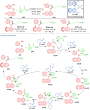
Scheme 60: CPA-catalyzed formation of axially chiral N-arylbenzimidazoles.

Scheme 61: CPA-catalyzed formation of axially chiral arylbenzoindoles.

Scheme 62: CPA-catalyzed formation of pyrrolylnaphthalenes.
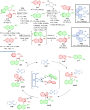
Scheme 63: CPA-catalyzed addition of naphthols and indoles to nitronaphthalenes.

Scheme 64: Atroposelective reaction of heterobiaryl aldehydes and aminobenzamides.

Scheme 65: Atroposelective cyclization forming N-arylquinolones.

Scheme 66: Atroposelective formation of 9H-carbazol-9-ylnaphthalenes and 1H-indol-1-ylnaphthalene.

Scheme 67: CPA-catalyzed formation of pyrazolylnaphthalenes.

Scheme 68: Atroposelective addition of diazodicarboxamides to azaborinephenols.

Scheme 69: Catalytic formation of axially chiral arylpyrroles.

Scheme 70: Atroposelective coupling of 1-azonaphthalenes with 2-naphthols.

Scheme 71: CPA-catalyzed formation of axially chiral oxindole-based styrenes.

Scheme 72: Atroposelective electrophilic bromination of aminonaphthoquinones.

Scheme 73: Atroposelective bromination of dienes.

Scheme 74: CPA-catalyzed formation of axially chiral 5-arylpyrimidines.

Scheme 75: Atroposelective hydrolysis of biaryloxazepines.

Scheme 76: Atroposelective opening of dinaphthosiloles.

Scheme 77: Atroposelective reduction of naphthylenals.

Scheme 78: Atroposelective allylic substitution with 2-naphthols.

Scheme 79: Atroposelective allylic alkylation with phosphinamides.

Scheme 80: Atroposelective allylic substitution with aminopyrroles.

Scheme 81: Atroposelective allylic substitution with aromatic sulfinamides.

Scheme 82: Atroposelective sulfonylation of naphthylynones.

Scheme 83: Squaramide-catalyzed reaction of alkynyl-2-naphthols with 5H-oxazolones.

Scheme 84: Formation of axially chiral styrenes via sulfonylative opening of cyclopropanols.

Scheme 85: Atroposelective organo-photocatalyzed sulfonylation of alkynyl-2-naphthols.

Scheme 86: Thiourea-catalyzed atroposelective cyclization of alkynylnaphthols.

Scheme 87: Squaramide-catalyzed formation of axially chiral naphthylisothiazoles.

Scheme 88: Atroposelective iodo-cyclization catalyzed by squaramide C69.

Scheme 89: Squaramide-catalyzed formation of axially chiral oligoarenes.

Scheme 90: Atroposelective ring-opening of cyclic N-sulfonylamides.

Scheme 91: Thiourea-catalyzed kinetic resolution of naphthylpyrroles.

Scheme 92: Atroposelective ring-opening of arylindole lactams.

Scheme 93: Atroposelective reaction of 1-naphthyl-2-tetralones and diarylphosphine oxides.

Scheme 94: Atroposelective reaction of iminoquinones with indoles.

Scheme 95: Kinetic resolution of binaphthylalcohols.

Scheme 96: DKR of hydroxynaphthylamides.

Scheme 97: Atroposelective N-alkylation with phase-transfer catalyst C75.
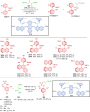
Scheme 98: Atroposelective allylic substitution via kinetic resolution of biarylsulfonamides.

Scheme 99: Atroposelective bromo-functionalization of alkynylarenes.
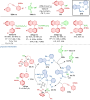
Scheme 100: Sulfenylation-induced atroposelective cyclization.

Scheme 101: Atroposelective O-sulfonylation of isochromenone-indoles.

Scheme 102: NHC-catalyzed atroposelective N-acylation of anilines.

Scheme 103: Peptide-catalyzed atroposelective ring-opening of lactones.

Scheme 104: Peptide-catalyzed coupling of 2-naphthols with quinones.

Scheme 105: Atroposelective nucleophilic aromatic substitution of fluoroarenes.
Emerging trends in the optimization of organic synthesis through high-throughput tools and machine learning
- Pablo Quijano Velasco,
- Kedar Hippalgaonkar and
- Balamurugan Ramalingam
Beilstein J. Org. Chem. 2025, 21, 10–38, doi:10.3762/bjoc.21.3
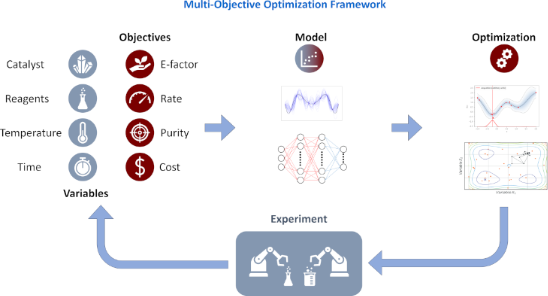
- -flow pattern using a Y-shaped mixer, followed by the suspension of the catalyst via a T-mixer. This technology was utilized to develop selective and efficient decarboxylative fluorination reactions. Recently, a slug flow platform was developed (Figure 3a) by injecting segments of gas as a separating

Graphical Abstract

Figure 1: A high-level representation of the workflow and framework used for the optimization of organic reac...

Figure 2: (a) Photograph showing a Chemspeed HTE platform using 96-well reaction blocks. (b) Mobile robot equ...

Figure 3: (a) Description of a slug flow platform developed using segments of gas as separation medium for hi...

Figure 4: Schematic representation (a) and photograph (b) of the flow parallel synthesizer intelligently desi...

Figure 5: (a) Schematic representation of an ASFR for obtaining an optimal solution with minimal human interv...

Figure 6: (a) A modular flow platform developed for a wider variety of chemical syntheses. (b) Various catego...

Figure 7: Implementation of four complementary PATs into the optimization process of a three-step synthesis.

Figure 8: Overlay of several Raman spectra of a single condition featuring the styrene vinyl region (a) and t...

Figure 9: (a) Schematic description of the process of chemical reaction optimization through ML methods. (b) ...

Figure 10: (a) Comparison between a standard GP (single-task) and a multitask GP. Training an auxiliary task u...

Figure 11: Comparison of the reaction yield between optimizations campaign where the catalyst ligand selection...
Synthesis of acenaphthylene-fused heteroarenes and polyoxygenated benzo[j]fluoranthenes via a Pd-catalyzed Suzuki–Miyaura/C–H arylation cascade
- Merve Yence,
- Dilgam Ahmadli,
- Damla Surmeli,
- Umut Mert Karacaoğlu,
- Sujit Pal and
- Yunus Emre Türkmen
Beilstein J. Org. Chem. 2024, 20, 3290–3298, doi:10.3762/bjoc.20.273
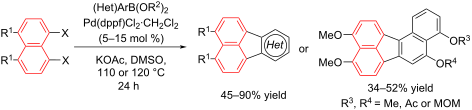
- challenging, if not impossible. In order to overcome this problem, we opted to synthesize benzo[j]fluoranthene analogues with differentially protected oxygens so that specific positions can be functionalized further if needed after selective deprotection. To this end, first we accomplished an efficient
- synthesis of benzo[j]fluoranthene 23 in six steps (Scheme 3). In this sequence, 1,8-DHN (19) was first converted to 1-acetoxy-8-methoxynaphthalene (24) via a selective mono-methylation of 19 followed by acetylation by acetyl chloride in 88% yield over two steps. The more electron-rich ring of naphthalene 24

Graphical Abstract

Figure 1: Examples of important azafluoranthene and benzo[j]fluoranthene natural products, and acenaphthylene...
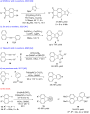
Scheme 1: Selected synthetic strategies towards heterocyclic fluoranthene analogues, and our approach.

Scheme 2: Synthesis of benzo[j]fluoranthene 18.

Scheme 3: Synthesis of benzo[j]fluoranthene 23.

Scheme 4: Synthesis of benzo[j]fluoranthene 28.
Intramolecular C–H arylation of pyridine derivatives with a palladium catalyst for the synthesis of multiply fused heteroaromatic compounds
- Yuki Nakanishi,
- Shoichi Sugita,
- Kentaro Okano and
- Atsunori Mori
Beilstein J. Org. Chem. 2024, 20, 3256–3262, doi:10.3762/bjoc.20.269
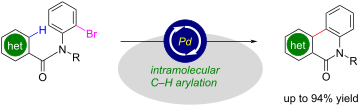
- efficient and selective extraction of lanthanides and actinides and, furthermore, a number of heterocycles involving pyridine rings have been reported to exhibit biological activities [14][15][16][17][18][19][20][21][22]. We have recently reported, as shown in Figure 1, that the introduction of a multiply

Graphical Abstract

Figure 1: Structures of multiply fused heterocyclic compounds composed of pyridine rings.

Scheme 1: Synthesis of C–H arylation precursors 1a–c.

Scheme 2: Palladium-catalyzed intramolecular direct arylation for synthesizing 8a and 8b and the X-ray crysta...
Synthesis of extended fluorinated tripeptides based on the tetrahydropyridazine scaffold
- Thierry Milcent,
- Pascal Retailleau,
- Benoit Crousse and
- Sandrine Ongeri
Beilstein J. Org. Chem. 2024, 20, 3174–3181, doi:10.3762/bjoc.20.262
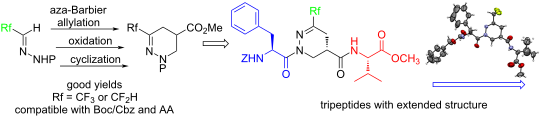
- on an intramolecular Michael addition carried out in DMF and catalyzed by 10% of potassium carbonate. As previously observed [37], under these conditions, the 5-endo-trig cyclization was selective and the lactam resulting from the 5-exo-trig cyclization was not observed. Furthermore, in the case of

Graphical Abstract

Figure 1: Examples of bioactive tetrahydropyridazine derivatives.

Figure 2: Linear and cyclic peptides incorporating the dehydropiperazic acid moiety.

Figure 3: Piperazic acid and analogues and target trifluoro/difluoromethylated tetrahydropyridazine acids.

Scheme 1: Reported syntheses of tetrahydropyridazine ester derivatives.

Figure 4: Synthetic strategy to obtain fluorinated tetrahydropyridazines from difluoro- or trifluoromethylate...

Scheme 2: Synthesis of fluorinated hydrazones 3a–f.

Scheme 3: Allylation of fluorinated hydrazones 3a–f to obtain 5a–f.

Scheme 4: Oxidation of hydrazines 5a–f to obtain hydrazones 6a–f.

Scheme 5: Intramolecular cyclization of compounds 6a–f to obtain tetrahydropyridazines 7a–f.

Scheme 6: Preparation of tripeptides 8e, 8e’, 8f, and 8f’. Yields refer to the yield over 2 steps.

Figure 5: X-ray diffraction of compound 8f.
Multicomponent reactions driving the discovery and optimization of agents targeting central nervous system pathologies
- Lucía Campos-Prieto,
- Aitor García-Rey,
- Eddy Sotelo and
- Ana Mallo-Abreu
Beilstein J. Org. Chem. 2024, 20, 3151–3173, doi:10.3762/bjoc.20.261
- , cholinesterase inhibition (human BuChE, hBuChE), Aβ1-42 self-aggregation inhibition, and antioxidant activity. FATH 5a (Scheme 5) emerged as a promising candidate, showing lower hepatotoxicity at 1000 µM (59.4%, 1.72-fold less toxic than tacrine), moderate and selective hBuChE inhibition (IC50 = 68.2 nM), strong
- new selective non-cannabinoid ligands due to the important motor impairment found in mice lacking GPR55 [51]. In this context, ML192 analogs were synthesized employing a divergent synthetic route starting with a multicomponent reaction, the Gewald reaction (Scheme 13). This reaction allows to easily
- heterocyclic core. The novel compounds were first evaluated using β-arrestin recruitment assays in CHO (chinese hamster ovary) cells overexpressing human GPR55. These new compounds have been evaluated in competitive binding assays for cannabinoid receptors, but all of them showed to be selective for GPR55 (>4

Graphical Abstract

Figure 1: Classical MCRs.

Figure 2: Different scaffolds that can be formed with the Ugi adduct.

Scheme 1: Oxoindole-β-lactam core produced in a U4C-3CR.

Figure 3: Most active oxoindole-β-lactam compounds developed by Brãndao et al. [33].

Scheme 2: Ugi-azide synthesis of benzofuran, pyrazole and tetrazole hybrids.

Figure 4: The most promising hybrids synthesized via the Ugi-azide multicomponent reaction reported by Kushwa...

Scheme 3: Four-component Ugi reaction for the synthesis of novel antioxidant compounds.

Figure 5: Most potent antioxidant compounds obtained through the Ugi four-component reaction developed by Pac...

Scheme 4: Four-component Ugi reaction to synthesize β-amiloyd aggregation inhibitors.

Figure 6: The most potential β-amiloyd aggregation inhibitors generated by Galante et al. [37].

Scheme 5: Four-component Ugi reaction to obtain FATH hybrids and the best candidate synthesized.

Scheme 6: Four-component Ugi reaction for the synthesis of FATMH hybrids and the best candidate synthesized.

Scheme 7: Petasis multicomponent reaction to produce pyrazine-based MTDLs.

Figure 7: Best pyrazine-based MTDLs synthesized by Madhav et al. [40].

Scheme 8: Synthesis of BCPOs employing a Knoevenagel-based multicomponent reaction and the best candidate syn...

Scheme 9: Hantzsch multicomponent reaction for the synthesis of DHPs as novel MTDLs.

Figure 8: Most active 1,4-dihydropyridines developed by Malek et al. [43].

Scheme 10: Chromone–donepezil hybrid MTDLs obtained via the Passerini reaction.

Figure 9: Best CDH-based MTDLs as AChE inhibitors synthesized by Malek et al. [46].

Scheme 11: Replacement of the nitrogen in lactams 11 with an oxygen in 12 to influence hydrogen-bond donating ...

Scheme 12: MCR 3 + 2 reaction to develop spirooxindole, spiroacenaphthylene, and bisbenzo[b]pyran compounds.

Figure 10: SIRT2 activity of best derivatives obtained by Hasaninejad et al. [49].

Scheme 13: Synthesis of ML192 analogs using the Gewald multicomponent reaction and the best candidate synthesi...

Scheme 14: Development of 1,5-benzodiazepines via Ugi/deprotection/cyclization (UDC) approach by Xu et al. [59].

Scheme 15: Synthesis of polysubstituted 1,4-benzodiazepin-3-ones using UDC strategy.

Scheme 16: Synthetic procedure to obtain 3-carboxamide-1,4-benzodiazepin-5-ones employing Ugi–reduction–cycliz...

Scheme 17: Ugi cross-coupling (U-4CRs) to synthesize triazolobenzodiazepines.

Scheme 18: Azido-Ugi four component reaction cyclization to obtain imidazotetrazolodiazepinones.

Scheme 19: Synthesis of oxazolo- and thiazolo[1,4]benzodiazepine-2,5-diones via Ugi/deprotection/cyclization a...
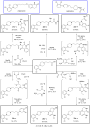
Scheme 20: General synthesis of 2,3-dichlorophenylpiperazine-derived compounds by the Ugi reaction and Ugi/dep...

Figure 11: Best DRD2 compounds synthesized using a multicomponent strategy.

Scheme 21: Bucherer–Bergs multicomponent reaction to obtain a key intermediate in the synthesis of pomaglumeta...

Scheme 22: Ugi reaction to synthesize racetam derivatives and example of two racetams synthesized by Cioc et a...
Controlled oligomerization of [1.1.1]propellane through radical polarity matching: selective synthesis of SF5- and CF3SF4-containing [2]staffanes
- Jón Atiba Buldt,
- Wang-Yeuk Kong,
- Yannick Kraemer,
- Masiel M. Belsuzarri,
- Ansh Hiten Patel,
- James C. Fettinger,
- Dean J. Tantillo and
- Cody Ross Pitts
Beilstein J. Org. Chem. 2024, 20, 3134–3143, doi:10.3762/bjoc.20.259
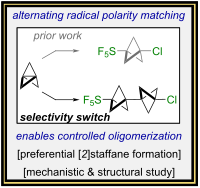
- oligomerizations involving [1.1.1]propellane – i.e., to make [n]staffanes – has been notoriously challenging to control when n > 1 is desired. Herein, we report selective syntheses of SF5- and CF3SF4-containing [2]staffanes from SF5Cl and CF3SF4Cl, demonstrating cases whereby oligomerization is preferentially
- substituted BCPs [25][26][27] or photochemical appendage of 1 onto an extant BCP [28][29][30][31] are relatively effective tactics for the selective assembly of certain [n]staffanes; the main caveat is that multiple synthetic steps are required. On the other hand, while a one-pot radical chain oligomerization
- synthetic challenge. Herein, we report proof-of-concept that our previous work on strain-release pentafluorosulfanylation of 1 [36] using SF5Cl (prepared in house [37] under mild oxidative fluorination conditions [38][39][40][41][42][43][44]) can be extended to the selective synthesis of the associated

Graphical Abstract

Figure 1: (Top) highlighting selectivity challenges in the synthesis of [n]staffanes using excess [1.1.1]prop...

Figure 2: Computed free energy profile for the oligomerization of [1.1.1]propellane (1) following SF5 radical...

Figure 3: Computed free energy profile for the oligomerization of [1.1.1]propellane (1) following CF3SF4 radi...

Figure 4: (A) The molecular structure of 3 at 90 K with 5 independent moieties in the asymmetric axis viewed ...
Hypervalent iodine-mediated intramolecular alkene halocyclisation
- Charu Bansal,
- Oliver Ruggles,
- Albert C. Rowett and
- Alastair J. J. Lennox
Beilstein J. Org. Chem. 2024, 20, 3113–3133, doi:10.3762/bjoc.20.258
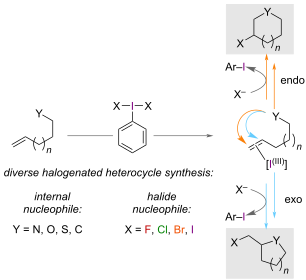
- cost effective and selective, one-pot transformation. Pharmaceutical uses for bio-active cyclic molecules accessible by I(III) reagents are plentiful; anticancer drugs can be formed from the basis of pyrrolo[2,3-b]indoles 1 [3][4], 2-oxazolines 2 [5][6], dihydrofuran 3 [7][8], and spirocyclic scaffolds
- . The level of this chemoselectivity was dependent on the iodane ligand: OPiv was more selective for aminofluorination than OAc, which was proposed to be due to differences in basicity and nucleophilicity (Scheme 10). Detailed mechanistic studies were carried out using multinuclear NMR spectroscopy

Graphical Abstract

Figure 1: Example bioactive compounds containing cyclic scaffolds potentially accessible by HVI chemistry.

Figure 2: A general mechanism for HVI-mediated endo- or exo-halocyclisation.
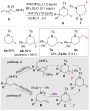
Scheme 1: Metal-free synthesis of β-fluorinated piperidines 6. Ts = tosyl.

Scheme 2: Intramolecular aminofluorination of unactivated alkenes with a palladium catalyst.
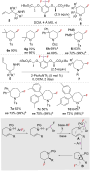
Scheme 3: Aminofluorination of alkenes in the synthesis of enantiomerically pure β-fluorinated piperidines. P...

Scheme 4: Synthesis of β-fluorinated piperidines.

Scheme 5: Intramolecular fluoroaminations of unsaturated amines published by Li.
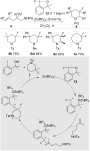
Scheme 6: Intramolecular aminofluorination of unsaturated amines using 1-fluoro-3,3-dimethylbenziodoxole (12)...
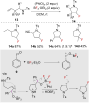
Scheme 7: 3-fluoropyrrolidine synthesis. aDiastereomeric ratio (cis/trans) determined by 19F NMR analysis.

Scheme 8: Kitamura’s synthesis of 3-fluoropyrrolidines. Values in parentheses represent the cis:trans ratio.
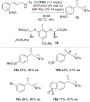
Scheme 9: Jacobsen’s enantio- and diastereoselective protocol for the synthesis of syn-β-fluoroaziridines 15.
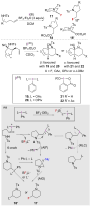
Scheme 10: Different HVI reagents lead to different diastereoselectivity in aminofluorination competing with c...
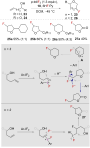
Scheme 11: Fluorocyclisation of unsaturated alcohols and carboxylic acids to make tetrahydrofurans, fluorometh...

Scheme 12: Oxyfluorination of unsaturated alcohols.
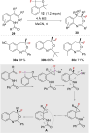
Scheme 13: Synthesis and mechanism of fluoro-benzoxazepines.
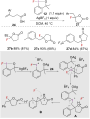
Scheme 14: Intramolecular fluorocyclisation of unsaturated carboxylic acids. Yield of isolated product within ...

Scheme 15: Synthesis of fluorinated tetrahydrofurans and butyrolactone.

Scheme 16: Synthesis of fluorinated oxazolines 32. aReaction time increased to 40 hours. Yields refer to isola...
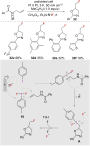
Scheme 17: Electrochemical synthesis of fluorinated oxazolines.

Scheme 18: Electrochemical synthesis of chromanes.

Scheme 19: Synthesis of fluorinated oxazepanes.
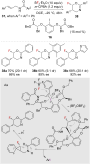
Scheme 20: Enantioselective oxy-fluorination with a chiral aryliodide catayst.
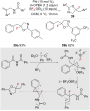
Scheme 21: Catalytic synthesis of 5‑fluoro-2-aryloxazolines using BF3·Et2O as a source of fluoride and an acti...

Scheme 22: Intramolecular carbofluorination of alkenes.

Scheme 23: Intramolecular chlorocyclisation of unsaturated amines.
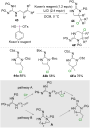
Scheme 24: Synthesis of chlorinated cyclic guanidines 44.
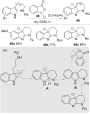
Scheme 25: Synthesis of chlorinated pyrido[2,3-b]indoles 46.

Scheme 26: Chlorolactonization and chloroetherification reactions.
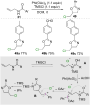
Scheme 27: Proposed mechanism for the synthesis of chloromethyl oxazolines 49.
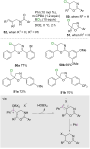
Scheme 28: Oxychlorination to form oxazine and oxazoline heterocycles promoted by BCl3.

Scheme 29: Aminobromocyclisation of homoallylic sulfonamides 53. The cis:trans ratios based on the 1H NMR of t...
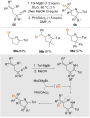
Scheme 30: Synthesis of cyclic imines 45.

Scheme 31: Synthesis of brominated pyrrolo[2,3-b]indoles 59.

Scheme 32: Bromoamidation of alkenes.

Scheme 33: Synthesis of brominated cyclic guanidines 61 and 61’.
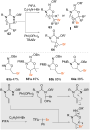
Scheme 34: Intramolecular bromocyclisation of N-oxyureas.
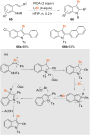
Scheme 35: The formation of 3-bromoindoles.

Scheme 36: Bromolactonisation of unsaturated acids 68.

Scheme 37: Synthesis of 5-bromomethyl-2-oxazolines.
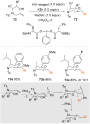
Scheme 38: Synthesis of brominated chiral morpholines.
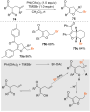
Scheme 39: Bromoenolcyclisation of unsaturated dicarbonyl groups.

Scheme 40: Brominated oxazines and oxazolines with BBr3.

Scheme 41: Synthesis of 5-bromomethtyl-2-phenylthiazoline.

Scheme 42: Intramolecular iodoamination of unsaturated amines.

Scheme 43: Formation of 3-iodoindoles.

Scheme 44: Iodoetherification of 2,2-diphenyl-4-penten-1-carboxylic acid (47’) and 2,2-diphenyl-4-penten-1-ol (...

Scheme 45: Synthesis of 5-iodomethyl-2-oxazolines.

Scheme 46: Synthesis of chiral iodinated morpholines. aFrom the ʟ-form of the amino acid starting material. Th...

Scheme 47: Iodoenolcyclisation of unsaturated dicarbonyl compounds 74.

Scheme 48: Synthesis of 5-iodomethtyl-2-phenylthiazoline (87).
Advances in the use of metal-free tetrapyrrolic macrocycles as catalysts
- Mandeep K. Chahal
Beilstein J. Org. Chem. 2024, 20, 3085–3112, doi:10.3762/bjoc.20.257
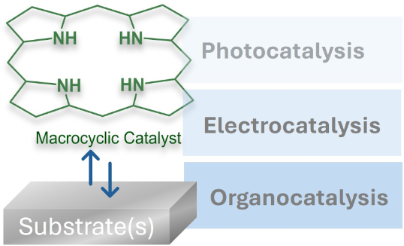
- , along with electrostatic and hydrogen-bonding interactions. This behavior not only allowed for the selective activation and deactivation of organocatalytic activity but also facilitated efficient catalyst recovery at the end of the catalytic reaction. Notably, control experiments supported the

Graphical Abstract

Figure 1: Chemical structures of the main tetrapyrrolic macrocycles studied in this review for their role as ...

Figure 2: Calix[4]pyrroles 3 and 4 and an their acyclic analogue 5 used for the transformation of Danishefsky...

Figure 3: Calixpyrrole-based organocatalysts 11 and 12 for the diastereoselective addition reaction of TMSOF ...

Figure 4: (a) Chemical structures of macrocyclic organocatalysts used for the synthesis of cyclic carbonates ...

Figure 5: Cuprous chloride-catalyzed aziridination of styrene (22) by chloramine-T (23) providing 1-tosyl-2-p...

Figure 6: Chemical structures of the various porphyrin macrocycles (18, 25–41) screened as potential catalyst...

Figure 7: Organocatalytic activity of distorted porphyrins explored by Senge and co-workers. Planar macrocycl...

Figure 8: Chemical structures of H2EtxTPP (x = 0, 2, 4, 6, 8) compounds with incrementally increasing nonplan...

Figure 9: Chemical structures of OxP macrocycles tested as potential organocatalysts for the conjugate additi...

Figure 10: a) Fundamental structure of the J-aggregates of diprotonated TPPS3 53 and b) its use as a catalyst ...

Figure 11: Chemical structures of amphiphilic porphyrin macrocycles used as pH-switchable catalysts based on i...

Figure 12: a) Chemical structures of porphyrin macrocycles for the cycloaddition of CO2 to N-alkyl/arylaziridi...

Figure 13: Electron and energy-transfer processes typical for excited porphyrin molecules (Por = porphyrin mac...

Figure 14: Proposed mechanism for the light-induced α-alkylation of aldehydes with EDA in the presence of H2TP...

Figure 15: a) Chemical structures of porphyrins screened as photoredox catalysts, b) model reaction of furan (...

Figure 16: Porphyrin macrocycles H2TPP (18) and PPIX 78 as photoreductants for the red light-induced C–H aryla...

Figure 17: Porphyrin macrocycles H2TPP (18) and PPIX 78 as photoredox catalyst for (a) α-alkylation of an alde...

Figure 18: Corrole macrocycles 98–100 as photoredox catalysts for C–H arylation and borylation reactions. Adap...

Figure 19: Proposed catalytic cycle of electrocatalytic generation of H2 evolution using tetrapyrrolic macrocy...

Figure 20: a) Chemical structures of tetrapyrrolic macrocycles 109, 73, and 110 used for oxygen reductions in ...

Figure 21: a) Absorption spectra (left) of the air-saturated DCE solutions containing: 5 × 10⁻⁵ M H2TPP (black...

Figure 22: Chemical structures of N,N’-dimethylated saddle-distorted porphyrin isomers, syn-Me2P 111 and anti-...

Figure 23: Reaction mechanisms for the two-electron reduction of O2 by a) syn-Me2Iph 113 and b) anti-Me2Iph 114...

Figure 24: O2/H2O2 interconversion using methylated saddle-distorted porphyrin and isophlorin (reduced porphyr...

Figure 25: Chemical structures of distorted dodecaphenylporphyrin macrocycle 117 and its diprotonated form 118...
Synthesis of the 1,5-disubstituted tetrazole-methanesulfonylindole hybrid system via high-order multicomponent reaction
- Cesia M. Aguilar-Morales,
- América A. Frías-López,
- Nadia V. Emilio-Velázquez,
- Alejandro Islas-Jácome,
- Angelica Judith Granados-López,
- Jorge Gustavo Araujo-Huitrado,
- Yamilé López-Hernández,
- Hiram Hernández-López,
- Luis Chacón-García,
- Jesús Adrián López and
- Carlos J. Cortés-García
Beilstein J. Org. Chem. 2024, 20, 3077–3084, doi:10.3762/bjoc.20.256
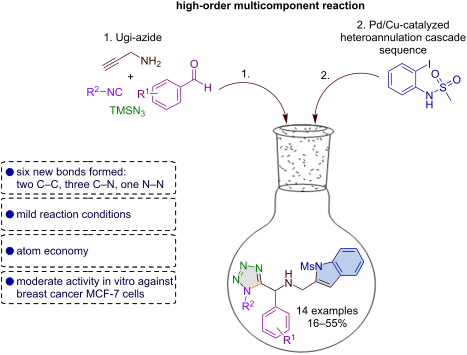
- representative studies include antibacterial, anti-inflammatory, antioxidant, selective inhibitor of COX-2 [34], and anti-HIV activity [35]. In this context, even though indole is considered a privileged scaffold present in some anticancer agents [36], a few examples of methanesulfonylindoles are studied as

Graphical Abstract
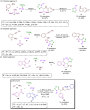
Scheme 1: Synthetic approaches to obtain the 1,5-disubstituted tetrazole-indole system and our synthetic appr...
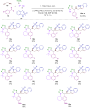
Scheme 2: High-order multicomponent reaction for the synthesis of 1,5-disubstituted tetrazol-methanesulfonyli...

Scheme 3: Plausible reaction mechanism for the synthesis of target molecules 18a–n.

Figure 1: Differential effect of the 1,5-disubstituted tetrazole-indole hybrid compounds 18a–j on proliferati...
Enantioselective regiospecific addition of propargyltrichlorosilane to aldehydes catalyzed by biisoquinoline N,N’-dioxide
- Noble Brako,
- Sreerag Moorkkannur Narayanan,
- Amber Burns,
- Layla Auter,
- Valentino Cesiliano,
- Rajeev Prabhakar and
- Norito Takenaka
Beilstein J. Org. Chem. 2024, 20, 3069–3076, doi:10.3762/bjoc.20.255
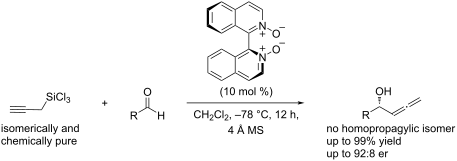
- propargyltrichlorosilane without N,N-diisopropylethylamine and (b) with N,N-diisopropylethylamine. It includes Gibbs free energies (kcal/mol) and Mulliken charges (in parentheses). Metallotropic rearrangement and regioselectivity issues. Asymmetric catalytic allenylation of aldehydes. Selective preparation of

Graphical Abstract

Scheme 1: Metallotropic rearrangement and regioselectivity issues.

Scheme 2: Asymmetric catalytic allenylation of aldehydes.

Scheme 3: Selective preparation of propargyltrichlorosilane.

Scheme 4: Evaluation of C2-symmetric catalysts with benzaldehyde (1a) as a model aldehyde. Reaction condition...

Scheme 5: Evaluation of the extent to which (S)-8 catalyzed the allenylation reaction. Reaction conditions: a...

Figure 1: A potential energy surface (PES) for the proposed mechanism for (a) isomerization of propargyltrich...
Cyclodextrin-based rotaxanes for polymer materials: challenge on simultaneous realization of inexpensive production and defined structures
- Yosuke Akae
Beilstein J. Org. Chem. 2024, 20, 3026–3049, doi:10.3762/bjoc.20.252
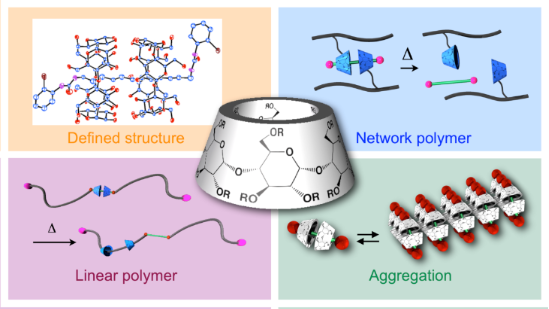
- visible-light irradiation or heating, CD was moved back to the azobenzene moiety, and the entire process was reversible. This system was further developed in 2005 by introducing bipyridinium moieties to implement the selective transfer of the wheel via heating or light irradiation (Figure 5B) [57]. During

Graphical Abstract

Figure 1: Overview of the CD-based rotaxane as a polymer material covered in this review.

Figure 2: CD structure.

Figure 3: Typical pathway for synthesizing CD-based rotaxanes.

Scheme 1: (A) Synthesis of α-CD-based [2]rotaxane via a metal–ligand complex. (B) Chemical structures of meth...

Scheme 2: Synthesis of α-CD-based polyrotaxane.

Scheme 3: Facile [3]rotaxane synthesis by the urea end-capping method.

Figure 4: (A) Single-crystal structure of α-CD-based [3]rotaxane 3 and PMα-CD-based [3]rotaxane 4. (B) Schema...
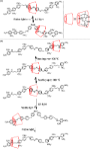
Figure 5: Structural control of CD-based [2]rotaxane via (A) light irradiation and (B) light irradiation and ...

Figure 6: Relationship among the plus–minus signs of ICD, the position of the guest molecule, and the axis of...

Figure 7: Structural control of CD-based rotaxane via (A) redox reaction and (B) in a solvent.
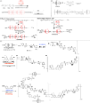
Scheme 4: (A) Synthesis of pseudopolyrotaxane bearing an ABA triblock copolymer as an axle. (B) Two synthetic...

Scheme 5: Slippage of size-complementary rotaxanes.

Figure 8: (A) Reversible formation of the CD-based [2]rotaxane. (B) Deslipping reaction of the CD-based size-...

Figure 9: (A) Chemical structures of [3]rotaxanes 2 and 3. (B) Schematic of the deslipping reaction of [3]rot...

Figure 10: (A) Modification of the axle ends of [3]rotaxane by (1) bromination and (2) the Suzuki coupling rea...

Figure 11: (A) ICD spectra of [3]rotaxanes bearing acylated (top) and conventional (bottom) CDs. (B) Schematic...

Figure 12: Synthesis of macromolecular[3]rotaxane via a size-complementary protocol.

Figure 13: Conjugated polymer insulated by (A) β-CD. (B) Triphenylamine-substituted β-CD.

Figure 14: Synthesis of the VSC and successive rotaxane-crosslinked polymer (RCP) preparation.

Figure 15: (A) Chemical structure of the [3]rotaxane crosslinker (RC). (B) Schematic of the synthesis and de-c...

Figure 16: (A) Random vinylation of the CD-based [3]rotaxane; (B) Schematic of the reaction between α-CD and m...

Figure 17: (A) Aggregation of CD-based [3]rotaxane. (B) Schematic of the plausible mechanism of the aggregatio...
Tailored charge-neutral self-assembled L2Zn2 container for taming oxalate
- David Ocklenburg and
- David Van Craen
Beilstein J. Org. Chem. 2024, 20, 3007–3015, doi:10.3762/bjoc.20.250
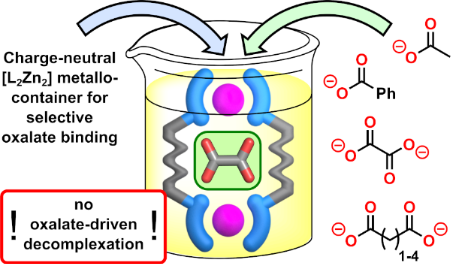
- match for these dicarboxylates in terms of the zinc–zinc distance and a selective formation of 1:1 host–guest species does not occur. Nitrate, sulfate, and dithionite showed no significant binding as examples of guests without carboxylate residues (Figure S31 in Supporting Information File 1). A
- experiments (500 MHz, 500 µM, DMSO-d6, 25 °C) with mixtures of studied analytes showing the selective formation of the 1:1 oxalate host–guest complex [(C2)@L2Zn2]2− in all cases. Two-synthon approach for ligand preparation via CuAAC click reaction of an azide-functionalized, protected 8-hydroxyquinoline and a

Graphical Abstract

Figure 1: a) Generally desired guest recognition by encapsulation of the analyte within self-assembled metal-...
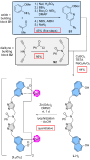
Scheme 1: Two-synthon approach for ligand preparation via CuAAC click reaction of an azide-functionalized, pr...

Figure 2: Recognition of mono- and dicarboxylates with [L2Zn2] which results in the formation of 1:1 host–gue...
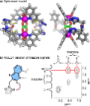
Figure 3: a) Optimized structure (ωB97X‒D4 [83]/def2-SVP [84,85], implicit solvation with DMSO [86], ORCA 5.0.3 [81,82]) of [(C2)@L2...
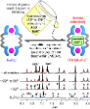
Figure 4: 1H NMR competition experiments (500 MHz, 500 µM, DMSO-d6, 25 °C) with mixtures of studied analytes ...
Advances in radical peroxidation with hydroperoxides
- Oleg V. Bityukov,
- Pavel Yu. Serdyuchenko,
- Andrey S. Kirillov,
- Gennady I. Nikishin,
- Vera A. Vil’ and
- Alexander O. Terent’ev
Beilstein J. Org. Chem. 2024, 20, 2959–3006, doi:10.3762/bjoc.20.249
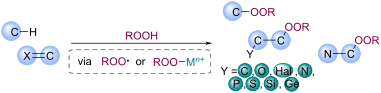
- become sought-after functionalities, particularly following the multi-tone consumption in polymer production and success in medicinal chemistry. The selective introduction of a peroxide fragment at different positions on the target molecule is a priority in the modern reaction design. The pioneering
- peroxides, oxaziridines, and their derived species are often applied as terminal oxidants [7][8]. The weakness of the O–O bond allows alkoxy radicals to form through homolysis or reduction [9]. The generated alkoxy radicals provide an accessible tool for selective radical cascades, where a variety of
- photoredox catalysis [26][27][28]. These methods allow selectivity to be controlled despite the presence of the complex cocktail of radical species generated by hydroperoxides under redox or homolysis conditions. The main challenge in selective radical peroxidation is the wide range of possible pathways

Graphical Abstract

Scheme 1: Organic peroxide initiators in polymer chemistry.

Scheme 2: Synthesis of organic peroxides.

Scheme 3: Richness of radical cascades with species formed from hydroperoxides in redox conditions.
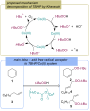
Scheme 4: Co-catalyzed allylic peroxidation of alkenes 1 and 3 by TBHP.

Scheme 5: Allylic peroxidation of alkenes 6 by Pd(II)TBHP.
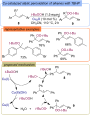
Scheme 6: Cu(I)-catalyzed allylic peroxidation.

Scheme 7: Enantioselective peroxidation of alkenes 10 with TBHP in the presence of copper(I) compounds.

Scheme 8: Oxidation of α-pinene (12) by the Cu(I)/TBHP system.

Scheme 9: Introduction of the tert-butylperoxy fragment into the α-position of cyclic ketones 15 and 17.
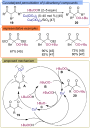
Scheme 10: α-Peroxidation of β-dicarbonyl compounds 19 using the Cu(II)/TBHP system.
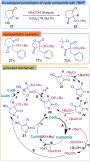
Scheme 11: Co-catalyzed peroxidation of cyclic compounds 21 with TBHP.

Scheme 12: Co-, Mn- and Fe-catalyzed peroxidation of 2-oxoindoles 23, barbituric acids 25, and 4-hydroxycoumar...

Scheme 13: Cu-catalyzed and metal-free peroxidation of barbituric acid derivatives 31 and 3,4-dihydro-1,4-benz...

Scheme 14: Electrochemical peroxidation of 1,3-dicarbonyl compounds 35.

Scheme 15: Peroxidation of β-dicarbonyl compounds, cyanoacetic esters and malonic esters 37 by the TBAI/TBHP s...
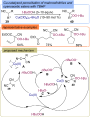
Scheme 16: Cu-catalyzed peroxidation of malonodinitriles and cyanoacetic esters 39 with TBHP.

Scheme 17: Mn-catalyzed remote peroxidation via trifluromethylation of double bond.

Scheme 18: Cu-catalyzed remote peroxidation via trifluromethylthiolation of double bond.

Scheme 19: Fe-, Mn-, and Ru-catalyzed peroxidation of alkylaromatics 45, 47, 49, and 51 with TBHP.

Scheme 20: Cu-catalyzed peroxidation of diphenylacetonitrile (53) with TBHP.
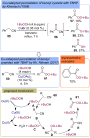
Scheme 21: Cu-catalyzed peroxidation of benzyl cyanides 60 with TBHP.
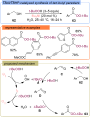
Scheme 22: Synthesis of tert-butylperoxy esters 63 from benzyl alcohols 62 using the TBAI/TBHP system.

Scheme 23: Enantioselective peroxidation of 2-phenylbutane (64) with TBHP and chiral Cu(I) complex.
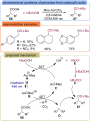
Scheme 24: Photochemical synthesis of peroxides 67 from carboxylic acids 66.
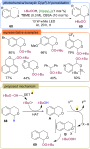
Scheme 25: Photochemical peroxidation of benzylic C(sp3)–H.
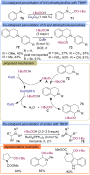
Scheme 26: Cu- and Ru-catalyzed peroxidation of alkylamines with TBHP.
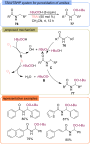
Scheme 27: Peroxidation of amides 76 with the TBAI/TBHP system.
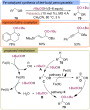
Scheme 28: Fe-catalyzed functionalization of ethers 78 with TBHP.

Scheme 29: Synthesis of 4-(tert-butylperoxy)-5-phenyloxazol-2(3H)-ones 82 from benzyl alcohols 80 and isocyana...

Scheme 30: Fe- and Co-catalyzed peroxidation of alkanes with TBHP.
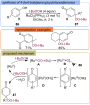
Scheme 31: Rh-catalyzed tert-butylperoxy dienone synthesis with TBHP.

Scheme 32: Rh- and Cu-catalyzed phenolic oxidation with TBHP.

Scheme 33: Metal-free peroxidation of phenols 94.

Scheme 34: Cu-catalyzed alkylation–peroxidation of acrylonitrile.

Scheme 35: Cu-catalyzed cycloalkylation–peroxidation of coumarins 99.

Scheme 36: Metal-free cycloalkylation–peroxidation of coumarins 102.

Scheme 37: Difunctionalization of indene 104 with tert-butylperoxy and alkyl groups.

Scheme 38: Acid-catalyzed radical addition of ketones (108, 111) and TBHP to alkenes 107 and acrylates 110.

Scheme 39: Cu-catalyzed alkylation–peroxidation of alkenes 113 with TBHP and diazo compounds 114.

Scheme 40: Cobalt(II)-catalyzed addition of TBHP and 1,3-dicarbonyl compound 116 to alkenes 117.

Scheme 41: Cu(0)- or Co(II)-catalyzed addition of TBHP and alcohols 120 to alkenes 119.

Scheme 42: Fe-catalyzed functionalization of allenes 122 with TBHP.

Scheme 43: Fe-catalyzed alkylation–peroxidation of alkenes 125 and 127.

Scheme 44: Fe- and Co-catalyzed alkylation–peroxidation of alkenes 130, 133 and 134 with TBHP and aldehydes as...
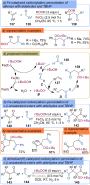
Scheme 45: Carbonylation–peroxidation of alkenes 137, 140, 143 with hydroperoxides and aldehydes.

Scheme 46: Carbamoylation–peroxidation of alkenes 146 with formamides and TBHP.

Scheme 47: TBAB-catalyzed carbonylation–peroxidation of alkenes.

Scheme 48: VOCl2-catalyzed carbonylation–peroxidation of alkenes 152.
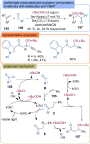
Scheme 49: Acylation–peroxidation of alkenes 155 with aldehydes 156 and TBHP using photocatalysis.
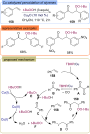
Scheme 50: Cu-catalyzed peroxidation of styrenes 158.

Scheme 51: Fe-catalyzed acylation-peroxidation of alkenes 161 with carbazates 160 and TBHP.

Scheme 52: Difunctionalization of alkenes 163, 166 with TBHP and (per)fluoroalkyl halides.

Scheme 53: Difunctionalization of alkenes 169 and 172 with hydroperoxides and sodium (per)fluoromethyl sulfina...
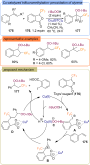
Scheme 54: Trifluoromethylation–peroxidation of styrenes 175 using MOF Cu3(BTC)2 as a catalyst.
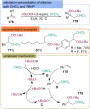
Scheme 55: Difunctionalization of alkenes 178 with tert-butylperoxy and dihalomethyl fragments.

Scheme 56: Difunctionalization of alkenes 180 with the tert-butylperoxy and dihalomethyl moieties.
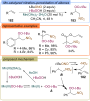
Scheme 57: The nitration–peroxidation of alkenes 182 with t-BuONO and TBHP.
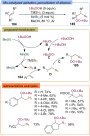
Scheme 58: Azidation–peroxidation of alkenes 184 with TMSN3 and TBHP.

Scheme 59: Co-catalyzed bisperoxidation of butadiene 186.

Scheme 60: Bisperoxidation of styrene (189) and acrylonitrile (192) with TBHP by Minisci.

Scheme 61: Mn-catalyzed synthesis of bis(tert-butyl)peroxides 195 from styrenes 194.

Scheme 62: Bisperoxidation of arylidene-9H-fluorenes 196 and 3-arylidene-2-oxoindoles 198 with TBHP under Mn-c...

Scheme 63: Synthesis of bisperoxides from styrenes 200 and 203 using the Ru and Rh catalysis.
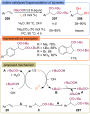
Scheme 64: Iodine-catalyzed bisperoxidation of styrenes 206.
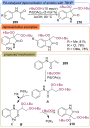
Scheme 65: Synthesis of di-tert-butylperoxyoxoindoles 210 from acrylic acid anilides 209 using a Pd(II)/TBHP o...

Scheme 66: Pinolation/peroxidation of styrenes 211 catalyzed by Cu(I).
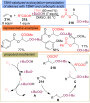
Scheme 67: TBAI-catalyzed acyloxylation–peroxidation of alkenes 214 with carboxylic acids and TBHP.

Scheme 68: Difunctionalization of alkenes 217 with TBHP and water or alcohols.

Scheme 69: TBAI-catalyzed hydroxyperoxidation of 1,3-dienes 220.

Scheme 70: Hydroxyperoxidation of 1,3-dienes 220.

Scheme 71: Iodination/peroxidation of alkenes 223 with I2 and hydroperoxides.

Scheme 72: The reactions of cyclic enol ethers 226 and 228 with I2/ROOH system.

Scheme 73: Synthesis of 1-(tert-butylperoxy)-2-iodoethanes 231.

Scheme 74: Synthesis of 1-iodo-2-(tert-butylperoxy)ethanes 233.
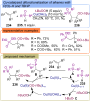
Scheme 75: Cu-catalyzed phosphorylation–peroxidation of alkenes 234.
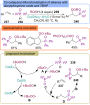
Scheme 76: Co-catalyzed phosphorylation–peroxidation of alkenes 237.
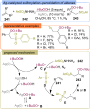
Scheme 77: Ag-catalyzed sulfonylation–peroxidation of alkenes 241.

Scheme 78: Co-catalyzed sulfonylation–peroxidation of alkenes 244.

Scheme 79: Synthesis of α/β-peroxysulfides 248 and 249 from styrenes 247.

Scheme 80: Cu-catalyzed trifluoromethylthiolation–peroxidation of alkenes 250 and allenes 252.

Scheme 81: Photocatalytic sulfonyl peroxidation of alkenes 254 via deamination of N-sulfonyl ketimines 255.

Scheme 82: Photoredox-catalyzed 1,4-peroxidation–sulfonylation of enynones 257.

Scheme 83: Cu-catalyzed silylperoxidation of α,β-unsaturated compounds 260 and enynes 261.

Scheme 84: Fe-catalyzed silyl peroxidation of alkenes.

Scheme 85: Cu-catalyzed germyl peroxidation of alkenes 267.
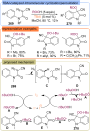
Scheme 86: TBAI-catalyzed intramolecular cyclization of diazo compounds 269 with further peroxidation.

Scheme 87: Co-catalyzed three-component coupling of benzamides 271, diazo compounds 272 and TBHP.

Scheme 88: Co-catalyzed esterification-peroxidation of diazo compounds 274 with TBHP and carboxylic acids 275.

Scheme 89: Cu-catalyzed alkylation–peroxidation of α-carbonylimines 277 or ketones 280.

Scheme 90: Mn-catalyzed ring-opening peroxidation of cyclobutanols 282 with TBHP.

Scheme 91: Peroxycyclization of tryptamines 284 with TBHP.

Scheme 92: Radical cyclization–peroxidation of homotryptamines 287.
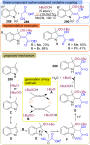
Scheme 93: Iodine-catalyzed oxidative coupling of indoles 288, cyanoacetic esters and TBHP.

Scheme 94: Summary of metal-catalyzed peroxidation processes.
4,6-Diaryl-5,5-difluoro-1,3-dioxanes as chiral dopants for liquid crystal compositions
- Maurice Médebielle,
- Peer Kirsch,
- Jérémy Merad,
- Carolina von Essen,
- Clemens Kühn and
- Andreas Ruhl
Beilstein J. Org. Chem. 2024, 20, 2940–2945, doi:10.3762/bjoc.20.246
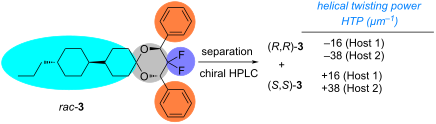
- chemistry [1][2][3]. In particular, cholesteric, i.e., chiral nematic, liquid crystals (LCs) are attractive for many display applications due to their chiroptical characteristics as well as the selective reflection of light giving rise to Bragg interference colors [4]. Cholesteric LCs can be obtained either

Graphical Abstract

Figure 1: Selected examples of chiral dopants with high HTPs in their nematic host LC mixture.

Scheme 1: Structure–property relationship of 4,6-diheteroaryl-5,5-difluoro-1,3-dioxanes as potential chiral d...

Scheme 2: The syntheses of chiral 4,6-diphenyl-5,5-difluoro-1,3-dioxanes 3 and 4 as dopants for cholesteric l...

Scheme 3: Synthesis of rac-2 as precursor of rac-3 and rac-4.

Figure 2: Configuration of (R,R)-3 determined by X-ray crystallography.
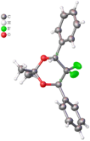
Figure 3: Configuration of (R,R)-4 determined by X-ray crystallography.
Recent advances in transition-metal-free arylation reactions involving hypervalent iodine salts
- Ritu Mamgain,
- Kokila Sakthivel and
- Fateh V. Singh
Beilstein J. Org. Chem. 2024, 20, 2891–2920, doi:10.3762/bjoc.20.243

- olefins, showcasing an efficient utilization of aryliodonium salts in the process. Later in the same year, Song and colleagues reported a protocol for the efficient synthesis of 2-aryl-substituted quinolines 27 and pyridine N-oxides 29 [63]. This reaction involved the selective arylation at the C2
- utilized to prepare these salts using ortho-triflate-substituted iodobenzene acetate 79. All synthesized diaryliodonium salts underwent successful aryl migrations, yielding the expected products 80 efficiently (Scheme 32). The advantages of this method include late-stage site-selective O-arylation
- therapeutics, particularly in antibody–drug conjugates (ADCs). Cysteine (Cys) holds a special place in this context due to the distinctive nucleophilicity of its thiol side chain. The cysteine thiol group offers a reactive handle for site-selective modifications, allowing for the attachment of various

Graphical Abstract

Figure 1: Various structures of iodonium salts.

Scheme 1: Αrylation of α-fluoroacetoacetamides 5 to α-aryl-α-fluoroacetoacetamides 7 and α-fluoroacetamides 8...
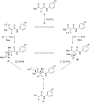
Scheme 2: Proposed mechanism for the arylation of α-fluoroacetoacetamides 5 to α-aryl-α-fluoroacetoacetamides ...

Scheme 3: α-Arylation of α-nitro- and α-cyano derivatives of α-fluoroacetamides 9 employing unsymmetrical DAI...

Scheme 4: Synthesis of α,α-difluoroketones 13 by reacting α,α-difluoro-β-keto acid esters 11 with aryl(TMP)io...

Scheme 5: Coupling reaction of arynes generated by iodonium salts 6 and arynophiles 14 for the synthesis of t...

Scheme 6: Metal-free arylation of quinoxalines 17 and quinoxalinones 19 with DAISs 16.

Scheme 7: Transition-metal-free, C–C cross-coupling of 2-naphthols 21 to 1-arylnapthalen-2-ols 22 employing d...

Scheme 8: Arylation of vinyl pinacol boronates 23 to trans-arylvinylboronates 24 in presence of hypervalent i...

Scheme 9: Light-induced selective arylation at C2 of quinoline N-oxides 25 and pyridine N-oxides 28 in the pr...

Scheme 10: Plaussible mechanism for the light-induced selective arylation of N-heterobiaryls.

Scheme 11: Photoinduced arylation of heterocycles 31 with the help of diaryliodonium salts 16 activated throug...

Scheme 12: Arylation of MBH acetates 33 with DIPEA and DAIRs 16.

Scheme 13: Aryl sulfonylation of MBH acetates 33 with DABSO and diphenyliodonium triflates 16.

Scheme 14: Synthesis of oxindoles 37 from N-arylacrylamides 36 and diaryliodonium salts 26.

Scheme 15: Mechanically induced N-arylation of amines 38 using diaryliodonium salts 16.

Scheme 16: o-Fluorinated diaryliodonium salts 40-mediated diarylation of amines 38.

Scheme 17: Proposed mechanism for the diarylation of amines 38 using o-fluorinated diaryliodonium salts 40.

Scheme 18: Ring-opening difunctionalization of aliphatic cyclic amines 41.

Scheme 19: N-Arylation of amino acid esters 44 using hypervalent iodonium salts 45.

Scheme 20: Regioselective N-arylation of triazole derivatives 47 by hypervalent iodonium salts 48.

Scheme 21: Regioselective N-arylation of tetrazole derivatives 50 by hypervalent iodonium salt 51.

Scheme 22: Selective arylation at nitrogen and oxygen of pyridin-2-ones 53 by iodonium salts 16 depending on t...

Scheme 23: N-Arylation using oxygen-bridged acyclic diaryliodonium salt 56.

Scheme 24: The successive C(sp2)–C(sp2)/O–C(sp2) bond formation of naphthols 58.

Scheme 25: Synthesis of diarylethers 62 via in situ generation of hypervalent iodine salts.

Scheme 26: O-Arylated galactosides 64 by reacting protected galactosides 63 with hypervalent iodine salts 16 i...

Scheme 27: Esterification of naproxen methyl ester 65 via formation and reaction of naproxen-containing diaryl...

Scheme 28: Etherification and esterification products 72 through gemfibrozil methyl ester-derived diaryliodoni...

Scheme 29: Synthesis of iodine containing meta-substituted biaryl ethers 74 by reacting phenols 61 and cyclic ...

Scheme 30: Plausible mechanism for the synthesis of meta-functionalized biaryl ethers 74.

Scheme 31: Intramolecular aryl migration of trifluoromethane sulfonate-substituted diaryliodonium salts 75.

Scheme 32: Synthesis of diaryl ethers 80 via site-selective aryl migration.

Scheme 33: Synthesis of O-arylated N-alkoxybenzamides 83 using aryl(trimethoxyphenyl)iodonium salts 82.

Scheme 34: Synthesis of aryl sulfides 85 from thiols 84 using diaryliodonium salts 16 in basic conditions.

Scheme 35: Base-promoted synthesis of diarylsulfoxides 87 via arylation of general sulfinates 86.

Scheme 36: Plausible mechanism for the arylation of sulfinates 86 via sulfenates A to give diaryl sulfoxides 87...

Scheme 37: S-Arylation reactions of aryl or heterocyclic thiols 88.

Scheme 38: Site-selective S-arylation reactions of cysteine thiol groups in 91 and 94 in the presence of diary...

Scheme 39: The selective S-arylation of sulfenamides 97 using diphenyliodonium salts 98.

Scheme 40: Plausible mechanism for the synthesis of sulfilimines 99.

Scheme 41: Synthesis of S-arylxanthates 102 by reacting DAIS 101 with potassium alkyl xanthates 100.

Figure 2: Structured of the 8-membered and 4-membered heterotetramer I and II.

Scheme 42: S-Arylation by diaryliodonium cations 103 using KSCN (104) as a sulfur source.

Scheme 43: S-Arylation of phosphorothioate diesters 107 through the utilization of diaryliodonium salts 108.

Scheme 44: Transfer of the aryl group from the hypervalent iodonium salt 108 to phosphorothioate diester 107.

Scheme 45: Synthesis of diarylselenides 118 via diarylation of selenocyanate 115.

Scheme 46: Light-promoted arylation of tertiary phosphines 119 to quaternary phosphonium salts 121 using diary...

Scheme 47: Arylation of aminophosphorus substrate 122 to synthesize phosphine oxides 123 using aryl(mesityl)io...

Scheme 48: Reaction of diphenyliodonium triflate (16) with DMSO (124) via thia-Sommelet–Hauser rearrangement.

Scheme 49: Synthesis of biaryl compounds 132 by reacting diaryliodonium salts 131 with arylhydroxylamines 130 ...

Scheme 50: Synthesis of substituted indazoles 134 and 135 from N-hydroxyindazoles 133.
C–H Trifluoromethylthiolation of aldehyde hydrazones
- Victor Levet,
- Balu Ramesh,
- Congyang Wang and
- Tatiana Besset
Beilstein J. Org. Chem. 2024, 20, 2883–2890, doi:10.3762/bjoc.20.242
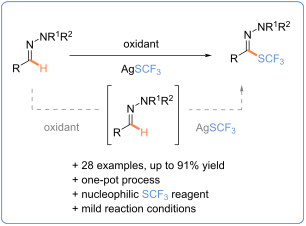
- /Education Center for Excellence in Molecular Sciences Institute of Chemistry, Chinese Academy of Sciences, Beijing 100190, China 10.3762/bjoc.20.242 Abstract The selective C–H trifluoromethylthiolation of aldehyde hydrazones afforded interesting fluorinated building blocks, which could be used as a

Graphical Abstract

Scheme 1: State of the art and this work.

Scheme 2: Reaction conditions: hydrazone (0.3 mmol, 1.0 equiv), NBS (0.33 mmol, 1.1 equiv), in CH3CN (0.4 M),...
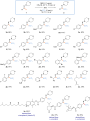
Scheme 3: Scope of the reaction. Reaction conditions: 1 (0.3 mmol, 1.0 equiv), NBS (0.33 mmol, 1.1 equiv) in ...

Scheme 4: Mechanistic investigations and post-functionalization reactions. a19F NMR yields using α,α,α-triflu...
Synthesis of pyrrole-fused dibenzoxazepine/dibenzothiazepine/triazolobenzodiazepine derivatives via isocyanide-based multicomponent reactions
- Marzieh Norouzi,
- Mohammad Taghi Nazeri,
- Ahmad Shaabani and
- Behrouz Notash
Beilstein J. Org. Chem. 2024, 20, 2870–2882, doi:10.3762/bjoc.20.241
- on a Bruker Avance spectrometer at 300.13 MHz and 75.47 MHz, respectively. IR spectra were created on a Thermo Nicolet Nexus 470 FT-IR spectrometer in cm−1. Mass spectra with an HP (Agile Technologies) 5975C Mass Selective Detector were used to confirm the mass of the synthesized products. The PL

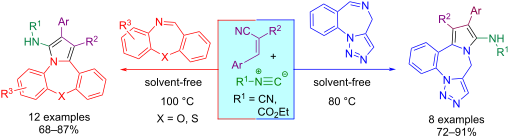
Graphical Abstract

Figure 1: Representation of distinguished structures of benzodiazepine/benzoxazepine/benzothiazepine with pha...

Scheme 1: Methods for the construction of pyrrole-fused heterocycles through I-MCR reactions.

Scheme 2: The model reaction of dibenzoxazepine, gem-diactivated olefin (2-benzylidenemalononitrile), and cyc...
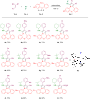
Scheme 3: Substrate scope. Conditions: Reactions were carried out using 1 (0.55 mmol), 2 (0.55 mmol), and 3 (...
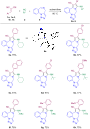
Scheme 4: Substrate scope..Conditions: reactions were carried out using 1 (0.55 mmol), 2 (0.55 mmol), and 5 (...

Figure 2: The crystal structure of 4h (CCDC 2365305).
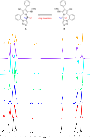
Figure 3: The DNMR (dynamic nuclear magnetic resonance) spectra of compound 6f (DMSO-d6, 300 MHz) at 25–85 °C...

Figure 4: The crystal structure of 6a (CCDC2365306).

Scheme 5: A suggested mechanism for compounds 4.

Scheme 6: Synthesis of pyrrole-fused dibenzoxazepine/triazolobenzodiazepine through a 4-CR.

Scheme 7: Gram-scale synthesis of pyrrole-fused dibenzoxazepine/triazolobenzodiazepine 4a and 6a via 3-CRs.

Figure 5: UV–vis absorption for compounds 4a, 6c and QS (quinine sulfate) (a); emission for 4a, 6c and QS (b)...
N-Glycosides of indigo, indirubin, and isoindigo: blue, red, and yellow sugars and their cancerostatic activity
- Peter Langer
Beilstein J. Org. Chem. 2024, 20, 2840–2869, doi:10.3762/bjoc.20.240
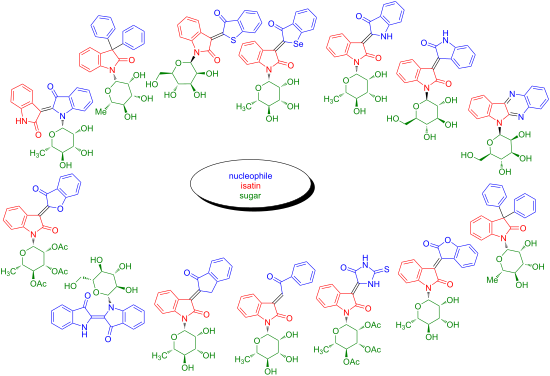
- . Compounds 48a–d were investigated with regard to their antiproliferative activities against lung carcinoma cells (H157) and human corneal epithelial cells (HCEC). All compounds showed a moderate and selective activity against H157 with 60% inhibition for compound 48b at a concentration of 100 µM. No
- -dihydrothiazol-5-ylidene)indolin-2-one-N-glycosides β-49a and β-49b, respectively (Scheme 32) [51]. Again, a deprotection was not possible under various conditions. Compounds 49a,b showed a moderate and selective activity against lung cancer cells H157 [52]. 3-(4-Oxo-4,5-dihydrothiazol-5-ylidene)indolin-2-one-N
- very good Z-selectivity. Employment of the pivaloyl instead of the acetyl protective group resulted in an improved yield for both steps to give S-glucoside β-54b. All attempts to deprotect compounds 54a,b failed. Compound 54a shows a moderate and selective activity against lung cancer cells H157 [52

Graphical Abstract

Scheme 1: Structures of indigo (1a), indirubin (2a) and isoindigo (3a).

Scheme 2: Structures of akashins A–C.
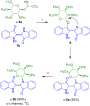
Scheme 3: Synthesis of 5b. Reagents and conditions: i) TMSOTf, 4 Å MS, CH2Cl2, −20 °C, 1.5 h, then 20 °C, 8–1...
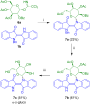
Scheme 4: Synthesis of 7c. Reagents and conditions: i) TMSOTf, 4 Å MS, CH2Cl2, −18 °C, 3 h; then: TMSOTf, 4 Å...
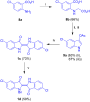
Scheme 5: Synthesis of 1d. Reagents and conditions: i) chloroacetic acid, Na2CO3, reflux, 6 h; ii) Ac2O, NaOA...

Scheme 6: Synthesis of 10e. Reagents and conditions: i) p-TsOH·H2O, acetonitrile, MeOH, 1 d; ii) NIS, PPh3, D...

Scheme 7: Synthesis of akashins A–C. Reagents and conditions: i) TMSOTf, 4 Å MS, CH2Cl2, −18 to 20 °C, 15 h; ...
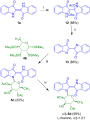
Scheme 8: Synthesis of 5d. Reagents and conditions: i) KMnO4, AcOH, high-power-stirring (12.000 rot/min), 20 ...

Scheme 9: Possible mechanism of the formation of 5c.

Scheme 10: Synthesis of 7d. Reagents and conditions: i) 1) CH2Cl2, 2) Me3SiI, 20 °C, 30 min, 3) 0 °C, 30 min, ...

Scheme 11: Synthesis of α-15b. Reagents and conditions: i) 1) CH2Cl2, 2) Me3SiI, 20 °C, 30 min, 3) 0 °C, 30 mi...
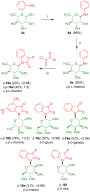
Scheme 12: Synthesis of isatin-N-glycosides 16a–f. Reagents and conditions: i) PhNH2, EtOH, 20 °C, 12 h; ii) Ac...
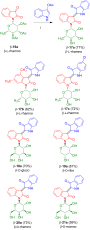
Scheme 13: Synthesis of 17–21. Reagents and conditions: i) Na2CO3, MeOH, 20 °C, 4 h.

Scheme 14: Synthesis of indirubin-N-glycosides α-17a and α-17b.
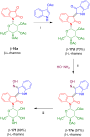
Scheme 15: Synthesis of β-17f. Reagents and conditions: i) 1) Na2CO3, MeOH, 20 °C, 4 h, 2) Ac2O/pyridine 1:1, ...

Scheme 16: Synthesis of β-24a. Reagents and conditions: i) n-PrOH, H2O, formic acid (buffer, 100 mM), 2 h, 65 ...

Scheme 17: Synthesis of isatin-N-glycosides 23b–g and 24b–g.

Scheme 18: Synthesis of β-29a,b. Reagents and conditions: i) EtOH, 20 °C, 12 h; ii) DDQ, dioxane, 20 °C, 12 h;...

Scheme 19: Synthesis of β-31a. Reagents and conditions: i) Na2SO3, dioxane, H2O, 110 °C, 2 d; ii) piperidine, ...

Scheme 20: Synthesis of 33a–d. Reagents and conditions: i) Ac2O, AcOH, NaOAc, 80 °C, 1 h; ii) 1) NaOMe, anhydr...

Scheme 21: Indirubins 34 and 35.

Scheme 22: Synthesis of 36f. Reagents and conditions: i) NaOH, H2O, 20 °C, 5 h; ii) HCl, NaNO2, H2O, −14 °C; i...

Scheme 23: Synthesis of 38a–h. Reagents and conditions: i) 1) 0.1 equiv NaOMe, MeOH, 20 °C, 15–20 min, 2) HOAc...

Scheme 24: Synthesis of 40a–h. Reagents and conditions: i) method A: EtOH/THF, cat. KOt-Bu, 20 °C, 3–4.5 h; me...

Scheme 25: Synthesis of 41a–d. Reagents and conditions: i) Ac2O, AcOH, NaOAc, 80 °C, 1 h.

Scheme 26: Synthesis of 41e. Reagents and conditions: i) AcOH, NaOAc, 110 °C, 24 h.

Scheme 27: Synthesis of E-β-43a–e and E-β-44a,b. Reagents and conditions: i) 1) NEt3, EtOH, 20 °C, 12 h, 2) DM...

Scheme 28: Synthesis of E-43f. Reagents and conditions: i) Na2CO3, MeOH, 20 °C, 6–24 h.

Scheme 29: Synthesis of 46a–m. Reagents and conditions: i) NEt3 (1 equiv), EtOH, 20 °C, 6–10 h; ii) MsCl, NEt3...

Scheme 30: Synthesis of 48a–d. Reagents and conditions: i) AcOH/Ac2O, NaOAc, 60 °C, 3–4 h.

Scheme 31: Synthesis of 48e. Reagents and conditions: i) NaOAc, AcOH, 110 °C, 24 h.
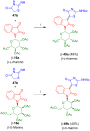
Scheme 32: Synthesis of β-49a,b. Reagents and conditions: i) AcOH/Ac2O, NaOAc, 60 °C, 3–4 h.

Scheme 33: Synthesis of β-54a,b. Reagents and conditions: i) 1) NaH, DMF, 0 °C, 15 min, 2) β-51a,b, 20 °C, 3 h...

Scheme 34: Synthesis of 54c–l. The yields refer to the yields of the first and second condensation step for ea...

Scheme 35: Synthesis of 57a–c and 58a–d. Reagents and conditions: i) HCl (conc.), AcOH, reflux, 24 h; ii) 1) B...

Scheme 36: Synthesis of 59a–e and 60a–e. Reagents and conditions: i) P(NEt2)3 (1.1 equiv), CH2Cl2, −78 °C to 2...

Scheme 37: Synthesis of 61a–d and 62a–d. Reagents and conditions: i) P(NEt2)3 (1.1 equiv), CH2Cl2, −78 °C to 2...

Scheme 38: Synthesis of β-64a–e and α-64a. Reagents and conditions: i) AcOH, Ac2O, NaOAc, 90 °C, 6 h.

Scheme 39: Synthesis of β-72a. Reagents and conditions: i) 66, EtOH, 20 °C, 12 h; ii) DDQ, dioxane, 20 °C, 12 ...

Scheme 40: Synthesis of β-72b.

Scheme 41: Synthesis of β-74a–c. Reagents and conditions: i) AcOH, Ac2O, NaOAc, 130 °C, 2 d.

Scheme 42: Synthesis of β-77. Reagents and conditions: i) 1) NEt3, EtOH, 20 °C, 12 h, 2) DMAP, NEt3, MsCl, 0 °...

Scheme 43: Synthesis of β-81a–f and β-80g. Reagents and conditions: i) AcOH, 80 °C, 1–3 h; ii) benzene, PTSA, ...

Scheme 44: Synthesis of 84a. Reagents and conditions: i) benzene, AlCl3, 20 °C, 10 min; ii) MeOH, NaOMe, 12 h,...

Scheme 45: Synthesis of 84b–l. The yields refer to the yields of the condensation and the deprotection step fo...
Investigation of a bimetallic terbium(III)/copper(II) chemosensor for the detection of aqueous hydrogen sulfide
- Parvathy Mini,
- Michael R. Grace,
- Genevieve H. Dennison and
- Kellie L. Tuck
Beilstein J. Org. Chem. 2024, 20, 2818–2826, doi:10.3762/bjoc.20.237
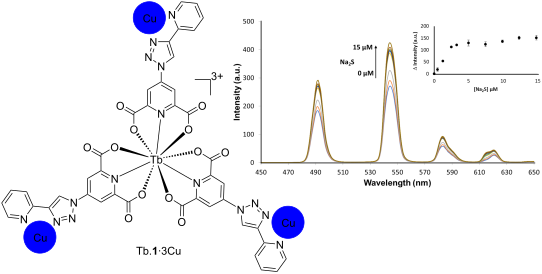
- for the detection of both gaseous and/or aqueous H2S are shown in Figure 1 [12][16][17]. These sensors all function via the copper sequestration mechanism, where upon addition of hydrogen sulfide to the quenched bimetallic species, luminescence modulation occurs. In our quest for highly selective
- are highly selective to HS−(aq) ions and are thus suitable for environmental or biological studies where interfering anions may be present. Gaseous H2S studies of [Tb.1·3Cu]3+ We aimed to further investigate the luminescence response of Tb3+ analogues upon exposure to hydrogen sulfide gas, building

Graphical Abstract

Figure 1: Previously reported lanthanide complexes [12,16,17].

Scheme 1: Synthesis of Tb.1.

Figure 2: Absorption (red line), excitation (yellow line, λem = 615 nm), and emission (green line, λex = 250 ...

Figure 3: (a) Changes in the luminescence emission spectrum of 5 µM [Tb.1·3Cu]3+ upon the addition of Na2S (0...

Figure 4: (a) Changes in the luminescence emission spectrum of 5 µM [Tb.1·3Cu]3+ upon the addition of Na2S (0...

Figure 5: Luminescence intensity of 5 μM Tb.1 in 10 mM Tris-HCl buffer, pH 7.4, containing 5% DMSO upon the a...

Figure 6: Changes in luminescent intensity of [Tb.1·3Cu]3+ (5 µM) detected at 545 nm in the presence of vario...

Figure 7: Chemical structure and mode of action of [Tb(DPA-N3)3]3− for detection of H2S(g) [11].
Copper-catalyzed yne-allylic substitutions: concept and recent developments
- Shuang Yang and
- Xinqiang Fang
Beilstein J. Org. Chem. 2024, 20, 2739–2775, doi:10.3762/bjoc.20.232
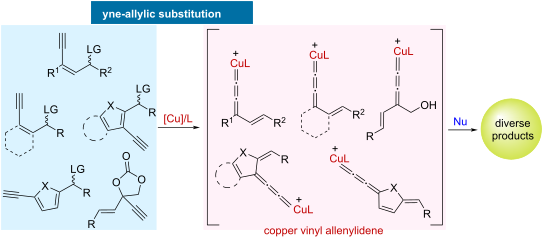
- nucleophiles (Scheme 1b). However, to achieve a highly selective yne-allylic substitution, a range of challenges must be addressed. First, how to achieve the regioselectivity under the coexistence of alkenyl and alkynyl units; second, how to realize the enantioselectivity control that is remote from the
- and yne-allylic substitution. Challenges in achieving highly selective yne-allylic substitution. Yne-allylic substitutions using indoles and pyroles. Yne-allylic substitutions using amines. Yne-allylic substitution using 1,3-dicarbonyls. Postulated mechanism via copper acetylide-bonded allylic cation

Graphical Abstract

Scheme 1: Copper-catalyzed allylic and yne-allylic substitution.

Scheme 2: Challenges in achieving highly selective yne-allylic substitution.

Scheme 3: Yne-allylic substitutions using indoles and pyroles.

Scheme 4: Yne-allylic substitutions using amines.

Scheme 5: Yne-allylic substitution using 1,3-dicarbonyls.

Scheme 6: Postulated mechanism via copper acetylide-bonded allylic cation.

Scheme 7: Amine-participated asymmetric yne-allylic substitution.

Scheme 8: Asymmetric decarboxylative yne-allylic substitution.

Scheme 9: Asymmetric yne-allylic alkoxylation and alkylation.

Scheme 10: Proposed mechanism for Cu(I) system.

Scheme 11: Asymmetric yne-allylic dialkylamination.

Scheme 12: Proposed mechanism of yne-allylic dialkylamination.

Scheme 13: Asymmetric yne-allylic sulfonylation.

Scheme 14: Proposed mechanism of yne-allylic sulfonylation.

Scheme 15: Aymmetric yne-allylic substitutions using indoles and indolizines.

Scheme 16: Double yne-allylic substitutions using pyrrole.

Scheme 17: Proposed mechanism of yne-allylic substitution using electron-rich arenes.

Scheme 18: Aymmetric yne-allylic monofluoroalkylations.

Scheme 19: Proposed mechanism.
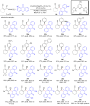
Scheme 20: Aymmetric yne-allylic substitution of yne-allylic esters with anthrones.

Scheme 21: Aymmetric yne-allylic substitution of yne-allylic esters with coumarins.
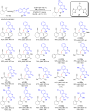
Scheme 22: Aymmetric yne-allylic substitution of with coumarins by Lin.

Scheme 23: Proposed mechanism.

Scheme 24: Amination by alkynylcopper driven dearomatization and rearomatization.

Scheme 25: Arylation by alkynylcopper driven dearomatization and rearomatization.

Scheme 26: Remote substitution/cyclization/1,5-H shift process.

Scheme 27: Proposed mechanism.

Scheme 28: Arylation or amination by alkynylcopper driven dearomatization and rearomatization.

Scheme 29: Remote nucleophilic substitution of 5-ethynylthiophene esters.

Scheme 30: Proposed mechanism.

Scheme 31: [4 + 1] annulation of yne-allylic esters and cyclic 1,3-dicarbonyls.
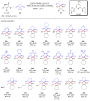
Scheme 32: Asymmetric [4 + 1] annulation of yne-allylic esters.

Scheme 33: Proposed mechanism.

Scheme 34: Asymmetric [3 + 2] annulation of yne-allylic esters.

Scheme 35: Postulated annulation step.

Scheme 36: [4 + 1] Annulations of vinyl ethynylethylene carbonates and 1,3-dicarbonyls.

Scheme 37: Proposed mechanism.

Scheme 38: Formal [4 + 1] annulations with amines.

Scheme 39: Formal [4 + 2] annulations with hydrazines.

Scheme 40: Proposed mechanism.
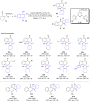
Scheme 41: Dearomative annulation of 1-naphthols and yne-allylic esters.

Scheme 42: Dearomative annulation of phenols or 2-naphthols and yne-allylic esters.

Scheme 43: Postulated annulation mechanism.
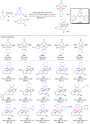
Scheme 44: Dearomative annulation of phenols or 2-naphthols.

Scheme 45: Dearomative annulation of indoles.

Scheme 46: Postulated annulation step.

Scheme 47: Asymmetric [4 + 1] cyclization of yne-allylic esters with pyrazolones.

Scheme 48: Proposed mechanism.

Scheme 49: Construction of C–C axially chiral arylpyrroles.

Scheme 50: Construction of C–N axially chiral arylpyrroles.
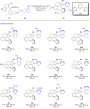
Scheme 51: Construction of chiral arylpyrroles with 1,2-di-axial chirality.

Scheme 52: Proposed mechanism.

Scheme 53: CO2 shuttling in yne-allylic substitution.

Scheme 54: CO2 fixing in yne-allylic substitution.

Scheme 55: Proposed mechanism.
Synthesis of fluoroalkenes and fluoroenynes via cross-coupling reactions using novel multihalogenated vinyl ethers
- Yukiko Karuo,
- Keita Hirata,
- Atsushi Tarui,
- Kazuyuki Sato,
- Kentaro Kawai and
- Masaaki Omote
Beilstein J. Org. Chem. 2024, 20, 2691–2703, doi:10.3762/bjoc.20.226

- blocks. When using them as nucleophilic reagents [15][16][17][18][19][20], the reaction between anion species, such as fluorine-containing Horner–Wadsworth–Emmons reagents, and carbonyl compounds led to E-selective olefination (Scheme 1A) [15]. On the other hand, some reactions with electrophilic

Graphical Abstract

Scheme 1: Synthesis of monofluoroalkenes using fluorine-containing building blocks.



