


Search results
Search for "dispersion" in Full Text gives 255 result(s) in Beilstein Journal of Organic Chemistry. Showing first 200.
Experimental and DFT studies on the regioselective methanolysis of 5-azido-9-oxabicyclo[6.1.0]nonan-4-yl 4-nitrobenzoate isomers
Beilstein J. Org. Chem. 2026, 22, 547–556, doi:10.3762/bjoc.22.40
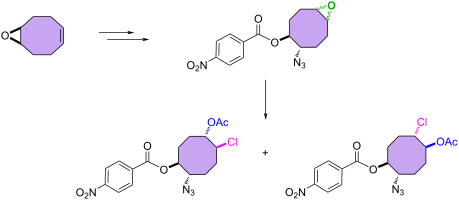
- were carried out with DFT at the M06-2X hybrid functional [27] augmented by Grimme’s dispersion correction DFT-D3 to improve the description of long-range dispersion interactions [28]. For this purpose, a Pople-type polarized triple-ζ split valence basis set with diffuse functions on all atoms, 6-311G


Electrosynthetic access to unsymmetrical oxaza[8]helicenes with high chiral stability and strong circularly polarized luminescence (CPL)
Beilstein J. Org. Chem. 2026, 22, 372–382, doi:10.3762/bjoc.22.25
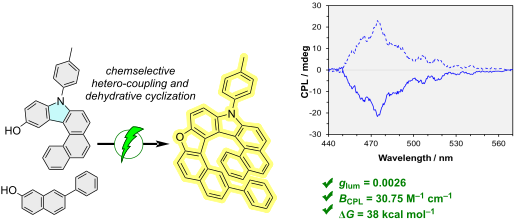
- the pKa of [3]·+ radical cation and spin density of neutral radical intermediate Int-I (optimized at the UB3LYP/6-31G+(d,p) level of theory with IEPCM model as solvation of DCM. Grimme’s dispersion with the original D3 damping function was applied as empirical dispersion correction to the optimized




Mechanistic insights into hydroxy(tosyloxy)iodobenzene-mediated ditosyloxylation of chalcones: a DFT study
Beilstein J. Org. Chem. 2025, 21, 2703–2715, doi:10.3762/bjoc.21.208
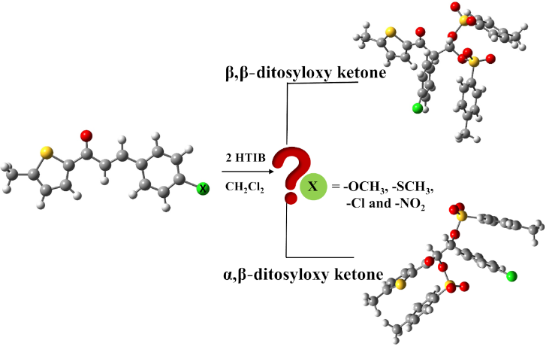
- computationally. The results obtained for chalcones are in qualitative agreement with results reported for substituted styrenes [31]. Computational Methodology Quantum chemical calculations were carried out using Gaussian 09 package [37]. The hybrid exchange-correlation functional B3LYP-D3 (including dispersion
- ) was used. B3LYP combines the Becke’s three parameter exchange functional, and the Lee–Yang–Parr correlation functional [38][39]. The D3 correction accounts for dispersion interactions, which are important for systems with heavy atoms [40][41]. Mixed basis set LANL2DZ (d, p) was employed for iodine


Synthesis of new tetra- and pentacyclic, methylenedioxy- and ethylenedioxy-substituted derivatives of the dibenzo[c,f][1,2]thiazepine ring system
Beilstein J. Org. Chem. 2025, 21, 2645–2656, doi:10.3762/bjoc.21.205
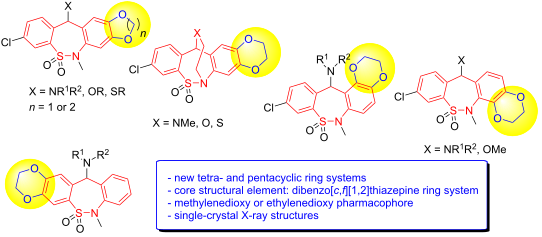
- . The pulse programs were taken from the Bruker software library (TopSpin 3.5) and full 1H and 13C assignments were achieved with widely accepted strategies. 1H assignments were accomplished using general knowledge of chemical shift dispersion with the aid of the 1H–1H coupling pattern. CDCl3 or DMSO-d6


Silica gel with covalently attached bambusuril macrocycle for dicyanoaurate sorption from water
Beilstein J. Org. Chem. 2025, 21, 2604–2611, doi:10.3762/bjoc.21.201
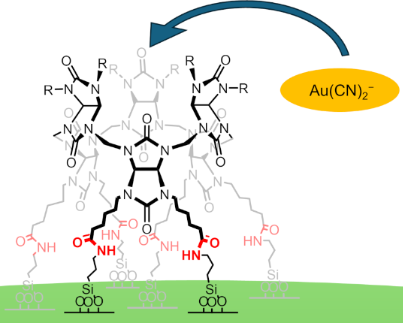
- Silica gel (8.01 g) was dispersed in toluene (24 mL) and stirred under argon atmosphere, while heated up to 115 °C. Then, APTES (6 mL) was added, and the dispersion was stirred under inert atmosphere at elevated temperature for 5 h. After cooling, the dispersion was filtered, washed thoroughly with
- DMF (15 mL) and BU1 (0.1 g), dissolved in a minimum amount of DMF, was added. The dispersion was mechanically shaken (180 rpm) at ambient temperature for 5.5 h. Afterwards, the dispersion was filtered, washed with DMF (5×) and methanol (5×) to remove unattached BU1. After air-drying in a hood


The high potential of methyl laurate as a recyclable competitor to conventional toxic solvents in [3 + 2] cycloaddition reactions
Beilstein J. Org. Chem. 2025, 21, 2389–2415, doi:10.3762/bjoc.21.184
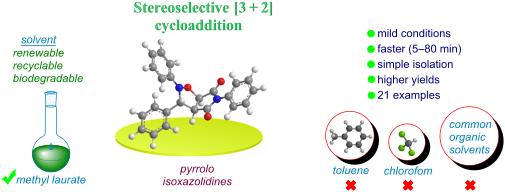
- space is shown in Figure 8a. The distribution of these selected solvents with other organic solvents in the 3D Hansen solubility space is determined by three Hansen solubility parameters (HSPs): dispersion (δD), polarity (δP), and hydrogen bonding (δH). As is well established, information about their
- potential hazard associated with their utilization as a solvent in the aforementioned reactions. For the solute component C,N-diphenylnitrone, the dispersion, polarity, and hydrogen bonding values for nitrone were determined as δD = 16.6, δP = 7.6 and δH = 8.7. Figure 8b clearly shows the position of the
- characteristics, arising from the ester group and the non-polar hydrocarbon chain, respectively. The nitrone contains a polar functional group (N–O) and two aromatic rings, which serve to generate both polar and dispersion forces. Consequently, these findings indicate that fatty acid methyl esters may possess






Thermodynamics and polarity-driven properties of fluorinated cyclopropanes
Beilstein J. Org. Chem. 2025, 21, 1742–1747, doi:10.3762/bjoc.21.137
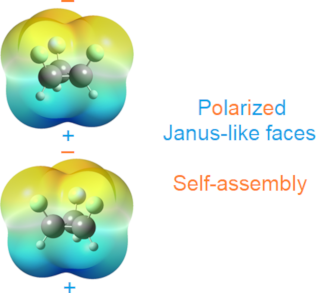
- dispersion corrections to improve the modeling of nonbonding interactions [23]. The same computational protocol was applied to cyclopropane, methane, and methyl fluoride, used as reference molecules in the isodesmic reactions. This methodology has proven reliable for predicting the energetics and properties


Synthesis of an aza[5]helicene-incorporated macrocyclic heteroarene via oxidation of an o-phenylene-pyrrole-thiophene icosamer
Beilstein J. Org. Chem. 2025, 21, 1561–1567, doi:10.3762/bjoc.21.119
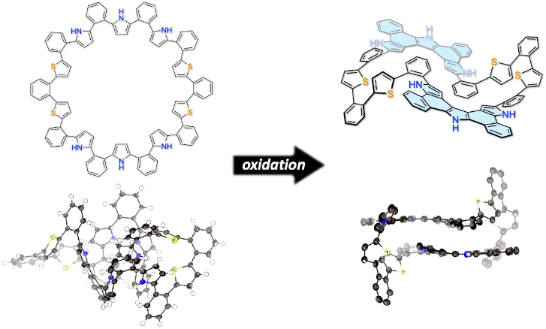
- two NH sites remained uncoordinated due to steric hindrance. Non-covalent interaction (NCI) plot analysis revealed distinct intramolecular π–π dispersion interactions between the two aza[5]helicene moieties (green surface in Figure 4b) [29][30][31]. Optical properties The electronic absorption and


Microwave-enhanced additive-free C–H amination of benzoxazoles catalysed by supported copper
Beilstein J. Org. Chem. 2025, 21, 1462–1476, doi:10.3762/bjoc.21.108
- dispersion of Cu and possible alterations of morphology. As reported in Figure 7, the silica support is characterised by irregular micrometre-sized agglomerates of nanometre-sized particles. This morphology is not modified after the use of the Si-MonoAm-Cu(I) catalyst in the reaction, as can be seen by
- comparing the corresponding FESEM images of the fresh and used catalyst (see Figure 7a and b). EDS maps show a homogeneous dispersion of copper on the catalyst with this dispersion being maintained after the catalysts is used (panels a and b of Figure 8). Conclusion The study demonstrates that the efficient



Development and mechanistic studies of calcium–BINOL phosphate-catalyzed hydrocyanation of hydrazones
Beilstein J. Org. Chem. 2025, 21, 755–765, doi:10.3762/bjoc.21.59
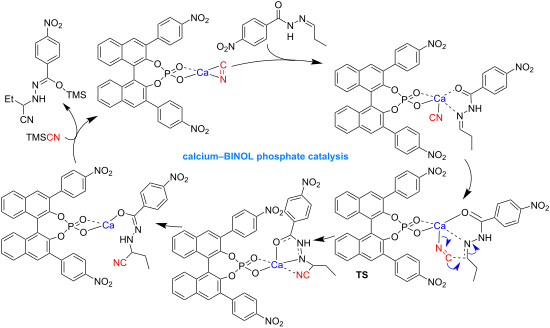
- the hydrocyanation of Z-hydrazone 1, (depicted is the pathway that gives the "S" product), catalyzed by in situ-formed calcium BINOL phosphate complex 7, as computed at the B3LYP/6-31G* level of theory, including zero-point energy, thermodynamic, and dispersion energy corrections (with Grimme's


Asymmetric synthesis of fluorinated derivatives of aromatic and γ-branched amino acids via a chiral Ni(II) complex
Beilstein J. Org. Chem. 2025, 21, 659–669, doi:10.3762/bjoc.21.52
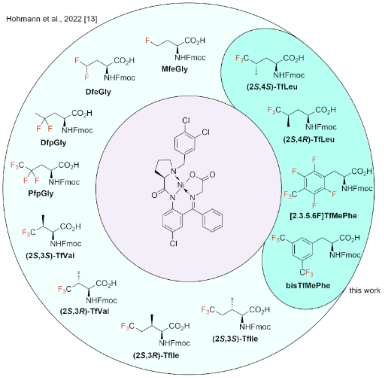
- ) complex 1 was synthesized according the procedure described by Romoff et al. [16]. Sodium hydride was used as a 60% dispersion in mineral oil. Triethylamine was dried over CaH2 and distilled freshly before use. Perfluorobutanesulfonyl fluoride was dried over CaCl2 and freshly distilled before use. Other


Antibiofilm and cytotoxic metabolites from the entomopathogenic fungus Samsoniella aurantia
Beilstein J. Org. Chem. 2025, 21, 327–339, doi:10.3762/bjoc.21.23
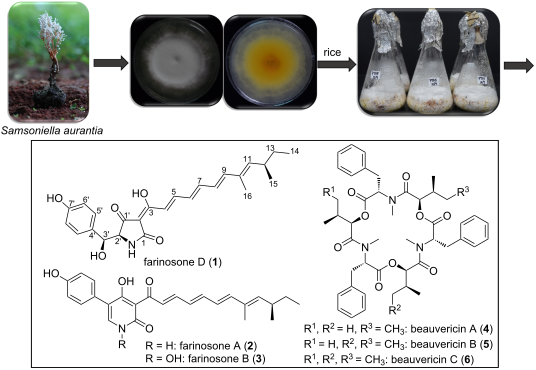
- . aureus biofilm revealed that these compounds did not significantly inhibit cell adherence to the substrate in binding assay nor they showed profound dispersion of preformed biofilms in biofilm eradication assay in the low µg/mL range. However, they effectively reduced metabolic activity and cell


Quantifying the ability of the CF2H group as a hydrogen bond donor
Beilstein J. Org. Chem. 2025, 21, 189–199, doi:10.3762/bjoc.21.11
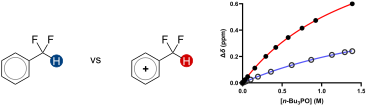
- also at odds with the experimental and theoretical results described below. We tentatively attributed the discrepancies to the involvement of other possible solute–solvent interactions, such as solute dipolarity, polarizability, and dispersion [47]. Ostensibly, these interactions can vary significantly



Surprising acidity for the methylene of 1,3-indenocorannulenes?
Beilstein J. Org. Chem. 2024, 20, 3144–3150, doi:10.3762/bjoc.20.260
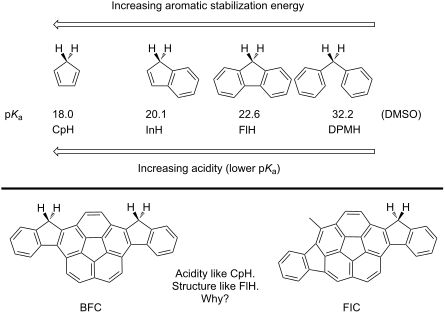
- energetic analyses of the molecular systems for all compounds described in this study were carried out with the B97-D dispersion enabled density functional method [29][30], using an ultrafine grid, together with the def2-TZVPP basis set [31]. Full geometry optimizations were performed and uniquely


Interaction of a pyrene derivative with cationic [60]fullerene in phospholipid membranes and its effects on photodynamic actions
Beilstein J. Org. Chem. 2024, 20, 2732–2738, doi:10.3762/bjoc.20.231
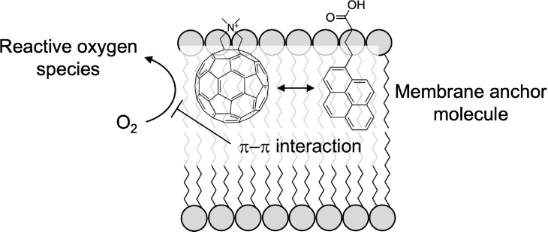
- may be attributed to the presence of unembedded PyBA in the dispersion. To this PyBA-embedded catC60-lip system, methanol was added to completely destroy the liposome structures, resulting in the regain of the fluorescence intensity (Figure 4b). The results clearly demonstrate that PyBA interacts with
- the 1O2 adduct of 4-oxo-TEMP (4-oxo-TEMPO) were observed in the dispersion of catC60-lip ([catC60] = 5 µM) in PBS(–) showing an evidence of energy transfer reaction by the photoexcited catC60 (Figure 5a(ii)). In the presence of electron donor (NADH) under photoirradiation, •OH generation was observed


Photoluminescence color-tuning with polymer-dispersed fluorescent films containing two fluorinated diphenylacetylene-type fluorophores
Beilstein J. Org. Chem. 2024, 20, 2682–2690, doi:10.3762/bjoc.20.225
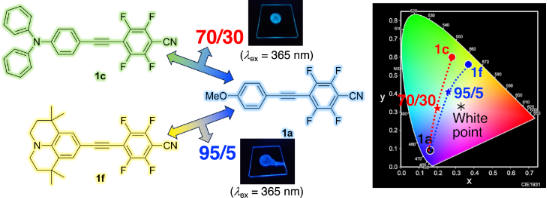
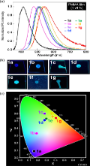
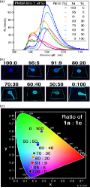
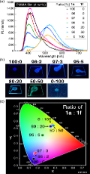
- and effective luminescence color-tuning method is proposed to investigate the photoluminescence behavior of two-component polymer dispersion films blended with two types of fluorinated diphenylacetylenes, namely blue- and yellow- or red-fluorescent fluorinated diphenylacetylenes. It is confirmed that
- fluorescence or phosphorescence from different luminescent centers in the polymer matrix should be combined, and the PL color can be precisely tuned by controlling the ratio of the PL luminescent materials [27][28][29]. In this study, we prepared polymer dispersion fluorescent films containing two compounds
- ) films Initially, we tested the PL behavior of polymer dispersion films containing fluorinated diphenylacetylenes 1a–g as a single component, as shown in Figure 3, because the PL behavior of fluorescent molecules dispersed in a polymer matrix generally differs from that in a dilute solution or the


Computational design for enantioselective CO2 capture: asymmetric frustrated Lewis pairs in epoxide transformations
Beilstein J. Org. Chem. 2024, 20, 2668–2681, doi:10.3762/bjoc.20.224
- with the Gaussian16 quantum chemical software package [29], using the B3LYP density functional [30][31] along with the Grimme dispersion correction including Becke and Johnson damping D3(BJ) [32][33][34] and the def2-TZVP basis set [35]. Harmonic frequencies were computed at the optimisation level to


Anion-dependent ion-pairing assemblies of triazatriangulenium cation that interferes with stacking structures
Beilstein J. Org. Chem. 2024, 20, 2567–2576, doi:10.3762/bjoc.20.215
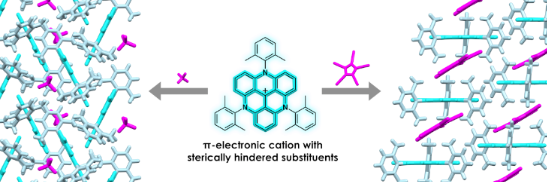
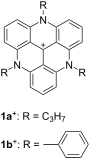
- , and dispersion forces (Edisp) of −12.5, −29.5, and −34.2 kcal/mol, respectively (Figure 6a–c and Figures S26–28 in Supporting Information File 1). Other sets of the ion pairs in the crystal structures showed smaller interaction energies. For example, the pair of 2+ and BF4− located at the side of TATA



Synthesis and conformational analysis of pyran inter-halide analogues of ᴅ-talose
Beilstein J. Org. Chem. 2024, 20, 2442–2454, doi:10.3762/bjoc.20.208
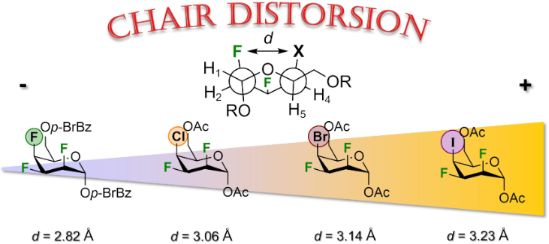
- includes effective core potentials for iodine. Empirical dispersion was accounted with Grimme’s D3 [72][73] correction including Becke–Johnson damping [74]. Computations were performed both in the gas phase (i.e., individual molecules with thermal corrections at 298.15 K based on ideal gas assumptions) and


Catalysing (organo-)catalysis: Trends in the application of machine learning to enantioselective organocatalysis
Beilstein J. Org. Chem. 2024, 20, 2280–2304, doi:10.3762/bjoc.20.196
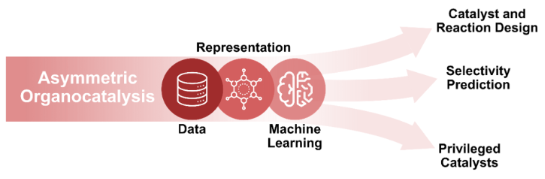
- , Chen and Pollice proposed Pint as a descriptor of the London dispersion potential that is universal and can be calculated without a probe system [94]. Although Pint has not been utilised for organocatalysis, the authors applied it to a Pd-metal-catalysed enantioselective 1,1-diarylation of benzyl
- dispersion interaction between the DABCOnium system and the CPA is governing the exo-selectivity. For the application of the ML techniques discussed above, it is assumed that all studied reactions follow the same mechanism. If that is not the case, models cannot be reliably fit to the data points, similar to




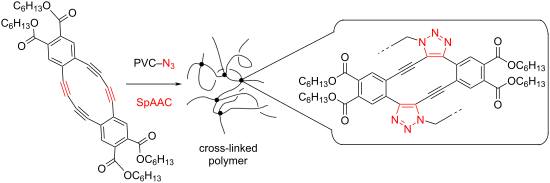
Metal-free double azide addition to strained alkynes of an octadehydrodibenzo[12]annulene derivative with electron-withdrawing substituents
Beilstein J. Org. Chem. 2024, 20, 2234–2241, doi:10.3762/bjoc.20.191
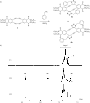
- recorded on a JASCO FP-8500. All calculations were carried out using the Gaussian 16 program [21]. The DFT calculations were carried out using the long-range and dispersion-corrected ωB97X-D functional [22]. The 6-31G(d,p) basis set was used for H, C, O, and S atoms [23][24]. The solvent effect of CH2Cl2




Factors influencing the performance of organocatalysts immobilised on solid supports: A review
Beilstein J. Org. Chem. 2024, 20, 2129–2142, doi:10.3762/bjoc.20.183
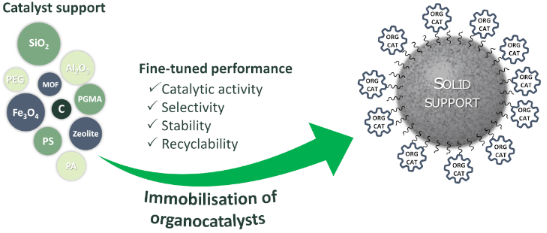
- mesoporous system, resulting in a high surface area and uniform pore size. As a result, a high degree of dispersion of the piperazine active sites was achieved, leading to a catalyst exhibiting comparable activity and selectivity to that of a homogenous organocatalyst. Moreover, the hydrophobic surface of


Hetero-polycyclic aromatic systems: A data-driven investigation of structure–property relationships
Beilstein J. Org. Chem. 2024, 20, 1817–1830, doi:10.3762/bjoc.20.160
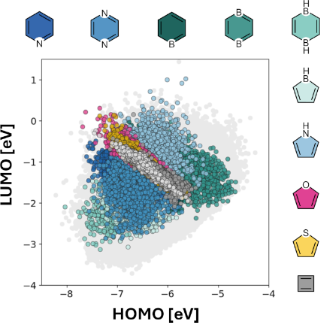
- ][33] level, including the D3 dispersion correction [29] by Grimme with Becke-Johnson damping [30]. We used the DFT-calculated dataset to generate fitting functions, such that all xTB-generated data was corrected to near DFT-level accuracy [9]. It is these corrected data that we use in this report to



Polymer degrading marine Microbulbifer bacteria: an un(der)utilized source of chemical and biocatalytic novelty
Beilstein J. Org. Chem. 2024, 20, 1635–1651, doi:10.3762/bjoc.20.146
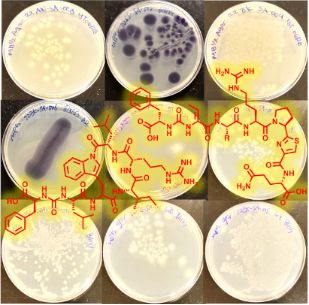
- Microbulbifer strains may require repeated rounds of serial enrichment. This genus was first described by Gonzales et al. in 1997 [5]. More than 130 strains have been reported from regions of wide geographical dispersion (Table 1, Figure 1). Microbulbifer bacteria are well known for their capacity to degrade




pKalculator: A pKa predictor for C–H bonds
Beilstein J. Org. Chem. 2024, 20, 1614–1622, doi:10.3762/bjoc.20.144
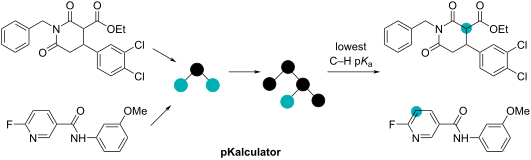
- identify the lowest-energy conformer. We then conduct re-optimization in ORCA (v. 5.0.4) [22][23], using the dispersion D4-corrected DFT functional CAM-B3LYP [24][25], the Karlsruhe [26][27] triple-ζ basis set, def2-TZVPPD, and the conductor-like polarizable continuum model (CPCM) [28] as the implicit


![[Graphic 9]](/bjoc/content/inline/1860-5397-20-144-i12.svg?max-width=637&scale=1.3000021)





