Search results
Search for "Suzuki–Miyaura" in Full Text gives 197 result(s) in Beilstein Journal of Organic Chemistry.
Palladium-catalyzed benzocyclization reactions of quinoline-2-carboxamides via sequential C–H/N–H functionalization
Beilstein J. Org. Chem. 2026, 22, 905–914, doi:10.3762/bjoc.22.71
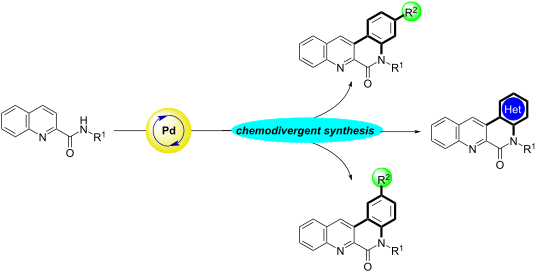
- carbon–heteroatom bonds. The classical coupling reactions, such as Kumada–Tamao–Corriu coupling [11][12][13], Sonogashira coupling [14][15], Negishi coupling [16][17], Migita–Kosugi–Stille coupling [18][19][20], Suzuki–Miyaura coupling [21][22], and Hiyama coupling [23][24] involve carbon–halogen and




Towards the targeted protein degradation of CK2: design and synthesis of CAM4066-based PROTACs
Beilstein J. Org. Chem. 2026, 22, 611–619, doi:10.3762/bjoc.22.47
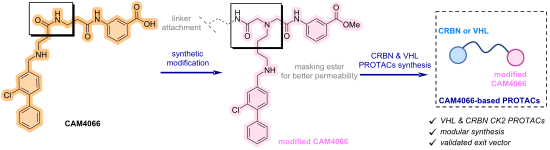
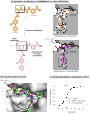
- corresponding triflate using triflic anhydride, followed by Suzuki–Miyaura cross-coupling with phenylboronic acid to give 16 in 59% yield (Scheme 1). Boc removal from intermediates 11–14 enabled attachment of the αD binder aldehyde 16 via reductive amination. Interestingly, NaBH(OAc)3 had performed well in the

Get a better glimpse on sequential photoreactions of trisnorbornadienes with 19F NMR spectroscopy
Beilstein J. Org. Chem. 2026, 22, 527–534, doi:10.3762/bjoc.22.38
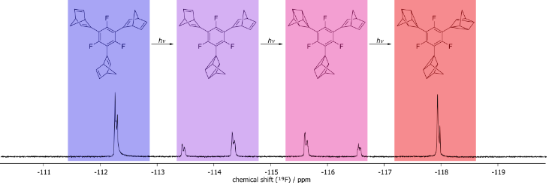
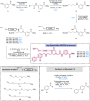
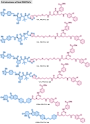
- storage. The target compound was readily synthesized by a Suzuki–Miyaura coupling reaction and examined with respect to the key properties for MOST applications. Upon direct or photosensitized irradiation, the trisnorbornadiene was transformed stepwise and almost quantitatively into the corresponding
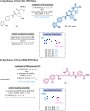
- trisnorbornadiene 1f was synthesized in 36% yield through a Suzuki–Miyaura coupling reaction of tribromotrifluorobenzene 3 with the 2-borononorbornadiene 1e (Scheme 2) [43]. The product 1f was identified and fully characterized by NMR spectroscopy (1H, 13C, 19F, COSY, HSQC, HMBC), mass spectrometry, melting point
- comparison of the synthesis and photophysical properties of the fluoro-substituted norbornadiene 1f with the ones of the parent compound 1b revealed that the yield of the Suzuki–Miyaura coupling reaction is significantly lower for the former [22], presumably because of the steric hindrance induced by the


Recent advances in the stereoselective synthesis of distal biaxially chiral molecules
Beilstein J. Org. Chem. 2026, 22, 461–479, doi:10.3762/bjoc.22.34
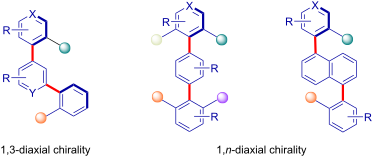
- -dibromonaphthalenes (45). Notably, the reaction achieved the synthesis of ternaphthalenes with excellent optical purity exceeding 95% ee. In 2014, Tang and co-workers pioneered the first asymmetric synthesis of functionalized chiral biaryl natural products with high enantioselectivity via Suzuki–Miyaura coupling
- catalyst control, ultimately forming a helix and another stereogenic axis. In 2019, Shi and co-workers developed a Suzuki–Miyaura cross-coupling reaction catalyzed by a chiral NHC–Pd complex proceeding with high enantioselectivity (Scheme 16) [55]. This reaction can be used to synthesize different kinds of
- prospects in the field of chiral organic material design. In 2025, Hong and co-workers successfully predicted a series of novel Sadphos (sulfinamide phosphine) ligands and accomplished the first enantioselective Ni-catalyzed Suzuki–Miyaura cross-coupling reaction (Scheme 24) [63]. Their work validated the


Configuration–packing synergy enabling integrated crystalline-state RTP and amorphous-state TADF
Beilstein J. Org. Chem. 2026, 22, 224–236, doi:10.3762/bjoc.22.16
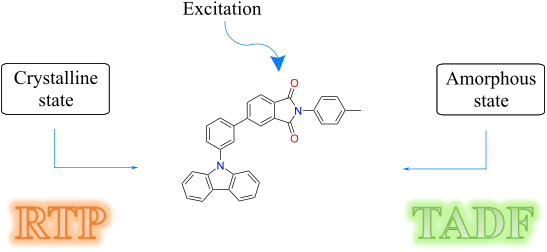
- EL spectra were measured under ambient conditions. Synthesis The synthetic route to 1 is shown in Scheme 1 and comprises imide formation followed by a Suzuki–Miyaura cross coupling. Synthesis of 5-bromo-2-(p-tolyl)isoindoline-1,3-dione (PI-Br, 4) In the first step, 2 (2.00 g, 8.81 mmol) was carefully
- , b) relationship between external quantum efficiency and brightness and c) current density–voltage–luminance characteristics of the OLED device based on 1 measured under ambient conditions. Synthetic pathway to 1 via imide formation and Suzuki–Miyaura cross-coupling. Energy-level parameters


Comparative analysis of complanadine A total syntheses
Beilstein J. Org. Chem. 2025, 21, 2334–2344, doi:10.3762/bjoc.21.178
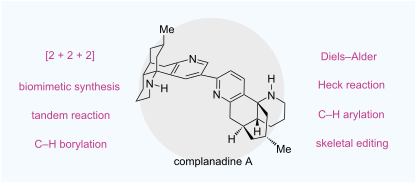
- reaction to rapidly establish the tetracyclic skeleton of complanadine A and an iridium-catalyzed site-selective pyridine C–H borylation followed by a Suzuki–Miyaura cross coupling to forge the C2–C3’ linkage. Their synthesis achieves a high degree of synergy between classic transformations and modern
- lycodine 34 underwent Ir-catalyzed C3–H borylation mainly guided by steric factors to provide boronic ester 35 in 75% yield. With the boronic ester handle at the C3 position, the subsequent Suzuki–Miyaura cross coupling between 35 and 33 occurred smoothly to deliver pseudo-dimer 36, which upon acidic
- -oxidation at one of the two benzylic positions, they started with benzylic oxidation of 34 using SeO2 to provide 37, which was further oxidized to pyridine N-oxide 38. Treatment of 38 with POCl3 in DMF delivered 2-chloropyridine 39 for the subsequent Suzuki–Miyaura cross coupling with 35 to form the C2–C3



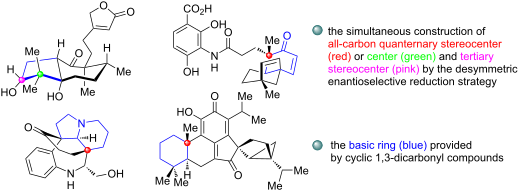
The application of desymmetric enantioselective reduction of cyclic 1,3-dicarbonyl compounds in the total synthesis of terpenoid and alkaloid natural products
Beilstein J. Org. Chem. 2025, 21, 2085–2102, doi:10.3762/bjoc.21.164
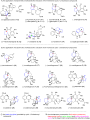
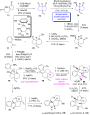
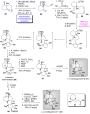
- hydroxyketone 104 in excellent diastereoselectivity and enantioselectivity [9][11]. Ozonolysis of the double bond in 104 followed by Purdie methylation with Ag2O/MeI, base-mediated vinyl triflation, and Pd-catalyzed Suzuki–Miyaura cross coupling with pinacol boronate 105 delivered diene 106. Next, The Et2AlCl







Measuring the stereogenic remoteness in non-central chirality: a stereocontrol connectivity index for asymmetric reactions
Beilstein J. Org. Chem. 2025, 21, 1995–2006, doi:10.3762/bjoc.21.155
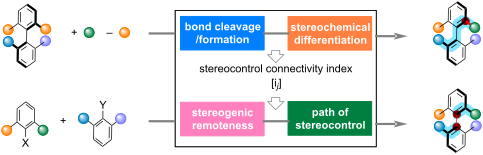
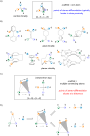
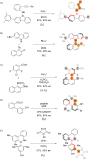
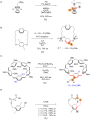
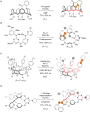
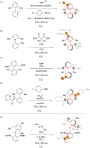
- –B [14] (Scheme 3E) bonds. In the case of an asymmetric cross-coupling reaction (Scheme 3C) [10], both sets of the substituents on individual aryl groups are considered because neither is involved in the bond formation/cleavage. Accordingly, the catalyst-controlled atroposelective Suzuki–Miyaura




Aryl iodane-induced cascade arylation–1,2-silyl shift–heterocyclization of propargylsilanes under copper catalysis
Beilstein J. Org. Chem. 2025, 21, 1984–1994, doi:10.3762/bjoc.21.154
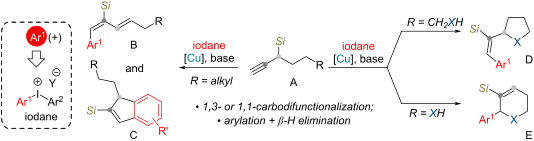
- propargylsilane 7d halogenation–cyclization cascade and Suzuki–Miyaura cross-coupling in the second step [22]. Thus, we have developed a faster and palladium-free route towards tetrahydrofurans 8. The latter can still be modified further through silicon–halide exchange followed by cross-coupling chemistry as


Enantioselective desymmetrization strategy of prochiral 1,3-diols in natural product synthesis
Beilstein J. Org. Chem. 2025, 21, 1932–1963, doi:10.3762/bjoc.21.151

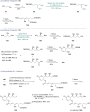
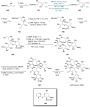
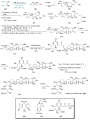
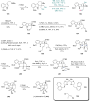
- with 99% ee. The TBS protection was crucial to prevent the potential racemization by intramolecular transesterification. Ester 79 was then prepared from 78 in eight steps. To complete the dimerization, fragments 80 and 81 were independently prepared from 79. An intermolecular Suzuki–Miyaura coupling












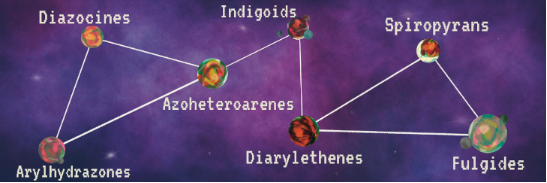
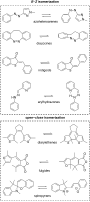
Photoswitches beyond azobenzene: a beginner’s guide
Beilstein J. Org. Chem. 2025, 21, 1808–1853, doi:10.3762/bjoc.21.143






Synthesis of an aza[5]helicene-incorporated macrocyclic heteroarene via oxidation of an o-phenylene-pyrrole-thiophene icosamer
Beilstein J. Org. Chem. 2025, 21, 1561–1567, doi:10.3762/bjoc.21.119
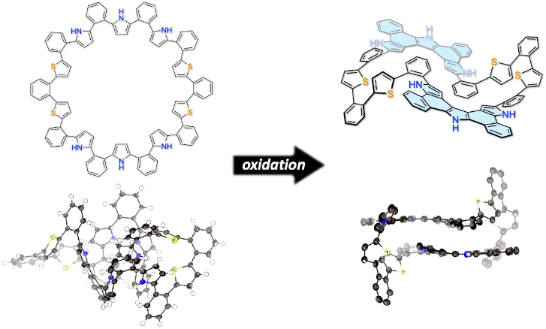
- hybrid decamer 3 in a previous report [26], via a Suzuki–Miyaura cross-coupling reaction between dibromo precursor 1 and borylated precursor 2 (Scheme 1). The resulting mixture was successfully separated by column chromatography on silica using CH2Cl2/n-hexane as an eluent to give icosamer 4 in 6% yield
- common organic solvents. Conclusion A novel o-phenylene-pyrrole-thiophene hybrid macrocycle (icosamer 4) was synthesized via Suzuki–Miyaura cross-coupling and isolated in 6% yield. Oxidation of 4 with PIFA produced a partially fused aza[5]helicene-containing macrocycle 5 in 58% yield, which was also


Oxetanes: formation, reactivity and total syntheses of natural products
Beilstein J. Org. Chem. 2025, 21, 1324–1373, doi:10.3762/bjoc.21.101
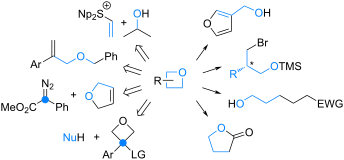
- , Howell et al. recently disclosed a general method for the synthesis of 2-halomethylideneoxetanes through halogenation of 2-methylideneoxetanes using N-halosuccinimides, and illustrated their synthetic utility by Suzuki–Miyaura, Sonogashira and Buchwald–Hartwig coupling reactions [53]. In addition to Cu










A versatile route towards 6-arylpipecolic acids
Beilstein J. Org. Chem. 2025, 21, 1104–1115, doi:10.3762/bjoc.21.88
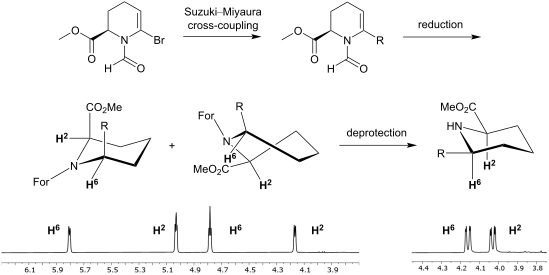
- accordance with coupling constants and resulting dihedral angles. Keywords: conformational restraints; dihedral angle NMR; half-chair conformation; modified amino acids; pipecolic acid; stereoselective hydrogenation; Suzuki–Miyaura cross-coupling; Introduction Non-proteinogenic amino acids play an
- structure of pipecolic acid is rather challenging and often necessitates early-stage derivatization followed by the formation of the six-membered ring [29][30][31][32]. An alternative is to utilise derivatization reactions such as Suzuki–Miyaura [33] or Sonogashira–Hagihara [34] cross-coupling reactions on
- a key intermediate product. This late-stage approach was previously described by us while utilising Suzuki–Miyaura or Sonogashira–Hagihara cross-coupling reactions to generate pipecolic acid derivatives with alkynyl substituents in the C6 position [35]. Here, we present a robust synthetic route to





Recent advances in the electrochemical synthesis of organophosphorus compounds
Beilstein J. Org. Chem. 2025, 21, 770–797, doi:10.3762/bjoc.21.61
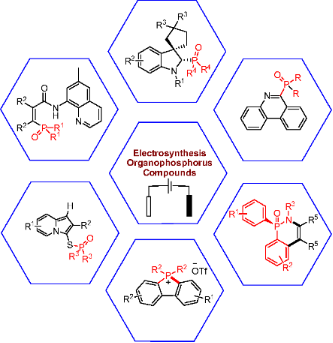
- -dechlorination product was observed. This notable result suggests performing a second coupling using conventional chemical methods, such as the Suzuki–Miyaura reaction. Furthermore, the coupling yield decreased for phenyl bromides bearing bulky ortho-substituents while hydrodehalogenation byproducts formed. The


Synthesis of N-acetyl diazocine derivatives via cross-coupling reaction
Beilstein J. Org. Chem. 2025, 21, 490–499, doi:10.3762/bjoc.21.36
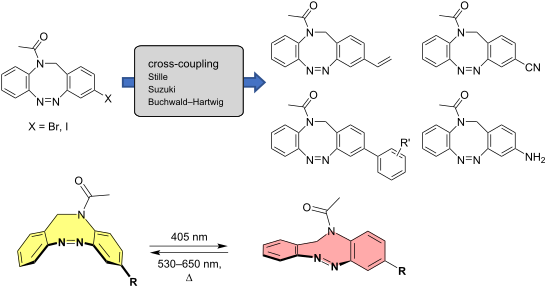
- of 74% for bromine 2 and 78% for iodo starting material 3 (Table 3) [24]. To overcome the problems of poor yields in the arylation of N-acetyl diazocines via Stille coupling we used Suzuki–Miyaura reactions of the diazocines 2 and 3 with different arylboronic acids [25][26]. There are several
- examples of last-step modifications of azobenzenes via Suzuki–Miyaura reactions in the current literature, which indicate that the reaction conditions are compatible with azo groups [27][28]. Suzuki–Miyaura reaction of 2 and 3 with different phenylboronic acids resulted in the formation of the
- with bis(pinacolato)diboron did not lead to the formation of the pinacolborane-substituted N-acetyl diazocine 18. Accordingly, the Suzuki–Miyaura reaction with inversed roles between N-acetyl diazocine boronic acid pinacol ester and aryl or alkyl halides could not be investigated. The Buchwald–Hartwig


Emerging trends in the optimization of organic synthesis through high-throughput tools and machine learning
Beilstein J. Org. Chem. 2025, 21, 10–38, doi:10.3762/bjoc.21.3
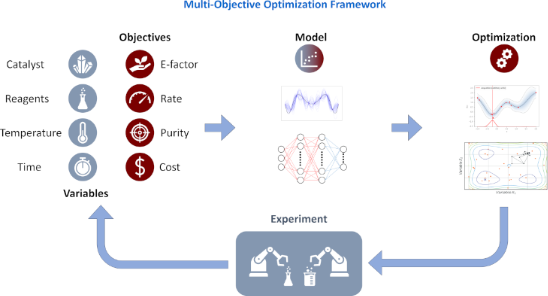
- of stereoselective Suzuki–Miyaura couplings, offering precise control over both categorical and continuous variables (Figure 2a) [15]. The integrated robotic system containing a four-needle dispense head facilitated the delivery of reagents in low volume and slurries, ensuring the accuracy and
- selection, a dispensing module for solids and liquids, a reaction module capable of heating and stirring, a sample preparation module, and a LC–MS characterization module (Figure 2d). The efficiency of the system has been demonstrated in three reactions types, namely Suzuki–Miyaura coupling, Buchwald
- drug molecules autonomously, and it does not include a closed-loop optimization framework. The Pfizer research team developed a custom-designed flow system for rapid reaction screening of the Suzuki–Miyaura coupling reaction on a nanomolar scale [50]. The platform included a modified HPLC system that


Synthesis of acenaphthylene-fused heteroarenes and polyoxygenated benzo[j]fluoranthenes via a Pd-catalyzed Suzuki–Miyaura/C–H arylation cascade
Beilstein J. Org. Chem. 2024, 20, 3290–3298, doi:10.3762/bjoc.20.273
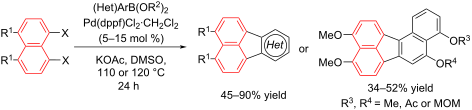
- %). This cascade involves an initial Suzuki–Miyaura cross-coupling reaction between 1,8-dihalonaphthalenes and heteroarylboronic acids or esters, followed by an intramolecular C–H arylation under the same conditions to yield the final heterocyclic fluoranthene analogues. The method was further employed to
- )-catalyzed [2 + 2 + 2] cycloaddition reactions with 1,8-dialkynylnaphthalenes to access azafluoranthenes and 2-pyridone-fused naphthalenes [27]. In 2017, we reported a Pd-catalyzed cascade reaction that involves a sequential Suzuki–Miyaura cross-coupling and a subsequent intramolecular C–H arylation between
- boronic esters of 1,8-DHN have recently been investigated and reported by Krempner and co-workers [51]. To our delight, the Suzuki–Miyaura coupling/intramolecular C–H arylation sequence between 12 and boronic ester 17d proceeded smoothly affording product 15a in 84% yield. The results summarized in Table


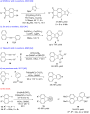


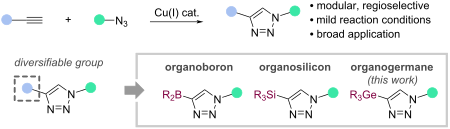
Germanyl triazoles as a platform for CuAAC diversification and chemoselective orthogonal cross-coupling
Beilstein J. Org. Chem. 2024, 20, 3198–3204, doi:10.3762/bjoc.20.265
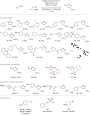
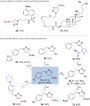
- to chemical biology (Scheme 3a). The utility of the germanyl triazole products was then assessed by subsequent derivatisation of exemplar compounds 15 and 21 (Scheme 3b). Chemoselective Suzuki–Miyaura cross-coupling of the BPin moiety in 21 was straightforward, giving 28 in excellent yield [73
- ]. Similarly, cross-coupling of the GeEt3 moiety in 15 under conditions developed by Schoenebeck and co-workers gave 29 [57]. Bromodegermanylation using NBS employing conditions from Schoenebeck gave bromotriazoles 30 and 31 in moderate to excellent yield [62]. These could then undergo Suzuki–Miyaura cross


C–C Coupling in sterically demanding porphyrin environments
Beilstein J. Org. Chem. 2024, 20, 2784–2798, doi:10.3762/bjoc.20.234
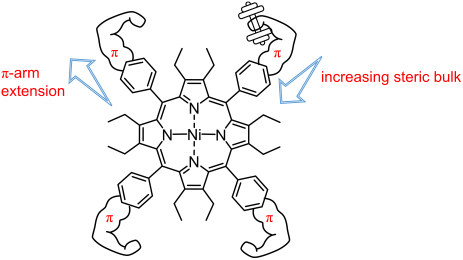
- porphyrin architectures, which could be used in supramolecular assemblies, catalysis, or sensing. In this work a library of arm-extended dodecasubstituted porphyrins was synthesized through the optimization of the classic Suzuki–Miyaura coupling of peripheral haloaryl substituents with a range of boronic
- further substitution directly on the meso- or a meso-phenyl ortho/meta/para positions of a porphyrin, is the introduction of C–C bond forming chemistry. This is typically achieved using palladium and/or another transition-metal catalyst [20]. Sonagashira [21], Suzuki–Miyaura [22], Heck [23], Stille [24
- coupling reactions, Suzuki–Miyaura couplings are known to be a robust tool when functionalizing porphyrins [29][30]. Many complex porphyrinoid architectures have been synthesized in this manner, from functional porphyrin arrays [31][32][33] to sterically challenging meso-substituted aryl bis-pocket


Synthesis of benzo[f]quinazoline-1,3(2H,4H)-diones
Beilstein J. Org. Chem. 2024, 20, 2708–2719, doi:10.3762/bjoc.20.228
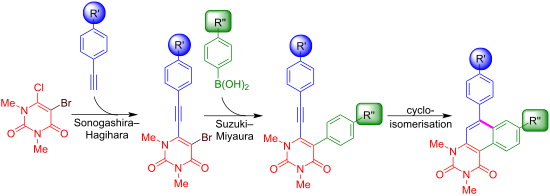
- and Suzuki–Miyaura cross-coupling reactions followed by Brønsted acid-mediated cycloisomerisation. The developed methodology tolerates various functional groups and leads to moderate up to quantitative yields of the final products. The impact of different functional groups on the optical properties
- known which allow for an individual introduction of substituents at both positions [37][38][51][52][53][54][55][56][57][58][59][60][61]. In our previous work, we developed a new method which enables both positions to be independently functionalised by Sonogashira- and Suzuki–Miyaura cross-coupling
- of palladium-catalysed Sonogashira–Hagihara and Suzuki–Miyaura cross-coupling reactions (Scheme 1). The final cyclisation step is accomplished by an acid-mediated cycloisomerisation. The synthesis of starting materials 4 was carried out by our previously reported protocol [65]. While compounds 4a–f




Synthesis of fluoroalkenes and fluoroenynes via cross-coupling reactions using novel multihalogenated vinyl ethers
Beilstein J. Org. Chem. 2024, 20, 2691–2703, doi:10.3762/bjoc.20.226

- fluoroenynes via Suzuki–Miyaura and Sonogashira cross-coupling reactions using novel multihalogenated fluorovinyl ethers, which are easily prepared from the reaction between phenols and 2-bromo-2-chloro-1,1,1-trifluoroethane (halothane). These reactions make use of the unique structure of multihalogenated
- fluorovinyl ethers, which contains a reactive bromine atom, to afford a series of fluoroalkenes and fluoroenynes in moderate to high yields. Keywords: fluoroalkenes; fluoroenynes; multihalogenated vinyl ethers; Suzuki–Miyaura cross-coupling reactions; Sonogashira cross-coupling reactions; Introduction
- chlorine atoms as reported by Hosoya and Niwa et al. In this study, we investigated the synthesis of fluoroalkenes 2 or fluoroenynes 3 by Suzuki–Miyaura or Sonogashira cross-couplings with a key building block 1 (Scheme 1D). Results and Discussion Optimization of the conditions of cross-coupling reactions


Machine learning-guided strategies for reaction conditions design and optimization
Beilstein J. Org. Chem. 2024, 20, 2476–2492, doi:10.3762/bjoc.20.212
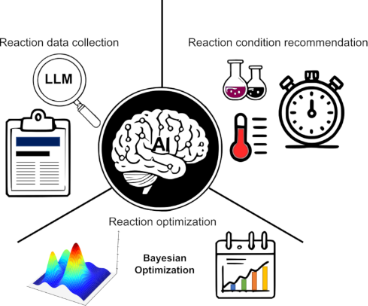
- simply memorize the most frequently reported solvents and reagents in the literature. Beker et al. [178] showed that some machine learning models could not outperform simple statistical analyses based on the popularity of reported conditions in the literature, using the Suzuki–Miyaura coupling as an
- ML and automated robotic experimentation to accelerate the exploration of general reaction conditions for heteroaryl Suzuki–Miyaura cross-coupling. They achieved an average yield that was twice as high as that of previous human-guided experiments. Recently, Wang et al. [65] formulated the


Catalysing (organo-)catalysis: Trends in the application of machine learning to enantioselective organocatalysis
Beilstein J. Org. Chem. 2024, 20, 2280–2304, doi:10.3762/bjoc.20.196
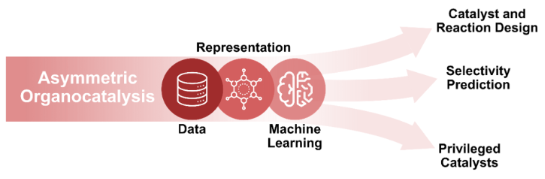
- catalysts’. While the concept of generality was recently explored in a closed-loop fashion for Suzuki–Miyaura cross couplings to find the most general catalyst and reaction conditions [131], the application of this concept in the context of ML has found comparatively less attention in organocatalysis




Multicomponent syntheses of pyrazoles via (3 + 2)-cyclocondensation and (3 + 2)-cycloaddition key steps
Beilstein J. Org. Chem. 2024, 20, 2024–2077, doi:10.3762/bjoc.20.178
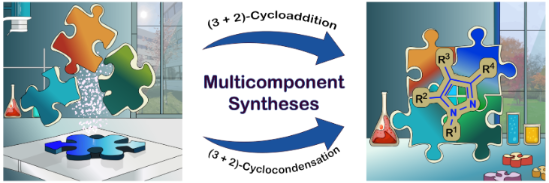
- Suzuki coupling of β,β-dibromenones 100, boronic acids, and 1,1-dimethylhydrazine in a three-component reaction (Scheme 36) [119]. The intermediary 5-bromopyrazoles formed by condensation/N-demethylation/cyclization sequence subsequently react by Suzuki–Miyaura cross-coupling in a one-pot fashion. The