


Search results
Search for "DMF" in Full Text gives 1101 result(s) in Beilstein Journal of Organic Chemistry. Showing first 200.
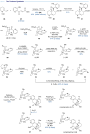
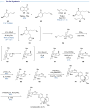
Synthesis of new tetra- and pentacyclic, methylenedioxy- and ethylenedioxy-substituted derivatives of the dibenzo[c,f][1,2]thiazepine ring system
Beilstein J. Org. Chem. 2025, 21, 2645–2656, doi:10.3762/bjoc.21.205
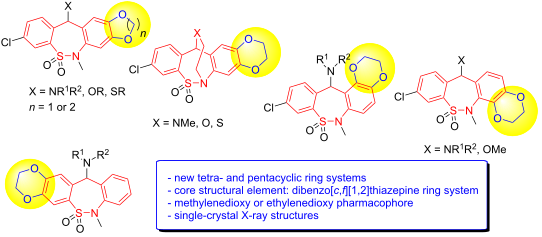
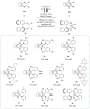
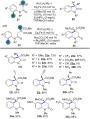
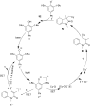
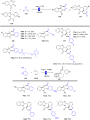
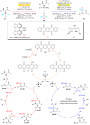
- intermediates 6 and 7. Conditions: i) 1,3-benzodioxol-5-amine (n = 1)/2,3-dihydro-1,4-benzodioxin-6-amine (n = 2), PhNEt2, MeOH, rt, 1 h, 95%/92%; ii) MeI, K2CO3, DMF, 4 h/1 h, 97%/98%; iii) NaOH, MeOH/H2O, reflux, 1 h, 97%/99%; iv) 1. PCl5, DCM, reflux, 8.5 h/9 h; 2. SnCl4, 0–5 °C, 2 h/1 h → rt, 2 h; 76%/84
- % (8: 2%). Synthesis of tetracyclic compounds 20 and 21. Conditions: i) NaBH4, DMF, EtOH, rt, 4.5 h/23 h, 95%/98%; ii) SOCl2, DCM, rt, 1.5 h/3.5 h, 100%/94%; iii) 20a,c–e: HNR1R2, dioxane or MeCN, rt, 1 h, 56–84%; 21a,c–p: HNR1R2, dioxane or MeCN, rt, 40 min–3.5 h, 48–93%. Synthesis of tianeptine
- , rt, 1 h, 91%; viii) NaBH4, NaOH, H2O, rt, 69 h, 83%; ix) SOCl2, DCM, rt, 2 h, crude: 100%; x) Br(CH2)2OH, MeCN, rt, 6 h, 61%; xi) K2CO3, MeCN, rt, 5 h, 71%. Synthesis of tetracyclic compounds 38. Conditions: i) NaBH4, DMF/EtOH, rt, 3 h, 89%; ii) SOCl2, DCM, rt, 1.5 h, 94%; iii) 38a–c: R1R2NH, MeCN


Efficient solid-phase synthesis and structural characterization of segetalins A–H, J and K
Beilstein J. Org. Chem. 2025, 21, 2612–2617, doi:10.3762/bjoc.21.202

- strategy for the total synthesis of segetalins A–H, J and K (1–10), bioactive cyclopeptides isolated from Vaccaria segetalis. Linear precursors were assembled on cost-effective 2-chlorotrityl chloride resin via Fmoc-SPPS, followed by PyBOP-mediated head-to-tail cyclization in DMF (10−3 M). After RP-HPLC
- resin as the solid support, enabling mild cleavage of the partially protected linear peptide precursor [21]. Efficient Fmoc deprotection was achieved using a solution of 1% pyridine and 1% 1,8-diazabicyclo[5.4.0]undec-7-ene (DBU) in N,N-dimethylformamide (DMF) [22]. For the assembly of the linear
- sequences, coupling efficiency was significantly enhanced using a 1:1 mixture of 1-hydroxybenzotriazole (HOBt) and 2-(1H-benzotriazol-1-yl)-1,1,3,3-tetramethyluronium hexafluorophosphate (HBTU) in DMF [23]. Finally, we obtained crude linear peptides with 75% to 95% yields (Table 1). The critical head-to


Silica gel with covalently attached bambusuril macrocycle for dicyanoaurate sorption from water
Beilstein J. Org. Chem. 2025, 21, 2604–2611, doi:10.3762/bjoc.21.201
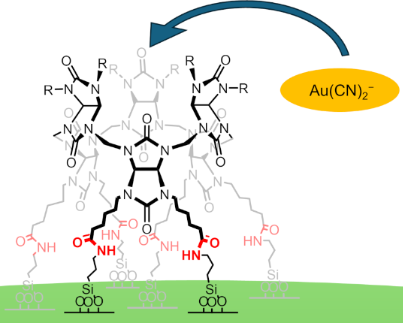
- (HOBt) and 1,3-diisopropylcarbodiimide (DIC) in DMF, resulting in SG-NHCO-BU1 with BU1 covalently attached through amide bonds (Scheme 1). The material was thoroughly washed with DMF, water, and methanol to remove byproducts and unreacted BU1. The grafting reaction was conducted using a 9:1 (w/w) ratio
- (Scheme 1). The latter reaction was also done using a 9:1 (w/w) ratio of a-SG to BU1, by treatment of a-SG with the macrocycle in DMF at ambient temperature (Scheme 1). The material was then isolated by filtration and washed with DMF and methanol. The prepared a-SG, SG-NHCO-BU1, and SG-BU1 materials were
- toluene, ethanol and acetone to remove unreacted APTES and dried in vacuo (50 °C) overnight in order to get a-SG [15][16]. Further, to prepare covalent SG-NHCO-BU1, a-SG (0.9 g) was suspended in DMF (15 mL) and shaken at ambient temperature for 30 min. BU1 (0.1 g, 1 equiv) was dissolved in a minimum


Assembly strategy for thieno[3,2-b]thiophenes via a disulfide intermediate derived from 3-nitrothiophene-2,5-dicarboxylate
Beilstein J. Org. Chem. 2025, 21, 2489–2497, doi:10.3762/bjoc.21.191
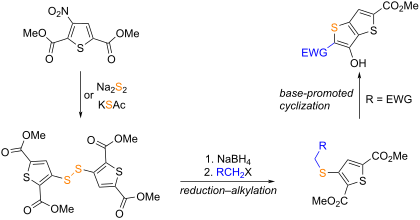
- -dicarboxylates by its one-pot reduction–alkylation using NaBH4 in DMF followed by an alkylating agent. Base-promoted cyclization of electron-deficient 3-alkylthio derivatives furnished 2-aryl-, 2-aroyl-, and 2-cyano-substituted thieno[3,2-b]thiophenes, bearing a 3-hydroxy group. This protocol broadens access to
- the nucleophilic substitution of the nitro group in 2-nitrobenzonitriles using Na2S in a DMF/water medium, followed by alkylation of the resulting 2-cyanophenylthiolates and subsequent cyclization [31]. However, in our case, the reaction of ester 1 with Na2S in either acetone or a DMF/water mixture
- cleavage of the S–S bond and the subsequent S-alkylation reaction were successful. To suppress the side reaction and improve reduction efficiency, we next employed DMF as a polar aprotic solvent. In Table 2, entry 4, reduction of disulfide 3 in DMF at 75 °C with NaBH4 was complete within 15 min. The excess



The high potential of methyl laurate as a recyclable competitor to conventional toxic solvents in [3 + 2] cycloaddition reactions
Beilstein J. Org. Chem. 2025, 21, 2389–2415, doi:10.3762/bjoc.21.184
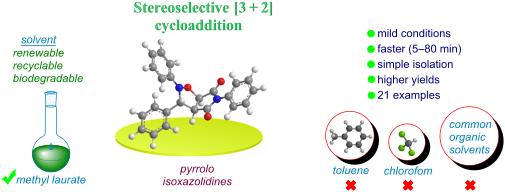
- ) has led to limitations on the use of chlorinated solvents, toluene, DMF etc., with the implementation of particular prerequisites [89]. The double bond present in oleic acid and methyl oleate may be disadvantageous for these solvents in comparison to methyl laurate. The potential isomerization and






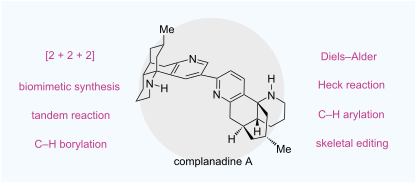
Comparative analysis of complanadine A total syntheses
Beilstein J. Org. Chem. 2025, 21, 2334–2344, doi:10.3762/bjoc.21.178
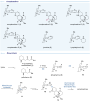
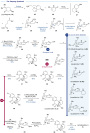
- -oxidation at one of the two benzylic positions, they started with benzylic oxidation of 34 using SeO2 to provide 37, which was further oxidized to pyridine N-oxide 38. Treatment of 38 with POCl3 in DMF delivered 2-chloropyridine 39 for the subsequent Suzuki–Miyaura cross coupling with 35 to form the C2–C3



Pathway economy in cyclization of 1,n-enynes
Beilstein J. Org. Chem. 2025, 21, 2260–2282, doi:10.3762/bjoc.21.173
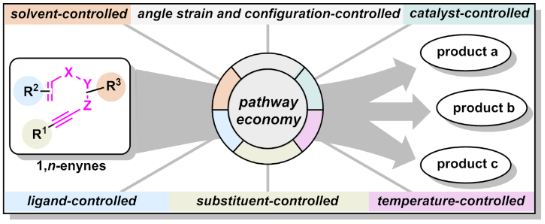
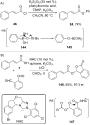
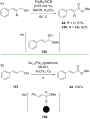
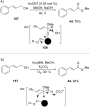
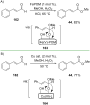
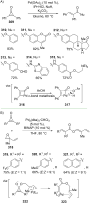
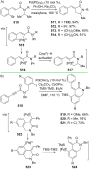
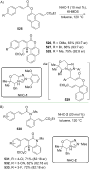
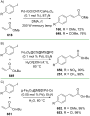
- solvent-controlled selective syntheses of two polycyclic compounds (Scheme 6) [13]. Using PdCl2 as the catalyst and DMF as the solvent, substrate 22 underwent a 6-endo-dig cyclization and subsequent enone insertion, forming a palladium–carbon bond intermediate. Protonolysis yielded isocoumarin-fused


C2 to C6 biobased carbonyl platforms for fine chemistry
Beilstein J. Org. Chem. 2025, 21, 2103–2172, doi:10.3762/bjoc.21.165


Switchable pathways of multicomponent heterocyclizations of 5-amino-1,2,4-triazoles with salicylaldehydes and pyruvic acid
Beilstein J. Org. Chem. 2025, 21, 2030–2035, doi:10.3762/bjoc.21.158
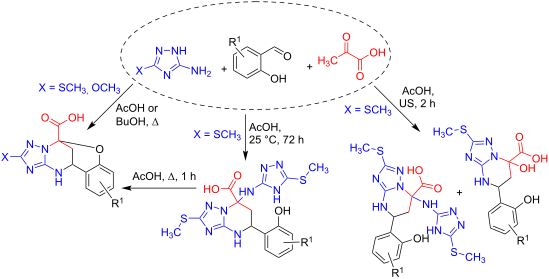
- behavior in this MCR. In the case of 3-carbomethoxy- and 3-(trifluoromethyl)-5-amino-1,2,4-triazoles the treatment with pyruvic acid and salicylaldehydes under thermal heating in different solvents (AcOH, DMF, n-butanol), instead of oxygen-bridged compounds gave a mixture of unidentified products with


Photochemical reduction of acylimidazolium salts
Beilstein J. Org. Chem. 2025, 21, 1973–1983, doi:10.3762/bjoc.21.153
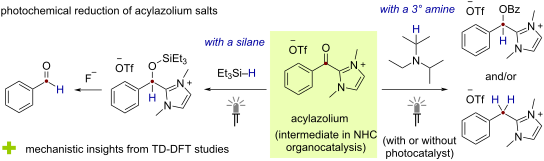
- was also observed in PhCF3 (11% of 2, 24% of 3, Table 1, entry 13) and acetone (14% of 2, 24% of 3, Table 1, entry 14), however, relatively complex reaction mixtures were obtained in either THF (4% of 2, 7% of 3, Table 1, entry 15) or DMF (Table 1, entry 16). At this stage, we returned our attention


Stereoselective electrochemical intramolecular imino-pinacol reaction: a straightforward entry to enantiopure piperazines
Beilstein J. Org. Chem. 2025, 21, 1897–1908, doi:10.3762/bjoc.21.147
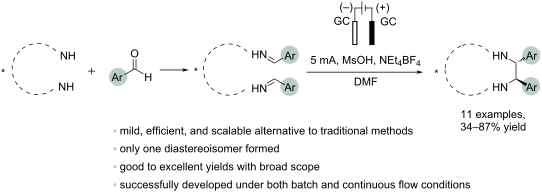
- for different N-benzyl benzaldimines in moderate to good yields. In 1991, Shono’s research group described the electroreductive intramolecular coupling of aromatic diimines, carried out in DMF in the presence of methanesulfonic acid in a divided cell equipped with a lead cathode, a carbon rod anode
- increased to 68% when DMF was used (Table 1, entry 2). The replacement of the platinum anode with graphite or zinc (Table 1, entries 4 and 5) had no significant effect on the yield. Similarly, increasing the total charge from 2.2 to 2.5 F/mol (Table 1, entries 6 and 7) resulted in only marginal changes
- product was observed and the starting diimine 1a was quantitatively recovered. The optimized reaction conditions, consisting in the use of GC electrodes, NEt4BF4 (2.6 equiv) as electrolyte, MsOH (3 equiv) as additive, constant current of 5 mA (2.5 mA/cm2), total charge of 2.2 F/mol, dry DMF as solvent





Convenient alternative synthesis of the Malassezia-derived virulence factor malassezione and related compounds
Beilstein J. Org. Chem. 2025, 21, 1730–1736, doi:10.3762/bjoc.21.135

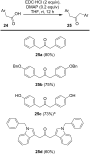
- those in published reports [22][24][35]. 1,3-Bis(1-benzyl-1H-indol-3-yl)propan-2-one (25d). Indole-3-acetic acid (1.0 g, 5.7 mmol) in DMF (10 mL) was cooled to 0 °C, and sodium hydride (273 mg, 11.4 mmol, 2 equiv) was added slowly with stirring. Benzyl bromide (1.9 g, 11.4 mmol, 2 equiv) was then added


Facile synthesis of hydantoin/1,2,4-oxadiazoline spiro-compounds via 1,3-dipolar cycloaddition of nitrile oxides to 5-iminohydantoins
Beilstein J. Org. Chem. 2025, 21, 1552–1560, doi:10.3762/bjoc.21.118

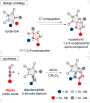
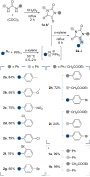
- precursors 4a–c were then prepared by the reaction of compounds 3a–c with N-chlorosuccinimide (NCS) in dimethylformamide (DMF). The ester group-containing chloro oxime 4d was obtained by the treatment of glycine ethyl ester hydrochloride with sodium nitrite and hydrochloric acid [25] and used thereafter as



Azide–alkyne cycloaddition (click) reaction in biomass-derived solvent CyreneTM under one-pot conditions
Beilstein J. Org. Chem. 2025, 21, 1544–1551, doi:10.3762/bjoc.21.117
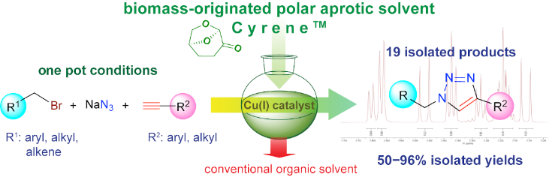
- used for click reactions such as chlorinated hydrocarbons [15][16], toluene [16], tetrahydrofuran (THF) [17][18], N,N-dimethylformamide (DMF) [19][20], N-methylpyrrolidone (NMP) [21], dimethyl sulfoxide (DMSO) [17][19][22], or acetonitrile [23] are classified into Class 1 and 2, of which applications
- -dioxane) or low (DMF, NMP, DMSO) (Figure 1). While low conversion was still detected in biomass-originated 2-MeTHF, MeLev, and EtLev established better performance. When their corresponding 4-alkoxy derivatives were applied, moderate (Me-4MeOV) or slightly lower (Et-4EtOV) conversions could be observed
- phenylacetylene, 2.5 mL solvent, 0.01 mmol CuI, 0.1 mmol Et3N, T = 30 °C, t = 4 h. DCM: dichloromethane, DMF: N,N-dimethylformamide, NMP: N-methylpyrrolidone, DMSO: dimethyl sulfoxide, 2Me-THF: 2-methyltetrahydrofuran, Me-4MeOV: methyl 4-methoxyvalerate, Et-4EtOV: ethyl 4-ethoxyvalerate, MeLev: methyl levulinate


General method for the synthesis of enaminones via photocatalysis
Beilstein J. Org. Chem. 2025, 21, 1535–1543, doi:10.3762/bjoc.21.116
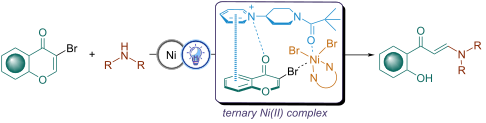
- -dimethylformamide (DMF) at 20 °C afforded the best results, giving the desired product 9a in 70% isolated yield (Table 1, entry 1). Changing NiBr2·diglyme to other nickel salts, such as Ni(OTf)2 and NiCl2·diglyme led to lower yields (Table 1, entries 2 and 3). Similarly, changing the ligand for dtbbpy or
- phenantroline also resulted in a decrease in the efficiency of the process (Table 1, entries 4 and 5). The pyridinium salt has also a significant effect on reactivity; thus, when 1-benzyl-2,4,6-triphenylpyridin-1-ium (PS2) was used, enaminone 9a was isolated in only 34% yield (Table 1, entry 6). Replacing DMF




Recent advances in oxidative radical difunctionalization of N-arylacrylamides enabled by carbon radical reagents
Beilstein J. Org. Chem. 2025, 21, 1207–1271, doi:10.3762/bjoc.21.98
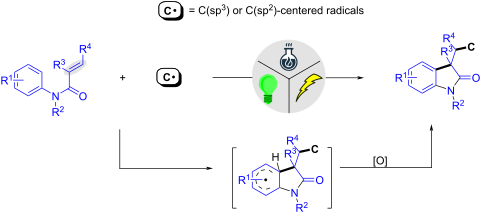
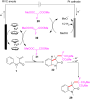
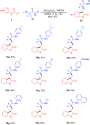
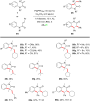
- , operated at a constant current of 5 mA in N,N-dimethylformamide (DMF) containing n-Bu4NBF4 as the electrolyte. The reaction proceeded efficiently at 100 °C under an inert atmosphere, yielding halogenated oxindoles in good to excellent yields. The substrate scope was systematically explored, revealing broad














Selective monoformylation of naphthalene-fused propellanes for methylene-alternating copolymers
Beilstein J. Org. Chem. 2025, 21, 1183–1191, doi:10.3762/bjoc.21.95
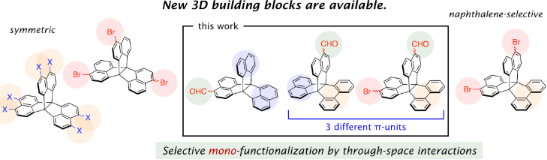
- ][59][60]. This scheme also enables control of the number of formyl groups by starting materials and reagents. Brominated [4.3.3]propellane was reacted with n-BuLi or iPrMgCl·LiCl to generate an organometal species, which was quenched with N,N-dimethylformamide (DMF) as an electrophile (Table S201 in

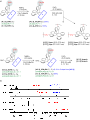

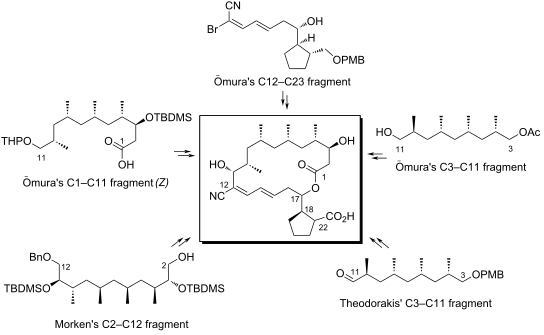
Synthetic approach to borrelidin fragments: focus on key intermediates
Beilstein J. Org. Chem. 2025, 21, 1135–1160, doi:10.3762/bjoc.21.91
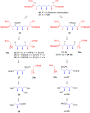
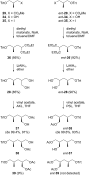
- LiAlH4 in ether to form alcohol 40 (89%) (Scheme 3). The primary alcohol 40 was then converted to its iodide derivative 42 (89%), from which single crystals were obtained, and its structure was determined unequivocally by XRD crystallography. Iodide 42 was then reacted with sodium phenylsulfinate in DMF








A versatile route towards 6-arylpipecolic acids
Beilstein J. Org. Chem. 2025, 21, 1104–1115, doi:10.3762/bjoc.21.88
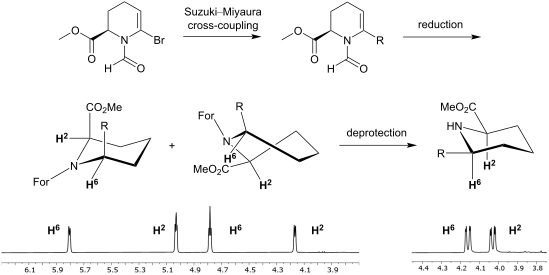
- to reduce the arylated N-formyl enamine moiety in 3 remained unsuccessful. We also aimed at improving conversion and yield by first testing different bases and catalysts [42][43]. DMF, a well-established solvent for cross-coupling reactions, led to lower degradation of the bromide 2 compared to other
- under the same conditions. The advantage of XPhos Pd G2 is the use of an aqueous solution without inert conditions, but even under these conditions, the conversion was lower than in DMF. Pd(OAc)2 showed the lowest conversion by far, with no conversion observed when Et3N was used as the base. Overall
- arylated products 3 with triphenylphosphine oxide, this issue does not occur using Pd(dppf)Cl2. The best conditions for the cross coupling were determined to be 5 mol % Pd(dppf)Cl2 as catalyst, 2.0 equiv K2CO3 as base, 1.5 equiv of the required boronic acid and DMF as the solvent. In addition, a minute





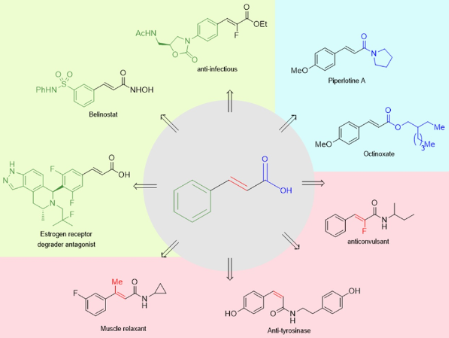
Recent advances in synthetic approaches for bioactive cinnamic acid derivatives
Beilstein J. Org. Chem. 2025, 21, 1031–1086, doi:10.3762/bjoc.21.85
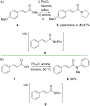
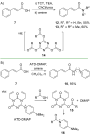
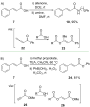
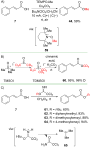
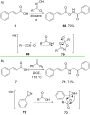
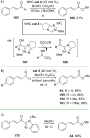
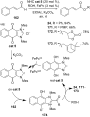
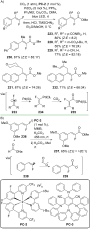
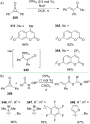
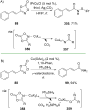
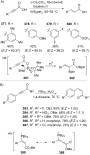
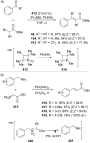
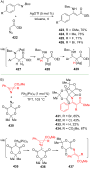
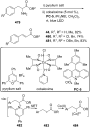
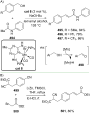
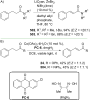
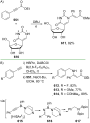
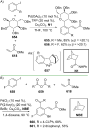
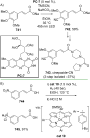
- cinnamic acid (7) and N,N’-dimethylformamide (DMF)-mediated by POCl3 via acid chloride 36 formation (Scheme 20) [52]. On top of the carboxyl activation approaches demonstrated above, O/N-acylation could also be achieved by employing an electrophilic alkylating agent by exploiting the nucleophilicity of the
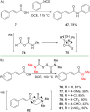
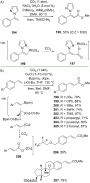
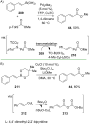
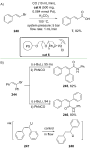
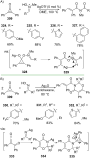
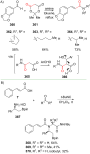
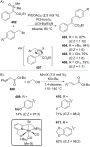
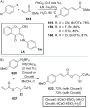
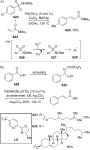
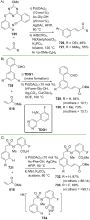
- of alkynes 297 with N,N’-dimethylformamide (DMF) to afford the corresponding cinnamamide 298 via ligand-to-ligand hydrogen transfer 299 (Scheme 72) [123]. Furthermore, Song and co-workers (2023) employed propargylic ester 300 to prepare the corresponding cinnamic esters/amides with excellent anti
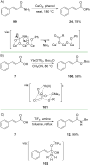
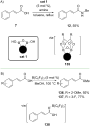
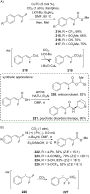
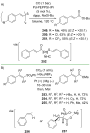
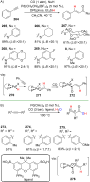
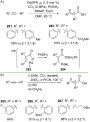
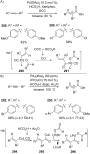
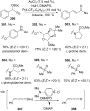
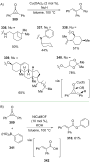
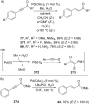
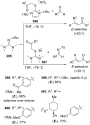
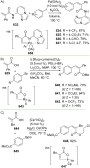
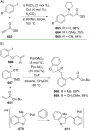
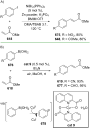
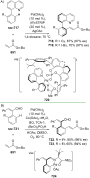
- cinnamamides 13, 77, 99, and 371 in good yields via the active palladium–hydride species 372 (Scheme 81A) [137]. The Z-to-E-selectivity could be effectively tuned by changing the solvent and temperature from CH3CN to DMF and rt to 80 °C, respectively. Similarly, Wang and co-workers (2023) employed Pd to


































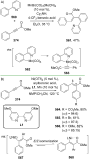
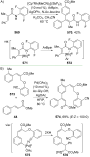


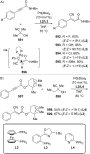
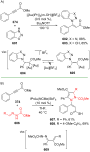

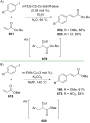

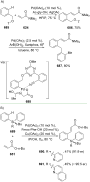
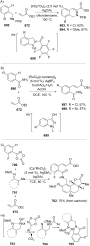
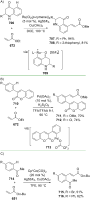




Pd-Catalyzed asymmetric allylic amination with isatin using a P,olefin-type chiral ligand with C–N bond axial chirality
Beilstein J. Org. Chem. 2025, 21, 1018–1023, doi:10.3762/bjoc.21.83
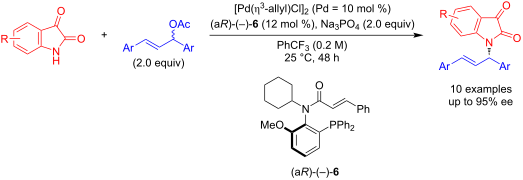
- proceeded when DMF was used (Table 1, entry 11). The reaction in PhCF3 afforded the target product in a good yield with the highest enantioselectivity compared to other solvents (Table 1, entry 12). Furthermore, when (E)-1,3-diphenyl-2-propenyl pivalate (14) was tested as the allyl ester, the desired


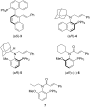
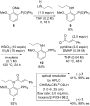


Recent advances in controllable/divergent synthesis
Beilstein J. Org. Chem. 2025, 21, 890–914, doi:10.3762/bjoc.21.73
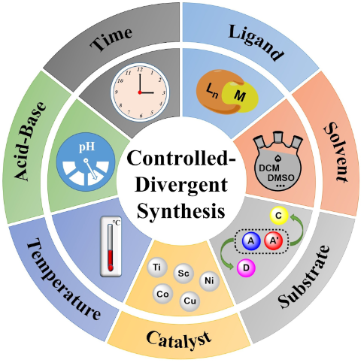
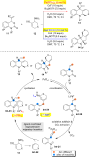
- generated the [1 + 1] macrocycle 39 as the sole product. In contrast, polar aprotic solvents such as dimethyl sulfoxide (DMSO), N,N-dimethylformamide (DMF), or acetonitrile (MeCN) favored precipitation of the [2 + 2] macrocycle 40. Notably, the macrocycle 40 underwent spontaneous structural reorganization







Unraveling cooperative interactions between complexed ions in dual-host strategy for cesium salt separation
Beilstein J. Org. Chem. 2025, 21, 845–853, doi:10.3762/bjoc.21.68
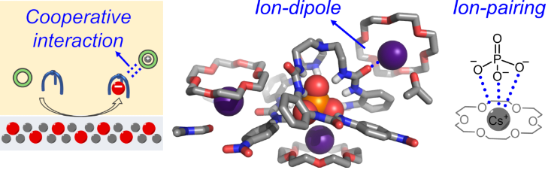
- , DMF, or acetone molecules), respectively. For the type-(II) Cs+ cation, direct ion-pairing interaction with complexed phosphate anion is clearly illustrated, where average P···O distance is 3.3 ± 0.2 Å. These cooperative interactions were further analyzed and visualized by independent gradient model
- . Three types of Cs+ complexations are observed. All Cs+ are seen to be complexed with 18-crown-6 and further stabilized by (I) ion-dipole interactions with DMF and carbonyl (O=C) group, (II) ion-pairing with receptor-complexed phosphate anion, and (III) ion-dipole interactions with acetone and carbonyl


Photochemically assisted synthesis of phenacenes fluorinated at the terminal benzene rings and their electronic spectra
Beilstein J. Org. Chem. 2025, 21, 670–679, doi:10.3762/bjoc.21.53
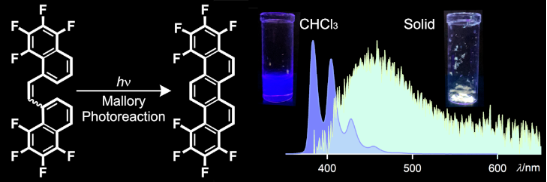
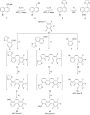
- , toluene, reflux; e) tert-BuLi, DMF, THF, −78 °C; f) KOH, 18-crown-6, CH2Cl2, reflux (rt for 8); g) hν, I2, cyclohexane (toluene/THF mixture for 11); h) p-TsOH, acetone, reflux. Synthesis of F8PIC, F8FUL, and F87PHEN. Reagents and conditions: a) KOH, 18-crown-6, CH2Cl2, reflux; b) hν, I2, toluene, rt





Asymmetric synthesis of fluorinated derivatives of aromatic and γ-branched amino acids via a chiral Ni(II) complex
Beilstein J. Org. Chem. 2025, 21, 659–669, doi:10.3762/bjoc.21.52
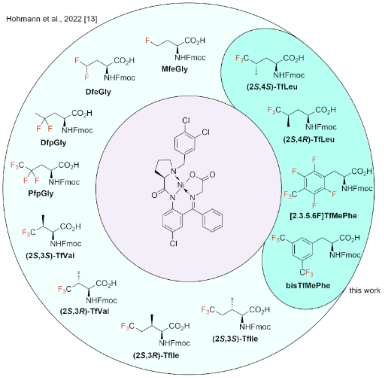
- (II) complex of bisTfMePhe have differed significantly. Here, sodium hydride (NaH) was identified as optimal base leading to a yield of 85% when using DMF as solvent at 0 °C to room temperature (Table 2, entry 4). Testing different base equivalents, solvents, solvent mixtures and temperatures didn’t
- lead to any yield improvement (Table 2, entries 7–13). Herein, using dimethylformamide (DMF), different equiv of alkyl bromide were further screened resulting in a yield of 93%. Thus, 1.5 equiv NaH with 1.5 equiv alkyl bromide in DMF at 0 °C to room temperature have been identified as optimal
- fluorinated alkyl iodide precursor 10, the corresponding alkylation reaction with the Ni(II) complex 1 was conducted under previously optimized conditions for the synthesis of Fmoc-TfIle [13] in terms of base (NaH) and solvent (DMF) and thoroughly screened in terms of base equivalents, concentration and





