Search results
Search for "benzyl" in Full Text gives 1016 result(s) in Beilstein Journal of Organic Chemistry. Showing first 200.
Advances in radical peroxidation with hydroperoxides
Beilstein J. Org. Chem. 2024, 20, 2959–3006, doi:10.3762/bjoc.20.249
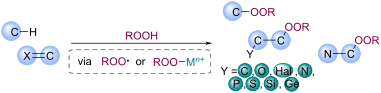
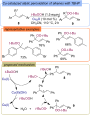
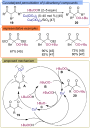
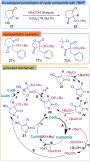
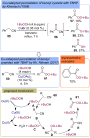
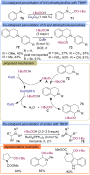
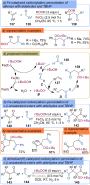
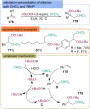
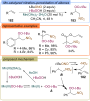
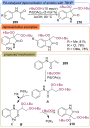
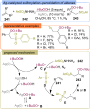
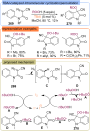
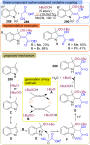
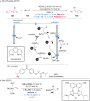
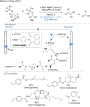
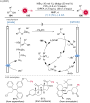
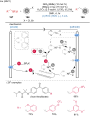
- trifluoromethylthiolated organic peroxides 44 in good yields. Benzyl C(sp3)–H The direct α-functionalization of alkylaromatic compounds 45 with TBHP with the formation of the mixed peroxides 46 was firstly reported by Minisci using Gif conditions – Fe(NO3)3/HOAc/Py (Scheme 19) [61]. Notably, high yields of peroxides 46
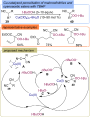
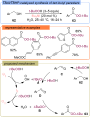
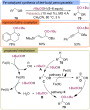
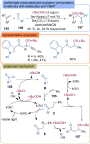
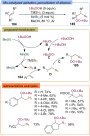
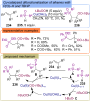
- carried out without solvent and at room temperature, using copper(II) acetate as the catalyst. The reaction pathway of tert-butyl perbenzoate synthesis from benzyl nitriles 60 involves the formation of intermediate D. The Kornblum–DeLaMare rearrangement of peroxide D gives benzoyl cyanide E, which is
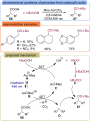
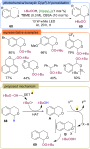
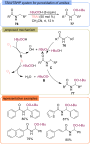
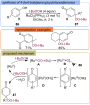
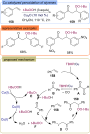
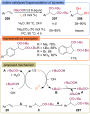
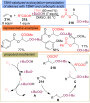
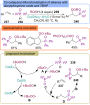
- further attacked by TBHP to give product 61. Benzyl alcohols 62 were also converted into tert-butyl perbenzoates 63 under the action of the TBAI/TBHP system (Scheme 22) [65][66]. During the process, TBHP oxidizes TBAI into iodine, which reacts with the second TBHP to generate tert-butylperoxy radical B





























Synthesis of fluorinated acid-functionalized, electron-rich nickel porphyrins
Beilstein J. Org. Chem. 2024, 20, 2954–2958, doi:10.3762/bjoc.20.248
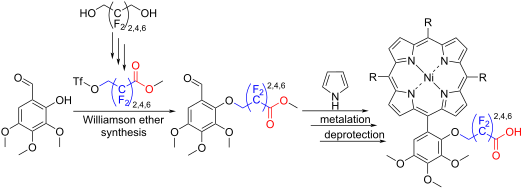
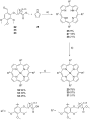
- , see Scheme 1). In order to break the symmetry and to generate the acid function only on one side, benzyl protection was performed. From diols 1, 2, and 3 statistical mixtures of unprotected, mono-, and di-protected products were obtained, from which the isolation of the desired mono-protected products
- bicarbonate (NaHCO₃) provided acids 7, 8, and 9. A byproduct is obtained during oxidation and it is assumed that this is the molecule oxidized at the benzyl position (see Supporting Information File 1, compounds 35–40). Work-up and isolation proved to be difficult, and therefore, the acids were directly
- converted into the methyl esters 10 (54%), 11 (52%), and 12 (46%). The benzyl-protecting group was removed hydrogenolytically to give products 13 (85%), 14 (65%), and 15 (99%). The alcohols were then converted to the triflates 16 (28%), 17 (41%), and 18 (63%). We have chosen 3,4,5-trimethoxybenzaldehyde (19


gem-Difluorovinyl and trifluorovinyl Michael acceptors in the synthesis of α,β-unsaturated fluorinated and nonfluorinated amides
Beilstein J. Org. Chem. 2024, 20, 2946–2953, doi:10.3762/bjoc.20.247
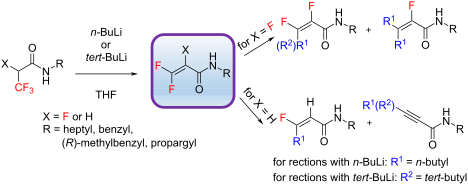
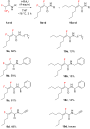
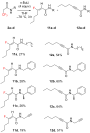
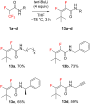
- was to be evidenced by a substitution reaction at the alpha position. We started testing the different bases with lithium bis(trimethylsilyl)amide [39]. The reactions did not take place in the presence of LiHMDS (Table 1, entries 1 and 2), using either benzyl bromide or methyl iodide as electrophiles




Recent advances in transition-metal-free arylation reactions involving hypervalent iodine salts
Beilstein J. Org. Chem. 2024, 20, 2891–2920, doi:10.3762/bjoc.20.243

- salt, subsequently leading to decarboxylative C–C coupling. Notably, this method achieves the incorporation of two fluorine atoms in the benzyl position without resorting to hazardous fluorination reagents, transition-metal catalysts, or organometallic compounds. The utility of this reaction is
- benzyl ester generated rather than the corresponding methyl esters. The reaction was also performed with a 6-membered cyclic diaryliodonium salt, which proceeded successfully and produced the respective iodo-containing arylated product in 59% yield with 76% ee after 24 h. Using the same reaction
- of O3-arylated galactosides 64 by reacting benzyl-protected galactoside 63 with diphenyliodonium triflates 16 at room temperature in the presence of potassium tert-butoxide as the base (Scheme 26) [77]. This transition-metal-free approach simplifies the synthesis process. Electron-pushing and




N-Glycosides of indigo, indirubin, and isoindigo: blue, red, and yellow sugars and their cancerostatic activity
Beilstein J. Org. Chem. 2024, 20, 2840–2869, doi:10.3762/bjoc.20.240
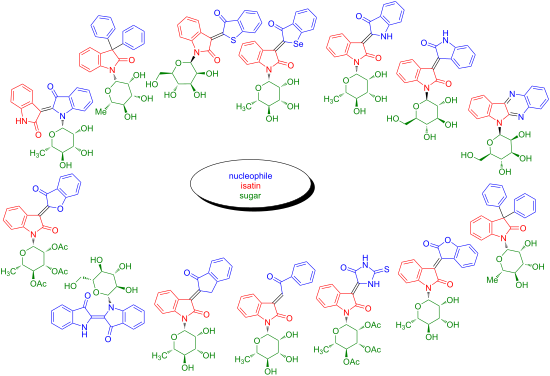
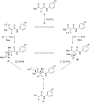
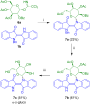
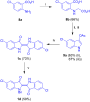
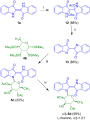
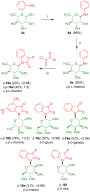
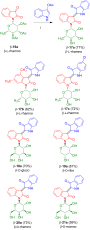
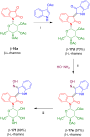
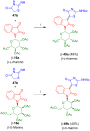
- , albeit, in low yield (Scheme 19) [25]. Cleavage of the benzyl groups using boron tribromide afforded β-31a. In contrast to indirubin-N-rhamnoside 17a, its isomer β-31a proved to be rather unstable. This fact was already earlier observed for indigo-N-rhamnoside 5d and again suggests that compounds
- -glycosides Sassatelli et al. reported the synthesis of isoindigo-N-glycosides β-57a–c by reaction of benzyl-protected isatin-N-glycosides β-56a–c with oxindole (55) (Scheme 35) [53][54][55]. Deprotection by BBr3 afforded β-58a–c. Isatins 56 were prepared by glycosylation of indoline, benzylation, and
- oxidation with CrO3. Although this approach allowed for the synthesis of acceptor-substituted isatin-N-glycosides, it proved to be tedious and the yields were low. In a similar way, acetyl-protected isoindigo-N-glycosides were prepared. In addition, benzyl-protected isoindigo-N-glycoside β-58d, containing a











Multicomponent synthesis of α-branched amines using organozinc reagents generated from alkyl bromides
Beilstein J. Org. Chem. 2024, 20, 2834–2839, doi:10.3762/bjoc.20.239
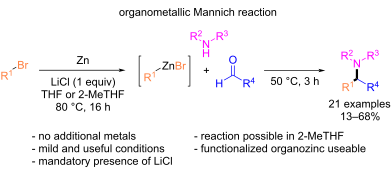
- ]. In this context, while significant contributions have highlighted the reliable use of diverse organometallic species in the three-component coupling, most examples of sp3-hybridized compounds have remained restricted to allyl [5] or benzyl [5][6] organometallic reagents. Conversely, examples of


Synthesis of tricarbonylated propargylamine and conversion to 2,5-disubstituted oxazole-4-carboxylates
Beilstein J. Org. Chem. 2024, 20, 2827–2833, doi:10.3762/bjoc.20.238

- -benzyl-2-(4-methylphenyl)oxazole-4-carboxylate (5a) in 13% yield (Table 3, entry 1). Several conditions were considered, but the yield of 5a did not improve. On the other hand, the addition of two equivalents of water increased the yield, indicating the important role of a stoichiometric amount of water
- experiments were conducted in the same way. In the deuteration experiment, the reaction was quenched with deuterium oxide (0.2 mL) instead of acetic acid. The decrease of the integral of the signal of the benzyl proton was confirmed by 1H NMR analysis. Synthesis of polyfunctionalized methane derivatives


Copper-catalyzed yne-allylic substitutions: concept and recent developments
Beilstein J. Org. Chem. 2024, 20, 2739–2775, doi:10.3762/bjoc.20.232
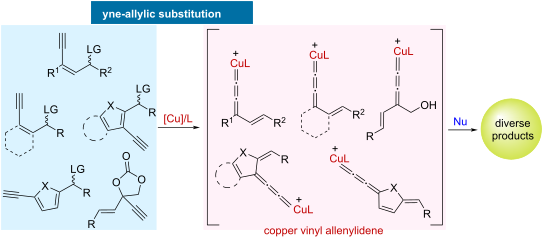
- carried out without the presence of terminal alkyne, although no ee value was obtained. Therefore, they speculated that the direct substitution at the benzyl position is the key to causing the side reaction that affected the enantioselectivity. Recently, Zhu and Xu et al. [74] achieved the η-nucleophilic













5th International Symposium on Synthesis and Catalysis (ISySyCat2023)
Beilstein J. Org. Chem. 2024, 20, 2704–2707, doi:10.3762/bjoc.20.227
- a new family of isatin-based α-acetamide carboxamide oxindole hybrids using the versatile Ugi four-component reaction [18]. Sixteen hybrids were prepared by reacting 5-amino-1-benzyl-3,3-dimethoxyindolin-2-one, benzyl isocyanide, carboxylic acids, and aldehyde/ketone derivatives, catalyzed by ZnF2

A review of recent advances in electrochemical and photoelectrochemical late-stage functionalization classified by anodic oxidation, cathodic reduction, and paired electrolysis
Beilstein J. Org. Chem. 2024, 20, 2500–2566, doi:10.3762/bjoc.20.214
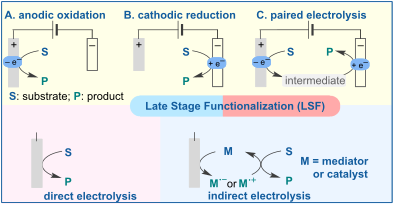
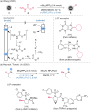
- . Mechanistically, this transformation can be understood as follows: first, a Br/Cl/CF3 radical is formed via anodic oxidation, which subsequently attacks the olefin. The newly formed benzyl radical is oxidized to a carbocation, which undergoes nucleophilic attack by DMF. Hydrolysis of the imine delivers the final
- aliphatic alcohols, benzyl alcohols are also suitable reagents. Numerous LSF examples and upscaling were demonstrated. The mechanism involves two anodic oxidations: first, the thiophenol is oxidized at the anode, forming a sulfur radical that attacks the isocyanide. The newly formed carbon radical is then
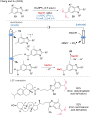
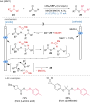
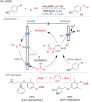
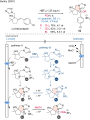
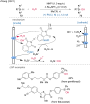
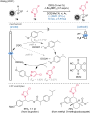
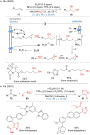
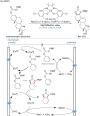
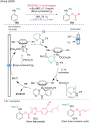
- have been developed, the combination of electrochemistry with organocatalysis is generally less explored. In this context, Wang et al. combined organocatalysis and electrochemistry for the benzyl amination via C–H/N–H dehydrogenative cross-coupling of alkyl arenes with azoles [39]. According to the




























HFIP as a versatile solvent in resorcin[n]arene synthesis
Beilstein J. Org. Chem. 2024, 20, 2469–2475, doi:10.3762/bjoc.20.211
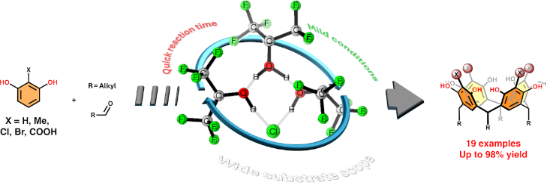
- ]. In contrast, the protocol reported herein provides 94–98% yield when employing longer chain-containing aldehydes (1c–e). In addition to resorcinol, 2-methylresorcinol is commonly used in resorcin[n]arene synthesis as radical oxidation of the methyl unit in the ArCH3 fragments provides a benzyl


Hypervalent iodine-mediated cyclization of bishomoallylamides to prolinols
Beilstein J. Org. Chem. 2024, 20, 2455–2460, doi:10.3762/bjoc.20.209
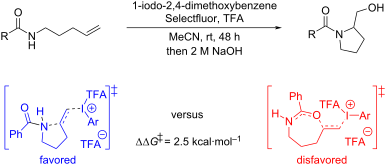
- and pivalamide 7j were formed in trace quantities whereas the benzyl derivative 7k was isolable. The enamide 7l was not observed. Intriguingly, cyclopropyl and cyclohexyl derivatives 7m and 7n, respectively, were formed and isolated in moderate yields. Furyl derivative 7o was isolated in 63% yield


Facile preparation of fluorine-containing 2,3-epoxypropanoates and their epoxy ring-opening reactions with various nucleophiles
Beilstein J. Org. Chem. 2024, 20, 2421–2433, doi:10.3762/bjoc.20.206
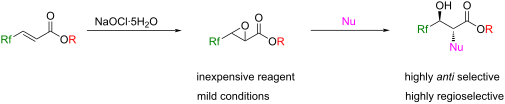
- detection of benzaldehyde which was considered to be formed by the NaClO-mediated oxidation of benzyl alcohol generated by hydrolysis. Changing the oxidizing reagent to crystalline NaClO·5H2O nicely solved the problem with the realization of 86% isolated yield of 2b by the utilization of this oxidant (2
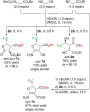
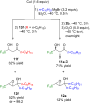
- the facile procedure presented here opens novel routes to the application of these intriguing products in a variety of fields. Experimental General procedure for the formation of the epoxyesters (GP-1): Benzyl (E)-2,3-epoxy-4,4,4-trifluorobutanoate (2b) GP-1A (by use of aqueous NaClO): To a solution
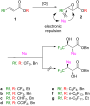
- C11H9F3O3: C, 53.67; H, 3.68; found: C, 53.54; H, 3.89. General procedure for the ring opening of epoxides (GP-2). Benzyl 2,3-anti-4,4,4-trifluoro-3-hydroxy-2-(p-methoxyphenyl)amino-butanoate (3ba) p-Anisidine (0.07 g, 0.60 mmol) was added to an EtOH (3 mL) solution of compound 2b (0.12 g, 0.50 mmol), and





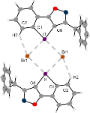
Evaluating the halogen bonding strength of a iodoloisoxazolium(III) salt
Beilstein J. Org. Chem. 2024, 20, 2401–2407, doi:10.3762/bjoc.20.204
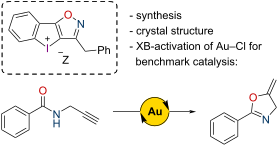
- it with our known iodonium species in the activation of Au(I)–Cl bonds. Results and Discussion As immediate precursor to the target structure 7Z, the literature-known isoxazole 10 was synthesized via a Cu(I)-catalyzed cycloaddition between (2-iodophenyl)acetylene (8) and benzyl nitrile oxide, which




Efficient one-step synthesis of diarylacetic acids by electrochemical direct carboxylation of diarylmethanol compounds in DMSO
Beilstein J. Org. Chem. 2024, 20, 2392–2400, doi:10.3762/bjoc.20.203
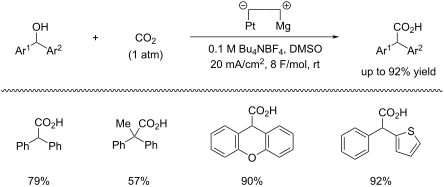
- dioxide; Introduction Electrochemical reduction of benzyl alcohol derivatives can induce reductive cleavage of a C(sp3)–O bond [1] at the benzylic position to generate the corresponding benzylic anion species. This protocol has been frequently applied to electrochemical carboxylation [2][3][4][5][6][7][8
- ][9][10][11], yielding phenylacetic acids. For example, Troupel et al. successfully performed electrochemical reduction of benzyl ethers and several esters such as acetate, trifluoroacetate, benzoate, and dibenzyl carbonate derived from benzyl alcohols, including 1-phenylethanol compounds, in the
- presence of carbon dioxide to give the corresponding phenylacetic acids [12]. We found that alkyl benzyl carbonates and benzal diacetates (benzylidene diacetates) were also applicable to electrochemical carboxylation with C(sp3)–O bond cleavage at the benzylic position, yielding phenylacetic acids [13] and


Asymmetric organocatalytic synthesis of chiral homoallylic amines
Beilstein J. Org. Chem. 2024, 20, 2349–2377, doi:10.3762/bjoc.20.201
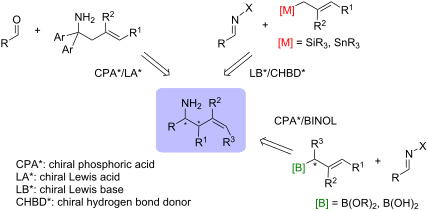
- new methodology used bench-stable allyl-1,3,2-dioxaborinane (27) in the reaction with preformed crude N-aryl-, N-benzyl- and N-allylimines in the presence of 2–8 mol % of the relatively simple 3,3’-Ph2-BINOL catalyst 3 at 50 °C in a microwave reactor at 10 W irradiation for 1 hour to afford amines 26
- . Therefore, it was conducted under an inert atmosphere in anhydrous dichloromethane with 3 Å molecular sieves. Benzyl carbamates 48 showed excellent enantioselectivities (90–97%) and moderate to high yields (58–94%) across a wide range of allylation reagents 49 on a submillimolar scale, including 2
- , creating the desired syn-(2R,3S)-homoallylic amine 120 in high diastereo- and enantioselectivity. The reaction was tested with various aryl, benzyl, allyl, and alkyl-functionalised β-formyl N-morpholinyl amides 119; the amide function was also varied. Yields were scattered across the 31–90% range, with the








Stereoselective mechanochemical synthesis of thiomalonate Michael adducts via iminium catalysis by chiral primary amines
Beilstein J. Org. Chem. 2024, 20, 2313–2322, doi:10.3762/bjoc.20.198
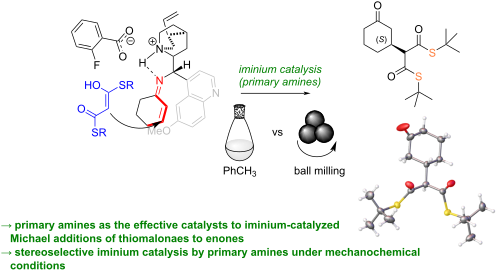
- time of two days under a pressure of 0.8 GPa [23]. Less reactive benzyl malonates, which allow for the cleavage of a free carboxylic group without the need for harsh base- or acid-mediated conditions [24], undergo additions catalyzed by primary amines [19]. However, these transformations are hampered
- low conversions and stereoselectivities when applied to benzylidene acetones or cyclic enones (vide infra). In our latest research in establishing a mild organocatalytic protocol for incorporating benzyl malonates and bisthiomalonates into cyclic enones and benzylidene acetones, we have developed a


Catalysing (organo-)catalysis: Trends in the application of machine learning to enantioselective organocatalysis
Beilstein J. Org. Chem. 2024, 20, 2280–2304, doi:10.3762/bjoc.20.196
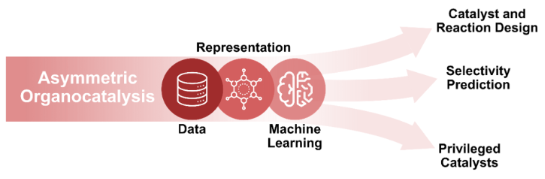
- enantioselectivities of a kinetic resolution of benzyl alcohols and an enantiodivergent fluorination of allylic alcohols, observing good correlations for both reactions. Since then, the proposed NCI descriptors have been successfully applied to multiple different reactions, such as an allenoate Claisen rearrangement
- , Chen and Pollice proposed Pint as a descriptor of the London dispersion potential that is universal and can be calculated without a probe system [94]. Although Pint has not been utilised for organocatalysis, the authors applied it to a Pd-metal-catalysed enantioselective 1,1-diarylation of benzyl




Deuterated reagents in multicomponent reactions to afford deuterium-labeled products
Beilstein J. Org. Chem. 2024, 20, 2270–2279, doi:10.3762/bjoc.20.195
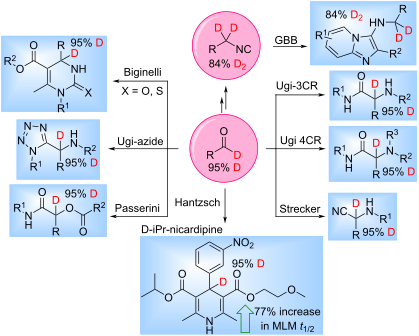
- [D3]-formamide. The ability to deuterate at benzylic positions is particularly relevant as benzylic C–H bonds are common in biologically relevant chemotypes and moreover appear in approximately 25% of the top selling 200 pharmaceuticals [23]. Benzyl cation stability is a driver of metabolism at these


Metal-free double azide addition to strained alkynes of an octadehydrodibenzo[12]annulene derivative with electron-withdrawing substituents
Beilstein J. Org. Chem. 2024, 20, 2234–2241, doi:10.3762/bjoc.20.191
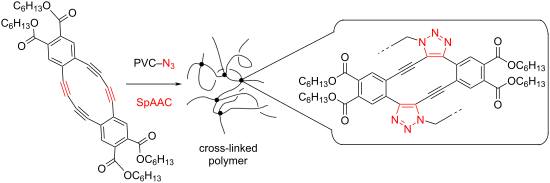
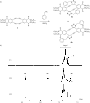
- was outside the scope of this study. Next, DBA 5 was subjected to the SpAAC with benzyl azide. When two equivalents of benzyl azide were added to a solution of 5 in CDCl3 at a controlled temperature of 30 °C, the reaction slowly proceeded (Figure 2). After 22 h, the original peak ascribed to starting
- followed a second-order reaction. Since no monoadducts were formed, the rate-determining step is the first azide addition. Based on this fact, the activation energy (Ea) of the reaction between 5 and benzyl azide in CDCl3, determined by the Arrhenius plots, was 60.9 kJ mol−1 (Figure 3). This value was
- apparently smaller than those previously reported for the reaction between DBA-OHex and benzyl azide (Table S1 in Supporting Information File 1). However, the Ea values were previously measured in DMSO-d6 and C6D6, and it is known that there is a solvent polarity effect on the reactivity of SpAACs. In order




Selective hydrolysis of α-oxo ketene N,S-acetals in water: switchable aqueous synthesis of β-keto thioesters and β-keto amides
Beilstein J. Org. Chem. 2024, 20, 2225–2233, doi:10.3762/bjoc.20.190
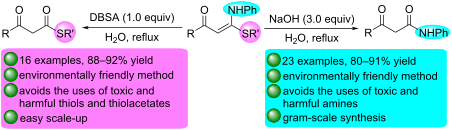
- well as electron-withdrawing substituents on the two phenyl rings in compounds 1, such as methyl, methoxy, halogen atoms (F, Cl, Br, I), CF3 and SO2CH3, were well tolerated, and their electronic effects insignificantly impacted the formation of 3. Similarly, N-benzyl-3-oxo-3-phenylpropanamide (3w



Electrochemical allylations in a deep eutectic solvent
Beilstein J. Org. Chem. 2024, 20, 2217–2224, doi:10.3762/bjoc.20.189
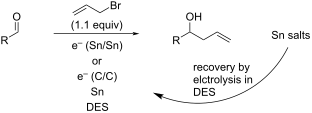
- more substituted end (gamma addition) was the major product in both cases, although alpha addition was also observed. In the case of crotyl bromide, no diastereoselectivity was noted for the gamma product. Non-allylic halides such as benzyl bromide, propargyl bromide, and ethyl bromoacetate (Table 3
- , entries 5–7) did not result in carbonyl addition. The benzyl bromide was recovered intact, while for the other two, they are both sufficiently volatile that they would have been lost during the work-up. For all three, the aldehyde was recovered unreacted. While the use of DES as solvent and electrolyte

Efficacy of radical reactions of isocyanides with heteroatom radicals in organic synthesis
Beilstein J. Org. Chem. 2024, 20, 2114–2128, doi:10.3762/bjoc.20.182
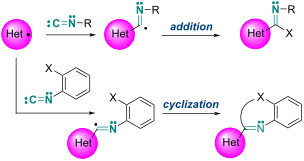
- yields. In the case of tert-butyl and benzyl isocyanides, the substituents on the nitrogen of imidoyl radical 2 (R = t-Bu or PhCH2, E = Et2P or Ph2P) were eliminated to give cyanophosphines (R’2P–CN, Scheme 7) [38]. On the other hand, we attempted a photoinduced addition of phosphorus–phosphorus


From perfluoroalkyl aryl sulfoxides to ortho thioethers
Beilstein J. Org. Chem. 2024, 20, 2108–2113, doi:10.3762/bjoc.20.181
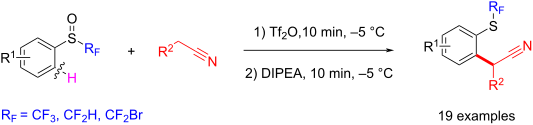
- using a series of nitriles with the sulfoxide 1a (Scheme 3). We noticed that the length of the alkyl chain has no impact on the yield (3a,b). However, the use of benzyl cyanide is completely deleterious for the reaction as no product was observed (3c). The presence of a chlorine atom at the alpha



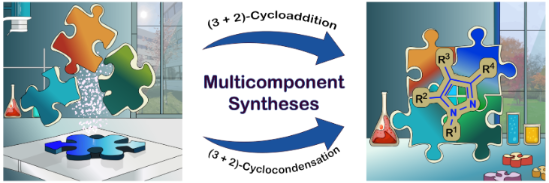
Multicomponent syntheses of pyrazoles via (3 + 2)-cyclocondensation and (3 + 2)-cycloaddition key steps
Beilstein J. Org. Chem. 2024, 20, 2024–2077, doi:10.3762/bjoc.20.178