Search results
Search for "decomposition" in Full Text gives 825 result(s) in Beilstein Journal of Organic Chemistry. Showing first 200.
Synthesis of benzo[f]quinazoline-1,3(2H,4H)-diones
Beilstein J. Org. Chem. 2024, 20, 2708–2719, doi:10.3762/bjoc.20.228
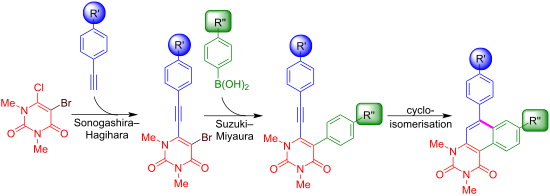
- respective cyclisation product. Hence, the application of the reaction conditions to starting materials 4b, 4c and 4e resulted in the decomposition of the starting materials and no product could be isolated. The employment of heterocyclic benzothiophene gave a very good yield of 80% for product 5i. Optical




Efficient modification of peroxydisulfate oxidation reactions of nitrogen-containing heterocycles 6-methyluracil and pyridine
Beilstein J. Org. Chem. 2024, 20, 2599–2607, doi:10.3762/bjoc.20.219
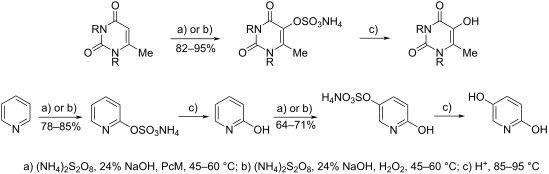
- − ion, which is formed by the non-radical decomposition of the peroxydisulfate ion in a strongly alkaline medium [34]: The Elbs and Boyland–Sims reactions were also effectively modified by the use of H2O2 as a co-oxidant (binary oxidation mixture APS/H2O2). Adding 2.0–2.3 equiv of H2O2 (Table 3) [35
- peroxydisulfate ion, leading to the production of oxygen [39]: Oxygen accumulation is additionally achieved by hydrogen peroxide self-decay, which is known to be increased in alkaline conditions [40]: Additionally, it has been reported [41] that hydroxyl radicals, produced from the decomposition of H2O2, can


Transition-metal-free synthesis of arylboronates via thermal generation of aryl radicals from triarylbismuthines in air
Beilstein J. Org. Chem. 2024, 20, 2577–2584, doi:10.3762/bjoc.20.216
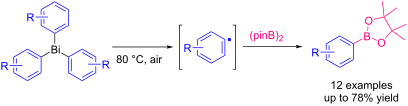
- somewhat difficult due to strong adsorption or decomposition on silica gel. Since some arylboronates are somewhat unstable, it is desirable to synthesize such compounds and then use them in a one-pot manner for the following reactions without isolation. To gain insight into the reaction pathways, several
- 1) was analyzed by 11B NMR measurement. It was noteworthy that diboron 2 was reactive with air under the reaction conditions, and the decomposition of 2 to form pinB–O–Bpin and pinB–OH was confirmed. The decomposition was also occurred by heating the solution of diboron 2 in BTF in air; however, in
- the presence of TEMPO, the decomposition of 2 was sightly occurred, and almost all of 2 was recovered (see Supporting Information File 1). Based on the results, diboron 2 could also be activated via the thermal homolysis of the B–B bond in the presence of oxygen (air). Based on the results of the



Anion-dependent ion-pairing assemblies of triazatriangulenium cation that interferes with stacking structures
Beilstein J. Org. Chem. 2024, 20, 2567–2576, doi:10.3762/bjoc.20.215
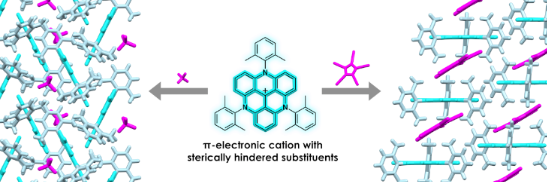
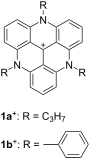
- S19 in Supporting Information File 1). Theoretically performed energy decomposition analysis (EDA) based on FMO2-MP2 using the basis set of NOSeC-V-DZP with MCP [37][38][39][40] for the anion and closely located 2+, as suggested by Hirshfeld surface analysis, revealed that short counteranion–TATA



Facile preparation of fluorine-containing 2,3-epoxypropanoates and their epoxy ring-opening reactions with various nucleophiles
Beilstein J. Org. Chem. 2024, 20, 2421–2433, doi:10.3762/bjoc.20.206
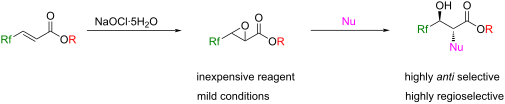
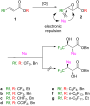
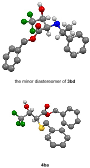
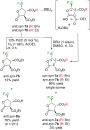
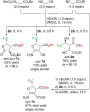
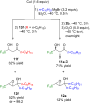
- ). The subjection of the compounds 1h and 1i to the standard conditions described above resulted in high recovery of the substrates, which could be explained by their higher LUMO + 1 energy levels responsible for the epoxidation [43]. Extensive decomposition was observed in the case of 1j even in a





Evaluating the halogen bonding strength of a iodoloisoxazolium(III) salt
Beilstein J. Org. Chem. 2024, 20, 2401–2407, doi:10.3762/bjoc.20.204
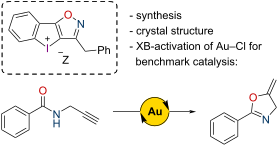
- ]. For all catalyst systems, decomposition of the −BArF24 anion was observed via 1H and 19F NMR spectroscopy, which is known to happen in the presence of activated gold complexes [29]. The stability of the DAI cations was checked with 1H NMR: the characteristic doublets belonging to the respective
- iodonium structures 1+, 2+, 3+, and 7+ were found to be constant (see Supporting Information File 1). The signals of the iodoxinium cation 4+ were overlapping with signals of the anion. However, the stability of 4+ (as well as of 2+) could be confirmed by 19F NMR measurements: no decomposition of the




Tandem diazotization/cyclization approach for the synthesis of a fused 1,2,3-triazinone-furazan/furoxan heterocyclic system
Beilstein J. Org. Chem. 2024, 20, 2342–2348, doi:10.3762/bjoc.20.200
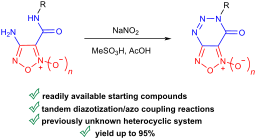
- obtained using NaNO2 in an AcOH + MeSO3H [1:1] solution (Table 1, entry 7). Organic solvents (CH2Cl2, MeCN) were not applied due to a known rapid decomposition of the generated (1,2,5-oxadiazolyl)diazonium salts [42]. The optimized conditions were applied for the preparation of [1,2,5]oxadiazolo[3,4-d


Hydrogen-bond activation enables aziridination of unactivated olefins with simple iminoiodinanes
Beilstein J. Org. Chem. 2024, 20, 2305–2312, doi:10.3762/bjoc.20.197
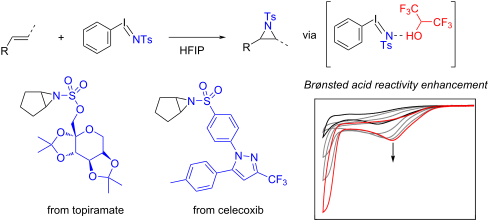
- with the stability of the relevant iminoiodinane reagent, with higher yields attributed to more electron-rich sulfonamide substitution such as 2a. Relatively electron-deficient iminoiodinanes are less efficient but are also more prone to decomposition (see Supporting Information File 1, Figure S2 for
- challenging iminoiodinanes). In situ preparation of the iminoiodinane intermediates is possible, and for those reagents that undergo facile decomposition, aziridination is more efficient using these conditions (yields for in situ-generated iminoiodinanes are in parentheses in Scheme 3, with N-o-methyl (6g


Catalysing (organo-)catalysis: Trends in the application of machine learning to enantioselective organocatalysis
Beilstein J. Org. Chem. 2024, 20, 2280–2304, doi:10.3762/bjoc.20.196
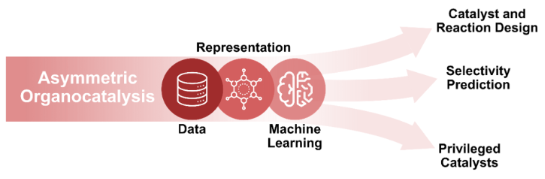
- [96] investigated a bromocyclization catalysed by a chiral phosphoric acid (CPA) and a DABCOnium brominating reagent (Figure 6). The authors calculated transition state conformer ensembles for several flexible DABCOnium systems and performed energy decomposition analysis to separate the interactions




Synthesis and reactivity of the di(9-anthryl)methyl radical
Beilstein J. Org. Chem. 2024, 20, 2254–2260, doi:10.3762/bjoc.20.193
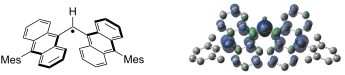
- dimerization in solution, the radical still remains even at 190 K due to the bulky nature of the two anthryl groups. Interestingly, upon exposure to air, the purple color of the radical solution quickly fades to orange, resulting in decomposition to give 9-anthryl aldehyde and anthroxyl radical derivatives
- radical. The unpaired electron is primarily located at the central sp2 carbon, a highly reactive site. The DAntM radical readily reacts with oxygen, leading to 1,2-dioxetane intermediate and decomposition to give anthryl aldehyde and a stable anthroxyl radical. Results and Discussion The synthetic route
- , indicating that the high reactivity of the central sp2 carbon. To evaluate the decomposition pathway, the decomposed materials were characterized. Surprisingly, the major compound detected by 1H NMR measurement of the crude material was compound 1, along with di(10-mesityl-9-anthryl)methane (4) as a minor


Efficacy of radical reactions of isocyanides with heteroatom radicals in organic synthesis
Beilstein J. Org. Chem. 2024, 20, 2114–2128, doi:10.3762/bjoc.20.182
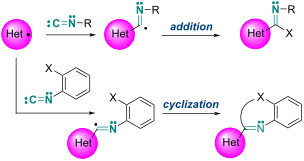
- aware of resource recycling, and promote the use of natural energy [16]. The following three methods are generally used to generate heteroatom radicals (E•) (Scheme 1). In method 1, E• is generated by hydrogen abstraction from E–H by cyanoisopropyl radicals generated by thermal decomposition of 2,2
- a pioneering study, Ito and Saegusa et al. reported the radical addition of thiols to isocyanides (Scheme 2) [27]. Thermal decomposition of AIBN as a radical initiator generates the 2-cyano-2-propyl radical ((NC)(CH3)2C•), which abstracts hydrogen from the thiol (R’SH) to form the thiyl radical (R’S
- yields the sequential addition products 9 in moderate to excellent yields (Scheme 5) [33]. The product can be used as a precursor for the carbapenem scaffold, one of the basic scaffolds of antibiotics. Thermal or photoirradiated decomposition of organotellurium compounds generates carbon radicals that


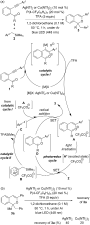
Development of a flow photochemical process for a π-Lewis acidic metal-catalyzed cyclization/radical addition sequence: in situ-generated 2-benzopyrylium as photoredox catalyst and reactive intermediate
Beilstein J. Org. Chem. 2024, 20, 1973–1980, doi:10.3762/bjoc.20.173
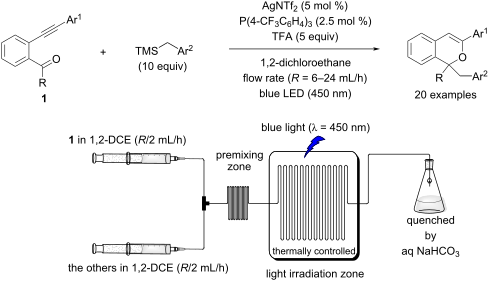
- continues to flow and the reaction can be quenched immediately when necessary, the decomposition of an unstable product under the reaction conditions can be avoided [22][23][24][25]. Furthermore, when a photoreaction is performed in a flow system, there is an advantage that the light irradiation efficiency


Access to 2-oxoazetidine-3-carboxylic acid derivatives via thermal microwave-assisted Wolff rearrangement of 3-diazotetramic acids in the presence of nucleophiles
Beilstein J. Org. Chem. 2024, 20, 1894–1899, doi:10.3762/bjoc.20.164

- -oxoazetidine-3-carboxylic acid derivatives based on the thermally promoted Wolff rearrangement of diazotetramic acids. Results and Discussion Diazotetramic acid derivatives 1 are available in a wide variety using the techniques described previously [32]. The conditions for their thermal decomposition were


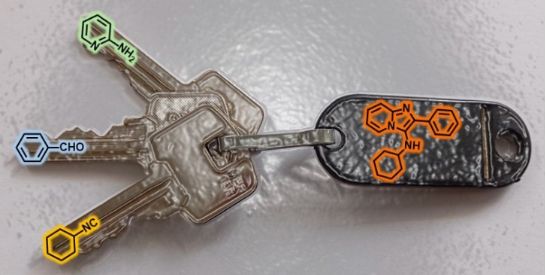
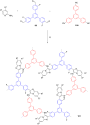
The Groebke–Blackburn–Bienaymé reaction in its maturity: innovation and improvements since its 21st birthday (2019–2023)
Beilstein J. Org. Chem. 2024, 20, 1839–1879, doi:10.3762/bjoc.20.162






Oxidative fluorination with Selectfluor: A convenient procedure for preparing hypervalent iodine(V) fluorides
Beilstein J. Org. Chem. 2024, 20, 1785–1793, doi:10.3762/bjoc.20.157
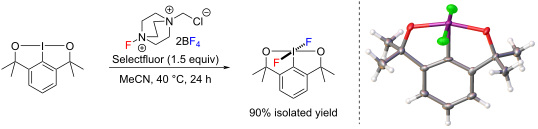
- iodine(I) precursor 8 (Table 1). Reacting 8 with 4 equivalents of trichloroisocyanuric acid (TCCA) and 6 equivalents of potassium fluoride in dry acetonitrile at 40 °C for 48 hours formed difluoroiodane 6 in a 90% spectroscopic yield (Table 1, entry 1). An iodosyl decomposition product 9 was also formed
- fluorinating reagent (Table 1, entry 5). When 8 was reacted with 4 equivalents of freeze-dried Selectfluor in dry acetonitrile at 40 °C for 48 hours, difluoroiodane 6 was formed in 85% spectroscopic yield. However, the iodosyl decomposition product 9 was also produced in 15% spectroscopic yield, despite
- rate of decomposition was reduced significantly (green line in Figure 3). The hydrolysis of the four hypervalent iodine(V) fluorides was also investigated in acetonitrile-d3 by adding 5 equivalents of water. All four compounds decomposed to their corresponding iodosyl compounds and the order of


A fiber-optic spectroscopic setup for isomerization quantum yield determination
Beilstein J. Org. Chem. 2024, 20, 1684–1692, doi:10.3762/bjoc.20.150
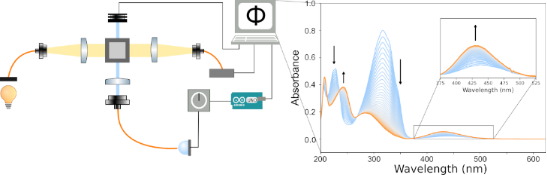
- kinetic model describing the components and the non-negativity constraint on the absorbance, can help to guide the decomposition of the data into chemically meaningful concentration traces and species-associated spectra (SAS) [38]. Global and target analysis is one of the methods employed in recent


Oxidation of benzylic alcohols to carbonyls using N-heterocyclic stabilized λ3-iodanes
Beilstein J. Org. Chem. 2024, 20, 1677–1683, doi:10.3762/bjoc.20.149
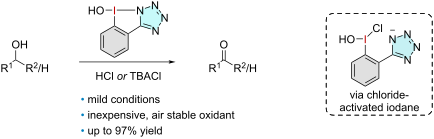
- decomposition for thiophenylmethanol 3y. Regarding the reaction mechanism, two plausible pathways can be discussed based on literature examples (Scheme 1, path a [17] and path b [33]). In either path, initial ligand exchange to the hydroxy(chloro)iodane I-OH is proposed. For getting an indication of a chloride




New triazinephosphonate dopants for Nafion proton exchange membranes (PEM)
Beilstein J. Org. Chem. 2024, 20, 1623–1634, doi:10.3762/bjoc.20.145
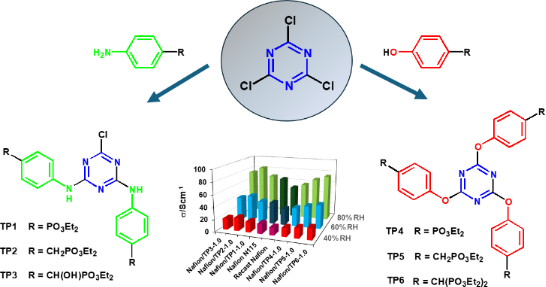
- , purification of the crude product by column chromatography led to the decomposition of compound TP7. Another strategy was devised to obtain the desired triazinephosphonate TP7: The first step was the nucleophilic substitution of the chlorine atoms of triazine 1 by 4-hydroxybenzaldehyde (12), followed by the


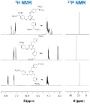


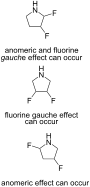
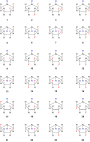
Regio- and stereochemical stability induced by anomeric and gauche effects in difluorinated pyrrolidines
Beilstein J. Org. Chem. 2024, 20, 1572–1579, doi:10.3762/bjoc.20.140
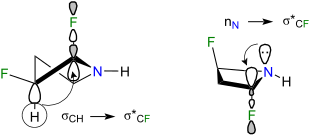
- both C–F bonds in 17 and 19 enabled an additional σCH→σ*CF interaction, rather than the negligible σCF→σ*CF electron delocalization that would occur if these bonds were vicinally antiperiplanar. As discerned from the decomposition of the full electronic energy into Lewis (e.g., steric effects) and non





Electrocatalytic hydrogenation of cyanoarenes, nitroarenes, quinolines, and pyridines under mild conditions with a proton-exchange membrane reactor
Beilstein J. Org. Chem. 2024, 20, 1560–1571, doi:10.3762/bjoc.20.139
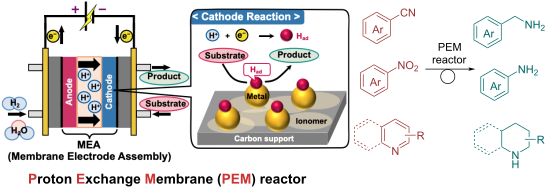
- decomposition of the substrates, and the desired products were not obtained. This system can be applied to large-scale syntheses. A similar yield of 7a was obtained when the reaction was scaled up (Scheme 5a). The electrolysis of 2.32 g of 6a gave 2.12 g of 7a (88% yield). Next, we examined the electroreduction


Benzylic C(sp3)–H fluorination
Beilstein J. Org. Chem. 2024, 20, 1527–1547, doi:10.3762/bjoc.20.137

- fragility of secondary and tertiary benzyl fluorides, as they observe elimination and hydrolysis in many cases [20][100], thereby raising question marks over their suitability as synthetic targets. Monofluorinated methyl arenes, however, are much more stable to these decomposition pathways. The nucleophilic
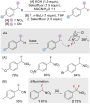
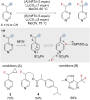
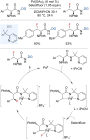
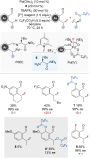
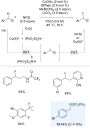
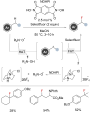
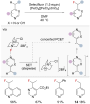
- -oxidation and decomposition to improve the reaction efficiency overall. Conclusion The fluorination of benzylic C(sp3)–H bonds provides rapid access to an important functional group used in medicinal chemistry to control the pharmacokinetic profile of drug candidates. Historical and recent research efforts



















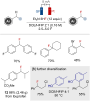
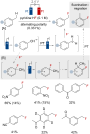

Tetrabutylammonium iodide-catalyzed oxidative α-azidation of β-ketocarbonyl compounds using sodium azide
Beilstein J. Org. Chem. 2024, 20, 1510–1517, doi:10.3762/bjoc.20.135
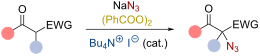
- decomposition and also some decarboxylation during column chromatography or upon prolonged reaction times. Also, tests with analogous β-ketoketones and β-ketoamides (compare with azidation products 5 and 6, Scheme 3) did not give any products but resulted in the formation of a variety of unidentified side


Synthesis and physical properties of tunable aryl alkyl ionic liquids based on 1-aryl-4,5-dimethylimidazolium cations
Beilstein J. Org. Chem. 2024, 20, 1278–1285, doi:10.3762/bjoc.20.110
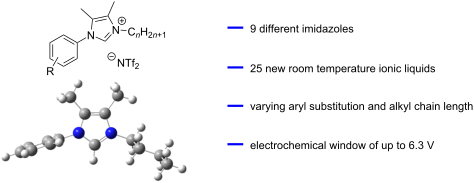
- -term thermal stability was investigated using ramped temperature analysis. The thermal decomposition temperatures (Table 1) for the ILs with the NTf2 anion are in the range from 266 °C (IL 59) to 409 °C (IL 37). In general, most ionic liquids with a butyl chain show higher decomposition temperatures
- than their counterparts with octyl or dodecyl chain. An increase in alkyl chain length from octyl to dodecyl, however, does not necessarily lead to a lower thermal stability. With decomposition temperatures of up to 409 °C (IL 37), the 1-aryl-4,5-dimethyl TAAILs can be described as ILs with a
- start at 0 V. Structures of the imidazolium cations obtained by DFT calculations (B3LYP/6-311++G (d,p)). The electrostatic potentials are indicated by color (blue: positive; red: negative). Overview of the synthesis of compounds 1–63. Thermal decomposition point at 5% mass loss in °C for NTf2− TAAILs 37


Synthesis of indano[60]fullerene thioketone and its application in organic solar cells
Beilstein J. Org. Chem. 2024, 20, 1270–1277, doi:10.3762/bjoc.20.109
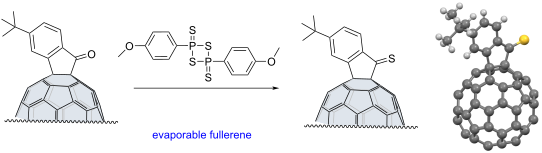
- was analyzed by HPLC to check for thermal decomposition during vacuum deposition. The t-Bu-FIDS structure remained almost unchanged, but very small amounts of two decomposed products were found at retention times of 7.5 min and 12.5 min. The latter decomposed product is C60, judged from the retention


Mechanistic investigations of polyaza[7]helicene in photoredox and energy transfer catalysis
Beilstein J. Org. Chem. 2024, 20, 1236–1245, doi:10.3762/bjoc.20.106
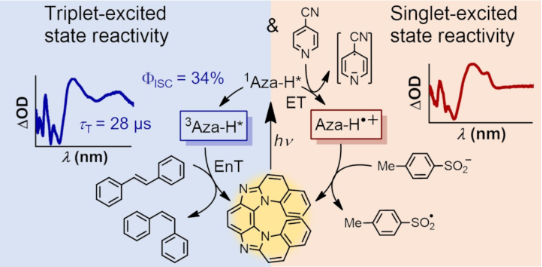
- solutions. However, these studies might be important for explaining reactivity changes when Aza-H is employed in photoreactions requiring or releasing Brønsted acids. During the 3-CR experiment, we observed a decomposition of the catalyst that occurred faster than in the absence of any additives (see
- , Supporting Information File 1) [76]. A reaction course plot in the absence of 4CP and TsNa revealed rapid decomposition of the photocatalyst, presumably in a [2 + 2]-photocycloaddition with the styrene component as observed in mass spectrometry (see Figure S17 and Figure S18 in Supporting Information File 1
- species in a three-component sulfonylation/arylation reaction, whereas the unexplored triplet state is responsible for the decomposition of the photocatalyst. Photoinduced radical cation formation and thermal regeneration could be unambiguously observed, providing deep mechanistic insights into the