Search results
Search for "X-ray" in Full Text gives 1345 result(s) in Beilstein Journal of Organic Chemistry. Showing first 200.
Vinylogous functionalization of 4-alkylidene-5-aminopyrazoles with methyl trifluoropyruvates
Beilstein J. Org. Chem. 2025, 21, 533–540, doi:10.3762/bjoc.21.41
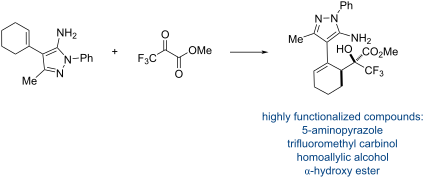
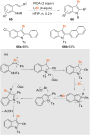
- to determine the role of the squaramide. The relative configuration of the stereogenic centres in compound 5aca was determined by X-ray crystallographic analysis (Scheme 3) [33]; the relative configurations of the other compounds 5 were assigned on the assumption of a uniform mechanistic pathway
- chromatography. Diastereoisomeric ratio (dr) determined by 1H NMR of the crude reaction mixture. Plausible mechanism and X-ray structure of compound 5aca. Optimization of the reaction conditions.a Supporting Information Supporting Information File 14: Detailed experimental procedures, characterization data, and
- copies of 1H NMR and 13C NMR spectra. Acknowledgements Access to NMR, MS, and X-ray facilities from the Servei Central de Suport a la Investigació Experimental (SCSIE)-UV and the NMR U26 facility of ICTS “NANBIOSIS” is acknowledged. Funding L.C.-F. thanks the Universitat de València for a predoctoral



Cryptophycin unit B analogues
Beilstein J. Org. Chem. 2025, 21, 526–532, doi:10.3762/bjoc.21.40
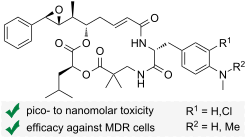
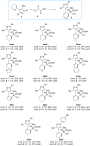
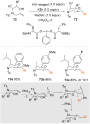
- control of equivalents and pH, or Leuckart–Wallach-like reaction with ammonium formate and Pd/C [25] provided monomethylaniline 7 in 37% and 35% yield, respectively. The absolute structure of monomethylaniline 7 was confirmed by single-crystal X-ray diffraction measurements (Figure 2). Compound 7
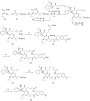
- conjugation handles in unit B. IC50 values given against (a) CCRF-CEM [20] and (b) KB-3-1 [21] cell lines. C: Cryptophycin-52 derivatives synthesised in this work. Molecular structure of Boc-ᴅ-Phe(4-NHMe)-OMe 7 as determined by single-crystal X-ray diffraction measurements. Thermal ellipsoids depicted at 50



Deep-blue emitting 9,10-bis(perfluorobenzyl)anthracene
Beilstein J. Org. Chem. 2025, 21, 515–525, doi:10.3762/bjoc.21.39
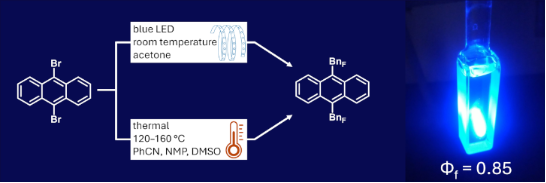
- photochemical reaction. Its structure was elucidated by NMR spectroscopy and single crystal X-ray diffractometry. The latter revealed no π–π interaction between neighboring ANTH cores. A combination of high photoluminescence quantum yield (PLQY) of 0.85 for 9,10-ANTH(BnF)2, its significantly improved
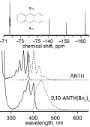
- ratio was found to be 1.74 (theoretical = 1.75), confirming the composition to be ANTH(BnF)2. Slow evaporation of a CH2Cl2 solution of 9,10-ANTH(BnF)2 at 2 °C afforded off-white plates suitable for X-ray diffraction. The structure shown in Figure 2 (top panel) confirmed the 9,10-substitution pattern
- concentrations used for ANTH, 9,10-ANTH(BnF)2, and quinine sulfate were 1.89, 1.14, and 1.94 (10−5 M), respectively. Relative quantum yields were calculated using the following equation referenced to quinine sulfate (Φf = 0.55 in 0.1 M H2SO4): X-ray crystallography The diffraction-quality single crystals of 9





Unprecedented visible light-initiated topochemical [2 + 2] cycloaddition in a functionalized bimane dye
Beilstein J. Org. Chem. 2025, 21, 500–509, doi:10.3762/bjoc.21.37
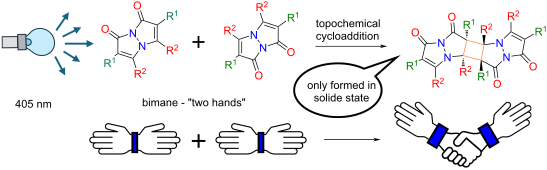
- promising strategy for synthesizing substituted cyclobutanes without the need for ultraviolet irradiation. Keywords: bimane; [2 + 2] cycloaddition; fluorescence; topochemical polymerization; X-ray crystallography; Introduction Topochemical polymerizations refer to polymerization reactions occurring in the
- Figure 2b. We hypothesized that this reaction occurred in the solid state, and further investigations confirmed this. To validate our findings, we employed single-crystal X-ray diffraction, which revealed the packing mode in the crystal and identified any photoproducts formed. Two additional compounds
- included two additional bimane samples, Me2B and Me4B. These samples were crystallized from a MeOH–DCM 1:1 (v/v) mixture which was left to slowly evaporate over the course of several days at room temperature, followed by single-crystal X-ray diffraction to determine their structure (Figure 4) and crystal


Synthesis of N-acetyl diazocine derivatives via cross-coupling reaction
Beilstein J. Org. Chem. 2025, 21, 490–499, doi:10.3762/bjoc.21.36
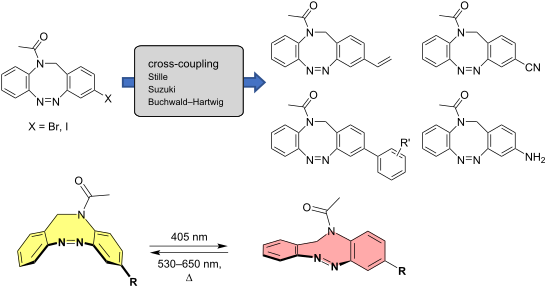
- -substituted diazocines were prepared via Stille, Suzuki, and Buchwald–Hartwig reactions. X-ray structures are presented for derivatives 1, 2 and 7. Keywords: cross-coupling; diazocine; N-acetyl diazocine; photoisomerization; photoswitch; thermal relaxation; Introduction Diazocines are frequently used
- /data_request/cif. Cambridge CB2 1EZ, UK; fax: +44 1223 336033. Supporting Information File 14: Synthetic procedures, UV–vis and NMR switching experiments, copies of UV–vis and NMR spectra, and X-ray crystallographic data. Funding The authors thankfully acknowledge financial support by the Deutsche


Photomechanochemistry: harnessing mechanical forces to enhance photochemical reactions
Beilstein J. Org. Chem. 2025, 21, 458–472, doi:10.3762/bjoc.21.33

- technique for high-throughput experimentation [83]. A further area of development would be the possibility of integrating options for the in-situ monitoring of reactions, such as X-ray and Raman techniques [47][48][84][85][86][87]. In conclusion, in recognizing that both photochemistry and mechanochemistry




Electrochemical synthesis of cyclic biaryl λ3-bromanes from 2,2’-dibromobiphenyls
Beilstein J. Org. Chem. 2025, 21, 451–457, doi:10.3762/bjoc.21.32
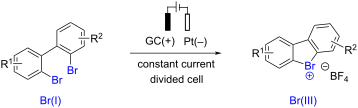
- extractive workup followed by reversed-phase chromatography and its structure was unambiguously confirmed by X-ray crystallography (Table 1, graphic). Gratifyingly, a two-fold increase in the yield was achieved by a slight reduction of the current density to j = 8 mA·cm−2 (entry 2 vs entry 1 in Table 1). A
- Cambridge Crystallographic Data Centre and allocated the deposition number CCDC 2404146. Supporting Information File 6: Experimental procedures, analytical and spectroscopic data for new compounds, copies of NMR spectra, and X-ray crystallographic data. Acknowledgements The authors thank Dr. Sergey
- Belyakov from the Latvian Institute of Organic Synthesis (LIOS) for X-ray crystallographic analysis. We also thank Prof. Edgars Suna (LIOS) for helpful discussions and assistance in preparing the manuscript. Funding This work was financially supported by Latvian Science Council grant LZP-2021/1-0595.


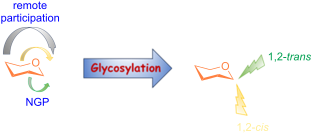
The effect of neighbouring group participation and possible long range remote group participation in O-glycosylation
Beilstein J. Org. Chem. 2025, 21, 369–406, doi:10.3762/bjoc.21.27




Synthesis, structure, ionochromic and cytotoxic properties of new 2-(indolin-2-yl)-1,3-tropolones
Beilstein J. Org. Chem. 2025, 21, 358–368, doi:10.3762/bjoc.21.26
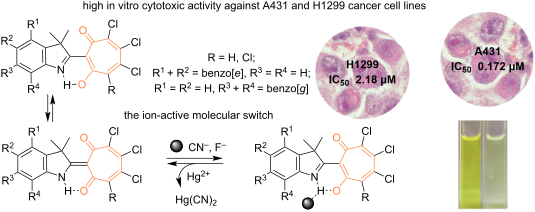
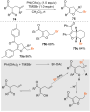
- determined. The structure of 2-(3,3-dimethyl-3H-benzo[g]indolin-2-yl)-5,6,7-trichloro-1,3-tropolone was determined by X-ray diffraction analysis. The compounds obtained are capable of switching emission at 420–440 nm and 476–530 nm upon successive exposure to CN− and Hg2+ ions in an acetonitrile solution. 2
- -(1,1-Dimethyl-1H-benzo[e]indolin-2-yl)-5,6,7-trichloro-1,3-tropolone exhibited high in vitro cytotoxic activity against A431 skin cancer and H1299 lung cancer cell lines. Keywords: cytotoxic activity; fluorescence; o-chloranil; quantum chemical DFT calculations; 1,3-tropolones; X-ray diffraction
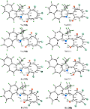
- reaction of o-chloranil with benzoannelated derivatives of 2,3,3-trimethylindolenine, a comprehensive evaluation of the structure of the compounds obtained using quantum chemical methods, X-ray diffraction analysis, two-dimensional correlation NMR spectroscopy, as well as investigation of their ionochromic




Synthesis of new condensed naphthoquinone, pyran and pyrimidine furancarboxylates
Beilstein J. Org. Chem. 2025, 21, 340–347, doi:10.3762/bjoc.21.24
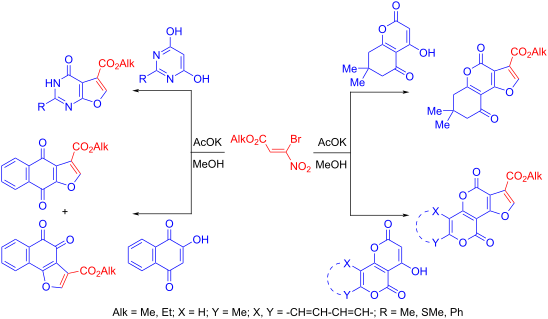
- of the synthesized compounds were proven by a set of physicochemical methods, including X-ray diffraction analysis. Keywords: CH-acids; 1-halo-1-nitroethenes; heterocyclization; nitroacrylates; X-ray diffraction analysis; Introduction The combination of the furan ring with various carbo- and
- case of 2e) or alcohol (in the case of 2f,g) solution for 1–3 h (ratio of acrylate/CH-acid/AcOK = 1:1:1.5) with a yield of 43–64% (Scheme 7). The structures of the obtained condensed furans 3–7 were characterized by a set of physicochemical methods, including X-ray diffraction analysis. Analysis of the
- frequency values (1725–1731 cm−1). This observation may be due to the position of the ester fragment relative to the heterocyclic system. The analysis of the results of X-ray diffraction analysis shows that the torsion angle C(10)–C(3)–C(16)–O(17) of methyl esters 5a and 6c is −0.8(2), and 5(2)°, and of


Molecular diversity of the reactions of MBH carbonates of isatins and various nucleophiles
Beilstein J. Org. Chem. 2025, 21, 286–295, doi:10.3762/bjoc.21.21
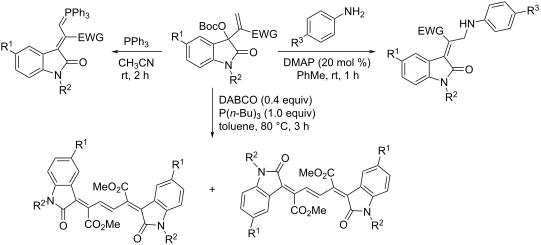
- yields. The single crystal structure of the compound 6e was determined by X-ray diffraction (Figure 3). The similar reaction of more nucleophilic tri(tert-butyl)phosphine and MBH carbonate of isatin resulted in a mixture of products. After carefully screening the reaction conditions, we found that DABCO
- triene derivatives can be prepared under relative mild reaction conditions with good steric selectivity. The single crystal structures of compounds 7a and 8a were successfully determined by X-ray diffraction method (Figure 4 and Figure 5). From the crystal structures, it can be found that the compound 7a



Synthesis and characterizations of highly luminescent 5-isopropoxybenzo[rst]pentaphene
Beilstein J. Org. Chem. 2025, 21, 270–276, doi:10.3762/bjoc.21.19
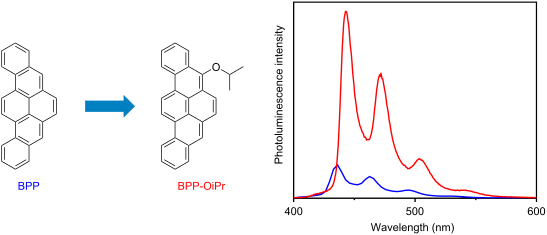
- -0495, Japan X-ray diffraction facility, Department of Chemistry, 100 E. 24th Street, The University of Texas at Austin, Austin, TX 78712, USA 10.3762/bjoc.21.19 Abstract A benzo[rst]pentaphene (BPP) substituted by an isopropoxy group (BPP-OiPr) was synthesized in a facile manner. Its photophysical
- literature. During our attempt to scale up the preparation of BPP 2 through the "DPEX" reaction, we unexpectedly obtained a 5-isopropoxy-substituted derivative of BPP (BPP-OiPr 3) (Scheme 1), whose structure was proven by NMR, mass spectrometry, and X-ray crystallography. In this work, we optimized the
- ferric chloride (FeCl3) gave BPP-dione 4 in 70% yield. The chemical structures of BPP-OiPr 3 and BPP-dione 4 were characterized by 1H and 13C NMR spectroscopy as well as mass spectrometry (see Supporting Information File 1, Figures S8–S11). A single crystal of BPP-OiPr 3 suitable for X-ray diffraction




Streamlined modular synthesis of saframycin substructure via copper-catalyzed three-component assembly and gold-promoted 6-endo cyclization
Beilstein J. Org. Chem. 2025, 21, 226–233, doi:10.3762/bjoc.21.14
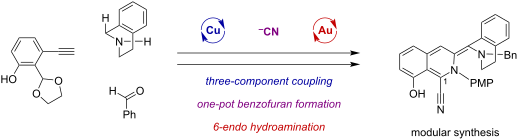
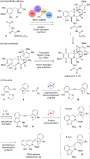
- structure of 16 was confirmed by serial X-ray crystallography using an X-ray free-electron laser (XFEL) [deposition number CCDC 2352718) [54][55]. We then performed a Strecker-type reaction on the aldehyde 16 to construct an α-aminonitrile 17. To our delight, the key intermediate, 2,3-diaminobenzofuran 11
- by small crystal analysis using an X-ray free-electron laser (XFEL) [54][55]. aSee Supporting Information File 1 for details. Supporting Information Supporting Information File 100: The experimental procedures and characterization data, including copies of NMR spectra and X-ray crystallographic




Heteroannulations of cyanoacetamide-based MCR scaffolds utilizing formamide
Beilstein J. Org. Chem. 2025, 21, 217–225, doi:10.3762/bjoc.21.13
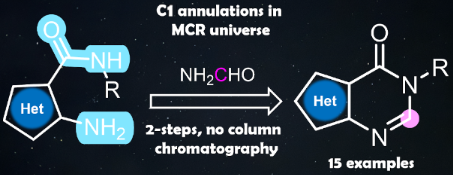
- specific MCR-based scaffolds as precursors and employing the abundant and inexpensive formamide as a C1 feedstock under neat conditions, we were able to efficiently access substituted thieno-, quinolino- and indolopyrimidones without the need of column chromatography. Further, a single-crystal X-ray




Hydrogen-bonded macrocycle-mediated dimerization for orthogonal supramolecular polymerization
Beilstein J. Org. Chem. 2025, 21, 179–188, doi:10.3762/bjoc.21.10
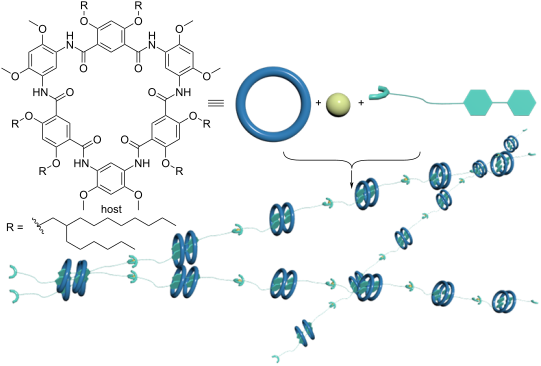
- effectively applied to form orthogonal supramolecular polymers. The macrocycle-mediated connectivity was confirmed by single-crystal X-ray diffraction, which revealed a unique 2:2 binding motif between host and guest, bridged by two cationic pyridinium end groups through π-stacking interactions and other
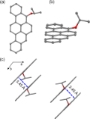
- 2444.3405, respectively. Stacked 1H NMR spectra (CDCl3/CD3CN 1:1, v/v, 400 MHz, 298 K) of G1 upon addition of different equiv of H1 ([G1] = 1.0⋅10−3 M). (a) 0.0 equiv, (b) 0.2 equiv, (c) 0.4 equiv, (d) 0.6 equiv, (e) 0.8 equiv, (f) 1.0 equiv, (g) 1.2 equiv, (h) 1.4 equiv, and (i) only H1. Single-crystal X
- -ray structure of the complex H2 ⊃ G1. a) Dimeric structure formed by cyclo[6]aramide H2 and cationic guest G1, with each guest molecule threading one molecule of H2 at its end. b) A portion of the dimeric structure showing an array of hydrogen bonding interactions between the amide oxygen atoms of H2



Synthesis, structure and π-expansion of tris(4,5-dehydro-2,3:6,7-dibenzotropone)
Beilstein J. Org. Chem. 2025, 21, 1–7, doi:10.3762/bjoc.21.1
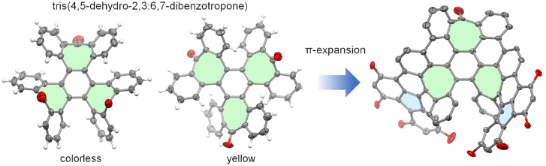
- analysis of it with X-ray crystallography. Interestingly, it is observed that tris(4,5-dehydro-2,3:6,7-dibenzotropone) crystallized from its solution in hexane resulting in colorless and yellow crystal polymorphs, where it adopts conformations of approximate Cs and C2 symmetry, respectively. Furthermore
- 1) featuring three heptagons and two pentagons, with its structure confirmed by X-ray crystallography. This π-expansion approach of compound 1 differs from the method reported by Müllen and co-workers, which involves Ramirez olefination and Suzuki coupling, resulting in the expansion of a seven
- Scholl reaction conditions. The structure of 3 was confirmed with single crystal X-ray crystallography, as detailed later. In addition, another product with a molecular ion peak of 1695.9115 in the high-resolution mass spectrum (Supporting Information File 1, Figure S6) was isolated in trace amounts


Synthesis, characterization, and photophysical properties of novel 9‑phenyl-9-phosphafluorene oxide derivatives
Beilstein J. Org. Chem. 2024, 20, 3299–3305, doi:10.3762/bjoc.20.274
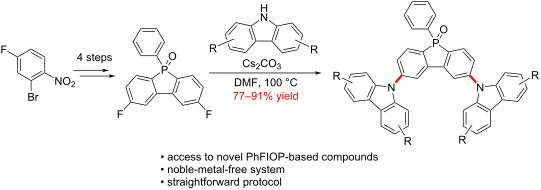
- HRMS spectrometry were in full agreement with the expected structures, and single-crystal X-ray diffraction analysis was conducted to confirm the structure of compound 7-H. Moreover, the photophysical properties of these PhFlOP derivatives were determined by UV–vis absorption and photoluminescence
- fully elucidated by single-crystal X-ray crystallography, which was performed on a Bruker APEX-II CCD diffractometer using graphite monochromated Mo Kα radiation at a temperature of 296 ± 2 K. Crystallographic data were deposited with the Cambridge Crystallographic Data Centre under accession number
- simple. The structure of 7-H was confirmed by single-crystal X-ray diffraction. Furthermore, UV–vis absorption and PL studies were carried out to explore the photophysical properties of these PhFlOP derivatives. Investigations for further applications of the PhFlOP-based emitters 7 are still ongoing. An




Reactivity of hypervalent iodine(III) reagents bearing a benzylamine with sulfenate salts
Beilstein J. Org. Chem. 2024, 20, 3281–3289, doi:10.3762/bjoc.20.272
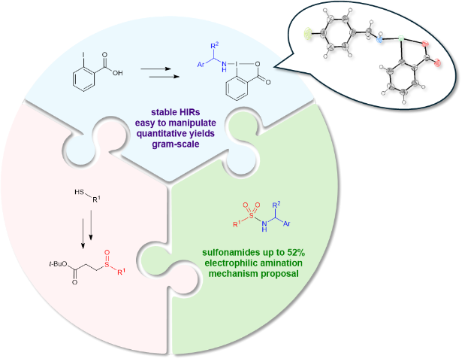
- benziodoxolone, 2d) were obtained with quantitative yields, as white solids on the gram-scale, easy to manipulate and long-term stable below 0 °C. Crystals of compound 2d were successfully obtained and its molecular structure was confirmed through single-crystal X-ray diffraction. The X-ray analysis revealed a
- the electrophilic amination of tert-butyl 3-(p-tolylsulfinyl)propanoate (4a) with BBX 2a (0.23 mmol of limitant in 2 mL of solvent). Supporting Information Supporting Information File 54: Experimental procedures, characterization data, NMR spectra, and X-ray diffraction data. Funding The authors
- /0124/2012 (X-ray Infrastructure), which was cofinanced by the ERDF under the PT2020 Partnership Agreement (POCI-01-0145-FEDER - 007265).



Efficient synthesis of fluorinated triphenylenes with enhanced arene–perfluoroarene interactions in columnar mesophases
Beilstein J. Org. Chem. 2024, 20, 3263–3273, doi:10.3762/bjoc.20.270
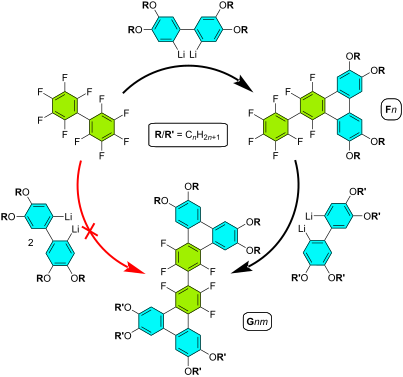
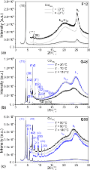
- methodologies. The mesomorphous properties of these two sets of compounds were investigated by polarized optical microscopy (POM), differential scanning calorimetry (DSC), and small-and wide-angle X-ray scattering (S/WAXS) and compared to related fluorinated and non-fluorinated homologs. The results showed that
- ) was prepared to grow single crystals suitable for X-ray analysis (Scheme S2 in Supporting Information File 1) in order to confirm the annulation reaction pattern, and 2,3,6,7-tetrakishexyloxy-10-phenyltriphenylene (BTP6, Scheme S3), the non-fluorinated isomer of F6 and PH6 (Figure 1), for probing the
- analysis (Figures S1–S32, Supporting Information File 1), and all the results agree with the proposed molecular structures. Single-crystal structure of F Suitable single crystals of compound F for X-ray analysis were obtained by slow evaporation of an ethyl acetate/ethanol solution (Figure 2, and



Intramolecular C–H arylation of pyridine derivatives with a palladium catalyst for the synthesis of multiply fused heteroaromatic compounds
Beilstein J. Org. Chem. 2024, 20, 3256–3262, doi:10.3762/bjoc.20.269
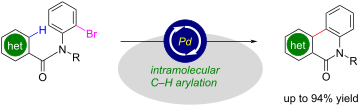
- the reaction was carried out with 7a under similar conditions, the cyclization occurred to afford 8a in 81% yield as shown in Scheme 2. The formation of 8a was confirmed by X-ray crystallographic analysis (CCDC 2227450). The related monofunctionalized analog 7b also smoothly underwent cyclization to
- arylation precursors 1a–c. Palladium-catalyzed intramolecular direct arylation for synthesizing 8a and 8b and the X-ray crystallographic structure of 8a. Studies on the reaction conditions for 2a from 1a. Pd-catalyzed C–H arylation of heteroarenes. Supporting Information Accession code CCDC 2227450
- . Supporting Information File 48: Additional experimental details and copies of 1H and 13C{1H} NMR spectra. Acknowledgements We thank Professor Shigeki Mori and Ms. Rimi Konishi (Ehime University) for the X-ray crystallographic analysis.


Synthesis of 2H-azirine-2,2-dicarboxylic acids and their derivatives
Beilstein J. Org. Chem. 2024, 20, 3191–3197, doi:10.3762/bjoc.20.264
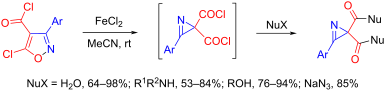
- single-crystal X-ray diffraction analysis. The reaction of azetidine with diacyl chloride 2a gave a complex mixture of products, and O-methyl hydroxylamine did not react. Diacyl chloride 2a reacts with methanol and ethanol to give diesters 11a,b (Scheme 5). An experiment with isoxazole 1a and methanol on
- research was carried out using resources of the Centre for Magnetic Resonance, the Research Centre for X-ray Diffraction Studies, the Centre for Chemical Analysis and Materials, and the Computer Centre of the Science Park of St. Petersburg State University. Funding This work was supported by Russian





Synthesis of extended fluorinated tripeptides based on the tetrahydropyridazine scaffold
Beilstein J. Org. Chem. 2024, 20, 3174–3181, doi:10.3762/bjoc.20.262
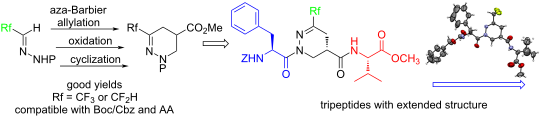
- intramolecular Michael addition. Preliminary conformational studies on tripeptides including this scaffold in the central position show an extended conformation in solution (NMR) and in the solid state (X-ray). Keywords: fluoroalkyl groups; heterocycles; hydrazino acids; peptides; tetrahydropyridazines
- LiOH, followed by a coupling reaction with ʟ-valine methyl ester hydrochloride, to give the corresponding four enantiomerically pure tripeptides 8 with satisfactory yields over two steps (Scheme 6). The absolute configuration (S,S,S) of the isomer 8f was unambiguously assigned by X-ray crystallographic
- configuration of compounds 7e and 7e’ and consequently of tripeptides 8e and 8e’ (see Supporting Information File 1). Next, some preliminary conformational studies were performed. Firstly, the X-ray crystallographic analysis of compound 8f did not show any hydrogen-bond pattern and the global structure of the


Controlled oligomerization of [1.1.1]propellane through radical polarity matching: selective synthesis of SF5- and CF3SF4-containing [2]staffanes
Beilstein J. Org. Chem. 2024, 20, 3134–3143, doi:10.3762/bjoc.20.259
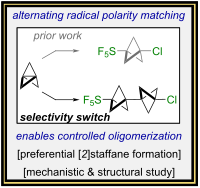
- truncated after incorporation of two bicyclopentane (BCP) units. Synthetic and computational studies suggest this phenomenon can be attributed to alternating radical polarity matching. In addition, single-crystal X-ray diffraction (SC-XRD) data reveal structurally interesting features of the CF3SF4
- for the first time created an opportunity for structural analysis. We previously reported and contextualized single-crystal X-ray diffraction (SC-XRD) data on 2 [36]; thus, we proceeded to grow crystals of 3 suitable for X-ray analysis through slow evaporation of ethyl acetate. To our surprise, an
- , we confirmed that a phase transition had occurred following structure determination at 240 K [78][79]. The X-ray data revealed that 3 crystallizes in the centrosymmetric orthorhombic space group Pnma in the high temperature phase (HTP) with cell axes a = 21.56 Å, b = 8.95 Å, and c = 7.28 Å, in


Hypervalent iodine-mediated intramolecular alkene halocyclisation
Beilstein J. Org. Chem. 2024, 20, 3113–3133, doi:10.3762/bjoc.20.258
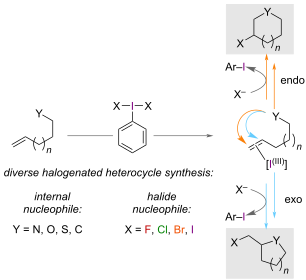
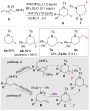
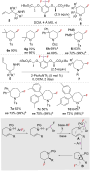
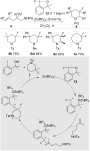
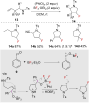
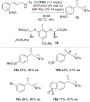
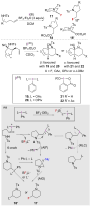
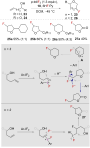
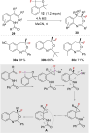
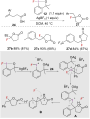
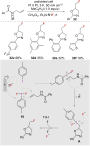
- , deuterium labelling, rearrangements on stereodefined substrates, and structural analyses (NMR and X-ray) of the reaction products. RT-NMR-derived data strongly supported a pathway of alkene activation by the iodane, as opposed to the formation of an N-I(III) adduct. The presence of 5-exo-products, with
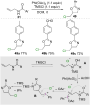
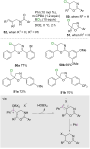
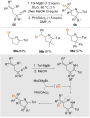
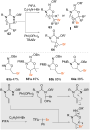
- excellent yields. The structures were also assigned by X-ray crystallography. Sulfur nucleophiles In 2015, Li and co-workers reported the synthesis of 5-bromomethyl-2-phenylthiazoline (79, Scheme 41) [48]. Sulfur was used as the internal nucleophile instead of nitrogen, as previously reported by the authors





















Cyclodextrin-based rotaxanes for polymer materials: challenge on simultaneous realization of inexpensive production and defined structures
Beilstein J. Org. Chem. 2024, 20, 3026–3049, doi:10.3762/bjoc.20.252
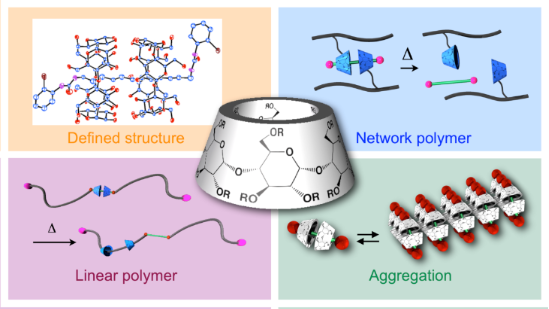
- formation of this inclusion complex, circular dichroism spectroscopy represents a powerful tool when combined with nuclear magnetic resonance (NMR) and X-ray single-crystal analysis. This is because the induced circular dichroism (ICD) can be observed on the guest molecule of the inclusion complex derived
- the hydrogen bonding by the primary- or secondary-alcohol groups, as confirmed by theoretical analyses. This structure was consistent with a previously reported X-ray crystal structure analysis of the complex structure comprising α-CD, polyion, and Li+ or Cd2+ [45]. Regarding the small rotaxane
- other synthetic methods: (1) the reaction can proceed on a 100 g scale in a 1 L flask and a 500 mL solution of water, sufficiently indicating the possibility of large-scale material applications; (2) the product contains only head-to-head structured [3]rotaxane, as confirmed by the X-ray crystal