Search results
Search for "heterocyclic" in Full Text gives 985 result(s) in Beilstein Journal of Organic Chemistry. Showing first 200.
Hydrogen-bond activation enables aziridination of unactivated olefins with simple iminoiodinanes
Beilstein J. Org. Chem. 2024, 20, 2305–2312, doi:10.3762/bjoc.20.197
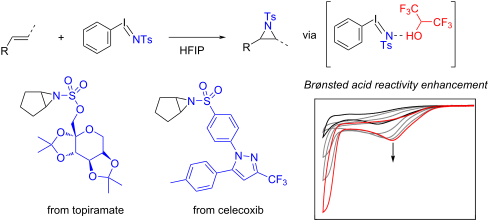
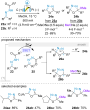
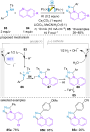
- -trifluoromethylsulfonyl)aziridine 6c was furnished in 47% yield. Similarly, 2,6-difluorosulfonyl-substituted iminoiodinane 2d afforded aziridine 6d in 52% yield. The aziridination procedure was tolerant of heterocyclic substituents on the iminoiodinane, N-(5-methylpyridin-2-ylsulfonyl)aziridine 6e could be obtained in 46


Deuterated reagents in multicomponent reactions to afford deuterium-labeled products
Beilstein J. Org. Chem. 2024, 20, 2270–2279, doi:10.3762/bjoc.20.195
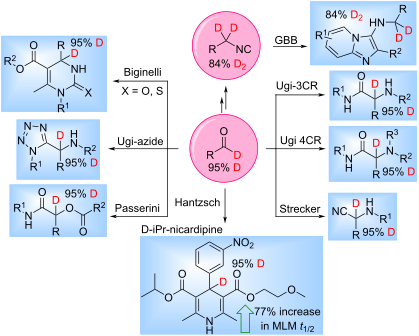
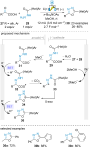
- (Scheme 8) [47]. The Groebke–Blackburn–Bienaymé (GBB) reaction is an intramolecular variant of the Ugi reaction where the intermediate nitrilium ion is intercepted by heteroatoms from the amino-heterocyclic input. Discovered in 1998, and reported independently by three different research groups, it is a


Heterocycle-guided synthesis of m-hetarylanilines via three-component benzannulation
Beilstein J. Org. Chem. 2024, 20, 2208–2216, doi:10.3762/bjoc.20.188
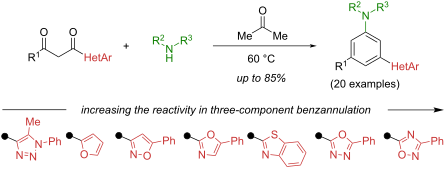
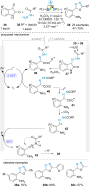
- -diketones has been developed. The electron-withdrawing power of the heterocyclic substituent (which can be estimated on the basis of calculated Hammett constants) in the 1,3-diketone plays a pivotal role in the studied reaction. The series of meta-hetarylanilines prepared (21–85% isolated yield
- was released [57] allowing direct comparison of different substituents. On the basis of the calculated Hammett constants, we have selected a model series of 1,3-diketones, bearing heterocyclic substituents with a range of electron-withdrawing ability (Figure 2). For the amine model series, we used
- reaction in the presence of molecular sieves and 1.5-fold excess of aniline (conditions B) dramatically reduced the reaction time to 1 d, allowing isolation of diarylamine 3ac in 75% yield (Scheme 2). Next, we started to screen various heterocyclic 1,3-diketones with the model amine series. The reaction of


O,S,Se-containing Biginelli products based on cyclic β-ketosulfone and their postfunctionalization
Beilstein J. Org. Chem. 2024, 20, 2143–2151, doi:10.3762/bjoc.20.184
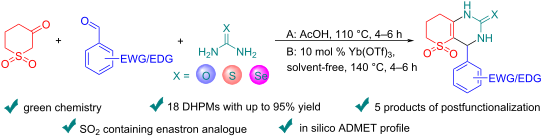
- synthesis of new S-heterocyclic systems we tried to combine the broad synthetic potential of Biginelli condensation and high reactivity β-ketosulfone 1 (dihydro-2H-thiopyran-3(4H)-one-1,1-dioxide) in various condensation reactions [14][15][16][17][18][19][20]. It was also worth mentioning that the thiopyran
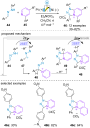
- , Leishmania amazonensis, Tcruzi epimastigota, Dengue larvicida, and for selected cases Alzheimer and Sars-COVID. For more details, see Table S1 (Supporting Information File 1). Conclusion In summary, we have demonstrated the catalytic regioselective Biginelli synthesis of new S-heterocyclic systems ‒ 4-aryl



Efficacy of radical reactions of isocyanides with heteroatom radicals in organic synthesis
Beilstein J. Org. Chem. 2024, 20, 2114–2128, doi:10.3762/bjoc.20.182
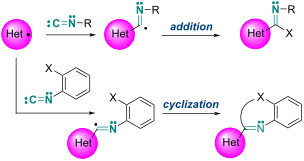
- phenanthridines via silver-catalyzed radical sulfonylation–cyclization of 2-isocyanobiphenyls (Scheme 25) [98]. Wang et al. reported a radical borylative cyclization of 2-isocyanobiaryls with N-heterocyclic carbene borane (Scheme 26) [99]. The boryl radical generated via hydrogen abstraction in the presence of di


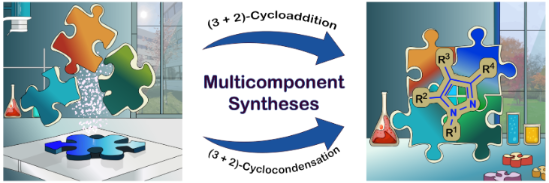
Multicomponent syntheses of pyrazoles via (3 + 2)-cyclocondensation and (3 + 2)-cycloaddition key steps
Beilstein J. Org. Chem. 2024, 20, 2024–2077, doi:10.3762/bjoc.20.178




Harnessing the versatility of hydrazones through electrosynthetic oxidative transformations
Beilstein J. Org. Chem. 2024, 20, 1988–2004, doi:10.3762/bjoc.20.175
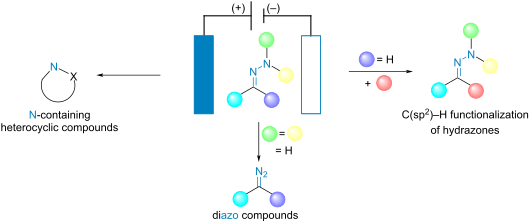
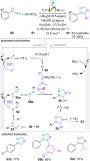
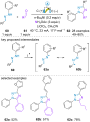
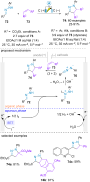
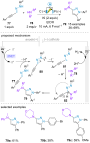
- solution, as described in the experimental section. This information is provided in brackets. Review Synthesis of azacycles Nitrogen-containing heterocyclic compounds possess numerous applications in various domains such as materials science, agrochemistry and medicinal chemistry. Especially, 60% of all
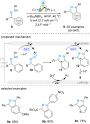
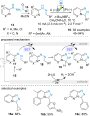
- electrochemical approach constitutes an advantageous alternative to previous methods, which required the preparation of difficult-to-handle hydrazonoyl halides for the synthesis of 1-aryl-5-amino-1,2,4-triazoles from cyanamide [56][57]. Pyrazolines are highly important heterocyclic motifs in pharmaceutical and








Regioselective alkylation of a versatile indazole: Electrophile scope and mechanistic insights from density functional theory calculations
Beilstein J. Org. Chem. 2024, 20, 1940–1954, doi:10.3762/bjoc.20.170
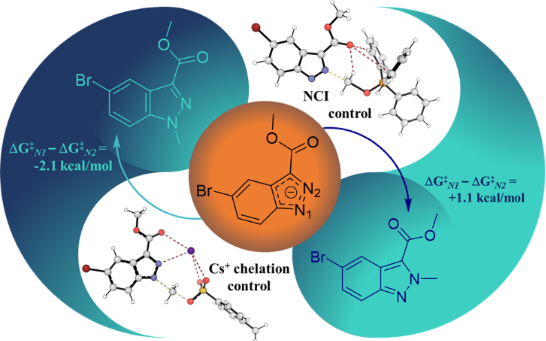
- heterocycles with interesting biological and medicinal properties. Indazole, also called benzpyrazole, is a heterocyclic organic compound commonly found as a structural motif in natural products, pharmaceuticals, agrochemicals, and bioactive compounds [1][2][3][4][5][6]. Indazole-containing compounds possess a


Solvent-dependent chemoselective synthesis of different isoquinolinones mediated by the hypervalent iodine(III) reagent PISA
Beilstein J. Org. Chem. 2024, 20, 1914–1921, doi:10.3762/bjoc.20.167
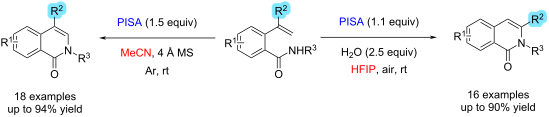
- is an important heterocyclic framework in natural products and biologically active molecules, and the efficient synthesis of this structural motif has received much attention in recent years. Herein, we report a (phenyliodonio)sulfamate (PISA)-mediated, solvent-dependent synthesis of different
- ); isoquinolinone; solvent-dependence; Introduction Isoquinolinone is an important heterocyclic structure found in many natural products and biologically active compounds, including pharmaceuticals [1]. For instance, lycoricidine, found in the medicinal plant Lycoris radiata, may inhibit the MCPyV LT protein
- –intramolecular cyclization cascade with excellent chemoselectivity in aqueous CH3CN [25]. Herein, as part of our continuing studies of heterocyclic scaffold synthesis mediated by hypervalent iodine reagents, we present the solvent-dependent chemoselective synthesis of a series of isoquinolinones mediated by PISA




Novel oxidative routes to N-arylpyridoindazolium salts
Beilstein J. Org. Chem. 2024, 20, 1906–1913, doi:10.3762/bjoc.20.166
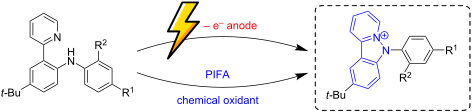
- containing electron-donating and electron-withdrawing groups were taken as the starting compounds (Scheme 2). As an oxidant, bis(trifluoroacetoxy)iodobenzene (PIFA) was used. It allowed obtaining the targeted heterocyclic cations in practical 49–54% yield for all starting diarylamines. Notably, a minor
- diaryldihydrophenazine was increased (10%). Thus, protonation completely suppressed the intramolecular cyclization route. Heterocyclic salts S1–S3 were obtained as amorphous solids, soluble in polar solvents (acetonitrile, DMF, acetone) and chlorinated hydrocarbons (CHCl3, CH2Cl2). The structure of new N


Access to 2-oxoazetidine-3-carboxylic acid derivatives via thermal microwave-assisted Wolff rearrangement of 3-diazotetramic acids in the presence of nucleophiles
Beilstein J. Org. Chem. 2024, 20, 1894–1899, doi:10.3762/bjoc.20.164

- organic synthesis as a route to generate ketenes is being actively investigated, involving both acyclic and carbocyclic diazocarbonyl compounds [26]. At the same time, the use of diazoheterocyclic reagents (including diazotetramic acids) in this transformation, with the formation of heterocyclic ring


2-Heteroarylethylamines in medicinal chemistry: a review of 2-phenethylamine satellite chemical space
Beilstein J. Org. Chem. 2024, 20, 1880–1893, doi:10.3762/bjoc.20.163
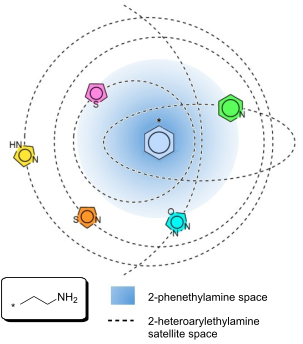
- structural hopping strategy, as five- or six-membered heterocyclic aromatic rings are widespread entities in drug discovery [4]. In this sense, any bioactive molecule enclosing a benzene ring in its initial optimization stages could undergo a heteroaromatic replacement. 2-Phenethylamines are notable




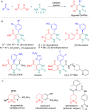
The Groebke–Blackburn–Bienaymé reaction in its maturity: innovation and improvements since its 21st birthday (2019–2023)
Beilstein J. Org. Chem. 2024, 20, 1839–1879, doi:10.3762/bjoc.20.162
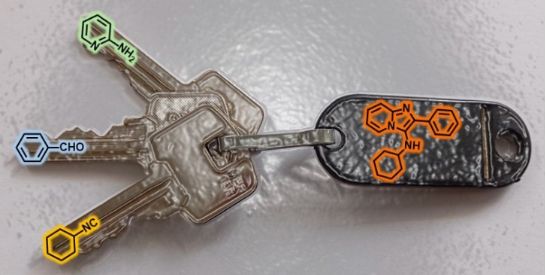
- already discussed in section 1.3, Brunschweiger et al. [47] reported the synthesis of DNA–imidazole heterocyclic conjugates by the GBB-3CR. An alternative to the previously discussed encapsulated solution-phase synthesis is the solid-phase approach in which the DNA barcodes are synthesized on CPG
- acid were essential for the success of the reaction (Scheme 16). A cheminformatic analysis revealed that GBB-based encoded libraries could cover a diverse chemical space, different from the one covered by encoded libraries obtained with other isocyanide-based MCRs. 2.2 Novel heterocyclic amidines
- -pot two-step procedure, combining the GBB-3CR and an acid-assisted deprotection reaction, to get a library of imidazo[2,1-f][1,2,4]triazin-4(3H)-ones 46, characterized by a flat heterocyclic ring system displaying the essential triad. Guanine derivatives are typically synthesized through a sequential






A facile three-component route to powerful 5-aryldeazaalloxazine photocatalysts
Beilstein J. Org. Chem. 2024, 20, 1831–1838, doi:10.3762/bjoc.20.161
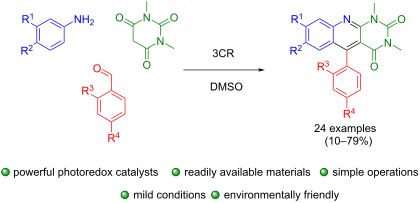
- purification. Thus, it significantly improves existing approaches. Keywords: catalysis; deazaalloxazine; flavin; multicomponent approach; one-pot reaction; Introduction Heterocyclic compounds containing pyrimidine and quinoline motifs in their structure, both of natural and synthetic origin, find a wide set
- mechanism, see Supporting Information File 1). Such results with previous reports on DMSO acting as a methine source in the synthesis of heterocyclic compounds [35][36] are opening a new avenue for the green synthesis of non-substituted 5-deazaalloxazines in a pseudo MCR fashion. Conclusion In summary, we




Hetero-polycyclic aromatic systems: A data-driven investigation of structure–property relationships
Beilstein J. Org. Chem. 2024, 20, 1817–1830, doi:10.3762/bjoc.20.160
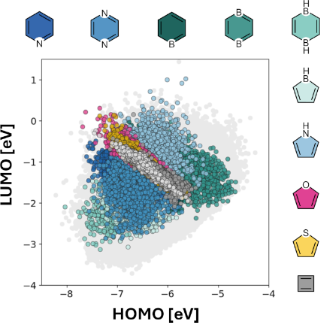
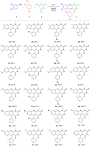
- -driven investigation of the newly generated COMPAS-2 dataset, which contains ~500k molecules consisting of 11 types of aromatic and antiaromatic rings and ranging in size from one to ten rings. Our analysis explores the effects of electron count, geometry, atomic composition, and heterocyclic composition
- new insights into these molecules. [Note: cata-condensed refers to fused PASs in which each atom participates in no more than two rings]. The second installment, COMPAS-2 [9], houses ~500k cata-condensed heterocyclic-PASs (cc-hPASs) comprising 11 types of aromatic and antiaromatic rings containing the
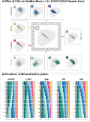
- [9] and COMPAS-1 [6]. The second, third, and fourth sections then present analyses of the data, each focused on different structural aspects: global electronic and geometric features, atomic composition, and heterocyclic composition. A roadmap of the article structure is shown in Figure 2. Comparison



Ugi bisamides based on pyrrolyl-β-chlorovinylaldehyde and their unusual transformations
Beilstein J. Org. Chem. 2024, 20, 1773–1784, doi:10.3762/bjoc.20.156
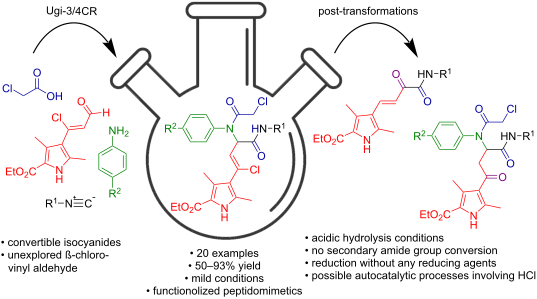
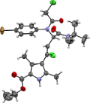
- bisamides based on the same aldehydes and amines may also demonstrate biological activity. In view of these facts, we decided to develop a new approach for the synthesis of hybrid molecules containing substituted heterocyclic and peptidomimetic moieties. The first stage of this approach was the preparation
- Ukraine "Directed synthesis, chemical transformations and properties of new nitrogen-containing heterocyclic compounds" (0122U001857).




Syntheses and medicinal chemistry of spiro heterocyclic steroids
Beilstein J. Org. Chem. 2024, 20, 1713–1745, doi:10.3762/bjoc.20.152
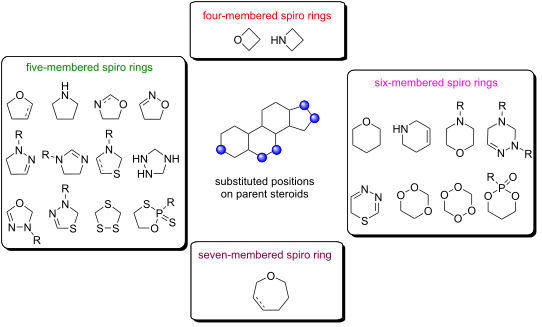
- is compelling evidence that incorporating a heterocyclic moiety into a steroid can alter its pharmacological and pharmacokinetic properties, driving intense interest in the synthesis of such hybrids among research groups. In this review, we present an overview of recent synthetic methodologies
- , spanning the period from 2000 to 2023, for the preparation of spiro heterocyclic steroids. The compounds surveyed encompass four-, five-, six-, and seven-membered heterocycles appended to various positions of steroidal backbones, with spirocycles containing oxygen, nitrogen, and sulfur atoms being
- heterocyclic moieties containing three or more (hetero)cycles. Moreover, many compounds are accompanied by data on their biological activities, such as antiproliferative, antimalarial, antimicrobial, antifungal, steroid antagonist, and enzyme inhibition, among others, aimed at furnishing pertinent insights for


Oxidation of benzylic alcohols to carbonyls using N-heterocyclic stabilized λ3-iodanes
Beilstein J. Org. Chem. 2024, 20, 1677–1683, doi:10.3762/bjoc.20.149
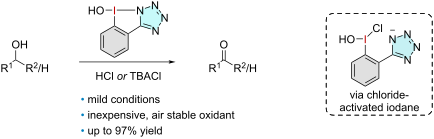
- detected as a side reaction via mass spectrometry. Vinyl alcohols were also studied, giving carvone (4v) in 74% yield without oxidation of the double bonds. Finally, other heterocyclic benzylic alcohols were investigated, which led to undesired chlorinations in the case of benzimidazoles 3w and 3x and




New triazinephosphonate dopants for Nafion proton exchange membranes (PEM)
Beilstein J. Org. Chem. 2024, 20, 1623–1634, doi:10.3762/bjoc.20.145
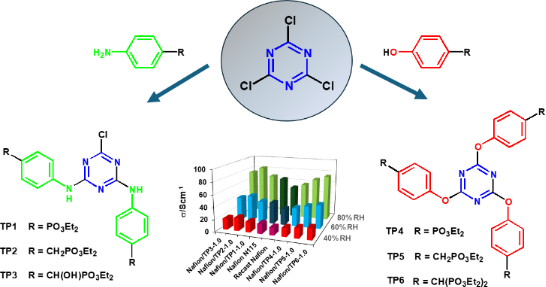
- symmetrical monosubstituted derivatives, or di- or trisubstituted symmetrical or asymmetrical derivatives. The C3 symmetry of 1,3,5-triazine makes it a popular heterocyclic core for the synthesis of star-shaped molecules [43][44][45], which was being used to the construction of triangular molecules, including




Generation of multimillion chemical space based on the parallel Groebke–Blackburn–Bienaymé reaction
Beilstein J. Org. Chem. 2024, 20, 1604–1613, doi:10.3762/bjoc.20.143

- . These results were used to generate a 271-Mln. readily accessible (REAL) heterocyclic chemical space mostly containing unique chemotypes, which was confirmed by comparative analysis with commercially available compound collections. Meanwhile, this chemical space contained 432 compounds that already
- the corresponding library members were denoted as 4{i,j,k}. Results and Discussion Library synthesis Preliminary experiments on the parallel GBB reaction were performed with heterocyclic amines 1{1–430}, aldehydes 2{1–583}, and isonitriles 3{1–73} available from our stock (based on our previous in


Electrophotochemical metal-catalyzed synthesis of alkylnitriles from simple aliphatic carboxylic acids
Beilstein J. Org. Chem. 2024, 20, 1497–1503, doi:10.3762/bjoc.20.133
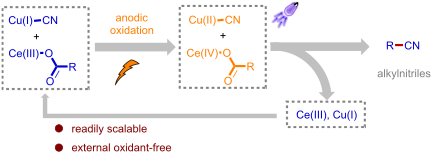
- readily converted into a myriad of functional groups including carbonyls, amines, imines, and a variety of heterocyclic scaffolds with well-established procedures [4][5][6][7][8][9]. In particular, tertiary nitriles are common structural motifs in many bioactive compounds and are widely used as


Synthesis of 4-functionalized pyrazoles via oxidative thio- or selenocyanation mediated by PhICl2 and NH4SCN/KSeCN
Beilstein J. Org. Chem. 2024, 20, 1453–1461, doi:10.3762/bjoc.20.128
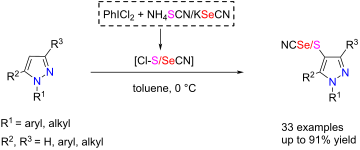
- ; thiocyanation; thiocyanogen chloride; Introduction Pyrazoles and their derivatives are an important class of five-membered heterocyclic compounds [1][2][3][4][5] that have drawn increasing attention from organic chemists, due to their potential biological and pharmaceutical properties including anti


Rapid construction of tricyclic tetrahydrocyclopenta[4,5]pyrrolo[2,3-b]pyridine via isocyanide-based multicomponent reaction
Beilstein J. Org. Chem. 2024, 20, 1436–1443, doi:10.3762/bjoc.20.126
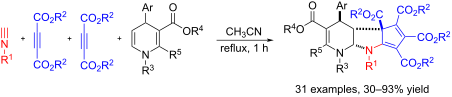
- generated by addition reaction of isocyanides to electron-deficient alkynes, which were sequentially trapped by various electrophiles and nucleophiles to give versatile acyclic and heterocyclic compounds [15][16][17][18][19][20][21][22][23][24][25][26]. In recent years, many multicomponent reactions based
- on alkyl isocyanides, electron-deficient alkynes and other reagents have been successfully developed for the synthesis of various carbocyclic and heterocyclic compounds [27][28][29][30][31][32][33][34][35]. The 5,6-unsubstituted 1,4-dihydropyridine is one of special kinds of 1,4-dihydropyridines. It
- synthetic protocols and in continuation of our aim to develop isocyanide-based multicomponent reactions for construction of diverse nitrogen-containing heterocyclic compounds [47][48][49][50][51][52][53][54][55][56][57][58], herein we wish to report the mutlicomponent reaction of alkyl isocyanides, dialkyl


Challenge N- versus O-six-membered annulation: FeCl3-catalyzed synthesis of heterocyclic N,O-aminals
Beilstein J. Org. Chem. 2024, 20, 1412–1420, doi:10.3762/bjoc.20.123
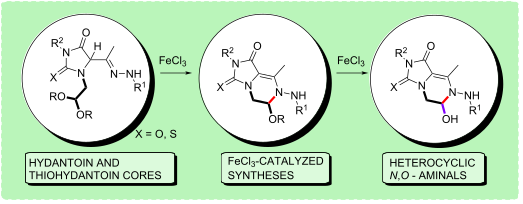
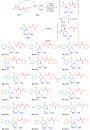
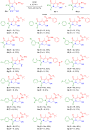
- Abstract A new class of heterocyclic N,O-aminal and hemiaminal scaffolds was successfully obtained by means of a three-component reaction (3-CR) of 1,2-diaza-1,3-dienes (DDs), α-aminoacetals and iso(thio)cyanates. These stable imine surrogates are generated from key-substituted (thio)hydantoin
- intermediates through selective FeCl3-catalyzed intramolecular N-annulation. Keywords: α-aminoacetals; fused-ring systems; heterocyclic hemiaminals; heterocyclic N,O-aminals; multicomponent reactions; Introduction N-Fused heterocycles are ubiquitous within crucial molecules, including biologically active
- natural products, pharmaceuticals, and functional materials (Figure 1) [1][2][3]. It has been assessed that almost one-third of the best-selling therapeutics contains fused heterocyclic structures [4]. Among the N-heterocycles, imidazopyrazine structures [5][6], derived from amalgamation of privileged




Synthesis of substituted triazole–pyrazole hybrids using triazenylpyrazole precursors
Beilstein J. Org. Chem. 2024, 20, 1396–1404, doi:10.3762/bjoc.20.121
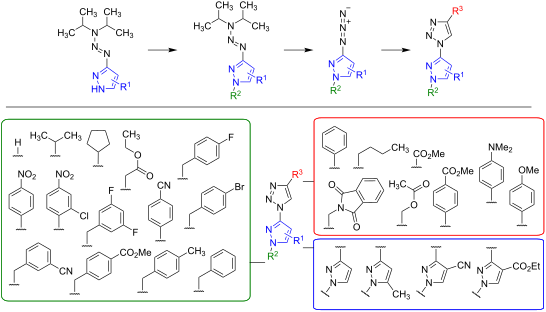
- ][2]. We are interested in feasible strategies to synthesize nitrogen-rich heterocyclic scaffolds that can extend the currently available libraries with new drug-like molecules. Our past work on pyrazoles [3][4][5][6] and triazoles [7][8][9][10][11] motivated us to search for suitable and versatile
- pyrazole–triazole hybrids: synthesis of azides 7 or 8 from amines and organohalides and subsequent CuAAC to larger heterocyclic systems 9 or non-substituted amine products 10; Sakai reaction of α-ketoacetal 11 for the synthesis of N-substituted derivative 13 [14][16][17][18][19]. Synthesis of pyrazolyl