Search results
Search for "activation" in Full Text gives 1200 result(s) in Beilstein Journal of Organic Chemistry. Showing first 200.
Access to optically active tetrafluoroethylenated amines based on [1,3]-proton shift reaction
Beilstein J. Org. Chem. 2024, 20, 2776–2783, doi:10.3762/bjoc.20.233
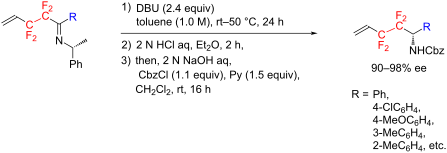
- transition state is not stabilized, leading to the increase of the activation energy of the reaction. As a result, the reaction does not proceed smoothly. The absolute configurations of product (S)-23c, (S)-23d, and (S)-23e were determined on the basis of their X-ray crystallographic analyses. The validity

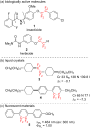


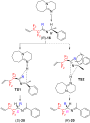
Computational design for enantioselective CO2 capture: asymmetric frustrated Lewis pairs in epoxide transformations
Beilstein J. Org. Chem. 2024, 20, 2668–2681, doi:10.3762/bjoc.20.224
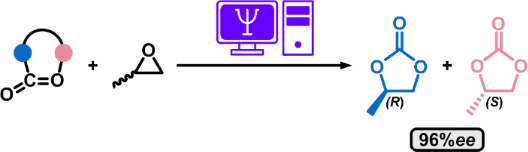
- . These limitations suggest that a more viable approach to employing FLPs as catalysts for CO2-related reactions could involve their use in CO2 activation [7][18][19]. In particular, the capture of CO2 by FLPs enhances the electrophilicity of the CO2 carbon atom and the nucleophilicity of one of the CO2
- than the catalysts at the top show lower catalytic activity due to insufficient activation of the substrate (Figure 1A, green points). Conversely, catalysts that bind too strongly impede the detachment of the catalyst–reactant complex, thereby reducing the catalyst turnover (Figure 1A, pink points) [26
- ][27]. The previous plots are effective for metal-based catalysts and relatively simple catalytic reactions; however, they fall short when reactions involve multiple steps and independent activation barriers. In this paper, instead of focusing solely on the activation energy, the energy span of the


Efficient modification of peroxydisulfate oxidation reactions of nitrogen-containing heterocycles 6-methyluracil and pyridine
Beilstein J. Org. Chem. 2024, 20, 2599–2607, doi:10.3762/bjoc.20.219
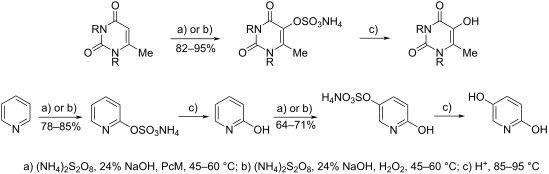
- . Additionally, the π-conjugation system facilitates the redistribution of electron density within the reaction complex, thereby lowering the activation barrier of the reaction [21]. The study employed the following oxidation catalysts for phthalocyanines – PcCo, PcFe(II), PcFe(III), PcMn, PcNi, and PcZn. The


Transition-metal-free synthesis of arylboronates via thermal generation of aryl radicals from triarylbismuthines in air
Beilstein J. Org. Chem. 2024, 20, 2577–2584, doi:10.3762/bjoc.20.216
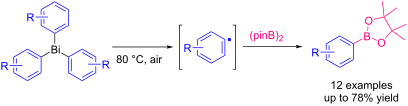
- with halogen or triflate groups. Recently, transition-metal-catalyzed direct borylation of arenes via C–H bond activation has been reported, although the design of the substrate and ligands is somewhat complicated [16][17][18][19][20][21][22]. Since the complete removal of catalyst-derived metal
- , and their derivatives can be easily synthesized by common Grignard reactions [37][38][39][40][41][42][43][44]. Three activation methods have been reported for their use as aryl radical sources. It has been reported that the homolysis of Ar–Bi bonds could be achieved by photoirradiation in the presence
- of photocatalysts or UV light irradiation without metal catalysts [45][46][47][48]. Similar homolysis by electrolysis has also been reported [49]. These two activation methods required special equipment (i.e., light sources or electronic devices). To achieve thermal homolysis of the Ar–Bi bonds, the



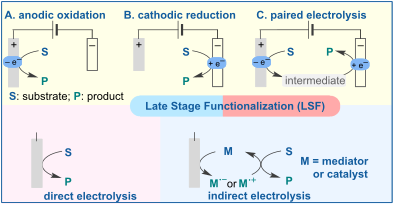
A review of recent advances in electrochemical and photoelectrochemical late-stage functionalization classified by anodic oxidation, cathodic reduction, and paired electrolysis
Beilstein J. Org. Chem. 2024, 20, 2500–2566, doi:10.3762/bjoc.20.214
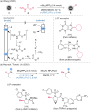
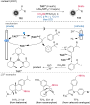
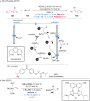
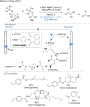
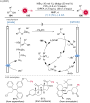
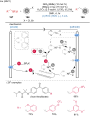
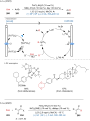
- direct activation of C(sp3)–H bonds under mild conditions [17]. The pronounced electron-deficient W2C nanocatalysts greatly facilitate the direct deprotonation process, ensuring the longevity of the electrode by overcoming self-oxidation. The LSF of drug molecules such as ibuprofen methyl ester and
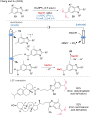
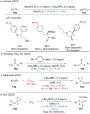
- derived from the interaction of non-activated alkenes with thianthrene [24]. This procedure has the advantage of separating the oxidative activation of the alkenes from the aziridination step, allowing efficient access to a variety of aziridine building blocks containing sensitive functional groups. This
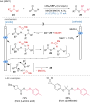
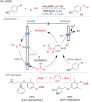
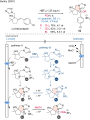
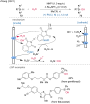
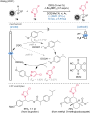
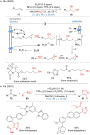
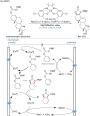
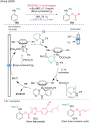
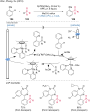
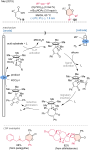
- carboxylate substrate and [Ru(p-cymene)Cl2]2. Subsequently, the Ru complex coordinates with the aniline substrate, followed by C–H activation to form a six-membered Ru species. The final product is generated through reductive elimination, releasing Ru(0), which is then reoxidized on the anode to regenerate


























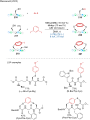


Machine learning-guided strategies for reaction conditions design and optimization
Beilstein J. Org. Chem. 2024, 20, 2476–2492, doi:10.3762/bjoc.20.212
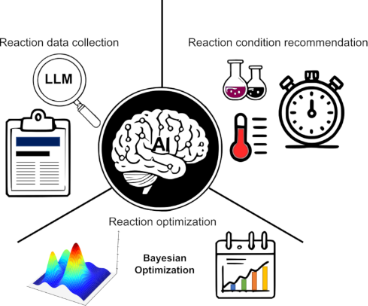
- extensive effort. This involves complex parameter optimization, meticulous validation against experimental data, and careful consideration of diverse reaction conditions and possible reaction mechanisms [28][29]. Although some studies employ transition-state (TS) theory to simulate activation energies and
- compute reaction enthalpy for particular types of reactions [30], this approach often demands significant computational resources to determine accurate TSs and activation energies. The complexity increases further when considering the impacts of solvents and catalysts, which means that large-scale
- ]. Most of the existing methods were originally designed for predicting reaction properties (such as activation energy, reaction enthalpy, etc.) or classifying reactions, but they can be potentially adapted for reaction conditions prediction by modifying the output layer of the model. Both global reaction


Hypervalent iodine-mediated cyclization of bishomoallylamides to prolinols
Beilstein J. Org. Chem. 2024, 20, 2455–2460, doi:10.3762/bjoc.20.209
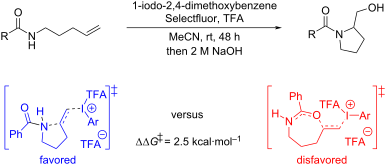
- -cyclization onto the alkene when n = 3, we modelled this reaction using DFT calculations (Scheme 2). Similarly, we concluded that the present reaction commences with activation of the olefin in 3a by the hypervalent iodine species 8, which is generated under the reaction conditions. The activation occurs via


Synthesis and conformational analysis of pyran inter-halide analogues of ᴅ-talose
Beilstein J. Org. Chem. 2024, 20, 2442–2454, doi:10.3762/bjoc.20.208
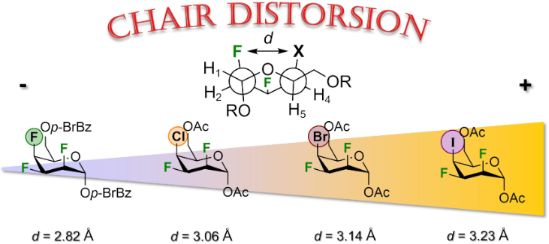
- 1,6-anhydro-2,3-dideoxy-2,3-difluoro-β-ᴅ-mannopyranose (5) readily accessible form levoglucosan (1, Scheme 1) [24]. Activation of the C4 hydroxy group as triflate and direct treatment with a nucleophilic halogen furnished intermediates 8–11. The latter compounds proved to be difficult to purify


Phenylseleno trifluoromethoxylation of alkenes
Beilstein J. Org. Chem. 2024, 20, 2434–2441, doi:10.3762/bjoc.20.207
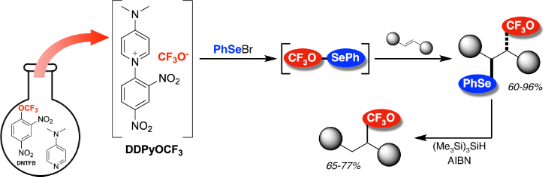
- resulting from the substitution of the CF3O group by the trifluoroacetoxy group was then observed. The activation of a fluorine atom from the CF3O group by H+ could be envisaged, which would then trigger the selenium attack to release difluorophosgene and HF, thus generating an episelenonium, which would



Homogeneous continuous flow nitration of O-methylisouronium sulfate and its optimization by kinetic modeling
Beilstein J. Org. Chem. 2024, 20, 2408–2420, doi:10.3762/bjoc.20.205
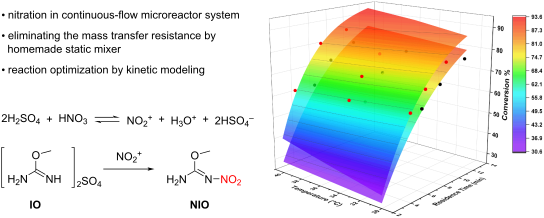
- modeling of this reaction was performed based on the theory of NO2+ attack, with the activation energy and pre-exponential factor determined. Finally, based on the response surface generated by the kinetic model, the reaction was optimized with a conversion of 87.4% under a sulfuric acid mass fraction of
- values of k0 at different temperatures, the activation energy for the electrophilic attack of NO2+ on the IO can be calculated by the Arrhenius equation: where R is the molar gas constant and T denotes the temperature in Kelvin, and Ea and A are the activation energy and pre-exponential factors for the
- temperatures on the apparent rate constants can be understood. In addition, a complete kinetic model of IO nitration based on NO2+ was developed to describe the reaction process, the activation energy of the IO nitration was calculated to be 192.57 kJ/mol. Furthermore, the accuracy of the kinetic model was


![[Graphic 1]](/bjoc/content/inline/1860-5397-20-205-i17.svg?max-width=637&scale=1.18182)


Evaluating the halogen bonding strength of a iodoloisoxazolium(III) salt
Beilstein J. Org. Chem. 2024, 20, 2401–2407, doi:10.3762/bjoc.20.204
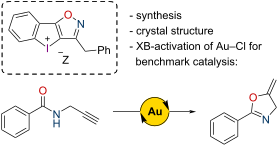
- obtained: in a titration study by Mayer and Legault it was determined that cyclic five-membered DAI salts, so-called iodolium compounds, are significantly stronger Lewis acids than their less-stable acyclic counterparts [12]. By using the activation of alkyl halides as a benchmark, our group later reported
- donors [16][17] from our group as well as of dicationic N-heterocyclic-substituted monodentate catalysts by Nachtsheim [15]. While such compounds are necessary to activate neutral substrates in more challenging reactions, monodentate and monocationic congeners provide sufficient activation in halide
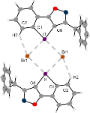
- it with our known iodonium species in the activation of Au(I)–Cl bonds. Results and Discussion As immediate precursor to the target structure 7Z, the literature-known isoxazole 10 was synthesized via a Cu(I)-catalyzed cycloaddition between (2-iodophenyl)acetylene (8) and benzyl nitrile oxide, which




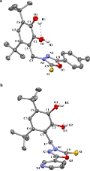
Synthesis, electrochemical properties, and antioxidant activity of sterically hindered catechols with 1,3,4-oxadiazole, 1,2,4-triazole, thiazole or pyridine fragments
Beilstein J. Org. Chem. 2024, 20, 2378–2391, doi:10.3762/bjoc.20.202
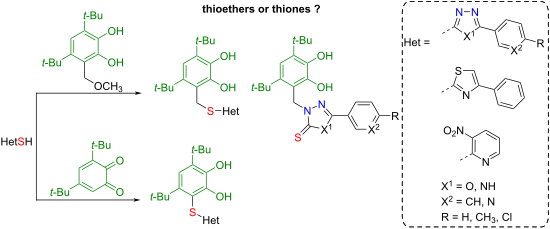
- corresponding thiol [35][36][37][38], in the nucleophilic substitution reaction in the aromatic ring of catechol [39][40] or under electrochemical conditions [41][42][43]. An anodic activation of catechols in the presence of a thiol leads to S-functionalized catechols with triazole, triazine, pyrimidine




Asymmetric organocatalytic synthesis of chiral homoallylic amines
Beilstein J. Org. Chem. 2024, 20, 2349–2377, doi:10.3762/bjoc.20.201
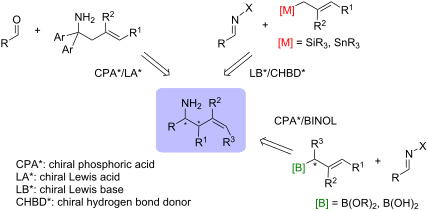
- highly enantioselective nucleophilic addition of primary (10), secondary, and even tertiary allylboronates, as well as allenylboronates to a broad set of imines, bearing the N-phosphinoyl group. The new approach allowed the activation of both the substrate and the reagent using aminophenol organocatalyst
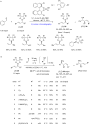
- acid activation mode appears to be the most plausible. Interestingly, chiral phosphoric acids failed to catalyse this reaction, but the use of chiral sulphonimide 45 afforded 82–97% ee and 65–84% yield on a set of aromatic and aliphatic aldehydes. The low reactivity of the allyltrimethylsilane (46
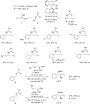
- commercially available derivative of ʟ-proline, (S)-(−)-α,α-bis(3,5-dimethylphenyl)-2-pyrrolidinemethanol (62) (Scheme 12). This catalyst is capable of asymmetric activation of N-(2-hydroxyphenyl)imines through the reversible chelation to the N-(2-hydroxyphenyl) group, forming a rigid intermediate, while the








Stereoselective mechanochemical synthesis of thiomalonate Michael adducts via iminium catalysis by chiral primary amines
Beilstein J. Org. Chem. 2024, 20, 2313–2322, doi:10.3762/bjoc.20.198
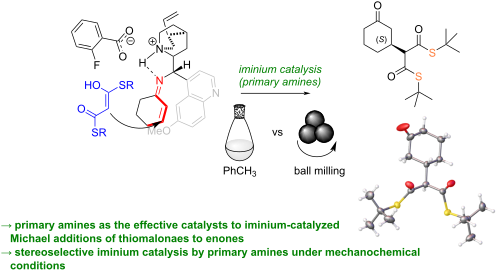
- Technology, wyb. Wyspiańskiego 27, 50-370 Wrocław, Poland 10.3762/bjoc.20.198 Abstract The study presents a novel approach utilizing iminium salt activation and mild enolization of thioesters, offering an efficient and rapid synthesis of Michael adducts with promising stereoselectivity and marking a
- significant advancement in mechanocatalysis. The stereoselective addition of bisthiomalonates 1–4 to cyclic enones and 4-chlorobenzylideneacetone proceeds stereoselectively under iminium activation conditions secured by chiral primary amines, in contrast to oxo-esters as observed in dibenzyl malonate addition
- studies by Bolm [12][13], and Juaristi et al. [14]. have significantly advanced chiral secondary amine-catalyzed stereoselective reactions under ball milling conditions, representing a widely explored activation mode in mechanochemical-mediated transformations. However, reports on chiral primary iminium


Hydrogen-bond activation enables aziridination of unactivated olefins with simple iminoiodinanes
Beilstein J. Org. Chem. 2024, 20, 2305–2312, doi:10.3762/bjoc.20.197
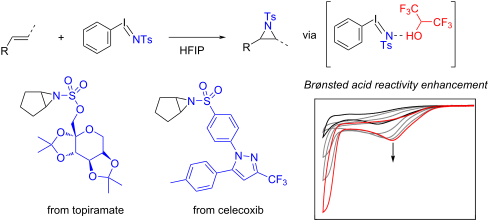
- -disubstituted olefins is observed and interpreted as evidence that aziridination proceeds via a carbocation intermediate that subsequently cyclizes. These results demonstrate a simple method for activating iminoiodinane reagents, provide analysis of the extent of activation achieved by H-bonding, and indicate
- the potential for chemical non-innocence of fluorinated alcohol solvents in NGT catalysis. Keywords: aziridination; electrochemistry; H-bond activation; hypervalent iodine; nitrene transfer; Introduction Hypervalent iodine reagents find widespread application in selective oxidation chemistry due to
- available in the absence of Lewis acid activation (Scheme 1a) [11][12]. A variety of Lewis acid activators have been reported [13][14][15][16][17][18][19][20][21][22] in an array of group-transfer reactions, including trifluoromethylation, cyanation, and fluorination. Brønsted acid activation has also been


Catalysing (organo-)catalysis: Trends in the application of machine learning to enantioselective organocatalysis
Beilstein J. Org. Chem. 2024, 20, 2280–2304, doi:10.3762/bjoc.20.196
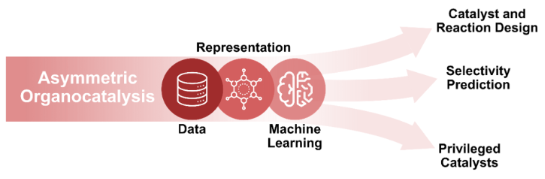
- catalysts [3]. In particular, enantioselective organocatalysis has shown an impressive rise in the last decades, owing to the tunability of catalysts and different modes of activation, enabling a manifold of different transformations [4][5]. The development of the field, driven by many researchers, led to
- energies of relevant species either via force field or quantum chemical methods to assess the properties of a reaction such as activation energies or selectivity. Irrespective of the degree of automation, in silico calculations are often less time-sensitive than wet-lab experiments and can be used to




Synthesis and reactivity of the di(9-anthryl)methyl radical
Beilstein J. Org. Chem. 2024, 20, 2254–2260, doi:10.3762/bjoc.20.193
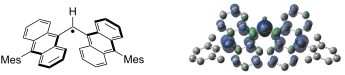
- small about 1.18 kcal mol−1 (Supporting Information File 1, Figure S2). To investigate the activation barrier of this equilibrium, potential energy curve by changing the dihedral angle θ of one anthryl group was calculated. The transition state was calculated with the dihedral angle θ = 30.6° and the
- activation barrier is only 2.94 kcal mol−1 (Supporting Information File 1, Figure S3). Thus, these two structures are likely in equilibrium and rapidly exchange with each other in solution. The energy difference between DAntM dimer (head-to-head σ-dimer) and DAntM radical monomer was also evaluated, showing


Metal-free double azide addition to strained alkynes of an octadehydrodibenzo[12]annulene derivative with electron-withdrawing substituents
Beilstein J. Org. Chem. 2024, 20, 2234–2241, doi:10.3762/bjoc.20.191
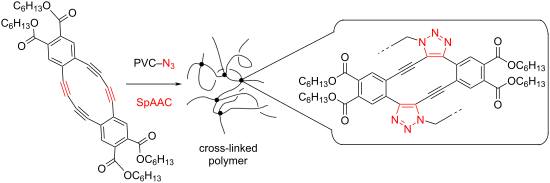
- followed a second-order reaction. Since no monoadducts were formed, the rate-determining step is the first azide addition. Based on this fact, the activation energy (Ea) of the reaction between 5 and benzyl azide in CDCl3, determined by the Arrhenius plots, was 60.9 kJ mol−1 (Figure 3). This value was




Electrochemical allylations in a deep eutectic solvent
Beilstein J. Org. Chem. 2024, 20, 2217–2224, doi:10.3762/bjoc.20.189
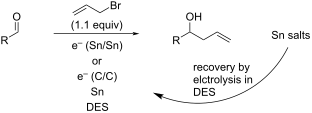
- activation of the tin. This variation was explored as seen in Table 5. Use of 0.5 equivalents of tin metal (Table 5, entry 1) did result in partial conversion to product, which increased to complete conversion when 1.5 equivalents of tin were used (Table 5, entry 3). Upon attempted recycling of this reaction

Heterocycle-guided synthesis of m-hetarylanilines via three-component benzannulation
Beilstein J. Org. Chem. 2024, 20, 2208–2216, doi:10.3762/bjoc.20.188
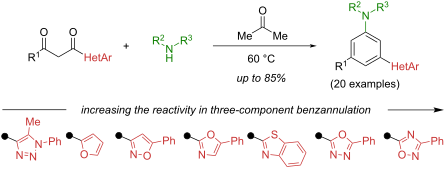
- heterocycles are isoelectronic to an ester or a carbamoyl group, we were interested in testing various heterocycles as electron-withdrawing groups for activation of the carbonyl group in 1,3-diketones. In order to compare the electron-withdrawing ability of heterocycles and previously studied EWGs, we tried to


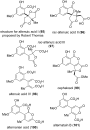
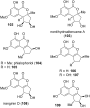
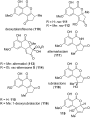
Natural resorcylic lactones derived from alternariol
Beilstein J. Org. Chem. 2024, 20, 2171–2207, doi:10.3762/bjoc.20.187
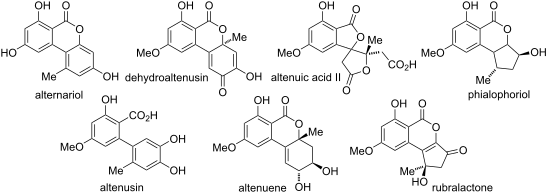
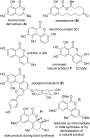
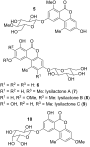
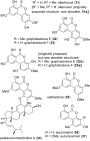
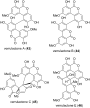
- turned out that induced cytotoxicity [75] is mediated by activation of the mitochondrial pathway of apoptosis in human colon carcinoma cells [76][77] and that cytotoxicity on HCT116 cells is increased, when AOH is combined with 9-O-methylalternariol (2, AME) [78]. AOH further showed to have a detrimental










O,S,Se-containing Biginelli products based on cyclic β-ketosulfone and their postfunctionalization
Beilstein J. Org. Chem. 2024, 20, 2143–2151, doi:10.3762/bjoc.20.184
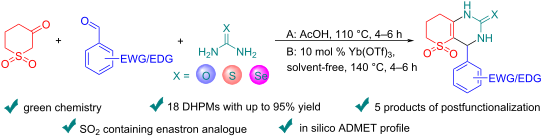
- ). However, increasing acidity and using trifluoroacetic acid (Table 1, entry 17) did not improve the overall yield. We also tried microwave activation conditions since this is a known technique for reactions of this type [32], but unfortunately, we did not find any improvement in the yield (Table 1, entry



From perfluoroalkyl aryl sulfoxides to ortho thioethers
Beilstein J. Org. Chem. 2024, 20, 2108–2113, doi:10.3762/bjoc.20.181
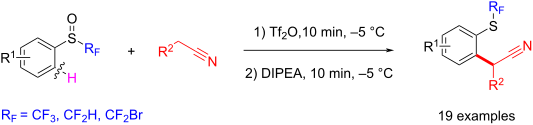
- their ability to be engaged in such a rearrangement [4][5]. Upon activation with trifluoromethanesulfonic anhydride and under heating, we showed their transformation to ortho thioethers with a fairly acceptable selectivity towards the pathway of sulfilimine synthesis (Scheme 1b). Following our seminal



Multicomponent syntheses of pyrazoles via (3 + 2)-cyclocondensation and (3 + 2)-cycloaddition key steps
Beilstein J. Org. Chem. 2024, 20, 2024–2077, doi:10.3762/bjoc.20.178
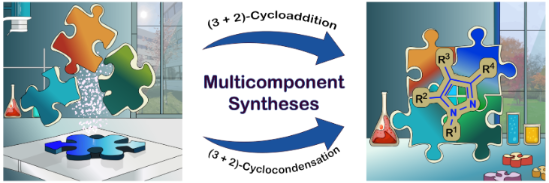
- 130 through chlorination and Stephens–Castro coupling [148]. With 1,4-dioxane as a solvent, chlorination yields could be increased by activation of oxalyl chloride to give glyoxyl chlorides 133. The resulting ynediones 134 were cyclized in a consecutive three-component fashion with Boc-hydrazine to




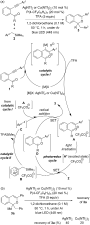
Development of a flow photochemical process for a π-Lewis acidic metal-catalyzed cyclization/radical addition sequence: in situ-generated 2-benzopyrylium as photoredox catalyst and reactive intermediate
Beilstein J. Org. Chem. 2024, 20, 1973–1980, doi:10.3762/bjoc.20.173
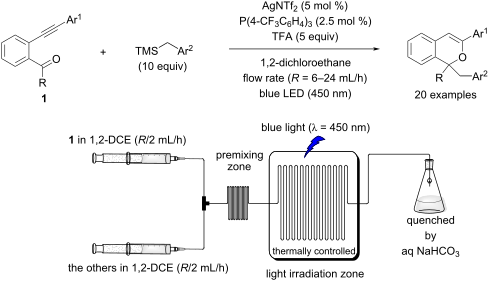
- catalytic cycles). In catalytic cycle I, the key cationic components, 2-benzopyrylium intermediates A, are generated in situ by the activation of the alkyne moiety of ortho-carbonyl alkynylbenzene derivatives 1 in the presence of the π-Lewis acidic metal catalyst [M]X [AgNTf2 or Cu(NTf2)2] and subsequent