Search results
Search for "carbon" in Full Text gives 2159 result(s) in Beilstein Journal of Organic Chemistry. Showing first 200.
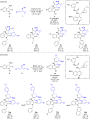
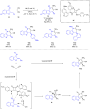
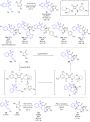
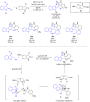
Organocatalytic kinetic resolution of 1,5-dicarbonyl compounds through a retro-Michael reaction
Beilstein J. Org. Chem. 2025, 21, 473–482, doi:10.3762/bjoc.21.34
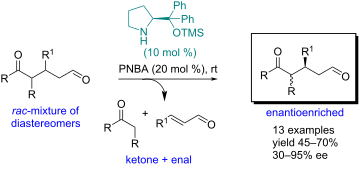
- organometallic catalysis [15], enzymatic catalysis [16], aminocatalysis [17][18][19], and hydrogen-bonding catalysis [20][21][22]. The Michael addition reaction is a versatile synthetic methodology that allows the formation of new carbon–carbon and carbon–heteroatom bonds through the coupling of electron-poor
- recorded in CDCl3 or acetone-d6. Chemical shifts for protons are reported in ppm from tetramethylsilane as an internal reference. Chemical shifts for carbons are reported in ppm from tetramethylsilane and referenced to the solvent's carbon resonance. Specific rotations were measured using a 5 mL cell with


Electrochemical synthesis of cyclic biaryl λ3-bromanes from 2,2’-dibromobiphenyls
Beilstein J. Org. Chem. 2025, 21, 451–457, doi:10.3762/bjoc.21.32
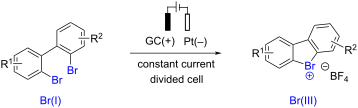
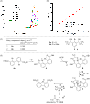
- -tetrafluorobenzene as an internal standard. Isolated yields are given in parentheses. A: Background and iR drop-corrected CVs of 5 mM 4a at different scan rates (solvent: HFIP, working electrode: glassy carbon, supporting electrolyte: 0.1 M TBA-BF4). B: Plot of the peak current densities (jp) vs v0.5. C


Unraveling aromaticity: the dual worlds of pyrazole, pyrazoline, and 3D carborane
Beilstein J. Org. Chem. 2025, 21, 412–420, doi:10.3762/bjoc.21.29
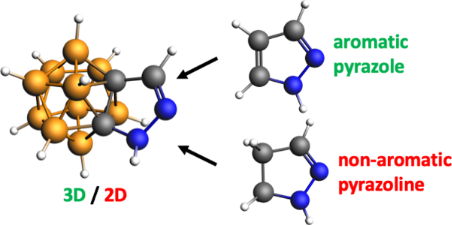
- therefore non-aromatic. Even when fused with benzene via a C–C bond, pyrazoline remains non-aromatic, which is the case of indazoline. Icosahedral carboranes are globular molecular clusters made of carbon and boron, displaying 3D aromaticity [12][13][14][15]. Their unique properties – such as aromaticity


The effect of neighbouring group participation and possible long range remote group participation in O-glycosylation
Beilstein J. Org. Chem. 2025, 21, 369–406, doi:10.3762/bjoc.21.27
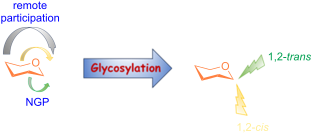
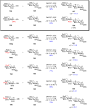
- glycochemists. The protecting building blocks on the glycosides contribute significantly in attaining the required stereochemistry of the resulting glycosides. Strategic installation of suitable protecting groups in the C-2 position, vicinal to the anomeric carbon, renders neighbouring group participation
- , whereas protecting groups in the distal C-3, C-4, and C-6 positions are often claimed to exhibit remote group participation with the anomeric carbon. Neighbouring group participation and remote group participation are being widely studied to help the glycochemists design the synthetic protocols for
- the inversion at the anomeric sp3 carbon centre by the attack of the acceptor moiety. Crich β-mannosylations are classic illustrations for the same [38][39]. On the other hand, the stability of the carbocation contributes towards the reaction to proceed via the dissociative two-step SN1 reaction




Synthesis, structure, ionochromic and cytotoxic properties of new 2-(indolin-2-yl)-1,3-tropolones
Beilstein J. Org. Chem. 2025, 21, 358–368, doi:10.3762/bjoc.21.26
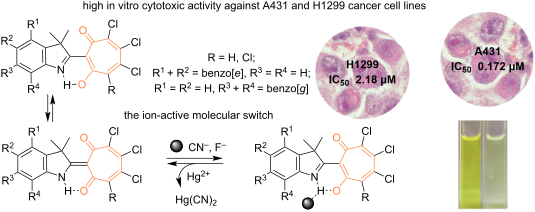
- spectrum of 7a, a correlation of the NH proton with the bridging carbon atoms C(3a'), C(9b'), and the quaternary carbon atom C(1') of the indolenine fragment is observed with δH 136.6 ppm, 134.0 ppm, and 53.6 ppm, respectively (Supporting Information File 2, Figure S20). The most important HMBC
- , no correlations of the down-field proton with the carbon atoms of the indolenine fragment are observed (Supporting Information File 2, Figures S21 and S22). Thus, in CDCl3, compound 7a is predominantly in the (OH) tautomeric form. The structure of 2-(3,3-dimethyl-3H-benzo[g]indolin-2-yl)-5,6,7




Synthesis, characterization, antimicrobial, cytotoxic and carbonic anhydrase inhibition activities of multifunctional pyrazolo-1,2-benzothiazine acetamides
Beilstein J. Org. Chem. 2025, 21, 348–357, doi:10.3762/bjoc.21.25
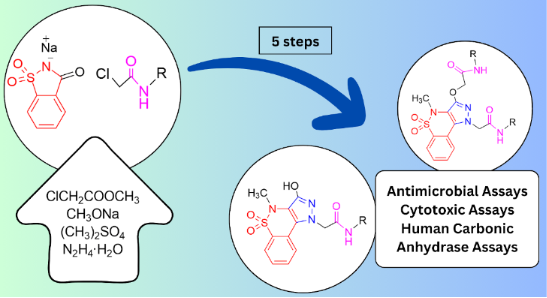
- methylene at 67.7–68.0 ppm, one N-methyl at 38.1–38.2 ppm, and one carbonyl carbon signal at 166.5–167.6 ppm. Also for compounds 7i–n, distinct 13C NMR chemical shifts were observed: two methylene carbon resonances at 54.7–68.2 ppm, one N-methyl at 37.9–38.0 ppm, and two carbonyl carbon signals at 165.2
- –166.7 ppm. Aromatic carbon chemical shifts for both sets of derivatives 7a–h and 7i–n were found in the range of 109.1–156.0 ppm. In vitro antimicrobial and SAR analysis Microbroth single dose antimicrobial assays were performed against different pathogens including susceptible Staphylococcus aureus


Antibiofilm and cytotoxic metabolites from the entomopathogenic fungus Samsoniella aurantia
Beilstein J. Org. Chem. 2025, 21, 327–339, doi:10.3762/bjoc.21.23
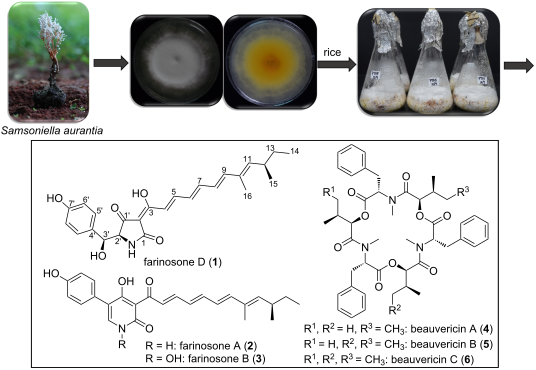
- spectrum to two sp3 carbon atoms at δC 67.8 (C-2') and 72.6 (C-3'), respectively. These results suggested that compound 1 possesses a tetramic acid moiety similar to prototenellin D (Figure 1), a precursor in the biosynthesis of tenellin [10], a 2-pyridone derivative purified from the entomopathogenic
- ketocarbonyl carbon at δC 192.9 (C-1') confirming the presence of a hydroxy group at C-3' and to be as depicted in Figure 1. Further key HMBC correlations were recognized including those from an olefinic proton at δH 5.51 (d, J = 9.6 Hz, H-11) to one allylic methyl group at δH 1.77 (d, J = 1.2 Hz, H3-16) and
- one doublet methyl group at δH 0.94 (d, J = 6.6 Hz, H3-15) indicating its presence in the middle between both methyl groups. The latter together with a terminal triplet methyl group at δH 0.80 (t, J = 7.4 Hz, H3-14) further revealed key correlation to one tertiary and one secondary sp3 carbon atoms at


Red light excitation: illuminating photocatalysis in a new spectrum
Beilstein J. Org. Chem. 2025, 21, 296–326, doi:10.3762/bjoc.21.22
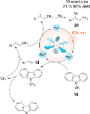
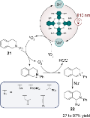
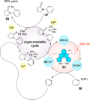
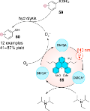
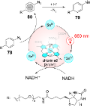
- the substrate, an activated ester 25, subsequently generating carbon-centered radicals without the need for sacrificial electron donors via a decarboxylation process. In reacting with electron-deficient alkenes or alkynes 26, these radicals further yield tetralin and dialin moieties 27, respectively
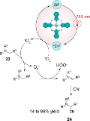
- , and heptamethin derivatives. The length of the polymethin chain has a pronounced effect on their absorption properties, with the addition of each conjugated carbon–carbon double bond causing a red shift of about 100 nm in the absorption spectrum. The formation of J-aggregates allows cyanin compounds
















Molecular diversity of the reactions of MBH carbonates of isatins and various nucleophiles
Beilstein J. Org. Chem. 2025, 21, 286–295, doi:10.3762/bjoc.21.21
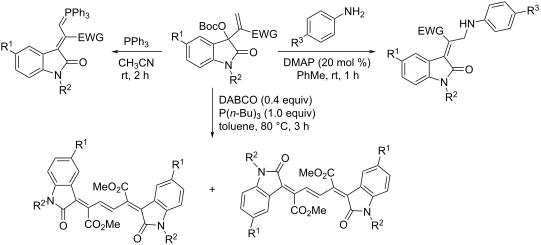
- derivatives. At first, a Lewis base attack at the α-position of the MBH nitrile of isatin resulted in the intermediate A with elimination of carbon dioxide and tert-butoxide ion. Secondly, the product 3 was produced by the SN2 substitution of the Lewis base by the arylamine. When MBH maleimides of isatin were
- used in the reaction, a direct Michael addition of the arylamine to the C=C bond of the maleimide unit and sequential elimination of carbon dioxide and tert-butoxide ion gives the intermediate B, which in turn undergoes an allylic rearrangement to afford the product 5. In this process, no extra
- addition of Lewis base is needed. When triphenylphosphine or tri(n-butyl)phosphine were involved in the reaction, the similar SN2’ substitution of tri(n-butyl)phosphine with the elimination of carbon dioxide and tert-butoxide anion gives the phosphonium salt C. Then, the deprotonation of phosphonium salt C



Oxidation of [3]naphthylenes to cations and dications converts local paratropicity into global diatropicity
Beilstein J. Org. Chem. 2025, 21, 277–285, doi:10.3762/bjoc.21.20
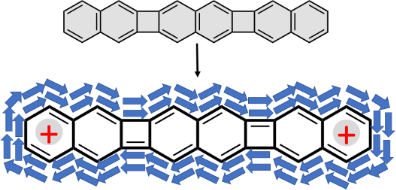
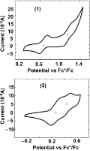
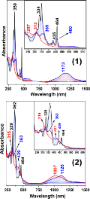
- Electrochemistry Cyclic voltammetry experiments were conducted with a three-electrode geometry operating with a glassy carbon as the working electrode. A Pt-coil counter electrode. and an Ag wire, as the pseudo-reference, were used. Potential values are given with respect to the ferrocene/ferrocenium (Fc/Fc


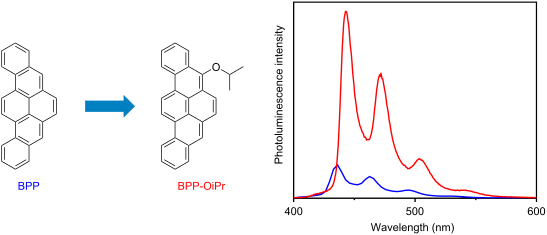
Synthesis and characterizations of highly luminescent 5-isopropoxybenzo[rst]pentaphene
Beilstein J. Org. Chem. 2025, 21, 270–276, doi:10.3762/bjoc.21.19
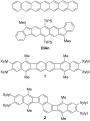
- Islam S. Marae Jingyun Tan Rengo Yoshioka Zakaria Ziadi Eugene Khaskin Serhii Vasylevskyi Ryota Kabe Xiushang Xu Akimitsu Narita Organic and Carbon Nanomaterials Unit, Okinawa Institute of Science and Technology Graduate University, 1919-1 Tancha, Onna-son, Kunigami-gun, Okinawa 904-0495, Japan




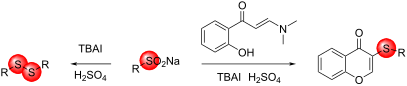
Synthesis of disulfides and 3-sulfenylchromones from sodium sulfinates catalyzed by TBAI
Beilstein J. Org. Chem. 2025, 21, 253–261, doi:10.3762/bjoc.21.17
- Zhenlei Zhang Ying Wang Xingxing Pan Manqi Zhang Wei Zhao Meng Li Hao Zhang School of Chemistry and Material Engineering, Anhui Provincial Key Laboratory of Green Carbon Chemistry, Engineering Research Center of Biomass Conversion and Pollution Prevention of Anhui Educational Institutions, Biomass
- prevented their widespread use on a large scale. Recently, research efforts have focused on exploring alternative reagents that offer the advantages of being odorless and more stable than thiols. These alternatives include sulfonyl chloride [26], sulfonyl hydrazine [27], carbon disulfide [28], and sodium



Effect of substitution position of aryl groups on the thermal back reactivity of aza-diarylethene photoswitches and prediction by density functional theory
Beilstein J. Org. Chem. 2025, 21, 242–252, doi:10.3762/bjoc.21.16
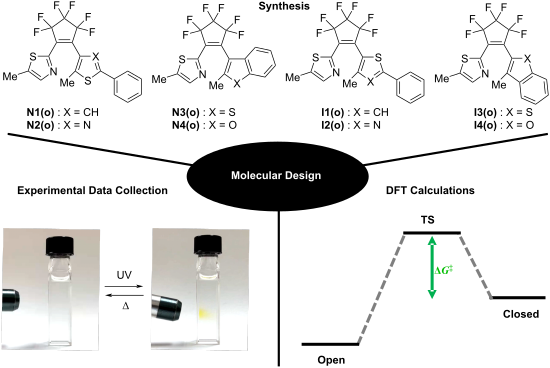
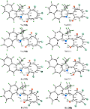
- generated and followed using the keyword Guess (mix, always). The frequency calculation for the TS was carried out to confirm that there is only one imaginary frequency corresponding to the stretching vibration between the nitrogen and the carbon atoms at the reactive site. The frequency calculation for



Streamlined modular synthesis of saframycin substructure via copper-catalyzed three-component assembly and gold-promoted 6-endo cyclization
Beilstein J. Org. Chem. 2025, 21, 226–233, doi:10.3762/bjoc.21.14
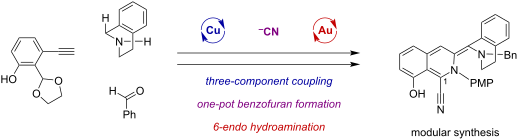
- expected to facilitate the 6-endo-dig cyclization to the distant sp-carbon on the alkyne, as demonstrated by Fujii and Ohno in their total synthesis of (−)-quinocarcin [52][53]. Secondly, the 6-endo-cyclized product 12, bearing the furan-conjugated isoquinoline-type framework, is predicted to be
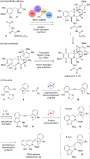
- Strecker reaction and cyclization to form the 2,3-diaminobenzofuran moiety, and gold(I)-promoted cascade sequence via 6-endo hydroamination, spontaneous dehydrogenative oxidation followed by ring opening. Carbon numbering was assigned in accordance with natural products. The structure of 16 was determined




Heteroannulations of cyanoacetamide-based MCR scaffolds utilizing formamide
Beilstein J. Org. Chem. 2025, 21, 217–225, doi:10.3762/bjoc.21.13
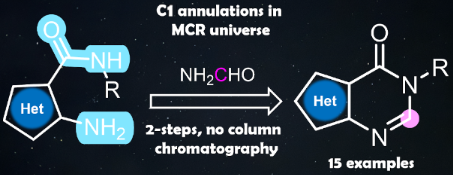
- Marios Zingiridis Danae Papachristodoulou Despoina Menegaki Konstantinos G. Froudas Constantinos G. Neochoritis Department of Chemistry, University of Crete, Voutes, 71003 Heraklion, Greece 10.3762/bjoc.21.13 Abstract C1 chemistry has a central role in the efficient utilization of single-carbon
- structure was obtained, revealing certain geometrical features. Keywords: 2-amino-substituted heterocycles; cyanoacetamide; Gewald reaction; multicomponent reaction (MCR); pyrimidine; Introduction The term “net-zero carbon” is becoming increasingly common as we consider a future marked by a rising global
- temperature and severe weather patterns – a result of human-induced greenhouse gas emissions. The principle of net-zero revolves around the idea of using Earth’s carbon resources at a rate that does not exceed their natural replenishment. In 2015, the United Nations introduced the Sustainable Development




Dioxazolones as electrophilic amide sources in copper-catalyzed and -mediated transformations
Beilstein J. Org. Chem. 2025, 21, 200–216, doi:10.3762/bjoc.21.12
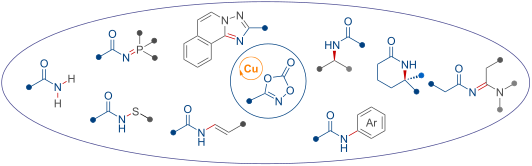
- iridium (Scheme 1b) [4][5][6][7][8][9][10][11][12][13][14][15][16][17][18][19]. Notably, dioxazolones have primarily been studied in directed carbon–hydrogen amidation processes, which can circumvent the need for tedious prefunctionalizations. Copper catalysts have gained recognition and attracted
- enantioselectivity. Furthermore, a lactam containing a quaternary carbon center (2g) was prepared. However, a lower enantioselectivity was observed for product 2h due to the similar steric environment of the two alkyl substituents. As shown in Figure 1, a catalytic cycle was proposed for the intramolecular C–H
- ) chloride reacts with boronic acids, forming the copper aryl complex INT-16, which then undergoes decarboxylative N–O bond insertion to generate the copper nitrenoid intermediate INT-17. Thereafter, nitrene insertion into the copper–carbon bond occurs, forming a new C(sp2)–N bond (INT-18). Finally, the


Quantifying the ability of the CF2H group as a hydrogen bond donor
Beilstein J. Org. Chem. 2025, 21, 189–199, doi:10.3762/bjoc.21.11
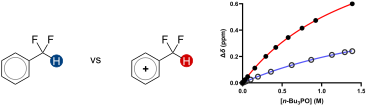
- oxygen, nitrogen, or sulfur, and a positively charged hydrogen atom, which interacts with a lone pair on the acceptor. Apart from these common heteroatom-containing hydrogen bond donors, certain carbon–hydrogen moieties can also act in this way, although in a substantially weaker capacity [5][6][7][8][9



Recent advances in electrochemical copper catalysis for modern organic synthesis
Beilstein J. Org. Chem. 2025, 21, 155–178, doi:10.3762/bjoc.21.9
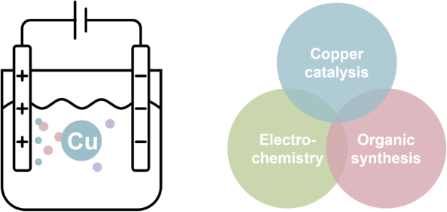
- electrochemistry and copper catalysis for various organic transformations. Keywords: copper; electrochemistry; radical chemistry; single-electron transfer; sustainable catalysis; Introduction Transition-metal-catalyzed cross-coupling has emerged as an effective method for forming carbon–carbon (C–C) and carbon
- enantioselective radical cyanation. In the proposed catalytic cycle, Co(III)–H species 92 are initially formed from the anodically oxidized Co(III) complex 91 and hydrosilane 88 (Figure 15). Subsequently, the HAT between the Co(III)–H catalyst 92 and the alkene 27 generates a carbon-centered radical species 93
- radical, which adds to the alkene 97 to form carbon-centered radical intermediate 106 (Figure 17). The resulting alkyl radical intermediate 106 then reacts with the Cu(II)(CN)2 catalyst 109 to produce a Cu(III) species 107, which undergoes reductive elimination to deliver the desired product 105 and the








Nickel-catalyzed cross-coupling of 2-fluorobenzofurans with arylboronic acids via aromatic C–F bond activation
Beilstein J. Org. Chem. 2025, 21, 146–154, doi:10.3762/bjoc.21.8
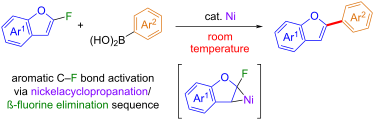
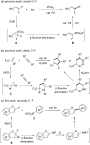
- coupling reactions of aromatic C–F and C–Br bonds with arylboronic acids. Keywords: arylboronic acid; benzofuran; C–F bond activation; cross-coupling; nickel; Introduction The metal-catalyzed activation of aromatic carbon–fluorine (C–F) bonds is widely recognized as a challenging task in synthetic
- -deficient carbon atom owing to the nearby fluorine and oxygen atoms. We expected that 2-fluorobenzofurans 1 could form nickelacyclopropanes E upon treatment with zero-valent nickel species. Subsequent β-fluorine elimination from these intermediates E would facilitate the activation of aromatic C–F bonds



Cu(OTf)2-catalyzed multicomponent reactions
Beilstein J. Org. Chem. 2025, 21, 122–145, doi:10.3762/bjoc.21.7

- to multiple C–C bonds generates extended carbon radicals capable of giving further functionalization. Regarding the ionic mechanism, the key step generally comprises the complexation with the unsaturated substrate leading to activation of the alkenyl/alkynyl moiety towards a nucleophilic attack. In
- orientation between the electron-rich nitrogen of the diene and the electron-poor carbon of the alkyne. A different one-pot procedure affording tetrahydropyridines was developed employing two molecules of aromatic aldehydes, ethyl acetoacetate and two molecules of aniline. The copper triflate catalyst acts in










Emerging trends in the optimization of organic synthesis through high-throughput tools and machine learning
Beilstein J. Org. Chem. 2025, 21, 10–38, doi:10.3762/bjoc.21.3
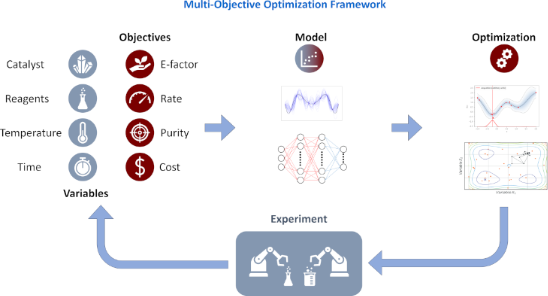
- different conditions. This parallel reactor setup was successfully utilized for the multistep synthesis of 18 compounds of an anticonvulsant drug, employing various reaction pathways to perform photoredox carbon–nitrogen cross-coupling reactions. A parallel droplet flow system was developed by Eyke et al


Synthesis, structure and π-expansion of tris(4,5-dehydro-2,3:6,7-dibenzotropone)
Beilstein J. Org. Chem. 2025, 21, 1–7, doi:10.3762/bjoc.21.1
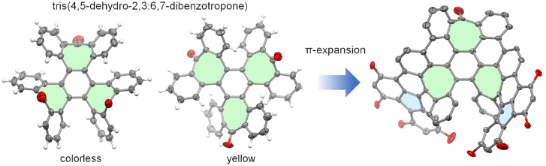
- Abstract The polycyclic skeleton of tris(4,5-dehydro-2,3:6,7-dibenzotropone) is a key structural fragment in carbon schwarzites, a theoretical form of negatively curved carbon allotrope. This report presents a new synthesis of this compound using a Ni-mediated Yamamoto coupling reaction and structural
- , expanding its π-skeleton through the Barton–Kellogg and Scholl reactions led to the successful synthesis of a curved polycyclic arene containing three heptagons and two pentagons. Keywords: carbon schwarzites; polycyclic arenes; Scholl reaction; seven-membered carbocycle; Yamamoto coupling; Introduction
- -tropone” in literature [1][2], although it should be named as 9H,18H,27H-hexabenzo[c,c′,c′′,f,f′,f′′]benzo[1,2-a:3,4-a′:5,6-a′′]triscycloheptene-9,18,27-trione according to the IUPAC nomenclature. We became interested in compound 1 because its polycyclic skeleton presents a key structural unit in carbon


Reactivity of hypervalent iodine(III) reagents bearing a benzylamine with sulfenate salts
Beilstein J. Org. Chem. 2024, 20, 3281–3289, doi:10.3762/bjoc.20.272
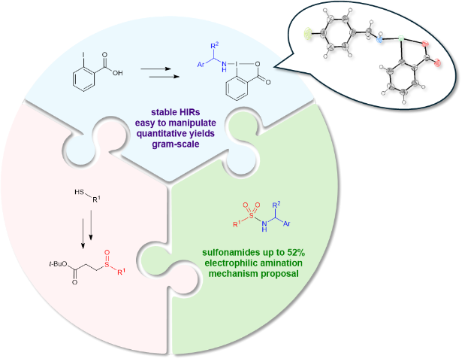
- conducted at room temperature for 20 hours, which resulted in a reduction of the yield for 5aa to 9% (Table 1, entry 5). This result might be due to the reactivity of this hypervalent iodine reagent. Indeed, we have previously observed that the transfer of the benzylamine moiety to carbon-based nucleophiles
- slight decrease observed for 5ac, with chiral (R)-1-((1-phenylethyl)amino)-1,2-benziodoxol-3-(1H)-one (2c), can be attributed to potential steric hindrance induced by the methyl group attached to the benzylic carbon, which may hinder the nucleophile’s access to the electrophilic center of the HIR. The



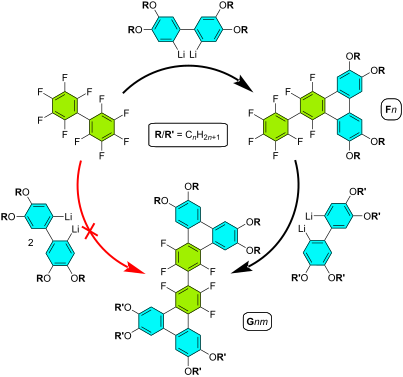
Efficient synthesis of fluorinated triphenylenes with enhanced arene–perfluoroarene interactions in columnar mesophases
Beilstein J. Org. Chem. 2024, 20, 3263–3273, doi:10.3762/bjoc.20.270
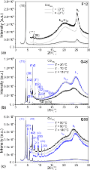
- along the main axes: ORTEP diagram showing 50% thermal ellipsoid probability: carbon (gray), fluorine (green), and hydrogen (white). POM textures, observed between crossed polarizers of Janus and dimer, F6, F12, G66, and G48, respectively, as representative examples. More images can be seen in



Non-covalent organocatalyzed enantioselective cyclization reactions of α,β-unsaturated imines
Beilstein J. Org. Chem. 2024, 20, 3221–3255, doi:10.3762/bjoc.20.268
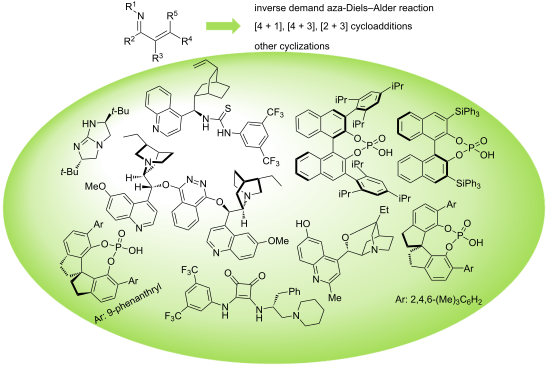
- construction of carbon–carbon bonds [5][6][7][8][9][10]. The hetero-Diels–Alder reaction is therefore an attractive strategy for the synthesis of heterocyclic compounds. It involves the reaction of dienes or dienophiles which possess a heteroatom in their structure. In this reaction, the HOMO of the diene and
- enantioselectivities (90–99% ee). This result could be attributed to the higher steric hindrance at the carbon atom of the imine. On the other hand, the reaction of 3-isothiocyanatooxindoles 4 and dienimines 9 afforded the cascade cycloadducts 10 in high yields (74–94%) and excellent diastereoselectivities (>20:1 dr
- isocyanide carbon, behaves a C3 synthon affording benzo[d]isothiazole 1,1-dioxide-dihydropyrroles 27 bearing two adjacent stereocenters in high yields (27–98%) and with moderate to excellent stereoselectivities (54–97% ee) when using thiourea IX (Scheme 10). The cyclization was observed with all derivatives