


Search results
Search for "energy" in Full Text gives 1410 result(s) in Beilstein Journal of Organic Chemistry. Showing first 200.
Controlled oligomerization of [1.1.1]propellane through radical polarity matching: selective synthesis of SF5- and CF3SF4-containing [2]staffanes
Beilstein J. Org. Chem. 2024, 20, 3134–3143, doi:10.3762/bjoc.20.259
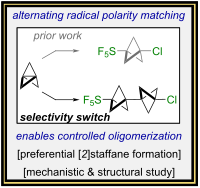
- nanotechnology [5], liquid crystal design [6][7][8][9][10], and the study of energy-transfer [11][12] or electron-transfer [13][14][15][16][17] processes. We also posit that lower-order [n]staffanes (i.e., n = 2 or 3) are potentially valuable C(sp3)-rich bioisosteres [18][19] that have been seemingly overlooked
- energy profile of the radical chain propagation sequence was computed at the PWPB95-D4/def2-QZVPP//PCM(Et2O)-ωB97X-D/def2-TZVP level of theory [51][52][53][54][55][56][57][58] (Figure 2). Following addition of an SF5 radical to 1 to form INT1, a Cl atom could be abstracted from SF5Cl via TS1 to form 4 or
- , alternatively, INT1 could be added to another equiv of 1 via TS2 to form INT2. Although formation of 4 is notably more thermodynamically favorable than INT2 (ΔΔG = −9.2 kcal/mol), a small difference in activation free energy is predicted (ΔΔG‡ = −1.4 kcal/mol). This, at least in part, provides an explanation as


Advances in the use of metal-free tetrapyrrolic macrocycles as catalysts
Beilstein J. Org. Chem. 2024, 20, 3085–3112, doi:10.3762/bjoc.20.257
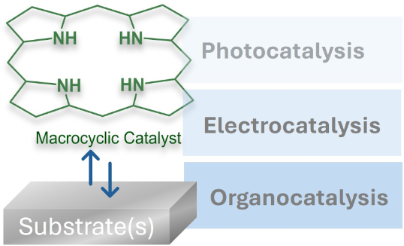
- with porphyrins, the direct linkage between their pyrrole units leads to a more contracted cavity compared to that of porphyrins. Similar to calix[4]pyrroles, synthetic metallo- and free-base (metal-free) porphyrins find various applications in the fields of medicine, energy, catalysis, molecular
- second-sphere interactions with a multipoint hydrogen-bonding pattern enhance CO2 reduction in organic solvents, improving stability, facilitating proton transfer, reducing energy barriers, and increasing selectivity [20]. Apart from advances in synthetic methodologies [2][21][22][23], the exploration of
- to absorb significant amounts of visible light photons, which allows them to reach an excited state. The excited porphyrin molecule is likely to undergo energy transfer (ET; photosensitization) or single-electron transfer (SET; photoredox catalysis) to substrate molecules (Figure 13). In


Enantioselective regiospecific addition of propargyltrichlorosilane to aldehydes catalyzed by biisoquinoline N,N’-dioxide
Beilstein J. Org. Chem. 2024, 20, 3069–3076, doi:10.3762/bjoc.20.255
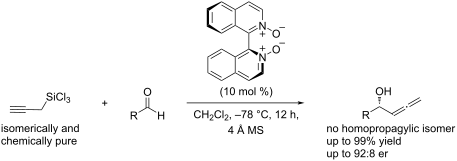
- ) which is 1.2 kcal/mol lower in energy than IN1. The IN1→IN2 transformation is driven by the redistribution of the negative charge on C1 in IN1. In particular, the Mulliken charge on C1 reduces from −0.77e to −0.66e and the charge on C3 increases from −0.43e to −0.55e and facilitate Coulombic interaction
- the two transformations. Studies directed toward a better understanding of possible transition-state structures and the design of new catalysts to improve the results are currently underway in our laboratories. A potential energy surface (PES) for the proposed mechanism for (a) isomerization of


Extension of the π-system of monoaryl-substituted norbornadienes with acetylene bridges: influence on the photochemical conversion and storage of light energy
Beilstein J. Org. Chem. 2024, 20, 3061–3068, doi:10.3762/bjoc.20.254
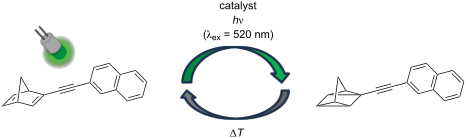
- Gutenberg University Mainz, Duesbergweg 10–14, 55128 Mainz, Germany 10.3762/bjoc.20.254 Abstract The photochromic norbornadiene/quadricyclane pair is a promising system for molecular solar thermal (MOST) energy storage, with which solar energy may be converted, stored, and released as heat in one integral
- up to 8 h at room temperature. Furthermore, the norbornadienes were transformed quantitatively into their quadricyclane photoproducts by irradiation with green light (520 nm) in the presence of a photosensitizer. Keywords: light energy conversion; photochemistry; photochromism; quadricyclanes
- ; Sonogashira–Hagihara coupling; Introduction The application of sustainable energy storage and supply has become a very important issue both from an economic and ecological point of view. In particular, the global energy demand is continuously expanding because of the increasing population, the development of


Cyclodextrin-based rotaxanes for polymer materials: challenge on simultaneous realization of inexpensive production and defined structures
Beilstein J. Org. Chem. 2024, 20, 3026–3049, doi:10.3762/bjoc.20.252
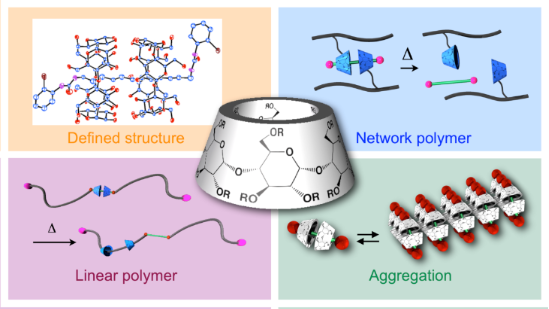
- . Keywords: cyclodextrin; defined structure; precise synthesis; rotaxanes; stimuli-responsive material; Introduction Stimuli-responsive materials can satisfy the existing high demands on such materials owing to their multiple functionalities (e.g., for effective energy storage or as decomposables under mild
- ]rotaxane. In this case, the energy diagram of the deslipping reaction differs from those of the ones bearing a [2]rotaxane intermediate (Figure 9E). As revealed in this study, the CD-based size-complementary rotaxane exhibiting a simple framework (no ionic substituents nor deoxynucleotide) was obtained
- small thickness are used. Moreover, this polymer can dissolve in water owing to the hydrophilicity of the CD units. Based on the above method, a conjugative polymer containing triphenylamine- (TPA)-modified β-CD was reported (Figure 13B) [82]. In this system, the excitation energy and electron transfer






Tunable full-color dual-state (solution and solid) emission of push–pull molecules containing the 1-pyrindane moiety
Beilstein J. Org. Chem. 2024, 20, 3016–3025, doi:10.3762/bjoc.20.251
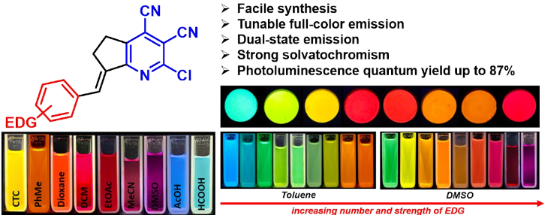
- , which is a rare approach for such fluorophores. Another rare phenomenon for push–pull molecules is dual-state emission (DSE) [45][46][47]. At the same time, the scope of applications of fluorophores exhibiting DSE is much wider. This is due to the fact that DSE molecules, after absorbing energy, are
- highest fluorescence efficiency of 53.4% was observed for the para-methyl derivative 1b. Solutions of stilbazoles 1 in DMSO were also characterized by large Stokes shift values, reaching 207 nm (5846 cm−1) and showing nonradiative loss of excitation energy. It should be noted that stilbazoles 1, in


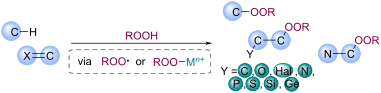
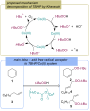
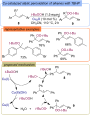
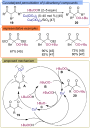
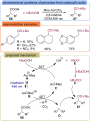
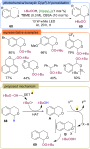
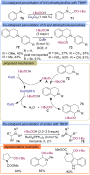
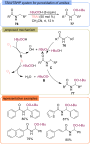
Advances in radical peroxidation with hydroperoxides
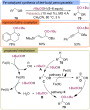
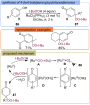
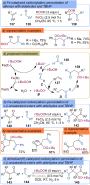
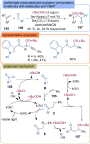
Beilstein J. Org. Chem. 2024, 20, 2959–3006, doi:10.3762/bjoc.20.249
















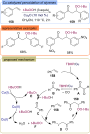


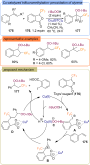
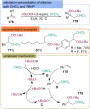

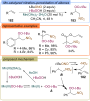
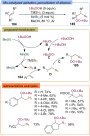


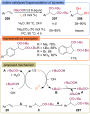
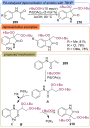

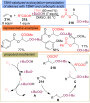


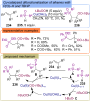
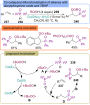
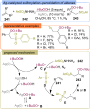


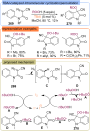



The charge transport properties of dicyanomethylene-functionalised violanthrone derivatives
Beilstein J. Org. Chem. 2024, 20, 2921–2930, doi:10.3762/bjoc.20.244
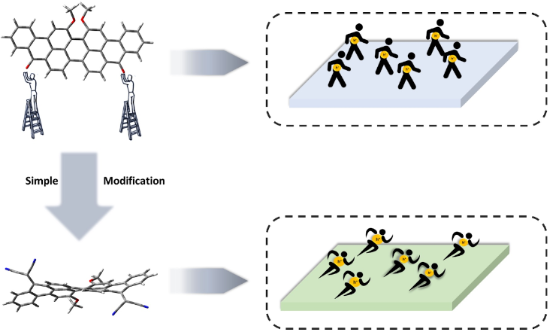
- potentially efficient and isotropic charge transport [12]. It is also evident that the presence of the two dicyanomethylene groups in compound 3 are responsible for lowering the energy of the two frontier molecular orbitals and for narrowing the energy gap between HOMO and LUMO. This is likely due to an
- enhanced push–pull effect in this molecule due to the presence of a stronger acceptor. Furthermore, the energy of the LUMO of compound 3 is comparable to reported PDI-based acceptors which have been used in OPVs with PCE > 7% [34]. Crystallographic study Needle-shape crystals of compound 3b suitable for


Recent advances in transition-metal-free arylation reactions involving hypervalent iodine salts
Beilstein J. Org. Chem. 2024, 20, 2891–2920, doi:10.3762/bjoc.20.243

- the study. The results demonstrated that the diphenyliodonium triflate has a feasible energy barrier of 21.5 kcal/mol and can be readily converted into a stable iodonium thiolate species. This species can further undergo a C–S bond-forming reductive elimination, providing the sulfide product. As a




Investigation of a bimetallic terbium(III)/copper(II) chemosensor for the detection of aqueous hydrogen sulfide
Beilstein J. Org. Chem. 2024, 20, 2818–2826, doi:10.3762/bjoc.20.237
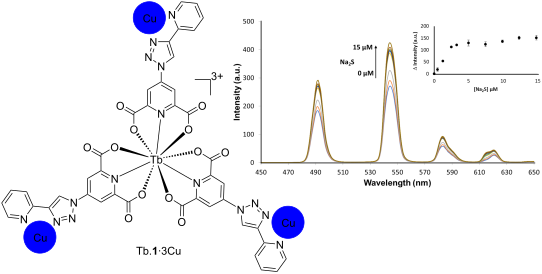
- luminescence upon exposure to gaseous H2S. To assess whether this observed behavior is consistent and potentially attributed to the energy levels of the Tb3+ ion, we conducted the gaseous studies with [Tb.1·3Cu]3+. Upon exposure to H2S gas using the established experimental setup, the [Tb.1·3Cu]3+ complex did
- proposed to function by Cu2+ sequestration. The remaining report is of a terbium(III) complex [Tb(DPA-N3)3]3− (Figure 7), which contains an aryl azide-functionalized ligand. In this system the azide functionality prohibits the energy transfer to the lanthanide ion, effectively quenching luminescence. In
- did with ([Eu(triazole-DPA)3·Cu]3+, however for the terbium(III) complexes, the electronic state of the ligand, [triazole-DPA]2− is altered, resulting in the energy gap of the ligand and the excited energy level of the Tb3+ ion being smaller. This would facilitate efficient back-energy transfer from


Synthesis and antimycotic activity of new derivatives of imidazo[1,2-a]pyrimidines
Beilstein J. Org. Chem. 2024, 20, 2806–2817, doi:10.3762/bjoc.20.236
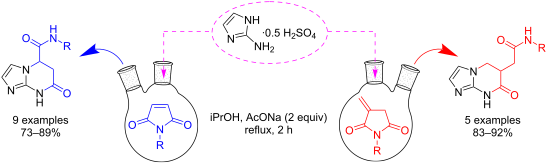
- 2 and 3, the minimum energy paths (MEPs) of these processes were calculated. Quantum chemical DFT calculations were performed using the B3LYP/6-311++G(d,p) basis set and taking into account solvation effects using the polarizable continuum model (PCM). Interactions of 1 with N-phenylmaleimide (2a
- and 7a are formed (Scheme 4). Although intermediate 7a has a lower activation energy (∆G = −0.23 kcal/mol), further recyclization processes are not possible due to the positive free energy change (∆G > 0). In this context, the formation of the final product is only possible to proceed via intermediate
- irreversible process, given that it is thermodynamically challenging to revert the formed target product 4a to the original starting substances or the corresponding intermediate 6a (∆G(4a→6a) = + 4.04 kcal/mol). Meanwhile, a minimal difference in the free energy of intermediates 6a and 7a may facilitate their


Mechanochemical difluoromethylations of ketones
Beilstein J. Org. Chem. 2024, 20, 2799–2805, doi:10.3762/bjoc.20.235
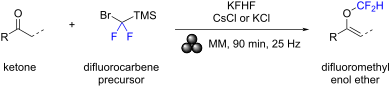
- absorption of mechanical energy and they are influenced by several factors, including the lack of solvation, changes in morphology and rheology of the reaction mixtures during the milling, and variations in concentration and dielectric environment. Consequently, an increased reactivity can be achieved


Access to optically active tetrafluoroethylenated amines based on [1,3]-proton shift reaction
Beilstein J. Org. Chem. 2024, 20, 2776–2783, doi:10.3762/bjoc.20.233
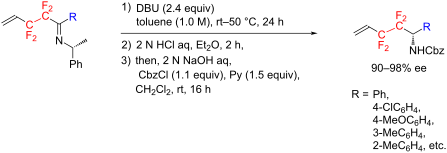
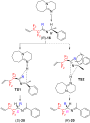
- transition state is not stabilized, leading to the increase of the activation energy of the reaction. As a result, the reaction does not proceed smoothly. The absolute configurations of product (S)-23c, (S)-23d, and (S)-23e were determined on the basis of their X-ray crystallographic analyses. The validity



Interaction of a pyrene derivative with cationic [60]fullerene in phospholipid membranes and its effects on photodynamic actions
Beilstein J. Org. Chem. 2024, 20, 2732–2738, doi:10.3762/bjoc.20.231
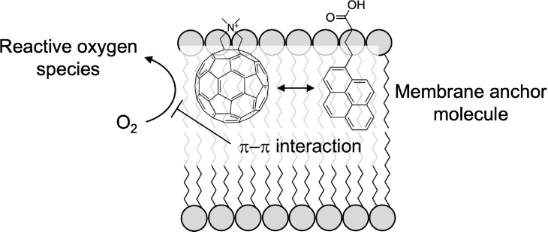
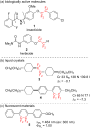
- the 1O2 adduct of 4-oxo-TEMP (4-oxo-TEMPO) were observed in the dispersion of catC60-lip ([catC60] = 5 µM) in PBS(–) showing an evidence of energy transfer reaction by the photoexcited catC60 (Figure 5a(ii)). In the presence of electron donor (NADH) under photoirradiation, •OH generation was observed
- same time, unusually fast conversion of O2•– to •OH was also suggested in this system. The results above suggest that catC60-lip generated both types of ROS (1O2 and •OH) via energy transfer and electron transfer mechanisms. The present results are in line with previous studies of photoinduced ROS


5th International Symposium on Synthesis and Catalysis (ISySyCat2023)
Beilstein J. Org. Chem. 2024, 20, 2704–2707, doi:10.3762/bjoc.20.227
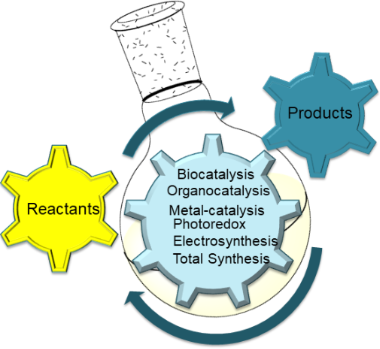
- extraordinary advances over the past 150 years. They are a crucial tool for the development of new molecules across a wide range of fields, including drug discovery, energy, materials science, and many more. The ability to design and create novel compounds through organic synthesis, aided by catalysis, is
- significantly impact the production of enhanced Nafion membranes, contributing to the development of more efficient decarbonized energy systems based on hydrogen technologies. The six triazinephosphonate derivatives bearing 4-aminophenyl or 4-hydroxyphenyl groups were obtained in very good yields through a
- fluorescence quantum yield, which is an important property for their potential application in the field of optoelectronics (particularly for energy and biological chemistry applications). In this thematic issue, Nieto et al. contributed a timely Review article on the chemical space of 2-phenethylamines

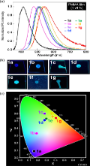
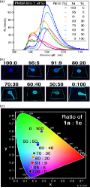
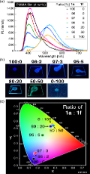
Photoluminescence color-tuning with polymer-dispersed fluorescent films containing two fluorinated diphenylacetylene-type fluorophores
Beilstein J. Org. Chem. 2024, 20, 2682–2690, doi:10.3762/bjoc.20.225
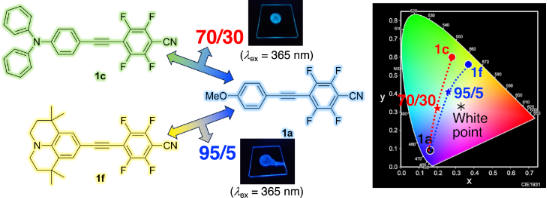
- white-light-emitting materials. Keywords: energy transfer; fluorinated diphenylacetylenes; photoluminescence; polymer-dispersed films; white luminescence; Introduction Luminescent materials in lighting and display devices have become indispensable in daily life [1][2][3]. In recent years, organic
- electroluminescent devices have attracted significant attention as lightweight and energy-saving optical devices, and there has been a strong demand for the development of luminescent materials. Until now, the design of solid-state light-emitting materials has not been established, and therefore, their development
- photoluminescence (PL) have been developed, whereas red PL with PL wavelengths in the long wavelength region is considered difficult to achieve owing to the energy gap law [11][12][13]. Over the past few decades, our group has been vigorously pursuing the exploration of functional molecules with a linear


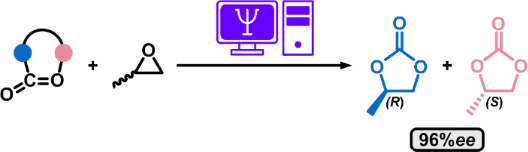
Computational design for enantioselective CO2 capture: asymmetric frustrated Lewis pairs in epoxide transformations
Beilstein J. Org. Chem. 2024, 20, 2668–2681, doi:10.3762/bjoc.20.224
- -D3(BJ)/def2-SVP computational level. Single point energy calculations on the optimised structures were run at the B3LYP-D3(BJ)/def2-TZVP level to obtain more accurate electronic energies. The reported free energies in this section correspond to the sum of the triple-zeta electronic energy and the
- free energy correction at double-zeta. The kinetics of some reactions were calculated, applying the transition state theory [40]. Within this theory, the rate constant of an elementary reaction with the free energy barrier ΔG‡ is given by Equation 1, where k is the rate constant in s−1, kB is the
- performance, for example, the reaction rate, is displayed as a function of the catalyst–substrate interaction, for example, the adsorption energy when considering a heterogeneous catalyst (Figure 1A). The resulting plot exhibits a volcano-like shape consisting of at least two slopes with the best-performing


Deciphering the mechanism of γ-cyclodextrin’s hydrophobic cavity hydration: an integrated experimental and theoretical study
Beilstein J. Org. Chem. 2024, 20, 2635–2643, doi:10.3762/bjoc.20.221
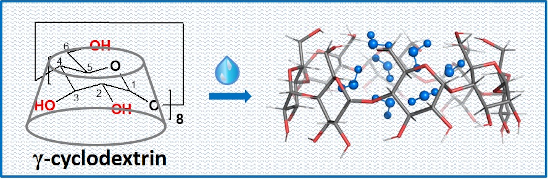
- ] hydration was employed: the geometries of γ-CD, water molecule/clusters and hydrated complexes were optimized at the M062X/6-31G(d,p) theoretical level and the electronic energy, Eel, of each structure was estimated. To obtain more accurate energies, single point calculations were made at the M062X/6-311++G
- is described in the first two papers in the series on the hydration of α-CD and β-CD, respectively [13][14]. The performed M062X/6-31G(d,p) frequency calculations for each structure ascertain that the wave function corresponds to a minimum on a potential energy hypersurface, but also yields the


Applications of microscopy and small angle scattering techniques for the characterisation of supramolecular gels
Beilstein J. Org. Chem. 2024, 20, 2608–2634, doi:10.3762/bjoc.20.220
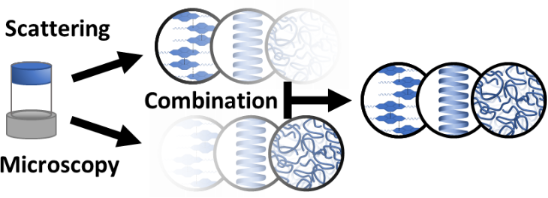
- supramolecular gels. Keywords: characterisation; electron microscopy; gelators; small angle scattering; supramolecular materials; Introduction Supramolecular gels are a versatile class of materials, and are of interest in many diverse applications from energy storage to cell culture [1][2]. The versatile


Transition-metal-free synthesis of arylboronates via thermal generation of aryl radicals from triarylbismuthines in air
Beilstein J. Org. Chem. 2024, 20, 2577–2584, doi:10.3762/bjoc.20.216
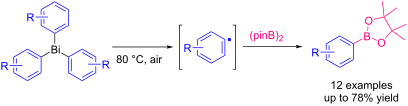
- aryl radicals without photocatalysts, and the trapping with diselenides afforded a variety of diaryl selenides [59]. Based on these backgrounds of our studies and the fundamental property, i.e., the weak bond dissociation energy of the Ph–Bi bond (46 kcal/mol) [60], we hypothesized that aryl radicals



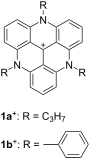
Anion-dependent ion-pairing assemblies of triazatriangulenium cation that interferes with stacking structures
Beilstein J. Org. Chem. 2024, 20, 2567–2576, doi:10.3762/bjoc.20.215
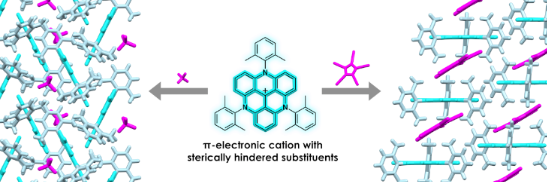
- S19 in Supporting Information File 1). Theoretically performed energy decomposition analysis (EDA) based on FMO2-MP2 using the basis set of NOSeC-V-DZP with MCP [37][38][39][40] for the anion and closely located 2+, as suggested by Hirshfeld surface analysis, revealed that short counteranion–TATA
- , respectively (Figure 8a,b and Figures S29 and S30 in Supporting Information File 1). The energy values for 2+-PCCp− are larger than other sets of ion pairs located at the side of TATA+ showing Etot of −63.1 kcal/mol. On the other hand, another proximally located ion pair in 2+-B(C6F5)4− showed similar Etot



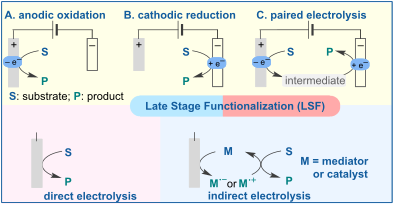
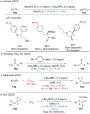
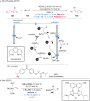
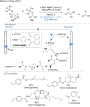
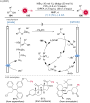
A review of recent advances in electrochemical and photoelectrochemical late-stage functionalization classified by anodic oxidation, cathodic reduction, and paired electrolysis
Beilstein J. Org. Chem. 2024, 20, 2500–2566, doi:10.3762/bjoc.20.214




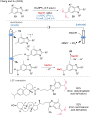

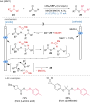
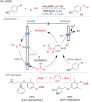


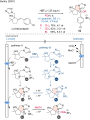





















Visible-light-mediated flow protocol for Achmatowicz rearrangement
Beilstein J. Org. Chem. 2024, 20, 2493–2499, doi:10.3762/bjoc.20.213
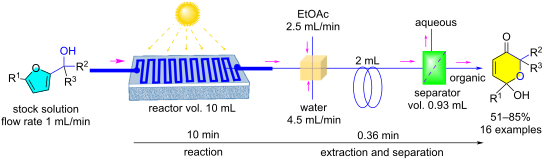
- and development of a visible light-assisted modular photo-flow reactor with a seamlessly integrated post-synthetic work-up procedure enabling the efficient synthesis of dihydropyranones from furfuryl alcohols. The reaction uses sun light as green energy source, and the novel photo-flow reactor
- batch protocol. This electrochemical batch process utilizes electricity to enhance the vibrational energy of the substrate for the completion of the reaction and involves a noble metal, such as Ni-DVBP as an electrode. Also, the batch technique encounters a serious issue when considered for bulk
- challenges. To address these points, a novel continuous photo-flow platform for the Achmatowicz reaction including integrated post-synthetic work-up in a safe and faster manner with less intervention of human was developed (Scheme 1 (2)). This process involves a nature abundant energy source such as sun


Machine learning-guided strategies for reaction conditions design and optimization
Beilstein J. Org. Chem. 2024, 20, 2476–2492, doi:10.3762/bjoc.20.212

- ]. Most of the existing methods were originally designed for predicting reaction properties (such as activation energy, reaction enthalpy, etc.) or classifying reactions, but they can be potentially adapted for reaction conditions prediction by modifying the output layer of the model. Both global reaction


Synthesis and conformational analysis of pyran inter-halide analogues of ᴅ-talose
Beilstein J. Org. Chem. 2024, 20, 2442–2454, doi:10.3762/bjoc.20.208
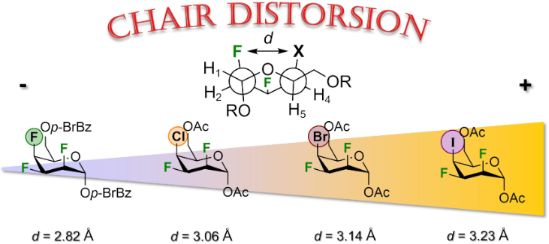
- in a chloroform solution, using the polarizable continuum model (PCM) [75]. A natural bonding orbital (NBO) analysis was performed to study the effects of hyperconjugation from C–F antibonding orbitals [76]. First, dipole moments, enthalpy and Gibbs free energy differences between 1C4 and 4C1 chair
- are nearly degenerate. In solution, the picture is much clearer: the 4C1 structure is always lower in enthalpy and Gibbs free energy, which corresponds with the experimental measurements. One can see that the gap between the two structures tends to decrease as the halogen becomes larger (the minor
- described the synthesis and conformational analysis of halogenated pyran analogues of ᴅ-talose. All analogues adopt standard 4C1-like conformations both in solution and in the solid-state. The conformations were corroborated using DFT calculations by looking at the energy, enthalpy and Gibbs’ free energy





