


Search results
Search for "carbon" in Full Text gives 2159 result(s) in Beilstein Journal of Organic Chemistry. Showing first 200.
Ceratinadin G, a new psammaplysin derivative possessing a cyano group from a sponge of the genus Pseudoceratina
Beilstein J. Org. Chem. 2024, 20, 3215–3220, doi:10.3762/bjoc.20.267
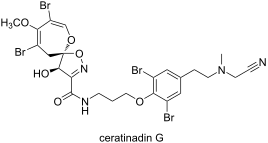
- 2.43) and methylene carbon C-22 (δC 46.3), and between H2-22 (δH 3.73) and N-methylene carbon C-20 (δC 58.7), indicated that C-22 was connected to 20-N. Additionally, an HMBC correlation was observed between H2-22 and the non-hydrogen-bearing carbon C-23. Considering the chemical shift of C-23 (δC
- inductive effect is attached to the carbon bearing the cyano group, the intensity of the absorption derived from the cyano group in the IR spectrum decreases significantly. This phenomenon has been reported, particularly in compounds where halogen or oxygen atoms are bonded to the carbon bearing the cyano
- group [16]. A similar effect is considered to occur when a nitrogen atom, which has a greater electronegativity than carbon, is attached. In fact, it has been reported that in aminoacetonitrile derivatives, the absorption due to the cyano group in the IR spectrum is either very weak or not observed [15


Discovery of ianthelliformisamines D–G from the sponge Suberea ianthelliformis and the total synthesis of ianthelliformisamine D
Beilstein J. Org. Chem. 2024, 20, 3205–3214, doi:10.3762/bjoc.20.266
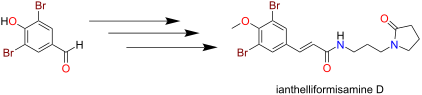
- ]. Methylenes resonating at δH 3.14, 1.64 and 3.20 were assigned to a three-carbon alkyl spin system that was flanked by nitrogen atoms [NH–(CH2)3–N] based on COSY correlations from the amide proton at δH 8.04. A terminal pyrrolidone was assigned based on COSY data for the three remaining methylene protons (δH
- 3.33, 1.91, 2.21), and a three-bond HMBC correlation from δH 3.33, and a two-bond correlation from δH 2.20 to the carbonyl resonating at δC 173.9 [15]. The observation of a 3JCH correlation from δH 3.20 to the nitrogen-bearing carbon at δC 46.4 and to δC 173.9 supported the assignment of the
- pyrrolidone moiety. A 1,3,4,5-tetrasubstituted aromatic ring was assigned based on 3JCH correlations from the isolated aromatic signal (δH 7.89) to its symmetrically placed carbon (δC 131.6) and to an oxygen-bearing carbon (δC 153.9) along with 2JCH correlations to a brominated (δC 118.0) and sp2 phenyl


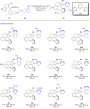
![[Graphic 1]](/bjoc/content/inline/1860-5397-20-266-i2.svg?max-width=637&scale=1.18182)
![[Graphic 2]](/bjoc/content/inline/1860-5397-20-266-i3.svg?max-width=637&scale=1.18182)
![[Graphic 3]](/bjoc/content/inline/1860-5397-20-266-i4.svg?max-width=637&scale=1.18182)

![[Graphic 4]](/bjoc/content/inline/1860-5397-20-266-i5.svg?max-width=637&scale=1.18182)
![[Graphic 5]](/bjoc/content/inline/1860-5397-20-266-i6.svg?max-width=637&scale=1.18182)

Direct trifluoroethylation of carbonyl sulfoxonium ylides using hypervalent iodine compounds
Beilstein J. Org. Chem. 2024, 20, 3182–3190, doi:10.3762/bjoc.20.263
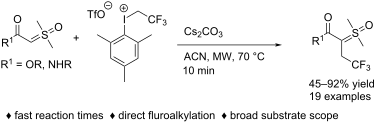
- versatile intermediates in organic synthesis due to their unique reactivity and ability to participate in a wide range of chemical transformations. In this scenario, sulfoxonium ylides are excellent substrates for bifunctionalization reactions, due to the ambiphilic character in their ylidic carbon [16
- ) hypervalent iodonium salts, for the efficient synthesis of fluorinated sulfoxonium ylides (Scheme 1c). Results and Discussion Since the introduction of hypervalent iodonium salts in organic chemistry, these valuable reagents have led to many new strategies for carbon–carbon bond formation [31][32]. Our


Surprising acidity for the methylene of 1,3-indenocorannulenes?
Beilstein J. Org. Chem. 2024, 20, 3144–3150, doi:10.3762/bjoc.20.260
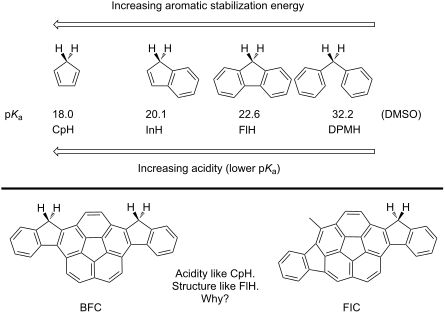
- is more nuanced [10][11]. Subsequently, literature and computational examples reveal a leitmotif for CpH-PAH-based redox-active carbon-rich materials. Results and Discussion From competitive titrations against 9-C6F5-fluorene (pKa = 28.14 in CH3CN) [12][13] and (4-Me-C6F4)(C6H5)CHCN (pKa = 26.98 in
- pentabenzocorannulene would produce air-stable radical and ionic PAHs, and that coupling such fragments would lead to stable redox-active carbon sheets. Conclusion In conclusion, the “surprise” in the surprising pKa for BIC and FIC was in our expectation of the deprotonated forms as poorly delocalized fluorenyl anions


Controlled oligomerization of [1.1.1]propellane through radical polarity matching: selective synthesis of SF5- and CF3SF4-containing [2]staffanes
Beilstein J. Org. Chem. 2024, 20, 3134–3143, doi:10.3762/bjoc.20.259
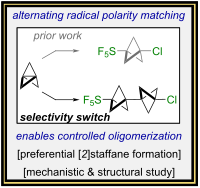
- , the carbon-centered radicals in both INT1 and INT4 are closer to strong electron-withdrawing groups than are the radical centers in INT2 and INT5, rendering INT1 and INT4 relatively more electrophilic. Inductive effects drop off steeply with distance, and it is also established that a substituent (or
- , e.g., a radical or cation) on the transannular carbon atom of a bicyclopentyl moiety can interact through space [35][63][64]. The consequence is ostensibly that more "nucleophilic" INT2 and INT5 are better matched for Cl atom abstraction from the "electrophilic" reagent (SF5Cl or CF3SF4Cl). To test
- this hypothesis, we examined computed trends in various electronic parameters for the INT1–INT3 and the INT4–INT6 series (Table 3). For instance, across several charge models (i.e., Hirshfeld [65], NPA [66][67][68], and CHELPG [69]), the charge (q) on the carbon atom on which the radical is centered


Hypervalent iodine-mediated intramolecular alkene halocyclisation
Beilstein J. Org. Chem. 2024, 20, 3113–3133, doi:10.3762/bjoc.20.258
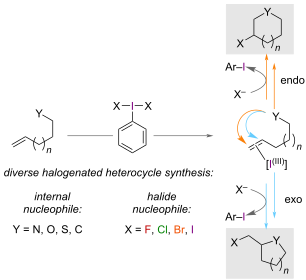
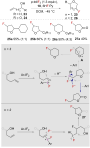
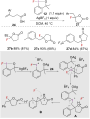
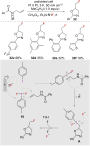
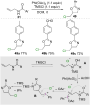
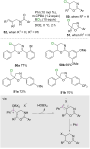
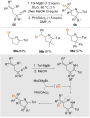
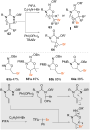
- , the intramolecular HVI-mediated halocyclisation of alkenes using carbon, oxygen, nitrogen or sulfur nucleophiles. Herein, we describe the examples reported in the literature, which are organised by the different halogens involved and the internal nucleophiles. Keywords: cyclisation; halogenation
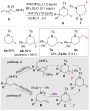
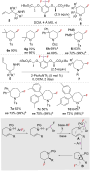
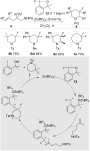
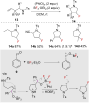
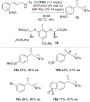
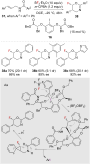
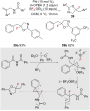
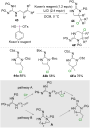
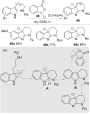
- fluoride and BF3·OEt2 as activator. A range of unsaturated amines 5 were cyclised to racemic β-fluorinated piperidines 6. Good yields were reported for all compounds except those with substituents present on the alkene. Homologation of the carbon chain from 5 to 6 carbons gave both 6- and 7-membered rings
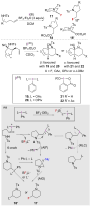
- good yields, demonstrating the scope of the reaction. The authors proposed an alternative reaction mechanism to those already described, in which trans-aminopalladation of the alkene, mediated by Pd(II), occurs with intramolecular attack of the nitrogen on the terminal carbon, generating a 6-membered

















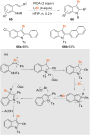


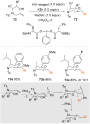
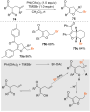


Advances in the use of metal-free tetrapyrrolic macrocycles as catalysts
Beilstein J. Org. Chem. 2024, 20, 3085–3112, doi:10.3762/bjoc.20.257
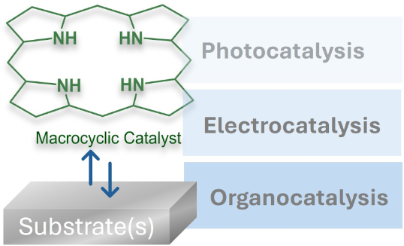
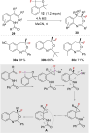
- ]pyrroles, and at the same time their conformation is rigid due to the presence of sp2-hybridized carbon bridges between the pyrrole units and alkyl groups on two of the inner N atoms of the macrocycle [64][65][66]. Among the OxP derivatives tested for organocatalysis (48a–i and 49a–i), only N-dialkylated


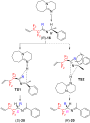
Enantioselective regiospecific addition of propargyltrichlorosilane to aldehydes catalyzed by biisoquinoline N,N’-dioxide
Beilstein J. Org. Chem. 2024, 20, 3069–3076, doi:10.3762/bjoc.20.255
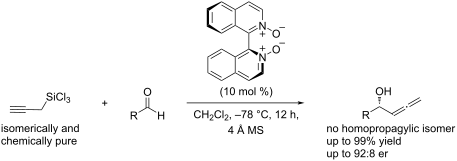
- ][15][16][17][18][19], the separation of which is by no means trivial [20] (Scheme 1). Nonetheless, substituents at the carbon atom indicated by γ (R2) of these reagents have been shown to bias the metallotropic rearrangement and/or the kinetic reactivity of the competing regioisomeric intermediates
- benzaldehydes, which may be attributable to that they have smaller steric demands in the vicinity of the carbonyl carbon atom than benzaldehyde. Importantly, we did not observe the corresponding homopropargylic alcohols [51] in all cases. Since this work is the first asymmetric catalysis study of isomerically


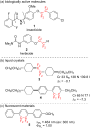
Tunable full-color dual-state (solution and solid) emission of push–pull molecules containing the 1-pyrindane moiety
Beilstein J. Org. Chem. 2024, 20, 3016–3025, doi:10.3762/bjoc.20.251
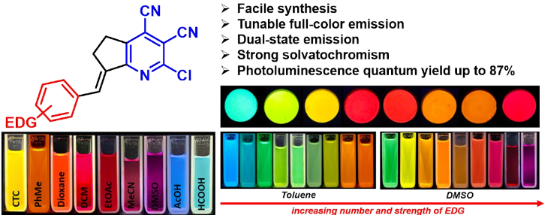
- the emission band was observed upon increasing the solvent polarity from carbon tetrachloride to DMSO, and the strongest fluorescence was registered in nonpolar medium (Φem = 87.5 % for compound 1c in toluene and Φem = 73.9% for compound 1i in CCl4). Slopes of the Lippert–Mataga plots (Figures S3 and


Advances in radical peroxidation with hydroperoxides
Beilstein J. Org. Chem. 2024, 20, 2959–3006, doi:10.3762/bjoc.20.249
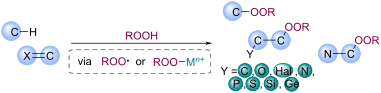
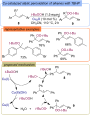
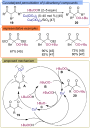
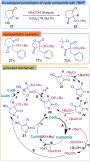
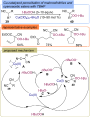
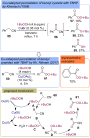
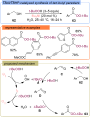
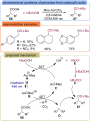
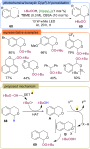
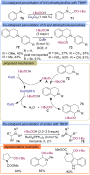
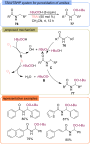
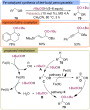
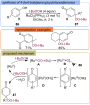
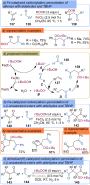
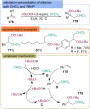
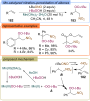
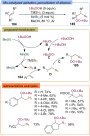
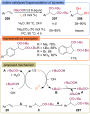
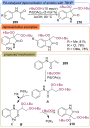
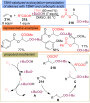
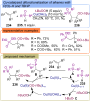
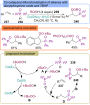
- tendency to recombine with C-centered radicals and add to unsaturated bonds with the formation of new carbon–oxygen bonds. However, alkoxy radicals, which are always present in such systems, are involved not only in the formation of ROO radicals but also in hydrogen atom transfer (HAT) processes and β
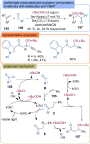
- alkenes 41 was disclosed (Scheme 17) [59]. The target 6-trifluoromethyl peroxides 42 were synthesized in good yields under mild conditions. The electrophilic CF3 radical A, generated from CF3SO2Na through single-electron oxidation by using Mnn/TBHP system, is captured by the carbon–carbon double bond to
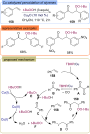
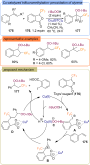
- generate the nucleophilic carbon radical B. The intramolecular 1,5-HAT of B provided the alkyl radical C, which then cross-coupled with the in situ-generated high-valent Mnn+1OO-t-Bu species to form the 1,6-difunctionalized product 42 via peroxy-ligand transfer. The remote trifluoromethylthiolation





























gem-Difluorovinyl and trifluorovinyl Michael acceptors in the synthesis of α,β-unsaturated fluorinated and nonfluorinated amides
Beilstein J. Org. Chem. 2024, 20, 2946–2953, doi:10.3762/bjoc.20.247
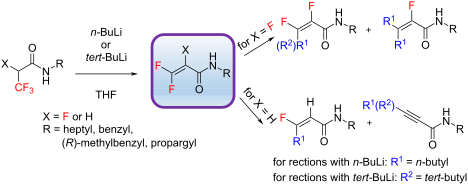
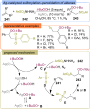
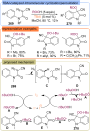
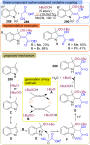
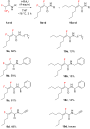
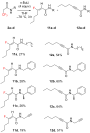
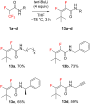
- series of new α,β-unsaturated amides, both fluorinated and nonfluorinated, were synthesized. Keywords: gem-difluorovinyl Michael acceptors; Michael addition; trifluorovinyl Michael acceptors; α,β-unsaturated amides; Introduction The Michael reaction, characterized by the addition of stable carbon
- nucleophiles to unsaturated compounds with electron-withdrawing groups, is a cornerstone in constructing carbon–carbon and carbon–heteroatom bonds [1]. It is instrumental in synthesizing natural products [2][3][4][5] and pharmaceuticals [6], underlining its significance in organic chemistry. Recent




Recent advances in transition-metal-free arylation reactions involving hypervalent iodine salts
Beilstein J. Org. Chem. 2024, 20, 2891–2920, doi:10.3762/bjoc.20.243

- unsymmetrical forms of these salts serve as effective electrophilic arylating reagents in various organic syntheses. The use of diaryliodoniums in C–C and carbon–heteroatom bond formations, particularly under metal-free conditions, has further enhanced the popularity of these reagents. In this review, we
- concentrate on various arylation reactions involving carbon and other heteroatoms, encompassing rearrangement reactions in the absence of any metal catalyst, and summarize advancements made in the last five years. Keywords: arylation reaction; diaryliodonium salts; electrophilic arylation reagent; metal-free
- ]. They offer several advantages over traditional reagents, including low toxicity, high reactivity, and excellent selectivity [43] under simple reaction conditions. The distinctive reactivity of DIAS enables the smooth arylation of various carbon and heteroatom nucleophiles under gentle conditions, with




Synthesis of pyrrole-fused dibenzoxazepine/dibenzothiazepine/triazolobenzodiazepine derivatives via isocyanide-based multicomponent reactions
Beilstein J. Org. Chem. 2024, 20, 2870–2882, doi:10.3762/bjoc.20.241
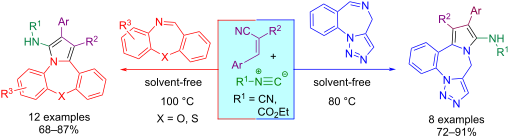
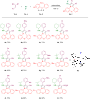
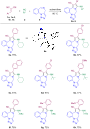
- . The signal at δ = 3.42 is the NH group. All the protons of the aromatic rings are located from δ = 7.10 to 7.99. In its 13C NMR spectrum, all of the carbon signals appear at δ = 158.3, 152.5, 134.7, 134.2, 133.9, 133.2, 130.8, 130.4, 129.2, 129.1, 129.0 128.9, 128.4, 127.4, 125.8, 122.6, 121.1, 120.6





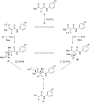
N-Glycosides of indigo, indirubin, and isoindigo: blue, red, and yellow sugars and their cancerostatic activity
Beilstein J. Org. Chem. 2024, 20, 2840–2869, doi:10.3762/bjoc.20.240
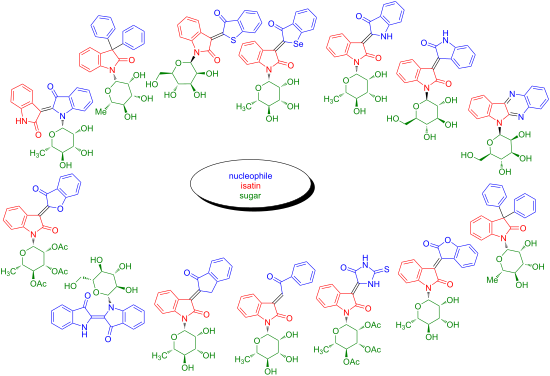
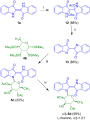
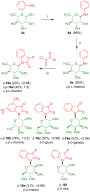
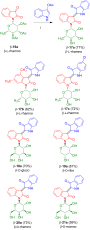
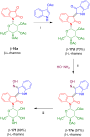
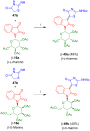
- substituent. The carbohydrate moiety also has an influence on the antiproliferative activity. The best activities were observed for rhamnosides, while the lowest activity was observed for galactoside β-20a. The configuration of the anomeric carbon atom of the rhamnoside did not show a major influence as very
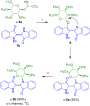
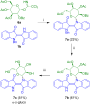
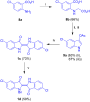
- from p-fluoroaniline which can be explained by the π-donating effect of fluorine which facilitates the cyclization via the ortho-position in case of m-, but not of p-fluoroaniline. It is worth to be noted that the formation of 23d proceeded with excellent regioselectivity via carbon C-6 rather than C-2
- isatin-N-glycosides derived from β-ᴅ-galactose, β-ᴅ-glucose, and β-ᴅ-xylose which might be due to their 1,2-trans configuration. An identical relative configuration (1,2-trans; 1,3-cis) is observed for the first three carbon atoms of β-ᴅ-galactose, β-ᴅ-glucose, and β-ᴅ-xylose. In contrast, for β-ᴅ











Multicomponent synthesis of α-branched amines using organozinc reagents generated from alkyl bromides
Beilstein J. Org. Chem. 2024, 20, 2834–2839, doi:10.3762/bjoc.20.239
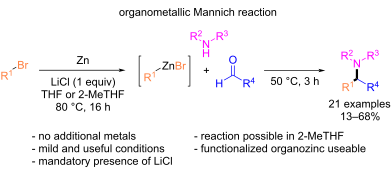
- organolithium reagents, thus limiting functional-group tolerance [11][12][13]. By contrast, heteroleptic (mixed) alkylzinc species (i.e., RZnX) are readily available and can typically be prepared from alkyl halides by direct insertion of metallic zinc into the carbon–halogen bond [14][15][16][17][18][19][20][21


Synthesis of tricarbonylated propargylamine and conversion to 2,5-disubstituted oxazole-4-carboxylates
Beilstein J. Org. Chem. 2024, 20, 2827–2833, doi:10.3762/bjoc.20.238

- various nucleophiles. This is because the imino carbon atom of 2 is also highly electrophilic, similar to DEMO [23][24][25]. This method offers an advantage over conventional methods as the N-acyl group can be modified by altering the acid amide. In this study, lithium acetylides were employed as
- through successive nucleophilic additions to the central carbon atom of DEMO. Cyclization of 4a quenched by D2O. Plausible mechanisms for the ring closure of 4. Hydration of the ethynyl group of 4a. Optimization of the reaction conditions for the reaction of 1a with the lithium acetylide of 3a. Addition


Investigation of a bimetallic terbium(III)/copper(II) chemosensor for the detection of aqueous hydrogen sulfide
Beilstein J. Org. Chem. 2024, 20, 2818–2826, doi:10.3762/bjoc.20.237
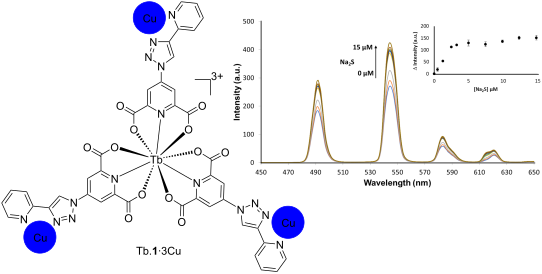
- hydrogen sulfide. Hydrogen sulfide (H2S) is now recognised as a significant gaseous signaling molecule, alongside nitric oxide and carbon monoxide; it belongs to the biologically active group known as "gaseous mediators" or "gasotransmitters" [1]. In mammalian systems, H2S is predominantly biosynthesized


Synthesis and antimycotic activity of new derivatives of imidazo[1,2-a]pyrimidines
Beilstein J. Org. Chem. 2024, 20, 2806–2817, doi:10.3762/bjoc.20.236
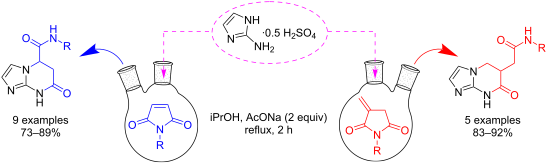
- C-3 of the imidazole core, would not be possible for the alternative imidazopyrimidine system. These results allowed us to reject the structure 11. The lack of correlation in the HMBC spectra between the protons of the amide fragment and the C-5 carbon atom, as well as the presence of cross-peaks of
- the H-5 proton with the C-8a nodal atom and the C-3 imidazole carbon atom, further supports the formation of product 4d. Strong interactions between protons of two methylene groups are the most noticeable features in the NOESY spectrum of the imidazo[1,2-a]pyrimidine 5d. Due to the conformational
- conformationally rigid seven-membered cycle. In the latter case, the picture would be different: the interaction of both methylene groups with the carbonyl carbon atom would be observed to an equal extent. In order to obtain additional information on the course of the reaction between 2-aminoimidazole 1 and imides


Mechanochemical difluoromethylations of ketones
Beilstein J. Org. Chem. 2024, 20, 2799–2805, doi:10.3762/bjoc.20.235
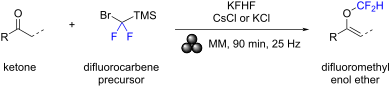
- by these findings, we now explored difluoromethylation reactions with compounds bearing less nucleophilic functional groups. Ketones caught our particular attention as they contain a weak nucleophilic carbonyl oxygen adjacent to an electrophilic carbonyl carbon. Previous studies have focused on
- sodium fluoride catalyst, with simple ketones, which resulted in the formation of difluoromethyl 2,2-difluorocyclopropyl ethers (Scheme 1B). Although the reactions worked well, it is also noteworthy that the use of TFDA as reagent, liberated fluoro(trimethyl)silane (TMSF), carbon dioxide, and ozone


C–C Coupling in sterically demanding porphyrin environments
Beilstein J. Org. Chem. 2024, 20, 2784–2798, doi:10.3762/bjoc.20.234
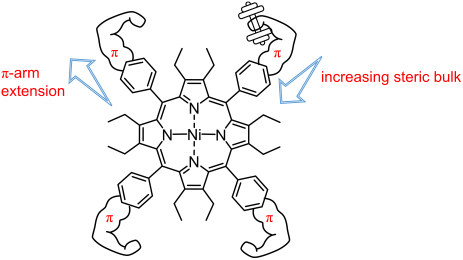
- illustrates that coupling phenyl, thiophene or other aryl moieties at this position would be extremely difficult. Furthermore, the distance between the o-bromine atoms and the nearest carbon neighbor of the β-ethyl groups is 3.7 Å, further complicates the success of coupling at this position. As discussed


Access to optically active tetrafluoroethylenated amines based on [1,3]-proton shift reaction
Beilstein J. Org. Chem. 2024, 20, 2776–2783, doi:10.3762/bjoc.20.233
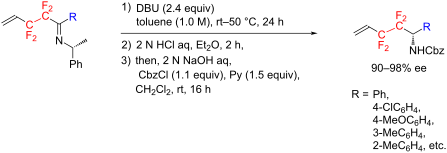
- reports on the preparation of chiral molecules possessing a tetrafluoroethylene unit on an asymmetric carbon center in a high optical purity, and to the best of our knowledge, only the following have been published so far (Scheme 1). As a highly enantioselective synthesis, there has been a pioneering work
- a tetrafluoroethylene group on an asymmetric carbon center. In order to overcome the current lack of synthetic methods for preparing such molecules, we came up with the idea of utilizing the [1,3]-proton shift reaction reported by Soloshonok et al. In 1997, Soloshonok et al. reported that
- , the negative charge generated on the imine carbon can be delocalized, hence the transition state is stabilized and the reaction proceeds smoothly. On the other hand, when the substituent R is an alkyl group, the negative charge generated on the imine carbon is an unstable factor, and therefore the



Copper-catalyzed yne-allylic substitutions: concept and recent developments
Beilstein J. Org. Chem. 2024, 20, 2739–2775, doi:10.3762/bjoc.20.232
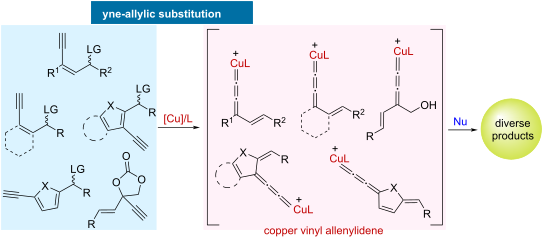
- rise to a series of differently substituted 1,4-enynes with monofluoroalkyl units in high yields and ee values (Scheme 18, 18a–i). The reaction effectively overcomes the drawbacks of low activity of tertiary carbon nucleophiles and instability of fluorinated compounds. Preliminary mechanistic studies
- stereoselective aromatization serves as a pivotal step in the transfer of central chirality to axial chirality (Scheme 52). To harness the full potential of CO2 as a renewable and abundant carbon source, He et al. [82] proposed an innovative strategy that married asymmetric yne-allylic substitution with CO2



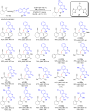


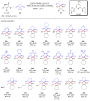


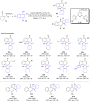


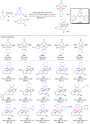




Computational design for enantioselective CO2 capture: asymmetric frustrated Lewis pairs in epoxide transformations
Beilstein J. Org. Chem. 2024, 20, 2668–2681, doi:10.3762/bjoc.20.224
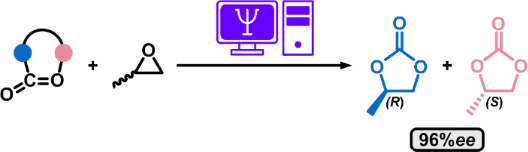
- , The University of Manchester, Oxford Road, Manchester, M13 9PL, UK Trinity Biomedical Sciences Institute, School of Chemistry, The University of Dublin, Trinity College, D02 R590 Dublin 2, Ireland 10.3762/bjoc.20.224 Abstract Carbon capture and utilisation (CCU) technologies offer a compelling
- strategy to mitigate rising atmospheric carbon dioxide levels. Despite extensive research on the CO2 insertion into epoxides to form cyclic carbonates, the stereochemical implications of this reaction have been largely overlooked, despite the prevalence of racemic epoxide solutions. This study introduces
- catalyst efficiency and selectivity in sustainable chemistry applications. Keywords: asymmetric catalysis; carbon dioxide; CO2; epoxide; frustrated Lewis pairs (FLPs); volcano plot; Introduction The field of frustrated Lewis pairs (FLPs) has flourished since their seminal discovery in 2006 by Stephan and


The scent gland composition of the Mangshan pit viper, Protobothrops mangshanensis
Beilstein J. Org. Chem. 2024, 20, 2644–2654, doi:10.3762/bjoc.20.222
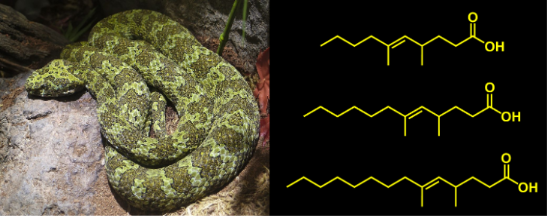
- vibrations. The linear gas chromatographic retention index (I) of Dm was 1595, lower than, e.g., 1621 reported for methyl 2,11-dimethyldodecanoate [18], indicating a multi-branched carbon chain. The number and positions of methyl groups along the chain can be estimated using the empirical calculation system


Applications of microscopy and small angle scattering techniques for the characterisation of supramolecular gels
Beilstein J. Org. Chem. 2024, 20, 2608–2634, doi:10.3762/bjoc.20.220
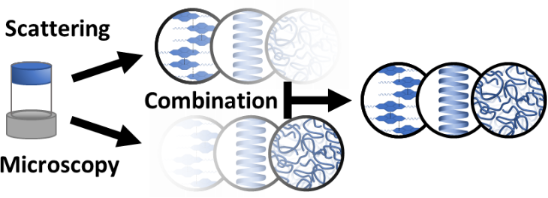
- number of structural features, but the sample preparation required can lead to significant changes in the materials morphology. EM requires many preparative steps to allow structures to be imaged including the application of an ultrathin coating of carbon, gold, or platinum. These are applied to conduct





