Search results
Search for "room temperature" in Full Text gives 2202 result(s) in Beilstein Journal of Organic Chemistry. Showing first 200.
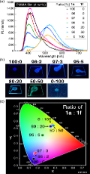
Photoluminescence color-tuning with polymer-dispersed fluorescent films containing two fluorinated diphenylacetylene-type fluorophores
Beilstein J. Org. Chem. 2024, 20, 2682–2690, doi:10.3762/bjoc.20.225
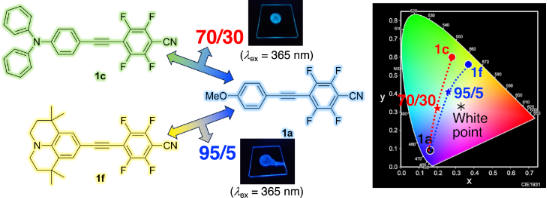
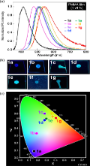
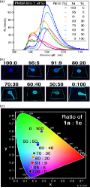
- diphenylacetylene structure as the π-conjugated core. As a part of our research projects, we have begun to explore diphenylacetylene-based luminescent molecules despite diphenylacetylene not exhibiting fluorescence at room temperature because it undergoes a πσ* excited state that rapidly forms a trans-bend


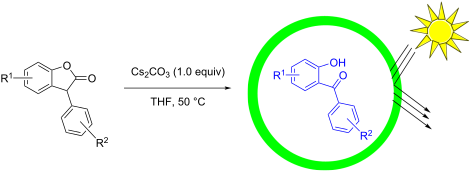
Transition-metal-free decarbonylation–oxidation of 3-arylbenzofuran-2(3H)-ones: access to 2-hydroxybenzophenones
Beilstein J. Org. Chem. 2024, 20, 2655–2667, doi:10.3762/bjoc.20.223
- elemental analyses were carried out with an Elementar Vario micro cube. Generation of hydroperoxide in THF. 35 mL of freshly distilled THF were heated under open atmosphere at 50 °C for 4 h. After 4 h, it was allowed to cool to room temperature, and THF was removed by distillation under vacuum to obtain the
- mmol) and mandelic acid derivatives 2a–d (6 mmol) was stirred and heated to 50 °C under nitrogen atmosphere until the mixture turned into a viscous oil. The viscous oil/paste was further heated to 140 °C until the reaction was complete (cf. TLC). The mixture was then brought to room temperature and a
- reaction (3–4 h, cf. TLC), the mixture was cooled to room temperature and THF present in the reaction mixture was evaporated. The residue was purified by preparative TLC (hexane/EtOAc) to obtain pure 2-hydroxybenzophenones. Cautions must be taken during the synthesis of 2-hydroxybenzophenones, since THF




The scent gland composition of the Mangshan pit viper, Protobothrops mangshanensis
Beilstein J. Org. Chem. 2024, 20, 2644–2654, doi:10.3762/bjoc.20.222
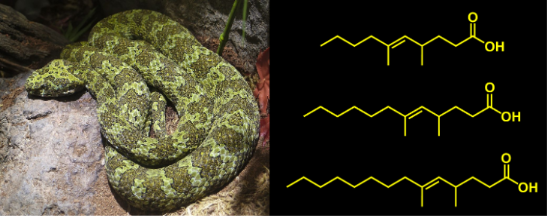
- room temperature for 1 h. The solvent was removed with a stream of N2 and the sample was taken up in CH2Cl2 and analyzed by GC–MS [43]. Dimethyl disulfide derivatization: Twenty µL of the sample in a 2 mL GC vial were diluted with pentane (20 µL) and mixed with freshly distilled dimethyl disulfide
- . The extract was concentrated by slow evaporation at room temperature before analysis. Derivatization with 2-amino-2-methyl-1-propanol (DMOX derivatives): 2-Amino-2-methyl-1-propanol (50 µL) was added to the natural extract (100 µL) in a 2 mL GC vial. The vial was purged with N2 and heated to 120 °C
- for 18 h. After cooling down to room temperature, water, and diethyl ether were added. The phases were separated and the aqueous phase was extracted three times with diethyl ether. The organic phases were combined, dried over sodium sulfate, filtered, and concentrated for GC–MS analysis [44


Efficient modification of peroxydisulfate oxidation reactions of nitrogen-containing heterocycles 6-methyluracil and pyridine
Beilstein J. Org. Chem. 2024, 20, 2599–2607, doi:10.3762/bjoc.20.219
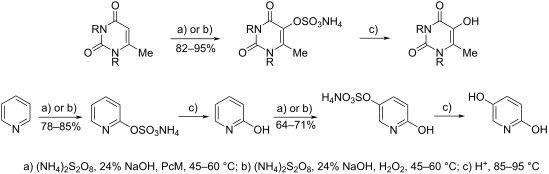
- determined that room temperature is inadequate for fully oxidizing substrates. The optimal oxidation temperature for uracils 1 and 4 is between 60–65 °C, whereas for pyridines 7 and 9 it is 45 °C. Heating the reaction mixture at a temperature higher than the optimum level causes the substrates to be
- mixture to room temperature, concentrated H2SO4 was slowly added until pH 6–7 according to litmus paper and left standing for 12 h. The precipitated white crystals were filtered off, washed with water, and dried in air. Compound 2 yields are given in [13] and compound 5 yields are given in Table 1. b
- at 45 °C for 10 h, cooled to room temperature, evaporated at reduced pressure to 1/3 volume, extracted with ethyl acetate (2 × 20 mL) to remove unreacted pyridine, followd by butanol (3 × 50 mL). The butanol fractions were combined and evaporated to dryness. The residue was washed with hot ethanol


Synthesis and cytotoxicity studies of novel N-arylbenzo[h]quinazolin-2-amines
Beilstein J. Org. Chem. 2024, 20, 2592–2598, doi:10.3762/bjoc.20.218
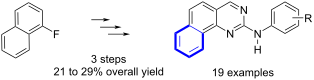
- bromobenzene (0.384 mmol, 1.5 equiv), Xanthphos (0.051 mmol, 0.2 equiv) and cesium carbonate (0.769 mmol, 3 equiv). This mixture was degassed for 15 minutes under N2 atmosphere. Pd2(dba)3 (0.0256 mmol, 0.1 equiv) was added and the reaction mixture was stirred for 16 h at 100 °C. After cooling to room
- temperature, the mixture was filtered through Celite and washed with EtOAc (2 × 10 mL). The filtrate was evaporated under reduced pressure and the crude product was purified by using 60–120 silica mesh column chromatography using 10–20% ethyl acetate in hexane as eluent afforded target compound 4a (69% yield


Base-promoted cascade recyclization of allomaltol derivatives containing an amide fragment into substituted 3-(1-hydroxyethylidene)tetronic acids
Beilstein J. Org. Chem. 2024, 20, 2585–2591, doi:10.3762/bjoc.20.217
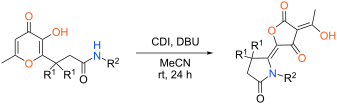
- of the process time led to decrease of the yield due to partial tarring of the reaction mixture (Table 1, entry 3). Next, we assumed that the investigated reaction can be performed at room temperature. However, stirring under these conditions for 3 h in MeCN didn’t enhance the yield of compound 4a
- (Table 1, entry 7). Then, we tested the investigated reaction in various solvents at room temperature for 24 h. It should be noted that all solvents used had no advantage over MeCN (Table 1, entries 8–11). Thus, the best results for considered recyclization were achieved at stirring of amide 4a in the
- presence of CDI and DBU in MeCN at room temperature for 24 h. The aforementioned optimal conditions were utilized for the synthesis of a wide range of tetronic acids bearing a pyrrolidinone unit (Scheme 3). The presented protocol is of general nature and allows us to prepare the final products with various


A review of recent advances in electrochemical and photoelectrochemical late-stage functionalization classified by anodic oxidation, cathodic reduction, and paired electrolysis
Beilstein J. Org. Chem. 2024, 20, 2500–2566, doi:10.3762/bjoc.20.214
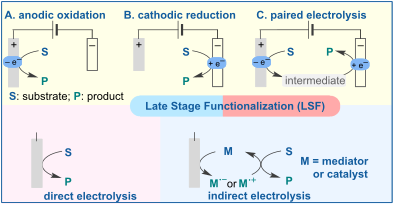
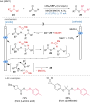
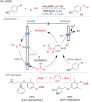
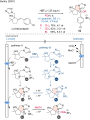
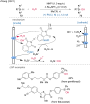
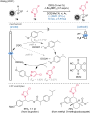
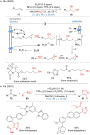
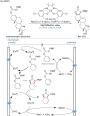
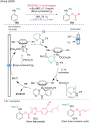
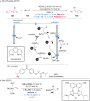
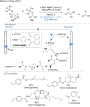
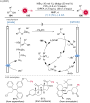
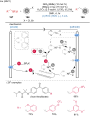
- anode and a foamed Ni cathode, at a constant current of 12 mA in DMSO at room temperature under atmospheric conditions. The reaction has been applied to more than 80 examples, including the late-stage functionalization of natural products and pharmaceuticals, as well as the synthesis and radiosynthesis
- method for the regioselective thiolation of aromatic C–H bonds by activating the thiol rather than the arene [19]. For their developed reaction, Pt electrodes were used in an undivided cell with a mixture of HFIP/DCE 3:1 at room temperature under argon. Late-stage functionalization was demonstrated for












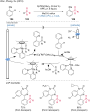


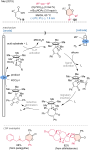


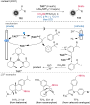


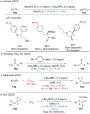










HFIP as a versatile solvent in resorcin[n]arene synthesis
Beilstein J. Org. Chem. 2024, 20, 2469–2475, doi:10.3762/bjoc.20.211
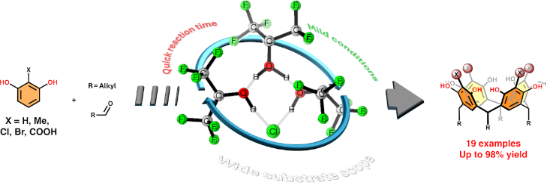
- set at 50% probability level. Resorcin[n]arene synthesis. Scope of resorcin[n]arene synthesis using HFIP. aAll reactions were performed with resorcinol (1.0 mmol), aldehyde (1.0 mmol), and HCl (30 mol %) in HFIP (5 mL) at room temperature, and the yields of the reactions are given as isolated yields


Phenylseleno trifluoromethoxylation of alkenes
Beilstein J. Org. Chem. 2024, 20, 2434–2441, doi:10.3762/bjoc.20.207
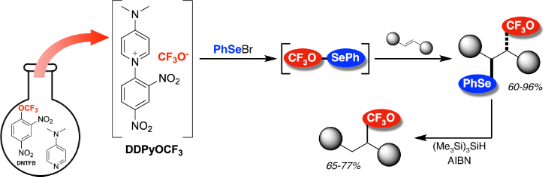
- stirred at room temperature for 2.5 h (unless otherwise stated). Note that a yellowish precipitate is formed during the reaction for high yielding substrates. The reaction is monitored by 19F NMR (PhCF3 as internal standard). At the end of the reaction, the content of the vial is transferred to a



Facile preparation of fluorine-containing 2,3-epoxypropanoates and their epoxy ring-opening reactions with various nucleophiles
Beilstein J. Org. Chem. 2024, 20, 2421–2433, doi:10.3762/bjoc.20.206
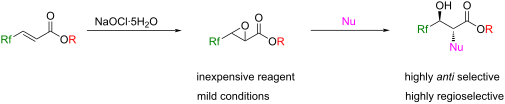
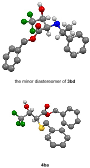
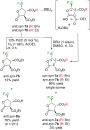
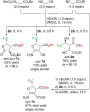
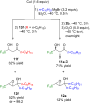
- indicated DMSO as the best for the attainment of high yields and diastereoselectivity (entries 1–5 vs 6 in Table 4), we further examined bases in this solvent to find out that t-BuOK behaved nicely, and the reaction of 2b with 2.0 equiv of diethyl malonate for 0.5 h at room temperature furnished 93% yield
- of compound 1b [42] (0.23 g, 1.00 mmol) in 3.0 mL of CH3CN was added NaClO aq. (5% in H2O, 1.50 g, 1.00 mmol) and the solution was stirred for 4.5 h at room temperature. This mixture was extracted with CH2Cl2 and the usual workup and purification afforded 0.15 g (0.60 mmol) of the pure title compound
- room temperature. Then, 0.1477 g (0.60 mmol) of 2b in 0.8 mL of DMSO was introduced to the resultant solution and the stirring was continued for 0.5 h. The same workup process and purification furnished 0.1717 g of an inseparable mixture of anti,syn-7a (dr = 99:1) and anti,syn-7b (7a:7b = 83:17). Anti





Efficient one-step synthesis of diarylacetic acids by electrochemical direct carboxylation of diarylmethanol compounds in DMSO
Beilstein J. Org. Chem. 2024, 20, 2392–2400, doi:10.3762/bjoc.20.203
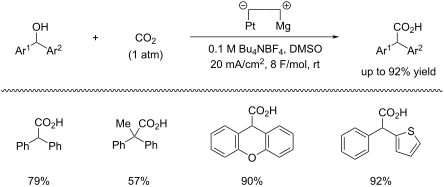
- ], screening of reaction conditions for the substrate 1a was carried out. Constant-current electrolysis of 1a using an undivided cell in the presence of carbon dioxide at room temperature was conducted. The effects of the current density (Table 1, entries 1–3), solvent (Table 1, entries 2, 4, and 5
- in less than 10% yield, determined through 1H NMR analysis, except for Table 1, entries 3 (13%) and 5 (25%). It should also be noted that electrolysis was carried out at room temperature, but the temperature of the reaction mixture increased to 40–50 °C at the end of the electrolysis in every case
- of the electroreductive C(sp3)–O bond cleavage, one additional experiment was carried out as shown in Scheme 5. Constant-current electrolysis of 1a in DMSO with 20 mA/cm2 of current density and 6 F/mol of electricity at room temperature under a nitrogen atmosphere instead of carbon dioxide resulted


Synthesis, electrochemical properties, and antioxidant activity of sterically hindered catechols with 1,3,4-oxadiazole, 1,2,4-triazole, thiazole or pyridine fragments
Beilstein J. Org. Chem. 2024, 20, 2378–2391, doi:10.3762/bjoc.20.202
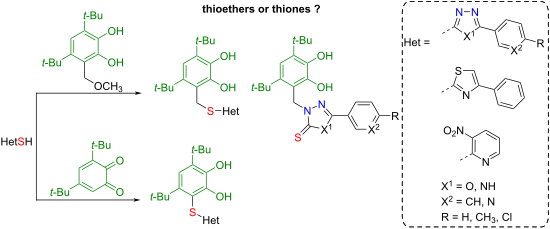
- /prooxidant, and antiradical activity was carried out for the catechols synthesized in this work. Results and Discussion Synthesis The interaction of 3,5-di-tert-butyl-o-benzoquinone with the corresponding thiols in ethanol at room temperature under argon leads to the formation of catechol thioethers 1–3 (69




Asymmetric organocatalytic synthesis of chiral homoallylic amines
Beilstein J. Org. Chem. 2024, 20, 2349–2377, doi:10.3762/bjoc.20.201
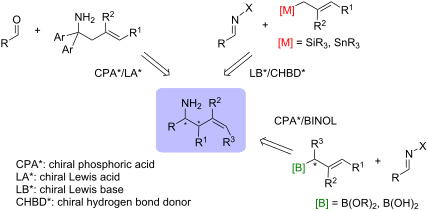
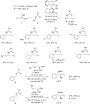
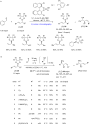
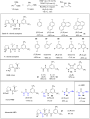
- equiv of isatin with a 50% excess of the α-CF3-substituted imine in toluene at room temperature in the presence of 10 mol % of organocatalyst 138 for times between 1 and 80 h. The reaction exhibited a broad scope in the isatin carbonate derivatives with high to excellent enantioselectivities (89–99








Stereoselective mechanochemical synthesis of thiomalonate Michael adducts via iminium catalysis by chiral primary amines
Beilstein J. Org. Chem. 2024, 20, 2313–2322, doi:10.3762/bjoc.20.198
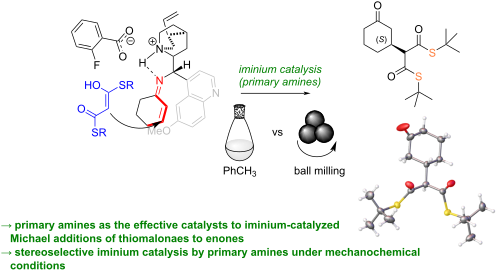
- nucleophilic catalyst. Test reactions between cyclohexenone and thiomalonate 1 conducted in toluene at room temperature indicated the formation of the product with high conversions and efficiencies (Scheme 2). Application of epi-aminoquinine (AQ-1) in combination with 2-fluorobenzoic acid (system A) led to the


gem-Difluorination of carbon–carbon triple bonds using Brønsted acid/Bu4NBF4 or electrogenerated acid
Beilstein J. Org. Chem. 2024, 20, 2261–2269, doi:10.3762/bjoc.20.194
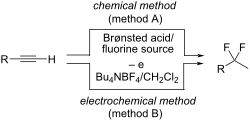
- (NMR) yield, in which trifluorotoluene (CF3C6H5) was used as an internal standard. The use of Tf2NH (5 equiv or 10 equiv) and Bu4NBF4 (5 equiv) in CH2Cl2 at room temperature gave the corresponding product 2a in up to 83% yield (Table 1, entries 1–5). The use of CF3COOH did not yield 2a at all (Table 1
- Bu4NBF4 was not effective (Table 1, entries 11 and 12). Finally, investigations of the amount of Bu4NBF4 and the reaction temperature demonstrated that conditions including Bu4NBF4 (9 equiv) and room temperature gave the best result (Table 1, entries 13–17). Based on the above investigation, we decided to



Metal-free double azide addition to strained alkynes of an octadehydrodibenzo[12]annulene derivative with electron-withdrawing substituents
Beilstein J. Org. Chem. 2024, 20, 2234–2241, doi:10.3762/bjoc.20.191
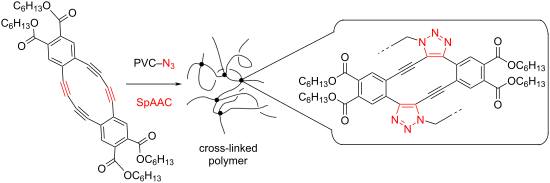
- partially azidated poly(vinyl chloride) (PVA-N3) was prepared by stirring poly(vinyl chloride) and NaN3 in DMF at room temperature overnight. Measurements NMR spectra were recorded using a JEOL mode Al300 (300 MHz) at room temperature. Deuterated chloroform was used as the solvent unless otherwise stated
- only one imaginary frequency corresponding to the reaction coordinate. Synthesis of 6a To a solution of 5 in CH2Cl2, two equivalents of benzyl azide were added and the mixture was stirred at room temperature for 12 h. Evaporation of the solvent quantitatively yielded the target compound. 1H NMR (CDCl3




Electrochemical allylations in a deep eutectic solvent
Beilstein J. Org. Chem. 2024, 20, 2217–2224, doi:10.3762/bjoc.20.189
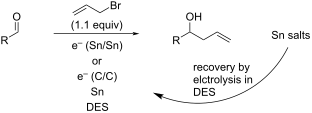
- , but its effective realization is limited by the need for both a solvent as well as a supporting electrolyte to allow for the flow of current through the reaction. Although some imaginative options have been reported, they tend to be quite limited in scope. Room temperature ionic liquids (RTILs) were

Novel truxene-based dipyrromethanes (DPMs): synthesis, spectroscopic characterization and photophysical properties
Beilstein J. Org. Chem. 2024, 20, 2163–2170, doi:10.3762/bjoc.20.186
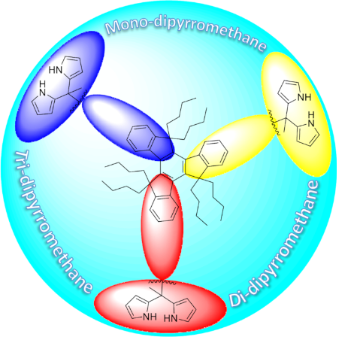
- –80%) along with their preliminary photophysical (absorption, emission and time resolved fluorescence lifetime) properties. The condensation reaction for assembling the required DPMs were catalyzed with trifluoroacetic acid (TFA) at 0 °C to room temperature (rt), and the stable dipyrromethanes were
- atmosphere. The flask was cooled to 0 ºC, and stirred vigorously after that n-BuBr (11.30 mL, 105.12 mmol) was slowly added to the RB-flask, and the mixture was stirred for 24 h at room temperature (rt), until the reaction completed (TLC monitoring). Then the reaction mixture was quenched with water, and the
- different equivalents (2 equiv for 12, 6 equiv for 15 and 9 equiv for 17) at 0 °C under N2 atmosphere. The red reaction mixture was stirred for 30 min at 0 °C, and further stirred at room temperature for 1 to 6 hours. After the reaction completion (TLC monitoring), the mixture was poured gradually into


Diastereoselective synthesis of highly substituted cyclohexanones and tetrahydrochromene-4-ones via conjugate addition of curcumins to arylidenemalonates
Beilstein J. Org. Chem. 2024, 20, 2016–2023, doi:10.3762/bjoc.20.177
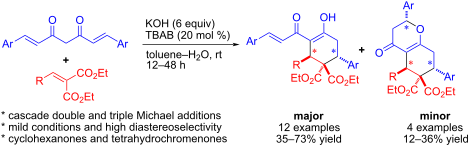
- from curcumins and arylidenemalonates is reported. This strategy works in the presence of aqueous KOH using TBAB as a suitable phase transfer catalyst at room temperature. The functionalized cyclohexanones are formed as major products in moderate to excellent yields with complete diastereoselectivity
- base (KOH) and a phase-transfer catalyst (PTC) in a biphasic medium (toluene–H2O) at room temperature, leading to highly functionalized cyclohexanones and tetrahydrochromenones as major and minor products, respectively, in moderate to high yield and excellent diastereoselectivity. Results and
- Discussion Initially, the reaction of 1a with 2a was carried out with 3.0 equiv of aq KOH as base and toluene as a solvent in the presence of 20 mol % tetrabutylammonium bromide (TBAB) as a phase-transfer catalyst at room temperature for 24 h (Table 1, entry 1). To our delight, the formation of double


Understanding X-ray-induced isomerisation in photoswitchable surfactant assemblies
Beilstein J. Org. Chem. 2024, 20, 2005–2015, doi:10.3762/bjoc.20.176
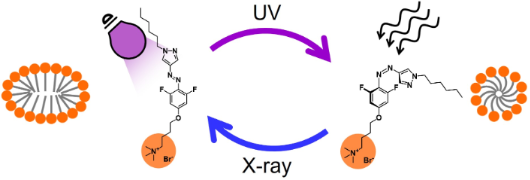
- ]. In addition to this, AAPTAB has a high thermal half-life at room temperature (5.7 years [19]), meaning there is no significant contribution from thermal Z–E isomerisation over the course of these experiments. Using in-situ UV- and visible-light irradiation with SAXS, here we measure the intermediate
- to the AzoTAB, as seen in similar amphiphilic systems [30][31]. In the case of ionisation, both stereoisomers would be expected to be affected equally. In comparison to Azo, the AAP moiety is much more stable as the Z isomer, with a thermal half-life of 5.7 years at room temperature [13]. This means
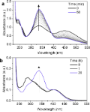
- (10 and 90 wt %), and the samples were heated to 60 °C, whilst stirring until homogenous. Samples were left to cool to room temperature whilst stirring. For the photoisomerisation studies using UV–vis absorbance spectroscopy, samples were irradiated to the PSS in a custom-built LED light box with UV



Harnessing the versatility of hydrazones through electrosynthetic oxidative transformations
Beilstein J. Org. Chem. 2024, 20, 1988–2004, doi:10.3762/bjoc.20.175
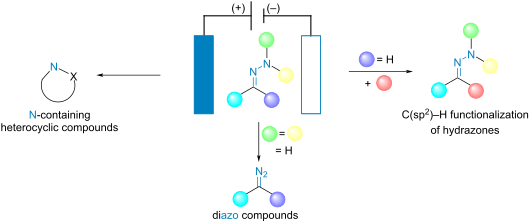
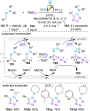
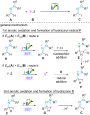
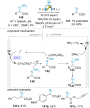
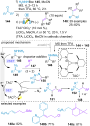
- reaction conditions. For instance, the use of lithium perchlorate as supporting electrolyte in acetonitrile at room temperature in a divided cell equipped with two platinum electrodes led exclusively to diazines 131 in good yields. In contrast, when the electrolysis was conducted in methanol containing



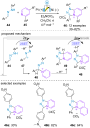
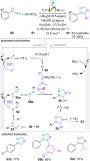
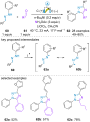


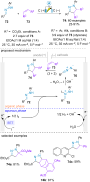
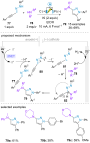
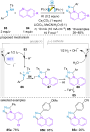
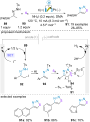
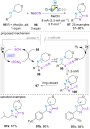



Development of a flow photochemical process for a π-Lewis acidic metal-catalyzed cyclization/radical addition sequence: in situ-generated 2-benzopyrylium as photoredox catalyst and reactive intermediate
Beilstein J. Org. Chem. 2024, 20, 1973–1980, doi:10.3762/bjoc.20.173
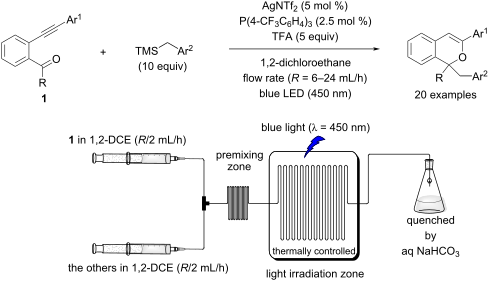
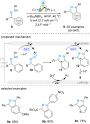
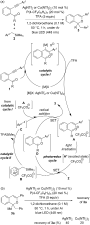
- reaction conditions were further examined (see Supporting Information File 1 for details). Although the yield of 3m was improved to 19% (Table 3, entry 2) by increasing the temperature of the premixing zone from room temperature to 50 °C and reducing the flow rate from 24 mL/h to 6 mL/h (light irradiation


Regioselective alkylation of a versatile indazole: Electrophile scope and mechanistic insights from density functional theory calculations
Beilstein J. Org. Chem. 2024, 20, 1940–1954, doi:10.3762/bjoc.20.170
- -substituted indazole analogs in 44% and 40% yields, respectively, by treating compound 6 with methyl iodide and potassium carbonate in dimethylformamide (DMF) at room temperature for 17 h [40]. Other works have shown poor selectivity when 6 and other isomers similar to 6 were reacted with isopropyl iodide and
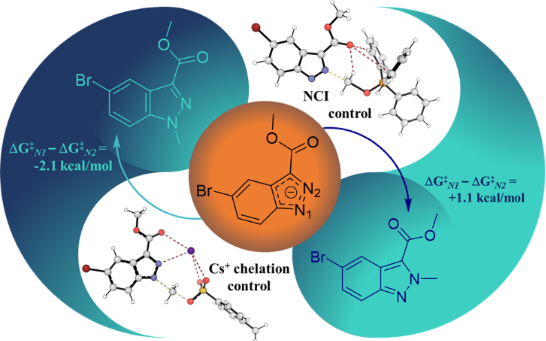
- % at room temperature to 89% when warmed to 50 °C. No information was provided to justify any N2-selectivity or the lack thereof. Should an N2–Cs+–O ion pair exist, this could reasonably account for all the reported results presented herein (vide infra). Additionally, using Cs2CO3 in dioxane provided
- no products at room temperature (see Table 1) presumably due to the low solubility of Cs2CO3 in dioxane. They also provided a single example of a Mitsunobu reaction utilizing n-pentanol, dibutyl azodicarboxylate (DBAD), and PPh3. Therefore, there is still a great need to develop an operationally


A new platform for the synthesis of diketopyrrolopyrrole derivatives via nucleophilic aromatic substitution reactions
Beilstein J. Org. Chem. 2024, 20, 1933–1939, doi:10.3762/bjoc.20.169
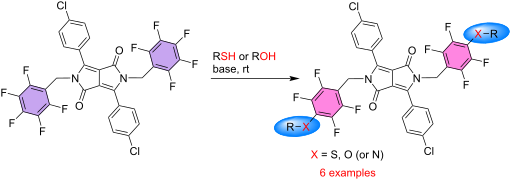
- synthesis of highly fluorescent DPP derivatives through straightforward nucleophilic aromatic substitution reactions with thiols and phenols. These nucleophilic substitutions occur at room temperature and manifest a remarkable selectivity for the 4-position of the pentafluorophenyl groups. Both symmetrical
- performed in dry DMF at room temperature, in the presence of a base (K2CO3 or Cs2CO3). Room temperature was chosen due to the observed rapid degradation of the starting material at elevated temperatures. The work described herein allowed us to assess the potential of DPP 2 as a novel platform for obtaining
- , 2.8 mmol) and NaH (11.2 mmol) in DMF (60 mL) was stirred at 0 °C under a nitrogen atmosphere for 30 min. At this temperature, and under vigorous stirring, a solution of pentafluorobenzyl bromide (1.7 mL, 11.2 mmol) in DMF (8 mL) was added dropwise. The mixture was stirred for 24 h at room temperature


Negishi-coupling-enabled synthesis of α-heteroaryl-α-amino acid building blocks for DNA-encoded chemical library applications
Beilstein J. Org. Chem. 2024, 20, 1922–1932, doi:10.3762/bjoc.20.168
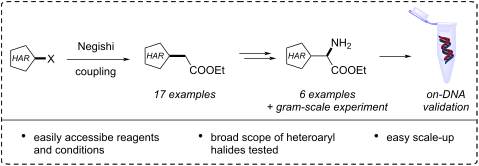
- protocols [70][71]. In these experiments, compounds 6b and 6i proved to be unstable under on-DNA conditions as they failed to form esters 8b and 8i. Closely related structures, such as α-aminobenzothiazol-2-ylacetic acid is known to undergo decarboxylation at room temperature [72]. Compound 8t underwent