


Search results
Search for "pKa" in Full Text gives 252 result(s) in Beilstein Journal of Organic Chemistry. Showing first 200.
Amino acid-based surfactants: sustainable synthesis and antimicrobial mechanisms
Beilstein J. Org. Chem. 2026, 22, 1067–1085, doi:10.3762/bjoc.22.85
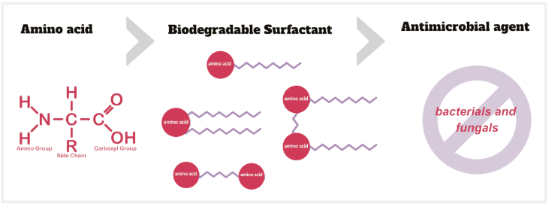
- between the surfactant’s polar head (e.g., arginine’s guanidinium group, pKa ≈ 12.5) and anionic microbial surface components – teichoic acids in Gram-positive bacteria (e.g., Staphylococcus aureus) or lipopolysaccharides in Gram-negatives (e.g., Escherichia coli) [80]. This interaction is stabilized by
- groups (e.g., arginine’s guanidine, which remains protonated at physiological pH due to its high pKa) and the negatively charged microbial surface components (e.g., phospholipids, teichoic acids in Gram-positive bacteria, or lipopolysaccharides in Gram-negative bacteria) [21][80]. This initial


Site-specific labelling of native peptides and proteins: chemical and enzymatic strategies
Beilstein J. Org. Chem. 2026, 22, 857–881, doi:10.3762/bjoc.22.67
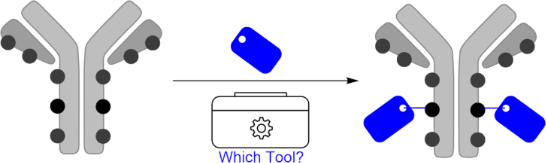
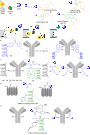
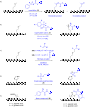
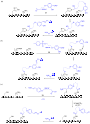
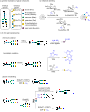
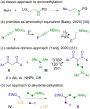
- reagent, 1) was used to label the α-amino group of insulin during sequence determination (Scheme 1a). Its selectivity over lysine’s ε-amine originates from the low pKa of the N-terminus, influenced by the adjacent carbonyl group and systematically characterized at ≈6–7 (Scheme 1b) [7]. Building on this
- biological environment [46]. In a related concept, the Chin group reported the genetic incorporation of the unnatural amino acid 2,3-diaminopropionic acid (DAP, 13), a nucleophilic amine that has a relatively low pKa (6–8) and is structurally analogous to serine or cysteine, enabling identification of native
- thiophosphorodichloridate reagents 25, as shown with hexahistidine-tagged proteins (Scheme 9d) [94]. Aspartate and glutamate, while weakly nucleophilic, can undergo O-alkylation via diazo compounds 26 (Scheme 9e) [95][96]. Arginine, traditionally difficult to modify due to its high pKa values, can be targeted with









Computational prediction of C–H hydricities and their use in predicting the regioselectivity of electron-rich C–H functionalisation reactions
Beilstein J. Org. Chem. 2026, 22, 603–610, doi:10.3762/bjoc.22.46
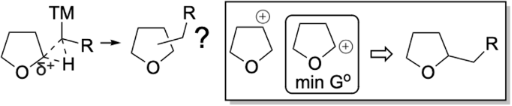
- host of other reactivity predictors. Keywords: bond dissociation energy; hydricity; hydride affinity; hydride-transfer reactions; machine learning (ML); quantum chemistry (QM); Introduction Bond dissociation energies (BDEs) and pKa values for C–H bonds are often used to rationalise and predict the
- calculations. Refer to section 1 in Supporting Information File 1 for more details. Hereafter, we check the geometries for imaginary frequencies and use the total thermal energy at 298.15 K. Following a similar approach from our previous paper for C–H pKa values [3], we compute the hydricity through the direct
- . These properties encompass the site of metabolism [25][27], the strengths of hydrogen bond donors and acceptors [28][29][30], the regioselectivity of electrophilic aromatic substitution reactions [10], C–H pKa values [3], and electro- and nucleophilicity [31]. Building on the methodology from Finkelmann


![[Graphic 6]](/bjoc/content/inline/1860-5397-22-46-i8.svg?max-width=637&scale=1.18182)


Synthesis and uranyl(VI) extraction performance of a calix[4]pyrrole–tetrahydroxamic acid receptor
Beilstein J. Org. Chem. 2026, 22, 486–494, doi:10.3762/bjoc.22.36
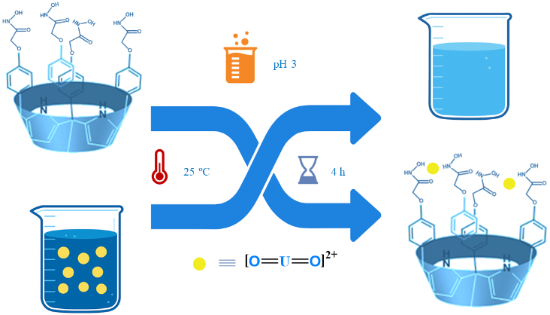
- %) between pH 4 and 8, with reduced uptake outside this range [68]. Although hydroxamic acids typically have pKa values of 7–9 [69], supramolecular systems bearing these groups do not exhibit uniform uranyl extraction behavior under identical pH conditions. Consequently, some systems achieve maximum
- deprotonation. The coordination of the hydroxamic acid groups to the uranyl cation stabilizes the deprotonated hydroxamate form, effectively lowering the apparent pKa and enabling strong binding even at low pH [33]. It is important to mention that the formation of the stable 5-membered chelate between the


Dialkylaminoalkylation of β-ketosulfones via ring-opening of 3-sulfonylpyrrolidines
Beilstein J. Org. Chem. 2026, 22, 383–389, doi:10.3762/bjoc.22.26
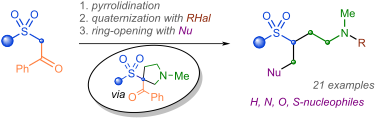
- of pKa 12–17 (in DMSO) [37]. Considering that the pKa of 1-phenyl-2-(phenylsulfonyl)ethan-1-one 1 is close to that interval (pKa 11.4, DMSO) we estimated its smooth incorporation in the process. Nevertheless, previously developed conditions for the pyrrolidination reaction provided insufficient




Electrosynthetic access to unsymmetrical oxaza[8]helicenes with high chiral stability and strong circularly polarized luminescence (CPL)
Beilstein J. Org. Chem. 2026, 22, 372–382, doi:10.3762/bjoc.22.25
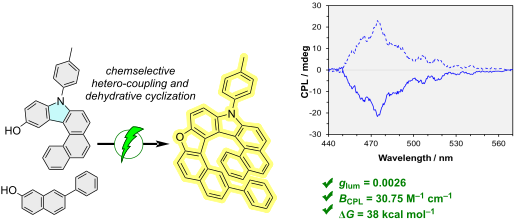
- , enabling regioselective intermolecular coupling with 4. While a Scholl-type coupling-first scenario cannot be ruled out, the computed acidity of [3]·+ (pKa ≈ −5.2) together with the more spin-density localization in Int-I supports a deprotonation-first, neutral-radical pathway, consistent with related
- the pKa of [3]·+ radical cation and spin density of neutral radical intermediate Int-I (optimized at the UB3LYP/6-31G+(d,p) level of theory with IEPCM model as solvation of DCM. Grimme’s dispersion with the original D3 damping function was applied as empirical dispersion correction to the optimized




Improved synthesis and physicochemical characterization of the selective serotonin 2A receptor agonist 25CN-NBOH
Beilstein J. Org. Chem. 2026, 22, 175–184, doi:10.3762/bjoc.22.11
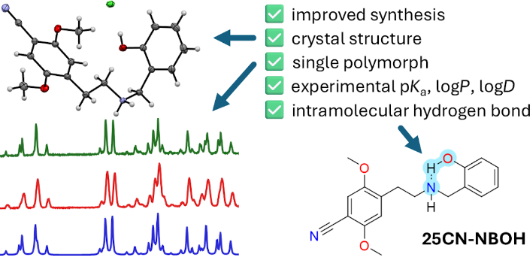
- aqueous solutions of 1·HCl may be prepared and stored well in advance of any application or investigation. Subsequently, the apparent pKa values (concentration-based) for 1 were determined to be 8.4 ± 0.1 and 10.7 ± 0.1 for the protonated amine and phenol, respectively, and the calculated pH-dependent
- be larger [22]. Since the IMHB in 1 is only slightly weaker than that found in some flavonoids, it is likely strong enough to persist even in aqueous media [23][24]. Based on the measured pKa values, at pH 7.4 approximately 10% of 1 is present in the neutral form. Combined with evidence from the
- the polar nature of this functional group. Based on computationally predicted and experimentally determined secondary deuterium isotope effects, we pinpointed the presence of an IMHB in the neutral form of 1, wherein the phenol proton interacts with the lone pair on the secondary amine. The pKa values


A new synthesis of Tyrian purple (6,6’-dibromoindigo) and its corresponding sulfonate salts
Beilstein J. Org. Chem. 2026, 22, 167–174, doi:10.3762/bjoc.22.10
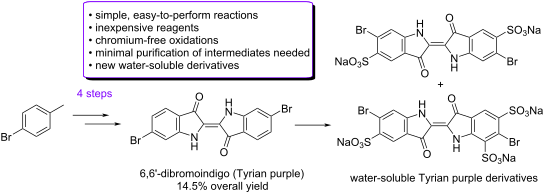
- and 508 nm suggest only two species are in solution. Plotting absorbance versus pH reveals a pKa value of 11.3 ± 0.05 (Supporting Information File 1, Figure S25). Additional increases in pH lead to a decrease in the absorbance at 755 nm and a growing absorbance at 461 nm indicating a second
- deprotonation. Examining the absorbance at 755 nm versus pH yields a second pKa value at 13.0 ± 0.11 (Supporting Information File 1, Figure S26). As shown in Figure 1B, the corresponding disulfonate of 6,6’-dibromoindigo, 9, shows similar UV–vis spectra to compound 10. Specifically, 9 shows a λmax at 606 nm and
- . Plotting absorbance versus pH yields a pKa value of 11.9 ± 0.05 (Supporting Information File 1, Figure S17). Above a pH of 12.18, a peak at 448 nm grows while the peak at 749 nm decreases (Supporting Information File 1, Figure S18). The changes in the visible spectra of 9 above a pH of 12.18 no longer


Reactivity umpolung of the cycloheptatriene core in hexa(methoxycarbonyl)cycloheptatriene
Beilstein J. Org. Chem. 2026, 22, 64–70, doi:10.3762/bjoc.22.2
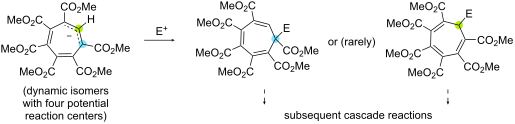
- (methoxycarbonyl)cycloheptatriene 3 (pKa(DMSO) = 8.65) [20][21] with potassium tert-butoxide and subjected to reactions with electrophilic reagents. The reactions gave two primary products 4 and 5 (Scheme 1) through an attack to either the most available i-position or the most nucleophilic but sterically hindered


Adaptive experimentation and optimization in organic chemistry
Beilstein J. Org. Chem. 2025, 21, 2367–2368, doi:10.3762/bjoc.21.180
- ]. However, the contributions in the thematic issue also reveal an important insight: while automation and AI are powerful tools, human chemical intuition remains invaluable. The work of Borup et al. on pKa prediction illustrates how machine learning can complement rather than replace expert knowledge [12
Thiadiazino-indole, thiadiazino-carbazole and benzothiadiazino-carbazole dioxides: synthesis, physicochemical and early ADME characterization of representatives of new tri-, tetra- and pentacyclic ring systems and their intermediates
Beilstein J. Org. Chem. 2025, 21, 2220–2233, doi:10.3762/bjoc.21.169
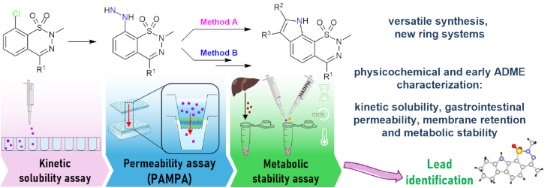
- physicochemical and early ADME characterization study, in the framework of which logP, pKa and logk values were calculated. Following that, kinetic solubility and in vitro gastrointestinal membrane-specific permeability measurements were carried out to assess the lead-likeness of the compounds. Subsequently, the
- surface area (TPSA) values fell in a desirable range (40–90 Å2) (see the extended table on physicochemical parameters in Supporting Information File 1, Table S1). Based on their pKa values, all compounds are non-ionizable or slightly basic. Kinetic solubility was considered good above 30 µM, moderate


Aryl iodane-induced cascade arylation–1,2-silyl shift–heterocyclization of propargylsilanes under copper catalysis
Beilstein J. Org. Chem. 2025, 21, 1984–1994, doi:10.3762/bjoc.21.154
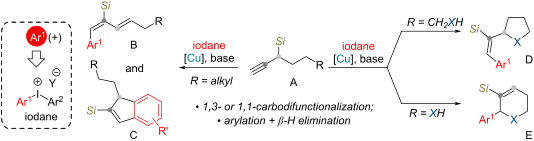
- -butyldimethylsilyl)hex-5-yn-1-yl)-N-phenylaniline (15). Thus, acylamides were found to have optimal pKa and nucleophilicity to react according to our desired pathway (Scheme 4). For the heterocyclization mechanism under arylating conditions, we propose a Cu(I/III) catalyzed pathway (Scheme 5). Firstly, the copper(I


Photoswitches beyond azobenzene: a beginner’s guide
Beilstein J. Org. Chem. 2025, 21, 1808–1853, doi:10.3762/bjoc.21.143






pH-Controlled isomerization kinetics of ortho-disubstituted benzamidines: E/Z isomerism and axial chirality
Beilstein J. Org. Chem. 2025, 21, 1568–1576, doi:10.3762/bjoc.21.120
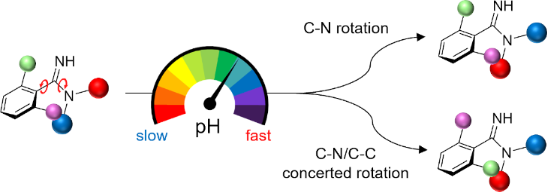
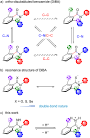
- –N rotation and C–N/C–C rotation by adjusting the pH of the solvent and the pKa of the amidine. Herein, we report our findings on the structural properties of an ortho-disubstituted benzamidine. Similar to DiBA, an ortho-disubstituted benzamidine has two types of stereoisomers: E/Z isomers arising
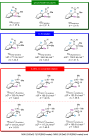
- calculated pKa values of the amidines are also shown in Table 1. As a result, the C–N isomerization was accelerated by an electron-withdrawing chloro substituent, and electron-donating substituents (Me, OMe and NMe2 groups) decreased the isomerization rate. Figure 7a illustrates the effect of the electronic
- the rotational barrier of the C–N/C–C concerted rotation is higher than that of C–N rotation. This finding is consistent with the calculated pKa of 10.6 for amidine 1, indicating that racemization is minimal under the conditions where most of the amidine remains in its protonated form. As pH was



Azobenzene protonation as a tool for temperature sensing
Beilstein J. Org. Chem. 2025, 21, 1528–1534, doi:10.3762/bjoc.21.115
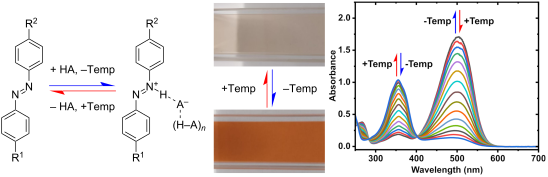
- spectral changes caused by azobenzene protonation is a well-established concept, with methyl orange-based pH indicators dating back to the late 1800s [22]. Early studies primarily focused on characterizing these spectral changes, determining pKa values, and elucidating the protonation mechanism of


Substituent effects in N-acetylated phenylazopyrazole photoswitches
Beilstein J. Org. Chem. 2025, 21, 830–838, doi:10.3762/bjoc.21.66
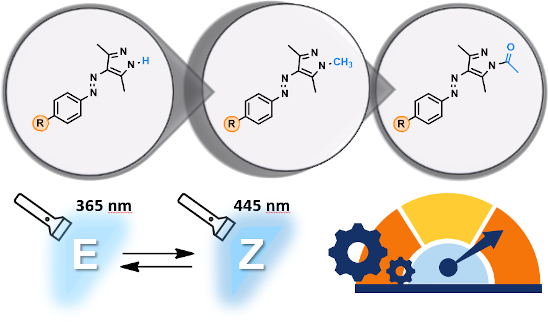
- classical azobenzenes. Heterocyclic rings offer, for example, enhanced polarity, electron pairs for metal coordination [27], better water-solubility, and variable pKa [28][29]. Special attention has been given to 5-membered N-heterocyclic azobenzenes, which not only maintain the azobenzenes properties but


Origami with small molecules: exploiting the C–F bond as a conformational tool
Beilstein J. Org. Chem. 2025, 21, 680–716, doi:10.3762/bjoc.21.54
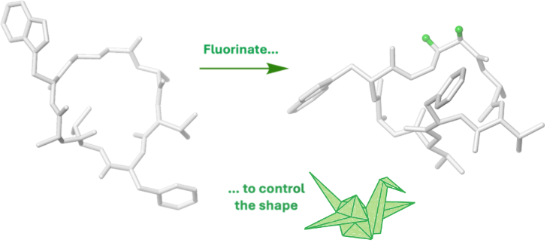
- sugar and phosphorus, e.g., 82, Figure 10) are of interest as non-hydrolysable isosteres, but a better match in terms of pKa and C–C–P angle is achieved with mono- or difluorophosphonates (e.g., 83–85, Figure 10) [143][144]. In the case of the monofluorophosphonates, conformational effects can also be
- including protein kinase A (PKA). Fluorination was investigated as a strategy for altering the conformation of the central seven-membered nitrogen heterocycle, and hence possibly improving the selectivity for PKCε. A variety of fluorination patterns were investigated (100–103, Figure 11), which were found
- to induce subtly different conformations of the seven-membered ring through an interplay of the conformational influences I–III (Figure 11) and sterics. Promisingly, these different shapes were found to successfully alter the PKCε/PKA selectivity, with one analogue (100) displaying higher potency and



Recent advances in allylation of chiral secondary alkylcopper species
Beilstein J. Org. Chem. 2025, 21, 639–658, doi:10.3762/bjoc.21.51
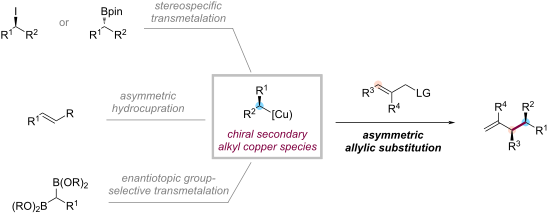
- phosphoramidite ligands significantly advanced this field, with contributions from numerous research groups including Hartwig, Helmchen, Carreira, Alexakis, and You [19]. In general, soft nucleophiles that typically possess conjugate acids with pKa values less than 25 have been utilized in most Pd and Ir
- nucleophiles 5 that have conjugate acids with pKa values greater than 25 such as organolithium, organomagnesium, organozinc, and organozirconium reagents. This crucial distinction effectively expanded the scope of allylic substitution reactions beyond traditional boundaries. The evolution of copper-catalyzed





Total synthesis of (±)-simonsol C using dearomatization as key reaction under acidic conditions
Beilstein J. Org. Chem. 2025, 21, 601–606, doi:10.3762/bjoc.21.47
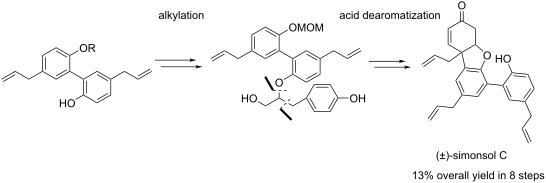
- DIPEA, affording compound 17 with an 89% yield [11]. For the following alkylation step with tert-butyl bromoacetate, three bases were tested: potassium carbonate, cesium carbonate, and sodium hydride. Considering the targeted alkylation of a phenolic hydroxy group and the pKa requirements of this


Beyond symmetric self-assembly and effective molarity: unlocking functional enzyme mimics with robust organic cages
Beilstein J. Org. Chem. 2025, 21, 421–443, doi:10.3762/bjoc.21.30
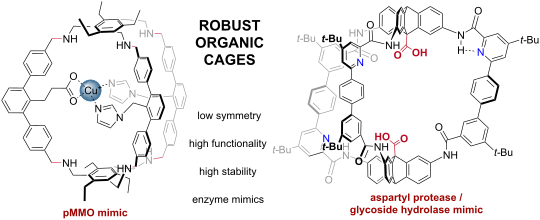
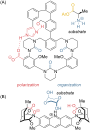
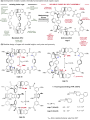
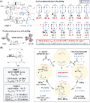
- a size-selective space [105][126][129][130][132][134]. A key advantage is that these capsules have been made on multi-hundred-gram scales and can be recycled [132]. Additionally, control of structural or bound water by the capsule [105] and properties such as a lowered pKa inside [125] demonstrate a
- hydrophobic [160] products have been popular, including hydrolyses, ring openings, and rearrangements [22]. These reaction classes have been discussed [24][25][140]. Cavity-directed changes in ion-localization [161][162] and pKa are effective [37][107][163][164], and size-selectivity [36][165][166][167] and
- the cage framework to polarize adjacent aryl–hydrogen bonds in the ligands by enough to coordinate and activate substrates (Figure 5E) [190]. Here, the use of bulky counteranions reinforces the cationic cage interior, which is enhanced further by use of lower polarity solvents, and the pKa of confined




Synthesis of extended fluorinated tripeptides based on the tetrahydropyridazine scaffold
Beilstein J. Org. Chem. 2024, 20, 3174–3181, doi:10.3762/bjoc.20.262
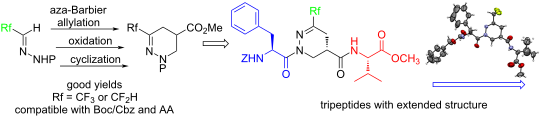
- groups (CF3 or CF2H) in organic molecules can modulate their physicochemical (pKa, lipophilicity), structural (additional hydrophobic and hydrogen-bond interactions), and biological properties (metabolic stability, membrane permeability) [14][15]. Alongside the very well-known CF3 group, the CF2H group


Surprising acidity for the methylene of 1,3-indenocorannulenes?
Beilstein J. Org. Chem. 2024, 20, 3144–3150, doi:10.3762/bjoc.20.260
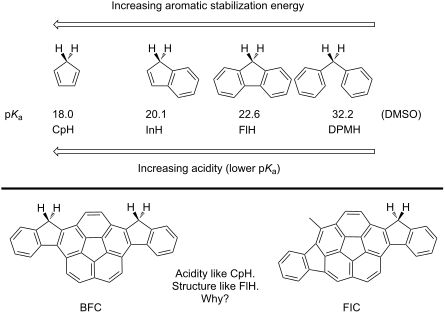
- of the first acidity constant (pKa) for BFC (27.6 in CH3CN) and FIC (27.8 in CH3CN) shows the methylene protons to be significantly more acidic than those in related cyclopentadiene (32 in CH3CN), indene (34 in CH3CN), or fluorene (37 in CH3CN) and comparable to the methine of 9
- -perfluorophenylfluorene (28.14 in CH3CN). This work reports quantitative pKa values of BFC and FIC, places those values in a broadened context of CpH-cognate hydrocarbon acidity and presents a Clar–Loschmidt graph perspective to help understand the “surprises”. Keywords: acidity; aromatic hydrocarbon; Clar sextet
- ; Loschmidt group element; molecular graph; Introduction A classic textbook tetrad linking hydrocarbon acidity to aromatic stabilization energy comprises cyclopentadiene (CpH), indene (InH), fluorene (FlH), and diphenylmethane (DPMH) [1][2], with pKa values in DMSO equal to 18 [3], 20.1 [3], 22.6 [3], and


Synthesis of fluorinated acid-functionalized, electron-rich nickel porphyrins
Beilstein J. Org. Chem. 2024, 20, 2954–2958, doi:10.3762/bjoc.20.248
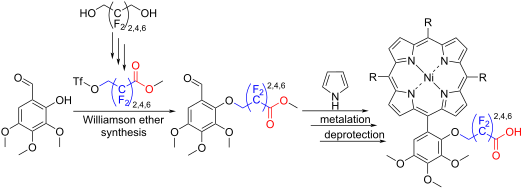
- –CH2–(CF2)n–COOCH3) with triflate as leaving group in terminal position are easily accessible and versatile building blocks for attaching long chain acids (pKa 0–1) to substrates in Williamson ether-type reactions. Keywords: acid-functionalized porphyrin; electron-rich porphyrin; nickel porphyrin
- -triflated, perfluoroalkylated carboxylic acids 16, 17, and 18 are easily accessible and versatile building blocks for connecting long chain acids (pKa range between 0 and 1) to substrates in Williamson ether-type reactions. Synthesis of the starting materials 16, 17, and 18 for the subsequent Williamson


gem-Difluorovinyl and trifluorovinyl Michael acceptors in the synthesis of α,β-unsaturated fluorinated and nonfluorinated amides
Beilstein J. Org. Chem. 2024, 20, 2946–2953, doi:10.3762/bjoc.20.247
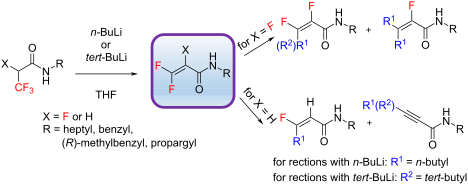
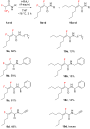
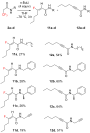
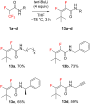
- , such a reaction pathway was absent for derivatives 11a–d, where the alpha-positioned proton exhibited a low pKa, favouring an easy elimination reaction. This is supported by the higher yields of products 12a–d compared to their 11a–d counterparts. The exclusive formation of E isomers in compounds 11a–d




Structure and thermal stability of phosphorus-iodonium ylids
Beilstein J. Org. Chem. 2024, 20, 2931–2939, doi:10.3762/bjoc.20.245
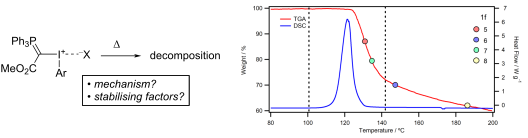
- Information File 1, Figure S6), the Kamlet–Taft hydrogen bond acceptor ability (β) (Supporting Information File 1, Figure S7) [37], the pKa of the conjugate acid HX (Figure S8), or the anion’s position (axial vs equatorial). The main stabilising factor we identified was the torsion angle φ between the





