Search results
Search for "mechanism" in Full Text gives 1922 result(s) in Beilstein Journal of Organic Chemistry. Showing first 200.
Rh(III)-catalyzed chelation-assisted C–H activation/annulation of 2-arylimidazolines with cyclic diazo-1,3-dicarbonyl compounds: a novel approach to tetracyclic annulated derivatives of 2,3-dihydroimidazo[2,1-a]isoquinoline
Beilstein J. Org. Chem. 2026, 22, 997–1003, doi:10.3762/bjoc.22.78
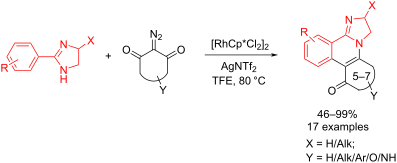
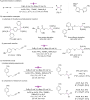
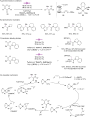
- reaction mixtures by NMR, none of them could be isolated in pure form by column chromatography. The following reaction mechanism can be proposed according to the literature data [18] (Figure 3a). The catalytic cycle begins with the formation of monomeric Rh(III)-catalyst A from the reaction of [RhCp*Cl2]2
- protodemetallation that delivers CAr-alkylated intermediate F and regenerates the active catalytic species. The target tetraheterocyclic product 4 is formed after intramolecular condensation between the carbonyl group and the imidazoline nitrogen of intermediate F. To support this mechanism experimentally, we have
- by 1H NMR of crude reaction mixtures. a) Proposed reaction mechanism; b) Experimental isolation of intermediate B (compound 5) from equimolar reaction of substrate 2a and the catalyst. C–H activation/annulation of 2-arylimidazolines with diazo-1,3-dicarbonyl compounds. aReaction conditions


Electrochemical reduction of unsaturated carbon–carbon bonds via 3d transition-metal catalysis
Beilstein J. Org. Chem. 2026, 22, 955–981, doi:10.3762/bjoc.22.75
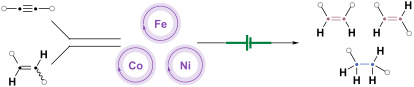
- ; electroorganic synthesis; reaction mechanism; 3d transition metals; unsaturated C–C bonds; Introduction Reductions of unsaturated C–C bonds Reduction of unsaturated C–C bonds, most notably, alkynes and alkenes, is a synthetic method that has been widely and extensively discussed with a long and rich history
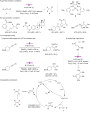
- along an energetically viable pathway with a notably low barrier, consistent with a concerted mechanism. These findings collectively delineate the proposed Z-selective reduction catalytic cycle. Moreover, bond dissociation energy analysis revealed that the relatively weak Co–H (42.4 kcal mol−1) and Co–C
- , the desired succinic acid derivatives were obtained. Importantly, this efficient conversion was observed only in the presence of the mediator; in its absence, product yields were markedly diminished and substantial amounts of starting material remained unreacted. According to the proposed mechanism








Recent advances in copper-catalyzed direct hydroamination of alkenes with (hetero)aromatic amines
Beilstein J. Org. Chem. 2026, 22, 925–947, doi:10.3762/bjoc.22.73
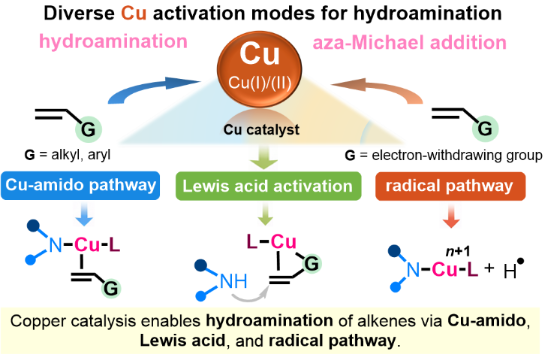
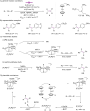
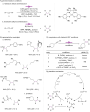
- ). In particular, NMR analysis indicated the formation of the organocopper species (IPr)Cu(N(Ph)CH2CH2CN) (VII), a key intermediate consistent with the nucleophilic addition mechanism. These early mechanistic studies established that copper-bound amido species act as key nucleophilic intermediates in
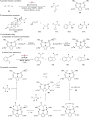
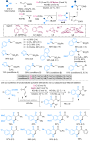
- copper–amido aza-Michael addition mechanism. Initially, the NHC-CuOt-Bu complex I, generated from NHC–CuCl and KOt-Bu, underwent ligand exchange with arylamine, yielding the active NHC–Cu–amido species II. Allylic sulfone 10 was then isomerized by base or NHC–CuOt-Bu to vinyl sulfone VI, which
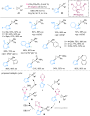
- under the optimized conditions, yielding the desired products in up to 96% yield. A plausible mechanism involves the in situ generation of an NHC-ligated copper–amido species via ligand exchange between the NHC–CuOt-Bu complex and pyrazole substrate (Scheme 15). Subsequent stereoselective aminocupration






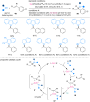

Palladium-catalyzed benzocyclization reactions of quinoline-2-carboxamides via sequential C–H/N–H functionalization
Beilstein J. Org. Chem. 2026, 22, 905–914, doi:10.3762/bjoc.22.71
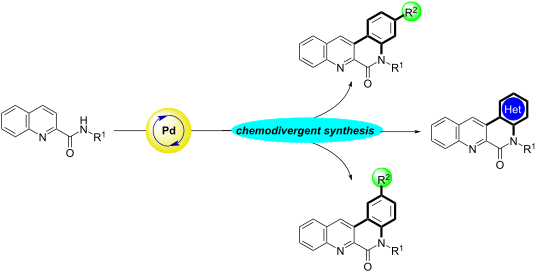
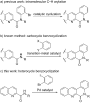
- reported [44][45][46][47][48][49][50][51][52][53][54], although the reaction mechanism with π-deficient N-heteroaromatics has not been elucidated (Scheme 2b). It is therefore valuable to investigate the differences in reactivity between C–H and N–H for intermolecular arylation in the presence of transition
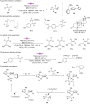
- NOESY (Figure 1d and e). These results suggested that the carbon–iodine bond in 1-bromo-2-iodobenzene was involved in the formation of the C–C bond, while the carbon–bromine bond was involved in the formation of the C–N bond (Scheme 4). Accordingly, a plausible reaction mechanism is proposed in Scheme 5
- mechanism for the sequential C–H/N–H functionalization reaction. Investigation of this C–H/N–H functionalization reaction conditions. Investigation of the substrate scope and substituent limitations of amide groups for the C–H/N–H functionalization reaction. Investigation of the dihaloarene substrate scope




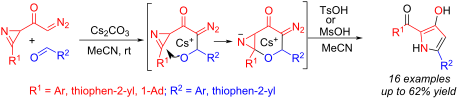
Cascade transformation of 2-(diazoacetyl)-2H-azirines to 2-aroyl-3-hydroxy-1H-pyrroles via condensation with aromatic aldehydes
Beilstein J. Org. Chem. 2026, 22, 897–904, doi:10.3762/bjoc.22.70
- formed (≈90%), while the minor one, based on the arguments presented above, is apparently the (1RR,3RR,6RR)-isomer. To shed light on the mechanism and stereoselectivity of the reaction, DFT calculations were performed at the B3LYP-D3/6-311+G(d,p)/LANL2DZ(Cs) level of theory with a SMD solvent model (for
- mixture was observed in the presence of AcOH, TfOH, TFAA, and BF3⋅Et2O. This is clearly due to the complex mechanism of formation of pyrrole 5a. The role of acid catalysis follows from the plausible mechanism of transformation of the bicyclic intermediate (1RR,3SR,6RR)-Phe-4 to pyrrole 5 shown in Scheme 4
- transformation of the latter affords 2-aroyl-3-hydroxy-1H-pyrrole. A plausible mechanism of the transformation of the bicyclic intermediate to pyrrole was confirmed by DFT calculations. Reaction of 2-(diazoacetyl)-2H-azirines 1 with aldehydes 2. Reaction of 2-(diazoacetyl)-2H-azirine 1b with aldehyde 2b and the


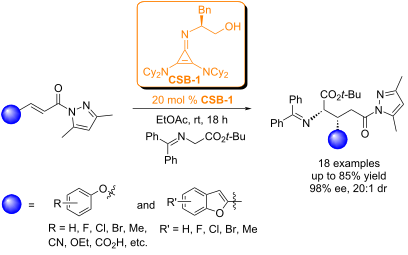
Chiral cyclopropenimine-catalyzed enantioselective Michael reactions of phenol and benzofuran-derived α,β-unsaturated pyrazolamides with benzophenone-imine of glycine esters
Beilstein J. Org. Chem. 2026, 22, 888–896, doi:10.3762/bjoc.22.69
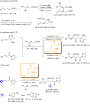
- anti-form of 6a. With mode B, the π–π stacking between benzophenone-imine 2a and the phenoxylmethyl group in 5a may enhance the ratio of this attack to produce the syn-form of 6a as major product. A mechanism for this highly enantioselective Michael addition between 2a and 5a was proposed based on
- experimental facts and the studies of the Lambert group [13]. This proposed reaction mechanism is demonstrated in Figure 5. At the beginning of the reaction, the chiral organosuperbase catalyst CSB-1 can deprotonate benzophenone-imine of glycine ester 2a to form the (E)-enolate of 2a and a cyclopropenium as
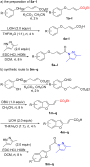
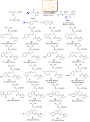
- benzophenone-imine esters. The catalysts used in the screening of Michael reaction conditions. The proposed attack modes of Michael addition of 2a and 5a. A proposed reaction mechanism of CSB-1 catalyzed Michael reaction between 2a and 5a. Configuration of 7d’ determined by X-ray diffraction analysis. Chiral






Site-specific labelling of native peptides and proteins: chemical and enzymatic strategies
Beilstein J. Org. Chem. 2026, 22, 857–881, doi:10.3762/bjoc.22.67
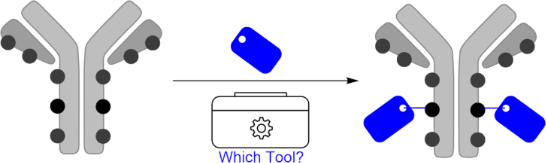
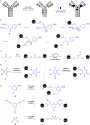
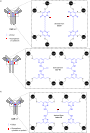
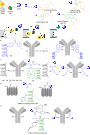
- mechanism. These reagents have been extensively explored for protein conjugates, especially as ADCs [34]. Similarly, divinylpyrimidines 10 [35] and arylenedipropiolonitriles 11 [36] have also been investigated for analogous purposes but via a conjugate addition mechanism (Scheme 3e). Exploiting the unique
- has become a cornerstone of biological research and therapeutic development, with applications including in vitro systems, live cells and animal models. The earliest form of affinity-guided labelling traces back to mechanism-based inhibitors, which exploit heightened reactivity of active-site residues
- site-specific histidine modification of the Fc region, albeit at a modest yield (37%). Another related and noteworthy technology is the cysteine-to-lysine transfer reaction, which operates via a mechanism analogous to native chemical ligation in Fab fragments [108]. Together the advances of small








The trans-influence in gold chemistry from a catalytic perspective
Beilstein J. Org. Chem. 2026, 22, 838–856, doi:10.3762/bjoc.22.66
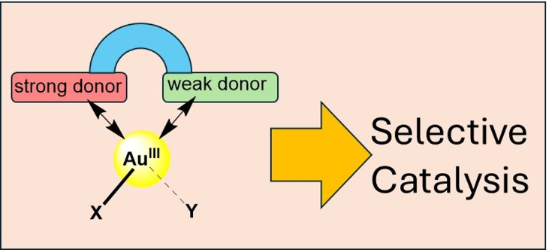
- recent mechanistic insights. Keywords: catalysis; gold; ligands; reaction mechanism; trans-influence; Introduction Gold catalysts have emerged as catalysts of choice in a multitude of organic transformations, not least due to their high functional group tolerance. Their applications have been widely
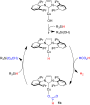
- into gold hydrides by stepwise O-transfer reactions to phosphine (Scheme 6) [55]. Quite a different mechanism for the conversion of Au–OH into Au–H was found by Goldberg and co-workers for the hydrogenolysis of [(P^C^P)AuOH]+, which requires an acid catalyst [56]. A mechanistically similar heterolytic
- auto-accelerating radical chain mechanism, to give a stable hydroperoxide complex 23 that was characterised by X-ray diffraction. This reaction was greatly accelerated by AIBN as radical initiator which generates Au(II) radical cations [(P^C^P)Au]+•, as well as RO• and ROO• radicals, which propagate


Unsymmetrical sulfoxides with sterically hindered catechol fragment: synthesis, structure, electrochemical properties, and antiradical activity
Beilstein J. Org. Chem. 2026, 22, 828–837, doi:10.3762/bjoc.22.65
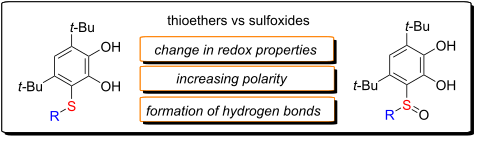
- comparative assessment of the electrochemical properties of the synthesized catechol sulfoxides and their precursors thioethers enables the proposal of an electrooxidation mechanism, the identification of electron transfer centers, and the elucidation of differences in the redox behavior of catechols
- either one or two stages, depending on the degree of branching of the hydrocarbon substituent. A possible mechanism for the anodic transformations of sulfoxides is the two-electron oxidation of the substituted o-benzoquinone formed in the first stage to a dication (Scheme 2, path a). Further
- antioxidant catechol unit and a secondary sulfur-based redox center enables a dual mechanism of radical neutralization, the efficiency of which can be tuned by the nature of the hydrocarbon substituent and the oxidation state of sulfur. The structural, electrochemical, and antiradical data presented herein


Synthesis and structural elucidation of a novel bis-spirooxindole from isatin and ethylenediamine
Beilstein J. Org. Chem. 2026, 22, 813–820, doi:10.3762/bjoc.22.63

- ), MeOH, reflux, 5 h, 66%; (b) ethylenediamine (2 equiv), EtOH, reflux, 6 h, 67%; (c) 2 equiv NaBH4 (58%) or NaBH3CN (76%), reflux, MeOH. Proposed mechanism for the formation of 25. Synthesis of 30 from 5-methylisatin (29). Supporting Information Supporting Information File 32: Copies of IR, NMR and MS


Knoevenagel condensation of 4,5- and 1,8-diazafluorenes
Beilstein J. Org. Chem. 2026, 22, 803–812, doi:10.3762/bjoc.22.62
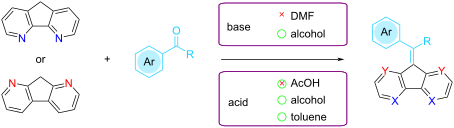
- diazafluorenes’ nature and solvent influence on the mechanism and reactivity. We also identified conditions allowing the preparation of both 4,5- and 1,8-diazafluorenylidenes in yields up to 85% minimizing complicated synthetic or experimental workup procedures. Additionally, the condensation of diazafluorenes
- cases when the condensation product precipitated from the reaction mixture (see note d in Table 1), i.e., when the reaction became irreversible. The proposed mechanism for the condensation reaction in the presence of ammonium acetate is shown in Scheme 2 [25]. Accordingly, the addition of diazafluorene
- . Knoevenagel reaction of 1 and 2 under acidic conditions. Proposed mechanism of condensation and competing protonation equilibrium. A proposed mechanism for the 4-to-2 degradation process. Condensation of 4,5- (1) and 1,8-diazafluorene (2) with di(pyrid-2-yl)ketone. Reaction yields are given in parentheses




Synthetic study of vic-bromination of diarylacetylenes, easy purification and separation
Beilstein J. Org. Chem. 2026, 22, 795–802, doi:10.3762/bjoc.22.61
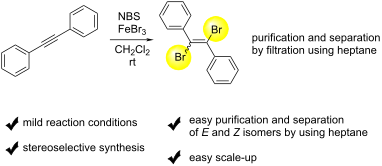
- make scale-up very easy. The E-selectivity was dropped in gram-scale synthesis, although the reason is unclear at present. For the understanding of the reaction mechanism, some control experiments were carried out. The reaction of 1a with NBS and n-Bu4NBr without FeBr3 gave trace amount of E-2a (Scheme
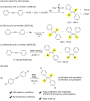
- FeBr3 might be important and in situ Br2 might be generated and formed. FeBr3 might react with Br2 to form [FeBr4]− and "Br+", which can react with 1a. As for the reaction mechanism, the plausible pathway might be the following (Scheme 3). The reaction of NBS and FeBr3 might generate Br2 or "Br+", which
- ; HRMS (ESI) m/z: [M + Na]+ calcd for C14H11Br2, 336.9222; found, 336.9215. Selected and previous reports for bromination of diphenylacetylenes (a–c), and this work (d). Gram-scale synthesis of (a), and control experiments of (b), (c) and (d). n.r. = no reaction. Plausible reaction mechanism of the



Preparation of 3-(alkylamino)imidazo[1,2-a]pyridine-2-carbaldehydes via Kornblum oxidation and unexpected ring-opening reactions of the corresponding alcohols under oxidative conditions
Beilstein J. Org. Chem. 2026, 22, 763–770, doi:10.3762/bjoc.22.58
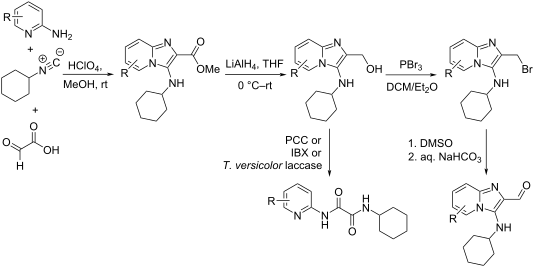
- mechanism. Oxidative ring-opening of imidazo[1,2-a]pyridines has been reported previously, but in these cases different ring-opened products were identified. These previous results are compared to our present report in Figure 5. Wang and co-workers [30] reported ring-opening accompanied by loss of a carbon
- laccase in the presence of TEMPO and O2, were tested on compounds 17 in order to obtain the corresponding aldehydes, but both of these methods also gave rise to the ring-opened products 18. A detailed investigation into the mechanism of this ring-opening reaction was not conducted. However, this failure


Synthesis and biological evaluation of new brassinosteroid analogs with C-22 benzoate function
Beilstein J. Org. Chem. 2026, 22, 753–762, doi:10.3762/bjoc.22.57
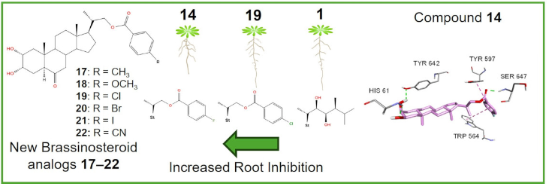
- extracellular part of a receptor kinase, NRI1, and then the activated BRI1 initiates a series of processes comprising the transduction pathway of BRs [3][15]. The main consequence of this mechanism is the accumulation of two transcription factors: BZR1 (Brassinazole Resistant1) and BES1 (BRI1-EMS-Suppressor1
- growth BRs act as root growth promoter at low concentration and the opposite effect is observed at high concentrations [22]. As sensing of BRs by BRI1 is the starting point of the mechanism by which plant responses are produced, this binding process has been extensively studied and it has been shown that
- regions, causing laminar inclination in a concentration-dependent manner. Although the molecular mechanism of this phenomenon remains elusive [35][36], this bioassay has been used with a large number of BR analogs and the obtained results have allowed the establishment of structure–activity relationships


Synthesis of heterocycles based on azomethine ylides from α-amino acids (or amines) and carbonyl compounds
Beilstein J. Org. Chem. 2026, 22, 705–741, doi:10.3762/bjoc.22.55
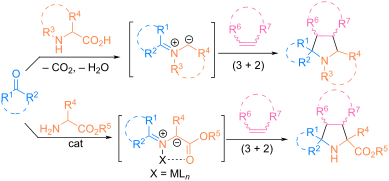
- dipolarophile can lead to a change in the mechanism and to an effective electrophilicity polarization toward the terminal carbon atom. This finding strongly supports the suitability of moderately activated olefins as dipolarophiles for the catalyzed asymmetric cycloaddition reactions involving azomethine ylides
- reaction proceeded with complete regioselectivity and very high diastereo- and enantioselectivity, affording stereoisomerically pure highly functionalized polysubstituted pyrrolidines in excellent yields (Scheme 25). Considering the probable reaction mechanism, the authors suggest that the effective
- , nitrogen, sulfur or a sulfone group as heteroatoms, reacted with azomethine ylide to form spirocyclic or fused pyrrolidines 95 in yields up to 98%. The authors suggest that the reaction of silylamine 92 with LiF proceeds via a concerted mechanism: in transition state I, the polarized fluorine atom (δ


Harnessing light energy with molecules
Beilstein J. Org. Chem. 2026, 22, 680–682, doi:10.3762/bjoc.22.52
- a computational study on the mechanism of photodenitrogenation of diazabicyclo[2.2.1]heptenes. We are grateful to all authors who have contributed to this thematic issue. The contributions show how harnessing of light energy can be finely tuned by structural modifications and used for diverse
Photoorganocatalytic trifluoromethylation of (het)arenes in green conditions
Beilstein J. Org. Chem. 2026, 22, 662–671, doi:10.3762/bjoc.22.50
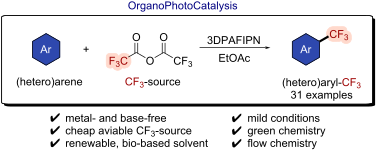
- , entries 3 and 4). A comparison of the space–time yield highlights the significant advantage of the flow technique (Table 3, entry 4), which was almost 30-fold higher than that achieved in the most efficient batch reaction (entry 3). Next, we investigated the reaction mechanism. As a first approach
- , radical trapping experiments were conducted. In line with the results obtained during the optimization, no product formation was observed in the presence of TEMPO or under air (Table 2, entries 13 and 14). To further probe the mechanism, the reaction mixture from the TEMPO-containing experiment was
- TFAA is thermodynamically favorable (ΔE = 0.18 V), whereas the oxidation of TMB is disfavored (ΔE = −0.34 V). We next assessed the theoretical feasibility of the proposed mechanism by means of DFT and TDDFT calculations. The results revealed that the reduction of TFAA, followed by the generation of the


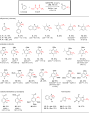


Advantages of PROTACs in achieving selective degradation of homologous protein families
Beilstein J. Org. Chem. 2026, 22, 628–661, doi:10.3762/bjoc.22.49
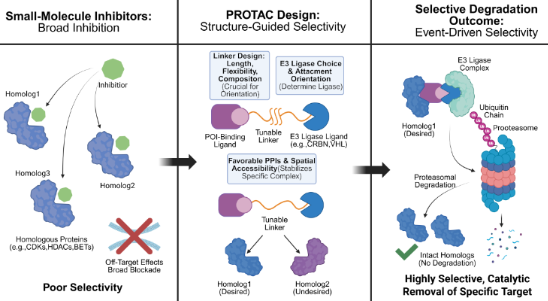
- enables the proteasome to recognize the complex, subsequently degrading the target protein via the endogenous ubiquitin–proteasome system [13][14]. Notably, this mechanism does not necessitate prolonged occupancy of the POI binding site. Instead, the transient formation of the ternary complex is
- multiple BET protein members [106]. However, due to the varying expression levels of BET protein members in different tumor types, these inhibitors failed in displaying good therapeutic effects. Moreover, due to the lack of highly selective BET inhibitors, the mechanism of cancer signaling pathways related









Hydrogen production from formic acid catalyzed by NHC–Cu complexes
Beilstein J. Org. Chem. 2026, 22, 620–627, doi:10.3762/bjoc.22.48
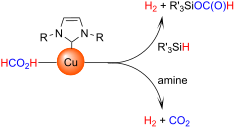
- decomposition in the presence of PhSiH3 was investigated. Surprisingly, gas-chromatography analyses showed that only H2 was released. Remarkably, neither CO nor CO2 were detected (see Supporting Information File 1, section 5). To obtain more information on the mechanism of this reaction, isotopic labeling
- steric reasons rather than electronics. In fact, the reaction of trifluoroacetic acid led to the same outcome as acetic acid (Scheme 4, see Supporting Information File 1, section 8). Theoretical as well as experimental investigations to assess the mechanism of this transformation are still ongoing. The
- conventional system FA/amine. Synthetic and theoretical studies are still ongoing in our laboratories to obtain more insights into the mechanism of this reaction. NHC–Cu complexes investigated in this study. Decomposition of FA catalyzed by NHC–Cu complexes in the presence of PhSiH3. Reaction conditions



Regioselective approach to 5-arylsulfonylisoxazoles and their antimicrobial activity
Beilstein J. Org. Chem. 2026, 22, 592–602, doi:10.3762/bjoc.22.45
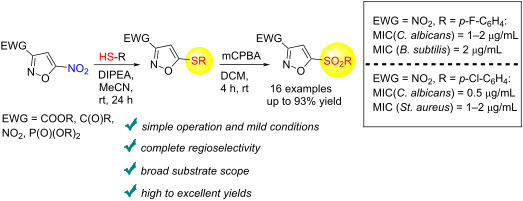
- sulfonyl or sulfinyl derivatives. Biological evaluation revealed that several compounds, especially 3-nitro-5-sulfonyl- and 5-sulfinylisoxazoles, exhibit potent antimicrobial activity against Gram-positive bacteria, fungi, and notably low MICs comparable to those of standard drugs. The mechanism of action
- as promising antimicrobial agents and provide new insights into their mechanism of action. Keywords: antimicrobial activity; aromatic nucleophilic substitution; isoxazoles; oxidation; sulfonylisoxazoles; Introduction The isoxazole ring represents an important building block for the synthesis of
- negligible activity (Table 2). To evaluate the possible mechanism of antibiotic action on bacterial cells, we have studied the antibacterial activity of the isoxazole derivatives on the reporter strains E. coli ΔtolC pDualrep2 (AmpR) and E. coli lptDmut pDualrep2.1 (KanR) as described previously [32][33


Design and synthesis of an erdafitinib-based selective FGFR2 degrader
Beilstein J. Org. Chem. 2026, 22, 583–591, doi:10.3762/bjoc.22.44
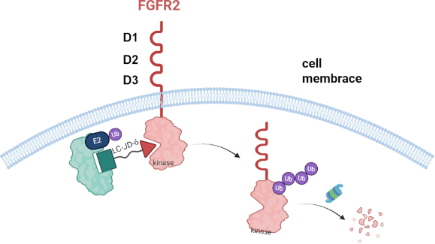
- and HEK293T cells. a) FGFR1, FGFR2, FGFR3, and FGFR4 levels in cells after treatment. b) The mechanism of PROTAC. It was created in BioRender (Chen, Lingfeng https://BioRender.com/7td2yot). This content is not subject to CC BY 4.0. c) Cellular localization of FGFR2 after treatment with LC-JD-6



Molecular tweezer–peptide conjugates disrupt the protein–protein interaction between survivin and histone H3 essential in mitosis
Beilstein J. Org. Chem. 2026, 22, 557–567, doi:10.3762/bjoc.22.41
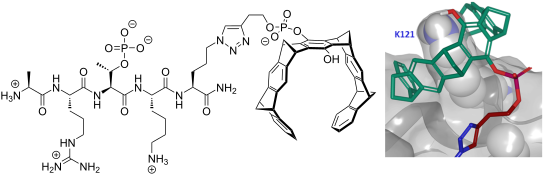
- lab [25]. Affinity determination, co-crystallization attempts, and bioassays are underway in our laboratories. Mechanism of CPC recruitment to centromeres and kinetochores. A) Initially phosphomarks are placed on Thr3 of histone H3 and on Thr120 of histone H2A. In histone H3, P-Thr3 together with the




Experimental and DFT studies on the regioselective methanolysis of 5-azido-9-oxabicyclo[6.1.0]nonan-4-yl 4-nitrobenzoate isomers
Beilstein J. Org. Chem. 2026, 22, 547–556, doi:10.3762/bjoc.22.40
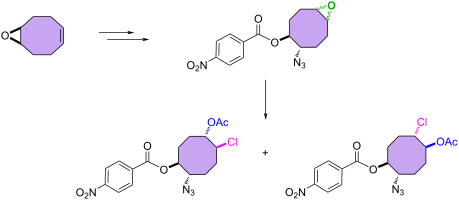
- -ray analysis (Figure 2) [25]. X-ray analysis of azido compound 10 confirmed the trans configuration of the azide group with chloride and the cis configuration with the acetate. Our suggested mechanism for the ring-opening of the epoxides 9 with HCl(g) in MeOH proceeded as described in Scheme 3. As
- NOESY experiments or the other 2D NMR conducted. Compound 11 is not a single crystal, so the determination by X-ray analysis of its structure was not possible. We strongly assume that the structure of 11 is based on the methanolysis mechanism of the epoxide 9a (Scheme 3). In order to elucidate the
- computations were performed to gain insights into the mechanism underlying regioselectivity for the methanolysis of the isomeric epoxides 9 (Figure 3). Detailed mechanistic routes involving all possible intermediates responsible for the regioselectivity step were constructed and the free energy barriers for


Melifoliox B, a novel phloroglucin derivative isolated from Melicope barbigera (Rutaceae) and synthesis of new oxidation products from melifoliones A and B
Beilstein J. Org. Chem. 2026, 22, 535–546, doi:10.3762/bjoc.22.39
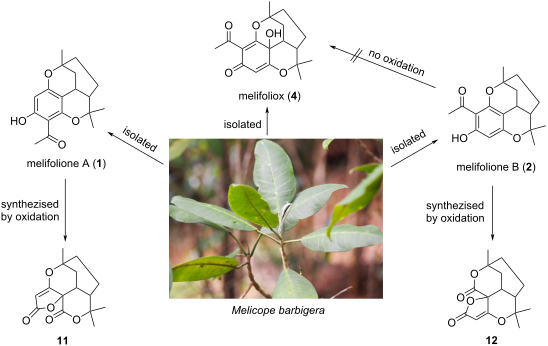
- contraction of the acetyl phenol to a furanone ring, forming the derivatives 11 and 12, whose structures were confirmed by X-ray analysis. A hypothetical mechanism for the oxidative ring contraction is proposed. 11 and 12 are the first representatives of new heterocyclic ring systems that have not previously
- the elucidation of the reaction mechanism and the synthesis of new compounds with possible biological activity. Experimental General Detailed experimental procedures are described in [1]. Instrumentation NMR spectra were recorded on Bruker ARX 300 or AVANCE DMX 600 NMR spectrometers (Bruker, Karlsruhe



Modern synthetic pathways towards eribulin and its subunits
Beilstein J. Org. Chem. 2026, 22, 495–526, doi:10.3762/bjoc.22.37
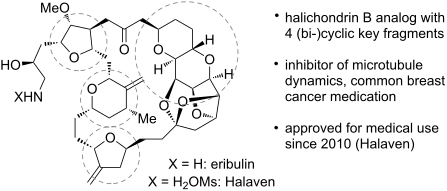
- , Halaven) due to its unique mechanism of action as a microtubule dynamics inhibitor. It is primarily used in the treatment of metastatic breast cancer and liposarcoma, offering a new therapeutic option for patients with advanced disease. To meet the increasing clinical demand, the research on new synthetic
- challenging soft tissue sarcoma, 1 has shown promise in prolonging overall survival and improving quality of life. The key feature that underpins 1's clinical importance is its unique mechanism of action [41][42][43][44][45][46][47][48][49][50]. Unlike other microtubule inhibitors such as taxanes and vinca
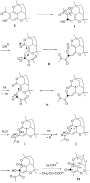
- in 71% yield. A detailed mechanism for this transformation is shown in Scheme 24 below [98]. Here, the Rh(II)-induced elimination of N2 generates carbene 218, which is attacked by the adjacent allyl ether moiety to form unstable zwitterion 219. Sigmatropic rearrangement and acidic workup yielded 213