Search results
Search for "DMSO" in Full Text gives 1096 result(s) in Beilstein Journal of Organic Chemistry. Showing first 200.
Synthesis of HBC fluorophores with an electrophilic handle for covalent attachment to Pepper RNA
Beilstein J. Org. Chem. 2025, 21, 727–735, doi:10.3762/bjoc.21.56
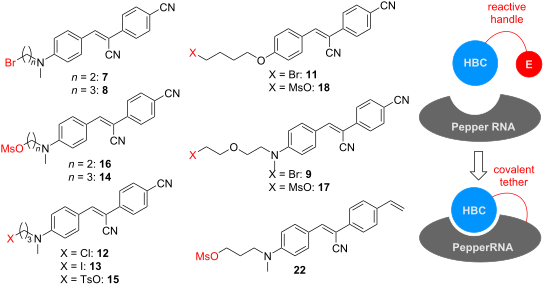
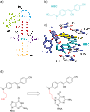
- observed for the HBC ether 11 (C4 homolog) and the bromoethoxyethyl HBC 9 (“C5” homolog). No reaction was observed for the C2 homolog 7 (Figure 2). Notably, the reaction yields for all derivatives increased when the DMSO content of the reaction mixture was increased from 5 to 15%. (DMSO was initially used
- better solubility in the reaction buffer and did not require DMSO as co-solvent, making it a very promising candidate for in vivo applications. To complete the study, and given that the mesyloxy group has shown superior efficacy over all other functional groups tested for Pepper alkylation, we
- additionally synthesized the HBC series with different linker lengths with the mesyloxy group, yielding the derivatives 16 to 18 (Scheme 5). All of these derivatives – although well soluble in the reaction buffer without the need for additional DMSO – were less reactive than N-(3-mesyloxypropyl) HBC derivative



Sequential two-step, one-pot microwave-assisted Urech synthesis of 5-monosubstituted hydantoins from L-amino acids in water
Beilstein J. Org. Chem. 2025, 21, 596–600, doi:10.3762/bjoc.21.46
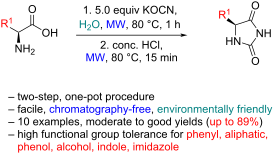
- min. The precipitates in the reaction mixture were filtered, washed with 1 M HCl solution (2 × 7 mL), distilled water (2 × 10 mL), and dried to afford H2a as a white solid. Yield 89%. [α]D20 −100.9 (c 11, CH3CN); 1H NMR (400 MHz, DMSO-d6) δ 10.44 (s, 1H), 7.93 (s, 1H), 7.17–7.30 (m, J = 8 Hz, 5H
- ), 4.33 (td, J = 5, 1 Hz, 1H), 2.92 (m, J = 5 Hz, 2H); 13C NMR (100 MHz, DMSO-d6) δ 175.2, 157.2, 135.6, 129.8, 128.1, 126.7, 58.4, 36.4; LC–MS (ESI) m/z: 191 [M + H]+, 163, 120; HRMS (ESI) m/z: [M + H]+ calcd for C10H11N2O2 191.0815; found, 191.0815. The procedure was repeated by substituting ʟ
- mixture was neutralized to pH 7 using saturated sodium bicarbonate solution and extracted with ethyl acetate multiple times. The organic extracts were combined, dried with anhydrous sodium sulfate, and concentrated under reduced pressure to afford H2d as a white solid. Yield 70%. 1H NMR (400 MHz, DMSO-d6


Formaldehyde surrogates in multicomponent reactions
Beilstein J. Org. Chem. 2025, 21, 564–595, doi:10.3762/bjoc.21.45
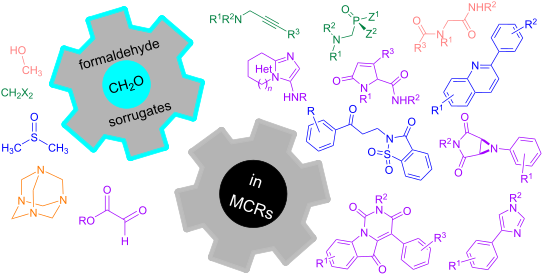
- , eventually, in other MCRs where formaldehyde acts as a C1 building block [16]. As can be seen in Scheme 3, under this strategy a wide variety of diamide compounds 1 could be afforded with very good yields applying MeOH as a formaldehyde source in a traditional Ugi reaction. Dimethyl sulfoxide (DMSO) as
- surrogate and source of formaldehyde Dimethyl sulfoxide is a well-known polar-aprotic solvent with high boiling point that is used in several organic synthetic reactions because of affordable cost and relatively low toxicity. There are numerous examples that show the use of DMSO as a C1 or C2 building block
- [17][18]. An important drawback of this solvent is the difficulty of its removal from the reaction crude, and extractions with water are commonly employed before purification. Depending on the reaction conditions, DMSO can be transformed into different products, e.g., under redox conditions, DMSO can


Deep-blue emitting 9,10-bis(perfluorobenzyl)anthracene
Beilstein J. Org. Chem. 2025, 21, 515–525, doi:10.3762/bjoc.21.39
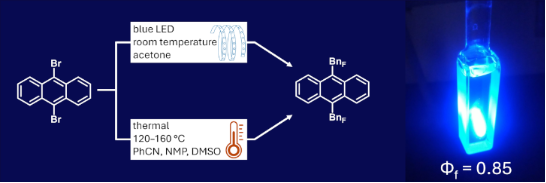
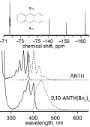
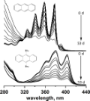
- reaction in the presence of Cu in DMSO [22]. The former approach yielded a complex, inseparable mixture of products and was not studied further. The latter approach afforded two isolable main products, 9-ANTH(BnF) (14% yield) and 9,10-ANTH(BnF)2 (7% yield, both are isolated yields based on ANTH). Several
- other, yet to be identified, ANTH(BnF)n compounds were also observed. In this reaction, ANTH dissolved in DMSO was heated to between 120 °C and 160 °C in the presence of 2 equiv of BnFI and 3 equiv of Cu powder as promotor for 24 h, resulting in the complete conversion of ANTH to reaction products. When
- )n starting material. A series of reactions with 9,10-ANTH(Br)2 and BnFI in the presence of Cu were carried out in four high-boiling organic solvents: DMSO, chlorobenzene (PhCl), benzonitrile (PhCN), and N-methylpyrrolidinone (NMP). When PhCl was the solvent, the 14% yield of the mono-substituted





Synthesis of the aggregation pheromone of Tribolium castaneum
Beilstein J. Org. Chem. 2025, 21, 510–514, doi:10.3762/bjoc.21.38
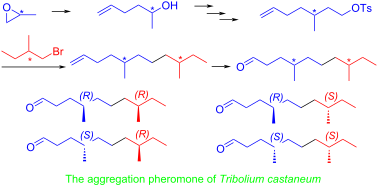
- , geminal acid (S)-7 was decarboxylated with DMSO to yield chiral acid (S)-8 [33], followed by TiCl4-catalyzed reduction with ammonia-borane to obtain the chiral alkenyl alcohol (S)-9 [34]. The final tosylation with p-tosyl chloride provided (S)-3-methylhept-6-en-1-yl 4-methylbenzenesulfonate ((S)-10) [29


Unprecedented visible light-initiated topochemical [2 + 2] cycloaddition in a functionalized bimane dye
Beilstein J. Org. Chem. 2025, 21, 500–509, doi:10.3762/bjoc.21.37
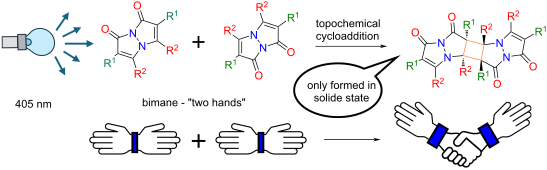
- shielding from light, and unavoidable light exposure during crystal selection, and the X-ray measurement itself. As an additional test, the compounds were prepared as NMR samples in DMSO-d6 and irradiated with 405 nm LED. Irradiation in the solution phase did not result in any dimerization; the respective
- solid spread across the flask. The entire flask was then irradiated using 405 nm LEDs in the turntable chamber. Solution-phase irradiation tests For solution-phase irradiations, 10 mg of each compound was dissolved in DMSO-d6 and placed into NMR tubes. The samples were irradiated directly inside the


Synthesis of N-acetyl diazocine derivatives via cross-coupling reaction
Beilstein J. Org. Chem. 2025, 21, 490–499, doi:10.3762/bjoc.21.36
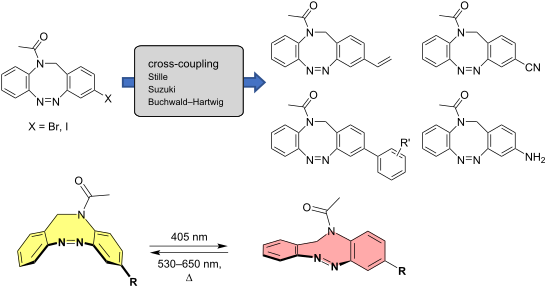
- neurotransmitters [10][11] or as switching units for potential dependent potassium channels [12]. Compared to the Z → E conversion rate of 92% (in n-hexane) of the parent diazocine the conversion in water/DMSO mixtures is decreasing with increasing water concentration (73% in water/DMSO 9:1) [8][9][10][11][12
- ]. Moreover, the parent diazocine is insoluble in water (precipitation in water/DMSO > 9:1). Substitution with polar substituents such as CH2NH2 provides water solubility, however, it does not restore the high Z → E conversion rates of the parent system in organic solvents, which is a disadvantage, since


Photomechanochemistry: harnessing mechanical forces to enhance photochemical reactions
Beilstein J. Org. Chem. 2025, 21, 458–472, doi:10.3762/bjoc.21.33

- , 70:30 anti/syn). This indicates a unique divergent photomechanochemical reaction pathway with respect to the simple irradiation in solid state. Remarkably, no selectivity was observed in solution state (DMSO as solvent), while a completely reversed selectivity (99%, anti/syn 91:9) was obtained when
- -assisted grinding (LAG). This minimizes waste production compared to conventional solution-based methods. This is particularly advantageous when high-boiling point (e.g., DMSO) or noxious solvents (e.g., DMF and halogenated ones) are required. It is worth noting, however, that in some cases the heat




Synthesis, structure, ionochromic and cytotoxic properties of new 2-(indolin-2-yl)-1,3-tropolones
Beilstein J. Org. Chem. 2025, 21, 358–368, doi:10.3762/bjoc.21.26
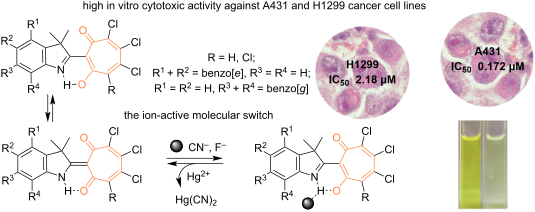
- (Scheme 2). The structures of tautomeric forms of 7a, 7b, 8a, 8b and their energy characteristics were calculated by PBE0/6-311+G(d,p) method in the gas phase and polar solvent (DMSO) (Table 1, Figure 1 and Supporting Information File 3). According to the obtained data, the (NH) isomers of 7 and 8 are
- characteristic values of chemical shifts and cross-peak analysis in two-dimensional spectra of 1H,1H COSY correlations, as well as 1H,13C correlations HSQC, HMBC, and 1H,15N HMBC spectra in DMSO-d6 and CDCl3 (Supporting Information File 2). In the 1H NMR spectrum of 7a in DMSO-d6, the signal of the weak field
- proton is shifted to a stronger field of 14.23 ppm and appears as a narrow singlet (Supporting Information File 2, Figure S17). Analysis of two-dimensional correlation spectra of heteronuclear NMR spectroscopy shows that compound 7a in DMSO-d6 solution exists in the (NH) tautomeric form. Thus, in the 1H




Synthesis, characterization, antimicrobial, cytotoxic and carbonic anhydrase inhibition activities of multifunctional pyrazolo-1,2-benzothiazine acetamides
Beilstein J. Org. Chem. 2025, 21, 348–357, doi:10.3762/bjoc.21.25
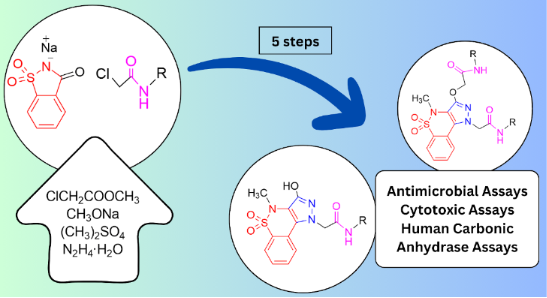
- prepared in DMSO and cancer cells were treated with 10 μM doses of compounds using the apoptosis inducing standard mensacarcin (10 μM) as a positive control [56]. Only compound 7l decreased cell viability to 63%, while the rest of the compounds showed very low to no significant decrease in cell viability
- ethanol. Characterization data Solutions of all synthesized compounds 7a–h were prepared in DMSO-d6 and scanned for their 1H NMR spectra at 300 MHz and 13C NMR spectra at 75 MHz. The characterization data for compounds 7a–h is given in Supporting Information File 1. Antimicrobial assays The antimicrobial
- experiments. Cytotoxic assays Single-dose MTT assays were performed for compounds 7a–n with the human colon cancer mammalian cell line (HCT-116, ATCC CCL-247) for evaluating the compounds’ inhibitory effects on cell viability [53][54][55][56]. Stock solutions of compounds were prepared in DMSO and cancer


Synthesis of new condensed naphthoquinone, pyran and pyrimidine furancarboxylates
Beilstein J. Org. Chem. 2025, 21, 340–347, doi:10.3762/bjoc.21.24
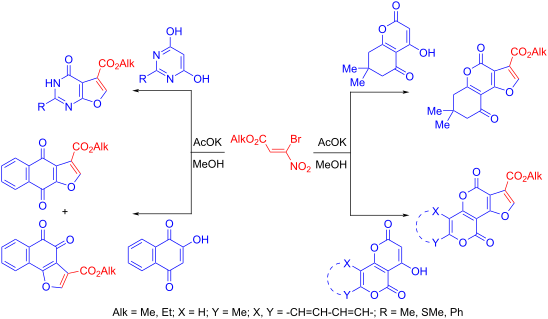
- data, they luminesce in DMSO solution when irradiated with light at wavelengths of 352 and 283 nm. Compounds 7a–f are capable of existing as lactim–lactam tautomers due to the presence of an amide fragment in their structure (Scheme 7). At the same time, the 1H and 13C NMR spectra of compounds 7a–f
- indicate their individuality. The presence of a broadened signal in the 1H NMR spectra (DMSO-d6) in the region of 12.49–12.84 ppm and a C4 signal in the 13C NMR spectra (DMSO-d6) in the region of 158.1–159.0 ppm does not allow us to unambiguously determine the tautomeric form of compounds 7a–f in solution
- Shimadzu UV-2401 PC spectrometer for samples in DMSO solutions in fused quartz cuvettes (optical path length 1.01 mm). Luminescence excitation spectra and luminescence spectra were recorded on a Shimadzu SF-6000 spectrofluorimeter in a 1 cm thick quartz cuvette at room temperature in a DMSO solution (c


Antibiofilm and cytotoxic metabolites from the entomopathogenic fungus Samsoniella aurantia
Beilstein J. Org. Chem. 2025, 21, 327–339, doi:10.3762/bjoc.21.23
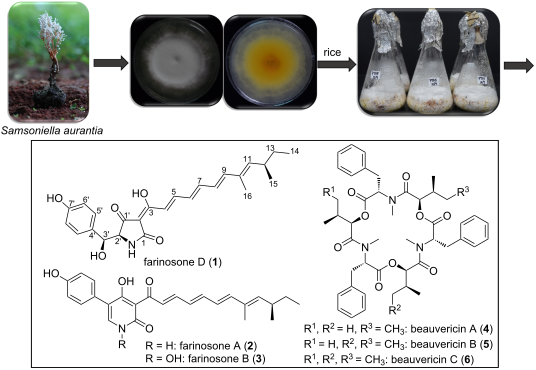
- ), 300 (0.5), 265 (0.6) 218 (2.4); NMR data (1H: 500 MHz, 13C: 125 MHz, DMSO-d6) see Table 1; HRESIMS m/z: [M – H2O + H]+ calcd for C25H28NO4+, 406.2026; found, 406.2020; [M + H]+ calcd for C25H30NO5+, 424.2118; found, 424.2126; [M + Na]+ calcd for C25H29NNaO5+, 446.1962; found, 446.1947. Farinosone A (2
- . Beauvericin A (4): Yellow solid powder; UV–vis (MeOH) λmax: 344, 221 nm; NMR data (1H: 500 MHz in DMSO-d6) comparable to the previously described spectral data [14][15]; HRESIMS m/z: [M + H]+ calcd for C46H60N3O9+, 798.4324; found, 798.4324; [M + NH4]+ calcd for C46H63N4O9+, 815.4590; found, 815.4588; [M + Na
- ]+ calcd for C46H59N3NaO9+, 820.4144; found, 820.4142. Beauvericin B (5): Yellow amorphous solid; UV–vis (MeOH) λmax: 344, 250, 210 nm; NMR data (1H: 500 MHz, DMSO-d6) comparable to the previously described spectral data [14][15]; HRESIMS m/z: [M + H]+ calcd for C47H62N3O9+, 812.4481; found, 812.4489; [M


Visible-light-promoted radical cyclisation of unactivated alkenes in benzimidazoles: synthesis of difluoromethyl- and aryldifluoromethyl-substituted polycyclic imidazoles
Beilstein J. Org. Chem. 2025, 21, 234–241, doi:10.3762/bjoc.21.15
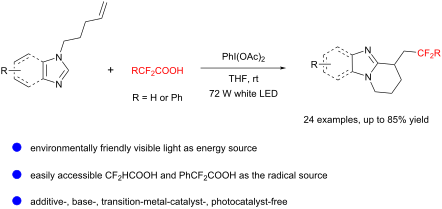
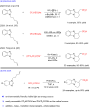
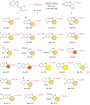
- transformation (Table 1, entries 2 and 3), and PIDA was the most efficient promoter. Changing THF to other solvents, such as DCM, EtOH, DMF, CH3CN, EtOAc, or DMSO, resulted in a lower yield (Table 1, entries 4–9). Furthermore, variations in the amounts of PIDA or CF2HCOOH led to diminished yields (Table 1


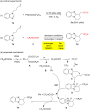
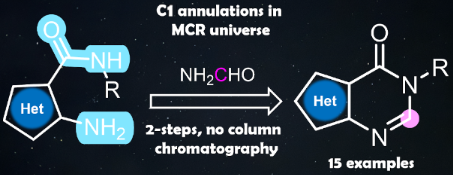
Heteroannulations of cyanoacetamide-based MCR scaffolds utilizing formamide
Beilstein J. Org. Chem. 2025, 21, 217–225, doi:10.3762/bjoc.21.13
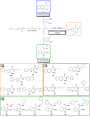
- pyrimidine scaffold. Representative fluorescence spectrum of compounds 5b (λex = 330 nm) and 6e (λex = 430 nm) at 0.2 M in DMSO. Molecular geometry observed within the crystal structure of compound 7b (CCDC 2376493). Strategies towards targeted adducts: A) Niementowski quinazoline synthesis utilizing
- materials. The colored frames indicate the different scaffold types. Synthesis of N-substituted thienopyrimidones 5a–e by a Gewald three-component reaction employing 2-aminothiophenes 2a–e and formamide as C1 source. A characteristic fluorescence for compound 5a was reported (365 nm in DMSO). The reported
- yield refers to the overall two-step synthesis. Synthesis of N-substituted quinolinopyrimidones 6a–e from 2-aminoindoles 3a–e and formamide as C1 source. A characteristic fluorescence for compound 6c was reported (365 nm in DMSO). The reported yields refer to the overall two-step synthesis. Synthesis of




Quantifying the ability of the CF2H group as a hydrogen bond donor
Beilstein J. Org. Chem. 2025, 21, 189–199, doi:10.3762/bjoc.21.11
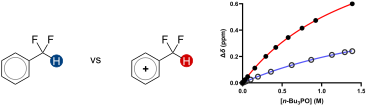
- by hydrogen bond acidity [47][48] which is derived from the 1H NMR chemical shift difference of a given proton in DMSO-d6 and CDCl3, the CF2H group is generally a stronger donor than the methyl group but substantially weaker than the OH or amide NH groups [19][20]. These results collectively indicate
- method [19][20][47][48]. This convenient approach relies on comparing the 1H NMR chemical shift of a hydrogen bond donor in DMSO-d6 to that of it in CDCl3. The HB donor presumably interacts strongly with hydrogen-accepting DMSO [51], but barely with CDCl3, which has a weak hydrogen bond acceptance



Emerging trends in the optimization of organic synthesis through high-throughput tools and machine learning
Beilstein J. Org. Chem. 2025, 21, 10–38, doi:10.3762/bjoc.21.3
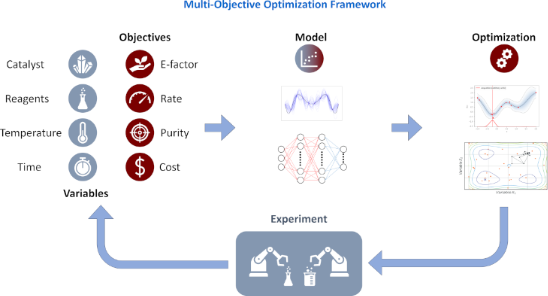
- with feedback DOE facilitated the rapid identification of appropriate solvents. Notably, the use of DMSO, DMF, and pyridine led to an enhanced yield of the monoalkylated product. An experimental setup was developed for single-droplet studies of visible-light photoredox catalysis using an oscillatory


Synthesis of acenaphthylene-fused heteroarenes and polyoxygenated benzo[j]fluoranthenes via a Pd-catalyzed Suzuki–Miyaura/C–H arylation cascade
Beilstein J. Org. Chem. 2024, 20, 3290–3298, doi:10.3762/bjoc.20.273
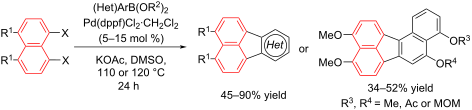
- formation reaction. Pleasingly, benzo[j]fluoranthene 27 was obtained successfully via the Pd-catalyzed reaction of dibromonaphthalene 14 and naphthylboronic ester 26 in DMSO at 120 °C, albeit in a modest yield of 34%. A final basic hydrolysis of the acetoxy group furnished benzo[j]fluoranthene 23 bearing a




Ceratinadin G, a new psammaplysin derivative possessing a cyano group from a sponge of the genus Pseudoceratina
Beilstein J. Org. Chem. 2024, 20, 3215–3220, doi:10.3762/bjoc.20.267
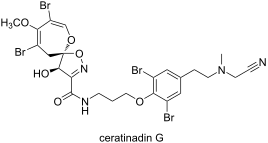
- . Cells were seeded at a density 2 × 10³ cells/well (198 μL/well) in 96-well plates, and test samples dissolved in DMSO (2 μL) were added to each well. The cells were then incubated for 72 hours. Cell viability was assessed using a WST-8 [2-(2-methoxy-4-nitrophenyl)-3-(4-nitrophenyl)-5-(2,4-disulfophenyl


Discovery of ianthelliformisamines D–G from the sponge Suberea ianthelliformis and the total synthesis of ianthelliformisamine D
Beilstein J. Org. Chem. 2024, 20, 3205–3214, doi:10.3762/bjoc.20.266
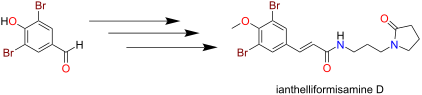
- brown gum. The LRESIMS of 4 indicated the presence of two bromine atoms due to a 1:2:1 ion cluster at m/z 459/461/463 [M + H]+, whilst the HRESIMS data allowed a molecular formula of C17H20Br2N2O3 to be assigned. The 1H NMR (Table 1) and edited HSQC spectra of 4 in DMSO-d6 indicated the presence of one
- . The 1H and 13C chemical shifts were referenced to solvent peaks for DMSO-d6 at δH 2.50 and δC 39.52, respectively. LRESIMS data was recorded on an Ultimate 3000 RS UHPLC coupled to a Thermo Fisher Scientific ISQEC single quadruple ESI mass spectrometer. HRESIMS data was acquired on a Bruker maXis II
- sufficient quantities of the minor natural products for characterisation and biological assessment with similar recoveries obtained. Ianthelliformisamine D (4): Stable brown gum; UV (MeOH) λmax, nm (log ε): 226 (4.01), 278 (3.86); 1H and 13C NMR data (DMSO-d6), see Table 1; LRESIMS (m/z): 459/461/463 [M + H


![[Graphic 1]](/bjoc/content/inline/1860-5397-20-266-i2.svg?max-width=637&scale=1.18182)
![[Graphic 2]](/bjoc/content/inline/1860-5397-20-266-i3.svg?max-width=637&scale=1.18182)
![[Graphic 3]](/bjoc/content/inline/1860-5397-20-266-i4.svg?max-width=637&scale=1.18182)

![[Graphic 4]](/bjoc/content/inline/1860-5397-20-266-i5.svg?max-width=637&scale=1.18182)
![[Graphic 5]](/bjoc/content/inline/1860-5397-20-266-i6.svg?max-width=637&scale=1.18182)

Surprising acidity for the methylene of 1,3-indenocorannulenes?
Beilstein J. Org. Chem. 2024, 20, 3144–3150, doi:10.3762/bjoc.20.260
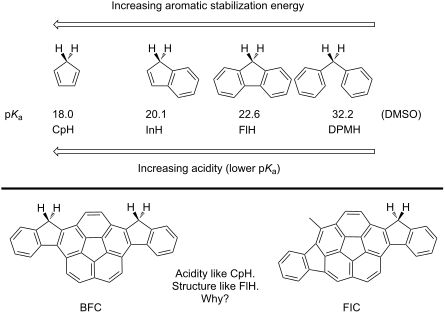
- ; Loschmidt group element; molecular graph; Introduction A classic textbook tetrad linking hydrocarbon acidity to aromatic stabilization energy comprises cyclopentadiene (CpH), indene (InH), fluorene (FlH), and diphenylmethane (DPMH) [1][2], with pKa values in DMSO equal to 18 [3], 20.1 [3], 22.6 [3], and
- 32.2 [4], respectively (Scheme 1) [5][6]. The reaction enthalpy for deprotonation of CpH is ca 20 kcal/mol less endothermic than DPMH and ca. 24–27 kcal/mol less endothermic than 1,4-pentadiene (PDH; pKa ≈ 35 in DMSO) [3], values strikingly similar to the resonance stabilization energy estimated for
- (pKa = 34 in CH3CN), or fluorene (pKa = 37 in CH3CN), BFC and FIC rank as stronger acids than CpH in acetonitrile. Extrapolation to DMSO by conversion equations, supports the assertion that BFC and FIC are more acidic than CpH in an “absolute acidity” sense [13]. How odd is such a pKa value of ca. 14


Advances in the use of metal-free tetrapyrrolic macrocycles as catalysts
Beilstein J. Org. Chem. 2024, 20, 3085–3112, doi:10.3762/bjoc.20.257
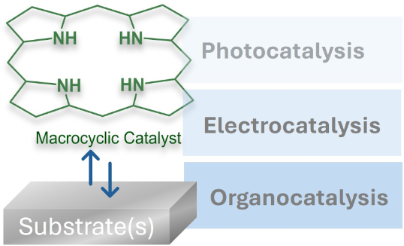
- solutions [18]. Similarly, Burns and co-workers reported di- and tetra-urea picket porphyrins highlighting, the impact of buried solvent molecules, such as DMSO, on the selectivity, affinity, and stoichiometry of anion binding [19]. Iron complexes of tetra-urea picket porphyrins further demonstrate how
- ) using substituted anilines 101 and t-BuONO (Figure 18). The reactions were conducted under light irradiation (blue light/sunlight) for 30 minutes in DMSO within an inert atmosphere. All corroles demonstrated catalytic activity with only 0.5% loading, while control experiments without a catalyst or light


Synthesis of the 1,5-disubstituted tetrazole-methanesulfonylindole hybrid system via high-order multicomponent reaction
Beilstein J. Org. Chem. 2024, 20, 3077–3084, doi:10.3762/bjoc.20.256
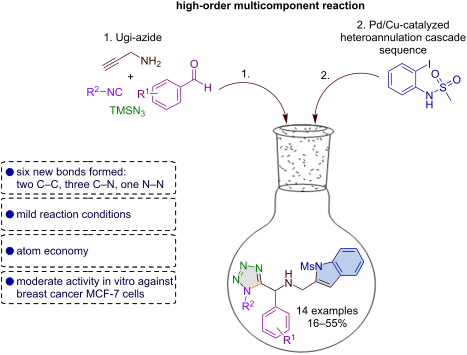
- proposing new structures with improved activity. Differential effect of the 1,5-disubstituted tetrazole-indole hybrid compounds 18a–j on proliferation of MCF-7 cell line. MCF-7 cells were treated with increasing doses of compounds 18a–j. Controls were cells treated with DMSO. Synthetic approaches to obtain



Cyclodextrin-based rotaxanes for polymer materials: challenge on simultaneous realization of inexpensive production and defined structures
Beilstein J. Org. Chem. 2024, 20, 3026–3049, doi:10.3762/bjoc.20.252
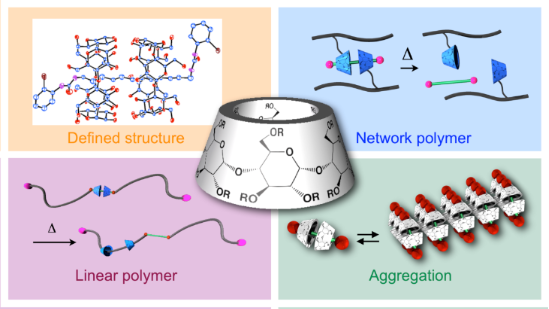
- sulfoxide (DMSO) must be available as CD forms the inclusion complex), (5) the yield of the end-capping reaction must be high, (6) the end-capping reagent and rotaxane must dissolve in the same solvent to facilitate a homogeneous reaction, and (7) the rotaxane must be isolable from the reaction mixture. The
- -based [2]rotaxane exhibiting α-CD as the end-capping moiety (Figure 7B) [62]. The wheel was located on the methylene moiety in DMSO, although it moved to the stilbene moiety in water via inclusion formation between CD on the axle-end moiety and the methylene chain. When [3]rotaxane exhibiting another
- the urea end-capping synthesis method (Figure 9) [46][47]. First, [3]rotaxane 3 synthesized using 2-bromophenyl isocyanate (yield: 73%) was confirmed to be a size-complementary rotaxane whose desilippage was observed in a DMSO solvent by heating at approximately 80 °C (Figure 9A,B). As the






Tunable full-color dual-state (solution and solid) emission of push–pull molecules containing the 1-pyrindane moiety
Beilstein J. Org. Chem. 2024, 20, 3016–3025, doi:10.3762/bjoc.20.251
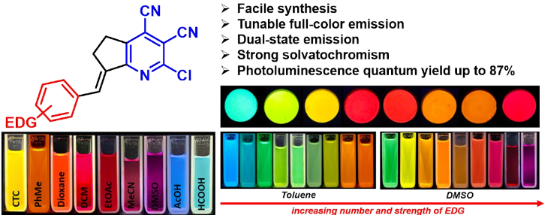
- the emission band was observed upon increasing the solvent polarity from carbon tetrachloride to DMSO, and the strongest fluorescence was registered in nonpolar medium (Φem = 87.5 % for compound 1c in toluene and Φem = 73.9% for compound 1i in CCl4). Slopes of the Lippert–Mataga plots (Figures S3 and
- even more pronounced for compound 1i than for 1c due to presence of the stronger electron-donating group. Then, the substituent effects on the spectral properties of stilbazoles 1a–i were studied in two different solvents: nonpolar toluene (Table 2) and highly polar DMSO (Table 3). The absorption
- only exceptions were compounds 1e and 1f, containing three methoxy groups. In these cases, a blue shift of the absorption band in comparison to the disubstituted derivative 1d was observed, which was apparently caused by a partial planarity violation due to steric hindrance. In DMSO, the absorption


Tailored charge-neutral self-assembled L2Zn2 container for taming oxalate
Beilstein J. Org. Chem. 2024, 20, 3007–3015, doi:10.3762/bjoc.20.250
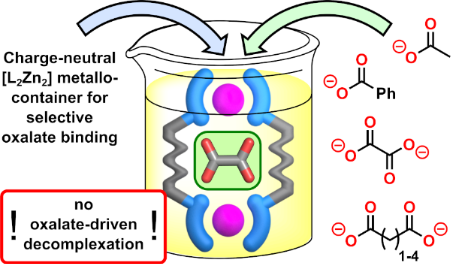
- connecting units for an easy ligand preparation (Figure 1b). The resulting compressed self-assembled host with a non-planar ligand backbone is the first charge-neutral metallocontainer able to bind oxalate forming a 1:1 host–guest complex with a binding constant of log K = 4.39 ± 0.04 in DMSO as highly
- troubles with the formed complexes in this respect. The final step of the ligand preparation is the CuAAC click reaction. The protecting Boc group of the 8-hydroxyquinoline units was cleaved during the workup right away resulting in ligand L-H2 with 44% yield. Self-assembly in DMSO with zinc(II) via its
- acetate salt results in a charge-neutral and bench-stable [L2Zn2] metallocontainer. Purification of the complex is achieved by lyophilization which accomplishes the removal of acetic acid as only byproduct of the complexation reaction and DMSO as solvent. The charge-neutral receptor is obtained as a