


Search results
Search for "amide" in Full Text gives 1000 result(s) in Beilstein Journal of Organic Chemistry. Showing first 200.
Recent advances in the electrochemical synthesis of organophosphorus compounds
Beilstein J. Org. Chem. 2025, 21, 770–797, doi:10.3762/bjoc.21.61
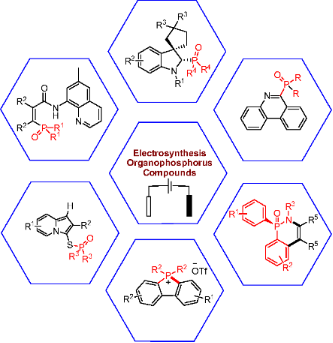
- platinum electrode as a cathode is very suitable for the process. Increasing the contact surface of the anode using a graphite felt electrode instead of a graphite rod in the reaction medium was one of the ways to improve the result. In 2023, Wang et al. [46] reported an electrochemical reaction of amide


Origami with small molecules: exploiting the C–F bond as a conformational tool
Beilstein J. Org. Chem. 2025, 21, 680–716, doi:10.3762/bjoc.21.54
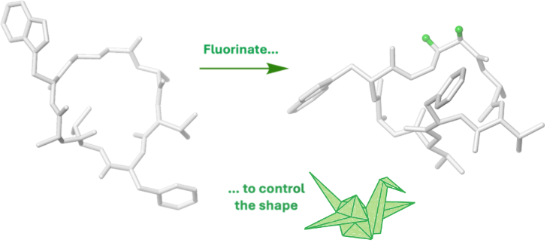
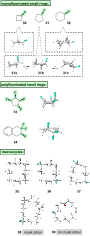
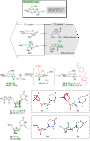
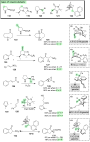
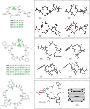
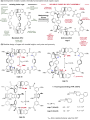
- planar conformation, whereas in the fluorinated macrocycle 49, the aryl ether moiety adopts an orthogonal conformation which necessitates substantial reorganisation elsewhere in the macrocycle including a cis-amide on the opposite side of the molecule. We now consider what happens if fluorine is



Entry to 2-aminoprolines via electrochemical decarboxylative amidation of N‑acetylamino malonic acid monoesters
Beilstein J. Org. Chem. 2025, 21, 630–638, doi:10.3762/bjoc.21.50
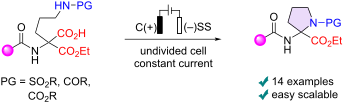
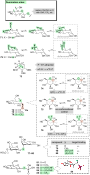
- hydrolysis/amide bond formation sequence, and therefore they are suitable for the design of peptidomimetics. Further work is in progress in our laboratory to expand the scope of nucleophiles in the decarboxylative functionalization of malonic acid monoesters. Experimental General procedure for the



Formaldehyde surrogates in multicomponent reactions
Beilstein J. Org. Chem. 2025, 21, 564–595, doi:10.3762/bjoc.21.45
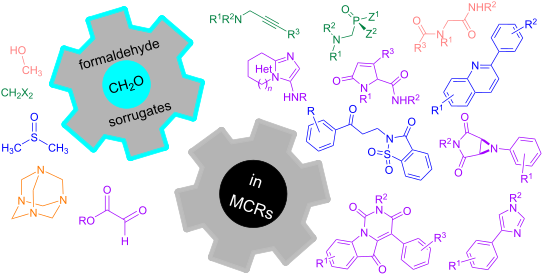
- an amide) and the enolizable position favored by the presence of an additional withdrawing group (phenylcarboxy). It was proposed that, after the cyclization, intermediate II follows a retro-Claisen fragmentation to give the final product by releasing


Asymmetric synthesis of β-amino cyanoesters with contiguous tetrasubstituted carbon centers by halogen-bonding catalysis with chiral halonium salt
Beilstein J. Org. Chem. 2025, 21, 547–555, doi:10.3762/bjoc.21.43
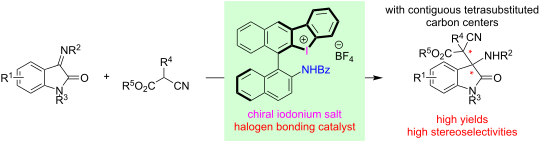
- importance of halogen bonding in the catalyst for the present reaction, chiral amide 9d and tetrabutylammonium bromide (9e) were applied as catalysts. The results indicate that 9d with only hydrogen bonding provided 17b in a lower yield than without catalyst maybe due to the deactivation of base by acidic
- amide moiety and with almost no enantioselectivity. Although the addition of a catalytic amount of 9e accelerated the reaction, the same diastereomer of 17b as the major product was obtained as for the reaction without a catalyst, which shows the importance of halonium salt moieties in our catalysts


Binding of tryptophan and tryptophan-containing peptides in water by a glucose naphtho crown ether
Beilstein J. Org. Chem. 2025, 21, 541–546, doi:10.3762/bjoc.21.42
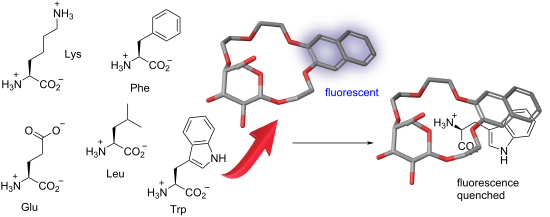
- extent. The receptor could instead potentially form H-bonds via its OH functionalities with the amide groups adjacent to the Trp residue in the peptide. The favourable negative entropy of the interaction between 1 and the tripeptides 2–7 suggests a significant contribution of the hydrophobic effect to


Beyond symmetric self-assembly and effective molarity: unlocking functional enzyme mimics with robust organic cages
Beilstein J. Org. Chem. 2025, 21, 421–443, doi:10.3762/bjoc.21.30
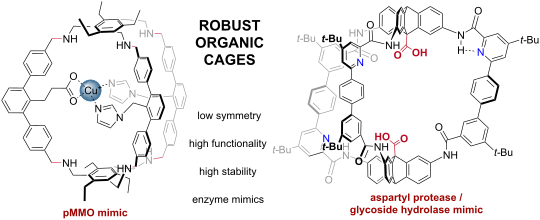
- typically not possible for imine [314] or metal-coordination cages [156][202][365]. Further, the robust amide cages could withstand harsh conditions such as ester hydrolysis, allowing access to the key acid-functionalized cages [38] that mimic aspartyl proteases and glycoside hydrolases. Otte has employed
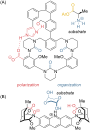
- can incorporate greater bond strain, and therefore the linkers themselves can contribute to cavity shape and symmetry outcomes. For instance, in our cages [38][39][40][41], due to the preference for N-phenylbenzamides to be planar, each amide group can be arranged in two metastable orientations: amide
- carbonyl oriented outward (designated by “0” or “O”) and amide carbonyl oriented inward (designated by “1” or “I”). There are 64 (26) permutations of carbonyl orientations in our cages, of which 13 are unique for cage 1 after grouping by symmetry (and ignoring enantiomers), which we have labelled as C1–C13




The effect of neighbouring group participation and possible long range remote group participation in O-glycosylation
Beilstein J. Org. Chem. 2025, 21, 369–406, doi:10.3762/bjoc.21.27
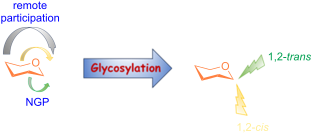
- their stereodirecting effect, Boltje et al. demonstrated a series of six ether, tertiary amide, and phosphine oxide-based auxiliary O-2 protecting groups [151]. The results indicated increased 1,2-cis selectivity with tertiary amide and phosphine-based protecting groups in comparison to an ether-based


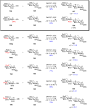


Synthesis, characterization, antimicrobial, cytotoxic and carbonic anhydrase inhibition activities of multifunctional pyrazolo-1,2-benzothiazine acetamides
Beilstein J. Org. Chem. 2025, 21, 348–357, doi:10.3762/bjoc.21.25
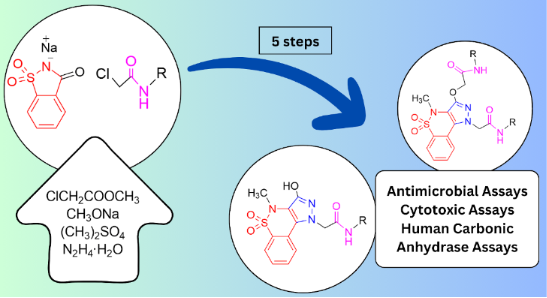
- are synthesized by incorporation of benzothiazine, pyrazole, and amide moieties in a new scaffold to create multifunctional derivatives of pyrazolo-1,2-benzothiazine. The presented compounds have been synthesized and analyzed using spectroscopic and spectrometric techniques including FTIR, HRMS, 1H
- [4]. Notable previous efforts include the synthesis of benzothiazine scaffolds connected to other heterocyclic moieties such as piperazine [5], triazole [6][7], hydantoin [8], and pyrazole moieties [9][10]. Very few examples of pyrazolobenzothiazines presenting an amide moiety are published. This
- work covers the synthesis of synergistic scaffolds containing biologically active 1,2-benzothiazine, pyrazole, and amide moieties. 1,2-Benzothiazines are chemically gifted drug candidates. Since one of the very first synthesis in 1956 [11], these scaffolds have proved themselves as versatile and


Synthesis of new condensed naphthoquinone, pyran and pyrimidine furancarboxylates
Beilstein J. Org. Chem. 2025, 21, 340–347, doi:10.3762/bjoc.21.24
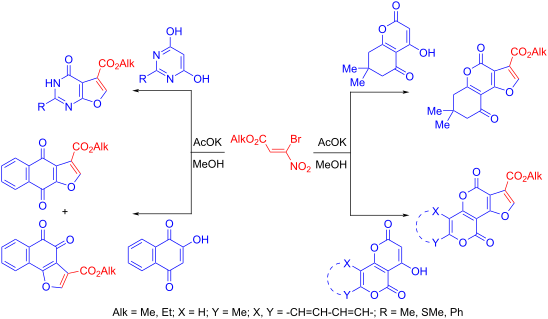
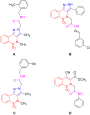
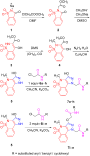
- data, they luminesce in DMSO solution when irradiated with light at wavelengths of 352 and 283 nm. Compounds 7a–f are capable of existing as lactim–lactam tautomers due to the presence of an amide fragment in their structure (Scheme 7). At the same time, the 1H and 13C NMR spectra of compounds 7a–f
- . In turn, in the IR spectra (KBr) of compounds 7a–f, absorption bands of the ester fragment in the region of 1714–1750 cm−1 and absorption bands of the carbonyl group of the amide fragment in the region of 1674–1688 cm−1 are observed, which suggests the existence of these compounds in the solid phase


Heteroannulations of cyanoacetamide-based MCR scaffolds utilizing formamide
Beilstein J. Org. Chem. 2025, 21, 217–225, doi:10.3762/bjoc.21.13
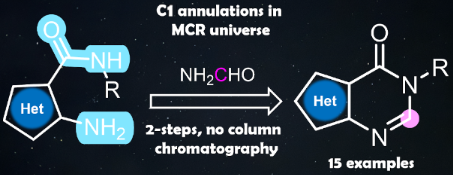
- installed amino group and a disubstituted amide group at the 2- and 3-positions, respectively, and reacting them with formamide (Scheme 1B). Those synthetic hubs can be rapidly accessed by cyanoacetamide-based MCRs, which is an interesting reaction type that gives access to privileged cores and has been
- moiety of the amide group resulted in pyrimidone annulation [41]. This was observed for the first time and completed the reported heteroannulation landscape utilizing the Niementowski reaction [25]. In general, the reactions had a rather broad scope as a great range of cyanoacetamides was compatible. The




Dioxazolones as electrophilic amide sources in copper-catalyzed and -mediated transformations
Beilstein J. Org. Chem. 2025, 21, 200–216, doi:10.3762/bjoc.21.12
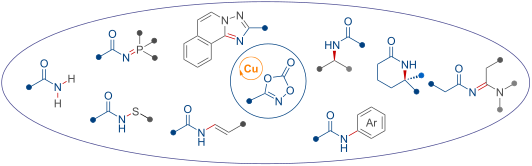
- electrophiles in various nucleophilic transformations due to their susceptibility to rapid decomposition into the corresponding isocyanates (Scheme 1a) [2][3]. They have attracted increasing interest as electrophilic amide sources in amidation using transition-metal catalysts such as ruthenium, rhodium, and
- ][58][59][60][61], and photoinduced alkylations of various nucleophiles [22][62][63][64][65][66][67][68]. Recently, these sustainable catalytic systems have gradually been applied to amidations employing dioxazolones as amide sources. To the best of our knowledge, no review article has yet covered the
- amide sources, were employed in this transformation. As shown in Scheme 8, several dioxazolones containing electron-rich substituents were transformed into the desired products with excellent enantioselectivity (23a and 23b). Otherwise, the electron-poor substituent-containing dioxazolones showed


Quantifying the ability of the CF2H group as a hydrogen bond donor
Beilstein J. Org. Chem. 2025, 21, 189–199, doi:10.3762/bjoc.21.11
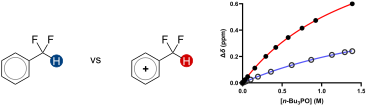
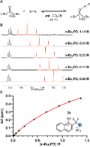
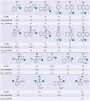
- by hydrogen bond acidity [47][48] which is derived from the 1H NMR chemical shift difference of a given proton in DMSO-d6 and CDCl3, the CF2H group is generally a stronger donor than the methyl group but substantially weaker than the OH or amide NH groups [19][20]. These results collectively indicate



Hydrogen-bonded macrocycle-mediated dimerization for orthogonal supramolecular polymerization
Beilstein J. Org. Chem. 2025, 21, 179–188, doi:10.3762/bjoc.21.10
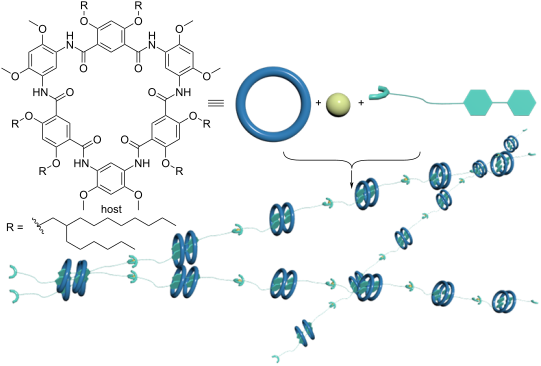
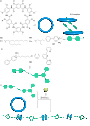
- aromatic amide macrocycles [36][37][38][39][40][41][42], a class of cyclic compounds comprising a number of aromatic residues with consecutive intramolecular hydrogen bonds and amide linkages, stand out as versatile host molecules as their cavity size, peripheral side chains, and recognition sites are
- amide macrocycle with six aromatic residues (hereafter called cyclo[6]aramide for brevity, Scheme 1a) could mediate dimerization as a host. That is because such a 2D macrocycle has six carbonyl oxygen atoms pointing inwards as binding sites, demonstrating excellent affinity for cationic organic guests
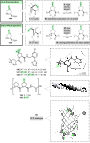
- -ray structure of the complex H2 ⊃ G1. a) Dimeric structure formed by cyclo[6]aramide H2 and cationic guest G1, with each guest molecule threading one molecule of H2 at its end. b) A portion of the dimeric structure showing an array of hydrogen bonding interactions between the amide oxygen atoms of H2



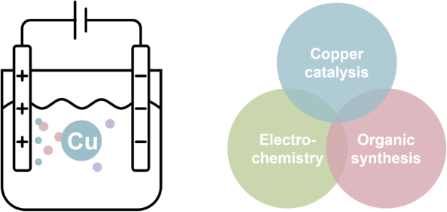
Recent advances in electrochemical copper catalysis for modern organic synthesis
Beilstein J. Org. Chem. 2025, 21, 155–178, doi:10.3762/bjoc.21.9
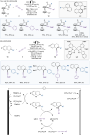
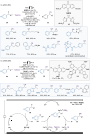
- , Huang, and Mei et al. explored Cu-catalyzed electrochemical C(sp2)–H bromination of 8-aminoquinoline amide at the C5 site of quinoline using NH4Br as a brominating reagent under anoxic oxidation conditions (Figure 13) [64]. This catalytic reaction has a broad substrate scope, and further investigation








Cu(OTf)2-catalyzed multicomponent reactions
Beilstein J. Org. Chem. 2025, 21, 122–145, doi:10.3762/bjoc.21.7

- was crucial for the formation of the organozinc reagent (Scheme 19) [36]. Spiro-2,3-dihydroquinazolinones 26 were formed exploiting a one-pot multicomponent reaction, using isatoic anhydride, ketones and primary amines. The isolation of the amide intermediate XXIII obtained by the copper-catalyzed










Recent advances in organocatalytic atroposelective reactions
Beilstein J. Org. Chem. 2025, 21, 55–121, doi:10.3762/bjoc.21.6
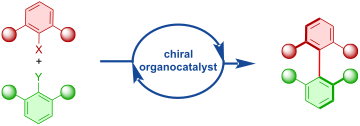
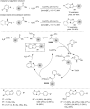
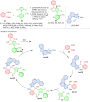
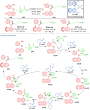
- reported. However, the reaction did not tolerate a variety of substitutions on the amide group, probably because of its involvement in hydrogen bonding with the organocatalyst (R)-C23. Expanding on earlier methodologies of Chen et al. [60][61] and Wang et al. [62] utilizing indole derivatives instead of β











Emerging trends in the optimization of organic synthesis through high-throughput tools and machine learning
Beilstein J. Org. Chem. 2025, 21, 10–38, doi:10.3762/bjoc.21.3
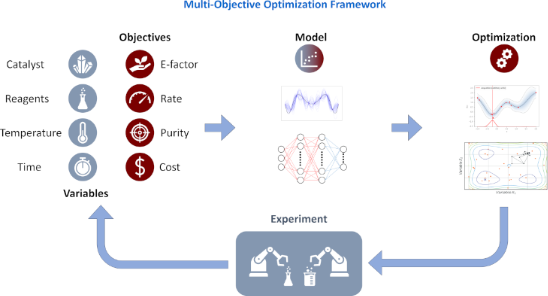
- Fitzpatrick et al. [58], allows researchers to oversee chemical reactions online. The hydration of 3-cyanopyridine to an amide was monitored by online MS, offering real-time conversion insights. Through 30 experiments within ten hours, five key reaction parameters were finely tuned for optimal conditions
- of the optimization processes. Liu et al. [69] developed a custom-built Python script to study the kinetics of carbonyldiimidazole-mediated amide formation by analyzing data from online HPLC and in-line FTIR-spectroscopic measurements. Their algorithm was able to automatically detect peaks from
- reactant and to feed this information back to the pump for immediate quenching of carbonyldiimidazole to prevent any side reactions. The entire process allows to control the acid activation and amide formation precisely to afford the desired final product in quantitative yield. Recently, Sagmeister et al


Giese-type alkylation of dehydroalanine derivatives via silane-mediated alkyl bromide activation
Beilstein J. Org. Chem. 2024, 20, 3274–3280, doi:10.3762/bjoc.20.271
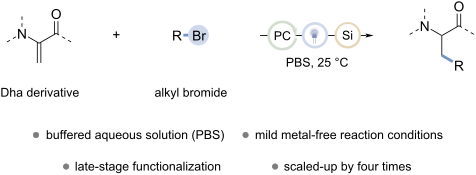
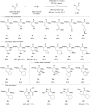
- %) and bromoadamantane in compound 22 (58%) were obtained in satisfactory yields. Subsequently, different Dha derivatives were subjected to the optimized reaction conditions, using bromocyclohexane (2) as the alkyl bromide. In order to explore the effect of the presence of an amide moiety in the Dha
- derivatives, a tertiary amide was firstly used to exclude selectivity issues arising from the hydrogen atoms of the amide functionality, yielding compound 23 in synthetically useful yield (39%). Interestingly, a secondary amide was formed in a higher yield of compound 24 (62%) compared to a Dha with a
- tertiary amide on the same position. Alternatively, the use of a double Boc-protected Dha resulted in a rather low yield of compound 25 (32%), while varying one Boc-protecting group with a Cbz-protecting group increased the yield substantially to 86% for compound 26. In addition, the use of a cyclic, N-Cbz



Intramolecular C–H arylation of pyridine derivatives with a palladium catalyst for the synthesis of multiply fused heteroaromatic compounds
Beilstein J. Org. Chem. 2024, 20, 3256–3262, doi:10.3762/bjoc.20.269
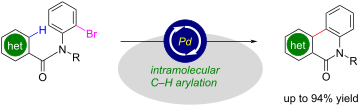
- Abstract The C–H arylation of 2-quinolinecarboxyamide bearing a C–Br bond at the N-aryl moiety is carried out with a palladium catalyst. The reaction proceeds at the C–H bond on the pyridine ring adjacent to the amide group in the presence of 10 mol % Pd(OAc)2 at 110 °C to afford the cyclized product in 42
- reaction of the corresponding heteroaromatic carboxylic acids with thionyl chloride followed by treatment with N-octyl-2-bromoaniline [15]. The reactions proceeded smoothly affording products 1a–c in good yields as shown in Scheme 1. We then studied the reaction of quinoline amide 1a under several
- effective to afford 2a in 94% yield. The reaction was then carried out with several pyridine derivatives including amide derivatives composed of 6-methylpicoline (1b) and unsubstituted picoline (1c) as summarized in Table 2. When the reaction was examined in the absence of a phosphine ligand, the yields of


Discovery of ianthelliformisamines D–G from the sponge Suberea ianthelliformis and the total synthesis of ianthelliformisamine D
Beilstein J. Org. Chem. 2024, 20, 3205–3214, doi:10.3762/bjoc.20.266
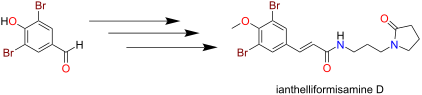
- methoxy group (δH 3.81), six methylene signals (δH 3.33, 3.20, 3.14, 2.21, 1.91, 1.63) and one exchangeable proton triplet (δH 8.04) that was indicative of a secondary amide [7]. Additionally, signals for one isolated trans olefin (δH 7.33, 6.66) and one aromatic signal (δH 7.89) that integrated for two
- ]. Methylenes resonating at δH 3.14, 1.64 and 3.20 were assigned to a three-carbon alkyl spin system that was flanked by nitrogen atoms [NH–(CH2)3–N] based on COSY correlations from the amide proton at δH 8.04. A terminal pyrrolidone was assigned based on COSY data for the three remaining methylene protons (δH
- from the amide proton linked the propyl-2-pyrrolidine moiety to the brominated acrylamide fragment and thus the full chemical structure of 4 was elucidated and assigned to ianthelliformisamine D. A refined literature search using Scifinder Scholar [16] revealed that compound 4 contains a novel scaffold


![[Graphic 1]](/bjoc/content/inline/1860-5397-20-266-i2.svg?max-width=637&scale=1.18182)
![[Graphic 2]](/bjoc/content/inline/1860-5397-20-266-i3.svg?max-width=637&scale=1.18182)
![[Graphic 3]](/bjoc/content/inline/1860-5397-20-266-i4.svg?max-width=637&scale=1.18182)

![[Graphic 4]](/bjoc/content/inline/1860-5397-20-266-i5.svg?max-width=637&scale=1.18182)
![[Graphic 5]](/bjoc/content/inline/1860-5397-20-266-i6.svg?max-width=637&scale=1.18182)

Germanyl triazoles as a platform for CuAAC diversification and chemoselective orthogonal cross-coupling
Beilstein J. Org. Chem. 2024, 20, 3198–3204, doi:10.3762/bjoc.20.265
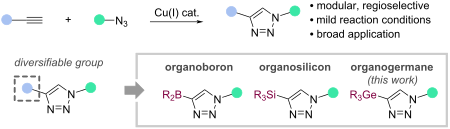
- established as a powerful approach for molecule synthesis. Strategies within click chemistry include several widely used reactions such as the (hetero-)Diels–Alder reaction [1][2], alkene hydrothiolation [3], and an array of amide-bond-forming chemistries [4]. However, by virtue of the access to alkyne and


Synthesis of 2H-azirine-2,2-dicarboxylic acids and their derivatives
Beilstein J. Org. Chem. 2024, 20, 3191–3197, doi:10.3762/bjoc.20.264
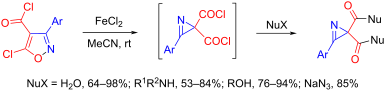
- -chloroisoxazole-4-carbonyl chlorides. Optimization of amide preparation. Supporting Information Supporting Information File 34: Experimental procedures and characterization data of new compounds. Acknowledgements In commemoration of the 300th anniversary of St Petersburg State University’s founding. This





Direct trifluoroethylation of carbonyl sulfoxonium ylides using hypervalent iodine compounds
Beilstein J. Org. Chem. 2024, 20, 3182–3190, doi:10.3762/bjoc.20.263
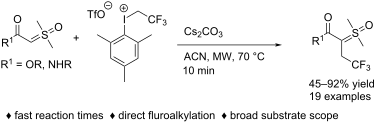
- Information File 1 for details). This limitation is attributed to the diminished reactivity of these ylides compared to ester and amide-derived sulfoxonium ylides. Having established this new methodology, we then turned our attention to demonstrate additional synthetic applications of this procedure. The


Synthesis of extended fluorinated tripeptides based on the tetrahydropyridazine scaffold
Beilstein J. Org. Chem. 2024, 20, 3174–3181, doi:10.3762/bjoc.20.262
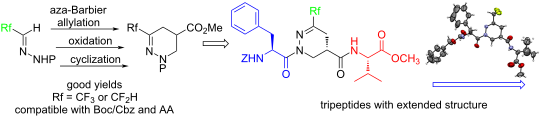
- isomers, two due to the E and Z isomers of the imine group (–N=CH–) and two due to the syn/anti-conformers of the amide bond (–NH-CO–). Experimentally, the E isomer is often more stable and so, predominant. The strong correlation between the NH and CH of the imine observed in 2D 1H-1H NOE experiments for
- ,anti. Then, hydrazones 3 were reacted with zinc and methyl 2-(bromomethyl)acrylate (4). This aza-Barbier reaction was performed in a biphasic medium (THF/aqueous solution of saturated NH4Cl) to avoid the formation of the α-methylene-γ-lactam obtained by intramolecular cyclization of the zinc amide on
- 19F,1H NOE experiments of compound 8f did not show any specific correlation between fluorine atoms and the protons of the amino acids (see Supporting Information File 1). Finally, the low chemical shifts of the amide and carbamate protons (6.4 ppm for NH of valine and 5.5 ppm for the NH of





