Search results
Search for "silica" in Full Text gives 1358 result(s) in Beilstein Journal of Organic Chemistry. Showing first 200.
Antibiofilm and cytotoxic metabolites from the entomopathogenic fungus Samsoniella aurantia
Beilstein J. Org. Chem. 2025, 21, 327–339, doi:10.3762/bjoc.21.23
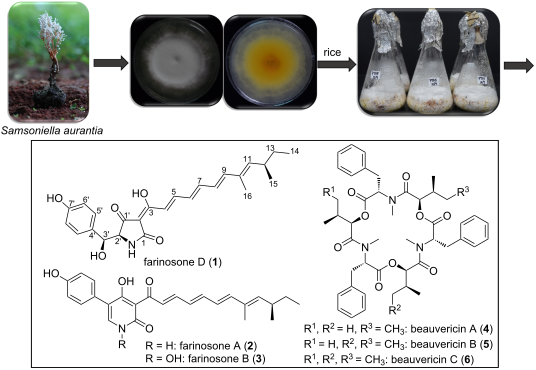
- (15 g) was analyzed by LC–MS. Thereafter, it was fractionated by vacuum liquid chromatography (VLC) using silica gel as a stationary phase. The elution procedure was performed using a chromatographic scheme of two different gradients as follows: 1) n-heptane/EtOAc (1:0, 7:3, 3:7, 0:1) followed by


Three-component reactions of conjugated dienes, CH acids and formaldehyde under diffusion mixing conditions
Beilstein J. Org. Chem. 2025, 21, 262–269, doi:10.3762/bjoc.21.18
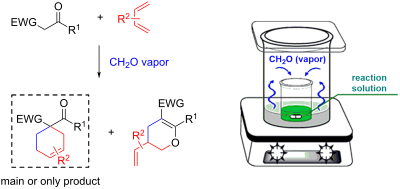
- solvents used were purified and dehydrated using the methods described in reference [28]. All starting reagents were purchased from commercial sources (e.g., Sigma-Aldrich, abcr, AKSci). Reactions were checked by TLC analysis using silica plates with a fluorescent indicator (254 nm) and visualized with a
- days (TLC or NMR control). After completion of the reaction, the solvent was removed under reduced pressure, and the residue was purified by column chromatography on silica gel using chloroform as eluent. ((1S,4S)-Bicyclo[2.2.1]hept-5-ene-2,2-diyl)bis(phenylmethanone) (8) and phenyl((4aR,7aS)-2-phenyl


Effect of substitution position of aryl groups on the thermal back reactivity of aza-diarylethene photoswitches and prediction by density functional theory
Beilstein J. Org. Chem. 2025, 21, 242–252, doi:10.3762/bjoc.21.16
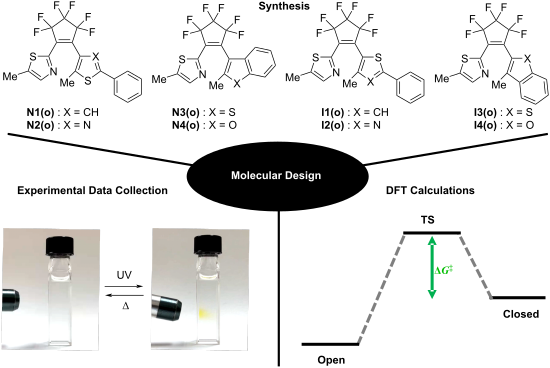
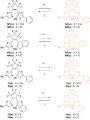
- solution, extracted with ether, washed with brine, dried over MgSO4, filtered, and concentrated in vacuo. The crude product was purified by column chromatography on silica gel using n-hexane and ethyl acetate 95:5 to give 1.4 g of I2(a) in 50% yield. 1H NMR (300 MHz, CDCl3, TMS) δ = 2.55 (d, JHF = 3.2 Hz
- brine, dried over MgSO4, filtered, and concentrated in vacuo. The crude product was purified by column chromatography on silica gel using n-hexane to give 2.8 g of I4(a) in 56% yield. 1H NMR (300 MHz, CDCl3, TMS) δ = 2.42 (s, 3H, CH3), 7.29–7.34 (m, 1H, aromatic H), 7.40–7.46 (m, 1H, aromatic H), 7.49
- reaction mixture was neutralized by HCl aqueous solution, extracted with ether, washed with brine, dried over MgSO4, filtered, and concentrated in vacuo. The crude product was purified by column chromatography on silica gel using n-hexane and ethyl acetate 8:2 and recycling HPLC using chloroform as the



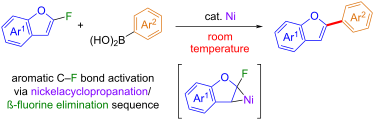
Nickel-catalyzed cross-coupling of 2-fluorobenzofurans with arylboronic acids via aromatic C–F bond activation
Beilstein J. Org. Chem. 2025, 21, 146–154, doi:10.3762/bjoc.21.8
- JMS-T100GCV or a JEOL JMS-T200GC spectrometer. All the reactions were conducted under argon or nitrogen. Materials: Column chromatography was conducted on silica gel (Silica Gel 60 N, Kanto Chemical Co., Inc.). Toluene and N,N-dimethylformamide (DMF) were purified by a solvent-purification system
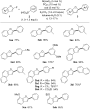
- . After removal of the solvent under reduced pressure, the residue was purified by silica gel column chromatography (hexane/EtOAc = 10:1) to give 3bb (76 mg, 98%) as a white solid. 1H NMR (500 MHz, CDCl3) δ 8.15 (d, J = 8.2 Hz, 1H), 7.93 (d, J = 8.2 Hz, 1H), 7.75–7.67 (m, 4H), 7.58 (ddd, J = 8.2, 6.9, 1.2



Emerging trends in the optimization of organic synthesis through high-throughput tools and machine learning
Beilstein J. Org. Chem. 2025, 21, 10–38, doi:10.3762/bjoc.21.3
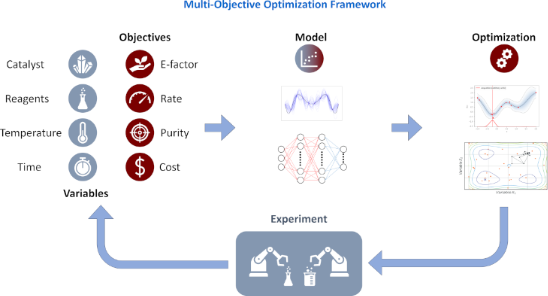
- products once experiments are performed. Despite this bottleneck, the landscape is evolving, with various practical tools emerging to streamline purification processes. From prepacked silica gel tubes to the precision semipreparative liquid chromatography and the versatile capabilities of various scavenger


Intramolecular C–H arylation of pyridine derivatives with a palladium catalyst for the synthesis of multiply fused heteroaromatic compounds
Beilstein J. Org. Chem. 2024, 20, 3256–3262, doi:10.3762/bjoc.20.269
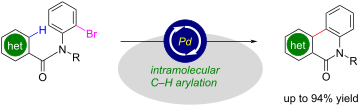
- dichloromethane (2 mL) three times. The combined organic extracts were repeatedly washed with water (20 mL) and brine (20 mL). The organic layer was dried over anhydrous sodium sulfate and concentrated under reduced pressure to give a crude material, which was purified by silica gel column chromatography (hexane


Ceratinadin G, a new psammaplysin derivative possessing a cyano group from a sponge of the genus Pseudoceratina
Beilstein J. Org. Chem. 2024, 20, 3215–3220, doi:10.3762/bjoc.20.267
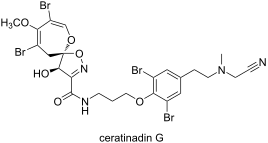
- , after which the extract was partitioned between EtOAc and H2O. The EtOAc-soluble fraction was subjected to silica gel column chromatography. A detailed analysis of the 1H NMR spectrum of the fraction eluted after the one containing ceratinadins E and F revealed signals corresponding to psammaplysin F (2
- sponge Pseudoceratina sp. (order Verongida; family Aplysinellidae), collected in Okinawa, Japan (0.4 kg, wet weight), was obtained following the method described in [8]. In a manner similar to [8], a portion of the EtOAc-soluble material (1.45 g) was fractionated by silica gel column chromatography
- [silica gel 60N (spherical, neutral, 40–50 µm), Kanto Chemical Co., Inc.; 38 × 350 mm; eluent CHCl3/MeOH 100:0 to 0:100], yielding 18 fractions (Fr. 1–18). A portion (17.0 mg) of the fraction Fr. 14 (32.5 mg) was further separated by C18 HPLC (COSMOSIL 5C18-AR-II, 10 × 250 mm, Nacalai tesque Inc.; eluent


Discovery of ianthelliformisamines D–G from the sponge Suberea ianthelliformis and the total synthesis of ianthelliformisamine D
Beilstein J. Org. Chem. 2024, 20, 3205–3214, doi:10.3762/bjoc.20.266
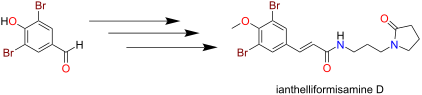
- ETD ESI-qTOF. Alltech Davisil (30–40 µm, 60 Å) C8-bonded silica and Alltech Davisil (30–40 µm, 60 Å) diol-bonded silica were used for pre-adsorption work before RP- or NP-HPLC, respectively. The pre-adsorbed material was subsequently packed into an Alltech stainless steel guard cartridge (10 × 30 mm
- phenyl-bonded silica (5 μm, 100 Å, 150 × 21.2 mm) and Phenomenex Luna C18 column (5 µm, 90–110 Å, 10 mm × 250 mm) were used for RP-HPLC separations. For NP-HPLC, a YMC diol-bonded silica (5 μm, 120 Å, 150 × 20 mm) column was used. The frozen marine sponge was dried using a Dynamic FD12 freeze dryer and
- -bonded silica (≈1 g), packed into a stainless-steel guard cartridge, and subjected to phenyl semipreparative RP-HPLC separation. Isocratic conditions of 90% H2O (0.1% TFA)/10% MeOH (0.1% TFA) were initially employed for the first 10 min, then a linear gradient to 100% MeOH (0.1% TFA) was run over 40 min


![[Graphic 1]](/bjoc/content/inline/1860-5397-20-266-i2.svg?max-width=637&scale=1.18182)
![[Graphic 2]](/bjoc/content/inline/1860-5397-20-266-i3.svg?max-width=637&scale=1.18182)
![[Graphic 3]](/bjoc/content/inline/1860-5397-20-266-i4.svg?max-width=637&scale=1.18182)

![[Graphic 4]](/bjoc/content/inline/1860-5397-20-266-i5.svg?max-width=637&scale=1.18182)
![[Graphic 5]](/bjoc/content/inline/1860-5397-20-266-i6.svg?max-width=637&scale=1.18182)

Direct trifluoroethylation of carbonyl sulfoxonium ylides using hypervalent iodine compounds
Beilstein J. Org. Chem. 2024, 20, 3182–3190, doi:10.3762/bjoc.20.263
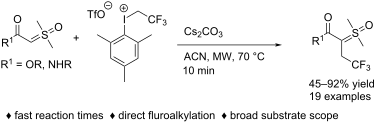
- vial was quickly capped with a Teflon microwave cap. The reaction was heated to 70 ºC for 10 min. The crude mixture was dissolved with DCM (3 mL), the solvent was removed under reduced pressure to furnish a crude product that was purified by flash column chromatography, using silica gel 60 (200–400


Synthesis of extended fluorinated tripeptides based on the tetrahydropyridazine scaffold
Beilstein J. Org. Chem. 2024, 20, 3174–3181, doi:10.3762/bjoc.20.262
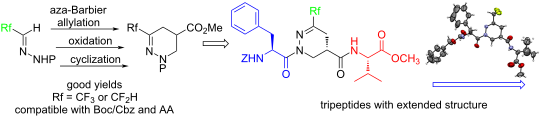
- compounds 7e and 7f, no competition with the NH of the phenylalanine was observed. The corresponding tetrahydropyridazines 7a–f were obtained in moderate to good yields (Scheme 5). Concerning compounds 7e and 7f, each diastereomer of the 1:1 ratio mixture could be isolated after purification by flash silica


gem-Difluorovinyl and trifluorovinyl Michael acceptors in the synthesis of α,β-unsaturated fluorinated and nonfluorinated amides
Beilstein J. Org. Chem. 2024, 20, 2946–2953, doi:10.3762/bjoc.20.247
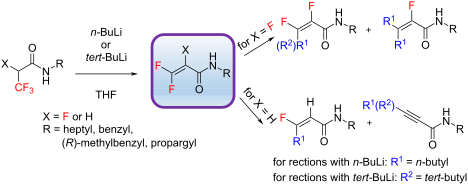
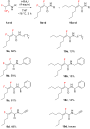
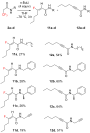
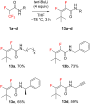
- products. These highly stable compounds were isolated after purification on silica gel in good yields (Scheme 2) and characterized by spectroscopic methods. The reaction proceeded with very high Z-stereoselectivity (Scheme 2, compounds 9a–d). In the 19F NMR spectra of crude mixtures, only trace amounts of




The charge transport properties of dicyanomethylene-functionalised violanthrone derivatives
Beilstein J. Org. Chem. 2024, 20, 2921–2930, doi:10.3762/bjoc.20.244
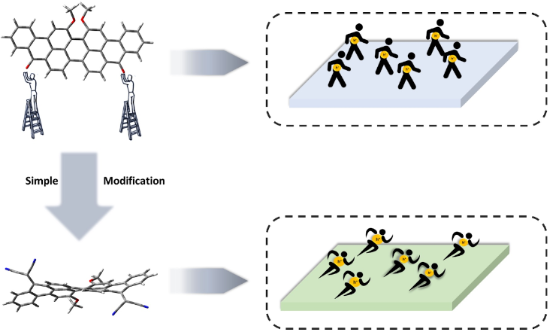
- dichloromethane (3 × 20 mL). The combined organic extract was dried over MgSO4, filtered and concentrated under reduced pressure. The crude product was purified by silica column chromatography (SiO2, CH2Cl2/diethyl ether 98:2) to give the title compound as a dark solid (30.0 mg, 13%). Mp 295–296 °C; 1H NMR (400
- × 20 mL). The combined organic extracts were dried over MgSO4, filtered and concentrated under reduced pressure. The crude product was purified by silica column chromatography (SiO2, CH2Cl2/diethyl ether 98:2) to give the title compound as a dark solid (120 mg, 36%). Mp 241–242 °C; 1H NMR (400 MHz


Recent advances in transition-metal-free arylation reactions involving hypervalent iodine salts
Beilstein J. Org. Chem. 2024, 20, 2891–2920, doi:10.3762/bjoc.20.243





C–H Trifluoromethylthiolation of aldehyde hydrazones
Beilstein J. Org. Chem. 2024, 20, 2883–2890, doi:10.3762/bjoc.20.242
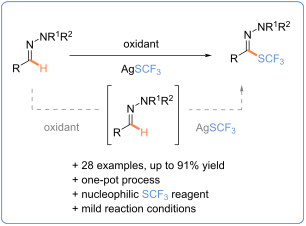
- collected separately, dried over MgSO4, and concentrated in vacuo. The crude was purified by column chromatography on silica gel, flash chromatography to afford the desired product 2–6. State of the art and this work. Reaction conditions: hydrazone (0.3 mmol, 1.0 equiv), NBS (0.33 mmol, 1.1 equiv), in CH3CN



Synthesis of pyrrole-fused dibenzoxazepine/dibenzothiazepine/triazolobenzodiazepine derivatives via isocyanide-based multicomponent reactions
Beilstein J. Org. Chem. 2024, 20, 2870–2882, doi:10.3762/bjoc.20.241
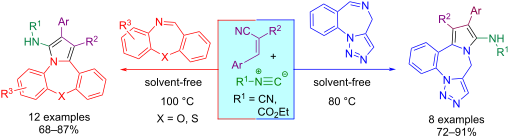
- reaction mixture was stirred at temperatures of 100 or 80 °C for 2 h using a magnetic stirrer. After making sure that the reactions were completed (monitored by TLC), the reaction mixture was cooled to ambient temperature. Then, the crude mixture was purified using a silica gel chromatography column and


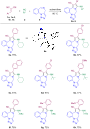



Synthesis of tricarbonylated propargylamine and conversion to 2,5-disubstituted oxazole-4-carboxylates
Beilstein J. Org. Chem. 2024, 20, 2827–2833, doi:10.3762/bjoc.20.238

- 3) [13][14]. To a dry THF solution of adduct 4a, butyllithium was added, and the reaction mixture was stirred at −78 °C for 5 min. Following the addition of acetic acid, the reaction mixture was concentrated and subjected to silica gel column chromatography, resulting in the isolation of ethyl 5
- ), the mixture was concentrated under reduced pressure. The residue was purified by column chromatography on silica gel (eluent: hexane/ethyl acetate 70:30, Rf 0.55) to afford diethyl 2-[(4-methylbenzoyl)amino]-2-(phenylethynyl)propanedioate (4a, 122 mg, 0.31 mmol, 78% yield) as yellow oil. 1H NMR (400
- acetic acid (0.1 mL), the solvent was removed under reduced pressure. The residue was purified by column chromatography on silica gel (eluent: hexane/ethyl acetate 70:30, eluent for TLC: hexane/ethyl acetate 80:20, Rf 0.61) to afford ethyl 2-(4-methylphenyl)-5-(phenylmethyl)oxazole-4-carboxylate (5a


Mechanochemical difluoromethylations of ketones
Beilstein J. Org. Chem. 2024, 20, 2799–2805, doi:10.3762/bjoc.20.235
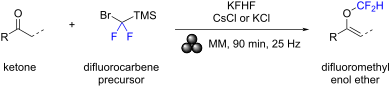
- 64% yield (Table 1, entry 8). Finally, CsCl was substituted by silica, which, to our surprise, blocked the product formation completely (Table 1, entry 9). Apparently, the presence of an alkali halide salt was beneficial, most likely by stabilizing the consistency of the reaction mixture leading to a
- sufficient mixing. Silica could not fulfill this role. Lastly, water, 1,4-dioxane, chloroform, and toluene were tested in a liquid-assisted grinding (LAG) protocol (Table 1, entries 10–13). The lowest yields were obtained with water and 1,4-dioxane, providing 3a in yields of 37% and 43%, respectively (Table


Synthesis of spiroindolenines through a one-pot multistep process mediated by visible light
Beilstein J. Org. Chem. 2024, 20, 2722–2731, doi:10.3762/bjoc.20.230
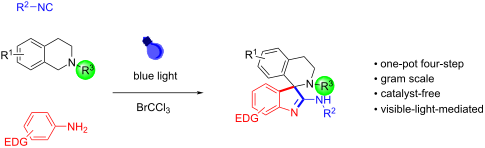
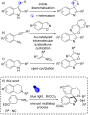
- yield of 88% each step). Since, during the optimization of the reaction conditions, we have noticed a certain instability of the spiro-compounds through chromatography on silica gel, we have initially carried out the purifications using alumina as the stationary phase. However, during the scope studies
- the solvent and using Et3N as additive for the eluent of the chromatography on silica gel. With these improvements, we have demonstrated that the yields are comparable to those obtained with purification on alumina but reaching significantly higher degrees of purity of the final products (see
- %) due to difficulties in the purification. IR spectra were recorded as solid, oil, or foamy samples, with the ATR (attenuated total reflectance) method. TLC analyses were carried out on pre-coated Merck silica gel 60 F254 plates or Aluminum oxide on TLC-plates and viewed at UV (254 nm) and developed




Synthesis of benzo[f]quinazoline-1,3(2H,4H)-diones
Beilstein J. Org. Chem. 2024, 20, 2708–2719, doi:10.3762/bjoc.20.228
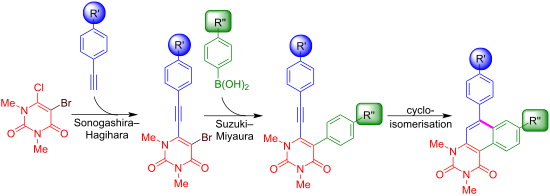
- -Flight (TOF) LC–MS. The solvent, toluene, was purchased as dry solvent and applied without further purification. Other reagents, catalysts, ligands, acids, and bases were used as purchased from commercial suppliers. Column chromatography was performed on Merck Silica gel 60 (particle size 63–200 μm


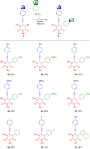
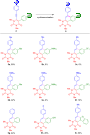


Transition-metal-free decarbonylation–oxidation of 3-arylbenzofuran-2(3H)-ones: access to 2-hydroxybenzophenones
Beilstein J. Org. Chem. 2024, 20, 2655–2667, doi:10.3762/bjoc.20.223
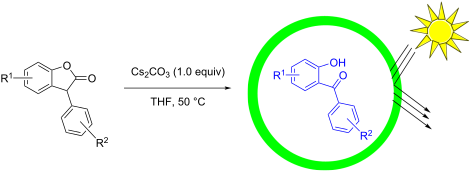
- vacuum, and the residue was purified using silica-gel column chromatography. Compounds 3aa [21], 3ba [21], 3ea [21], 3eb [21], 3fa [21], 3fb [22], 3ga [21], and 3ja [21] were synthesized using the similar method as reported previously by us. General procedure for the synthesis of 2-hydroxybenzophenones


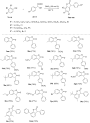


The scent gland composition of the Mangshan pit viper, Protobothrops mangshanensis
Beilstein J. Org. Chem. 2024, 20, 2644–2654, doi:10.3762/bjoc.20.222
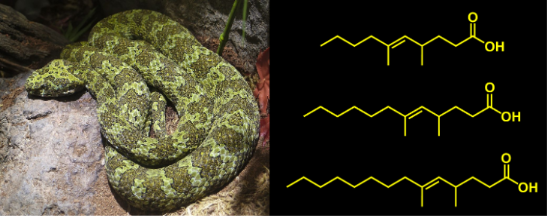
- analysis [8]. Silver nitrate column chromatography: Silver nitrate column chromatography was carried out as described [45]. An aq solution of silver nitrate (5.5 g) in H2O (30 mL) was added to silica gel (50 g). Water was added to barely cover the silica gel. The silica was stirred with a glass rod and
- shaken for 15 min and then placed in an oven at 100 °C until the silica gel was completely dried. The impregnated silica gel was stored in the dark until use. Syntheses 1-(1-Propen-1-yl)piperidine (2): In a manner analogous to [27], potassium carbonate (2 g, 15 mmol), piperidine (10 mL, 0.1 mol), and


Synthesis and cytotoxicity studies of novel N-arylbenzo[h]quinazolin-2-amines
Beilstein J. Org. Chem. 2024, 20, 2592–2598, doi:10.3762/bjoc.20.218
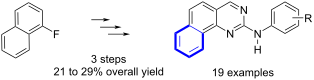
- traces of residual moisture. Reactions were monitored by thin-layer chromatography (TLC) using E. Merck silica gel plates and components were visualized by illumination with short wavelength UV light and/or staining (ninhydrin or basic KMnO4). All aldehydes were distilled right before use. All aryl
- temperature, the mixture was filtered through Celite and washed with EtOAc (2 × 10 mL). The filtrate was evaporated under reduced pressure and the crude product was purified by using 60–120 silica mesh column chromatography using 10–20% ethyl acetate in hexane as eluent afforded target compound 4a (69% yield


Transition-metal-free synthesis of arylboronates via thermal generation of aryl radicals from triarylbismuthines in air
Beilstein J. Org. Chem. 2024, 20, 2577–2584, doi:10.3762/bjoc.20.216
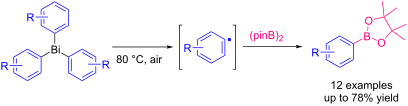
- somewhat difficult due to strong adsorption or decomposition on silica gel. Since some arylboronates are somewhat unstable, it is desirable to synthesize such compounds and then use them in a one-pot manner for the following reactions without isolation. To gain insight into the reaction pathways, several



Anion-dependent ion-pairing assemblies of triazatriangulenium cation that interferes with stacking structures
Beilstein J. Org. Chem. 2024, 20, 2567–2576, doi:10.3762/bjoc.20.215
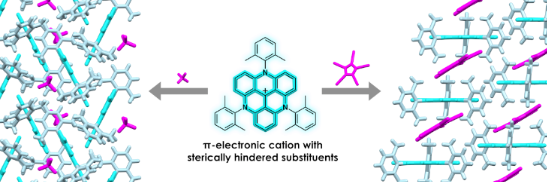
- sheets coated with silica gel 60 (Merck 5554). Column chromatography was performed on Wakogel C-300. Preparation of ion pairs 4,8,12-Tris(2,6-dimethylphenyl)-4,8,12-triazatriangulenium as a BF4− ion pair, 2+-BF4−. According to the literature procedure [26], to a Schlenk tube were added 2,6
- -dimethylaniline (7.0 mL, 59 mmol) and tris(2,6-dimethoxyphenyl)methylium as a Cl− ion pair [22] (504 mg, 1.09 mmol). The Schlenk tube was placed in an oil bath and was heated from rt to reflux over a period of 30 min. The reaction mixture was allowed to reach rt, and then the aniline was removed by short silica
- , 1.38 mmol), and the reaction mixture was stirred at rt for 10 min, followed by filtration, and evaporation to dryness. The residue was purified by silica gel column chromatography (Wakogel C-300; eluent: MeOH/AcOEt/CH2Cl2 1:2:8) and was recrystallized from CH2Cl2/n-hexane to afford 2+-BF4− (143 mg



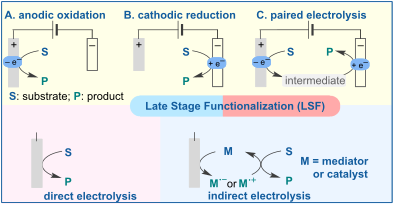
A review of recent advances in electrochemical and photoelectrochemical late-stage functionalization classified by anodic oxidation, cathodic reduction, and paired electrolysis
Beilstein J. Org. Chem. 2024, 20, 2500–2566, doi:10.3762/bjoc.20.214