


Search results
Search for "toluene" in Full Text gives 1215 result(s) in Beilstein Journal of Organic Chemistry. Showing first 200.
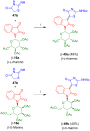
Organocatalytic kinetic resolution of 1,5-dicarbonyl compounds through a retro-Michael reaction
Beilstein J. Org. Chem. 2025, 21, 473–482, doi:10.3762/bjoc.21.34
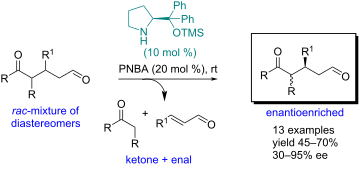
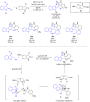
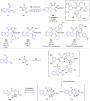
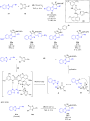
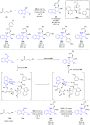
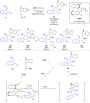
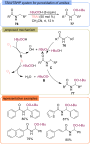
- a greater or lesser extent, in all the solvents tested except in water (Table 1, entry 19), where the mixture remains unchanged after 100 hours. The enantiomeric ratio of the diastereomer anti-1 depends on the solvent used, with toluene (Table 1, entry 22) providing the best results. Finally
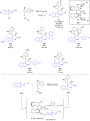
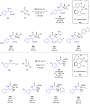
- reacts more quickly than the anti-(3S,4R)-1, forming the enamine E (Scheme 4) that participates in the retro-Michael reaction, producing the starting ketone and the enal and enantio-enriching the reaction mixture in anti-(3S,4R)-1. Subsequently, toluene was chosen as the solvent due to its ability to
- provide the highest enantiomeric ratio. The influence of catalyst, co-catalyst, and temperature on the reaction progress and enantioselectivity was further investigated. Different essays using 0.028 M toluene solutions were carried out, and the results are summarized in Table 2. The reaction also occurs


The effect of neighbouring group participation and possible long range remote group participation in O-glycosylation
Beilstein J. Org. Chem. 2025, 21, 369–406, doi:10.3762/bjoc.21.27
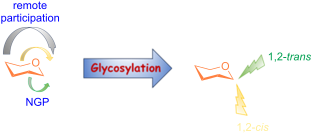
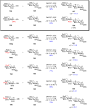
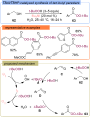
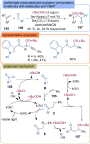
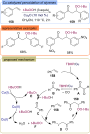
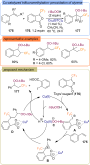
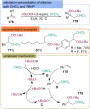
- demonstrated that the use of triflimide (Tf2NH) in solvents like CH2Cl2, acetonitrile or toluene at −78 °C yielded exclusively the 1,2-trans stereoselective glycoside product 105 (protocol A, Scheme 18), while the use of triflic acid (TfOH) in ether as the solvent at ambient temperature conditions (protocol B
- -trans product 114 or 115, while TFE (2,2,2-trifluoroethanol, 116) as acceptor gave the 1,2-cis product 117 or 118 primarily. The exclusive formation of the 1,2-trans and 1,2-cis product was achieved with butanol and TFE, respectively, by correspondingly changing the solvent system to toluene and ether




Molecular diversity of the reactions of MBH carbonates of isatins and various nucleophiles
Beilstein J. Org. Chem. 2025, 21, 286–295, doi:10.3762/bjoc.21.21
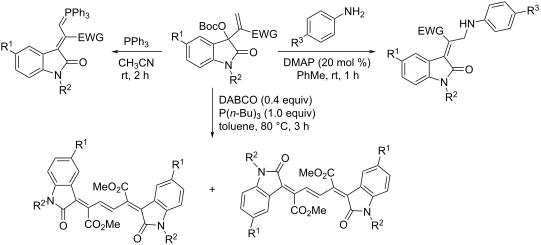
- was found that the reaction did not proceed in DMF as solvent (Table 1). When the reaction was carried out in dichloromethane, dichloroethane, acetonitrile, and toluene, the expected product 3a was produced in low yields (entries 2–5 in Table 1). The reaction in toluene at elevated temperature
- resulted in a slight increase of the yield (entries 6 and 7 in Table 1). In the presence of 20 mol % of DMAP, the reaction in toluene at room temperature afforded the product 3a in 72% yield. However, increasing the amount of DMAP decreased the yield (entries 8–10 in Table 1). Additionally, stronger bases
- such as DABCO, DBU, triethylamine, and K2CO3 also resulted in the significant reduction of the yields. Therefore, the reaction of MBH nitrile of isatins and arylamines can be simply carried out in toluene at room temperature in the presence of a catalytic amount of DMAP. With the optimized reaction



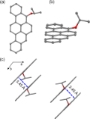
Synthesis and characterizations of highly luminescent 5-isopropoxybenzo[rst]pentaphene
Beilstein J. Org. Chem. 2025, 21, 270–276, doi:10.3762/bjoc.21.19
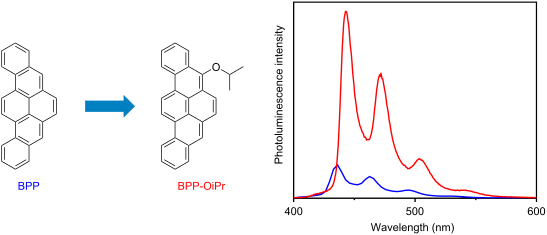
- exhibited similar emission spectra in toluene with maxima at 436 and 443 nm, respectively, with well-defined vibronic structures (Figure 2b). Notably, the absolute PLQY of BPP-OiPr 3 was measured to be 0.73, demonstrating a remarkable enhancement of the photoluminescence from BPP 2 (PLQY: 0.13) and tert
- allow more radiative transitions. On the other hand, a broad and featureless PL spectrum with the maximum at 538 nm was observed for BPP-dione 4 in toluene with a high PLQY of 0.62, which is again significantly enhanced from that of BPP 2. To gain further insight into the photophysical properties of BPP
- (Figure 2c). In contrast, BPP-dione 4 displayed a considerable redshift of the emission maximum from 538 nm in toluene to 572 nm in dimethylformamide (DMF) along with disappearance of the shoulder peak with increasing solvent polarity (Figure 2d). The UV–vis absorption spectra of 4 in different solvents




Three-component reactions of conjugated dienes, CH acids and formaldehyde under diffusion mixing conditions
Beilstein J. Org. Chem. 2025, 21, 262–269, doi:10.3762/bjoc.21.18
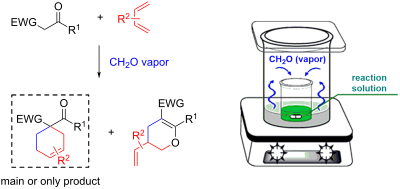
- 9 in toluene for 7 h led to the formation of an equilibrium mixture of these compounds in a ratio of ≈2:1 (Scheme 5). We propose that the reversible transformation of 8 to 9 proceeded via the intermediate formation of zwitterion 21, in which the charges were stabilized by mesomeric effects under


Nickel-catalyzed cross-coupling of 2-fluorobenzofurans with arylboronic acids via aromatic C–F bond activation
Beilstein J. Org. Chem. 2025, 21, 146–154, doi:10.3762/bjoc.21.8
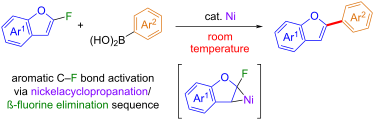
- optimized the coupling reaction using potassium phosphate as a base and increasing the nickel catalyst loading to 20 mol %, achieving a yield of 78% for the desired product 3bg. When 2-naphthylboronic acid (2i) was employed, its solubility was enhanced using a mixed solvent system of toluene, methanol, and
- JMS-T100GCV or a JEOL JMS-T200GC spectrometer. All the reactions were conducted under argon or nitrogen. Materials: Column chromatography was conducted on silica gel (Silica Gel 60 N, Kanto Chemical Co., Inc.). Toluene and N,N-dimethylformamide (DMF) were purified by a solvent-purification system
- mmol), and K2CO3 (50 mg, 0.36 mmol) were added toluene (3.0 mL) and H2O (0.6 mL). After stirring at room temperature for 13 h, the reaction mixture was diluted with H2O. Organic materials were extracted with diethyl ether three times. The combined extracts were washed with brine and dried over Na2SO4



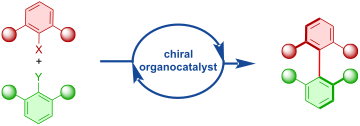
Recent advances in organocatalytic atroposelective reactions
Beilstein J. Org. Chem. 2025, 21, 55–121, doi:10.3762/bjoc.21.6
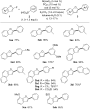
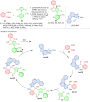
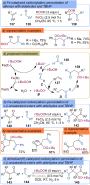
- indoles 96 or pyrroles 99 and 1,4 diketones 97, respectively, the authors were able to achieve very good to near-perfect yields with consistently high enantioselectivities. Configurational stabilities of the products 98 and 100 were explored in toluene at 110 °C. Rotational barriers were calculated to be
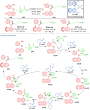
- enantioselectivities, the authors also calculated the racemization barrier of products 133. It was determined as a class-3 atropoisomer with 30.1 kcal/mol at 90 °C in toluene. The preparation of 133 on a gram scale yielded 75% of the product with a similar level of enantiomeric purity (90% ee). A key step of this
- axially chiral products 144 (Scheme 42) [70]. Moderate to decent yields were reported, with enantioselectivities up to 88%. In terms of configurational stability, the representative product 144 could be stirred at 130 °C for 24 h in toluene without loss in yield or enantioselectivity. The calculated











Synthesis, structure and π-expansion of tris(4,5-dehydro-2,3:6,7-dibenzotropone)
Beilstein J. Org. Chem. 2025, 21, 1–7, doi:10.3762/bjoc.21.1
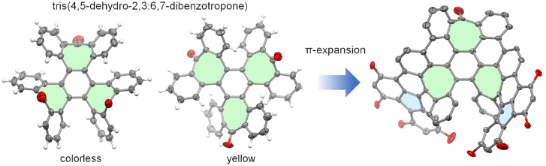
- synthesized according to the procedures detailed in Supporting Information File 1. In this reaction, the first step of diazo–thioketone coupling occurred at 50 °C in THF, and the second step of desulfurization with triisopropyl phosphite occurred in refluxed toluene, giving diene 10 in a yield of 47%. The


Synthesis, characterization, and photophysical properties of novel 9‑phenyl-9-phosphafluorene oxide derivatives
Beilstein J. Org. Chem. 2024, 20, 3299–3305, doi:10.3762/bjoc.20.274
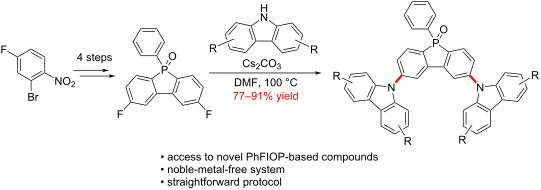
- were conducted. UV−vis absorption spectra of 7 in toluene solution at room temperature are shown in Figure 2, and the corresponding data are included in Table 2. The spectra in Figure 2a exhibit two major absorption bands at ≈290 nm and ≈340 nm. The band at around 290 nm might be induced by π→π
- has insignificant effect on the molecular ground state of 7-H. The PL spectra of the PhFlOP-based compounds 7 in toluene at room temperature are shown in Figure 3, and the λem values are included in Table 2. Different emission wavelengths are observed due to the various substituents present in the
- the CT feature in the excited state. Further, the solvent dependence of 7-H exhibits good consistence with that reported by the Nishida group [31]. The PLQY and τDF values of the PhFlOP-based emitters 7 were measured in degassed toluene, and the corresponding data are included in Table 2, showing a




Reactivity of hypervalent iodine(III) reagents bearing a benzylamine with sulfenate salts
Beilstein J. Org. Chem. 2024, 20, 3281–3289, doi:10.3762/bjoc.20.272
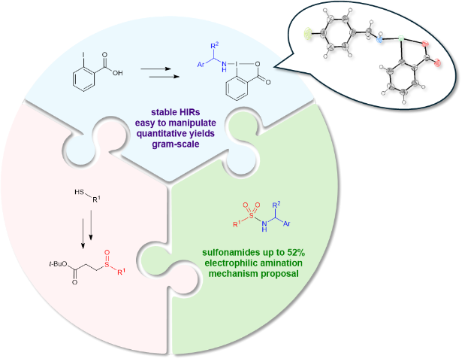
- reagent 2a in most organic solvents, an alternative solvent was tested; nevertheless, BBX 2a showed to be insoluble when using toluene (Table 1, entry 3). To have further insights on the formation of sulfonamide 5aa, an experiment was conducted under the same stoichiometric conditions that yielded product



Non-covalent organocatalyzed enantioselective cyclization reactions of α,β-unsaturated imines
Beilstein J. Org. Chem. 2024, 20, 3221–3255, doi:10.3762/bjoc.20.268
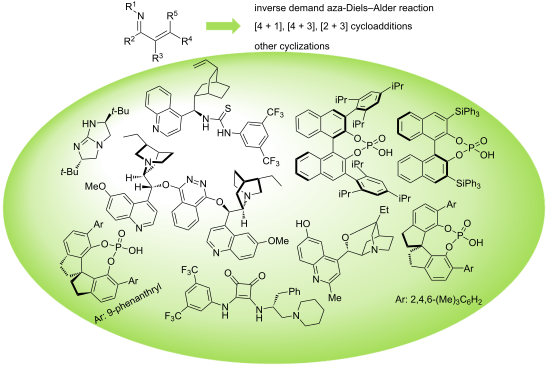
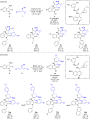
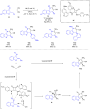
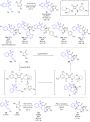
- acid as additive and a mixture of toluene and water provided the best results in terms of yield and enantioselectivity. A wide scope was explored, including electron-donating substituents and electron-withdrawing groups, as well as heterocycles, giving densely functionalized chiral azaspirocyclic











Tunable full-color dual-state (solution and solid) emission of push–pull molecules containing the 1-pyrindane moiety
Beilstein J. Org. Chem. 2024, 20, 3016–3025, doi:10.3762/bjoc.20.251
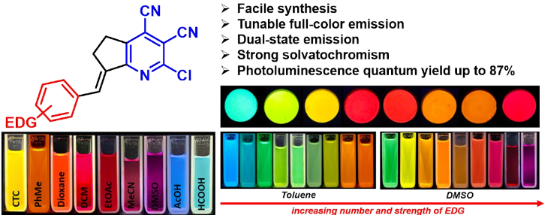
- , indicating that the more polar singlet excited state (S1) was much better stabilized by polar solvents than the ground state (S0). The highest fluorescence quantum yield of about 87% was observed in toluene. Then, the solvatochromic properties of stilbazole 1i, bearing a stronger electron-donating
- 511 nm), in the region of solvents with medium polarity. Protonation of the dimethylamino group was additionally confirmed by titration of pyrindane 1i in toluene using trifluoroacetic acid (see Figure S2, Supporting Information File 1). According to the data obtained, an increasing amount of acid
- the emission band was observed upon increasing the solvent polarity from carbon tetrachloride to DMSO, and the strongest fluorescence was registered in nonpolar medium (Φem = 87.5 % for compound 1c in toluene and Φem = 73.9% for compound 1i in CCl4). Slopes of the Lippert–Mataga plots (Figures S3 and


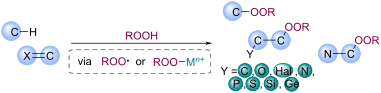
Advances in radical peroxidation with hydroperoxides
Beilstein J. Org. Chem. 2024, 20, 2959–3006, doi:10.3762/bjoc.20.249





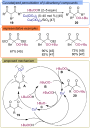
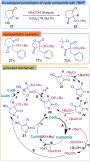


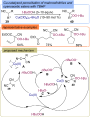


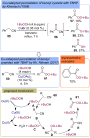










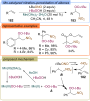
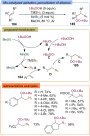


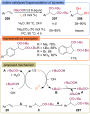
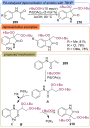

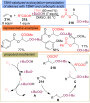


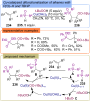
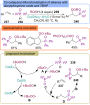
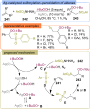





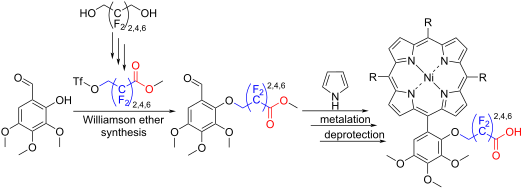
Synthesis of fluorinated acid-functionalized, electron-rich nickel porphyrins
Beilstein J. Org. Chem. 2024, 20, 2954–2958, doi:10.3762/bjoc.20.248
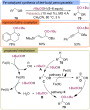
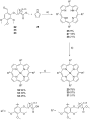
- porphyrins with Ni(acac)2; c) ester hydrolysis to generate the free acids 32, 33, and 34. Conditions: a) 1) 22/23/24, TFA, abs. DCM, N2, reflux, 30 min, 2) pyrrole, reflux, 2.5 h, 3) DDQ, reflux, 2 h; b) Ni(acac)2, toluene, reflux, 20 h; c) 1) LiOH, MeOH, rt, 1 h, 2) HCl. Supporting Information Supporting


4,6-Diaryl-5,5-difluoro-1,3-dioxanes as chiral dopants for liquid crystal compositions
Beilstein J. Org. Chem. 2024, 20, 2940–2945, doi:10.3762/bjoc.20.246
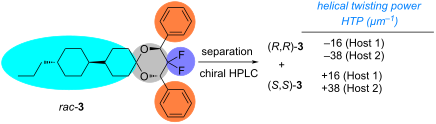
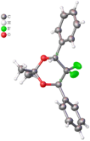
- purification. Ketalization of rac-2 with liquid crystal-like ketone 1 [43] (in toluene) or 2,2-dimethoxypropane 5 (in THF) provided dioxanes rac-3 and rac-4 in 56% and 62% yields, respectively (Scheme 2). Samples of rac-3 and rac-4 were separated by preparative HPLC on a chiral phase. Suitable crystals of all


The charge transport properties of dicyanomethylene-functionalised violanthrone derivatives
Beilstein J. Org. Chem. 2024, 20, 2921–2930, doi:10.3762/bjoc.20.244
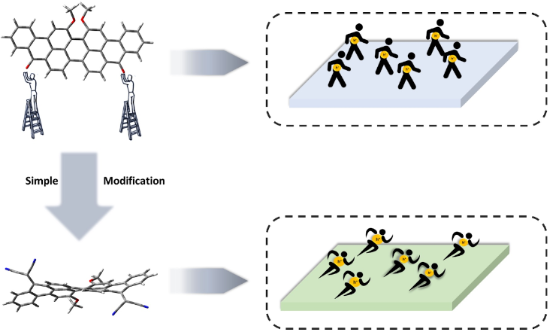
- . The substrates were washed using deionised H2O, acetone, and isopropanol before being dried over a stream of compressed air. Octadecyltrichlorosilane (30 μM) was dropcast onto the substrate for 5 minutes before the substrate was washed with toluene. The substrate was then dried over compressed air. A


Recent advances in transition-metal-free arylation reactions involving hypervalent iodine salts
Beilstein J. Org. Chem. 2024, 20, 2891–2920, doi:10.3762/bjoc.20.243

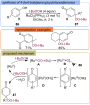
- base and toluene as solvent were required (Scheme 3). On the other hand, for the α-arylation of the α-cyano derivative of compounds 9, t-BuOK as base and THF as a solvent were useful to yield the products in a short reaction time (30 min). All the products with a wide range of electronically varied
- decarboxylation of α,α-difluoro-β-keto acid esters 11 with the help of aryl(TMP)iodonium tosylates 12 in toluene at 100 °C to yield α,α-difluoroketones 13 in excellent yield (Scheme 4). The reaction proceeds via ligand exchange between the fluorinated carboxylate and the tosylate anion of the hypervalent iodine
- product yield increased [93]. Similarly, the arylation of sulfonamides can also be achieved by using t-BuONa in toluene for an hour at room temperature in the presence of air (conditions D) [94]. The mechanism of the reaction involves formation of anionic intermediates I and II by the action of the base




Synthesis of pyrrole-fused dibenzoxazepine/dibenzothiazepine/triazolobenzodiazepine derivatives via isocyanide-based multicomponent reactions
Beilstein J. Org. Chem. 2024, 20, 2870–2882, doi:10.3762/bjoc.20.241
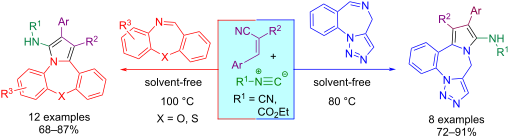
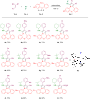
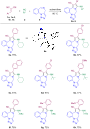
- , we investigated the reaction in dichloromethane at room temperature and at 40 °C (Table 1, entries 1 and 2) and we found that the reaction progressed slightly at 40 °C. This promising result prompet us to examine the reaction in multiple anhydrous solvents such as CH3CN, toluene, EtOH, THF, EtOAc





N-Glycosides of indigo, indirubin, and isoindigo: blue, red, and yellow sugars and their cancerostatic activity
Beilstein J. Org. Chem. 2024, 20, 2840–2869, doi:10.3762/bjoc.20.240
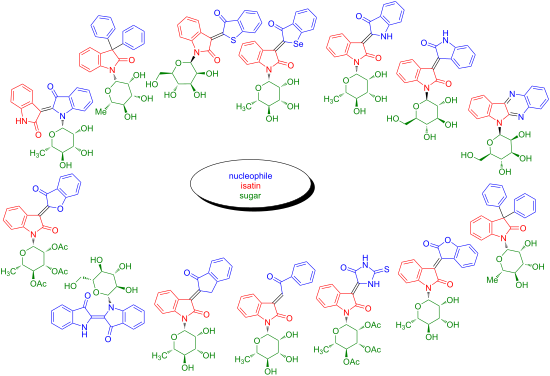
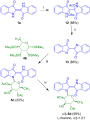
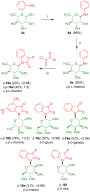
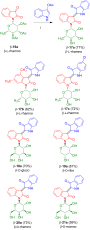
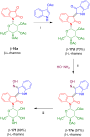
- afforded β-84a in 88% yield. Friedel–Crafts acylation of isatin-N-glycosides β-16c–e with benzene, toluene, anisole, and N,N-dimethylaniline and subsequent deprotection afforded 3,3-diaryloxindole-N-glycosides β-84b–l (Scheme 45) [63]. Some of the products showed antiproliferative activity against


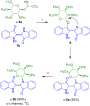
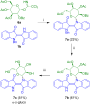
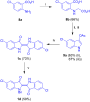









Synthesis of tricarbonylated propargylamine and conversion to 2,5-disubstituted oxazole-4-carboxylates
Beilstein J. Org. Chem. 2024, 20, 2827–2833, doi:10.3762/bjoc.20.238

- to that reported in reference [23], to a solution of DEMO (1.72 g, 10.0 mmol) in toluene (40 mL) were added 4-methylbenzamide (1.63 g, 12 mmol), 3 Å molecular sieves (3.4 g), and acetic anhydride (2.0 mL, 20 mmol). The resulting solution was heated at 100 °C for 4 h. After cooling to room temperature


Synthesis and antimycotic activity of new derivatives of imidazo[1,2-a]pyrimidines
Beilstein J. Org. Chem. 2024, 20, 2806–2817, doi:10.3762/bjoc.20.236
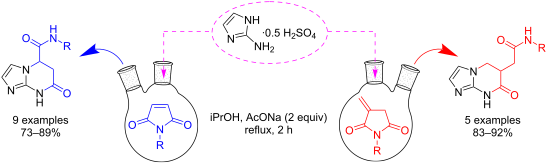
- in the mass spectra were interpreted on the basis of pre-calculated weights (as molecular ions with [M + H]+) for all possible initial, intermediate, and expected interaction products (Table 1). The tentative experiments showed that when toluene or dioxane were used as solvents, the maximum


Mechanochemical difluoromethylations of ketones
Beilstein J. Org. Chem. 2024, 20, 2799–2805, doi:10.3762/bjoc.20.235
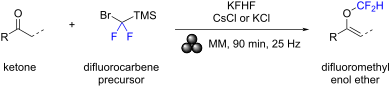
- sufficient mixing. Silica could not fulfill this role. Lastly, water, 1,4-dioxane, chloroform, and toluene were tested in a liquid-assisted grinding (LAG) protocol (Table 1, entries 10–13). The lowest yields were obtained with water and 1,4-dioxane, providing 3a in yields of 37% and 43%, respectively (Table
- 1, entries 10 and 11). With the less polar solvents chloroform and toluene 3a was obtained in 62% and 68% yield, respectively (Table 1, entries 12 and 13). For comparison, the difluoromethylation of ketone 1a with difluorocarbene precursor TMSCF2Br (2) was investigated in solution (Scheme 2). The


C–C Coupling in sterically demanding porphyrin environments
Beilstein J. Org. Chem. 2024, 20, 2784–2798, doi:10.3762/bjoc.20.234
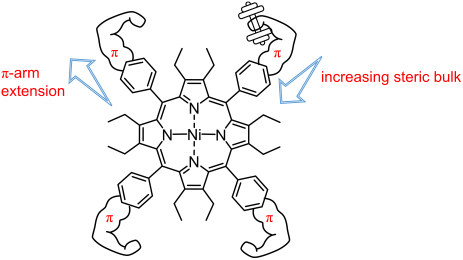
- with aldehydes 8, 9, and 10 under Lindsey conditions [42] utilizing BF3·OEt2 and DDQ [43] to achieve porphyrins 4, 5, and 6, which were not isolated and instead reacted immediately. Ni(II)porphyrins 11, 12, and 13 were prepared by reacting porphyrins 4, 5, and 6 in toluene for 18 hours using Ni(II


Access to optically active tetrafluoroethylenated amines based on [1,3]-proton shift reaction
Beilstein J. Org. Chem. 2024, 20, 2776–2783, doi:10.3762/bjoc.20.233
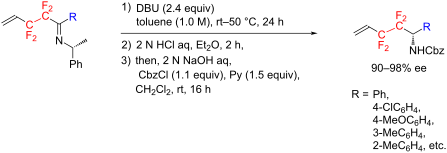
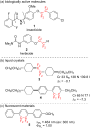
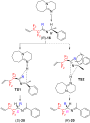
- Science and Engineering, Ibaraki University, 4-12-1 Nakanarusawa, Hitachi, Ibaraki 316-8511, Japan 10.3762/bjoc.20.233 Abstract Treatment of various (R)-N-(2,2,3,3-tetrafluoropent-4-en-1-ylidene)-1-phenylethylamine derivatives with 2.4 equiv of DBU in toluene at room temperature to 50 °C for 24 h led to
- diethyl ether, toluene, hexane, and cyclohexane, (S)-20b was obtained in 30% to 40% yield and significant amounts of unreacted substrate were still observed, although formation of the byproduct 22b could be generally suppressed. We also examined the reaction using other bases instead of DBU. As shown in



Interaction of a pyrene derivative with cationic [60]fullerene in phospholipid membranes and its effects on photodynamic actions
Beilstein J. Org. Chem. 2024, 20, 2732–2738, doi:10.3762/bjoc.20.231
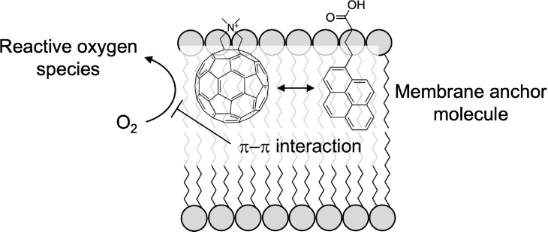
- ., Kyoto, Japan) and toluene (FUJIFILM Wako Pure Chemical Corporation, Osaka, Japan). DMPC in ethanol and catC60 or C60 in DMSO/toluene were mixed in molar ratios of 1:0, 1:0.1, 1:1, or 1:10, and the solvent was removed using a rotary evaporator (Rotavapor R-300, BÜCHI Labortechnik AG, Switzerland) at 40





