


Search results
Search for "room temperature" in Full Text gives 2203 result(s) in Beilstein Journal of Organic Chemistry. Showing first 200.
Efficient synthesis of fluorinated triphenylenes with enhanced arene–perfluoroarene interactions in columnar mesophases
Beilstein J. Org. Chem. 2024, 20, 3263–3273, doi:10.3762/bjoc.20.270
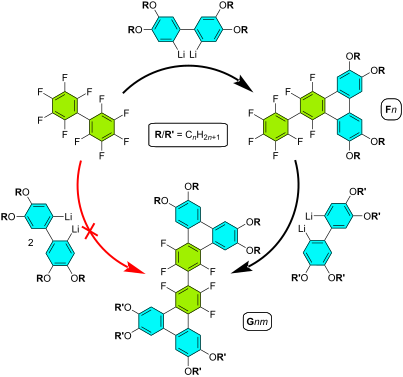
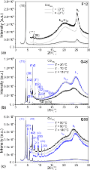
- –332 °C for Fn and above 340 °C for Gnm, probing their excellent thermal stability. All Fn and Gnm compounds display mesophases at room temperature. Their optical textures and phase-transition behaviors were observed via hot stage polarizing optical microscopy (POM). POM images were systematically
- POM observations and their room temperature behaviors (no crystallization is observed even at low temperature, except for F12). Compounds with shorter alkyl chains, F3, F4, and F5, possess almost the same clearing temperatures near 190 °C, whereas from F6 to F12, the clearing temperature gradually
- emergence of a more ordered, 3D phase for some PHn derivatives observed on cooling at lower temperature. As expected, neither F or BTP6 are mesomorphic. As for the larger fluorine derivatives Gnm (G55, G66, and G48), they all possess enantiotropic columnar mesophases right from room temperature up to 183



Intramolecular C–H arylation of pyridine derivatives with a palladium catalyst for the synthesis of multiply fused heteroaromatic compounds
Beilstein J. Org. Chem. 2024, 20, 3256–3262, doi:10.3762/bjoc.20.269
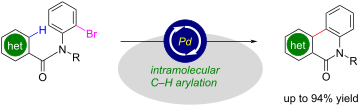
- ), tetrabutylammonium bromide (31.7 mg, 0.098 mmol), Pd(OAc)2 (2.2 mg, 10 mol %), and triphenylphosphine (2.8 mg, 10 mol %). The mixture was dissolved in 3.1 mL of DMA and stirring was continued at 110 °C for 24 h. Then, water (3 mL) was added after cooling to room temperature. The product was extracted with


Non-covalent organocatalyzed enantioselective cyclization reactions of α,β-unsaturated imines
Beilstein J. Org. Chem. 2024, 20, 3221–3255, doi:10.3762/bjoc.20.268
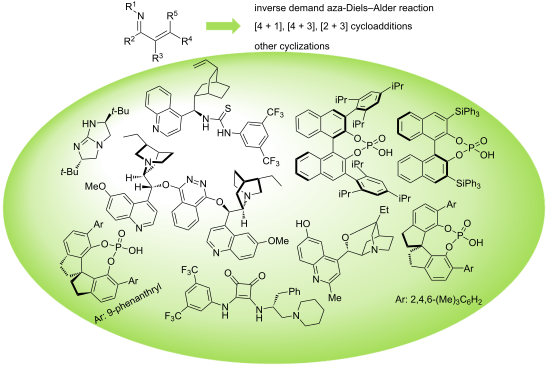
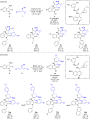
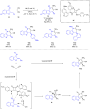
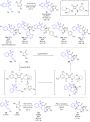
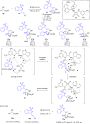
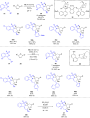
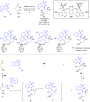
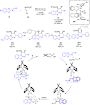
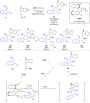
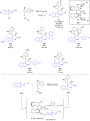
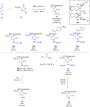
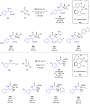
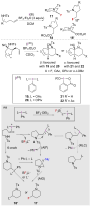
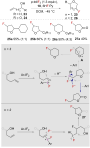
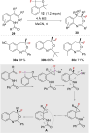
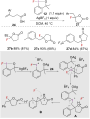
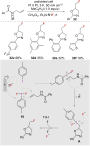
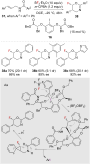
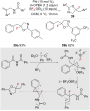
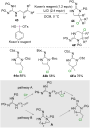
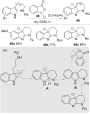
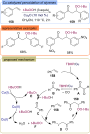
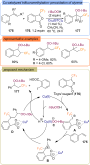
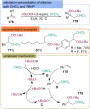
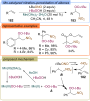
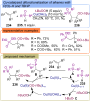
- -catalyzed asymmetric inverse electron demand aza-Diels–Alder reaction of 1,3-diazadienes 21 and 3-vinylindoles 61 [47]. After a screening of reaction conditions, chiral phosphoric acid XIV was found to be the best organocatalyst, and by using dichloromethane as solvent at room temperature, 43 different











Discovery of ianthelliformisamines D–G from the sponge Suberea ianthelliformis and the total synthesis of ianthelliformisamine D
Beilstein J. Org. Chem. 2024, 20, 3205–3214, doi:10.3762/bjoc.20.266
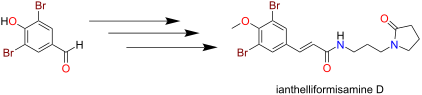
- /CH2Cl2 at room temperature (17% yield). Subjecting the methoxylated benzaldehyde intermediate 9 to a Doebner–Knoevenagel condensation with malonic acid and pyridine afforded the brominated cinnamic acid analogue 10 in 54% yield [19]. Amidation chemistry using carbonyldiimidazole (CDI) [18] and the
- ground using a Fritsch Universal Cutting Mill Pulverisette 19. The ground marine sponge was extracted at room temperature using an Edwards Instrument Company Bioline orbital shaker set to 200 rpm. Solvents were removed from extracts with a Büchi R-144 rotary evaporator and from HPLC fractions using a
- (2.0 M, 1.5 mL, 11 mmol) was slowly added and the mixture stirred at room temperature for 6 h. The reaction crude was pre-adsorbed to C8-bonded silica, packed into a stainless steel guard cartridge then purified by Luna C18 semipreparative RP-HPLC using isocratic conditions of 50% H2O (0.1% TFA)/50


![[Graphic 1]](/bjoc/content/inline/1860-5397-20-266-i2.svg?max-width=637&scale=1.18182)
![[Graphic 2]](/bjoc/content/inline/1860-5397-20-266-i3.svg?max-width=637&scale=1.18182)
![[Graphic 3]](/bjoc/content/inline/1860-5397-20-266-i4.svg?max-width=637&scale=1.18182)

![[Graphic 4]](/bjoc/content/inline/1860-5397-20-266-i5.svg?max-width=637&scale=1.18182)
![[Graphic 5]](/bjoc/content/inline/1860-5397-20-266-i6.svg?max-width=637&scale=1.18182)

Synthesis of 2H-azirine-2,2-dicarboxylic acids and their derivatives
Beilstein J. Org. Chem. 2024, 20, 3191–3197, doi:10.3762/bjoc.20.264
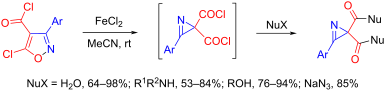
- not isomerize at room temperature, which is typical for highly sterically congested isoxazoles containing a 3-tert-butyl substituent [26]. The mechanism of such isomerizations of isoxazoles has been previously discussed using DFT calculations [25][26], which revealed the formation of an isoxazole–Fe
- , into the O–H bonds of diacid 6a (Scheme 5). Apparently, in this case, the reaction proceeds through a less sterically congested transition state. Diacyl chloride 2a was also reacted with sodium azide as nucleophile at room temperature giving dicarbonyl azide 12 in 85% yield (Scheme 6). Conclusion Two
- reaction sequences for the synthesis of 3-aryl-5-chloroisoxazole-4-carbonyl chlorides have been developed. These compounds are convenient precursors for the preparation of 2H-azirine-2,2-dicarboxylic acids and their derivatives such as amides, esters and azides, via an Fe(II)-catalyzed room temperature





Direct trifluoroethylation of carbonyl sulfoxonium ylides using hypervalent iodine compounds
Beilstein J. Org. Chem. 2024, 20, 3182–3190, doi:10.3762/bjoc.20.263
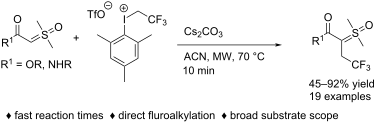
- studies using methyl ester sulfoxonium ylide 1a and 2,2,2-trifuoroethyl(mesityl)iodonium triflate salt (2a), as model substrates (see also Table S1 in Supporting Information File 1). Combining these at room temperature in acetonitrile produced 3a in 8% 1H NMR yield (Table 1, entry 1). Repeating the
- was also not effective (Table 1, entry 7; 56% yield), extending the reaction time to 24 hours at room temperature gave 3a in 69% yield (Table 1, entry 8). Other chlorinated, ethereal or polar solvents were also tested under this prolonged reaction time, but none proved better than acetonitrile (Table


Controlled oligomerization of [1.1.1]propellane through radical polarity matching: selective synthesis of SF5- and CF3SF4-containing [2]staffanes
Beilstein J. Org. Chem. 2024, 20, 3134–3143, doi:10.3762/bjoc.20.259
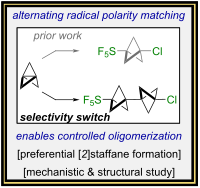
- the equivalents of [1.1.1]propellane (1) relative to SF5Cl and evaluating the impact on selectivity (Table 1). A 0.1 M solution of SF5Cl in n-pentane was added to a 0.8 M solution of 1 in Et2O at room temperature, and the mixture was stirred for 3 hours prior to 19F NMR analysis. Upon increasing from
- established that [1.1.1]propellane participates in radical-chain reactions (i.e., oligomerization) at room temperature in solution to form unsubstituted [n]staffanes. The origin of this innately controlled oligomerization was then investigated through density functional theory (DFT) calculations. The free
- cooling from 260 K down to 100 K; additional details are reported in Supporting Information File 1. Interestingly, the original LTP unit cell was not detected; instead, only the reduced cell observed in the HTP was found at all temperatures. However, after warming the same crystal of 3 back to room


Hypervalent iodine-mediated intramolecular alkene halocyclisation
Beilstein J. Org. Chem. 2024, 20, 3113–3133, doi:10.3762/bjoc.20.258
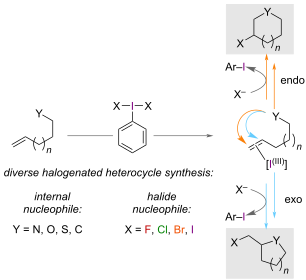
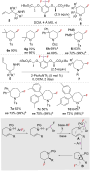
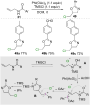
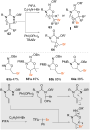
- under mild conditions in DCM at room temperature. A range of substituents on the aromatic ring were tested with electron-withdrawing groups resulting in lower yields compared to electron-donating groups. The proposed mechanism for the reaction involved formation of a chloronium ion and nucleophilic
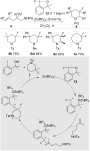
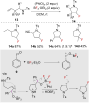
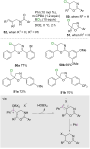
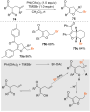
- as the bromine source and Bu4NBr as a reaction promoter, racemic brominated pyrrolidines 54 were synthesised from a range of homoallylic sulfonamides 53 in excellent yields under mild conditions at room temperature. A mechanism was suggested by the authors (Scheme 29), whereby ligand exchange on PhI
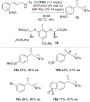
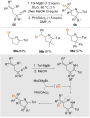
- [2,3-b]indoles 59 were synthesised in up to quantitative yields under mild reaction conditions at room temperature. A range of other indole derivatives were cyclised in similarly good yields demonstrating the scope of the reaction. Li and Liu reported the bromoamidation of alkenes in 2014 (Scheme 32





















Synthesis of the 1,5-disubstituted tetrazole-methanesulfonylindole hybrid system via high-order multicomponent reaction
Beilstein J. Org. Chem. 2024, 20, 3077–3084, doi:10.3762/bjoc.20.256
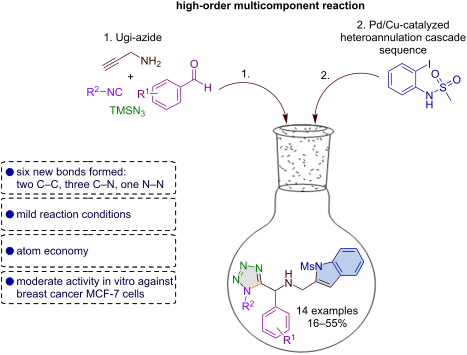
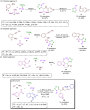
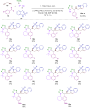
- trifluoroethanol as the solvent and at room temperature [23][24][25][26]. In the initial reaction, propargylamine served as a bifunctional reagent, with the primary amine group participating in the first step and the terminal alkyne promoting the subsequent heteroannulation. (Scheme 2). As observed in our previous



Extension of the π-system of monoaryl-substituted norbornadienes with acetylene bridges: influence on the photochemical conversion and storage of light energy
Beilstein J. Org. Chem. 2024, 20, 3061–3068, doi:10.3762/bjoc.20.254
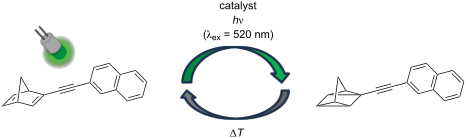
- up to 8 h at room temperature. Furthermore, the norbornadienes were transformed quantitatively into their quadricyclane photoproducts by irradiation with green light (520 nm) in the presence of a photosensitizer. Keywords: light energy conversion; photochemistry; photochromism; quadricyclanes


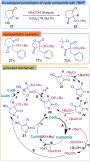
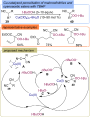
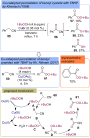
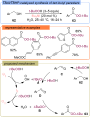
Advances in radical peroxidation with hydroperoxides
Beilstein J. Org. Chem. 2024, 20, 2959–3006, doi:10.3762/bjoc.20.249
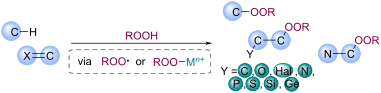
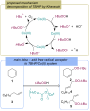
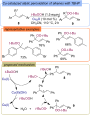
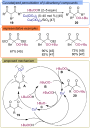
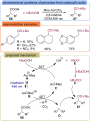
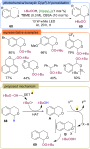
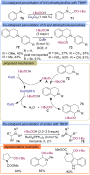
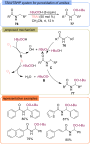
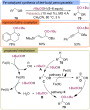
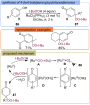
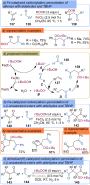
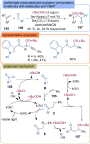
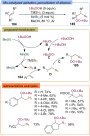
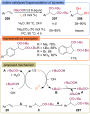
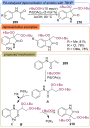
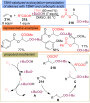
- carried out without solvent and at room temperature, using copper(II) acetate as the catalyst. The reaction pathway of tert-butyl perbenzoate synthesis from benzyl nitriles 60 involves the formation of intermediate D. The Kornblum–DeLaMare rearrangement of peroxide D gives benzoyl cyanide E, which is





























Structure and thermal stability of phosphorus-iodonium ylids
Beilstein J. Org. Chem. 2024, 20, 2931–2939, doi:10.3762/bjoc.20.245
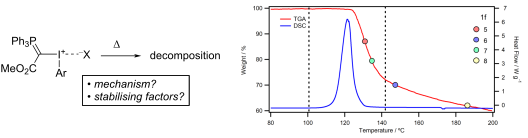
- , with the tosylate trans to the arene in one (θ2 = 177.8) and trans to the ylid in the other (θ1 = 169.5), which suggests that this isomerisation is fast at room temperature and the position of the anion has no significant effect on the stability of these compounds. This hypothesis is further supported


The charge transport properties of dicyanomethylene-functionalised violanthrone derivatives
Beilstein J. Org. Chem. 2024, 20, 2921–2930, doi:10.3762/bjoc.20.244
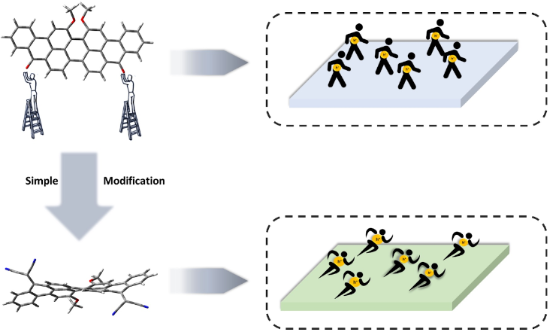
- carbonate was added (300 mg, 2.04 mmol), and the reaction mixture was stirred at 100 °C overnight. After cooling the reaction mixture to room temperature, it was poured into methanol (200 mL), and the resulting precipitate was filtered, then washed with water (150 mL) to give the title compound as a dark
- mmol) and 1-bromooctane (2.12 mL, 12.28 mmol) were dissolved in N,N-dimethylformamide (60 mL). Then, potassium carbonate was added (1.13 g, 8.19 mmol), and the reaction mixture was stirred at 100 °C overnight. After cooling the reaction mixture to room temperature, it was poured into methanol (400 mL
- overnight. After cooling the reaction mixture to room temperature, it was poured into methanol (200 mL), and the resulting precipitate was filtered, then washed with water (150 mL) to give the title compound as a dark solid (600 mg, 71%). 1H NMR (400 MHz, CDCl3) δ 8.78 (d, J = 8.0 Hz, 2H), 8.63 (d, J = 8.3


Recent advances in transition-metal-free arylation reactions involving hypervalent iodine salts
Beilstein J. Org. Chem. 2024, 20, 2891–2920, doi:10.3762/bjoc.20.243

- group from position 4, and then regioselective vicinal functionalization of the generated aryne. The method's compatibility with halide-substituted aryl compounds enhances its versatility and practicality. Moreover, the completion of reaction within a mere 40 minutes at room temperature underscores its
- aryl donor (Scheme 24) [75]. The reaction worked very well at room temperature under base-free conditions. In this one-pot synthesis of double arylation of naphthols 58, a novel radical precursor, [1,1´-oxybis(2,2,6,6-tetramethylpiperidine)] (59), was employed. This precursor undergoes spontaneous
- of O3-arylated galactosides 64 by reacting benzyl-protected galactoside 63 with diphenyliodonium triflates 16 at room temperature in the presence of potassium tert-butoxide as the base (Scheme 26) [77]. This transition-metal-free approach simplifies the synthesis process. Electron-pushing and




C–H Trifluoromethylthiolation of aldehyde hydrazones
Beilstein J. Org. Chem. 2024, 20, 2883–2890, doi:10.3762/bjoc.20.242
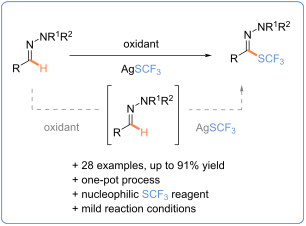
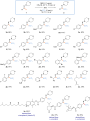
- room temperature. α,α,α-Trifluoroacetophenone (42 μL, 0.3 mmol, 1.0 equiv) was added as an internal standard for determining the 19F NMR yield. The mixture was then filtered on a pad of celite and rinsed with CH2Cl2. The solution was then washed with brine twice (20 mL) and the organic layers were



Synthesis of pyrrole-fused dibenzoxazepine/dibenzothiazepine/triazolobenzodiazepine derivatives via isocyanide-based multicomponent reactions
Beilstein J. Org. Chem. 2024, 20, 2870–2882, doi:10.3762/bjoc.20.241
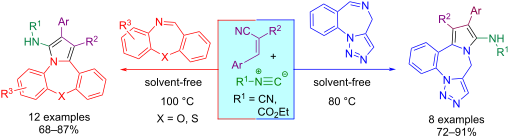
- , we investigated the reaction in dichloromethane at room temperature and at 40 °C (Table 1, entries 1 and 2) and we found that the reaction progressed slightly at 40 °C. This promising result prompet us to examine the reaction in multiple anhydrous solvents such as CH3CN, toluene, EtOH, THF, EtOAc
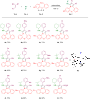
- studied by X-ray diffraction analysis, and the crystal structure is illustrated in Figure 2 (detailed information can be found in the Supporting Information File 1). The 1H NMR spectrum of product 6f obtained through the I-MCR was investigated and some unexpected chemical shifts were observed at room
- temperature (Figure 3A) [46]. Therefore, dynamic NMR measurements were performed for compound 6f at various temperatures (25, 35, 45, 55, 65, 75, and 85 °C). As illustrated in Figure 3, all peaks in the spectrum correspond to the structure of 6f. Spectrum A recoreded at 25 °C has two broad singulet signals at


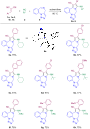

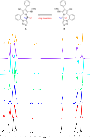


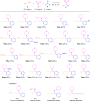
Multicomponent synthesis of α-branched amines using organozinc reagents generated from alkyl bromides
Beilstein J. Org. Chem. 2024, 20, 2834–2839, doi:10.3762/bjoc.20.239
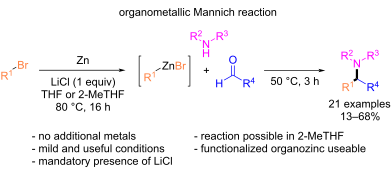
- ]. Thus, whereas Rieke et al. reported the insertion of activated zinc into alkyl bromides in THF at room temperature [16][17], Knochel et al. described the direct metalation of alkyl iodides in THF at 30 °C [18]. More recently, Knochel et al. improved their original method by the use of zinc dust in the
- presence of LiCl in THF for the metalation of alkyl bromides at room temperature [19]. Besides, Huo described the insertion of zinc dust into alkyl bromides at 80 °C in DMA or DMF [20]. Despite the high synthetic interest in mixed organozinc compounds, their use in the preparation of α-branched amines


Synthesis of tricarbonylated propargylamine and conversion to 2,5-disubstituted oxazole-4-carboxylates
Beilstein J. Org. Chem. 2024, 20, 2827–2833, doi:10.3762/bjoc.20.238

- to that reported in reference [23], to a solution of DEMO (1.72 g, 10.0 mmol) in toluene (40 mL) were added 4-methylbenzamide (1.63 g, 12 mmol), 3 Å molecular sieves (3.4 g), and acetic anhydride (2.0 mL, 20 mmol). The resulting solution was heated at 100 °C for 4 h. After cooling to room temperature
- was reacted with lithium acetylide, which was prepared from ethynylbenzene (3a) and butyllithium at 0 °C, the solution turned black, resulting in a complex reaction mixture (Table 1, entry 1). This complication persisted even when the reaction was conducted at −78 °C and then warmed to room
- temperature without addition of acetic acid. To address this, the reaction was performed at −78 °C, and acetic acid was added at the same temperature, yielding adduct 4a in 13% yield (Table 1, entry 2). The reaction yield was significantly influenced by the amounts of 3a and butyllithium used. The yield of 4a


Investigation of a bimetallic terbium(III)/copper(II) chemosensor for the detection of aqueous hydrogen sulfide
Beilstein J. Org. Chem. 2024, 20, 2818–2826, doi:10.3762/bjoc.20.237
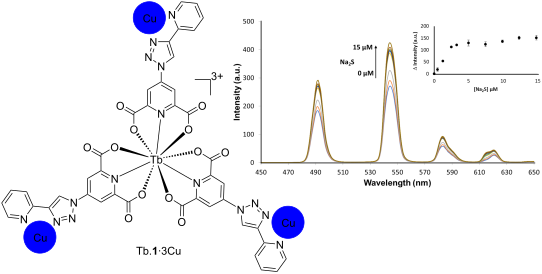
- were measured at room temperature utilizing a Varian Cary 1E UV–vis spectrophotometer with a quartz cell of 10 mm path length. Luminescence emission spectra of aqueous solutions were captured at 23 °C using a Varian Cary-Eclipse fluorescence spectrophotometer set to phosphorescence mode, employing a
- calibration gas generator. Synthesis of Tb.1 To a solution of L (155 mg, 0.5 mmol) in water (6 mL) and 1 M NaOH (4 mL) a solution of Tb(OTf)3 (100 mg, 0.166 mmol) in water (2 mL) was added to obtain a white precipitate instantly. The solution was stirred at room temperature for a day. The precipitate was


Mechanochemical difluoromethylations of ketones
Beilstein J. Org. Chem. 2024, 20, 2799–2805, doi:10.3762/bjoc.20.235
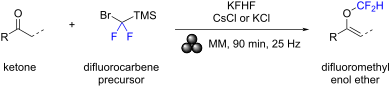
- efficiently converted to the target products under solvent-free conditions. The reactions proceed at room temperature and are complete within 90 minutes, demonstrating both efficiency and experimental simplicity. Keywords: ball milling; difluorocarbene; difluoromethylations; difluoromethyl enol ether
- reaction conditions were chosen based on those reported by Ni, Hu and co-workers for the difluoromethylation of alcohols in solution [39]. The two activators KFHF and KOAc were investigated in a dichloromethane/water mixture at room temperature for 10 h. In both cases, the yield of 3a was negligible (with
- during the reaction. Conclusion In conclusion, we discovered a mechanochemical synthesis of difluoromethyl enol ethers. The products were obtained from the corresponding ketones at room temperature after a reaction time of 90 minutes. The investigation of the reaction scope revealed challenges in


Access to optically active tetrafluoroethylenated amines based on [1,3]-proton shift reaction
Beilstein J. Org. Chem. 2024, 20, 2776–2783, doi:10.3762/bjoc.20.233
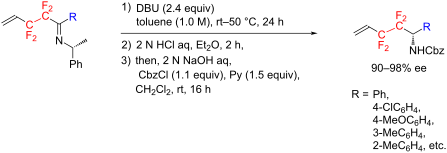
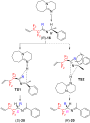
- Science and Engineering, Ibaraki University, 4-12-1 Nakanarusawa, Hitachi, Ibaraki 316-8511, Japan 10.3762/bjoc.20.233 Abstract Treatment of various (R)-N-(2,2,3,3-tetrafluoropent-4-en-1-ylidene)-1-phenylethylamine derivatives with 2.4 equiv of DBU in toluene at room temperature to 50 °C for 24 h led to
- at room temperature for 24 h gave the corresponding [1,3]-proton shift adduct (S)-20b in 31% yield (Table 1, entry 1). In this case, the HF-elimination product 21b was also obtained in 16% [37], and the starting material was recovered in 53%. As shown in entries 2–7 of Table 1, the reactions in



Copper-catalyzed yne-allylic substitutions: concept and recent developments
Beilstein J. Org. Chem. 2024, 20, 2739–2775, doi:10.3762/bjoc.20.232
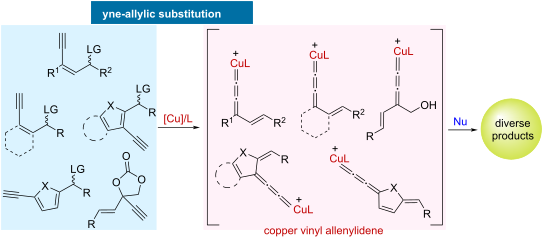
- for the Cu(I) system indicate that it is not the formation of alkynyl copper intermediate but the formation of active copper vinyl allenylidene intermediate is the rate-limiting step (Scheme 10). Due to the gaseous nature of dimethylamine at room temperature, it needs to be stored in special solvents













Interaction of a pyrene derivative with cationic [60]fullerene in phospholipid membranes and its effects on photodynamic actions
Beilstein J. Org. Chem. 2024, 20, 2732–2738, doi:10.3762/bjoc.20.231
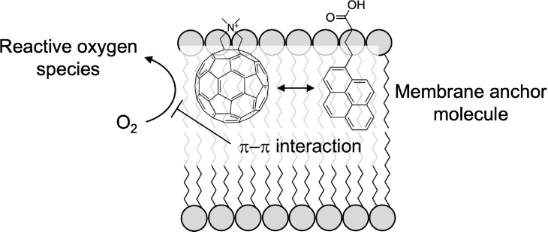
- until the lipid membrane had completely peeled off from the flask. To remove free catC60 and C60, the resulting suspension was centrifuged at 20,000g at room temperature for 10 min. The supernatant was collected and subjected to more than 20 extrusions using a Mini-Extruder equipped with a 100 nm-pore
- solution (335 µM) was added instead of 10 µM of PBS(–). The solution was subjected to O2 bubbling for 30 seconds and then taken into 50 µL capillary and sealed. The solution was then irradiated with blue LED light for 30 minutes. The capillary was taken into the ESR tube for measurement at room temperature
- recorded at room temperature. O2•– Generation: Measurements were performed in a mixture of DMSO and PBS(–) (1-to-4, v/v). Ten µL of catC60 sample solution (25 µM), 10 µL of DETAPAC solution (5 mM), 10 µL of DEPMPO solution (500 mM), 10 µL of NADH (40 mM) and 10 µL of PBS(–) were mixed in a 0.5 mL Eppendorf


Synthesis of spiroindolenines through a one-pot multistep process mediated by visible light
Beilstein J. Org. Chem. 2024, 20, 2722–2731, doi:10.3762/bjoc.20.230
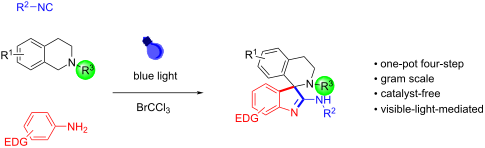
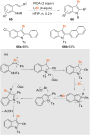
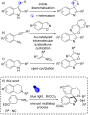
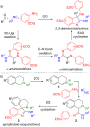
- of components and temperature (Table 2). We firstly irradiated with blue LEDs (451 nm) the mixture of the three components in the presence of 1.5 equiv of BrCCl3 for 18 h at room temperature under argon atmosphere (Table 2, entry 1). To our surprise, the reaction provided only traces of the expected




5th International Symposium on Synthesis and Catalysis (ISySyCat2023)
Beilstein J. Org. Chem. 2024, 20, 2704–2707, doi:10.3762/bjoc.20.227
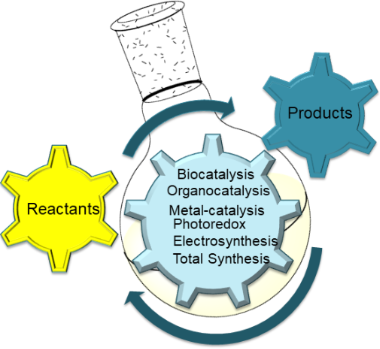
- in MeOH at room temperature with a short reaction time. Some of them were further functionalized with a 1,2,3-triazole ring via copper-catalyzed azide–alkyne cycloaddition (CuAAC) and deprotected with trifluoroacetic acid. Several hybrids were evaluated against six cancer cell lines, displaying GI50




