Search results
Search for "substituents" in Full Text gives 1786 result(s) in Beilstein Journal of Organic Chemistry. Showing first 200.
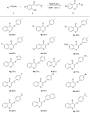
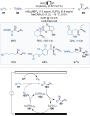
Synthesis of disulfides and 3-sulfenylchromones from sodium sulfinates catalyzed by TBAI
Beilstein J. Org. Chem. 2025, 21, 253–261, doi:10.3762/bjoc.21.17
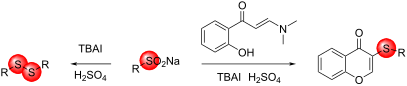
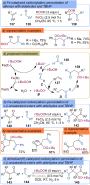
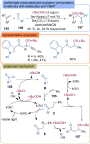
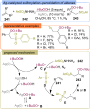
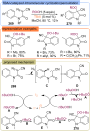
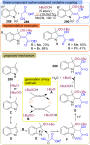
- , demonstrated that a wide range of disulfides were synthesized efficiently when sodium sulfinates served as substrates. The isolated yields ranged from 49% to 89% for products 2a–o. In the case of sodium arylsulfinates with various substituents on the benzene ring, we observed minimal effects on the reaction
- . For example, electron-donating groups (Me, tert-butyl, MeO, naphthyl) and electron-withdrawing groups (F, Cl, Br) attached to the benzene ring led to products 2a–i with yields ranging from 60% to 89%. Interestingly, products with strong electron-withdrawing substituents were obtained in moderate
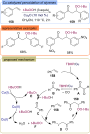
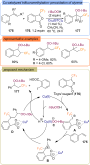
- groups on the aryl substituents of the enaminones were tolerated and afforded the corresponding products in good to excellent yields (4a–f), with a slight decrease in the yield if 5-nitrophenyl-substituted enaminone was used as a substrate (4f). Both sodium arylsulfinates and sodium alkylsulfinates (4g–p



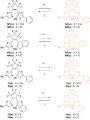
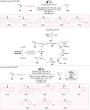
Effect of substitution position of aryl groups on the thermal back reactivity of aza-diarylethene photoswitches and prediction by density functional theory
Beilstein J. Org. Chem. 2025, 21, 242–252, doi:10.3762/bjoc.21.16
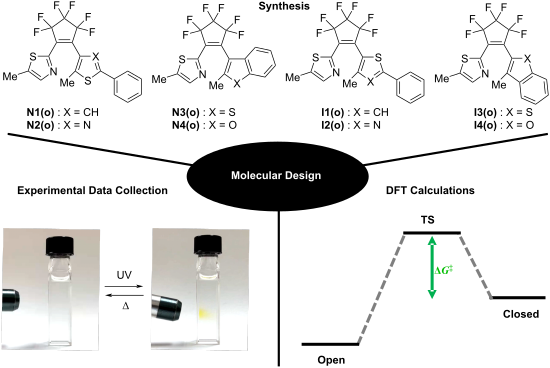
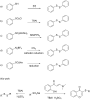
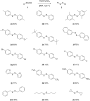
- -withdrawing substituents on the N-aryl moieties enhanced the thermal stability of the Z-isomers while maintaining the advantageous photoswitching properties upon irradiation with red light [52]. The effect of substituents on the thermal cis–trans isomerization of azobenzenes has also been widely studied, and



Visible-light-promoted radical cyclisation of unactivated alkenes in benzimidazoles: synthesis of difluoromethyl- and aryldifluoromethyl-substituted polycyclic imidazoles
Beilstein J. Org. Chem. 2025, 21, 234–241, doi:10.3762/bjoc.21.15
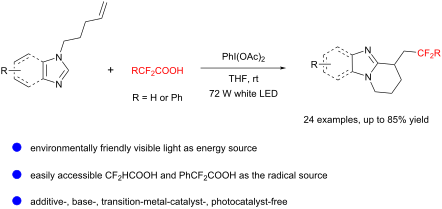
- good tolerance for both electron-withdrawing groups such as fluorine (–F), bromine (–Br), and chlorine (–Cl), as well as electron-donating substituents like methoxy (–OMe) and methyl (–Me), yielding the corresponding 6-membered tricyclic imidazoles in moderate to good yields (3b–h). Benzene rings
- substituted with halogen atoms (–F, –Cl, –Br) were also suitable for this transformation, efficiently giving the desired products in yields of 65–80% (3b, 3e–g), thus facilitating further functionalization possibilities. Notably, substrates with substituents at the sterically hindered 7-position of the


Streamlined modular synthesis of saframycin substructure via copper-catalyzed three-component assembly and gold-promoted 6-endo cyclization
Beilstein J. Org. Chem. 2025, 21, 226–233, doi:10.3762/bjoc.21.14
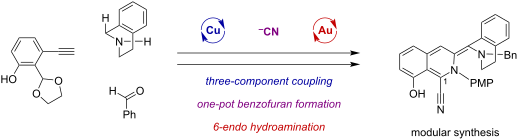
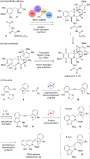
- reliance on the biomimetic PS reactions, we sought to develop a de novo synthetic process that is independent of the substituents on the aromatic rings at both ends (Scheme 1c). To achieve more rapid synthesis and flexible structural diversification of the alkaloidal scaffolds, we conceived a streamlined




Heteroannulations of cyanoacetamide-based MCR scaffolds utilizing formamide
Beilstein J. Org. Chem. 2025, 21, 217–225, doi:10.3762/bjoc.21.13
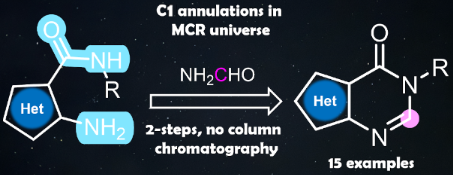
- reaction of 2 with formamide was performed within only 3 h (Scheme 3), yielding the N-substituted thienopyrimidones 5a–e in 30–99% total yield (2 steps), as well with aliphatic and (hetero)aromatic substituents. Quinoline derivatives are prevalent in nature, and many exhibit a range of biological
- of aliphatic and aromatic substituents (Scheme 4). Pyrimidines and pyrimidone-bearing indole derivatives are crucial in organic chemistry because of their extensive use as bioactive compounds with a wide array of significant biological activities (DB03074, DB03304, DB08131) [70][71][72]. In a similar




Dioxazolones as electrophilic amide sources in copper-catalyzed and -mediated transformations
Beilstein J. Org. Chem. 2025, 21, 200–216, doi:10.3762/bjoc.21.12
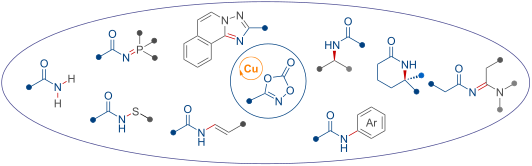
- enantioselectivity. Furthermore, a lactam containing a quaternary carbon center (2g) was prepared. However, a lower enantioselectivity was observed for product 2h due to the similar steric environment of the two alkyl substituents. As shown in Figure 1, a catalytic cycle was proposed for the intramolecular C–H
- afforded the product 10g in good yield. Acetylenes containing tolyl and trifluorophenyl substituents also exhibited improved reactivity (10h and 10i). Heteroaromatic acetylenes were effective in this transformation, forming N-acyl amidines 10j and 10k, respectively. On the other hand, the use of linear
- leads to the formation of the N-acyl amidine product 10. 1.4 N-Arylation of dioxazolones Amides bearing N-substituents are key structural motifs in a wide range of polymers [82], natural products [83], and pharmaceuticals [84][85]. Conventional synthetic routes for N-arylamides typically involve the


Recent advances in electrochemical copper catalysis for modern organic synthesis
Beilstein J. Org. Chem. 2025, 21, 155–178, doi:10.3762/bjoc.21.9
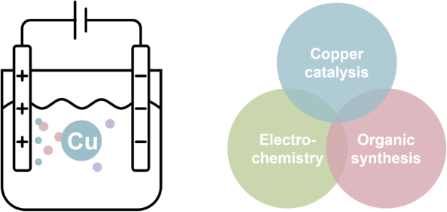
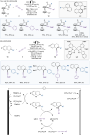
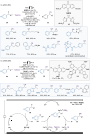
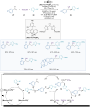
- toxic chemical oxidants and releasing hydrogen gas as the sole byproduct. Various benzamides 1 and terminal arylalkynes 2 bearing electron-rich or electron-withdrawing groups provided the desired products 3 with high chemoselectivities. However, terminal alkynes with alkyl substituents did not yield the
- of substrates, including arylacetylenes with electron-donating and electron-withdrawing groups, and ferrocenyl amides with alkyl and acyl substituents on the other Cp ring. Additionally, the reaction showed similar reactivity and enantioselectivity on a 1 mmol scale. In 2020, Mei et al. reported the
- sterically hindered hydroquinone promotes 1,4-addition, resulting in the formation of an α-arylated intermediate 40, and different products are generated depending on the substituents on the Schiff base. For example, a methyl-substituted Schiff base provided a chiral quinone 35 after 1,4-addition and








Nickel-catalyzed cross-coupling of 2-fluorobenzofurans with arylboronic acids via aromatic C–F bond activation
Beilstein J. Org. Chem. 2025, 21, 146–154, doi:10.3762/bjoc.21.8
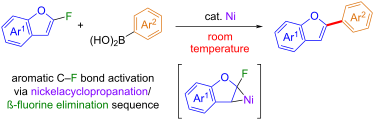
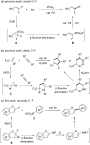
- successfully synthesize a range of 2-arylbenzofurans with various substituents. The reaction, which proceeded under mild conditions, involved β-fluorine elimination from nickelacyclopropanes formed by the interaction of 2-fluorobenzofurans with zero-valent nickel species. This protocol facilitates orthogonal
- simultaneously between E and the arylboronic acids 2, leading to the formation of G (Scheme 5, path c). The intermediates G then undergo reductive elimination to yield 3. To assess the impact of halogen substituents, we also examined reactions of 2-halogenated benzofurans 1a-X (1a-Cl: X = Cl; 1a-Br: X = Br; 1a-I
- nickelacyclopropane Eb in a stoichiometric reaction. Screening of conditions for coupling of 1b with 2b. Effect of halogen substituents. Supporting Information Supporting Information File 82: Detailed experimental procedures and spectral data. Acknowledgements This work was partially performed using facilities of



Recent advances in organocatalytic atroposelective reactions
Beilstein J. Org. Chem. 2025, 21, 55–121, doi:10.3762/bjoc.21.6
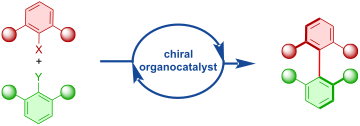
- heteroannulation [50]. The SPINOL-derived chiral phosphoric acid C26 catalyzed the formation of axially chiral products 81 from diarylketones 79a–f and ketoesters 80a–c (Scheme 26). The substrate scope contained a broad range of substituents, including electron-donor groups and whole benzene rings. The authors
- -naphthols, new atroposelective reactions of quinones and iminoquinones were developed [63]. The reaction of quinones with an ester group 109 and indoles with alkyl substituents 110 catalyzed by CPA C29 provided products 112 with regioselectivity on the pyrrole ring of indole (Scheme 35). On the contrary
- in the regioselectivity change. Song et al. broadened the scope of usable substrates for the asymmetric arylation of naphthoquinones 115 with indolizines 114 catalyzed by CPA (R)-C23 forming atropoisomers 116 (Scheme 36) [64]. A broad range of indolizine substrates was tested with substituents in











Facile one-pot reduction of β-nitrostyrenes to phenethylamines using sodium borohydride and copper(II) chloride
Beilstein J. Org. Chem. 2025, 21, 39–46, doi:10.3762/bjoc.21.4
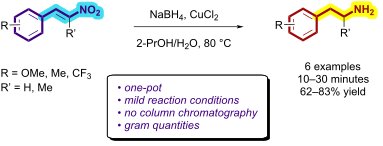
- -nitrostyrene (4a), precursor of most of the hallucinogenic 2C-X family (Table 1). This method was also tested on other types of scaffolds to investigate its potential general applications and effects on other substituents. As sodium borohydride per se does not reduce ester nor nitro functionalities [15][16][17


Synthesis, characterization, and photophysical properties of novel 9‑phenyl-9-phosphafluorene oxide derivatives
Beilstein J. Org. Chem. 2024, 20, 3299–3305, doi:10.3762/bjoc.20.274
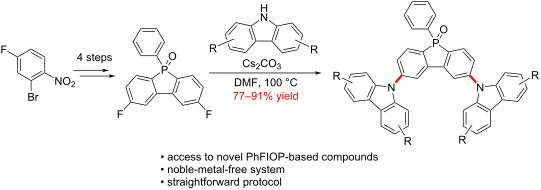
- studies, revealing that their photophysical behavior can be affected by the different substituents in the donor carbazole group. Keywords: carbazole; D−A−D type; noble-metal-free system; 9‑phenyl-9-phosphafluorene oxide; photophysical properties; Introduction π-Conjugated molecular materials containing
- hand, we turned our attention to the synthesis of PhFlOP-based compounds through a Cs2CO3-facilitated nucleophilic substitution with substituted carbazoles as the nucleophiles (Scheme 2). For example, tert-butyl, bromo, carbazolyl, or phenyl substituents were introduced into the carbazoles. To our
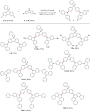
- has insignificant effect on the molecular ground state of 7-H. The PL spectra of the PhFlOP-based compounds 7 in toluene at room temperature are shown in Figure 3, and the λem values are included in Table 2. Different emission wavelengths are observed due to the various substituents present in the




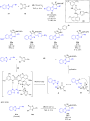
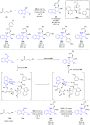
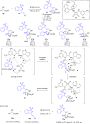
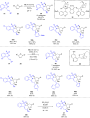
Non-covalent organocatalyzed enantioselective cyclization reactions of α,β-unsaturated imines
Beilstein J. Org. Chem. 2024, 20, 3221–3255, doi:10.3762/bjoc.20.268
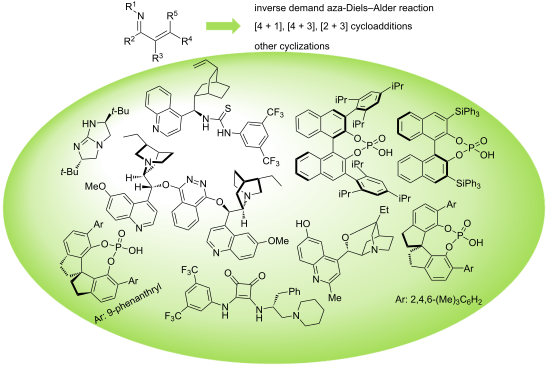
- acid as additive and a mixture of toluene and water provided the best results in terms of yield and enantioselectivity. A wide scope was explored, including electron-donating substituents and electron-withdrawing groups, as well as heterocycles, giving densely functionalized chiral azaspirocyclic
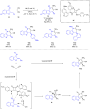
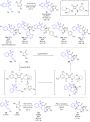
- moiety in up to 99% yields, up to 93% ee and >20:1 dr (Scheme 5) to be obtained. In general, the steric and electronic properties of the conjugated imines had a slight effect on the enantioselectivities of the reactions. However, the authors pointed out that the azlactones with different substituents at
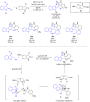
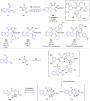
- -azadienes bearing substituents at the ortho-position were tested, the enantioselectivities decreased, probably due to higher steric hindrance. The mechanism of the reaction is depicted in Scheme 7; firstly, the dual activation of the azadiene and the enol form of the azlactone through hydrogen bonding with











Synthesis of 2H-azirine-2,2-dicarboxylic acids and their derivatives
Beilstein J. Org. Chem. 2024, 20, 3191–3197, doi:10.3762/bjoc.20.264
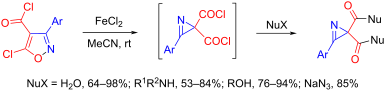
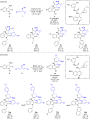
- included oxidation of aldehydes 4 with Oxone to acids 5 and the conversion of the latter into acid chlorides with thionyl chloride. The first reaction sequence was suitable for obtaining compounds 1a–c,e,f with substituents tolerant to radical reaction conditions. A significant advantage of the method is
- the conversion of the latter to the acid chlorides 1 with thionyl chloride proceeded with yields of 77–92%. This made it possible to synthesize the target isoxazoles 1b,d,g–j with fairly high yields. Having in hand a set of isoxazoles 1a–i containing aryl substituents at the 3-position of the




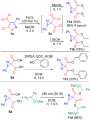

Direct trifluoroethylation of carbonyl sulfoxonium ylides using hypervalent iodine compounds
Beilstein J. Org. Chem. 2024, 20, 3182–3190, doi:10.3762/bjoc.20.263
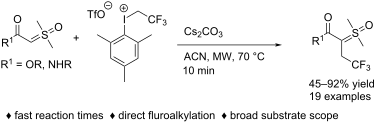
- scope and limitations of this novel transformation (Scheme 2). Initially, we investigated the effects of introducing various substituents around the ester group of the carbonyl sulfoxonium ylide. We discovered that the reaction worked very well for various alkyl ester derived substrates (3b–g). For


Hypervalent iodine-mediated intramolecular alkene halocyclisation
Beilstein J. Org. Chem. 2024, 20, 3113–3133, doi:10.3762/bjoc.20.258
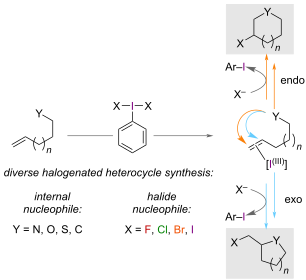
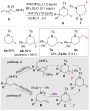
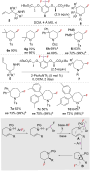
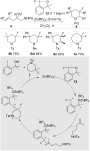
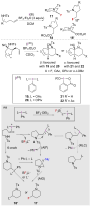
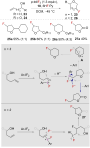
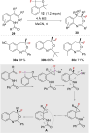
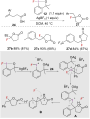
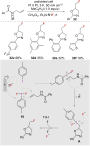
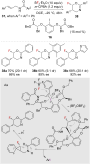
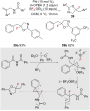
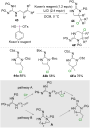
- fluoride and BF3·OEt2 as activator. A range of unsaturated amines 5 were cyclised to racemic β-fluorinated piperidines 6. Good yields were reported for all compounds except those with substituents present on the alkene. Homologation of the carbon chain from 5 to 6 carbons gave both 6- and 7-membered rings
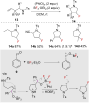
- , intramolecular aminofluorination of a range of unsaturated amines formed β-fluorinated piperidines 6 and 3-fluoroazepanes 7 in good yields. Again, yields only significantly fell with substrates containing substituents on the alkene. Depending on the length of the alkyl chain, both 6- and 7-membered rings were
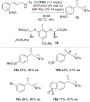
- . Aminoacetylation of the alkene competed with the aminofluorination to form 3-acetoxypiperidines 11. Other sources of fluoride were tested, with metal fluoride salts giving no or trace products. The authors reported that only 6-membered rings were formed, with a range of substituents on the β-carbon of the alkene





















Advances in the use of metal-free tetrapyrrolic macrocycles as catalysts
Beilstein J. Org. Chem. 2024, 20, 3085–3112, doi:10.3762/bjoc.20.257
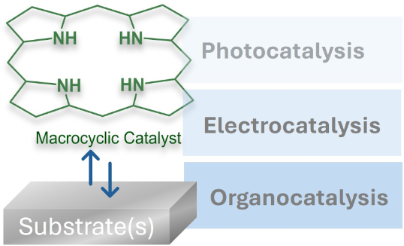
- , photocatalysts, and electrocatalysts are presented here. The effect of macrocyclic structural modifications such as their functionalization with different substituents, distortion from planarity, conformational flexibility and rigidity towards catalytic activity are presented, highlighting the potential of these
- other binding sites required for substrate binding and/or promotion of the catalytic activity. Past studies have shown that modifying the porphyrin core with urea functionalities and amino acid substituents leads to the formation of ureaporphyrins, which significantly enhance sugar binding in non-polar
- electron-withdrawing substituents at the meso- and/or β-positions and highly saddle-distorted geometry (27, 29–31) are inactive (Table 2). Mono-N-alkylation of the macrocycles resulted in a slight improvement of activity giving up to 50–62% conversion for 34 and 37, both of which are alkylated versions of


Synthesis of the 1,5-disubstituted tetrazole-methanesulfonylindole hybrid system via high-order multicomponent reaction
Beilstein J. Org. Chem. 2024, 20, 3077–3084, doi:10.3762/bjoc.20.256
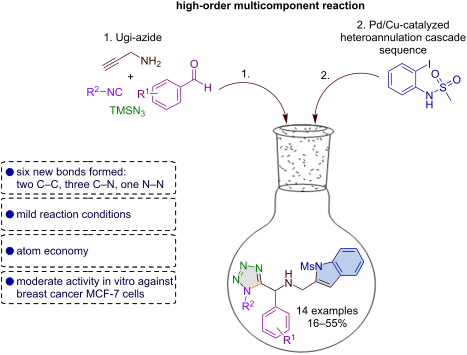
- importance of the tert-butyl and cyclohexyl substituents in the imidazole can be deduced. According to the IC50 results presented in Figure 1, it can be seen that all cyclohexyl-substituted derivatives tested show activity. In contrast, those carrying the tert-butyl group are inactive, except for 18i and 18a
- substituent on the phenyl group, it is interesting to note that the most active compound of the whole series is the fluorinated derivative 18d, followed in order of inhibition by 18j, which has no substituents. The position of this halogen is also relevant since the activity decreases when it is in the 4



Enantioselective regiospecific addition of propargyltrichlorosilane to aldehydes catalyzed by biisoquinoline N,N’-dioxide
Beilstein J. Org. Chem. 2024, 20, 3069–3076, doi:10.3762/bjoc.20.255
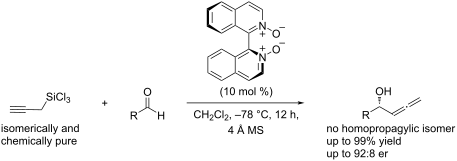
- ][15][16][17][18][19], the separation of which is by no means trivial [20] (Scheme 1). Nonetheless, substituents at the carbon atom indicated by γ (R2) of these reagents have been shown to bias the metallotropic rearrangement and/or the kinetic reactivity of the competing regioisomeric intermediates
- toward electrophiles [14][15][16][17][18][19]. Consequently, all reported asymmetric catalytic aldehyde allenylation methods are currently limited to metal/metalloid reagents bearing R2 substituents [21][22][23][24][25][26][27][28][29][30][31][32][33][34], except for the methods with
- , the enantioselectivity consistently decreased as the chiral pocket became narrower while the reactivity remained the same. As such, we reduced the size of the substituents that craft the chiral pocket (7) and found that unsubstituted catalyst 8 was the most enantioselective. This observed catalyst


Extension of the π-system of monoaryl-substituted norbornadienes with acetylene bridges: influence on the photochemical conversion and storage of light energy
Beilstein J. Org. Chem. 2024, 20, 3061–3068, doi:10.3762/bjoc.20.254
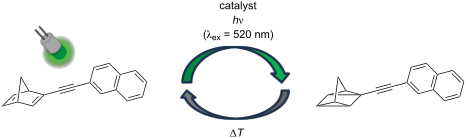
- generations of modified norbornadiene derivatives with diverse variations of donor and acceptor substituents [25][26][27][28][29][30][31][32]. However, such a modification often leads to higher molar masses and thus to lower energy densities [7][25][33]. Consequently, further fine tuning of the substituents
- quadricyclanes from 3.0 h to 7.8 h, which are essentially in the same range as the ones of analogues with an acceptor-substituent in the 3-position of the norbornadiene [34]. Notably, the quadricyclane derivatives with sterically more demanding substituents in the 2-position of the norbornadiene unit, such as 1e


Cyclodextrin-based rotaxanes for polymer materials: challenge on simultaneous realization of inexpensive production and defined structures
Beilstein J. Org. Chem. 2024, 20, 3026–3049, doi:10.3762/bjoc.20.252
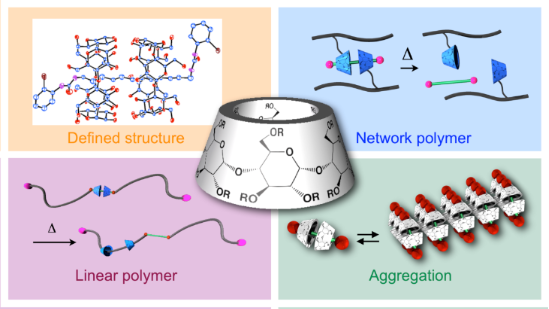
- synthesize the rotaxane. For example, Anderson and co-workers reported the synthesis of γ-CD–based [2]rotaxane via the Suzuki reaction using a dicarboxylic acid end-capping reagent; they reported a 17% yield (Scheme 1C) [39]. To perform an end-capping reaction in water, multiple hydrophilic substituents
- , most of their rotaxane structures required a complicated multistep synthesis as well as the introduction of polar substituents, such as carboxylic acid or sulfonic acid groups, to generate a water-soluble system, and these prevent the direct application of those frameworks to polymer systems. As the
- ]rotaxane. In this case, the energy diagram of the deslipping reaction differs from those of the ones bearing a [2]rotaxane intermediate (Figure 9E). As revealed in this study, the CD-based size-complementary rotaxane exhibiting a simple framework (no ionic substituents nor deoxynucleotide) was obtained






Tunable full-color dual-state (solution and solid) emission of push–pull molecules containing the 1-pyrindane moiety
Beilstein J. Org. Chem. 2024, 20, 3016–3025, doi:10.3762/bjoc.20.251
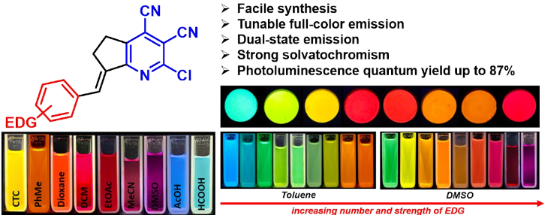
- pyridine as an acceptor. The introduction of additional substituents to stilbazole makes it possible to change the optical properties of this molecular framework within a wide range [16][17][18][19]. This approach has found many applications in the synthesis of compounds that are used in various optical
- and acceptor groups arranged in a specific sequence, such as in D–π–A chromophores. This creates the conditions for efficient intramolecular charge transfer (ICT), which plays a key role in the DSE phenomenon. Also, additional substituents can affect the geometry and conformation of the molecule
- containing various numbers of substituents at the donor site, which differed in their electron-donating strength, was obtained. It was found that the reaction of pyridine 2 with aromatic aldehydes occurred with complete stereoselectivity – only the E-isomer was obtained as the reaction product. The


Advances in radical peroxidation with hydroperoxides
Beilstein J. Org. Chem. 2024, 20, 2959–3006, doi:10.3762/bjoc.20.249
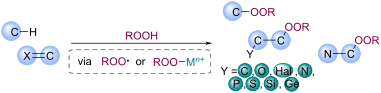
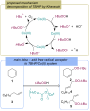
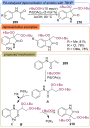
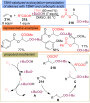
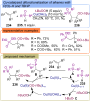
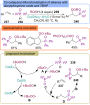
- carried out as part of the investigation of the enzymatic function of cytochrome P-450 with low valent ruthenium complex catalysts. Various phenols 86 bearing para-substituents were transformed into the corresponding tert-butyldioxy dienones 87 smoothly using RuCl2(PPh3)3 as the catalyst (Scheme 31) [83










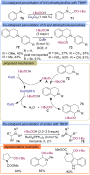
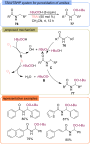
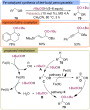


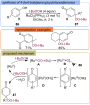






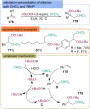

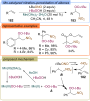
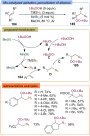


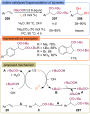








Synthesis of fluorinated acid-functionalized, electron-rich nickel porphyrins
Beilstein J. Org. Chem. 2024, 20, 2954–2958, doi:10.3762/bjoc.20.248
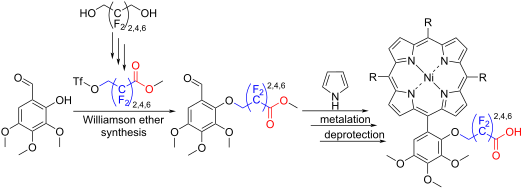
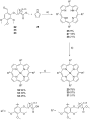
- . After metalation with Ni(acac)2 and hydrolysis electron-rich porphyrins were obtained, that are equipped with covalently attached long chain acid substituents. The target compounds have potential applications in catalysis, sensing, and materials science. The fluorinated aliphatic carboxylic acids (TfO


Structure and thermal stability of phosphorus-iodonium ylids
Beilstein J. Org. Chem. 2024, 20, 2931–2939, doi:10.3762/bjoc.20.245
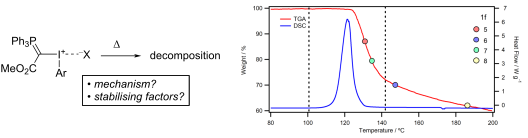
- bipyramidal (T-shaped) with the least electronegative group and the two nonbonding electron pairs occupying the equatorial positions, and the most electronegative substituents forming a hypervalent 3-centre-4-electron (3c-4e) bond in the axial position (Figure 1A) [17][18]. The LUMO of this bond is
- concentrated on iodine [19], making it highly electrophilic, while a nonbonding pair of electrons is mainly centred on the axial substituents, causing a build-up of electron density on these positions (Figure 1A) [1][20]. Stabilisation of this charge on the axial substituents by strong electron-withdrawing
- ligand occupies the position trans to the ylid substituent, with the aryl substituent in the equatorial position. Substituents on hypervalent iodine compounds can interconvert via Barry pseudorotation [31] and, interestingly, the crystal structure for compound 1i contains two isomers in its unit cell


Recent advances in transition-metal-free arylation reactions involving hypervalent iodine salts
Beilstein J. Org. Chem. 2024, 20, 2891–2920, doi:10.3762/bjoc.20.243

- in unsymmetrical diaryliodonium salts the transfer of the aryl group with the relatively lower electron density and less steric hindrance was favoured. A range of electron-rich and electron-deficient substituents positioned para to the aryl ring in the diaryliodonium salts were found to be well
- . Notably, the efficiency of the cross-coupling reaction was observed to increase with the transfer of electron-poor aryl groups from the hypervalent iodine salt. Thus, electron-withdrawing substituents such as trifluoromethyl, m-chloro, and fluorine on the aryl group promoted efficient coupling. Moreover
- various substituents on the aromatic ring. Additionally, a variety of substituted esters, ketones, and nitriles were found to be compatible with the reaction. Additionally, the same approach was used for the aryl sulfonylation. Trisubstituted allylic sulfones 35 were synthesized by reacting MBH acetate 33