


Search results
Search for "substituents" in Full Text gives 1786 result(s) in Beilstein Journal of Organic Chemistry. Showing first 200.
The charge transport properties of dicyanomethylene-functionalised violanthrone derivatives
Beilstein J. Org. Chem. 2024, 20, 2921–2930, doi:10.3762/bjoc.20.244
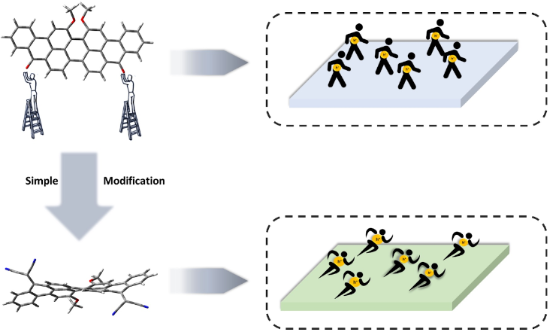
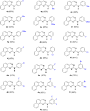
- dicyanomethylene-functionalised violanthrone derivatives (3a, 3b and 3c) featuring different alkyl substituents. It is found that the introduction of the electron-deficient dicyanomethylene groups significantly improves the optical absorption compared to their previously reported precursors 2a–c. All compounds are
- modification of dihydroxyviolanthrone where the effect of three alkoxy substituents on the 16,17-bis(2-ethylhexyloxy)anthra[9,1,2-cde]benzo[rst]pentaphene-5,10-dione, on aggregation and photovoltaic properties was studied [30]. It was found that derivatives with the shortest linear alkyl chain (n-hexyl
- values of absorption (λonset), and little difference was found with values of 1.47 eV for 3b and 1.46 eV for 3a and 3c. It is noted that the optical properties did not show a significant change upon altering the alkyl chains which indicates that different alkyl substituents have a minimal effect on the


Synthesis of pyrrole-fused dibenzoxazepine/dibenzothiazepine/triazolobenzodiazepine derivatives via isocyanide-based multicomponent reactions
Beilstein J. Org. Chem. 2024, 20, 2870–2882, doi:10.3762/bjoc.20.241
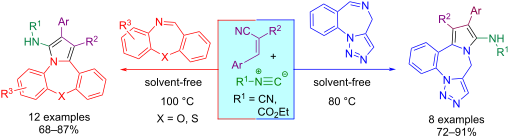
- reaction conditions giving the products 4 in yields ranging from 68% to 87% (Scheme 3, 4a–l). In this reaction, the presence of electron-withdrawing substituents in the aromatic rings of the gem-diactivated olefins led to slightly better yields of the products 4 when compared to the substrates having
- electron-donating substituents (Scheme 3). The cause of this phenomenon is probably related to the electron-widthdawing effect of these substitution groups in olefin, which affects the nucleophilic attack of the isocyanides. When a carboxylate substituent was present instead of the carbonitrile in the gem
- increase and the electron-donating substituents led to a decrease in the reaction efficiency (Scheme 3, 4a–k). In addition, benzothiazepine was used in this protocol and the corresponding pyrrole-fused benzothiazepine was obtained with a yield of 73% (Scheme 3, 4l). Also, various isocyanides were suitable





N-Glycosides of indigo, indirubin, and isoindigo: blue, red, and yellow sugars and their cancerostatic activity
Beilstein J. Org. Chem. 2024, 20, 2840–2869, doi:10.3762/bjoc.20.240
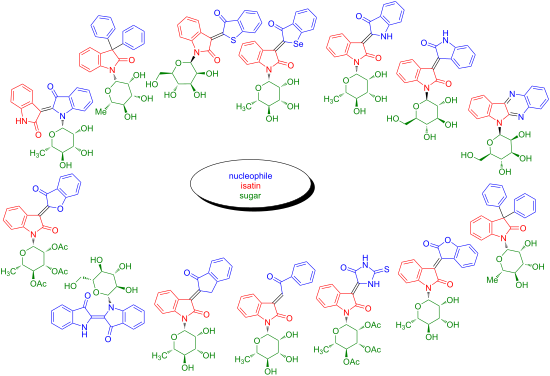
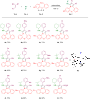
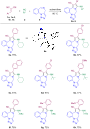
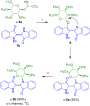
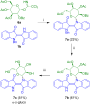
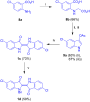
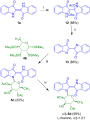
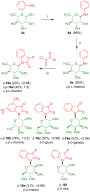
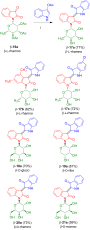
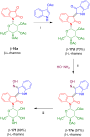
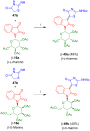
- , both electron-donating and -withdrawing substituents were tolerated. In contrast, isatin-N-glycosides containing electron-withdrawing groups and, thus, the corresponding indirubin-N-glycosides could not be successfully prepared at this point (vide infra). In general, anomerically pure isatin-N











Synthesis and antimycotic activity of new derivatives of imidazo[1,2-a]pyrimidines
Beilstein J. Org. Chem. 2024, 20, 2806–2817, doi:10.3762/bjoc.20.236
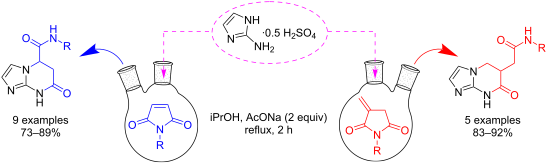
- [1,2-a]pyrimidines obtained by various modifications of this method and a number of others described in detail in the review by Goel et al. [4], literature data on the synthesis of tetrahydroimidazo[1,2-a]pyrimidines without substituents in the second and third positions remain limited. In this context
- ). Conclusion Thus, we have proposed an efficient way to construct tetrahydroimidazo[1,2-a]pyrimidines without substituents at the 4 and 5-positions of the imidazole fragment by the reaction of 2-aminoimidazole with N-arylitaconimides and N-substituted maleimides. With the aid of DFT calculations, the most


Mechanochemical difluoromethylations of ketones
Beilstein J. Org. Chem. 2024, 20, 2799–2805, doi:10.3762/bjoc.20.235
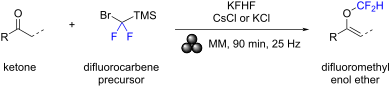
- was obtained. Furthermore, most isolated products had only purities of ca. 90% still containing inseparable impurities (as revealed by NMR spectroscopy). In the first series of substrates, acetophenone derivatives with various para-substituents were applied. Similar to methyl tolyl ketone (1a), which


C–C Coupling in sterically demanding porphyrin environments
Beilstein J. Org. Chem. 2024, 20, 2784–2798, doi:10.3762/bjoc.20.234
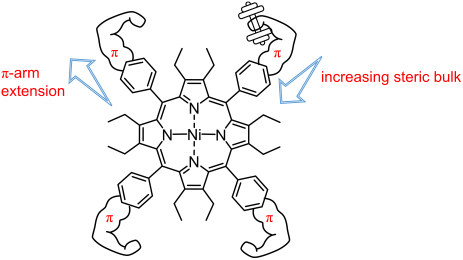
- porphyrin architectures, which could be used in supramolecular assemblies, catalysis, or sensing. In this work a library of arm-extended dodecasubstituted porphyrins was synthesized through the optimization of the classic Suzuki–Miyaura coupling of peripheral haloaryl substituents with a range of boronic
- the porphyrin ring deforming from the mean porphyrin plane either by steric repulsion in the core of the macrocycle or by bulky substituents at the porphyrin periphery [3]. This affords four principle distortion modes, saddle, dome, ruffle or wave [8], which can be quantified by the normal-coordinate
- structural decomposition (NSD) method developed by Shelnutt and co-workers [9] and further implemented and visualized by us [8][10]. Of the four main quantifiable distortion modes, saddle-shaped porphyrins can be afforded by peri-interactions between β-substituents and the meso-substituents [3][11], or


Copper-catalyzed yne-allylic substitutions: concept and recent developments
Beilstein J. Org. Chem. 2024, 20, 2739–2775, doi:10.3762/bjoc.20.232
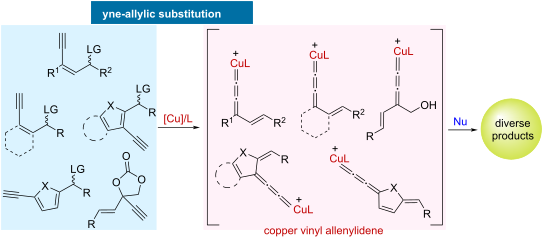
- related to yne-allylic substitutions. Review Copper-catalyzed yne-allylic substitutions affording 1,3- and 1,4-enynes In 2022, Fang et al. [62] realized the copper-catalyzed yne-allylic substitution involving stabilized “soft” nucleophiles for the first time. Indoles and pyrroles with various substituents
- :1 (Scheme 3, 3e). Carbonates with aryl or styryl residue can undergo the reaction smoothly (Scheme 3, 3f–k), but alkyl-substituted substrates showed low yields (Scheme 3, 3l and 3m). Moreover, secondary amines with various substituents, acyclic amines, primary amines, or even the amine moieties in
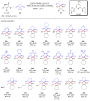
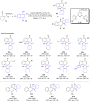
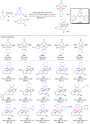
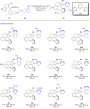
- -, stereo-, and enantioselectivities, resulting in a series of chiral yne-allylic sulfone compounds with different substituents (Scheme 13, 14a–q). Due to the high steric hindrance of the γ-site, nucleophilic substitutions preferentially occur at the α-site. Through subsequent control experiments, they













Synthesis of benzo[f]quinazoline-1,3(2H,4H)-diones
Beilstein J. Org. Chem. 2024, 20, 2708–2719, doi:10.3762/bjoc.20.228
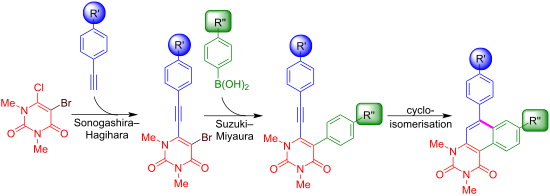
- known which allow for an individual introduction of substituents at both positions [37][38][51][52][53][54][55][56][57][58][59][60][61]. In our previous work, we developed a new method which enables both positions to be independently functionalised by Sonogashira- and Suzuki–Miyaura cross-coupling
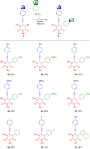
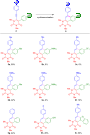
- are known compounds, the synthesis of derivatives 4g–i has not been previously reported (Scheme 2). Yields were generally lower in case of the presence of electron-withdrawing substituents. Subsequently, the cyclisation of 4a–i to 5a–i by acid-mediated cycloisomerisation was studied. In our first
- -group-containing compounds 5d and 5f are bathochromically shifted by ≈80 nm and ≈100 nm, respectively. The other compounds show similar emission maxima at ≈405 nm, hinting to a limited impact of the aryl substituents and their functional groups on the emission properties for these compounds. Moreover




Synthesis of fluoroalkenes and fluoroenynes via cross-coupling reactions using novel multihalogenated vinyl ethers
Beilstein J. Org. Chem. 2024, 20, 2691–2703, doi:10.3762/bjoc.20.226

- -chloro-1,1,1-trifluoroethane (halothane) in good yields (Scheme 1D) [42]. Compound 1 has a unique structure possessing three types of halogen atoms, namely bromine, chlorine, and fluorine, and it would be expected to afford multisubstituted fluoroalkenes by installing various substituents to bromine or
- cross-coupling between 1e, derived from m-aminophenol, and 4a proceeded in only 15% yield (Table 3, entries 17 and 18). We performed Sonogashira cross-couplings between 1 and a variety of alkynes 5 (Table 4). Arylacetylenes, which have electron-donating substituents on the aromatic ring (5b–f), and 2
- -naphthylacetylene (5g) provided the corresponding enynes (3b–g) in 43–92% yields (Table 4, entries 1–6). On the contrary, electron-withdrawing substituents such as chloro, trifluoromethyl and nitro groups resulted in low cross-coupling yields (3h–j) (Table 4, entries 7–9). p-Acetyl or p-formylphenylacetylene (5k or


Photoluminescence color-tuning with polymer-dispersed fluorescent films containing two fluorinated diphenylacetylene-type fluorophores
Beilstein J. Org. Chem. 2024, 20, 2682–2690, doi:10.3762/bjoc.20.225
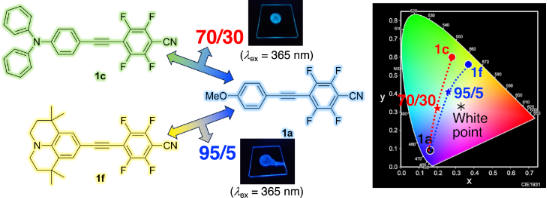
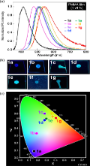
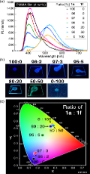
- structure (Figure 1a) [14][15][16]. Our extensive efforts have revealed that introducing electron-donating alkoxy and electron-withdrawing cyano groups at both ends of the diphenylacetylene scaffold slows the internal conversion to the πσ* excited state. Further incorporating four fluoro substituents in the



Computational design for enantioselective CO2 capture: asymmetric frustrated Lewis pairs in epoxide transformations
Beilstein J. Org. Chem. 2024, 20, 2668–2681, doi:10.3762/bjoc.20.224
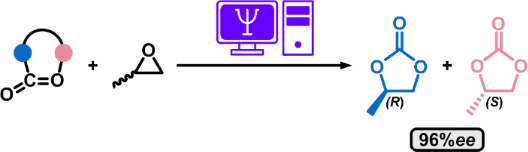
- an in silico approach to design asymmetric frustrated Lewis pairs (FLPs) aimed at controlling reaction stereochemistry. Four FLP scaffolds, incorporating diverse Lewis acids (LA), Lewis bases (LB), and substituents, were assessed via volcano plot analysis to identify the most promising catalysts. By
- strategically modifying LB substituents to induce asymmetry, a stereoselective catalytic scaffold was developed, favouring one enantiomer from both epoxide enantiomers. This work advances the in silico design of FLPs, highlighting their potential as asymmetric CCU catalysts with implications for optimising
- colleagues [1]. These compounds, which feature a Lewis acid (LA) and a Lewis base (LB), whose interaction is hindered by bulky substituents or chain strain, have garnered significant attention. Initially explored for their ability to trap small molecules [2][3], such as H2 [4], CO2 [5][6][7], N2O [8][9], and


Transition-metal-free decarbonylation–oxidation of 3-arylbenzofuran-2(3H)-ones: access to 2-hydroxybenzophenones
Beilstein J. Org. Chem. 2024, 20, 2655–2667, doi:10.3762/bjoc.20.223
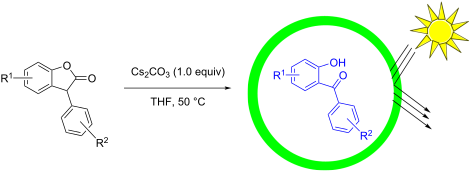
- -absorbing as well as photo-antioxidant properties via an intramolecular hydrogen transfer [5]. The structure–activity relationship between the substituents of 2-hydroxybenzophenones and their UV-absorption properties has been reported previously [6]. It was concluded that the ability to absorb UV light and
- of 3-arylbenzofuran-2(3H)-ones with both electron-donating as well as electron-withdrawing substituents reacted smoothly to afford the corresponding benzophenones 4aa–ka in good to high yields. Substitutions at the 5, 6, or 7 positions of the benzofuranones did not hamper the reaction, although a




The scent gland composition of the Mangshan pit viper, Protobothrops mangshanensis
Beilstein J. Org. Chem. 2024, 20, 2644–2654, doi:10.3762/bjoc.20.222
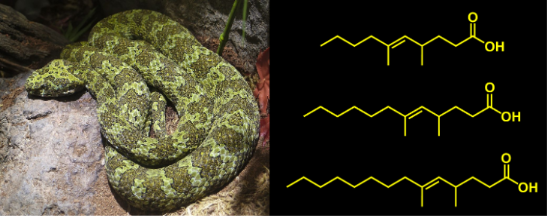
- substituents, which are usually separated by an odd number of carbons and located at even-numbered carbons due to their biosynthetic origin from methylmalonate units [26]. From these analytical data, we proposed that compounds A–F were 4,6-dimethyl-5-enoic acids, ranging from C9 to C14 in chain length (Figure


Synthesis and cytotoxicity studies of novel N-arylbenzo[h]quinazolin-2-amines
Beilstein J. Org. Chem. 2024, 20, 2592–2598, doi:10.3762/bjoc.20.218
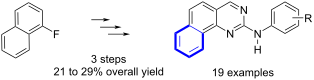
- compounds with two substituents or with three fluorine atoms. All these compounds have been obtained in fair yields (51–70%) and they have spectral and analytical data in agreement with the indicated structures, as given in the experimental section and Supporting Information File 1. Cytotoxicity studies


Base-promoted cascade recyclization of allomaltol derivatives containing an amide fragment into substituted 3-(1-hydroxyethylidene)tetronic acids
Beilstein J. Org. Chem. 2024, 20, 2585–2591, doi:10.3762/bjoc.20.217
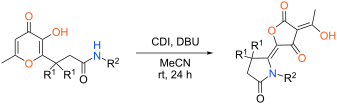
- aliphatic substituents at the ring nitrogen atom. Besides that, we managed to perform the investigated reaction using the corresponding aniline derivative 4r. It should be mentioned that in this case the considered recyclization proceeded in lower yield comparing with other amides and was accompanied by


Anion-dependent ion-pairing assemblies of triazatriangulenium cation that interferes with stacking structures
Beilstein J. Org. Chem. 2024, 20, 2567–2576, doi:10.3762/bjoc.20.215
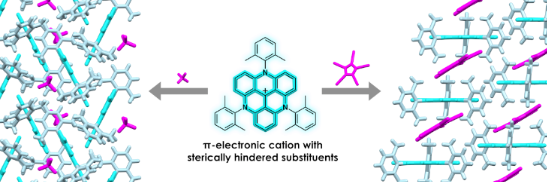
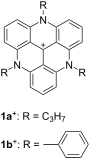
- modifications of the N-aryl units as sterically hindered substituents significantly affect the assembling behaviors, their solid-state packing structures are largely unknown. In this study, ion pairs (salts) of an N-aryl-substituted TATA+ as a bulky cation with various counteranions were prepared for
- assemblies without stacking of the TATA+ planes owing to the steric hindrance of the bulky N-substituents, indicating that the arrangement of the TATA+ cation was largely dependent on the coexisting counteranions. In particular, the TATA+ cation in the BF4− and PF6− ion pairs formed herringbone structures by



Visible-light-mediated flow protocol for Achmatowicz rearrangement
Beilstein J. Org. Chem. 2024, 20, 2493–2499, doi:10.3762/bjoc.20.213
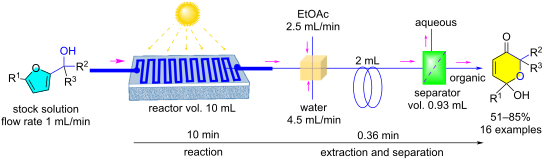
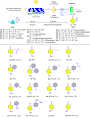
- -flow platform to provide the corresponding dihydropyranone products (3a–p) with moderate to good yields (51–85%), Figure 1. We investigated several furanol derivatives by altering the substituents at two critical positions: the hydroxymethyl carbon and the 5-position of the furan ring, that were
- essential for the Achmatowicz reaction. Figure 1 demonstrates that even when there was no substituent at the hydroxymethyl position (in 2b), the reaction proceeded effectively, leading to the formation of 3b with an 80% yield inferring that the absence of substituents at the hydroxymethyl group does not
- prevent the formation of the desired product. At the same position, introducing more substituents such as n-butyl (2c), dimethyl (2d), cyclohexyl (2e) and sterically crowded diphenyl (2f) groups also led to the corresponding products (3c–f) with average to good yields that were comparable to that obtained


Photoredox-catalyzed intramolecular nucleophilic amidation of alkenes with β-lactams
Beilstein J. Org. Chem. 2024, 20, 2461–2468, doi:10.3762/bjoc.20.210
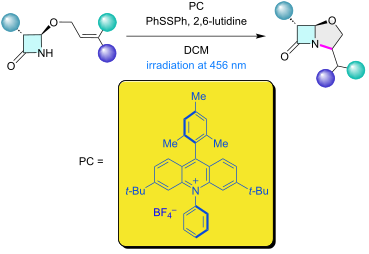
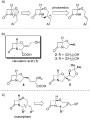
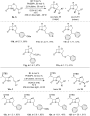
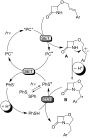
- lactams. Notably, all reported structures have alkyl or aryl substituents in position 3 of the clavam ring. Conversely, clavams substituted with alkyl chains at the 2-position, to the best of our knowledge, have not been previously reported and are absent from common organic compound databases. To explore




Synthesis and conformational analysis of pyran inter-halide analogues of ᴅ-talose
Beilstein J. Org. Chem. 2024, 20, 2442–2454, doi:10.3762/bjoc.20.208
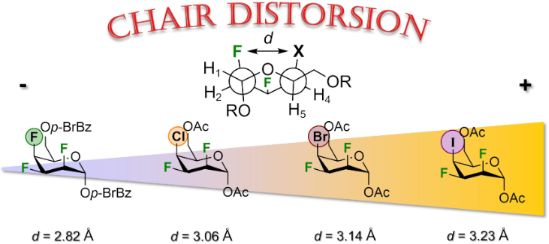
- Table 4. The Newman projections of the halogenated analogues show deviations from parallel alignment for the C2–F and C4–X substituents of 12.08° for 17, 17.08° for 13, 18.18° for 14, and 18.59° for 15 (talopyranose, 18: 5.92°). This deviation is responsible for the distance between F2 and the halogen


Phenylseleno trifluoromethoxylation of alkenes
Beilstein J. Org. Chem. 2024, 20, 2434–2441, doi:10.3762/bjoc.20.207
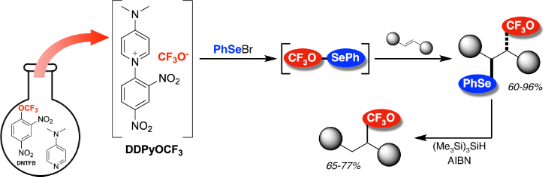
- were usually obtained when the substituents at the double bond differed significantly. When the substituent hindrance was less pronounced, the ratio was less significant (2f, 2j). Interestingly, a reverse regioselectivity was observed depending on the starting alkenes. For the terminal alkenes, the



Facile preparation of fluorine-containing 2,3-epoxypropanoates and their epoxy ring-opening reactions with various nucleophiles
Beilstein J. Org. Chem. 2024, 20, 2421–2433, doi:10.3762/bjoc.20.206
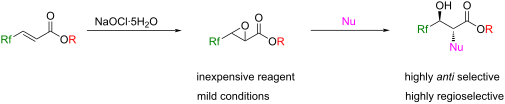
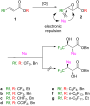
- , University of Hyogo, 3-2-1 Koto, Kamigori-cho, Ako-gun, Hyogo 678-1297, Japan 10.3762/bjoc.20.206 Abstract We describe herein a facile method to access 2,3-epoxyesters with fluorine-containing substituents at their 3-position starting from the corresponding enoates by utilization of the low-costed and easy
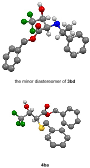
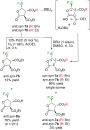
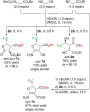
- ) Grignard-based cuprates. These processes usually yielded the addition products along with the epoxy ring opening at the 2 position via the SN2 mechanism, affording 3-Rf-3-hydroxyesters with the incorporation of a variety of substituents at the 2-position in a highly anti-selective fashion. We believe that





Evaluating the halogen bonding strength of a iodoloisoxazolium(III) salt
Beilstein J. Org. Chem. 2024, 20, 2401–2407, doi:10.3762/bjoc.20.204
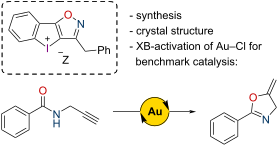
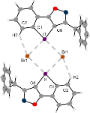
- that six-membered core structures are also weaker XB donors (iodininium 3OTf) than iodolium 1OTf [13]. Furthermore, the importance of substituents in the core and on the outer rings was demonstrated (XB donors 2OTf and 4OTf). Nachtsheim reported the synthesis of N-heterocyclic substituted monocationic




Synthesis, electrochemical properties, and antioxidant activity of sterically hindered catechols with 1,3,4-oxadiazole, 1,2,4-triazole, thiazole or pyridine fragments
Beilstein J. Org. Chem. 2024, 20, 2378–2391, doi:10.3762/bjoc.20.202
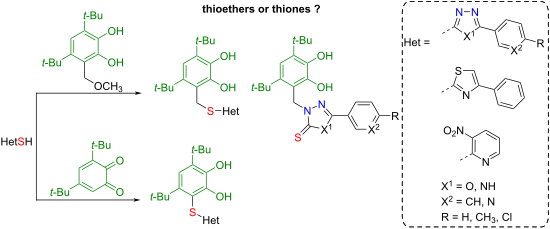
- established for these compounds. The electrochemical behavior of the studied compounds is influenced by several factors: the nature of the heterocycle and its substituents, the presence of a sulfur atom in the catechol ring, or a thione group in the heterocyclic core. The radical scavenging activity and
- neuroprotective, antihypoxic effects, act as antiparkinsonian agents [3][4][5], exhibit antitumor and antibacterial activity [6][7][8], possess antioxidant properties for regulating free radical processes [9][10][11]. The functionalization of polyphenolic compounds by introducing various substituents or
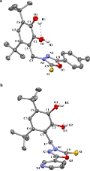
- average lengths of the С–С bonds of six-membered carbon cycle С(1–6) (1.396 ± 0.013 Å in 5, 1.397 ± 0.009 Å in 6, 1.396 ± 0.012 Å in 8) are typical for catechols [50][55][56]. The presence of complex polyfunctional substituents affects their spatial location regarding a catechol fragment. In most cases




Asymmetric organocatalytic synthesis of chiral homoallylic amines
Beilstein J. Org. Chem. 2024, 20, 2349–2377, doi:10.3762/bjoc.20.201
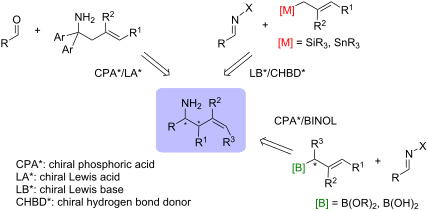
- slightly more efficient with electron-poor substrates. On the other hand, high enantioselectivity was maintained over the aldehyde scope regardless of steric size and position of the substituents. A few years later, Wulff and co-workers [42] further elaborated the aza-Cope rearrangement methodology by








Tandem diazotization/cyclization approach for the synthesis of a fused 1,2,3-triazinone-furazan/furoxan heterocyclic system
Beilstein J. Org. Chem. 2024, 20, 2342–2348, doi:10.3762/bjoc.20.200
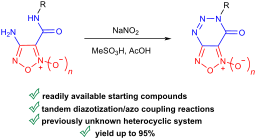
- derivatives bearing both aromatic and aliphatic substituents. The NO-donor ability of the synthesized furoxano[3,4-d][1,2,3]triazin-7(6H)-ones was additionally evaluated. The elaborated method provides access to novel nitrogen heterocyclic compounds with potential applications as drug candidates or
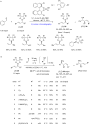
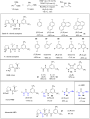
- ][1,2,3]triazin-7(6H)-one 2-oxides 1 (Scheme 2). Note, that triazinones 1a–d bearing aryl substituents at position 6 were obtained in high yields, however, in the case of the 2-methoxyphenyl derivative the yield of target triazinone 1e was somewhat lower arguably due to steric hindrance. To our delight
- , furoxancarboxamides 2f–h bearing aliphatic substituents or amino acid residues also smoothly underwent the studied tandem protocol and the corresponding biheterocyclic compounds 1f–h were obtained in yields of 45–77%. After having developed a general method for the synthesis of target furoxanotriazinones 1a–h, we





