Search results
Search for "optimization" in Full Text gives 1221 result(s) in Beilstein Journal of Organic Chemistry. Showing first 200.
Facile preparation of fluorine-containing 2,3-epoxypropanoates and their epoxy ring-opening reactions with various nucleophiles
Beilstein J. Org. Chem. 2024, 20, 2421–2433, doi:10.3762/bjoc.20.206
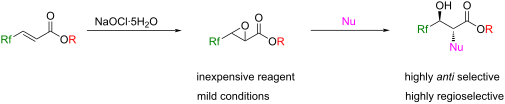
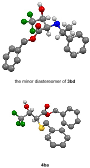
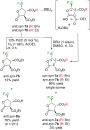
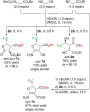
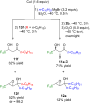
- 2 were recognized as versatile building blocks for the construction of 2-amino-3-hydroxypropanoates with 2,3-anti stereochemistry, if appropriate amines work nicely in a nucleophilic manner [44]. After the brief optimization of the conditions for the reaction of 2b and p-anisidine, good yields with
- successful employment of amines as nucleophiles for the epoxy ring opening in a highly stereoselective fashion, we next turned our attention to thiols. Optimization of the reaction conditions based on the ones for amines clarified the tendency that the longer reaction time and the higher temperature
- of the product (Table 4, entry 15). During this optimization process, the obtained product was uncovered not to be a single component but a mixture of two compounds, anti,syn-7a and anti,syn-7b, the latter of which seemed to be produced from the former by the attack of the ethoxide ion released

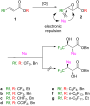




Homogeneous continuous flow nitration of O-methylisouronium sulfate and its optimization by kinetic modeling
Beilstein J. Org. Chem. 2024, 20, 2408–2420, doi:10.3762/bjoc.20.205
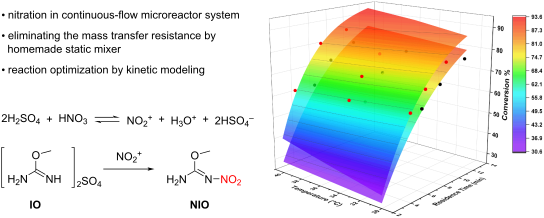
- 94%, initial reactant concentration of 0.5 mol/L, reaction temperature of 40 °C, molar ratio of reactants at 4.4:1, and a residence time of 12.36 minutes. Keywords: continuous flow; kinetic modeling; nitration; reaction optimization; static mixer; Introduction The demand for high-quality
- continuous flow nitrification system, leading to better elimination of the effects of mass and heat transfer [11]. Kinetic modeling is a classical approach to chemical reaction optimization, where the effects of various reaction parameters on the results are effectively quantified by mathematical formulas
- understanding of the nitrification mechanism and optimization of the reaction. Luo et al. have carried out extensive research on this topic and obtained accurate kinetic data for the nitration of chlorobenzene [17], o-nitrotoluene [18], and p-nitrotoluene [19] by constructing a homogeneous continuous flow


![[Graphic 1]](/bjoc/content/inline/1860-5397-20-205-i17.svg?max-width=637&scale=1.18182)


Evaluating the halogen bonding strength of a iodoloisoxazolium(III) salt
Beilstein J. Org. Chem. 2024, 20, 2401–2407, doi:10.3762/bjoc.20.204
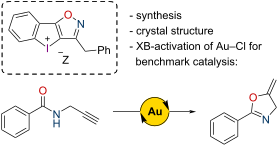
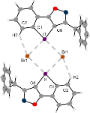
- abstractions, e.g. to activate gold chloride complexes [18][19]. Therefore, besides the development of new bidentate catalyst motifs, we were still interested in the optimization of these “simpler” derivatives. Thus, we designed a new catalyst motif [20] featuring an isoxazole ring, XB donor 7Z, and compared




Tandem diazotization/cyclization approach for the synthesis of a fused 1,2,3-triazinone-furazan/furoxan heterocyclic system
Beilstein J. Org. Chem. 2024, 20, 2342–2348, doi:10.3762/bjoc.20.200
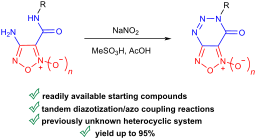
- ). NO release data. Tandem diazotization/azo coupling reactions of (1,2,5-oxadiazolyl)carboxamides containing an amino functionality. Synthesis of target furoxanotriazinones 1a–h. The synthesis of furazanotriazinones 7a–h. Control experiment with Na15NO2. Optimization of the diazotization of amide 2aa


Improved deconvolution of natural products’ protein targets using diagnostic ions from chemical proteomics linkers
Beilstein J. Org. Chem. 2024, 20, 2323–2341, doi:10.3762/bjoc.20.199
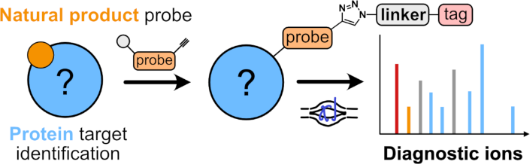
- might be to obtain the pathologically relevant protein targets or off-targets, this may further lead to optimization of the NP scaffold to improve the desired activity. In this review, we focus on the most frequently used chemical proteomic strategies that necessitate a covalent bond between a target
- dozens of kilodaltons. The main advantage of the gel shift assay is to obtain quantitative information of the protein’s probe modification extent, considering high efficiency of the click reaction. Given the bulkiness of the PEG–azide linker, the bioorthogonal reaction needs some optimization, including
- modified peptides can be used for side identification given the relatively high abundance and ionization efficiency due to remaining lysine. The use of the AzTB linker is practical for swift optimization of enrichment workflows, because after the probe–protein conjugates enrichment on the streptavidin




Hydrogen-bond activation enables aziridination of unactivated olefins with simple iminoiodinanes
Beilstein J. Org. Chem. 2024, 20, 2305–2312, doi:10.3762/bjoc.20.197
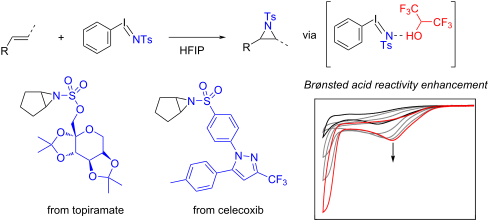
- give rise to epoxidation products. Epoxides are not on-path to the observed aziridines. f) Proposed reaction mechanism. Optimization of HFIP-promoted aziridination of cyclohexene (1a). Conditions: 0.20 mmol 1a, 0.40 mmol PhINTs 2a, 1.0 mL HFIP, N2 atmosphere, 20 °C, 16 h. Yield was determined via 1H
- NMR using triethyl 1,3,5-benzenetricarboxylate as internal standard. Supporting Information Supporting Information File 92: Experimental procedures and characterization data, original spectra of new compounds, and optimization details. Funding The authors acknowledge the Welch Foundation (A-1907


Catalysing (organo-)catalysis: Trends in the application of machine learning to enantioselective organocatalysis
Beilstein J. Org. Chem. 2024, 20, 2280–2304, doi:10.3762/bjoc.20.196
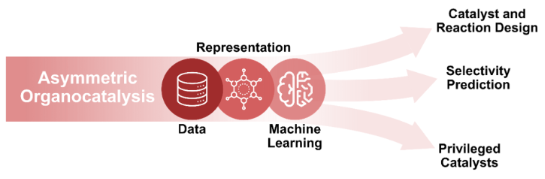
- optimization algorithm allowed them to discover multiple trade-off optima, enabling a scientist to select the ideal catalyst based on the specific requirements of catalytic activity and selectivity, while still accounting for catalyst generality through design of the objectives. Noticeably, data analysis




Deuterated reagents in multicomponent reactions to afford deuterium-labeled products
Beilstein J. Org. Chem. 2024, 20, 2270–2279, doi:10.3762/bjoc.20.195
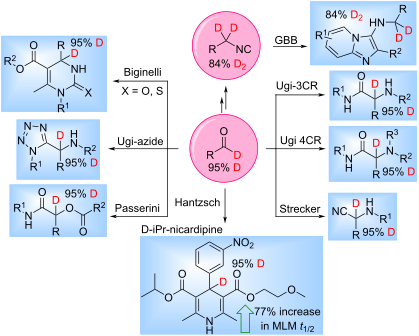
- . Optimization of deuterated Leuckart–Wallach reactiona. Microsomal stability package of deuterated and non-deuterated dihydropyridines. Supporting Information Supporting Information File 86: Experimental and analytical data and copies of NMR spectra. Acknowledgements We thank the UA mass spectrometry and NMR


gem-Difluorination of carbon–carbon triple bonds using Brønsted acid/Bu4NBF4 or electrogenerated acid
Beilstein J. Org. Chem. 2024, 20, 2261–2269, doi:10.3762/bjoc.20.194
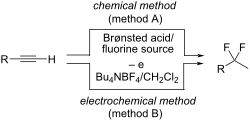
- or its equivalent is indirectly prepared and utilized in only solution phase. Results and Discussion First, we have chosen hex-5-yn-1-ylbenzene (1a) as the model substrate in the reaction optimization (Table 1, method A). The reaction was carried out as follows: Hex-5-yn-1-ylbenzene (1a, 0.5 mmol
- ) was reacted with the Brønsted acid (X equiv) and the fluorine source (Y equiv) in the solvent (4 mL) at temperature of T (°C) for Z hours. The chemical yield of the desired product, (5,5-difluorohexyl)benzene (2a), was evaluated for reaction optimization by using the 19F nuclear magnetic resonance
- for 2a. Plausible reaction mechanism. Optimization of the gem-difluorination of hex-5-yn-1-ylbenzene (1a) to form difluorinated compound 2a (method A). Scope and limitations. Supporting Information Supporting Information File 84: Experimental procedure, characterization data of compounds and copies



Synthesis and reactivity of the di(9-anthryl)methyl radical
Beilstein J. Org. Chem. 2024, 20, 2254–2260, doi:10.3762/bjoc.20.193
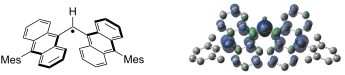
- two anthryl moieties (Figure 3b, Supporting Information File 1, Figure S1). DFT calculations for structural optimization revealed that the energy difference between two DAntM radical structures with different spin positions, spin localization at the central sp2 carbon and on the anthryl group, is


Cell-free protein synthesis with technical additives – expanding the parameter space of in vitro gene expression
Beilstein J. Org. Chem. 2024, 20, 2242–2253, doi:10.3762/bjoc.20.192
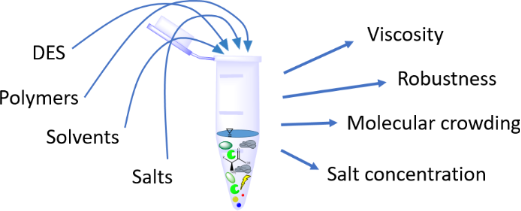
- nucleotides and amino acids, as well as energy molecules, salts, buffer, etc., are added. After successful protein synthesis, further substrates can be added for an enzyme activity assay. Although mimicking of cell-like conditions is an approach for optimization, the physical and chemical properties of CFPS
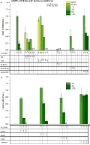
- various options for soluble substances. Effects of technical additives on the CFPS performance In vitro sfGFP production with additives The in vitro expression of sfGFP, or GFP variants in general, is well established and is often used as a model system for optimization (e.g., with active learning
- deviations in the measurements or by the undefined addition of amino acids via the cell-free extract. Irrespective of this, the high concentration of sfGFP obtained shows the high level of optimization of the synthesis. Therefore, it is not expected that the addition of technical additives will further


Selective hydrolysis of α-oxo ketene N,S-acetals in water: switchable aqueous synthesis of β-keto thioesters and β-keto amides
Beilstein J. Org. Chem. 2024, 20, 2225–2233, doi:10.3762/bjoc.20.190
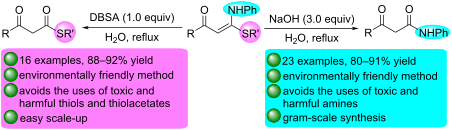
- yield is stated. Keto/enol ratio of 3 was determined by 1H NMR spectroscopy. Gram-scale hydrolysis reactions of 1a. Proposed mechanism for formation of β-keto thioesters 2 and β-keto amides 3. Optimization of the reaction conditions. EcoScale calculations and results for the synthesis of 2a and 3a [75



Electrochemical allylations in a deep eutectic solvent
Beilstein J. Org. Chem. 2024, 20, 2217–2224, doi:10.3762/bjoc.20.189
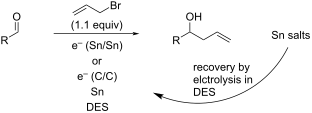
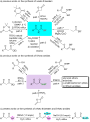
- electrode materials for electrochemical allylations [29][30][31][32][33][34][35][36][37][38][39][40][41][42][43][44][45][46][47][48]. Further optimization employing tin (Table 1, entry 2) enabled near complete conversion to the desired product by using 2.5 F/mol of current passed through the solution at a

Finding the most potent compounds using active learning on molecular pairs
Beilstein J. Org. Chem. 2024, 20, 2152–2162, doi:10.3762/bjoc.20.185
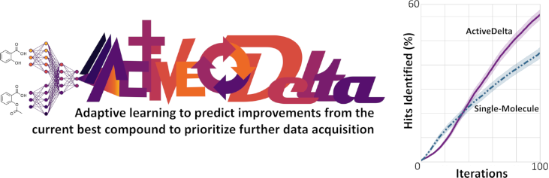
- regimes by enabling faster and more accurate identification of more diverse molecular hits against critical drug targets. Keywords: active learning; drug design; machine learning; molecular optimization; potency predictions; Introduction Active learning is a powerful concept in molecular machine
- ][4] and steer molecular optimization for drug discovery [5][6][7][8]. Active learning is particularly powerful during early project stages. However, one major downside is that, at these early project stages, only a very small amount of training data is available to learn from [9] which can be
- , model exploitation can lead to analog identification, which can limit the acquired knowledge and the scaffold diversity of selected hits [1]. We previously showed that leveraging pairwise molecular representations as training data can support molecular optimization by directly training on and predicting


O,S,Se-containing Biginelli products based on cyclic β-ketosulfone and their postfunctionalization
Beilstein J. Org. Chem. 2024, 20, 2143–2151, doi:10.3762/bjoc.20.184
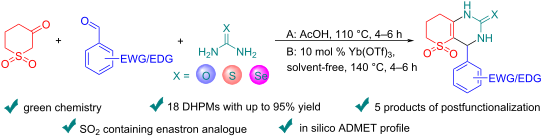
- ). Results and Discussion Reaction optimization Over the past two decades more than 300 various catalytic systems have been proposed for Biginelli chemistry, e.g., simple inorganic and organic acids, metal salts, metal oxides, ionic liquids, phosphines, nanocatalysts, organocatalysts, ion exchange resins [1
- ][4][9] or even visible light-driven methods [25][26][27][28]. We started our study from the optimization of the reaction conditions using β-ketosulfone 1, benzaldehyde and thiourea as model reaction. According to the literature, the reaction has been shown to work best and most efficiently under
- reaction (A) and examples of DHMP (B) and thiopyran-1,1-dioxide (C) containing drugs. Scope of the obtained Biginelli products 2a–q. Synthesis of SO2-containing enastron analogue 2r. Postmodification of the Biginelli product 2a. Optimization of reaction. Supporting Information Supporting Information File



From perfluoroalkyl aryl sulfoxides to ortho thioethers
Beilstein J. Org. Chem. 2024, 20, 2108–2113, doi:10.3762/bjoc.20.181
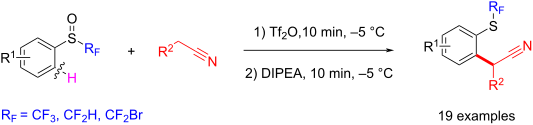
- Discussion We started our optimization with the reaction between acetonitrile and phenyl trifluoromethyl sulfoxide (1a, Table 1). We firstly chose the same stoichiometry as described in our previous study and tried to reduce the reaction time by the help of microwave heating (Table 1, entry 1). Under these
- . The scope of aryl perfluoromethyl sulfoxides and a selenoxide. The scope of alkyl nitriles. Optimization of the reaction conditions. Supporting Information Supporting Information File 48: Experimental procedures, characterization data of all isolated products as well as copies of NMR spectra for



Computational toolbox for the analysis of protein–glycan interactions
Beilstein J. Org. Chem. 2024, 20, 2084–2107, doi:10.3762/bjoc.20.180
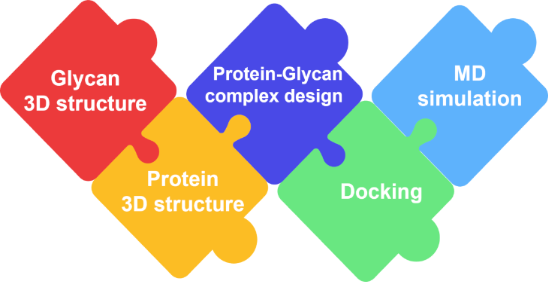
- bacterial sugars, the parametrisation of each building block is needed and requires the use of ab initio methodologies, including several steps of charges and electron density calculations, optimization and minimization, making the computational study of bacterial glycans difficult and time-consuming. 2


Diastereoselective synthesis of highly substituted cyclohexanones and tetrahydrochromene-4-ones via conjugate addition of curcumins to arylidenemalonates
Beilstein J. Org. Chem. 2024, 20, 2016–2023, doi:10.3762/bjoc.20.177
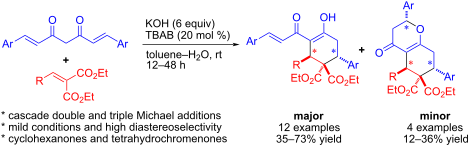
- not have a significant effect on the yield or formation of respective products (Table 1, entry 12). Based on the optimization studies, a combination of KOH in toluene and TBAB (Table 1, entry 2) as phase-transfer catalyst was chosen as the best conditions. Although KOH could saponify the ester group


Allostreptopyrroles A–E, β-alkylpyrrole derivatives from an actinomycete Allostreptomyces sp. RD068384
Beilstein J. Org. Chem. 2024, 20, 1981–1987, doi:10.3762/bjoc.20.174
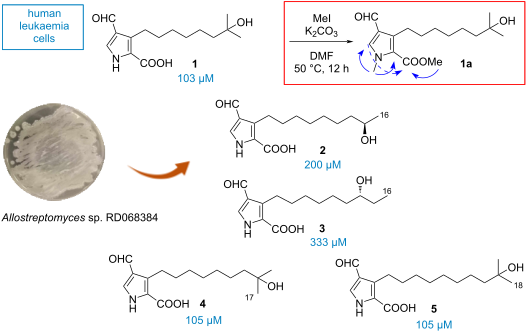
- and 3, their conformational ensembles, datasets of a structure and population of each conformer [25], were determined using a Spartan 24 parallel package conformational search tool (Wavefunction Inc, USA), followed by geometry optimization of the most weighted conformers (Boltzmann distribution weight
- [31]. Range-separated hybrid GGA (RSH-GGA) functional, including dispersive interaction with 6-31G* as the polarization basis set (ωB97X-D/6-31G* method), was used for energy and geometry optimization [32]. Bioactivity Cytotoxicity and tyrosinase assays were carried out according to the procedures


Negishi-coupling-enabled synthesis of α-heteroaryl-α-amino acid building blocks for DNA-encoded chemical library applications
Beilstein J. Org. Chem. 2024, 20, 1922–1932, doi:10.3762/bjoc.20.168
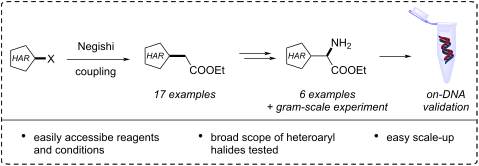
- screening and rapid optimization [46][47]. Homogenous heating and mixing in flow reactors can lead to higher reaction rates and yields. In terms of photochemistry, continuous flow setups provide enhanced light irradiation as well [48][49]. These advantages make flow chemistry a powerful tool for chemical
- methods were tested and after a brief optimization process, zinc dust and HCl in a mixture of EtOH/dioxane proved to be the best conditions in order to maximize the yield and limit the amino ester instability issues (see Table S6 in Supporting Information File 1). By slightly adjusting the reaction time




Solvent-dependent chemoselective synthesis of different isoquinolinones mediated by the hypervalent iodine(III) reagent PISA
Beilstein J. Org. Chem. 2024, 20, 1914–1921, doi:10.3762/bjoc.20.167
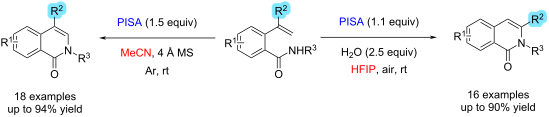
- structures of the intermediate 1CC. Proposed mechanism for the reaction between 1a and PISA in wet HFIP. Optimization of the reaction conditions for the synthesis of 4-substituted isoquinolinone 2aa. Supporting Information Supporting Information File 12: Experimental details, optimization studies, compound




2-Heteroarylethylamines in medicinal chemistry: a review of 2-phenethylamine satellite chemical space
Beilstein J. Org. Chem. 2024, 20, 1880–1893, doi:10.3762/bjoc.20.163
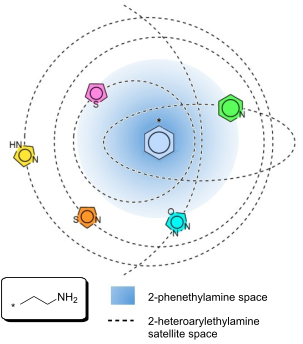
- importance in medicinal chemistry, as it can be employed as a rational to expand bioactive chemical space to tackle lead optimization issues like lack of potency, efficacy, and selectivity or pharmacokinetic/dynamic issues. One of the most important building blocks (in the sense of participating in a vast
- structural hopping strategy, as five- or six-membered heterocyclic aromatic rings are widespread entities in drug discovery [4]. In this sense, any bioactive molecule enclosing a benzene ring in its initial optimization stages could undergo a heteroaromatic replacement. 2-Phenethylamines are notable


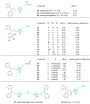


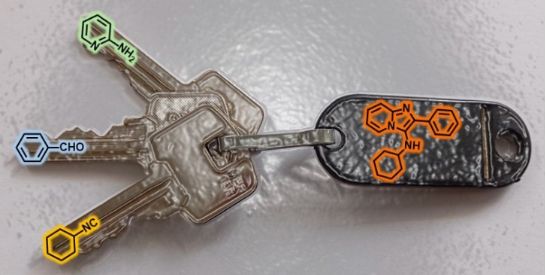
The Groebke–Blackburn–Bienaymé reaction in its maturity: innovation and improvements since its 21st birthday (2019–2023)
Beilstein J. Org. Chem. 2024, 20, 1839–1879, doi:10.3762/bjoc.20.162
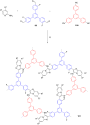
- acids). In order to expand DELs to the GBB reaction, compartmentation was proposed to confine an acidic catalyst into the lipophilic core of micelles, inaccessible to water soluble DNA. Micelles were made of a sulfonic acid substituted, amphiphilic copolymer 13. After reaction optimization, a narrow
- , respectively. For further investigations, however, CALB was chosen due to its lower cost and easier availability. Optimization of enzyme loading and substrate ratios increased the yield up to 91%. Immobilization of the enzyme on silica particles was not detrimental to the yield, but allowed enzyme recycling
- interactions with the target were synthetized. After optimization of the reaction medium and of the concentration of reactants, and after setting up an analytical method relying on UPLC with tandem quadrupole detector, the on-target KTGS experiments were conducted. In a first set of experiments, a single


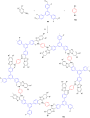




A facile three-component route to powerful 5-aryldeazaalloxazine photocatalysts
Beilstein J. Org. Chem. 2024, 20, 1831–1838, doi:10.3762/bjoc.20.161
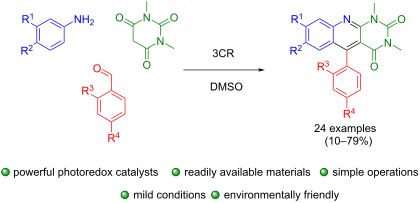
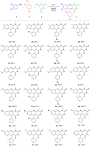
- . aReaction was done in DMF/AlCl3. bIsolation requires precipitation with 2-propanol. c2 days. Control experiments related to bulky substituted aldehydes. Optimization of the reaction conditions for the synthesis of 2a. Supporting Information Supporting Information File 28: Spectroscopic and analytical data




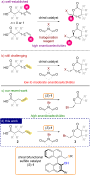
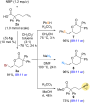
Chiral bifunctional sulfide-catalyzed enantioselective bromolactonizations of α- and β-substituted 5-hexenoic acids
Beilstein J. Org. Chem. 2024, 20, 1794–1799, doi:10.3762/bjoc.20.158
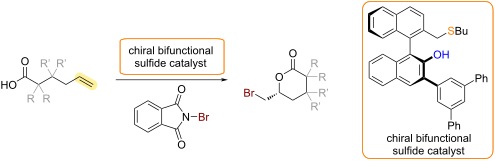
- , provided the corresponding iodolactonization product in racemic form with a good yield (80% yield, 50:50 er) [36]. To improve the enantioselectivity in the asymmetric bromolactonization of 2a using NBP and catalyst (S)-1g, the optimization of reaction solvents was also performed. Based on our recent